Yes, jasmine absolutely grows in Hawaii, and in many parts of the islands it thrives with very little fuss. Jasmine can also grow in Las Vegas, but you will need to choose the right type and give it excellent drainage and consistent watering during hot spells grows in. The most important jasmine in Hawaii is Jasminum sambac, known locally as pikake, the iconic lei flower with that sweet, heady fragrance. It grows as a shrub or informal climber in the warm lowlands of every major island and does exceptionally well in the humid, sunny conditions found on leeward coastlines. The catch is that not every plant sold as 'jasmine' is the same species, and some types struggle in Hawaii's wetter or cooler microclimates. Knowing exactly which jasmine you're dealing with makes the difference between a thriving landscape vine and a plant that sulks in a corner.
Does Jasmine Grow in Hawaii? Types, Zones, and Tips
Quick answer by jasmine type
| Jasmine type | Scientific name | Grows in Hawaii? | Best conditions |
|---|---|---|---|
| Pikake / Arabian jasmine | Jasminum sambac | Yes, easily | Warm lowlands, well-drained soil, full to partial sun |
| Common jasmine / Poet's jasmine | Jasminum officinale | Yes, with care | Cooler elevations (1,000–3,000 ft), good drainage required |
| Star jasmine / Confederate jasmine | Trachelospermum jasminoides | Yes, very well | Lowlands to mid-elevations, tolerates more moisture |
| Night-blooming jasmine | Cestrum nocturnum | Yes, very easily | Most low-elevation areas, nearly any well-drained soil |
| Spanish jasmine | Jasminum grandiflorum | Yes, at cooler elevations | Higher elevations, less humidity preferred |
| Carolina jessamine | Gelsemium sempervirens | Limited | Possible in drier, cooler zones but rarely attempted |
Which jasmine do you actually mean?
This matters more than almost anywhere else in the country, because Hawaii's garden centers sell several completely different plants all under the 'jasmine' label. Jasminum sambac (pikake) is the one most people want when they think Hawaiian jasmine. It's the one used in leis, described in Hawaiian language dictionaries as a shrub or climber with rounded dark green leaves and intensely fragrant small white flowers. The Lei Poinaʻole Project explains that pikake is Jasminum sambac, a sweet-fragranced jasmine lei flower used in Hawaiian leis blank" rel="noopener noreferrer">pikake is the one used in leis. blank" rel="noopener noreferrer">The University of Hawaii identifies it under both the common names jasmine, sampaguita, and lei-pikake. It is a true jasmine.
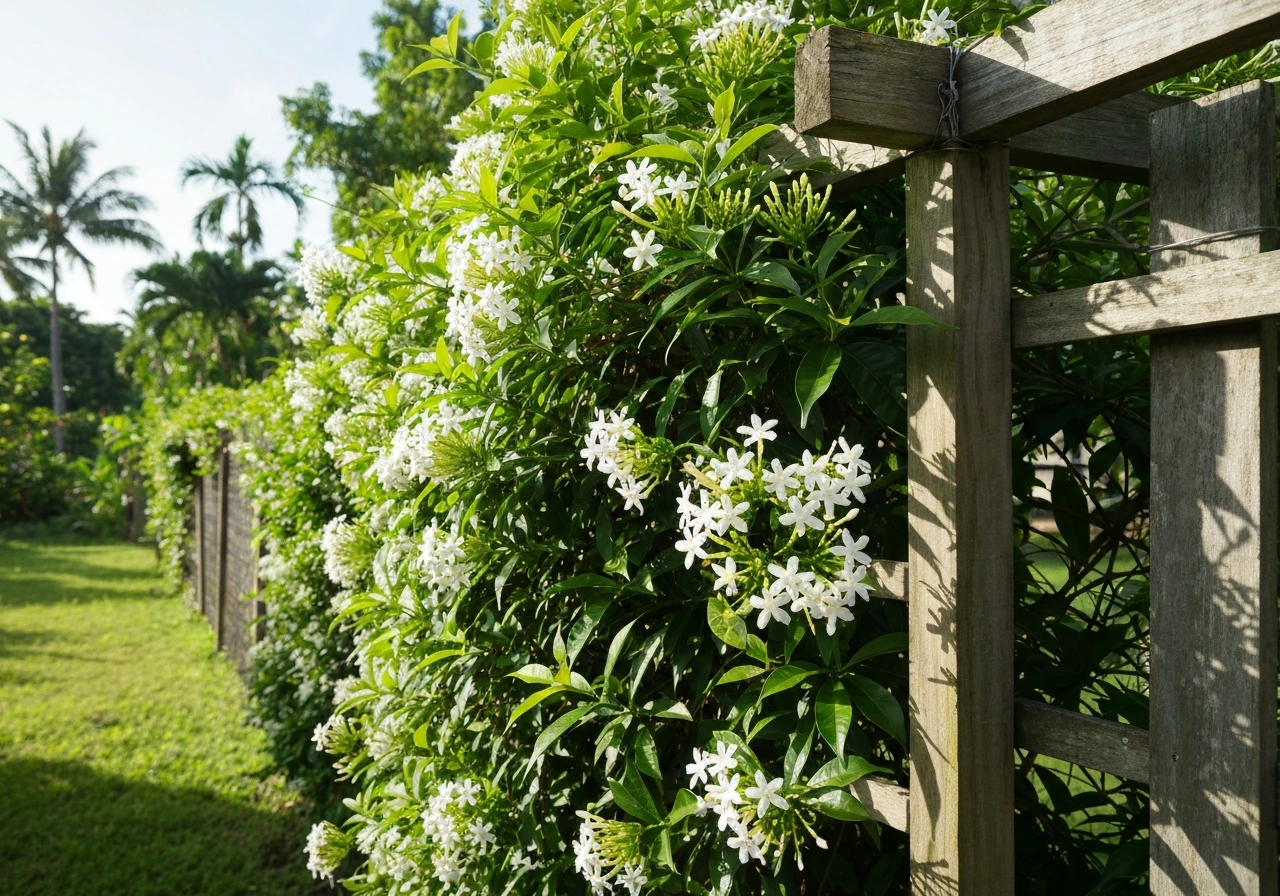
Star jasmine (Trachelospermum jasminoides) is extremely common in Hawaii and often just called jasmine at nurseries. It's not a true jasmine at all, but it performs well, produces fragrant white pinwheel flowers, and is an honest-to-goodness workhorse as a landscape vine or ground cover. Night-blooming jasmine (Cestrum nocturnum) is another common lookalike with a powerful night scent, but it belongs to a completely different plant family. If the plant tag just says 'jasmine' without a species name, ask before you buy.
Where on each island will jasmine do best
Oahu
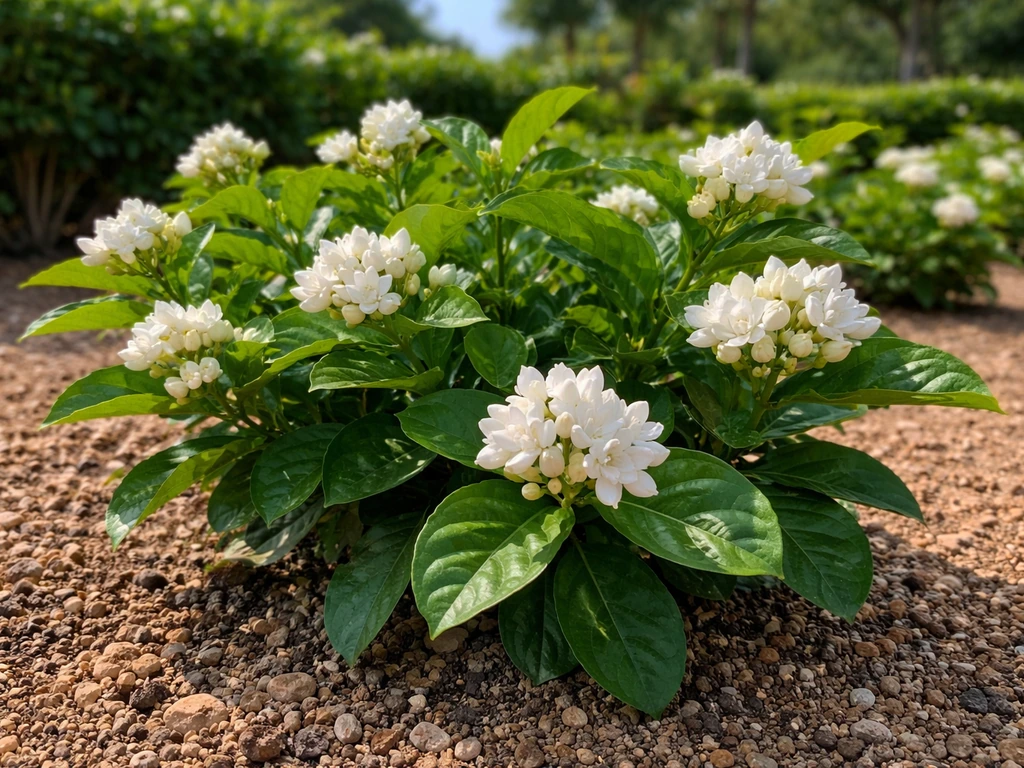
Pikake (Jasminum sambac) is essentially a landscape staple in Oahu's lower elevations, from Honolulu and Kailua down to the leeward coast around Ewa Beach and Waianae. The warm, relatively dry leeward side gives it the drainage and sunshine it needs. On the windward side (Kaneohe, Kaaawa), heavier rainfall means you need to pay close attention to soil drainage, since waterlogging is one of the few things that reliably kills Jasminum. Star jasmine handles the windward moisture better and is a good swap if your yard stays wet.
Maui
Central and south Maui (Kihei, Kahului, Wailea) offer ideal pikake conditions: warm, sunny, and drier than the island's north shore. Upcountry Maui above 2,000 feet around Kula gets noticeably cooler at night, which can slow pikake's growth and reduce flowering. That same upcountry zone is actually where Spanish jasmine (Jasminum grandiflorum) and common jasmine (Jasminum officinale) feel more at home. If you're in Hana on the rainy east side, prioritize drainage above everything else.
Big Island (Hawaii Island)
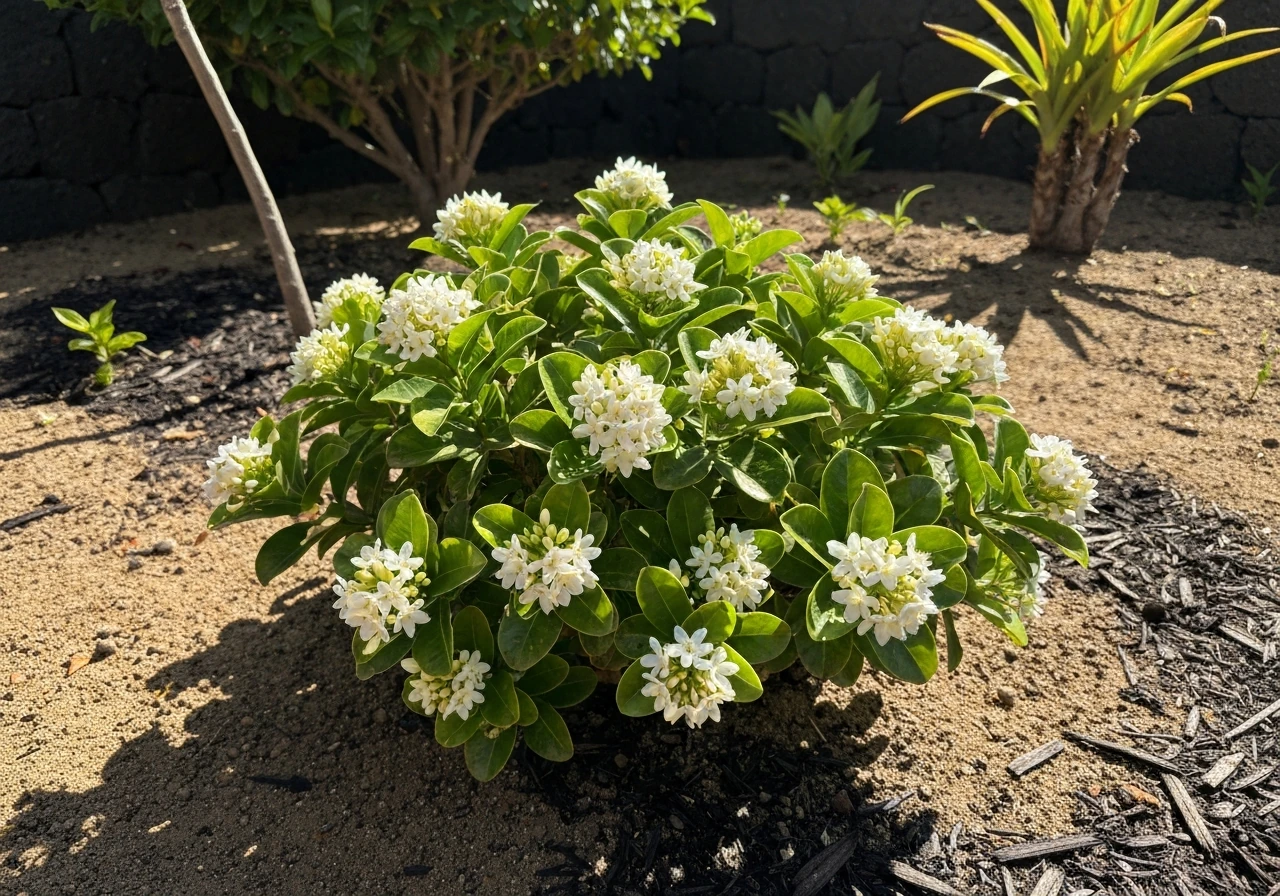
The Big Island has the widest climate range of any island. The Kona coast is almost perfect for pikake: warm, relatively dry, and sunny. The Hilo side receives heavy rainfall year-round (150+ inches annually in some spots) and waterlogged conditions are a real risk for jasmine roots. East-facing slopes near Pahoa and Puna are moist enough that star jasmine or night-blooming jasmine may be safer bets. Above 3,000 feet in areas like Kamuela (Waimea), temperatures drop enough that pikake blooms less reliably, but Jasminum officinale can handle it.
Kauai, Molokai, Lanai
Kauai's south shore (Poipu, Lihue area) gets good sun and drainage, making it workable for pikake. The north shore around Hanalei is one of the rainiest places in the U.S. and is genuinely challenging for any Jasminum unless your drainage situation is exceptional. Molokai's drier west side and Lanai's lowland zones both suit pikake without much trouble.
What's easy and what's tricky about growing jasmine in Hawaii
The honest good news: pikake is one of the most culturally adapted plants in Hawaii. CTAHR (University of Hawaii's College of Tropical Agriculture and Human Resources) notes it flowers heavily from March through September, and because it blooms on new growth, even if you prune it hard, it comes back flowering. It grows in a range of soils including rich loam, silty clay loam, and sandy soils as long as you irrigate during dry spells and maintain good drainage. Target soil pH of 6.0 to 6.5 is easy to hit in most island soils.
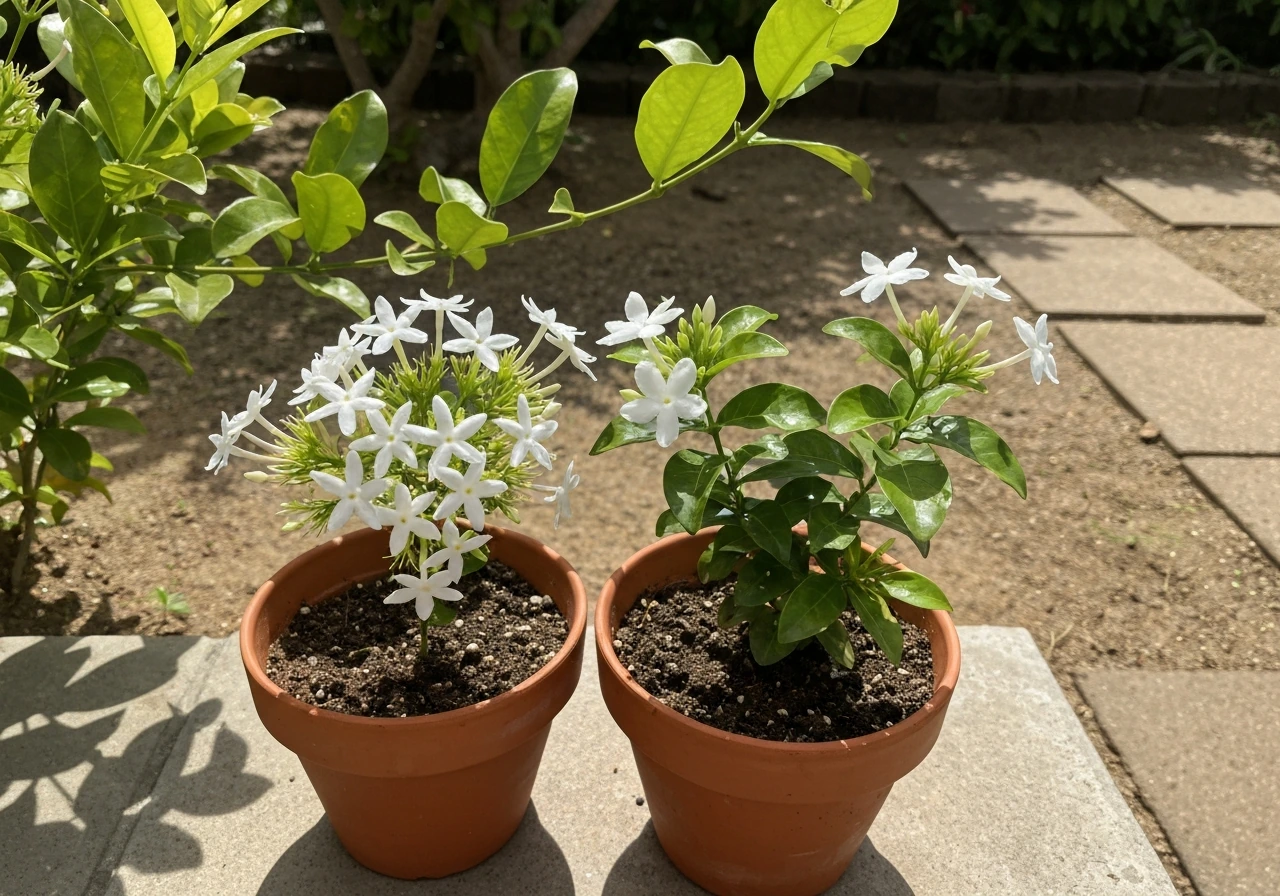
The trickier part is drainage. CTAHR is explicit that waterlogging kills almost all Jasminum species. In Hawaii's windward areas or anywhere that gets heavy tropical rain for weeks at a stretch, planting on a raised mound, a slope, or in a raised bed makes a measurable difference. Container growing is also a legitimate option: pikake in a large well-draining pot on a lanai is a classic Hawaii setup and allows you to move the plant if you need to control its conditions.
- Easy: Pikake's heat and humidity tolerance in warm lowland Hawaii is essentially unmatched among fragrant ornamentals
- Easy: Long bloom season (March to September) with fragrant flowers usable for leis, garlands, and cut arrangements
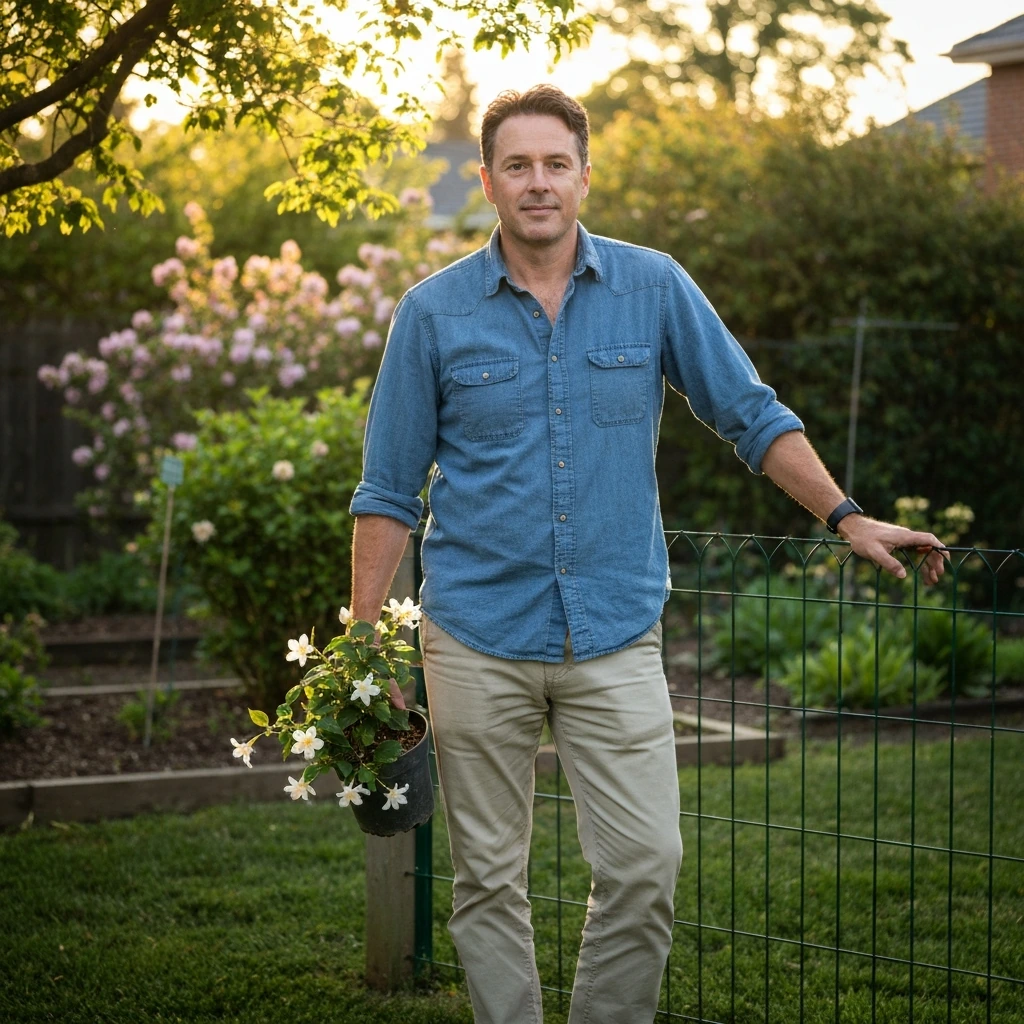
- Easy: Grows as a shrub or can be trained up a trellis, fence, or arbor without much fuss
- Tricky: Drainage on windward sides and wet slopes is non-negotiable
- Tricky: Cooler upcountry temperatures (below about 55°F regularly) reduce flowering in pikake specifically
- Tricky: Regular pruning is needed to keep it producing new growth (which is where the flowers come from)
Common problems to watch for
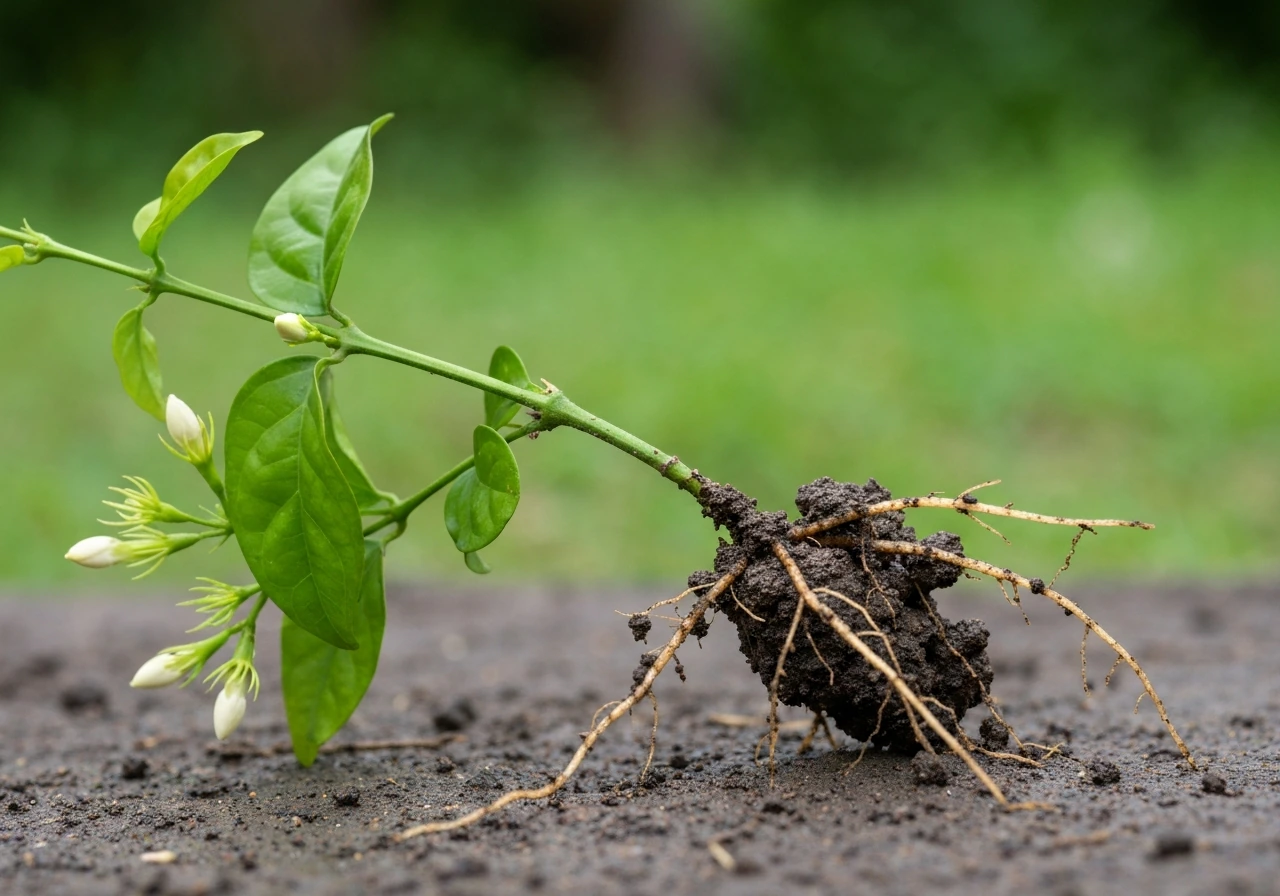
Root rot is the number one killer of jasmine in Hawaii and it's almost always caused by poor drainage combined with heavy rain or overwatering. If you're losing plants that looked fine and then suddenly collapsed, poor drainage is the first suspect. Amend compacted clay soils with organic matter before planting and avoid low spots in the yard.
Mealybugs, spider mites, and aphids are all regular visitors on jasmine in Hawaii, especially in drier months when plant stress makes them more vulnerable. Check the undersides of leaves regularly. A strong blast of water or a diluted neem oil spray handles most minor infestations. Scale insects are another persistent issue on stems and require a more targeted approach with horticultural oil.
In very humid, poorly ventilated settings, powdery mildew can appear on foliage. Improving air circulation around the plant (thinning the canopy, avoiding walls that trap humidity) usually reduces the problem without fungicide. Finally, chlorosis (yellowing leaves with green veins) sometimes shows up in alkaline soils or when irrigation water is very hard. A soil test and a mild acidifying fertilizer resolves it quickly.
How to pick the right plant before you buy
At a Hawaii nursery, do not rely on the common name alone. Ask the staff for the full scientific name (genus and species) before purchasing anything labeled 'jasmine.' A tag that reads Jasminum sambac is pikake. A tag that reads Trachelospermum jasminoides is star jasmine, a solid choice but a different plant entirely. If the tag only says 'jasmine' with no species name, that's a red flag worth clarifying.
Look for plants with multiple healthy stems, dark green leaves without yellowing or spotting, and no visible insects on the undersides of leaves. Avoid rootbound plants with roots circling out of the drain holes, as these take longer to establish. Local nurseries tied to University of Hawaii extension programs (many on Oahu and the Big Island) are particularly good sources because their stock is grown for Hawaii's specific conditions rather than shipped from mainland production facilities.
- Ask for the full scientific name (not just 'jasmine') and confirm it matches what you want
- Check the CTAHR website or call your county's UH cooperative extension office to confirm suitability for your specific elevation and island
- Buy locally grown stock when possible, ideally from a nursery familiar with your island's microclimates
- Confirm your soil drains well before planting, especially on windward or low-lying properties
- If in doubt about drainage, start in a large container first and observe performance before committing to a landscape bed
Good alternatives if your conditions don't suit jasmine
If you're in a cooler upcountry zone where pikake underperforms, or a very wet windward area where drainage is a constant battle, there are excellent fragrant alternatives that feel right at home in Hawaii.
| Alternative plant | Scientific name | Why it works in Hawaii | Best for |
|---|---|---|---|
| Plumeria | Plumeria spp. | Extremely drought tolerant, thrives in full sun, iconic Hawaiian fragrance | Dry leeward lowlands, coastal areas |
| Gardenia | Gardenia jasminoides | Strong sweet fragrance similar to jasmine, tolerates more moisture | Windward sides, wetter soils |
| Star jasmine (as an alternative to pikake) | Trachelospermum jasminoides | More moisture tolerant than true jasmine, fast-growing vine | Windward areas, wetter microclimates |
| Night-blooming jasmine | Cestrum nocturnum | Nearly indestructible in Hawaii lowlands, powerful evening scent | Low-elevation humid areas |
| Mock orange | Murraya paniculata | Sweet jasmine-like fragrance, very heat tolerant | Warm lowlands, hedges and borders |
| Ylang-ylang | Cananga odorata | Tropical fragrant tree, thrives in warm humid Hawaii conditions | Large gardens, tropical landscapes |
For gardeners elsewhere facing tougher climate limits, it's worth knowing that jasmine's feasibility swings wildly by region. Does jasmine grow in California too? It can in the right warm microclimates, but you have to match the species to your local heat and drainage conditions. In Idaho, whether jasmine can grow well depends heavily on winter cold, your microclimate, and whether you choose a species suited to colder conditions jasmine's feasibility swings wildly by region. If you are wondering, can jasmine grow in Washington state, the answer usually depends on whether you can provide warmth, sunlight, and protection from cold snaps. It's a much harder conversation in places like Colorado or Idaho where freezing winters are the primary obstacle. Even in warm-climate states like Arizona, the combination of dry heat and alkaline soils creates a different set of challenges. In Arizona, whether jasmine can grow depends heavily on selecting the right species and providing excellent drainage and protection from the hottest dry spells jasmine in Arizona. Hawaii is genuinely one of the easier places in the U.S. to grow jasmine, which is why pikake became such a central part of the island's cultural identity. In Utah, jasmine can be much harder to grow because winter cold and dry conditions often limit flowering unless you pick the right type and protect it pikake became such a central part of the island's cultural identity.
FAQ
If I buy jasmine in Hawaii, how do I know I’m getting pikake (lei jasmine)?
It depends on the “jasmine” species. Pikake (Jasminum sambac) is the lei jasmine most closely associated with Hawaii, while star jasmine (Trachelospermum jasminoides) and night-blooming jasmine (Cestrum nocturnum) are common nursery substitutes. If you want the classic lei flower scent, insist on Jasminum sambac on the tag before buying.
What’s the best way to grow jasmine on the wet, windward side of the islands?
For the most reliable success in rainy windward areas, do not plant in low spots or flat ground that stays wet. Use a raised mound, slope planting, or a raised bed, and if drainage is questionable, start in a large well-draining container so you can adjust watering and placement.
Why does my jasmine flower less or not at all after I plant it?
Night-blooming jasmine and star jasmine often start flowering at different ages than pikake. After transplanting, expect a settling period where growth may slow, especially in cooler upcountry nights. If flowering seems delayed, confirm the plant is the species you want, check drainage first, then wait for a full warm season before changing the whole plant setup.
My jasmine suddenly died. Could it be normal, and what should I check first?
If the plant collapses after looking fine, it is usually root rot from waterlogging, not a “bad batch” of jasmine. Reduce watering, improve drainage immediately (raised bed or container), and avoid frequent light watering that keeps the root zone constantly wet.
My jasmine leaves are yellowing. How can I tell if it’s nutrient-related versus overwatering?
A strong next-step for “unknown chlorosis” (yellow leaves with green veins) is a soil test, then compare it to irrigation water quality. In alkaline conditions or with very hard water, the fix is typically switching to a mild acidifying approach and ensuring the plant is not being overwatered.
Can I grow pikake in a pot on a lanai in Hawaii?
Yes, containers work well in Hawaii because they let you control drainage and move the plant during heavy rain periods. Use a large pot, a fast-draining mix, and a pot with drainage holes, then water based on the mix drying slightly, not on a fixed schedule.
Does pruning reduce jasmine flowering in Hawaii, and when should I prune?
Yes, but prune with the right timing and expectations. Since pikake blooms heavily on new growth, pruning can be less risky than for some other plants, but you still need to avoid trimming back so late and so hard that you remove most new growth for the next flowering cycle.
What should I inspect before buying jasmine at a local nursery?
Start with basic plant checks: healthy stems and leaves without yellowing or spotting, no visible pests on the undersides, and not being rootbound. Then verify the full scientific name on the tag, because “jasmine” at Hawaii nurseries can refer to multiple unrelated plants.
How do I reduce powdery mildew on jasmine when it’s very humid?
Powdery mildew usually shows up when humidity stays high and airflow is poor. If you see it, thin the canopy and avoid planting against walls or dense hedges that trap moisture, because improving ventilation often prevents repeat outbreaks without heavy chemical use.
Which jasmine pests are most common, and what’s the best first response?
In Hawaii, mealybugs, spider mites, and aphids are often the early problem, while scale tends to be more stubborn on stems. Check leaf undersides regularly, use a targeted treatment like horticultural oil for scale, and consider a quick soap or neem-type approach for minor soft-bodied pests before infestations spread.