Yes, jasmine grows very well in California, but the answer depends heavily on which jasmine you mean and where in the state you live. In Las Vegas, you can only grow jasmine successfully if you choose a cold-tolerant type and plan for the city’s intense heat and winter lows does jasmine grow in las vegas.
Does Jasmine Grow in California? Types and Where to Plant
Marcus Hartwell
1 Jun 2026
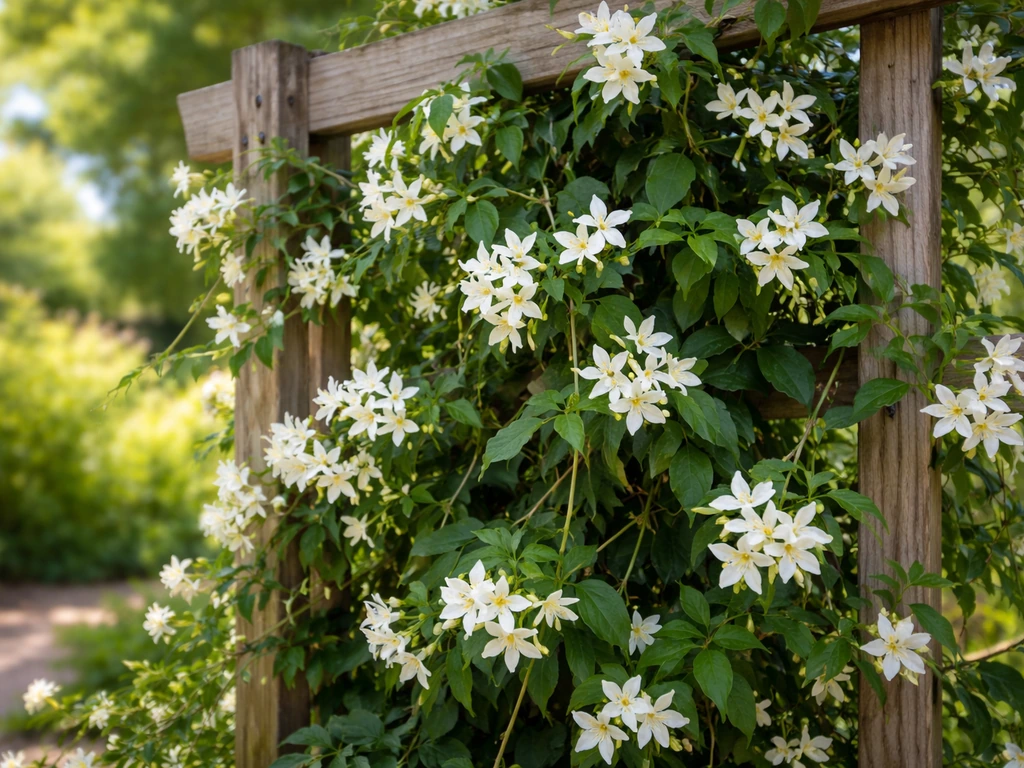
The plant most Californians call 'jasmine' is actually star jasmine (Trachelospermum jasminoides), a tough, fragrant vine that thrives across most of the state in USDA Zones 8 through 10. True jasmine (Jasminum officinale and its relatives) also grows here, though it needs a bit more attention in colder inland spots.
If you're standing at a nursery or staring at a neighbor's fence covered in white flowers, you're almost certainly looking at star jasmine, and the good news is that plant loves California.
Which 'jasmine' are we actually talking about?
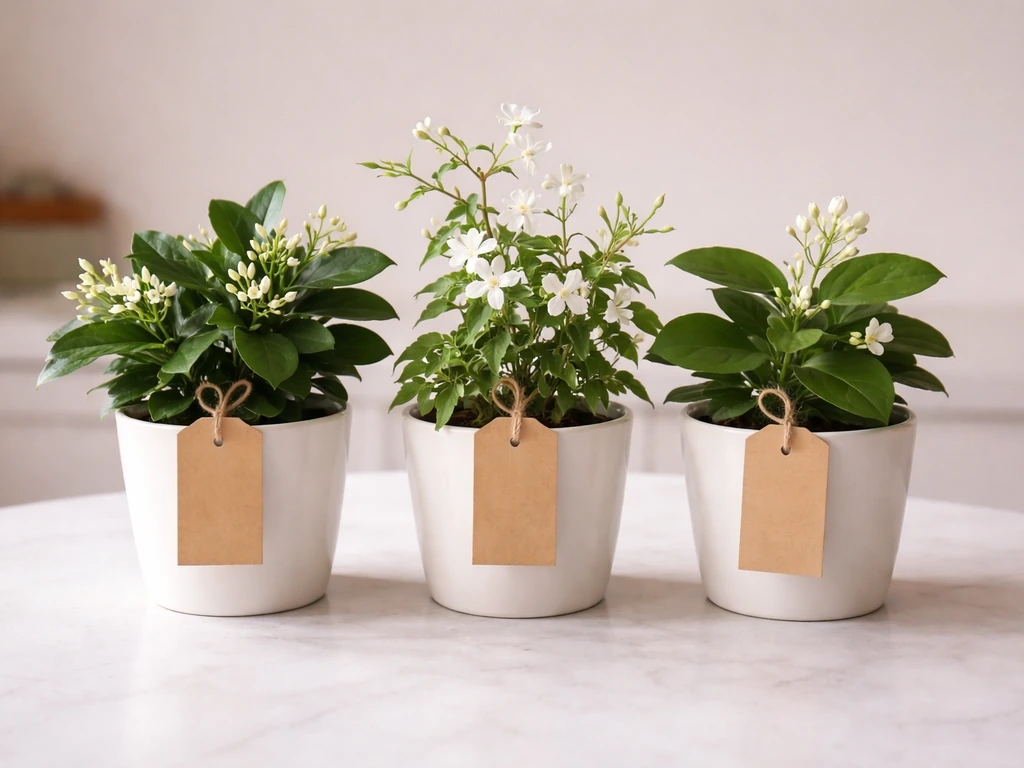
This is the most important thing to sort out before you buy anything. 'Jasmine' gets used loosely to describe several different plants, and mixing them up leads to wrong expectations and sometimes dead plants. UC IPM also notes that the “jasmine” sold for gardens can include multiple botanical types, with some being evergreen, semievergreen, or deciduous shrubs and vines jasmine gets used loosely to describe several different plants. Here are the main ones you'll encounter in California:
- Star jasmine (Trachelospermum jasminoides): Also called Confederate jasmine. This is not botanically a true jasmine at all, but it's by far the most popular 'jasmine' in California gardens. It's a fast-growing evergreen vine with intensely fragrant white flowers. When someone points at a fence covered in jasmine, this is almost always what they mean.
- Common or true jasmine (Jasminum officinale): Sometimes called poet's jasmine. This is the real Jasminum genus, with delicate white flowers and a lighter fragrance. It can be semievergreen to deciduous depending on winter temperatures.
- Arabian jasmine (Jasminum sambac): A tropical species, the source of jasmine tea fragrance. Loves heat and humidity, less cold-tolerant than the others.
- Pink jasmine (Jasminum polyanthum): A popular vine sold widely in California with pink-tinged buds that open white. It grows vigorously and performs well in mild climates.
- Carolina jasmine (Gelsemium sempervirens): Another lookalike that shows up in nurseries. It's a different genus entirely, and all parts of it are toxic, so worth knowing the distinction.
For this guide, the focus is on the two you're most likely to plant: star jasmine and true/common jasmine. Both grow in California, but they have different zone requirements and tolerances, so knowing which one you want matters.
A quick California answer by region
California is enormous and climatically diverse, so let's cut right to it by broad region.
| California Region | Typical USDA Zones | Star Jasmine | True Jasmine (J. officinale) |
|---|---|---|---|
| Southern California coast (LA, San Diego, OC) | 10a–11a | Excellent, thrives year-round | Grows well, may stay evergreen |
| Central Coast (Santa Barbara, Monterey, San Luis Obispo) | 9b–10b | Excellent | Very good |
| San Francisco Bay Area | 9b–10b | Excellent | Very good |
| Sacramento Valley / Central Valley | 9a–10a | Good to excellent, watch summer heat | Good, some deciduous drop in winter |
| Inland Southern California (Riverside, San Bernardino foothills) | 8b–10a | Good, protect from occasional frost | Good with some winter dieback possible |
| High Desert (Victorville, Palmdale area) | 7b–8b | Marginal, needs sheltered microclimate | Marginal to risky |
| Mountain areas / Sierra foothills above 3,000 ft | 6–8a | Not reliable outdoors | Unlikely to survive winters |
The coastal zones from San Diego up through the Bay Area are genuinely ideal jasmine territory. The Mediterranean climate, mild winters, and warm summers are almost a perfect match. The farther inland or higher in elevation you go, the more cautious you need to be, particularly about cold snaps in winter.
The zone math: when jasmine makes it and when it doesn't
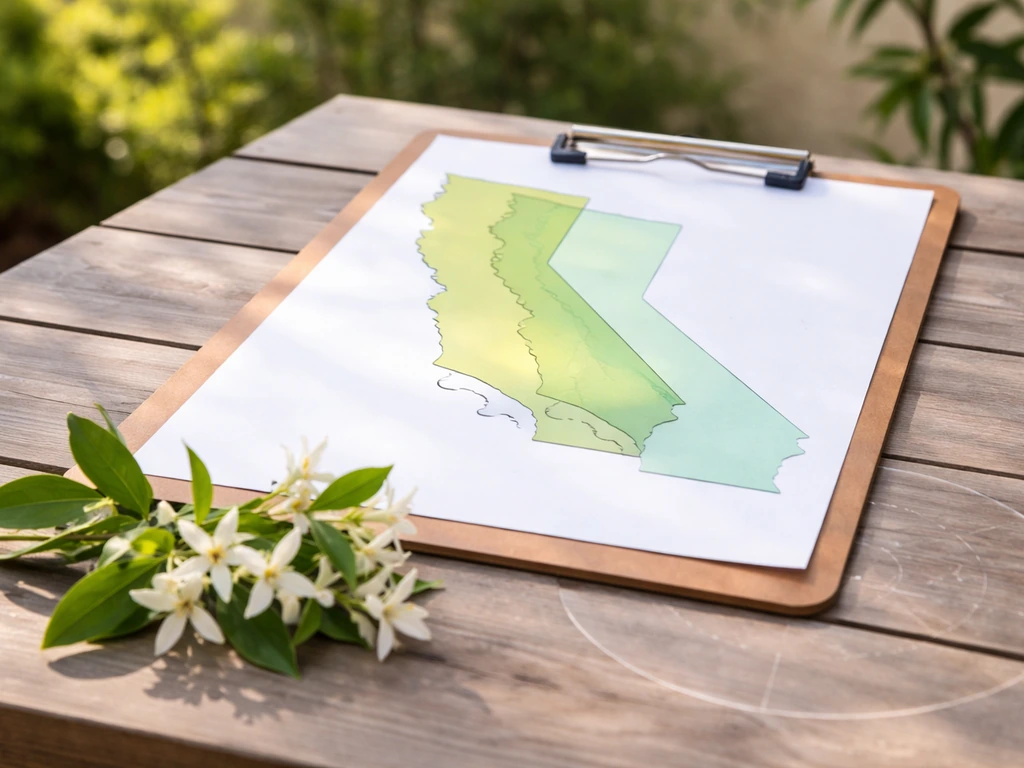
Star jasmine is reliably hardy in USDA Zones 8 through 10, which covers the vast majority of populated California. The Royal Horticultural Society also cautions that Trachelospermum (star jasmine) won’t do well in soggy ground, windy sites, or very cold locations where winter temperatures consistently fall below about -5°C (23°F) [Trachelospermum (star jasmine) won’t do well in soggy ground, windy sites, or very cold locations below about -5°C (23°F)](https://www. rhs. org.
uk/plants/trachelospermum). It can push into a sheltered Zone 7b spot with some winter protection, but below that it struggles. The critical number is about 23°F (-5°C): if your location regularly dips below that temperature in winter, you'll see freeze damage on star jasmine, showing up as blackened or scorched-looking leaves. It won't necessarily kill an established plant, but it can set it back significantly.
True jasmine (J. officinale) has similar cold tolerance, rated for Zone 7 and above, so the cutoff is roughly the same.
The fastest way to confirm your specific zone is to go to the USDA Plant Hardiness Zone Map and enter your ZIP code. It uses a 30-year average of annual extreme minimum winter temperatures, so it reflects what your garden will actually face over time, not just last year's weather. If your zone comes back as 8 or higher, you're in solid jasmine territory. Zone 7b is the edge of possibility. Zone 7a and below, you're better off with something else or keeping the plant in a container you can move.
Cold damage severity in California also depends on more than just the number on the map. How fast the temperature drops, how long it stays cold, and whether the plant was well-watered going into the cold snap all matter. A dry plant hits hard by a sudden freeze does worse than a hydrated one experiencing a gradual chill. That's worth keeping in mind if you're in an inland valley where winter nights can surprise you.
Best jasmine varieties for California
Once you've confirmed your zone is workable, here are the varieties that consistently perform in California conditions:
Star jasmine (Trachelospermum jasminoides)
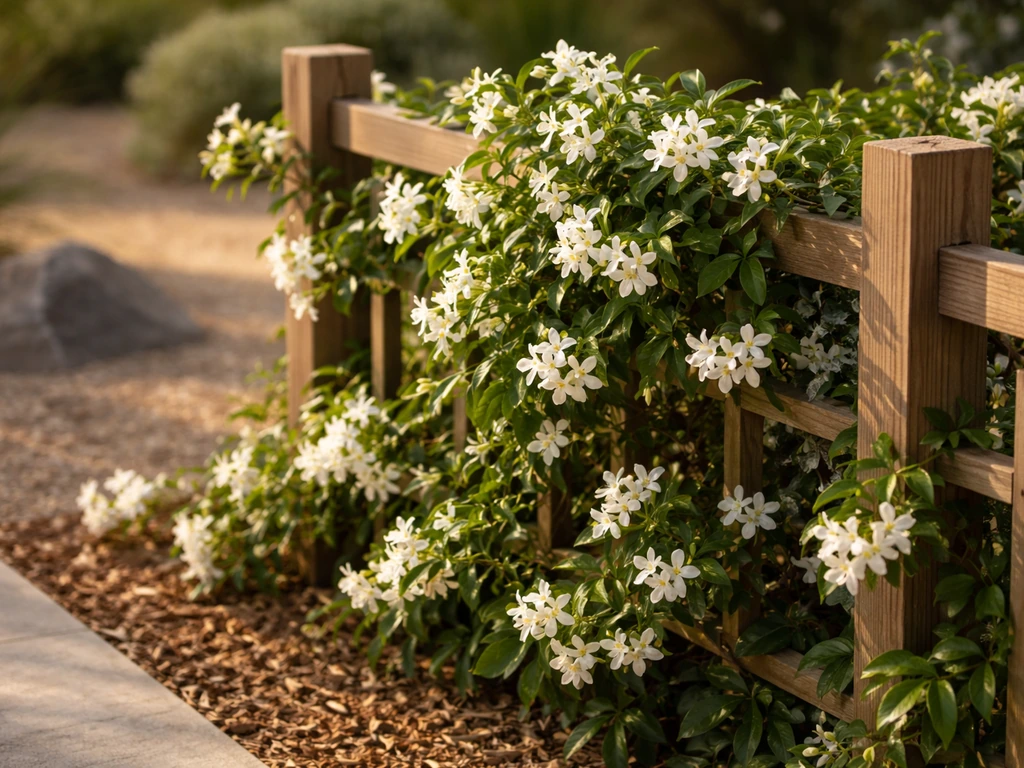
This is the go-to choice for most of California. It's evergreen, low-maintenance, drought-tolerant once established (rated moderate drought tolerance), and produces intensely fragrant white flowers in late spring and early summer. It works as a climbing vine, a ground cover, or a low shrub depending on how you train it. The cultivar 'Madison' is worth knowing by name because it's more cold-hardy than the standard species, making it a better pick if you're in an inland or higher-elevation spot near the edge of Zone 7. UC Davis has even trialed Trachelospermum cultivars locally, confirming they can perform in California's Central Valley climate.
Pink jasmine (Jasminum polyanthum)
This one is everywhere in California nurseries for good reason. It blooms prolifically in late winter to early spring, often before most other plants are doing anything interesting. It's a vigorous grower, so give it something substantial to climb. It performs best in Zones 8 through 10 and is a great choice for the coast and Bay Area.
Common/true jasmine (Jasminum officinale)
True jasmine works well in most of coastal and inland California and tolerates full sun to partial shade. It responds well to pruning after flowering, which keeps it from getting leggy. Expect it to drop some leaves in colder winters in the inland valleys, but it typically comes back fine in spring. It's not the plant you want if you're in the high desert or mountain foothills.
Arabian jasmine (Jasminum sambac)
Best suited to Southern California's warmer coastal and inland areas, Zone 9b and above. It needs more heat and is less forgiving of cool nights than the other types. If you're in San Diego or the warmer parts of the LA basin, it's worth trying. If you're in the Bay Area or farther north, stick with star jasmine or pink jasmine.
Practical tips for buying and planting today
A few things that will save you from common mistakes:
- Check the label carefully at the nursery. Ask specifically for Trachelospermum jasminoides (star jasmine) or Jasminum polyanthum (pink jasmine) rather than just 'jasmine.' The name confusion is real and widespread, even among nursery staff.
- Plant in full to partial sun. Star jasmine flowers most prolifically in full sun. Too much shade means fewer flowers, though the foliage stays fine. Aim for at least 4 to 6 hours of direct sun per day.
- Don't plant in soggy ground. Star jasmine is susceptible to Phytophthora root rot if the soil stays wet for extended periods. Good drainage is non-negotiable. If your soil is heavy clay, amend it or plant in a raised area.
- Don't plant too deep. Set the crown right at or slightly above the soil surface. Planting too deeply promotes the same root rot issues.
- In inland valleys, plant near a south- or west-facing wall. Reflected heat and wind protection from a structure creates a microclimate that can make the difference between a plant that sulks and one that thrives.
- Water regularly the first growing season to establish, then back off. Established star jasmine handles California's dry summers reasonably well.
June is actually a good time to plant in most of California. You'll get a long establishment window before any winter cold, and the plant will put on significant growth through summer and fall.
When containers or alternatives make more sense
If you're in a higher-elevation foothill area, the high desert (think Victorville or Palmdale), or anywhere that regularly sees hard freezes below 20°F in winter, growing jasmine in a container is your most practical option. Pot up star jasmine in a large container, keep it on a sheltered patio through the growing season, and move it to a garage or protected space when a hard freeze is forecast. This is the same approach gardeners use in colder states like Colorado or Utah, where jasmine is a much harder proposition outdoors year-round. If you’re wondering does jasmine grow in Colorado, it depends a lot on the variety and whether you’re growing it outdoors through freezes or using a sheltered container setup.
For gardeners in California's mountain communities or Sierra Nevada foothills where winters are genuinely harsh, the honest answer is that jasmine is not the right permanent landscape plant. In those spots, consider native alternatives like Cleveland sage (Salvia clevelandii) for fragrance, or look at other cold-hardy flowering vines that match your zone. Spending money on jasmine in Zone 6 or 7a California is likely to end in frustration.
California sits in a different world from neighboring states when it comes to jasmine. But if you're wondering whether jasmine grows in Hawaii, the same idea applies: it depends on the type of jasmine and how you match its needs to your local conditions California.
For example, if you're wondering does jasmine grow in Idaho, the key is matching the right type to your local USDA hardiness zone and winter lows California sits in a different world from neighboring states when it comes to jasmine.
While gardeners in Arizona's desert valleys face brutal summer heat and those in cooler states like Washington face cold winters and lower light, most of California's populated coast and valleys hit a sweet spot where jasmine, especially star jasmine, just works. California sits in a different world from neighboring states when it comes to jasmine Washington. If you’re in Washington, focus on cold hardiness first and be prepared for winter protection or container growing.
In general, jasmine can struggle in much of Arizona because many areas experience winter freezes and extreme heat that push it beyond its ideal hardiness zones jasmine in Arizona. If you're in one of those zones, pick up a plant, give it a sunny spot with decent drainage, and it will almost certainly reward you with that iconic fragrance by next spring. If you're wondering, does jasmine grow in Las Vegas, the same zone-and-winter-freeze logic applies before you buy.
FAQ
How do I tell star jasmine vs true jasmine at a nursery in California?
Look at the leaf type and bloom timing. Star jasmine is usually evergreen with glossy, leathery leaves and it commonly blooms in late spring to early summer. True jasmine tends to be more seasonal in how it looks and, in California gardens, often blooms later winter into early spring, with a different flower and leaf feel. If the label just says “jasmine,” ask the clerk for the Latin name (for example, Trachelospermum jasminoides for star jasmine).
If I’m near Zone 7b, can I still grow jasmine in the ground?
Sometimes, but plan for freeze protection and expect slower performance. For edge zones, choose the more cold-hardy cultivar you can (like ‘Madison’ for star jasmine), plant in a sheltered microclimate (south or west wall), and avoid low spots where cold air pools. Use mulch, and water normally going into winter so the roots are not stressed going into the cold snap.
Does jasmine need full sun in California to bloom well?
Not exactly. Star jasmine tolerates part shade but blooms best with more sun, especially in inland areas where summer heat is less forgiving. True jasmine also does well in full sun to partial shade, and it can get leggy if it does not get enough light. If you get lush growth but few flowers, the first fix is usually more direct sun.
Can I grow jasmine in drought conditions or without regular watering?
Yes once established, but there is a key transition period. During the first growing season, give consistent deep watering to help it root. After that, star jasmine’s moderate drought tolerance usually kicks in, but it can still get stressed during prolonged heat waves. A slow drip schedule is often more reliable than letting it fully dry out repeatedly.
What’s the best spacing for jasmine when used as a vine or ground cover?
Give it room to spread and avoid fighting for airflow. As a rough guide, space plants so each will have about 3 to 6 feet of room depending on how quickly you want coverage and whether you prune. For trained vines on a fence, ensure the plant has a sturdy support system, not just loose trellis twine, because vigorous growth can loosen weak anchors.
Does jasmine need to be pruned in California, and when?
Pruning after flowering is the safer timing for both star jasmine and true jasmine. Trimming right after blooms helps remove spent growth and encourages new flowering wood or flowering sites. If you prune too late in the season, you can reduce next year’s flowers. Also, for trained plants, periodically thin to prevent a dense mat that traps moisture and can increase leaf issues.
Why does my jasmine lose leaves after winter in inland California?
Leaf drop is common, especially for true jasmine and in cooler inland valleys. It is often a reaction to cold stress rather than a disease. Focus on proper winter care: keep roots mulched, don’t overwater during cold wet periods, and expect fuller recovery in spring. If leaves look scorched right after a freeze, it’s likely frost damage on tender shoots.
Will jasmine perfume my yard even if it’s not blooming yet?
You’ll get fragrance most reliably when buds and blooms form. During establishment, especially if the plant is young or recently transplanted, it may focus on roots and green growth first, with fewer flowers. If your jasmine has been in the ground less than a year, give it another season before judging its flowering.
Is container-growing realistic for inland or high-freeze areas of California?
Yes, and it is often the most practical option in foothill freezes and high desert conditions. Use a large pot with excellent drainage, keep it on the warmest sheltered patio you have during the growing months, and move it to an unheated garage or protected spot when a hard freeze is forecast. The pot can freeze more deeply than ground soil, so the container adds protection needs even if the variety is “almost” hardy.
Are there common problems in California jasmine besides cold?
The two big ones are poor drainage and incorrect expectations from a misidentified plant. Star jasmine can decline when roots sit in soggy soil, especially in winter rains. Also, if you accidentally planted a jasmine type that is less cold tolerant for your exact area, you may see repeated dieback. Before troubleshooting pests, confirm the Latin name and check your drainage and microclimate.