
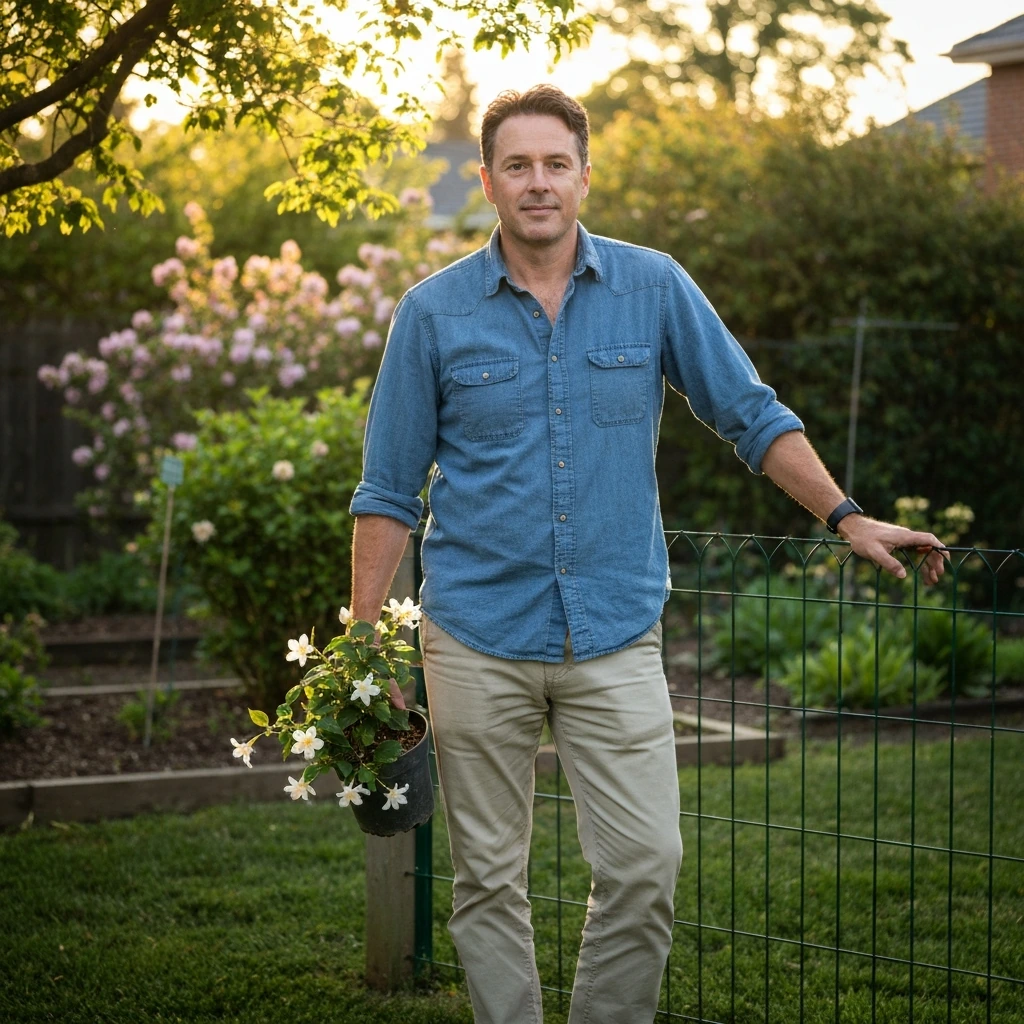
Gardenias can grow in Pennsylvania, but whether they survive long-term depends almost entirely on where in the state you live and which variety you plant. If you're wondering can gardenias grow in Washington state, the same zone thinking and cold protection strategies apply, but you'll need to match your local microclimate. In the warmest pockets of southeastern Pennsylvania (Zone 7a), a cold-hardy cultivar planted in a sheltered spot has a real shot at overwintering outdoors. In central Pennsylvania (Zones 6a and 6b), outdoor survival is possible but risky, and you'll need the right variety plus serious winter protection. In northern and mountainous regions (Zone 5b or colder), gardenias will not reliably survive winters in the ground, and containers brought inside are your best path to success.
Can Gardenias Grow in Pennsylvania? Zones, Types, Care Tips
Pennsylvania's Zones at a Glance: What That Means for Gardenias
Pennsylvania covers more climatic ground than most people realize. The USDA hardiness zones run from 5b in the highest elevations of the Poconos and north-central mountains all the way up to 7a in parts of Philadelphia and Delaware County. PlantMaps lists USDA hardiness zone(s) for Pennsylvania cities and counties, such as examples showing Zone 6b for Arnold City and Zone 5b through 7a across Bedford County USDA hardiness zones run from 5b ... up to 7a in parts of Philadelphia and Delaware County. That's a big difference in winter cold, and gardenias feel every degree of it. Standard gardenias (Gardenia jasminoides) are generally rated hardy to Zone 7 or 8, which means most of Pennsylvania is already pushing their limits.
| Region | Typical USDA Zones | Outdoor Gardenia Verdict |
|---|---|---|
| Southeast PA (Philadelphia metro, Delaware Co.) | 6b–7a | Possible with cold-hardy cultivar and site protection |
| South-central PA (Lancaster, York, Harrisburg) | 6a–6b | Risky outdoors; cold-hardy cultivars with heavy mulching required |
| Southwest PA (Pittsburgh metro) | 6a–6b | Similar to south-central; sheltered sites help |
| Central PA (State College, Altoona) | 5b–6a | Very difficult outdoors; container growing strongly recommended |
| Northern and mountain regions (Poconos, Potter Co.) | 5a–5b | Not feasible outdoors; containers only |
If you're in the Philadelphia suburbs or along the lower Susquehanna Valley, you're in the best position Pennsylvania offers for gardenias. Even then, a Zone 6b winter with a sharp cold snap can catch you off guard. I've seen gardeners in Chester County lose established gardenia shrubs to a single week of temperatures in the single digits. Zone matters, but so does the specific spot in your yard.
Pick the Right Variety First, This Is the Most Important Decision
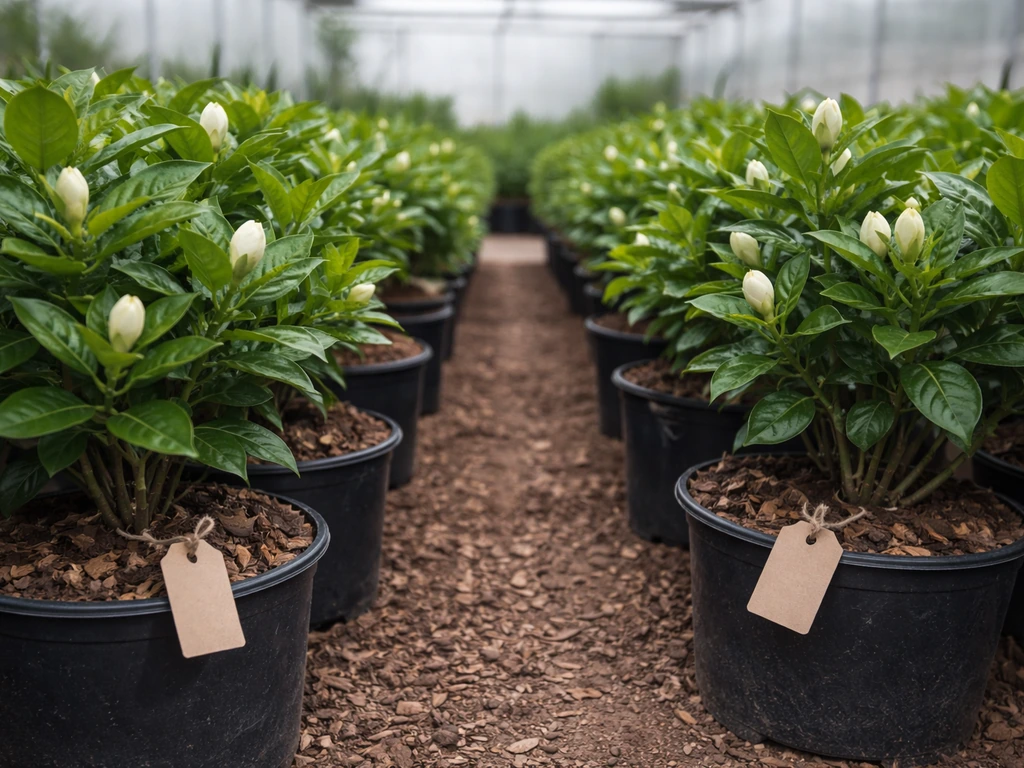
The gardenia most people picture, the big, fragrant white-flowered shrub common in Southern gardens, is typically Gardenia jasminoides in its standard form, rated hardy only to Zone 8. That plant won't survive a Pennsylvania winter outdoors, period. What you want are the cultivars specifically bred or selected for cold hardiness. These are the varieties worth seeking out if you're in Pennsylvania.
- 'Kleim's Hardy': One of the most cold-tolerant gardenias available, rated to Zone 6b and sometimes Zone 6a in protected spots. Smaller single flowers but extremely fragrant. A solid first choice for south-central and southeastern PA.
- 'Daisy': Another Zone 6b performer with good cold tolerance. Compact growth habit, which makes it easier to mulch and shelter.
- 'Frostproof': As the name suggests, it handles cooler temperatures better than standard varieties. Rated to Zone 7 but worth trying in a very sheltered Zone 6b location.
- 'Chuck Hayes': Bred specifically for cold hardiness, it's one of the few gardenias that has survived Zone 6 winters with proper protection. Double flowers and a spreading habit.
- 'Crown Jewel': A patented variety with reported cold hardiness into Zone 6. This one has shown good performance in Mid-Atlantic trials.
- Standard Gardenia jasminoides (without a specific hardiness cultivar name): Avoid planting this in the ground anywhere in Pennsylvania unless you're treating it as an annual.
If you're comparing Pennsylvania to neighboring states, the situation is similar to growing gardenias in New Jersey and Maryland, where the warmer southeastern zones give gardeners a fighting chance with the right cultivar. Virginia's warmer zones have a wider window for success, and Massachusetts and Connecticut face even tighter constraints than most of Pennsylvania.
How to Give Outdoor Gardenias a Fighting Chance Through Winter
Even with a cold-hardy cultivar, surviving a Pennsylvania winter outdoors requires smart siting and active protection. Gardenias have two main vulnerabilities in winter: root damage from soil freezing, and foliage and bud damage from cold, drying wind. You need to address both.
Site Selection
Plant your gardenia on the south or east side of the house, where it gets reflected warmth and is shielded from the northwest winds that push the coldest Pennsylvania air in January and February. A spot near a brick or masonry wall is ideal, the thermal mass helps buffer overnight lows. Avoid low-lying areas where cold air settles, and never plant in a frost pocket.
Mulching and Root Protection
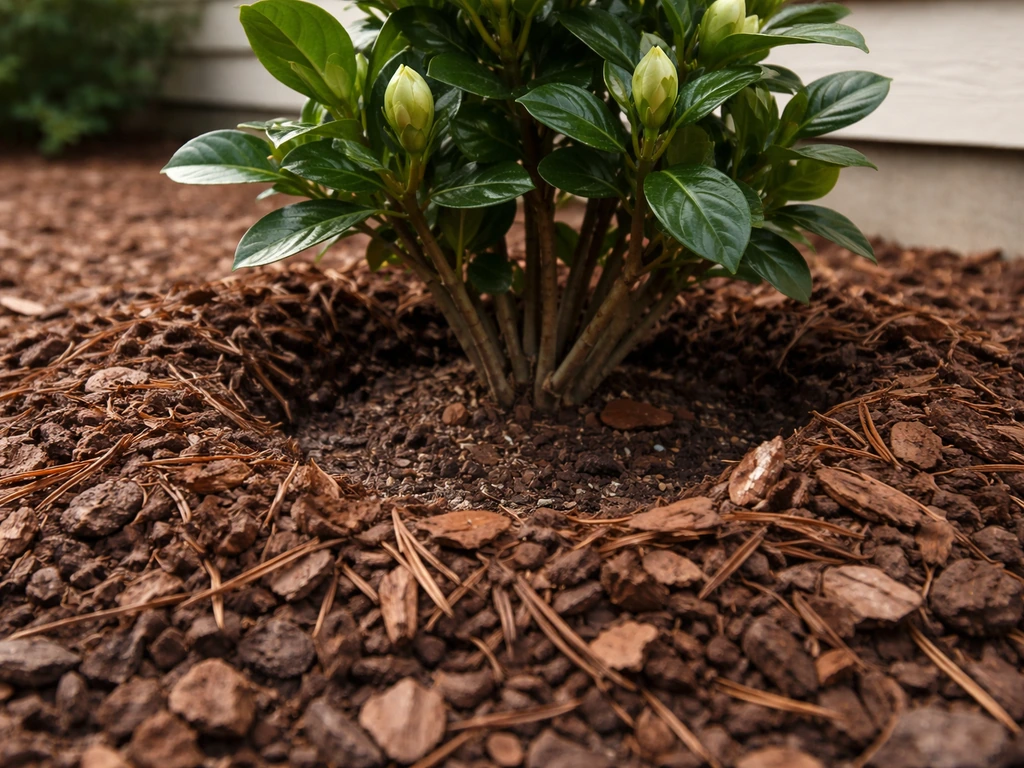
Apply 3 to 4 inches of pine bark or shredded pine needle mulch around the base before the ground freezes, typically by late October in most of Pennsylvania. Pull the mulch back a few inches from the actual stem to prevent rot. This layer insulates the roots from the worst cold and also helps maintain the slightly acidic soil moisture gardenias need. Do not use wood chip mulch from hardwood trees, it raises soil pH as it decomposes, which is the opposite of what gardenias want.
Wind and Frost Cloth
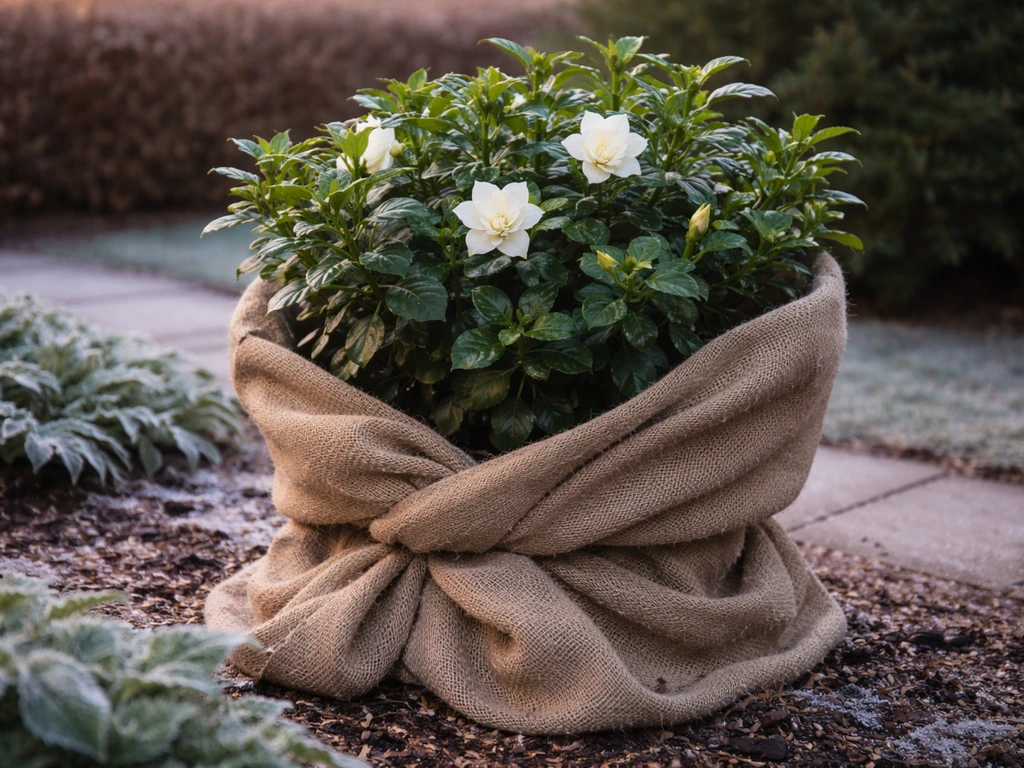
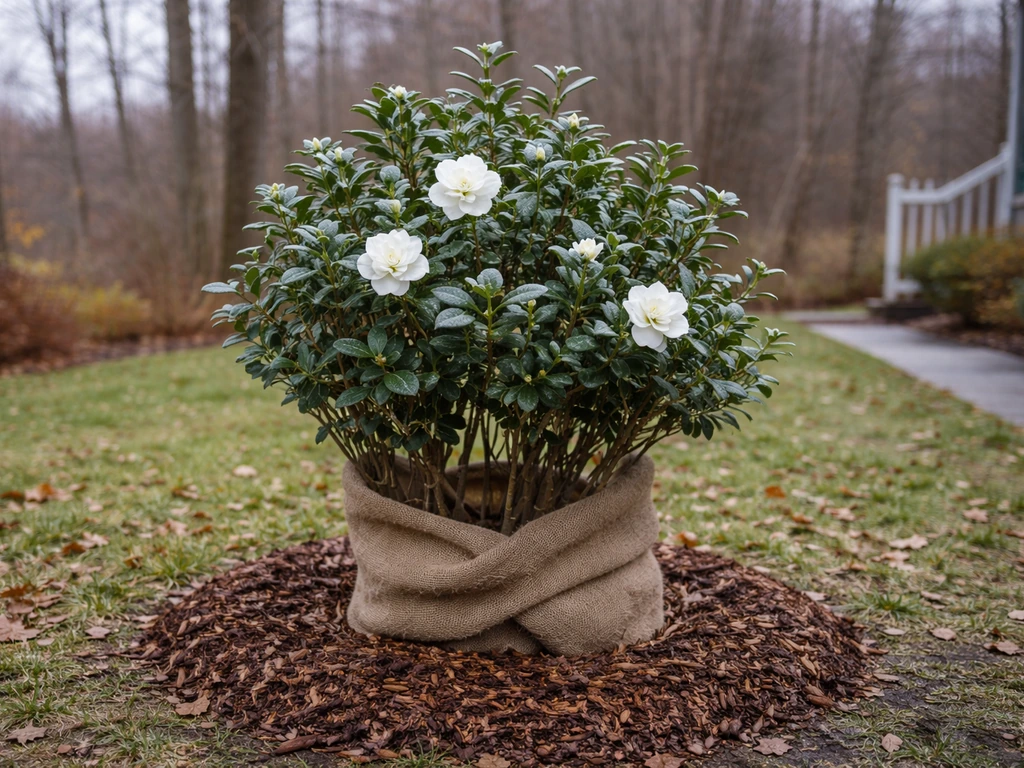
For the first few winters especially, wrap the plant loosely in burlap or frost cloth when temperatures are expected to drop below 15°F. Don't use plastic, it traps moisture and can do more harm than good. Remove the covering during mild spells so the plant can breathe. Some gardeners in the Philadelphia area build a simple wire cage stuffed with dried leaves around younger plants, which works well as an inexpensive insulation method.
What Gardenias Actually Need to Thrive in Pennsylvania Soil and Sun
Assuming your plant survives winter, the growing season conditions matter just as much for getting blooms and maintaining plant health. Pennsylvania soil conditions vary considerably, and gardenias are pickier than most shrubs.
Sunlight
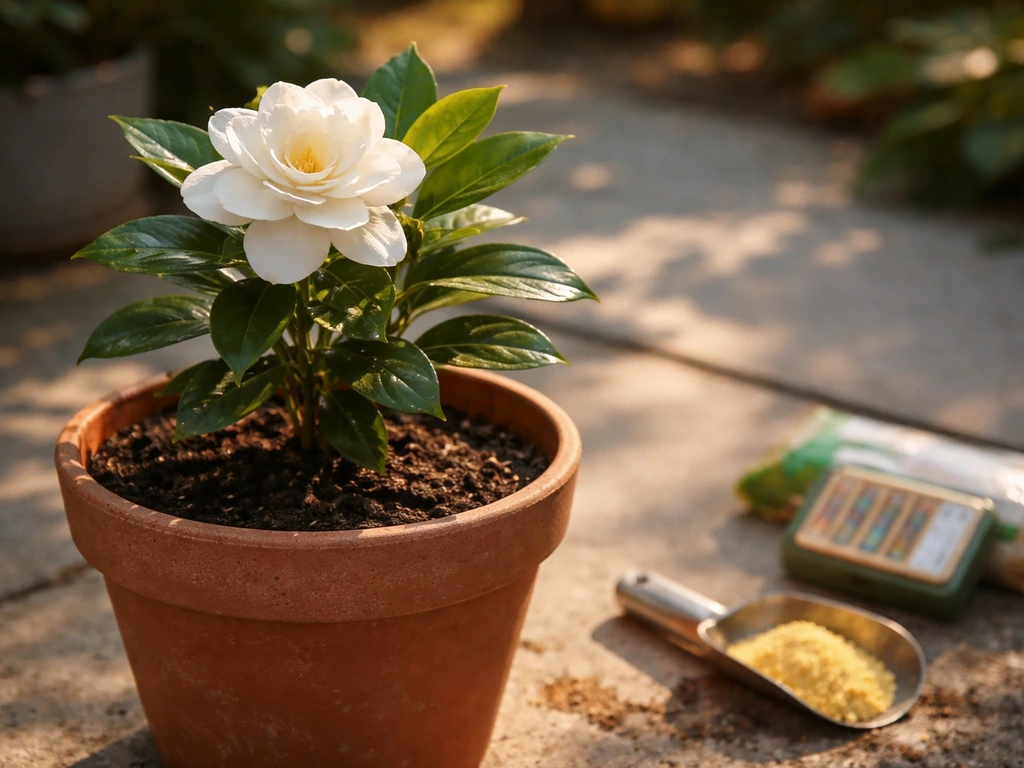
Gardenias prefer full sun to partial shade. In Pennsylvania, where summer humidity can be high but intense heat is less sustained than in the Deep South, full morning sun with some afternoon shade is often the sweet spot. Too much afternoon shade and you'll get leggy growth and fewer blooms. Too much intense afternoon sun in a hot summer can stress the plant and trigger bud drop.
Soil pH Is Non-Negotiable
Gardenias need acidic soil, pH between 5.0 and 6.0. This is one area where Pennsylvania gardeners have to pay attention, because much of the state's native soil ranges from moderately acidic to near-neutral depending on the region and past land use. Penn State Extension strongly advises getting a soil test before planting anything pH-sensitive, and gardenias are exactly that kind of plant. If your soil reads above 6.5, iron and manganese become less available to the plant, which leads to yellowing leaves (chlorosis), one of the most common problems Pennsylvania gardeners report with gardenias. Amend with sulfur or use an acidifying fertilizer, and top-dress with pine bark mulch to help maintain pH over time. Avoid liming the soil around gardenias.
Watering and Moisture
Gardenias need consistent moisture but cannot tolerate waterlogged roots. Pennsylvania's variable rainfall means you'll sometimes need to supplement during dry spells, particularly in July and August. One important note for container growers: if you're using tap water in parts of Pennsylvania where the water has high alkalinity, repeated watering can gradually raise soil pH and cause nutrient lockout. Using rainwater or acidified water for container gardenias makes a real difference in plant health over time, Penn State Extension's guidance on irrigation water alkalinity is worth reviewing if you notice yellowing despite correct soil amendments. Penn State Extension also notes that interpreting irrigation water tests for pH and alkalinity can help prevent plant performance problems caused by Pennsylvania water supplies.
Outdoors in the Ground vs. Containers: What Actually Works By Zone
This is the decision most Pennsylvania gardeners need to make before buying a plant. Here's how to think about it based on your zone.
| Your Zone | Best Approach | Key Notes |
|---|---|---|
| Zone 7a (SE PA warmest spots) | In-ground with cold-hardy cultivar | Choose 'Kleim's Hardy' or 'Chuck Hayes'; sheltered south-facing site; mulch heavily |
| Zone 6b (Philadelphia suburbs, parts of Lancaster/York) | In-ground possible but use containers as backup | Cold-hardy cultivar essential; protect in severe winters; container gives you flexibility |
| Zone 6a (Harrisburg, Pittsburgh, south-central) | Container growing preferred; in-ground very risky | Bring containers in before first hard freeze; overwinter indoors in bright cool space |
| Zone 5b–6a (central PA, Poconos edges) | Containers only | Move indoors before temps drop below 20°F; never leave outdoors all winter |
| Zone 5a–5b (northern, mountain regions) | Containers and indoor overwintering | Treat as a houseplant that summers outdoors; no realistic path to in-ground success |
Container growing is genuinely viable and not a consolation prize. A gardenia in a 12- to 16-inch pot with acidic potting mix (look for mixes formulated for azaleas and camellias) can bloom beautifully on a Pennsylvania porch from late May through September. In October, move it to a bright indoor space, a south-facing window or a room that stays between 60 and 65°F at night. Gardenias prefer cooler night temperatures to set buds, so a cool bright room actually encourages blooming the following season better than a warm dark basement.
Keeping Gardenias Healthy: Maintenance and Common Problems
Even when everything goes right with site and soil, Pennsylvania gardeners run into a predictable set of problems with gardenias. Knowing what to look for makes all the difference.
Yellowing Leaves (Chlorosis)
Yellow leaves with green veins are the classic sign of iron deficiency caused by high soil pH. Before reaching for iron supplements, test your soil pH. If it's above 6.0, correcting the pH is the real fix. Applying chelated iron as a foliar spray can give temporary green-up while you work on the underlying pH problem, but it's not a permanent solution.
Bud Drop
Gardenias are notorious for dropping flower buds before they open. In Pennsylvania, the most common triggers are temperature swings (very common in spring and fall here), low humidity indoors during winter, and inconsistent watering. For outdoor plants, avoid fertilizing after late July, pushing new growth late in the season makes the plant less cold-hardy going into fall. For indoor containers, mist the foliage regularly or set the pot on a tray of pebbles with water to boost humidity.
Cold Damage
If you see brown, crispy foliage after a cold snap, don't panic and don't prune immediately. Wait until late March or early April to assess what's truly dead. Gardenias often look devastated after a hard freeze but push new growth from the base or from protected buds once the weather warms. Scratch the stem with your fingernail, green under the bark means the stem is alive. Prune only what's clearly dead once new growth confirms where the plant is viable.
Fertilizing
Use an acidifying fertilizer formulated for azaleas, rhododendrons, or camellias. Feed in April, again in June, and stop by the end of July. In Pennsylvania, fertilizing in August or September encourages tender new growth that won't harden off before frost, which is a common mistake that costs gardeners their plants.
Where to Buy the Right Gardenia for Pennsylvania (and What to Ask)
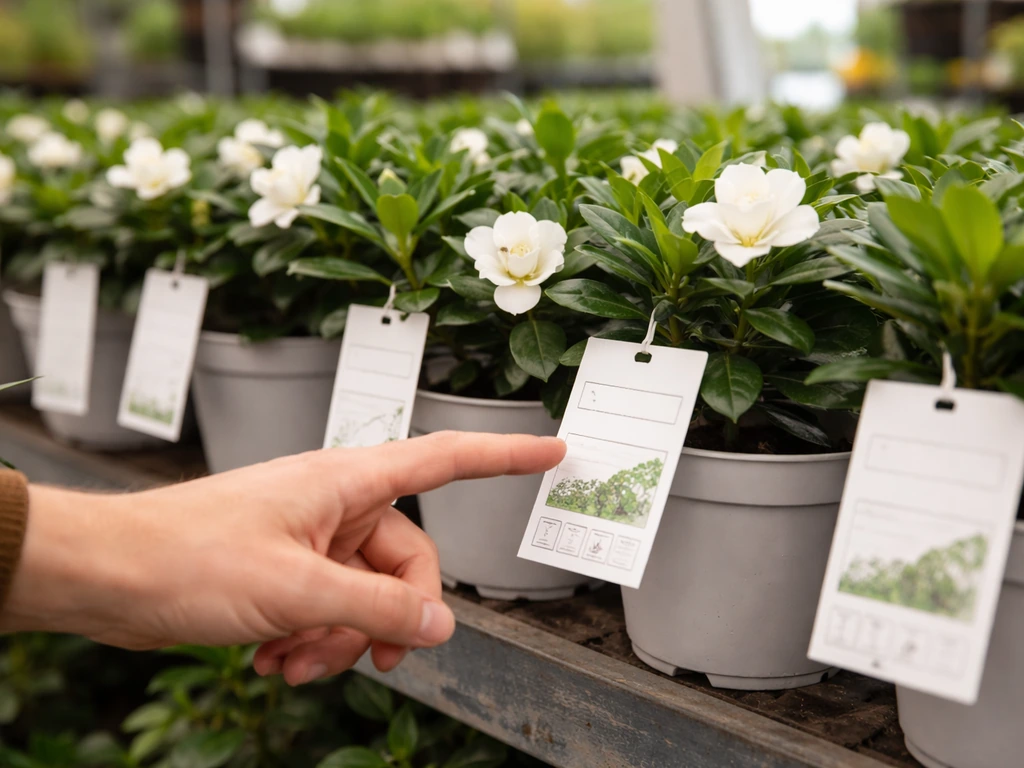
This is where a lot of Pennsylvania gardeners go wrong. The gardenias at big-box garden centers are often unlabeled or labeled only as 'Gardenia jasminoides' without any cultivar name, which usually means they're standard warm-climate varieties with no cold-hardiness rating. Buying one of those and planting it in Zone 6b Pennsylvania is a setup for disappointment.
Here's what to look for and ask when buying:
- Ask specifically for the cultivar name, not just 'gardenia.' If the staff can't tell you the cultivar, walk away or buy it only for a container you'll bring indoors.
- Look for 'Kleim's Hardy,' 'Chuck Hayes,' 'Crown Jewel,' or 'Daisy' on the label — these are the names with documented cold performance in Zone 6 conditions.
- Check the hardiness rating on the tag. You want to see Zone 6b or lower (colder) listed. Zone 7 or 8 means it's not suited for most of Pennsylvania outdoors.
- Shop at independent nurseries rather than big-box stores when possible. Local nurseries in the Philadelphia, Lancaster, and Pittsburgh areas are more likely to stock regionally appropriate selections and can give you zone-specific advice.
- Consider mail-order nurseries that specialize in cold-hardy broadleaf shrubs — they typically list USDA zone ratings clearly and offer cultivars that local stores may not carry.
- If ordering online, confirm the plant is rated for at least one zone colder than your own as a safety buffer, especially if you're in Zones 6a or 6b.
One practical tip: buy your gardenia in spring, not fall. This gives it a full growing season to establish roots before facing its first Pennsylvania winter. A plant that's had six months to settle into your soil will handle cold stress much better than one planted in September with barely a month to get established.
Pennsylvania sits in a challenging middle ground for gardenias, warmer than states like Massachusetts or Connecticut where gardenias are almost exclusively a container plant, but colder than the Mid-Atlantic zone where outdoor gardenia culture is genuinely low-risk. Gardenias in Connecticut are often grown as container plants because winters are typically harsher for outdoor survival Massachusetts or Connecticut where gardenias are almost exclusively a container plant. With the right cultivar, the right site, and a solid winter protection plan, gardenias are achievable in southeastern Pennsylvania and worth attempting with a container backup strategy anywhere else in the state. If you're wondering whether gardenias can grow in NJ, the same zone and winter-protection logic applies. The failure rate among Pennsylvania gardeners comes down almost entirely to buying the wrong variety, fix that first, and everything else becomes manageable.
FAQ
Can gardenias grow in Pennsylvania as indoor plants year-round, or will they still need outdoor time?
Yes, but only with a cold-hardy cultivar and a real indoor overwintering plan. A window that gets afternoon sun can still trigger stress, so use bright light without baking the pot, and keep nights cooler (around 60 to 65°F) to reduce bud drop.
What’s the best way to choose a yard location in Pennsylvania beyond just “south or east side”?
Pick a spot that stays slightly warmer and less windy than the rest of your yard, not just any south-facing corner. If you cannot avoid nearby tree lines or walkways that blast northwest winds, plan on stronger winter wrapping plus a sheltered microclimate like a courtyard or behind a solid fence.
If my soil test shows I’m close to the right pH, should I still worry about chlorosis (yellow leaves)?
A soil test is still the safest first step. If pH is only slightly high, you may be able to correct it over time with pine bark top-dressing and appropriate fertilizers, but if it is well above 6.5, expect iron problems to keep returning unless you actively lower pH.
How should watering change in Pennsylvania in late fall and during winter for gardenias?
In ground, stop supplemental irrigation in early fall unless you are in a prolonged dry spell, because overly wet, warm soil can increase winter injury when cold arrives. For containers, water as needed but avoid leaving the pot sitting in saucers, and make sure the mix drains freely before freeze periods.
Does the recommended pine-needle mulch approach work the same for container-grown gardenias in Pennsylvania?
It depends on the container. For in-ground plants, pine mulch should sit at a few inches thickness and be pulled back from the stem to prevent rot. For containers, use fresh acidic potting mix and avoid stacking mulch against the trunk, instead insulate by wrapping the pot sides or using an insulating collar.
What should I ask for at the nursery if I want a gardenia that can survive Pennsylvania winters?
Yes, but “big-box” labels like “Gardenia jasminoides” are often incomplete. When you buy, ask for the cultivar name and any stated cold tolerance or root-hardy rating, not just the species name.
When is the safest time to prune gardenias in Pennsylvania after a winter freeze?
For most Pennsylvania gardeners, the safest approach is to treat pruning as a spring activity only after you can judge which stems truly survived. If you prune too late, you risk cutting off protected buds and encouraging new growth that is more vulnerable before winter.
If my gardenia looks dead after winter, how do I tell what to remove versus what to save?
Often, it is not actually dead. Wait until late March or early April, then scratch the bark lightly, green under the surface means it is alive. If a stem is brown and dry all the way through, remove it, but keep protected, lower growth if it still looks viable.
How can I tell whether my yellow leaves are from pH and not from overwatering or a fertilizer issue, especially in containers?
Yes, using high-alkalinity tap water can keep pushing container soil pH upward even if you started with acidic mix. If you see yellowing despite recent soil amendment, switch to rainwater or use acidified water, then recheck potting mix pH periodically because the problem can return.
My gardenia drops buds before they open. What are the most common causes in Pennsylvania besides cold snaps?
That can happen when nighttime temperatures stay too warm, humidity is low, or watering swings. In Pennsylvania, indoors during winter is a common trigger, so increase humidity around the plant (misting and pebble tray) and keep watering steady rather than letting the root ball dry out then flood.
Can I use a container strategy even if I plant the gardenia in the ground first?
If the cultivar is borderline for your zone, choose the container route as a backup. A 12- to 16-inch pot with an azalea or camellia-style acidic mix is workable, but you still need insulation for roots and consistent light during indoor overwintering, not a dark basement routine.
If my gardenia has leaf problems and I’m not sure if it’s nutrient or disease, what quick checks should I do first?
Fungus and nutrient stress can both show up as leaf spotting or discoloration, but gardenias’ most reliable early indicator in Pennsylvania is pH-related yellowing. Before treating with sprays, confirm soil or potting mix pH and check that drainage is adequate, because wet feet can worsen multiple issues at once.