
Gardenias can grow in New York, but only in specific parts of the state and only if you match your approach to your zone. Gardenias can also be grown in Connecticut, but you will need to use a similar zone-aware approach and protect them from winter cold. In New York City, Long Island, and the Lower Hudson Valley (USDA zones 6b–7b), you have a real shot at growing gardenias in containers year-round and, in the warmest microclimates, even in the ground with serious winter protection. Anywhere north of that, including the Catskills, Finger Lakes, Capital Region, and the Adirondacks (zones 3–6a), gardenias will not survive a typical winter outdoors. In Massachusetts, the winter cold is usually the deciding factor, so gardeners typically rely on containers and indoor overwintering grow gardenias in Massachusetts. For those areas, containers that come inside are the only realistic path.
Can Gardenias Grow in New York? Zones, Tips, and Overwintering
What zone are you in, and what does that actually mean for gardenias?
The USDA hardiness zone map divides areas by their average annual extreme minimum winter temperature, in 5°F half-zone increments. Gardenias are generally rated as hardy to zone 7 (minimum temps around 0°F to 10°F) for the toughest cultivars, with most varieties preferring zone 8 and above (10°F to 20°F minimums). That immediately tells you a lot about New York.
| NY Region | Typical USDA Zone | Gardenia Verdict |
|---|---|---|
| Adirondacks / Northern NY | 3b–5a | Container only, must winter indoors |
| Finger Lakes / Capital Region | 5b–6a | Container only, must winter indoors |
| Catskills / Hudson Valley (upper) | 5b–6b | Container only, must winter indoors |
| Lower Hudson Valley / Westchester | 6b–7a | Container preferred; in-ground possible with heavy protection |
| New York City / Bronx / Brooklyn | 7a–7b | Container easiest; sheltered in-ground sites are feasible |
| Long Island (North Shore) | 7a | Container easiest; in-ground possible with protection |
| Long Island (South Shore / Forks) | 7b | Best odds in NY; sheltered in-ground can work |
Urban heat island effect in NYC can push some neighborhoods firmly into zone 7b, which genuinely changes what is possible. If you are in a south-facing courtyard in Brooklyn or a sheltered spot in Queens, you are growing in a warmer microclimate than your official zone suggests. That is worth paying attention to.
What New York's climate actually does to gardenias
Winter cold is the main problem
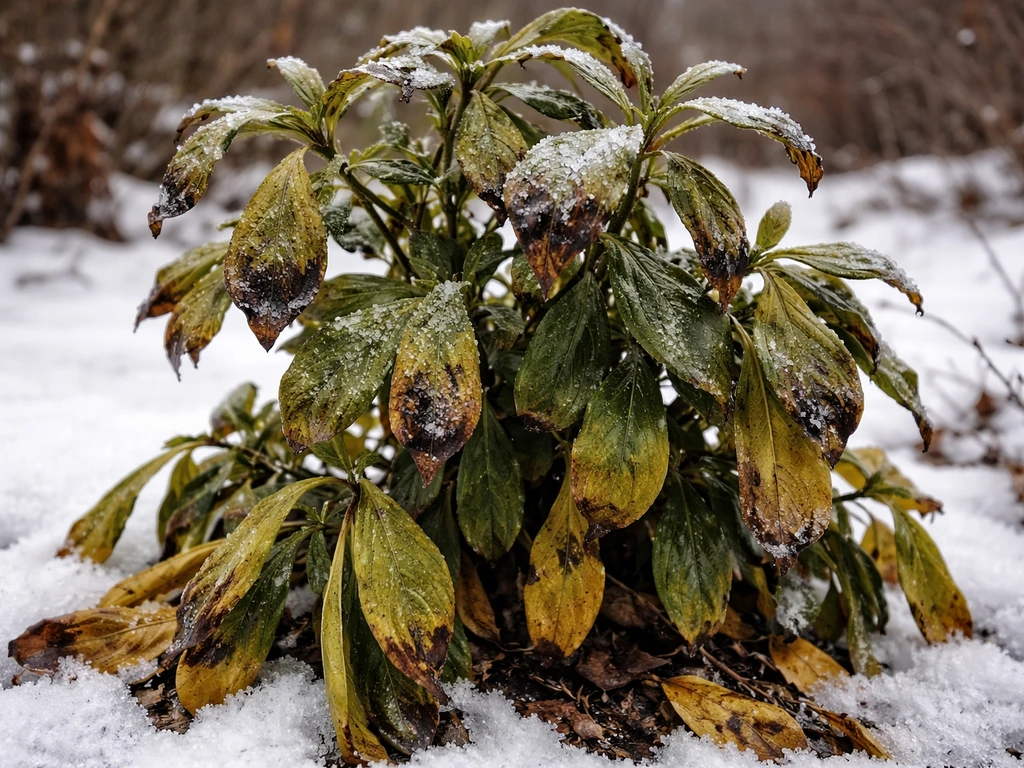
Most gardenias start dropping leaves and dying back when temperatures hit 15°F, and a night at 0°F will kill even a well-established in-ground plant outright in most of New York. The Adirondacks regularly see lows of -20°F to -30°F in winter. Even NYC sees occasional dips below 10°F in a harsh winter. That is the core challenge: gardenias evolved in the humid subtropics and simply have no cold tolerance built in.
Summer heat and humidity actually help
Here is the good news people often miss: New York summers, especially in the city and on Long Island, are genuinely good for gardenias. Temperatures in the 80s, moderate to high humidity, and long sunny days are exactly what gardenias want during the growing season. If you can solve the winter problem, the summer growing conditions in the southern half of the state are quite favorable. Upstate New York has shorter, cooler summers, which means less growth and fewer blooms even when the plant survives.
Air quality and dry indoor air in winter
If you move gardenias indoors for winter, heated indoor air in New York homes is very dry, typically dropping to 20–30% relative humidity when the heat runs constantly. Gardenias want 50–60% humidity or higher. This is one of the biggest reasons container gardenias struggle when overwintered inside: the plant is technically protected from frost but slowly stressed by dry air, leading to bud drop and pest outbreaks.
How to actually grow gardenias successfully in New York
Choosing your site
If you are in zone 7 or warmer and want to try in-ground, pick the most protected microclimate you have: south or southeast facing, against a masonry wall that holds heat, sheltered from north and west winds. Avoid frost pockets and low spots where cold air settles. Full sun to partial afternoon shade is ideal. In zones 6 and below, do not attempt in-ground; grow in a container that you can move.
Soil matters a lot
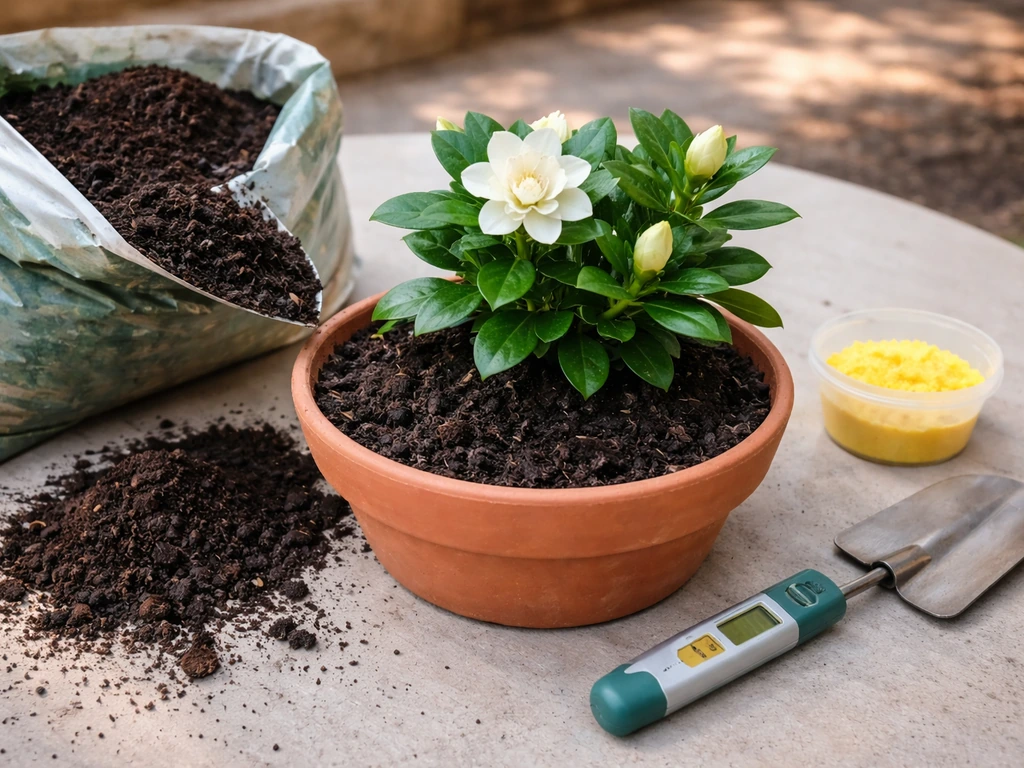
Gardenias need acidic, well-draining soil with a pH between 5.0 and 6.0. Most New York garden soil is too alkaline for them without amendment. If planting in ground, work in plenty of acidic organic matter (peat moss, composted pine bark, elemental sulfur) before planting. For containers, use a quality acidic potting mix formulated for azaleas and camellias. Check pH with an inexpensive meter and retest each spring, because alkaline tap water will gradually push pH up over time.
Light, water, and drainage
Gardenias want at least 6 hours of direct sun daily during the growing season. Morning sun with some afternoon protection works well in hotter inland areas. Water consistently to keep soil evenly moist but never waterlogged. In containers, this means checking moisture every 1–2 days in summer heat. Poor drainage is a fast way to kill a gardenia, whether in ground or in a pot, so make sure any container has large drainage holes and that in-ground sites do not sit wet.
Best cultivars and buying tips for New York gardeners
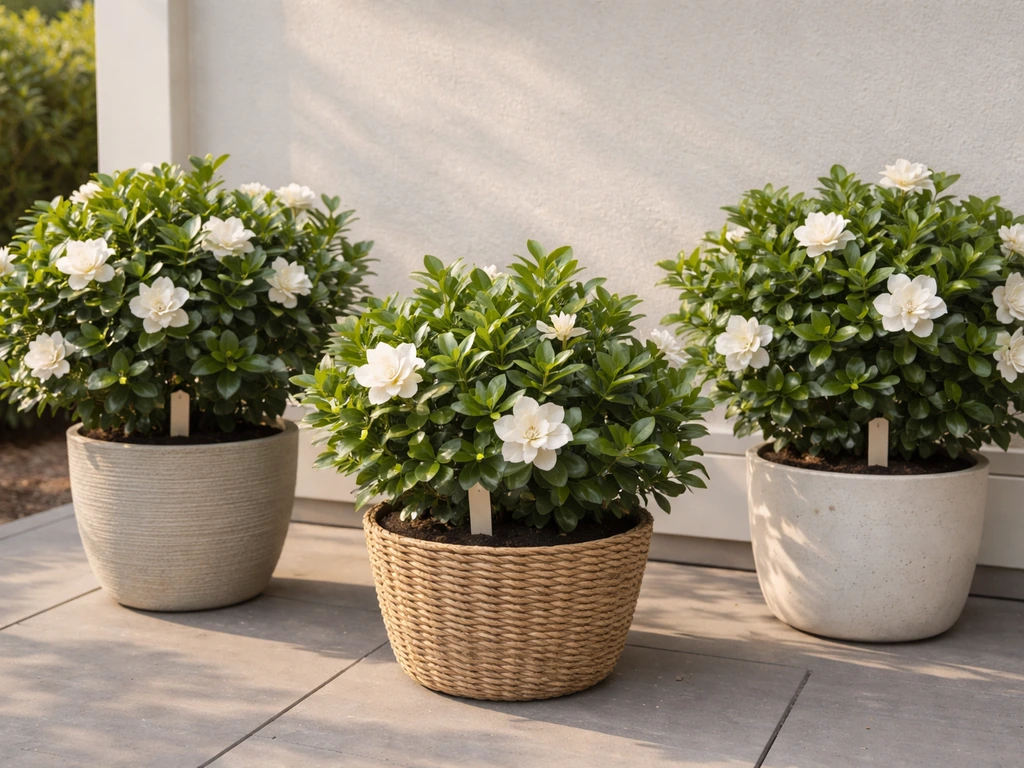
Not all gardenias are equal when it comes to cold tolerance. For New York, prioritizing hardier cultivars gives you more margin for error.
- Gardenia jasminoides 'Kleim's Hardy': One of the most cold-tolerant cultivars available, rated to zone 6b–7. Compact grower (2–3 feet), single white flowers. Best choice if you want to try in-ground in zone 7.
- Gardenia jasminoides 'Chuck Hayes': Cold-hardy to zone 6b in protected spots, double flowers, more reblooming than many others. A reliable choice for Long Island and NYC containers or sheltered in-ground.
- Gardenia jasminoides 'Crown Jewel': Marketed as hardy to zone 6, low spreading habit. Good container candidate.
- Gardenia jasminoides 'August Beauty': Classic double blooms, strong fragrance, but only hardy to zone 7–8. Best as a container plant throughout New York.
- Standard or 'Mystery' gardenias: Beautiful and fragrant but zone 8–10 plants. Grow in containers; do not attempt in-ground anywhere in New York.
When buying, look for plants at local nurseries rather than big-box stores. Local independent nurseries in the NY area are more likely to stock cultivars suited for northeastern climates. Buy in spring so the plant has a full growing season to establish before any winter challenge. Avoid purchasing large gardenias at end-of-season sales unless you have a plan for overwintering immediately: a stressed plant going into its first New York winter is a bad combination.
Container vs. in-ground is a real decision. Containers give you total control and eliminate winter kill risk everywhere in New York. In-ground planting in zone 7 areas is satisfying when it works, but you accept that a bad winter (think polar vortex) can still kill the plant. For most New York gardeners outside of the southern tip of Long Island, containers are simply the more reliable investment.
Seasonal care plan for New York
Spring (April–May)
Move container gardenias back outside after the last frost date, which in NYC and Long Island is typically mid to late April and in the Lower Hudson Valley around late April to early May. Repot if rootbound, refresh the top layer of soil, and begin fertilizing with an acid-formula fertilizer. Check pH and adjust if needed. For in-ground plants, remove winter mulch gradually as temperatures warm and assess any winter dieback by pruning to live wood.
Summer (June–August)
This is prime growing and blooming season. Water consistently, feed every 2–4 weeks with an acidic fertilizer (iron-enriched formulas help prevent yellowing), and watch for pests. Do any light shaping pruning right after the first bloom flush, but avoid heavy pruning in summer since you will cut off forming buds. If container plants are in full sun during a heat wave, some afternoon shade prevents scorching.
Fall (September–October)
Stop fertilizing by early September so the plant hardens off properly. For container plants, bring them inside before nighttime temperatures drop below 50°F consistently, typically by mid-October in NYC and Long Island and earlier upstate. Do not wait for a frost warning; the transition should be gradual. For in-ground plants in zone 7, apply a 4–6 inch layer of mulch (shredded bark or pine needles) over the root zone after the ground cools. Wrap the plant loosely in burlap once temperatures are consistently below 40°F.
Winter (November–March)
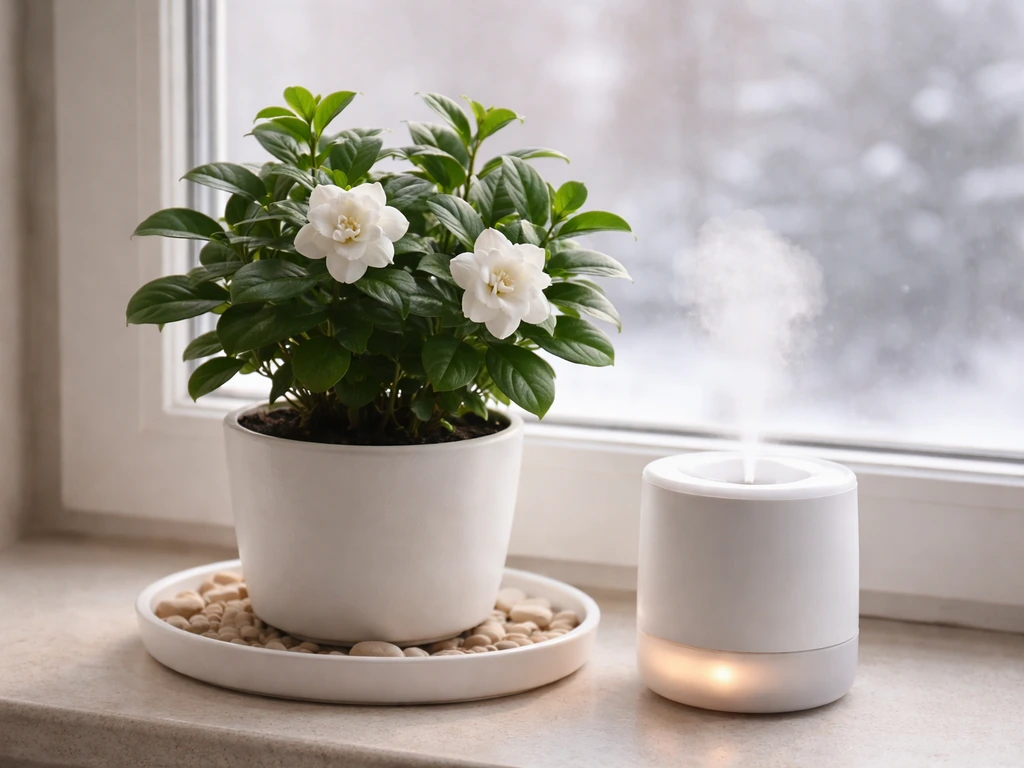
Container plants indoors need a cool, bright location, ideally 60–65°F with as much light as possible (south-facing window or a grow light). Run a humidifier nearby or use a pebble tray filled with water under the pot to raise local humidity. When overwintering indoors, Gardenia guides commonly recommend keeping gardenias in bright light and managing humidity, since dry indoor air can stress the plants blank" rel="noopener noreferrer">Run a humidifier nearby or use a pebble tray filled with water under the pot to raise local humidity.. Water sparingly, just enough to keep the root ball from drying out completely. Do not fertilize. Watch closely for scale, spider mites, and whitefly, which thrive in dry indoor conditions. In-ground plants with burlap wrapping in zone 7 are largely on their own; check that mulch has not been displaced by wind or animals.
Common problems New York gardeners run into
| Problem | What It Looks Like | Fix |
|---|---|---|
| Iron chlorosis | Yellow leaves with green veins, especially on new growth | Lower soil pH; apply chelated iron or acidic fertilizer |
| Bud drop | Buds form then fall off before opening | Usually caused by temperature fluctuation, low humidity, or over/underwatering; stabilize conditions |
| Scale insects | Sticky residue on leaves, brown bumps on stems | Spray with horticultural oil; repeat in 10 days; inspect regularly indoors in winter |
| Spider mites | Fine webbing, stippled or bronzed leaves | Increase humidity; spray with insecticidal soap or neem oil; more common in dry indoor winter air |
| Sooty mold | Black coating on leaves | Usually follows a scale or aphid infestation; treat the pest first, then wipe leaves clean |
| Root rot | Wilting despite moist soil, brown mushy roots | Check drainage; let soil dry slightly between waterings; repot with fresh well-draining mix |
| Winter kill (in-ground) | No leafing out in spring, brittle brown stems | Prune to live wood; if roots survive, plant may resprout; consider containerizing next time |
Yellowing leaves are the single most common complaint from New York gardenia growers, and nine times out of ten it is iron chlorosis caused by soil pH drifting too high. Clemson HGIC notes that gardenias perform best in soil with a pH around 5.0 to 6.0, and when iron is unavailable, leaves can turn pale green to yellow due to iron chlorosis acid-loving plants that grow best around a soil pH of 5.0 to 6.0. Before assuming the plant is diseased, test your pH. If it is above 6.5, that is almost certainly your problem, and it is fixable.
How to decide right now: plant or containerize?
Here is a simple way to make the call based on where you are in New York today. If you are in zone 7a or warmer (NYC, most of Long Island, lower Westchester), you have two real options: containers for guaranteed survival, or a protected in-ground spot if you commit to winter mulching and burlap. If you are in zone 6b (lower Hudson Valley, some North Shore spots), containers are strongly recommended, with 'Kleim's Hardy' or 'Chuck Hayes' as your best bets. For example, the cultivar ‘Chuck Hayes’ is often described as more cold-hardy than typical gardenia cultivars, with sheltered Zone 6 possible blank" rel="noopener noreferrer">‘Kleim's Hardy' or 'Chuck Hayes' as your best bets. Anywhere in zone 6a and colder, the answer is containers only, bring them inside before October 15, and put them near your best window.
The honest truth is that container growing is the smarter long-term play for almost everyone in New York. You protect your investment, you can optimize soil pH precisely, and you never lose a plant to a freak cold snap. The gardeners I have seen succeed with in-ground gardenias in New York are the ones in the warmest urban microclimates with masonry walls and serious winter prep habits. If that is not your situation, a beautiful container gardenia that you overwinter indoors will give you more flowers and less heartbreak.
If you are comparing notes with gardeners in nearby states: the calculus is slightly easier in New Jersey and parts of Virginia, and noticeably harder in Massachusetts and Connecticut, which share New York's northern cold challenge. New York sits in the middle of that spectrum, with enough warm zones in the southern part of the state to make gardenias genuinely rewarding if you are strategic about where and how you grow them.
- Look up your specific zip code on the USDA hardiness zone map to confirm your zone (not just your general region).
- Decide: container or in-ground? Use the zone table above. When in doubt, choose container.
- Buy a cold-hardy cultivar like 'Kleim's Hardy' or 'Chuck Hayes' from a local nursery this spring.
- Get an acidic potting mix and a soil pH meter before you plant.
- Mark your calendar to move containers inside before mid-October and back out after last frost in spring.
- Set up a humidifier or pebble tray for your indoor winter spot now, before the plant needs it.
FAQ
What is the lowest temperature where gardenias in New York can still survive if they are in-ground with winter protection?
Even with wrapping and mulch, many gardenias are unreliable when you get sustained lows near or below 0°F. In New York, the safer plan is to treat 0°F as a hard risk threshold, and consider your setup a “maybe” below about 15°F rather than a guaranteed survival system.
If I want to grow gardenias outdoors in winter, how do I know I picked the right spot in my yard?
Avoid low areas where cold air collects (frost pockets), and look for a location that stays warmer longer in winter daylight. Practical test, feel the ground near the plant at first light during cold snaps, warmer spots tend to correlate with better winter survival.
My gardenia starts yellowing even though I amended the soil, what’s the next thing to check?
Re-test pH and also inspect drainage and root health. If water sits or the potting mix stays soggy, roots can struggle and you can see yellowing that looks like nutrient issues, so confirm the soil is evenly moist but never waterlogged.
How often should I water container gardenias in New York winters if I overwinter indoors?
Water sparingly but don’t let the root ball fully dry out. A good rule is to water only after the top inch of mix feels dry, and use the light level, temperature, and pot size to adjust frequency.
Will tap water ruin gardenias in New York over time?
It can, especially if it’s hard or alkaline. Since alkaline water gradually raises pH, use a pH meter to track changes each spring, and consider temporarily switching to rainwater or filtered water if you repeatedly see pH creep above your target range.
Do I need to repot container gardenias in New York every year?
Not necessarily. Repot when the plant is rootbound or when the mix breaks down, typically every 2 to 3 years. In the off-season, refresh the top layer annually, then retest pH before heavy feeding.
Can I keep a container gardenia outside in late fall if days are warm?
In most of New York, yes for daytime exposure, but avoid leaving it outdoors once nighttime temperatures drop consistently toward the 40s. Gradually transition earlier, because sudden cold can shock buds and trigger leaf drop even if the plant isn’t fully killed yet.
What’s the difference between yellowing from iron chlorosis and stress from dry indoor air?
Iron chlorosis usually correlates with persistently high pH and new growth turning pale yellow, while dry-air stress often comes with bud drop, spider mite buildup, and overall dullness. If you see yellowing, test pH first before assuming it’s only an indoor humidity problem.
If my gardenia drops buds or leaves after I bring it indoors, is that always fatal?
Usually it’s recoverable, but it signals stress, most often low humidity or a drastic light change. Move it to the brightest available spot, keep humidity closer to 50 to 60 percent, and avoid fertilizing until it stabilizes.
Which hardy cultivars should I consider for New York if I’m in zone 6b or warmer?
For zone 6b, the article’s best-fit choices are ‘Kleim’s Hardy’ and ‘Chuck Hayes.’ For zone 7 and warmer, you still want the hardier end of the cultivar range, because a single unusually cold winter can wipe out less cold-tolerant varieties.