
Gardenias can grow in Massachusetts, but you need to go in with realistic expectations. In the warmer coastal and eastern parts of the state (zones 6a and 6b), a cold-hardy cultivar planted in a protected spot has a genuine shot at surviving outdoors long-term. In central Massachusetts (mostly zone 6a), you can push your luck with the right variety and heavy winter protection. In western Massachusetts (zone 5b), outdoor survival is a real gamble, and growing gardenias in containers you bring indoors each fall is the smarter move. This is not a plant that thrives effortlessly here the way it does in the South, but it is absolutely doable if you match the right variety to the right spot.
Can Gardenias Grow in Massachusetts? Zones, Varieties, Tips
Marcus Hartwell
14 May 2026
Can gardenias actually survive Massachusetts winters?
Standard gardenias (Gardenia jasminoides) are native to subtropical Asia and are typically rated for zones 7 or 8 and warmer. Massachusetts sits mostly in zones 5b through 6b, which means winter lows can swing anywhere from about -15°F in the Berkshires to just below 0°F along the South Shore and Cape Cod. That's well outside what a typical gardenia can handle without help. The challenge is not just the lowest temperature on record, but the repeated freeze-thaw cycles, dry winter winds, and long cold periods that Massachusetts winters routinely deliver.
That said, 'typical gardenia' is doing a lot of work in that sentence. Breeders have developed cultivars specifically bred to push hardiness into zones 6 and sometimes even 5b. Those varieties change the conversation for Massachusetts gardeners considerably. The honest answer is: standard gardenias will almost certainly die in a Massachusetts winter without serious intervention, but the right cold-hardy cultivars, planted correctly, can survive and bloom in the eastern half of the state.
The cold-hardy cultivars worth considering
Not all gardenias are created equal when it comes to cold tolerance, and variety selection is probably the single biggest decision you will make. Here are the cultivars that come up most often for cold-fringe gardening and that are worth looking for at your local nursery:
- 'Kleim's Hardy': One of the most frequently cited cold-tolerant gardenias, this compact single-flowered cultivar has received attention from the Royal Horticultural Society for its relative cold hardiness. It stays smaller than many gardenias (usually 2 to 3 feet tall), which actually helps with winter protection. Worth trying in zone 6a and 6b locations.
- 'Frostproof': Another commonly recommended cold-hardy selection, often listed for zones 6 to 11. It produces classic double white blooms and has a reputation for tolerating cooler temperatures better than standard varieties. A solid choice for eastern Massachusetts.
- 'Chuck Hayes': Developed specifically for cold hardiness, this semi-double flowered cultivar is often recommended for zone 6 gardens. It tends to rebloom, which is a nice bonus if you manage to get it through the winter.
- 'Daisy': A compact double-flowered cultivar sometimes marketed for zone 6, useful in protected spots in eastern and central Massachusetts.
- Standard Gardenia jasminoides varieties (unlabeled or labeled for zones 7-8): Skip these entirely for outdoor planting in Massachusetts. They may look beautiful at the garden center, but they are not built for New England winters.
When you are shopping, look specifically for the words 'cold hardy,' 'zone 6,' or a named cultivar from the list above. A generic 'gardenia' with no cultivar name is almost certainly not going to make it through a Worcester winter.
Where in Massachusetts do gardenias have the best shot?
Massachusetts spans more climate variation than most people realize, and your zip code matters a lot here. Western Massachusetts (the Berkshires and Pioneer Valley) sits mostly in zone 5b, where average winter lows can dip to -10°F to -15°F. That is a very hard environment for gardenias, and outdoor in-ground planting is a high-risk proposition even with the hardiest cultivars. Container growing with indoor overwintering is the realistic path here.
Central Massachusetts, including Worcester and the surrounding areas, is generally zone 6a, with average lows around -5°F to -10°F. This is the borderline zone where a cold-hardy cultivar in an excellent microclimate might survive, but you need to provide serious winter protection and expect some dieback in tough years. Think of it as possible but not reliable without effort.
Eastern Massachusetts, from Greater Boston out to the North Shore, South Shore, and especially Cape Cod and the Islands, falls into zone 6b. Here average lows hover closer to 0°F to -5°F, and the maritime influence moderates temperature swings. This is where gardenias have the best realistic chance of outdoor survival in Massachusetts. Gardeners in Hingham, Plymouth, or Barnstable with a sheltered south-facing site have a genuinely plausible setup for a cold-hardy cultivar.
| Region | USDA Zone | Typical Winter Low | Outdoor Feasibility |
|---|---|---|---|
| Western MA (Berkshires, Pioneer Valley) | 5b | -10°F to -15°F | Very difficult; container + overwinter indoors recommended |
| Central MA (Worcester area) | 6a | -5°F to -10°F | Possible with cold-hardy cultivar and heavy protection |
| Eastern MA / Greater Boston | 6b | 0°F to -5°F | Best in-ground option; cold-hardy varieties in protected sites |
| Cape Cod and South Shore | 6b (warmer edge) | Near 0°F or slightly above | Most favorable in the state for outdoor gardenias |
Picking the right spot in your yard
Even within a favorable zone, where you plant your gardenia inside your own yard can make or break it. Microclimates are real, and a difference of just 5 to 10 feet can mean the difference between a plant that survives and one that gets scorched by wind every February.
Gardenias want at least 6 hours of direct sun per day, so a south or southeast-facing location is ideal. Beyond sun, wind protection is critical in Massachusetts. A spot sheltered by a south-facing wall (especially brick or stone, which absorbs and radiates heat), a fence, or a dense evergreen hedge creates the kind of microclimate that pushes your effective hardiness zone warmer. The area right against the south wall of your house is often the warmest, most protected spot on the property.
Soil matters a lot too. Gardenias need acidic, well-draining soil with a pH between 5.0 and 6.5. Most Massachusetts soils are naturally on the acidic side, which is actually a point in our favor here. However, if your soil is heavy clay (common in many suburban areas), it will hold water around the roots during freeze-thaw cycles and cause root rot. Amend with compost and coarse material, or build a slightly raised bed, to ensure drainage. Avoid planting near a foundation where lime from concrete can drift into the soil and raise the pH over time.
In-ground vs. container growing: which makes sense for you?
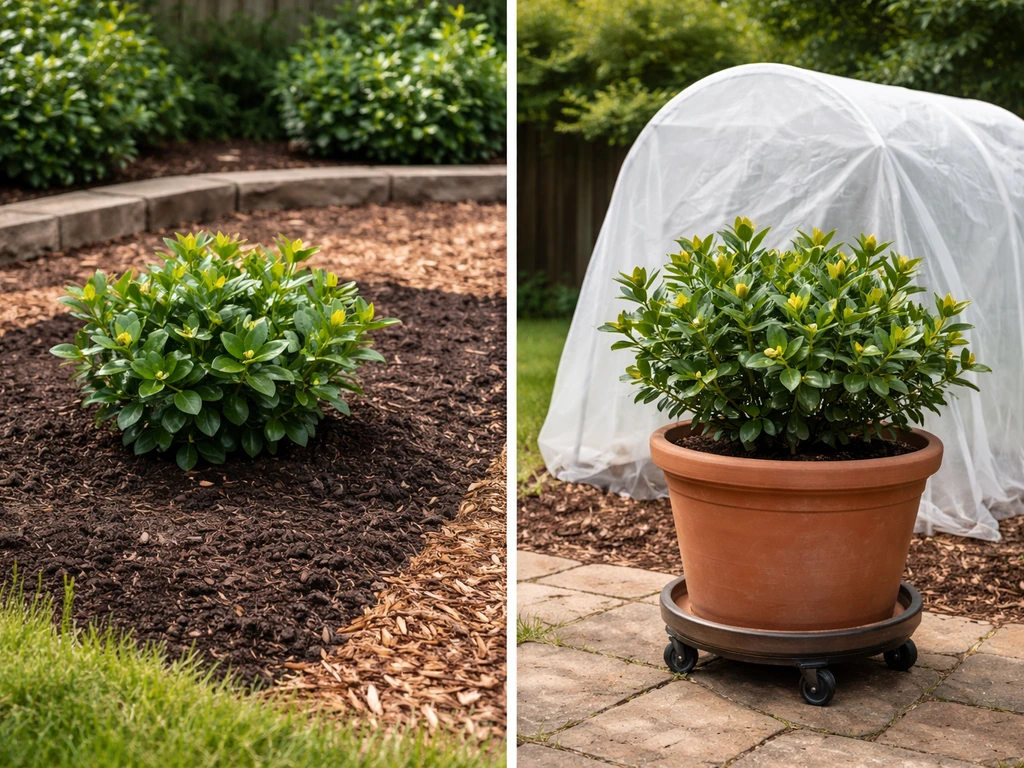
This is probably the most practical decision to make after you know your zone. In-ground planting gives you a larger root system, less frequent watering, and a plant that can eventually grow into a proper shrub. But it also means committing to that location and accepting that a brutal winter could kill the plant outright. Container growing means more work (watering, moving, winter storage), but it gives you complete control and essentially eliminates the winter-kill risk.
| Factor | In-Ground | Container |
|---|---|---|
| Best for zones | 6a and 6b with protection | 5b and 6a, or anywhere you want reliability |
| Winter survival risk | Moderate to high depending on site | Low if brought indoors |
| Summer care | Less frequent watering needed | More frequent watering required |
| Plant size potential | Larger over time | Limited by pot size |
| Flexibility | Fixed location | Can move for sun, protection, or display |
| Soil control | Requires amendment | Full control with potting mix |
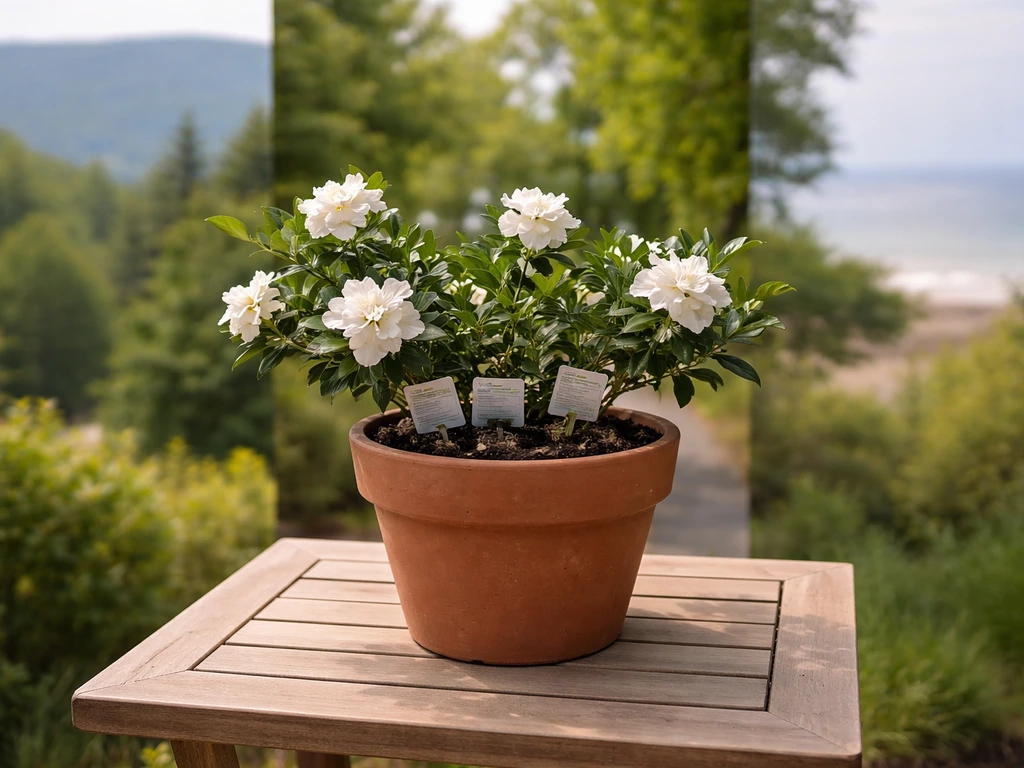
If you are in western or central Massachusetts, or if you simply want to guarantee blooms without a 50/50 gamble every winter, go with containers. Use a quality acidic potting mix (look for mixes formulated for azaleas and rhododendrons, which share similar pH needs), and plan to bring the plant inside before the first hard frost, typically late September to mid-October in most of Massachusetts.
If you are in eastern Massachusetts and have a genuinely sheltered, south-facing spot with good drainage, planting in-ground with a cold-hardy cultivar is a reasonable bet. Just do not put your only gardenia in the ground your first year. Try one in-ground and keep a backup in a container until you see how the first winter goes.
Getting gardenias through a Massachusetts winter
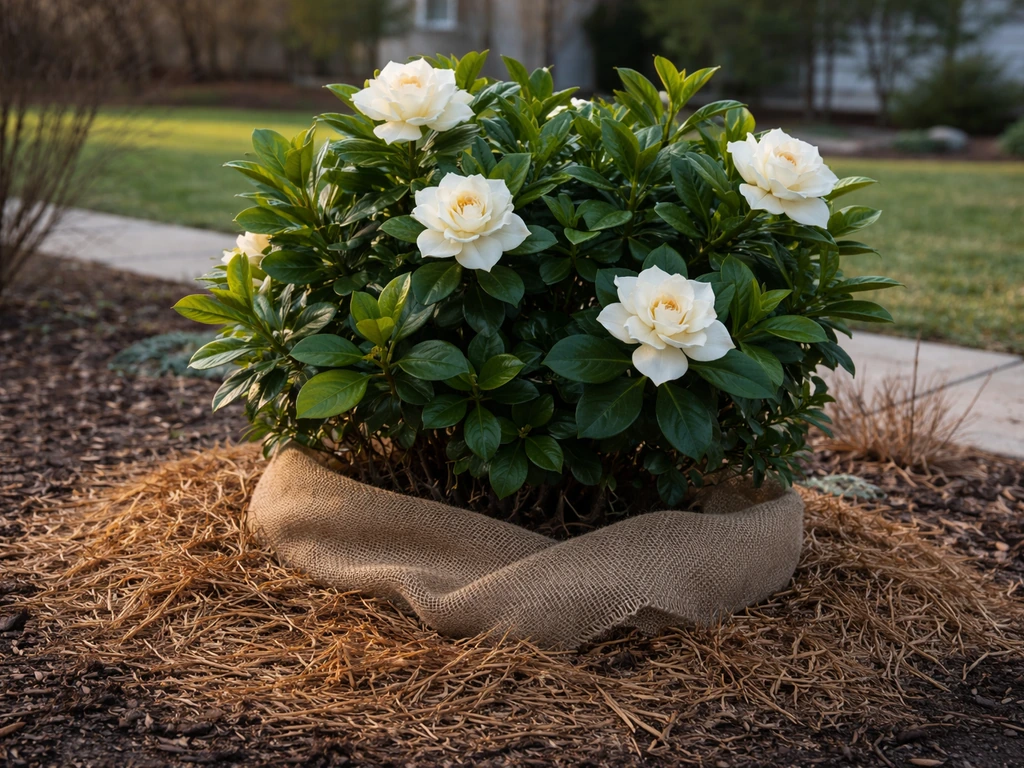
Whether you go in-ground or container, winter is the real test. For in-ground plants, the most effective protection combines a few layers of defense. Start by mounding 6 to 8 inches of organic mulch (shredded bark, wood chips, or straw) around the base of the plant before the ground freezes. This insulates the root zone from the worst freeze-thaw cycles, which are arguably more damaging than a single sustained cold snap. Repeated freezing and thawing heaves roots and desiccates tissue more than a clean, steady cold.
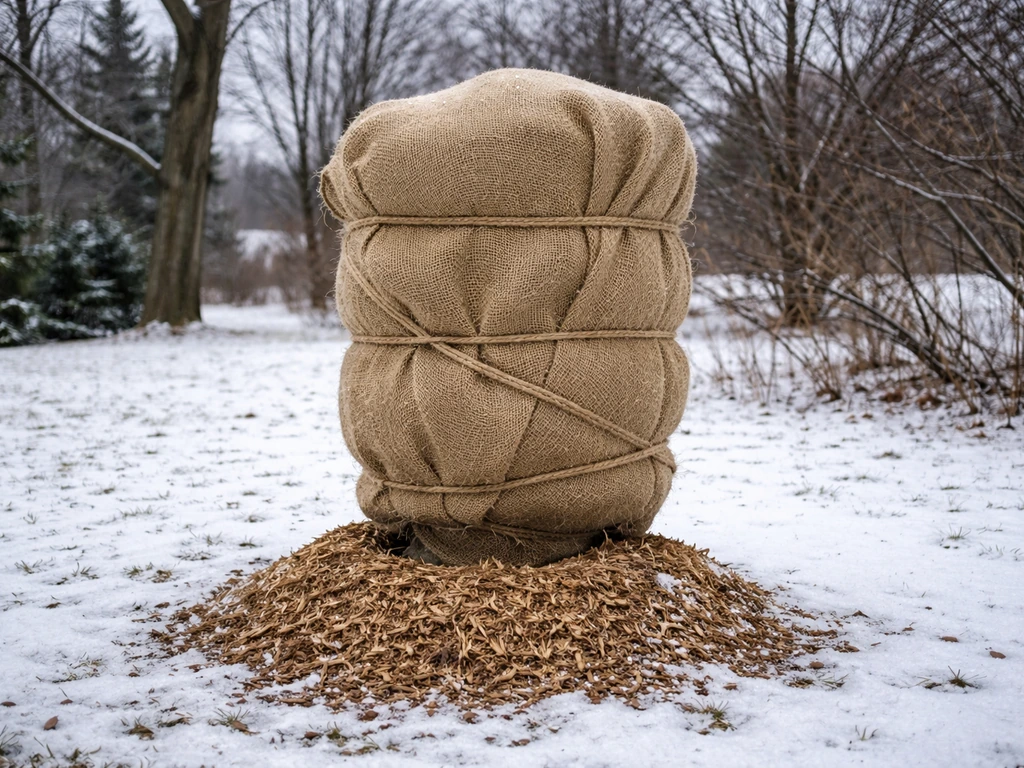
During hard cold snaps, a simple burlap wrap or a cardboard tent over the plant can buffer wind and hold in some ground warmth. Avoid wrapping with plastic, which traps moisture and can cause fungal problems. Remove the covering on milder days to let the plant breathe. Anti-desiccant sprays, applied to the foliage in late fall, can help reduce moisture loss from the leaves during cold, windy, dry Massachusetts winters, which is a frequently overlooked cause of dieback.
For container plants, bring them inside before nighttime temperatures consistently drop below 50°F. Gardenias are sensitive to sudden temperature swings, so do not wait for a hard frost and then rush them inside. A cool, bright indoor space (a sunroom, a south-facing window, or under grow lights) is ideal. Keep temperatures between roughly 55°F and 65°F at night if you can, which helps maintain bud set for next year's blooms. Water sparingly through winter, but do not let the root ball dry out completely. Bone-dry roots in a cold garage is one of the fastest ways to kill a container gardenia.
If you have a larger container that is difficult to move, you can try sinking it into a sheltered corner of the yard and mulching up to its rim to reduce freeze-thaw stress on the roots. This works best for marginally hardy situations in zone 6b, but it is not a reliable strategy for anything colder.
Why gardenias fail in the Northeast (and how to avoid the usual traps)
Even gardeners who do everything right sometimes lose a gardenia in Massachusetts, and it is worth understanding the common failure modes so you can troubleshoot and not just assume 'gardenias don't grow here.'
- Winter dieback from cold injury: The most common killer. Even a cold-hardy cultivar can die back to the ground (or die outright) in a zone 5b winter without protection. Dieback down to the root zone sometimes allows regrowth from the base in spring, but there is no guarantee.
- Root damage from freeze-thaw cycles: A hard freeze followed by a warm spell followed by another freeze is more damaging than sustained cold. This is a classic New England winter pattern, and it is brutal on gardenias. Good mulching and drainage are your defenses.
- Winter desiccation: Cold, dry winds pull moisture out of evergreen leaves faster than frozen or near-frozen roots can replace it. The plant looks burned or bronzed by late February. Anti-desiccant sprays and wind protection both help.
- Wrong soil pH: Gardenias in soil above pH 6.5 will show yellowing leaves (chlorosis) and struggle to bloom. Massachusetts soils near foundations or in areas with heavy limestone content can creep alkaline. Test your soil before planting.
- Bud drop from temperature stress: Gardenias only bloom within a relatively narrow temperature range. Wild temperature swings, whether from a late spring cold snap or an early fall chill, cause buds to drop before they open. This is why sheltered, stable microclimates matter so much.
- Too much shade: Gardeners sometimes plant gardenias in partial shade to protect them from harsh conditions, then wonder why they get no blooms. Gardenias need at least 6 hours of direct sun to bloom reliably.
- Overwatering or poor drainage: Especially in container situations, soggy roots over winter leads to root rot. Make sure pots have drainage holes, and ease off watering significantly during the dormant season.
How Massachusetts compares to nearby states
It helps to understand where Massachusetts fits in the regional picture. Connecticut and Rhode Island, which share similar zone 6 conditions in their warmer areas, face essentially the same challenges and opportunities as eastern Massachusetts. The same general guidance applies if you are wondering whether gardenias can grow in Connecticut, since the warmer coastal areas share similar winter conditions gardenias in Connecticut. New York state is highly variable, with New York City in zone 7b (much more hospitable) but the Hudson Valley and upstate in zones closer to Massachusetts. New Jersey and Maryland, with large portions in zone 7, give gardenia growers a noticeably friendlier baseline. New Jersey and Maryland have a more gardenia-friendly baseline because many areas sit in warmer zones. In Washington state, gardenias have a similar challenge with cold winters and wind, so you will generally do best with a cold-hardy cultivar in a very sheltered spot or with container growing gardenia growers a noticeably friendlier baseline. Gardenias can grow in Maryland when you choose cold-hardy varieties and provide good winter protection New Jersey and Maryland. Virginia and further south is where gardenias truly thrive outdoors without intervention. Yes, gardenias can sometimes grow in Virginia as well, but it depends on your zone and whether you provide protection in winter gardenias truly thrive outdoors in Virginia. Massachusetts sits at the northern edge of realistic outdoor gardenia territory, which means effort and variety selection matter more here than almost anywhere else. With the right cold-hardy cultivar and serious winter protection, you can sometimes grow gardenias in Pennsylvania, but success depends heavily on your exact location and microclimate.
The bottom line for Massachusetts gardeners
If you live in eastern Massachusetts, particularly in zone 6b coastal areas, gardenias are worth trying in-ground with a cold-hardy cultivar like 'Kleim's Hardy,' 'Frostproof,' or 'Chuck Hayes.' Give them a sheltered south-facing spot, acidic well-drained soil, and consistent winter protection. If you are in central or western Massachusetts, the container approach is not a compromise, it is just the smarter strategy. You will get reliable blooms, zero winter-kill stress, and a plant that can last for many years with proper indoor overwintering. Either way, start by getting your soil pH right, choosing the right cultivar, and picking the most protected spot in your yard. Those three decisions determine whether gardenias work for you in Massachusetts more than anything else.
FAQ
Can I grow a gardenia outdoors in Massachusetts during summer and move it inside for winter, like a “seasonal” plant?
Yes, but only if the temperature stays stable and the plant is already acclimated. Bring the container indoors before nighttime lows drop below about 50°F, place it in the brightest spot you have, and keep watering minimal but consistent so the root ball never fully dries out. If you leave it outside through a cold snap and then move it, the sudden swing often causes bud drop and dieback.
Why did my indoor container gardenia bloom poorly the year after overwintering?
Late spring blooms can be disrupted if winter storage conditions are off. To support bud set, aim for a cool, bright indoor environment where night temperatures stay roughly in the mid 50s to low 60s. Also avoid fertilizing heavily in winter, and wait until after the plant resumes active growth in spring.
If my Massachusetts gardenia looks dead after winter, how can I tell whether it actually survived?
In-ground, you can expect some dieback in tough years, even with a cold-hardy cultivar. The best sign that it survived is new shoots from the base or lower stems, not just intact tips. If it looks dead above ground, wait several weeks in spring before pruning, because gardenias often recover from lower growth.
Is it okay to cover gardenias with plastic during Massachusetts winter protection?
Don’t use thick plastic directly on the plant. Plastic can trap moisture and raise humidity around the foliage during thaws, which increases the risk of fungal problems. If you need a barrier, use breathable wrapping like burlap, or a dry tent approach that sheds moisture while still allowing airflow on milder days.
My soil pH is near neutral, but there’s a concrete foundation nearby, can gardenias still succeed?
It can, but only indirectly. Gardenias need acidic soil, so avoid adding lime or products that raise pH. Concrete and nearby foundations can sometimes increase pH over time, so choose planting locations away from areas where wash-off or drift could reach the root zone, and confirm pH yearly.
Can I propagate a gardenia at home in Massachusetts instead of buying an already-grown plant?
Yes, but it is more about technique than timing. If you take cuttings, use clean tools, keep cuttings warm and consistently humid, and use an acidic rooting medium. In Massachusetts, taking cuttings late summer and rooting them before the first fall cold helps them establish enough to face winter stress.
When is the best time to repot or refresh potting mix for a gardenia in Massachusetts?
Because gardenias dislike root stress, the safest approach is to avoid changing containers in mid-winter. If you must repot, do it in spring after growth restarts. Use an acidic mix, avoid breaking the root ball aggressively, and water in thoroughly so the plant settles before it has to handle cold-weather indoor conditions.
If my yard doesn’t have 6 hours of sun, can I still grow gardenias in Massachusetts?
Probably not, unless it is a cold-hardy cultivar and the site is very sheltered. “Shade” is also tricky because gardenias need ample light to set buds. For best odds in Massachusetts, prioritize a south or southeast exposure with wind protection, then use your winter insulation strategy.
How do I troubleshoot whether my Massachusetts gardenia died from winter cold, wind, or overwatering?
Yes, but treat it like a warning sign, not a guess. Winter wind desiccation can cause leaf and stem dieback, and constant wet feet can also kill roots. After winter, inspect for both: brittle, dried foliage suggests wind and dryness, while blackened or mushy roots suggests waterlogged soil or poor drainage.