
Camellias can grow in Michigan, but only in the right part of the state, with the right cultivar, and with some deliberate site planning. In the warmest corners of southern Michigan (zones 6a and 6b), cold-hardy camellia varieties have a genuine shot at surviving winters and blooming reliably. In the middle and northern portions of the Lower Peninsula, it becomes a calculated risk. In the Upper Peninsula, camellias are not a practical outdoor plant. The short version: if you're in the southern third of the Lower Peninsula and you choose a cold-hardy cultivar carefully, yes, you can grow camellias in Michigan.
Do Camellias Grow in Michigan? Yes or It Depends
Marcus Hartwell
27 May 2026
Michigan's climate reality for camellias
Camellias are broadly rated for USDA zones 6 through 9, with most common varieties (especially Japanese camellia, Camellia japonica) performing best in zones 7 and warmer. USDA ARS notes that it uses the [Plant Hardiness Zone Map](https://planthardiness. ars. usda.
gov/) as the standard for comparing plant cold tolerance to typical minimum temperatures at a location. The problem is that Michigan is mostly zones 4 through 6, and even the warmest zone 6 spots in the state push hard against what camellias can tolerate. Michigan's all-time record low is a brutal -51°F recorded at Vanderbilt in 1934, and while that's an extreme outlier, the state regularly sees lows that would kill most camellias outright.
The NOAA/NWS Marquette area climate records also publish detailed record-low tables for the Houghton/Hancock area, which can help estimate realistic extreme lows for Upper Peninsula gardening.
Even in a mild winter, Michigan's cold isn't the only threat. Camellias are particularly vulnerable to freeze-thaw cycles in late winter and early spring, when a warm spell pulls them out of dormancy and then a hard frost follows. Desiccating winter winds strip moisture from evergreen leaves faster than frozen roots can replace it, causing winterburn or outright death. Spring cold snaps arriving after bud swell can destroy a whole season's flowers in a single night. These aren't just bad-luck scenarios in Michigan; they're normal annual risks. Camellias can still grow in adverse conditions when you pick the most cold-tolerant types and match the plant to a protective microclimate how do camellias grow in adverse conditions.
Zone-by-zone: where camellias are likely to survive
Michigan's hardiness zones vary significantly from south to north, and even within a zone, microclimates created by the Great Lakes can make a real difference. Here's an honest look at what you're working with across the state.
| Michigan Region | Typical Zones | Camellia Feasibility | Reality Check |
|---|---|---|---|
| Southwestern Lower Peninsula (lakeshore) | 6a–6b | Best odds in the state | Lake Michigan moderates winters; some Camellia japonica and hardy hybrids survive most years |
| Southeastern Lower Peninsula (metro Detroit area) | 6a–6b | Possible with care | Less lake buffering; freeze-thaw cycles are a bigger risk than in the southwest |
| Central Lower Peninsula | 5b–6a | Marginal; high risk | Winter lows routinely damage or kill camellias; only the hardiest hybrids worth trying |
| Northern Lower Peninsula | 5a–5b | Not recommended | Sault Ste. Marie recorded -11°F in a single recent winter; camellias rarely survive |
| Upper Peninsula | 3b–5a | Not viable outdoors | Record lows and long winters make outdoor camellia growing impractical |
The Great Lakes effect is real and worth using. The southwestern shoreline counties (Berrien, Van Buren, Allegan) benefit from Lake Michigan's thermal mass, which delays hard freezes in fall and moderates the worst winter cold. Gardeners in those areas consistently report success with plants that struggle just 40 miles inland. Gardenias, like camellias, tend to struggle in colder interiors, so check whether your Colorado location has the warm conditions they need Gardenias in Colorado. If you're in one of those lakeshore zones, your camellia odds are meaningfully better than the zone number alone suggests.
Choosing the right camellia type and cultivar for Michigan
This is where many Michigan gardeners go wrong: they buy a beautiful Camellia japonica at a garden center, plant it, and watch it die the first hard winter. Species and cultivar selection matters enormously when you're near the edge of a plant's cold hardiness range. Not all camellias are created equal when it comes to Michigan winters.
Camellia japonica: the common one, and a mixed bag for Michigan
Camellia japonica is the classic showy camellia with large blooms. Most cultivars are rated for zone 7 and warmer, making them a poor fit for most of Michigan. However, some cold-hardy japonica selections have been pushed into zone 6 with protection. These include cultivars like 'Korean Fire', which was selected partly for its cold tolerance. Even with a cold-hardy japonica, you're essentially gambling in zones 6a and below, and losing is common.
Camellia sinensis: the tea plant, surprisingly tough
Camellia sinensis, the tea plant, is generally hardier than japonica and has been grown in zone 6 with reasonable success. Its flowers are smaller and less showy (white, about an inch across), but the plant itself is more resilient. If your main goal is having a living camellia in Michigan rather than a showstopper bloom display, sinensis is worth considering for southern Lower Peninsula gardens.
Cold-hardy hybrid camellias: the best bet for Michigan
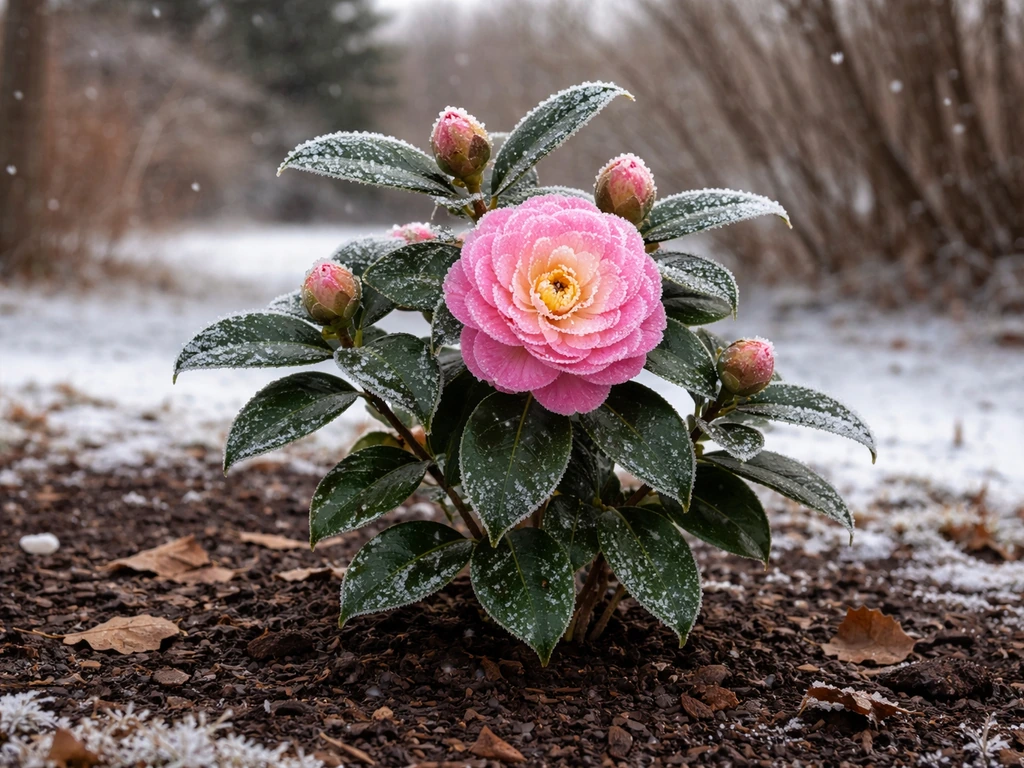
The most promising options for Michigan are the cold-hardy hybrid camellias developed specifically for northern climates. The 'Ice Series' and 'April Series' hybrids (developed partly from Camellia oleifera, an oil-producing species with notable cold tolerance) are rated to zones 6 and sometimes 5b. Cultivars like 'Ice Angels', 'Winter's Star', 'Winter's Snowman', and 'April Remembered' have shown real cold-hardiness in trial plantings, with some surviving temperatures down to -10°F in favorable site conditions. These are your best practical option if you're gardening in zones 6a to 6b in Michigan.
- 'Winter's Star' (Camellia oleifera hybrid): rated to zone 6, lavender-pink blooms in late fall, one of the most consistently cold-hardy options
- 'April Remembered' (Camellia japonica hybrid): zone 6, semi-double pink flowers, reliable for southern Michigan with site protection
- 'Ice Angels' (Camellia oleifera hybrid): zone 6, white flowers, late fall bloom, strong cold performance in trials
- 'Korean Fire' (Camellia japonica): zone 6 with protection, red flowers, selected for cold tolerance
- Camellia sinensis: zone 6, small white flowers, more about foliage interest than blooms; hardier than most japonica types
Site conditions that make or break winter hardiness
In Michigan, where you plant a camellia often matters as much as which cultivar you choose. The right microclimate can shift your plant's effective hardiness by half a zone or more. Get the site wrong and even the toughest cultivar will struggle.
- North or east-facing walls: counterintuitive, but a north or east-facing wall keeps camellias cooler in late winter, which delays premature bud break triggered by warm afternoon sun. This reduces the freeze-after-bud-break problem that kills flowers and buds in spring.
- Wind protection: a solid windbreak (fence, wall, dense evergreen hedge) on the north and west sides dramatically reduces desiccation damage to evergreen leaves. This is non-negotiable in Michigan's open or lakeside gardens.
- Avoid south-facing walls: south-facing exposures in Michigan warm up fast on sunny winter days and encourage early growth that gets nailed by late frosts.
- Slightly elevated ground: low spots collect cold air on still, clear nights. A gentle slope or slightly raised bed drains cold air away from the plant and can reduce the effective low temperature by several degrees.
- Proximity to the house foundation: the thermal mass of a heated structure moderates temperature swings right next to it. A sheltered corner where two walls meet is often the warmest spot in a residential yard.
- Soil drainage: camellias in wet, poorly drained soil are more susceptible to root damage during freeze-thaw cycles. Well-drained, slightly acidic soil (pH 5.5 to 6.5) is essential.
Simple protection and planting tips for Michigan gardens
Even in the best southern Michigan microclimate, cold-hardy camellias benefit from a little extra help. Camellias also need consistent watering, the right light level, and soil that drains well to establish and keep blooming cold-hardy camellias. The goal isn't to fight Michigan winters head-on; it's to shave off the worst edges of cold stress and protect the plant during its most vulnerable moments.
When to plant
Plant camellias in spring, after the last frost date for your area, so the plant has a full growing season to establish roots before facing its first Michigan winter. A newly planted camellia with undeveloped roots is far more vulnerable to winter kill than an established one. Avoid fall planting in Michigan; the window between a good planting time and hard frost is too short for root establishment.
Mulching
Apply 3 to 4 inches of organic mulch (pine bark, wood chips, or pine straw) around the base of the plant, keeping it a few inches away from the trunk. This insulates the root zone, moderates soil temperature swings, and retains moisture through dry winter periods. Mulching in late fall, just before the ground freezes, is one of the simplest and most effective things you can do for a Michigan camellia.
Winter wrapping
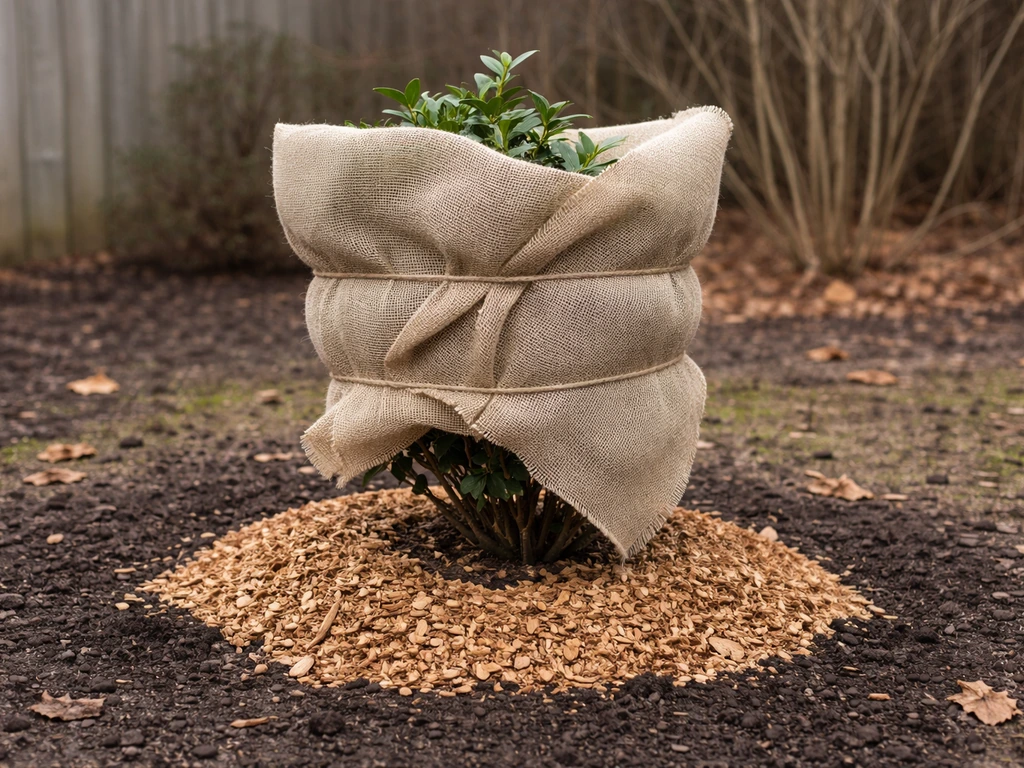
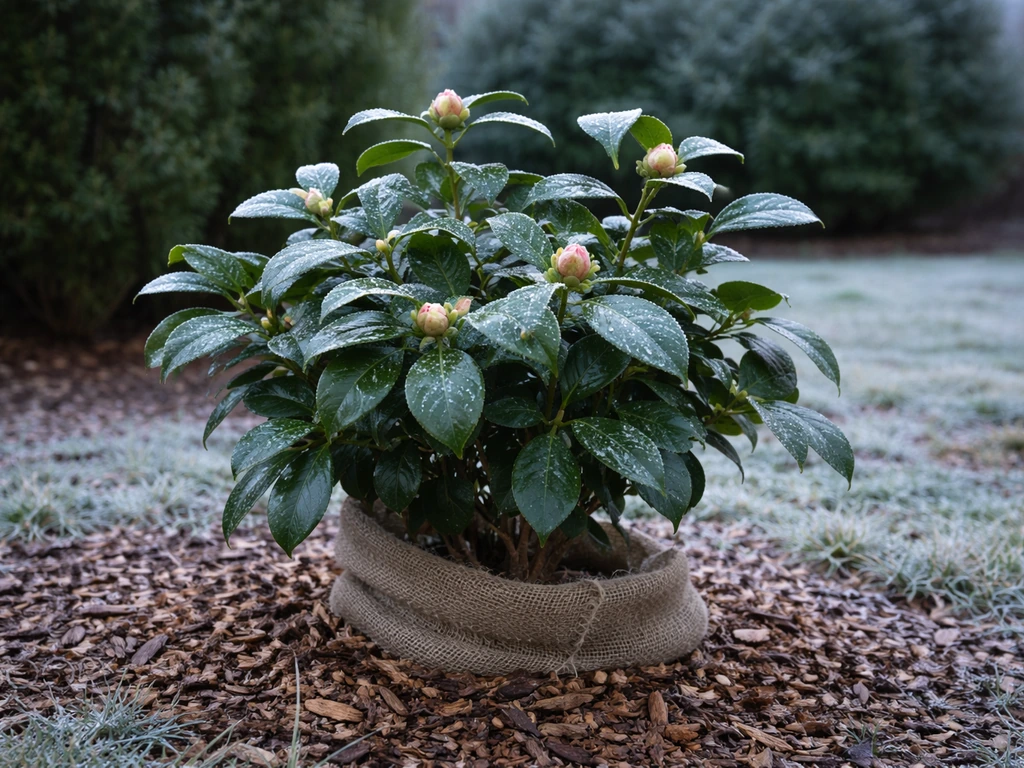
For plants in marginal zones or in their first couple of winters, wrapping with burlap or frost cloth reduces wind desiccation and provides a few degrees of buffer against the coldest nights. Wrap loosely so there's airflow, and remove the covering in early spring once temperatures stabilize above freezing. Anti-desiccant sprays (like Wilt-Pruf) applied to foliage in late fall can also reduce winterburn on evergreen leaves.
Watering before freeze-up
Water your camellia deeply in late October, just before the ground freezes. A well-hydrated plant going into winter is noticeably more cold-tolerant than a dry one. Dry roots combined with cold desiccating winds are a combination that kills camellias in Michigan more often than outright cold temperatures alone.
Container growing as a backup strategy
Gardeners in zones 5b and colder, or anywhere in the Upper Peninsula, can still enjoy camellias by growing them in large containers and moving them to an unheated but frost-free garage or basement for winter. They need minimal light during dormancy but need temperatures to stay above about 20°F. This is a legitimate strategy if you're committed to the plant and willing to put in the work each fall and spring.
Quick decision checklist and next steps
Before you buy a camellia for a Michigan garden, run through this quick checklist to figure out whether you're working with the odds or against them. If you are also wondering about warmer climates, you might be asking, do camellias grow in Texas, and the answer depends on matching the right variety to the local zone.
- Find your exact USDA hardiness zone using the 2023 USDA Plant Hardiness Zone Map (search your zip code). Anything zone 6a or warmer is a reasonable starting point for camellias in Michigan.
- Identify whether you're in a Great Lakes microclimate. Lakeshore areas in southwest Michigan (Berrien, Van Buren, Allegan counties) get meaningful winter moderation from Lake Michigan. If you are, your odds improve.
- Choose a cold-hardy cultivar only. Do not buy a standard Camellia japonica unless it is explicitly rated to zone 6. Look for 'Winter's Star', 'Ice Angels', 'April Remembered', or other Camellia oleifera hybrids rated to zone 6 or colder.
- Scout your yard for the best microclimate: a sheltered north or east-facing spot with wind protection, good drainage, and proximity to a structure that moderates temperature extremes.
- Plan to plant in spring (after last frost) so the plant has time to establish before winter. Mark your calendar to mulch in late fall and water deeply before the ground freezes.
- Set realistic expectations. In Michigan's zone 6, a well-sited cold-hardy camellia will likely survive most winters, but some years it will suffer dieback or lose buds to a late frost. This is normal, not failure. Cut back damaged growth in spring and the plant typically rebounds.
- If you're in zone 5b or colder, consider container growing rather than in-ground planting. It's more work but it actually succeeds.
Michigan isn't camellia country the way the Southeast is, and it never will be. But in the right southern corner of the state, with the right plant and a well-chosen site, you can absolutely grow camellias and get flowers. In Colorado, the key is matching the cold-hardy cultivar to a sheltered, well-protected microclimate and using winter protection can camellias grow in colorado.
If you are wondering can camellia grow in India, the key is matching the cultivar to your local temperatures and giving it protection during the coldest or driest periods. If you want a quick answer to where do camellias grow in Michigan, focus on the warmest southern areas and use the Great Lakes microclimates to your advantage. It just takes more intention than dropping one in the ground and hoping for the best.
To answer what do camellias need to grow, focus on the right hardiness zone, protected site conditions, and consistent watering and winter protection. In the right settings, camellias can thrive in many places beyond Michigan, and the key is matching the plant to your local hardiness zone and winter conditions what do camellias need to grow. Gardeners in other challenging climates, like those wondering whether camellias can grow in Colorado or Texas, face their own versions of this same calculus: matching the plant's cold (or heat) limits against local reality and finding the cultivars and techniques that shift the odds in their favor.
FAQ
What’s the best camellia type to try in Michigan if I want it to survive and bloom?
In southern Lower Peninsula gardens, you will usually see the best chances with cold-hardy hybrid types, not standard Camellia japonica sold as “showy” landscape camellias. Even with the right cultivar, plan for protection during the first 1 to 2 winters, because establishment delays often decide survival more than bloom potential.
If my camellia survives in Michigan, why might it not bloom the next spring?
Camellias often die from winter stress, not from a single extreme low. If your plant survived but didn’t bloom, the most common cause is late-winter freeze damage to swollen buds, or repeated freeze-thaw cycles that disrupted dormancy. Protect buds with wind blocking and frost cloth during sudden cold snaps in late winter.
Can I grow a Michigan camellia in a container instead of planting in the ground?
Yes, but expect it to be more work and less reliable outdoors. For containers, use a pot large enough to reduce temperature swings, keep it outdoors until temperatures are consistently cold, then move it to a frost-free, cool space where it stays above roughly 20°F. Avoid keeping it warm and actively growing all winter, because it can break dormancy too early.
When should I mulch my camellia in Michigan, and how thick is thick enough?
For most Michigan gardeners, mulch is most helpful late fall after growth slows but before the ground freezes. Apply 3 to 4 inches around the root zone, leave clearance around the trunk, and keep it from piling up against the plant because trapped moisture can lead to rot.
How should I wrap a camellia for winter in Michigan without damaging it?
Don’t wrap camellias like a package. If you use burlap or frost cloth, do it loosely so air can move, and remove it in early spring once nights are reliably above freezing. Trapping humid air under tight wraps can increase disease and also create heat that pushes buds too early.
Should I keep watering my camellia through the winter in Michigan?
Yes, but it changes how you should water. Deep watering in late October is important, but once the soil is frozen, you generally should not keep adding water. In containers, check moisture on mild winter days, but stop short of soaking, because cold, wet conditions can harm roots.
What are the early signs that my Michigan camellia didn’t survive winter?
A camellia can look alive yet be “recently dead” when roots were damaged. Signs to watch include leaf drop after a cold snap, blackened or brittle new growth, and a lack of spring bud swelling. If the plant leafs out poorly in year one after a winter, assume root damage and give it extra protection the next season while you assess recovery.
Can I plant a camellia in fall if winters are mild where I live?
Late spring planting usually works better than fall planting because it gives roots time to grow before Michigan’s first serious freezes. If you must plant later than ideal, reduce stress by choosing an even more sheltered site and be extra consistent with water during the remainder of the growing season.
What kind of planting location gives me the best odds in Michigan?
A south-facing, sheltered spot is usually more effective than the zone number alone. Prioritize locations protected from prevailing winds and with slightly moderated temperatures (for example, near a building wall that blocks wind). Avoid low spots where cold air pools, because frost can be worse there than on adjacent ground.
If cold temperatures aren’t extreme, how do winter winds still kill camellias in Michigan?
Yes. If winter wind is a problem, desiccation is a major killer, even when the temperature dips aren’t record-breaking. In practice, windbreaks, sturdier winter coverings, and anti-desiccant sprays used in late fall (on foliage) can reduce winterburn when you’re near the edge of the cultivar’s cold tolerance.
Is overwintering indoors always better than in-ground camellias in northern Michigan?
For gardeners in Michigan’s colder parts (zone 5b and especially the Upper Peninsula), the more realistic path is overwintering containers indoors rather than trying to push an in-ground plant through. If you insist on in-ground in marginal areas, treat it as an experiment: select the coldest-hardy hybrid available, add strong wind protection, and accept that flower loss or occasional death can happen.