
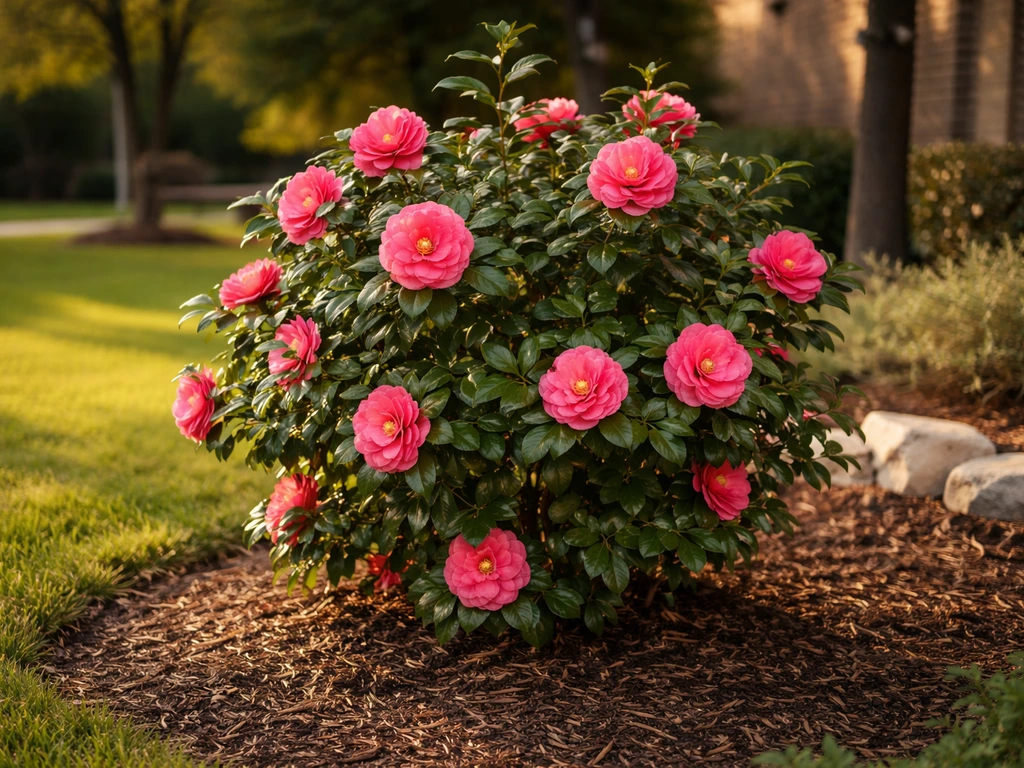
Yes, camellias can absolutely grow in Texas, but not everywhere in the state and not without picking the right type. Most of Texas falls into USDA hardiness zones 6b through 10a, and camellias (particularly Camellia japonica) thrive in zones 7 through 9. That puts a large swath of the state, East Texas, the Piney Woods, the Gulf Coast, Central Texas, and even parts of North Texas, squarely in camellia territory. The western part of the state, far West Texas and the Panhandle, is another story, where winter cold and alkaline soils make it a much harder fight.
Do Camellias Grow in Texas? How to Plant and Care
Marcus Hartwell
16 Apr 2026
Can camellias grow across all of Texas?
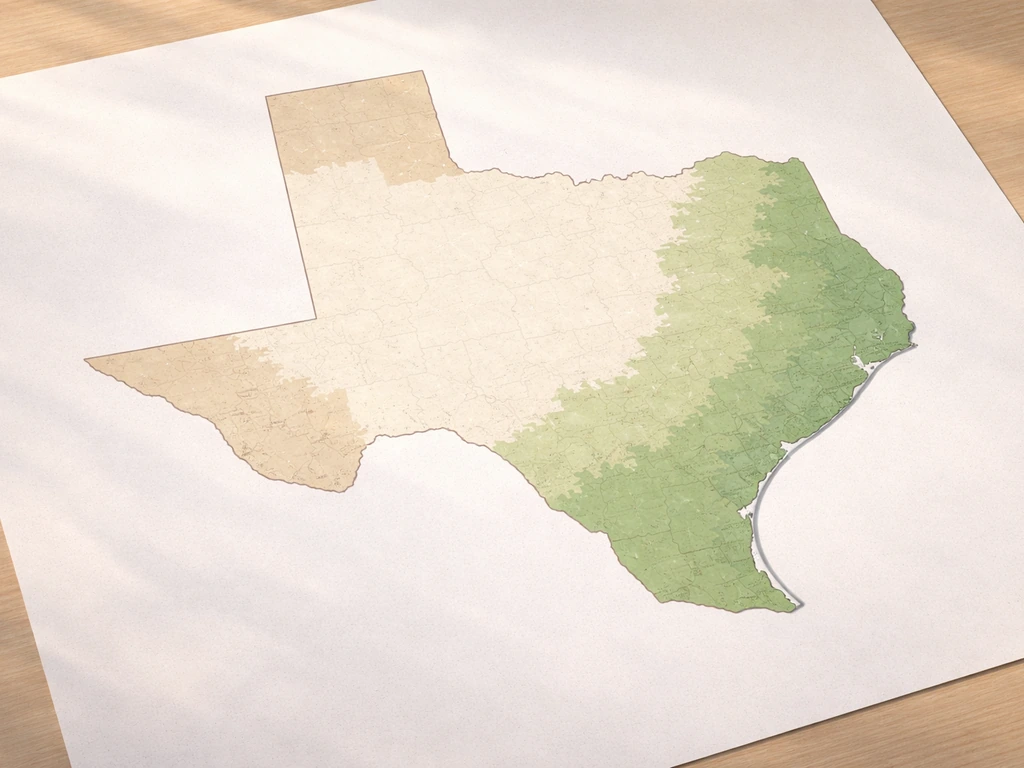
The short answer is: most of Texas, yes. The edges of the state, no. To understand why, you need to know that USDA hardiness zones are based on average annual extreme minimum temperatures, basically how cold it gets at its worst in winter. Standard Camellia japonica varieties are rated for zones 7 to 9, which covers the heart of the state. East Texas in particular is prime camellia country, and Henderson County master gardeners have been championing camellias as winter-interest shrubs in that region for years. The greater Houston area, the Hill Country, and even the Dallas-Fort Worth corridor (mostly zone 7b to 8a) are realistic growing zones for camellias.
Where it gets tricky is the Texas Panhandle (zone 6a to 6b) and far West Texas, including El Paso (zone 8a but with alkaline soil and low humidity that camellias hate). If you're in the Panhandle, standard varieties likely won't make it through a hard winter without serious protection. And if you want to understand where camellias grow best across the broader U.S., the Southeast and Upper South are the sweet spot, and East Texas sits comfortably within that range.
Which camellia types actually handle Texas conditions
There are two species you'll realistically be choosing between in Texas: Camellia japonica and Camellia sasanqua. They behave differently in the Texas climate, and knowing which fits your yard can save you a lot of heartbreak.
Camellia japonica
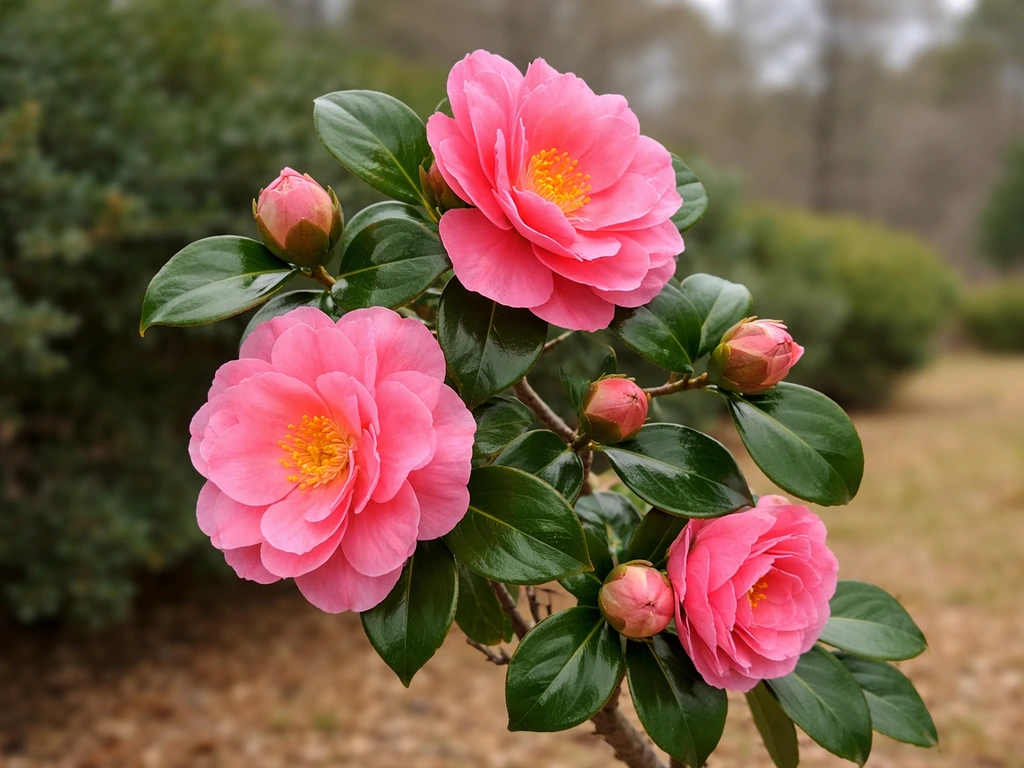
This is the classic camellia with the large, showy blooms in late winter to early spring. It's rated for zones 7 to 9, which maps well onto East Texas, the Gulf Coast, and Central Texas. It does prefer some afternoon shade, which actually works in its favor in Texas summers because the heat can stress it if it's planted in full sun. The challenge is that japonica blooms open during the coldest part of the year, making the flowers vulnerable to freeze damage even when the plant itself survives. A late cold snap in February can wipe out an entire flower season without harming the shrub at all.
Camellia sasanqua
Sasanqua camellias bloom in fall and early winter, which in Texas actually gives them an advantage. By the time hard freezes arrive, they've often already finished blooming. They also tend to be more heat-tolerant and adaptable to sunnier spots than japonicas. If you're in a warmer part of the state, like South Texas or coastal areas near Houston, sasanqua is often the smarter first choice. 'Yuletide' is a popular variety suited to warmer zones, and there are newer heat-tolerant introductions like 'Warm Hearted™ Pink,' which has been developed with excellent heat tolerance and is rated for zones that include Texas's core growing regions.
Cold-hardy cultivars for North and West Texas
If you're pushing into zone 6b territory, there are cultivars bred specifically for colder tolerance. Varieties like 'Polar Ice,' 'Snow Flurry,' and 'Winter's Charm' have demonstrated performance into zone 6. These are worth looking into if you're in the northern part of the state where winters regularly dip below what standard japonicas can comfortably handle. Understanding how camellias grow in adverse conditions helps explain why these cold-hardy hybrids are engineered differently, with thicker cell walls and different dormancy triggers that reduce freeze injury.
| Type | Bloom Time | Best Texas Zones | Heat Tolerance | Cold Tolerance |
|---|---|---|---|---|
| Camellia japonica | Late winter to early spring | 7–9 | Moderate (needs afternoon shade) | Hardy to low zone 7 |
| Camellia sasanqua | Fall to early winter | 7–10 | Good (handles more sun) | Hardy to low zone 7 |
| Cold-hardy hybrids (e.g., 'Polar Ice', 'Snow Flurry') | Winter | 6–8 | Moderate | Hardy into zone 6 |
| Heat-tolerant hybrids (e.g., 'Warm Hearted™ Pink') | Fall to winter | 7–10 | Excellent | Hardy to zone 7 |
Where to put them in your Texas yard
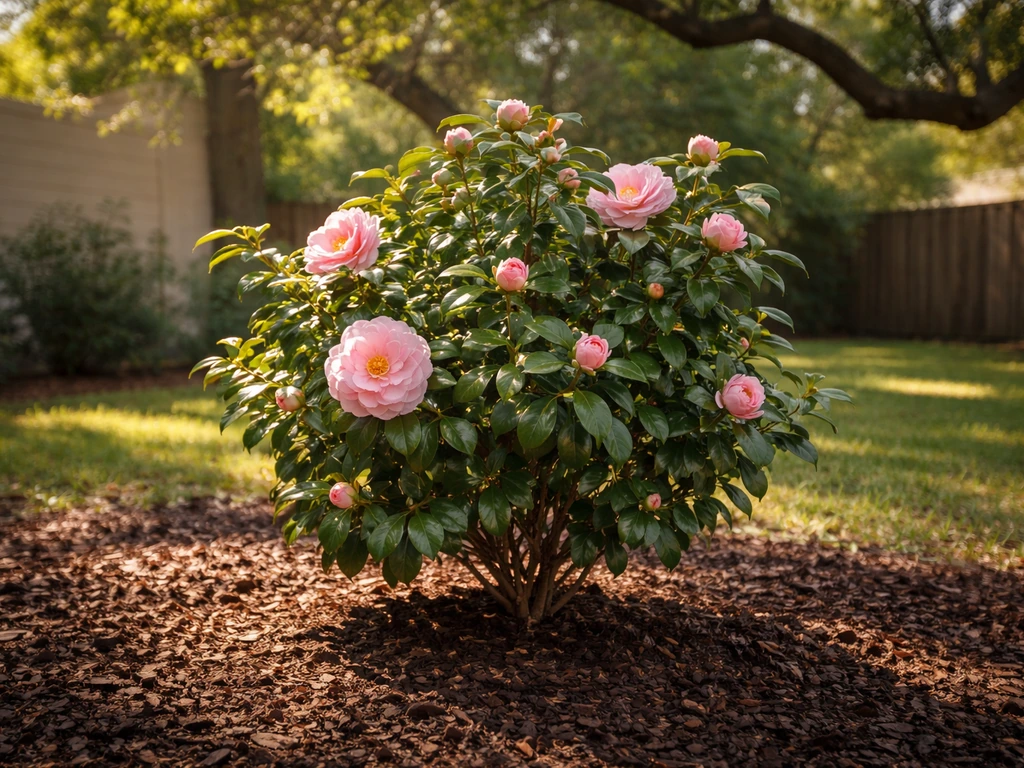
Site placement might be the single most important decision you make with camellias in Texas. Get this wrong and you'll fight the plant every year. Get it right and they practically take care of themselves.
Camellias want morning sun and afternoon shade. In Texas, that afternoon shade is not optional in most regions, it's survival. The LSU AgCenter recommends about four to six hours of direct sun with protection from afternoon heat, and Proven Winners echoes this exactly, recommending morning sun with afternoon shade or dappled light. Under the canopy of tall pines or oaks is ideal, which is why East Texas, with its natural tree cover, is such a natural fit. Avoid planting on the west or south side of your house where afternoon sun bakes the plant during summer.
Wind protection matters too, especially in North Texas. Cold north winds in winter can desiccate leaves and damage buds even when temperatures don't drop to truly damaging levels. A fence, wall, or evergreen hedge on the north side of the planting area gives meaningful protection. Camellias can tolerate surprisingly low temperatures during short below-freezing spells when they're sheltered from cold wind, so that windbreak is worth the effort.
Soil, drainage, and getting the planting setup right
Camellias are picky about soil, and Texas throws a few specific challenges at them. The biggest are alkaline soils (common in Central, West, and North Texas) and clay soils with poor drainage (common in much of the eastern half of the state).
Camellias need acidic soil, with a preferred pH range of about 5.8 to 6.5. Some sources stretch the acceptable range to 5.5 to 6.8, but if your soil is above 7.0, which is common in the Hill Country and parts of North Texas, you'll need to amend before you plant. Sulfur, ferrous sulfate, or aluminum sulfate can lower pH, and Texas master gardeners have documented using these approaches for camellias in the state. The reason pH matters so much is that if the soil pH is wrong, the plant can't absorb fertilizer efficiently even if you're applying the right products regularly.
On drainage, camellias should never be planted in sites with high water tables or where water pools after rain. Root rot from waterlogged soil is one of the fastest ways to lose a camellia. If your yard has clay-heavy soil, work in organic matter like pine bark, leaf mold, or compost to improve both drainage and pH at the same time. Raised beds or mounding the planting area a few inches above grade can also help in problem spots.
You also want to keep consistent soil moisture, because dry spells during summer are one of the factors that disrupt flower bud formation for the following season. Understanding what camellias need to grow well makes it clear that soil prep is where most of the long-term success is built.
When you plant, dig a hole about twice as wide as the root ball but no deeper. Set the plant so the top of the root ball is slightly above the surrounding soil level, not sunk into a bowl. This keeps the crown from staying wet and reduces rot risk. Avoid planting under shallow-rooted trees that compete aggressively for water, as that competition can disrupt the consistent moisture camellias need for bud development.
Watering, mulch, and feeding
In the first year, water consistently and deeply, especially through Texas summers. Once established, camellias are reasonably drought-tolerant but perform better with regular moisture during the growing season and into fall when buds are setting. During dry stretches, deep watering once or twice a week is better than shallow daily watering.
Mulch is your friend. A 2 to 3 inch layer of pine bark mulch, pine straw, or shredded leaves around the base of the plant (but not piled against the trunk) serves multiple purposes in Texas: it keeps roots cooler in summer, holds moisture during dry spells, and provides some insulation during winter cold snaps. For winter protection specifically, applying mulch after the plant has hardened in response to shorter days and initial early frosts, rather than too early in fall, gives the best results.
For fertilizer, use an acid-forming fertilizer formulated for camellias, azaleas, or gardenias. Apply in early spring as new growth begins, then again in early summer. Stop fertilizing by late summer so you don't push new tender growth that can be damaged by early fall cold snaps. Never fertilize a stressed or drought-stressed plant, because without adequate soil moisture the roots can't absorb nutrients effectively and you can actually burn the roots.
Pruning, winter prep, and protecting buds from freezes
Camellias don't need heavy pruning. Light shaping right after the main bloom season is the right move, which for japonicas means late spring after flowering ends. Sasanquas can be lightly shaped in late winter after their fall bloom. Avoid pruning in late summer or fall because you'll cut off the buds that are just forming.
Freeze events are the biggest seasonal challenge in Texas, and they can happen unpredictably. The February 2021 freeze is a recent reminder of how brutal Texas winters can get even in normally mild zones. Here's what actually helps when a freeze is forecast:
- Water the soil deeply before a freeze arrives. Moist soil holds heat better than dry soil, giving roots more protection.
- Cover the plant with frost cloth, burlap, or row cover if temperatures are expected to drop hard. A single layer of floating row cover can provide roughly 5 to 7 degrees of frost protection, and doubling it can push that to around 10 to 12 degrees.
- If the plant is flowering or has open buds, protecting them is especially important since open blossoms and colored buds are more cold-sensitive than the woody structure of the shrub itself.
- Remove covers during the day if temperatures rise above freezing so the plant doesn't overheat or stay damp underneath.
After a hard freeze, be patient. This is one of the most common mistakes Texas gardeners make: they see brown damaged tissue and immediately start cutting it all back. Texas A&M and AgriLife Extension both advise against rushing the pruning. Freeze injury on woody plants can take days to months to fully reveal itself, and what looks dead may still recover. Wait until you can clearly see which wood is alive (green under the bark when you scratch it with a fingernail) and which is truly dead before cutting. Prune only the obviously dry, brittle, clearly dead wood in the short term, and do your more complete cleanup once the plant shows spring growth.
Common Texas camellia problems and how to fix them
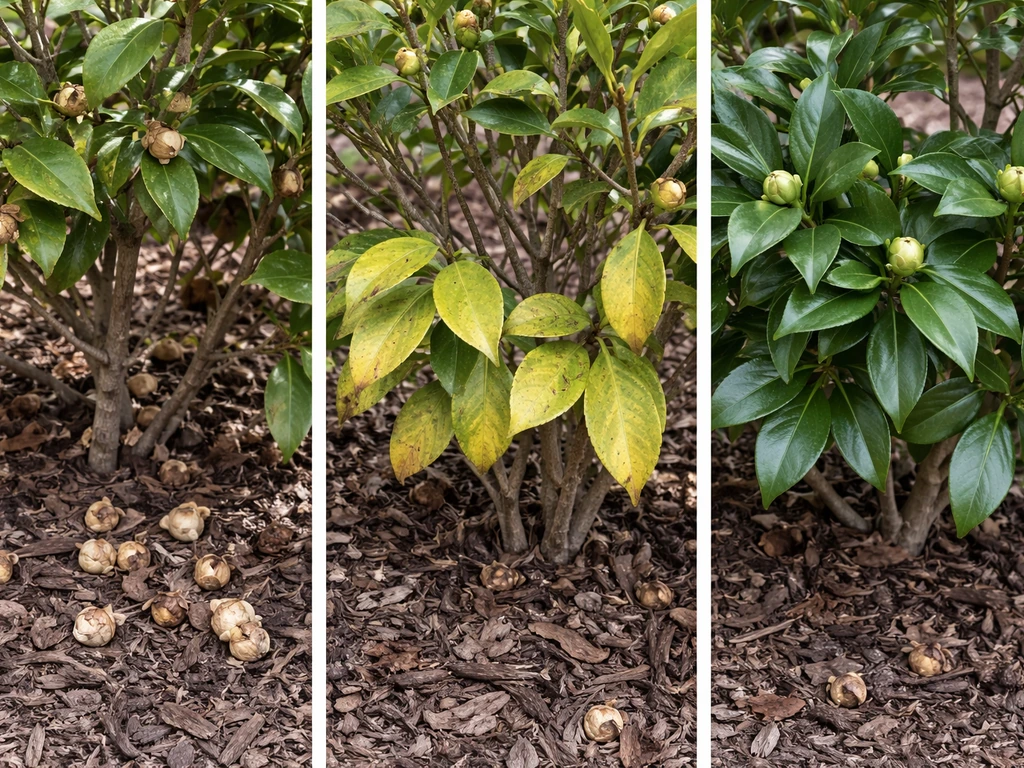
Even in the right zone with the right site setup, Texas camellias can run into a handful of recurring problems. Knowing what you're looking at helps you respond quickly instead of losing a plant to something fixable.
Bud drop
Buds forming and then dropping before they open is frustrating, but it's usually either a moisture issue or temperature stress. Inconsistent watering during summer and fall when buds are forming is a common culprit. Sudden temperature swings, a warm spell followed by a sharp freeze, can also cause buds to brown and drop. Even within a zone that's technically suitable, sudden temperature changes can damage flowers and buds significantly. This is one reason East Texas gardeners watch the weather closely during camellia bloom season.
Yellow leaves
Yellowing leaves are often a pH or nutrient absorption problem. If your soil pH has drifted too alkaline (which happens in Texas, especially if you're using hard tap water regularly), the plant can't absorb iron and other micronutrients efficiently. The Royal Horticultural Society describes ericaceous, or acid, soil as having a pH of less than 7, with it becoming more acidic as the pH number decreases. Test your soil pH every few years and amend as needed. Applying a chelated iron supplement can address iron chlorosis quickly while you work on adjusting the soil longer-term.
Scale and spider mites
These are the most common pest problems on camellias in the South. Scale shows up as white or tan crusty bumps on stems and the undersides of leaves. Spider mites cause a stippled, dusty look to leaves and are most active during hot, dry weather, which Texas has plenty of. A horticultural oil spray applied when the plant is not heat-stressed is effective against both. Spray in the cooler parts of the day and avoid treating during the hottest summer periods.
Flower blight
Flower blight is a fungal disease that causes brown spots with a characteristic netted or marbled pattern on the petals, and it spreads through infected mulch or fallen blooms. It's more common in warm, humid years, which describes much of East Texas perfectly. The fix is sanitation: remove infected flowers promptly, replace old mulch, and avoid overhead watering. Don't compost infected blooms.
Root rot from poor drainage
If a camellia is wilting, losing leaves suddenly, or declining for no obvious above-ground reason, poor drainage is worth investigating. Root rot from consistently wet soil is difficult to reverse once it's advanced. Prevention is the real answer here: never plant in a low spot, always work organic matter into heavy clay soils, and raise the planting area if drainage is questionable.
Is Texas worth the effort for camellias?
For most of the state, absolutely yes. East Texas and the Gulf Coast are legitimately great camellia climates, and properly sited plants in those areas can thrive for decades with minimal fuss. The Central Texas and DFW zones take a bit more attention to site and variety selection, but they're very achievable. If you're wondering how Texas compares to other states that get asked this question a lot, the contrast is pretty stark: camellias in Michigan face far more severe cold challenges, and the gardening strategies there look quite different from what works in Texas.
If you're in North Texas or want to push into colder microclimates, focus on cold-hardy hybrid cultivars, give the plant a sheltered north-facing windbreak, and don't rush to prune after hard freezes. If you're in a warmer zone near the Gulf Coast, sasanqua types and heat-tolerant hybrids are your best starting point. The comparison between Texas and other warm-climate states is also instructive: camellia growing in India, for example, faces similar heat and humidity challenges in certain regions, and many of the same variety selection principles apply.
One final thought: if you're already growing azaleas successfully in your yard, camellias will likely work too. They want similar conditions, acidic well-drained soil, partial shade, and consistent moisture. If you want a checklist for getting those conditions right, review what do camellias need to grow as a related guide before you adjust your site and care routine.
And unlike some flowering shrubs that are borderline in Texas, camellias in the right spot don't just survive, they put on a genuinely spectacular winter show when everything else in the yard has gone dormant. That's a hard combination to beat. If you're curious how other shade-loving flowering shrubs compare in tricky regional climates, the question of whether gardenias grow in Colorado offers a useful contrast to how Texas conditions line up for camellia success.
And for gardeners curious about the toughest end of the camellia range, the comparison with growing camellias in Colorado shows just how favorable even the more challenging parts of Texas really are.
FAQ
Can I grow camellias in containers in Texas, especially if my soil is alkaline or clay-heavy?
Yes, camellias can work in Texas pots, but you must control two things the ground version avoids: insulation and soil chemistry. Use an acidic potting mix (target about pH 5.8 to 6.5), and keep the container from freezing hard or drying out completely. In north or Panhandle areas, consider burying the pot in the ground or wrapping it with insulation during winter, because roots in containers freeze faster than roots in the ground.
What should I do right after a freeze, can I prune off all the brown parts immediately?
Don’t prune just because flowers or tips look damaged after a cold snap. Wait until you can clearly distinguish live wood from dead wood (scrape test, green under the bark), then remove only the obviously dead sections first. More thorough shaping should wait until spring growth starts, otherwise you can cut off healthy buds that were temporarily set back by the freeze.
My camellia buds form then drop, what causes this in Texas and how do I fix it?
Flower drop before blooms open is often not a “bad plant” sign, it is usually timing or moisture stress during bud set. Check whether watering in late summer through early fall is consistent, and avoid letting the soil swing from very dry to very wet. Sudden warm spells followed by sharp cold can also brown buds, so track weather patterns as well as watering.
How can I tell if yellow leaves in my Texas camellia are from pH problems versus a nutrient or watering issue?
If your camellia leaves yellow but the veins stay greener, suspect iron chlorosis from high pH or poor nutrient uptake. The practical next step is to test soil pH and confirm it is staying in the acidic range, then use an iron source that matches your issue (chelated iron can help quickly). Long-term, address pH with soil amendments rather than relying only on repeated fertilizer applications.
What’s the best way to prevent root rot in heavy clay areas of East or Central Texas?
In Texas, the biggest root-rot trigger is poor drainage or water pooling, especially in low spots and heavy clay. Improve drainage with raised mounds, add organic matter (pine bark, leaf mold, compost), and make sure the crown is not set too deep. If your yard tends to stay wet after rain, treat it like a drainage project before planting rather than a “care” problem after the fact.
When should I mulch for winter protection in Texas, and how thick should it be?
For Texas freezes, timing mulch matters. Apply mulch after the plant has begun to respond to shorter days and you get some early frosts, so it provides insulation without trapping overly warm conditions. Keep mulch 2 to 3 inches thick and away from the trunk, and avoid piling it higher, which can increase moisture around the crown.
Why does my camellia survive winter but lose its blooms in late February, and can I prevent that?
Camellias typically bloom in the coldest part of the season for japonica, so late cold snaps can wipe out the flower show even if the shrub survives. A helpful strategy for risk reduction is to place the plant where it gets morning sun with afternoon shade, and consider a windbreak to reduce desiccation. For yards that repeatedly get late freezes, sasanqua or cold-hardy hybrid cultivars can also be a more reliable choice.
Which camellia type should I choose in Texas, japonica or sasanqua, if I want the highest chance of success?
Yes, but start by matching the species to your conditions. If you get hot summers and you want blooms that finish before the harshest freezes, sasanqua types are often a better first attempt. In cooler parts of Texas, cold-hardy japonica or hybrid cultivars can outperform standard varieties, especially if you add north-side wind protection and avoid poorly sited full-sun locations.
How often should I fertilize camellias in Texas, and when is the wrong time to do it?
Use acid-forming fertilizer, but don’t overfeed or feed late. Apply in early spring as new growth begins and again in early summer, then stop by late summer to avoid tender growth that can be damaged by early cold snaps. Also, only fertilize when the plant is not drought-stressed, because nutrient uptake is poor and root burn risk goes up.