
Bougainvillea can grow in Oregon, but only in a narrow slice of the state and almost never reliably in the ground year-round. In colder states like Michigan, bougainvillea can still be grown, but it usually needs a container setup and indoor overwintering to beat the winter chill grow in Oregon. If you're in the warmest parts of Southern Oregon or a sheltered spot in the Willamette Valley, you have a real shot with the right variety and some winter protection. If you're on the coast or in the high desert, the honest answer is no: the cold, the lack of summer heat, or both will beat it most years. Here's exactly where the line falls and what it takes to pull it off.
Can Bougainvillea Grow in Oregon? Zone by Zone Guide
Marcus Hartwell
11 Jun 2026
Oregon's climate reality check for bougainvillea
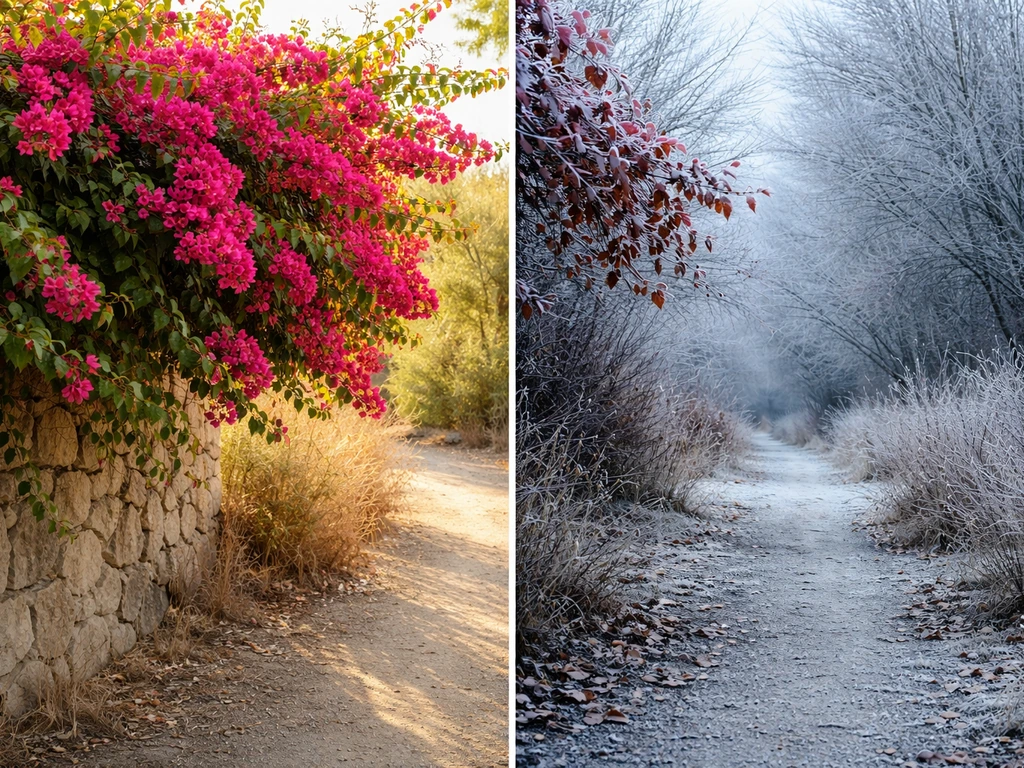
Bougainvillea is a tropical vine that evolved in the hot, dry climates of South America. It wants blazing sun, minimal water once established, and temperatures that never seriously flirt with freezing. Oregon is essentially the opposite: mild but often overcast summers, wet winters, and regular freezing temps across most of the state. That's the core tension you're working against.
The critical number to know is 30°F (-1°C). Sustained temps below that threshold for several hours will damage outer branches and foliage, and if it stays that cold for an extended period, it can kill the plant down to the root crown. A single brief frost it can sometimes shake off. A Pacific Northwest winter where temps regularly dip into the mid-20s? That's a different story entirely. Most of Oregon outside the Siskiyou foothills and parts of the Rogue Valley sees exactly those kinds of winters, which is why this plant is such a gamble here.
On top of the cold problem, bougainvillea needs heat to bloom. It thrives in USDA Zone 10 and can survive in Zone 9 with protection, according to Clemson University. It wants full sun and well-drained soil, ideally baking in summer heat. Oregon's characteristically cool, cloudy summers in most regions simply don't deliver the warmth bougainvillea needs to put on its signature flower show, even if the plant manages to survive the winter.
Can bougainvillea survive in Oregon: by region and typical zones
Oregon spans multiple climate zones, so the answer genuinely depends on where you live. Let's break it down honestly.
| Oregon Region | Typical USDA Zones | In-Ground Viability | Container Viability |
|---|---|---|---|
| Southern Oregon (Rogue Valley, Medford, Ashland) | Zone 7b-8b | Possible with protection in warmest microclimates | Yes, with winter shelter |
| Willamette Valley (Portland, Salem, Eugene) | Zone 7b-9a | Unlikely most years; Zone 9a microclimates are marginal | Yes, with indoor overwintering |
| Oregon Coast | Zone 8a-9a | No: too cool and humid even if frost is rare | Marginal; poor blooming likely |
| Central and Eastern Oregon (Bend, Medford high desert) | Zone 5b-7a | No: winter temps too severe | Only if fully overwintered indoors |
Southern Oregon gives you the best odds. The Rogue Valley, including Medford and Ashland, sits in Zones 7b to 8b, gets legitimately hot summers, and has a more Mediterranean feel than the rest of the state. In a south-facing, sheltered spot against a masonry wall, a cold-hardy bougainvillea variety might survive mild winters with heavy mulching and frost cloth. It's still a project, not a sure thing, but gardeners in the Medford area have made it work in exceptional microclimates.
The Willamette Valley is where most Oregon gardeners live, and the answer here is complicated. Portland and the northern valley are mostly Zone 8a to 8b, which sounds promising until you remember that winter lows regularly hit the mid-to-upper 20s Fahrenheit, often with sustained cold snaps. Eugene and Salem are slightly milder some years. In-ground success is unlikely without consistent extraordinary protection, but container growing with indoor overwintering is genuinely doable.
The Oregon coast might seem hospitable because it rarely gets hard freezes, but bougainvillea dislikes the coast for a different reason: it's too cool, too foggy, and too humid all summer. Can bougainvillea grow in Scotland too? In most cases, it is not reliably planted in the ground, but container growing with indoor overwintering is the usual route Oregon coast might seem hospitable. Without real heat, the plant may survive but it won't bloom well. Central and Eastern Oregon simply get too cold in winter, with many areas dropping to Zone 6 or below, and bougainvillea has no business being planted in the ground there. In Massachusetts, the same winter-cold limits make in-ground growth extremely unlikely, but a container approach with indoor overwintering may be worth trying can bougainvillea grow in massachusetts.
In-ground vs container: the best setup for Oregon gardens
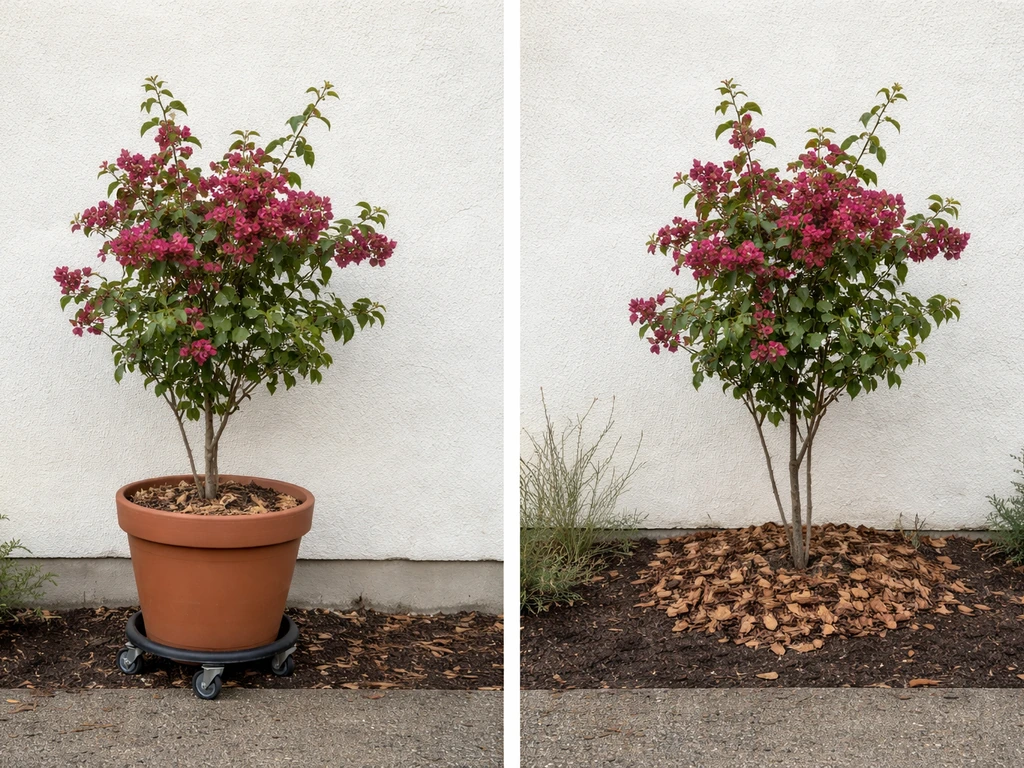
For most Oregon gardeners, containers are the realistic path. Growing bougainvillea in a pot means you control the most important variable: where it spends the winter. You can move it to an unheated garage or basement when temperatures drop, keep it alive through the cold months, and bring it back out in spring. In-ground planting is essentially betting that your specific microclimate is warm enough, every winter, that the roots won't freeze. In most of Oregon, that's a bet you'll lose eventually.
If you do want to try in-ground planting, Southern Oregon is really the only region worth attempting it. Choose a spot against a south-facing wall or fence where heat accumulates, ensure the soil drains fast (bougainvillea hates wet feet), and plant in spring so the roots have a full season to establish before their first winter. Anywhere in the Willamette Valley or north, in-ground plants are very likely to die back to the ground or lose the root system entirely in a bad winter.
For containers, use a well-draining mix, not standard potting soil. A cactus or Mediterranean blend works well, or mix regular potting soil with perlite at about a 50/50 ratio. Choose a container large enough for the root system but not so oversized that it stays waterlogged. Terracotta works beautifully for drainage but is heavy to move; a lightweight resin pot with drainage holes is more practical when you're hauling it indoors every October.
Overwintering strategies that actually work in Oregon
Whether you're growing in a container or attempting in-ground, overwintering is the critical task in Oregon. In a cooler place like Maryland, overwintering strategy is also the key factor in whether bougainvillea can survive Overwintering is the critical task in Oregon. Here's what actually helps versus what's wishful thinking.
Container overwintering (the most reliable approach)
- In late September or early October, before the first frost, bring the container inside. An unheated garage, basement, or enclosed porch that stays above 30°F is sufficient. It doesn't need to stay warm, just frost-free.
- Cut back watering dramatically. Bougainvillea goes semi-dormant in low-light winter conditions and wet roots will rot. Water lightly every 3-4 weeks, just enough to keep the root ball from desiccating completely.
- Expect the plant to drop most or all of its leaves. This is normal dormancy behavior, not death. Don't panic and overwater.
- Keep it in a spot that gets some ambient light if possible, but low-light survival is workable for the winter months.
- In April or May, once night temps are consistently above 40°F, transition it back outside gradually over one to two weeks to avoid sun shock.
In-ground protection for Southern Oregon microclimates
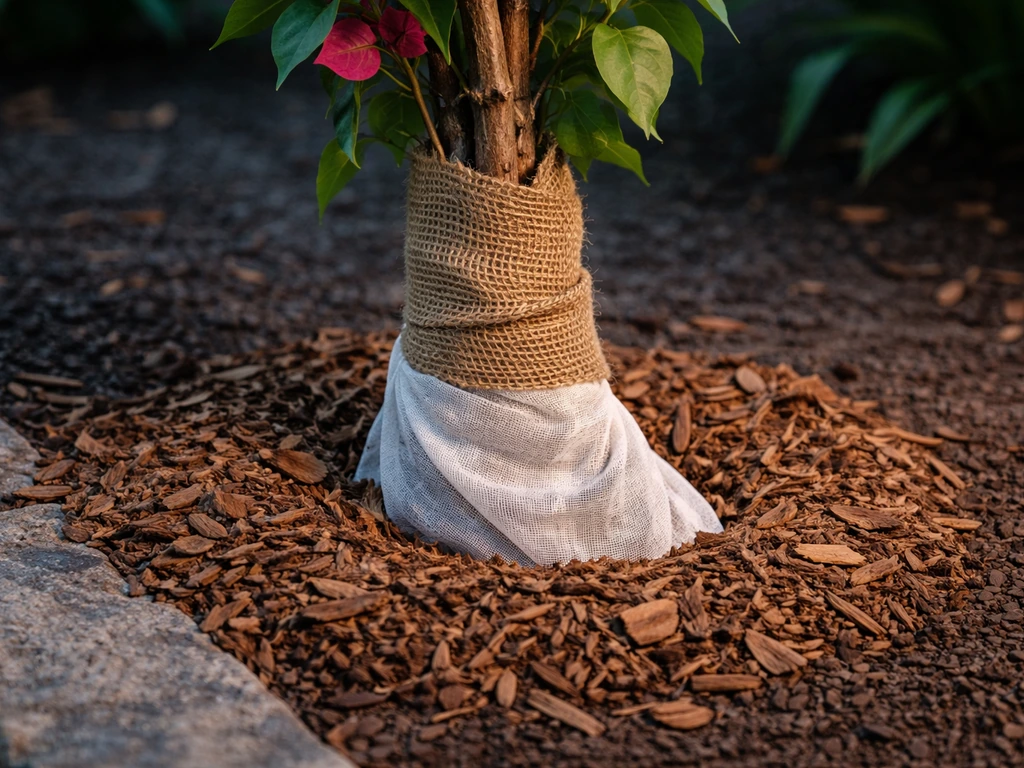
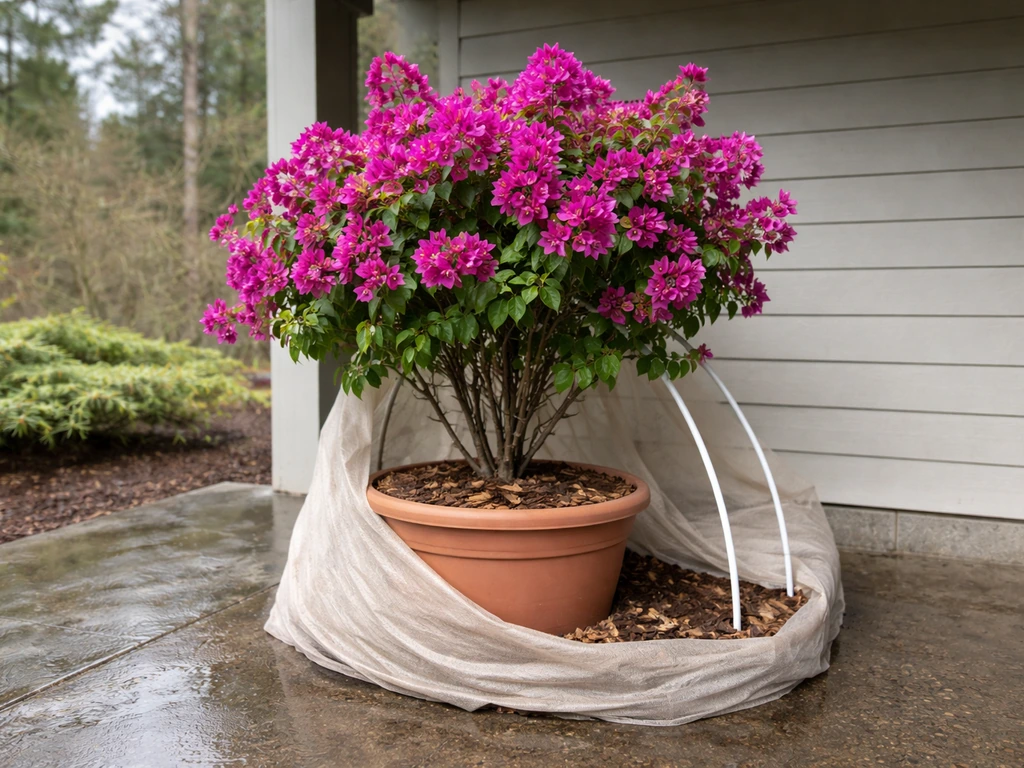
- Apply 4-6 inches of mulch over the root zone before the first frost to insulate the roots.
- Wrap the main canes loosely in burlap or frost cloth when temps are forecast below 28°F.
- A south or west-facing masonry wall behind the plant acts as a thermal buffer, storing daytime heat and radiating it at night.
- Even with all of this, expect dieback of the outer canes in cold winters. If the roots survive, the plant will resprout from the crown in spring. If a hard freeze reaches the roots, the plant is likely lost.
Choosing varieties and preventing common failures
Variety selection matters more than most people realize. Not all bougainvilleas have the same cold tolerance, and in a marginal climate like Oregon's, choosing a hardier cultivar can be the difference between success and a dead plant every spring.
Bougainvillea 'Barbara Karst' and 'San Diego Red' are often cited as among the most cold-tolerant varieties, and they're your best options for trying this in Southern Oregon or a particularly sheltered Willamette Valley microclimate. 'Raspberry Ice' and 'Helen Johnson' are compact varieties that work well in containers and are manageable for indoor overwintering. Avoid large, vigorous cultivars if you're growing in a pot, since they'll outgrow their container fast and become hard to move.
Three common failure points to watch for
- Cold damage: The obvious one. Temps below 30°F sustained for several hours damage canes; sustained temps in the mid-20s and lower kill roots. In Oregon, this is the most common way bougainvillea dies.
- Poor drainage: Oregon's wet winters are a double threat. If your soil or container mix stays waterlogged, roots rot even if the plant survives the cold. Excellent drainage is non-negotiable.
- Insufficient sun and heat: Bougainvillea needs full sun (at least 6 hours of direct sun daily) and genuine summer heat to bloom. In cloudy Western Oregon summers, you may keep the plant alive but see little to no flowering. If blooms are the whole point, this matters a lot.
What to do if bougainvillea won't survive: Oregon-friendly alternatives
If you're in Zone 7 or below, on the coast, or just don't want the hassle of annual overwintering, there are better plants for the same visual role. Oregon's climate actually suits several vigorous, showy vines and ornamentals that deliver comparable drama without the cold-season stress.
| Alternative Plant | What It Offers | Oregon Suitability |
|---|---|---|
| Clematis (various species) | Vigorous flowering vine, similar climbing habit, huge color range | Excellent throughout Oregon; fully hardy |
| Hardy Fuchsia (Fuchsia magellanica) | Vivid tropical-looking blooms, bright magenta and purple | Hardy to Zone 7, thrives in Western Oregon |
| Trumpet Vine (Campsis radicans) | Fast-growing climber, bold orange-red blooms | Hardy to Zone 5, very vigorous in Oregon |
| Climbing Hydrangea (Hydrangea petiolaris) | Showy white blooms, dramatic coverage on walls and fences | Hardy throughout Oregon, tolerates Pacific NW conditions |
| Chilean Glory Flower (Eccremocarpus scaber) | Bright tubular flowers, tropical look, fast growth | Works as an annual in most of Oregon, perennial in milder zones |
Hardy fuchsia is a personal favorite recommendation for Western Oregon gardeners who want that punchy, almost tropical color without the annual rescue mission. It handles the Willamette Valley climate gracefully, thrives in partial shade, and delivers months of blooms. Clematis is the go-to if you want a serious flowering vine on a fence or arbor anywhere in the state.
If you're specifically drawn to bougainvillea's vivid color and papery bracts, consider growing it as a seasonal patio plant in a container, enjoying it from May through September, and accepting that overwintering is part of the deal. Plenty of Oregon gardeners do exactly this and love it. Just go in with clear eyes about what the plant needs and what Oregon's winters will actually deliver.
Gardeners in other challenging climates face similar decisions. If you’re wondering can bougainvillea grow in Pennsylvania, the same reality applies: your success depends on warmth, protection, and often container growing Gardeners in other challenging climates face similar decisions.. Bougainvillea growers in Seattle, Massachusetts, and Michigan all run into the same core problem: beautiful plant, wrong climate. If you’re wondering can bougainvillea grow in Georgia, the key is whether you can match its need for heat and protect it from cold snaps. The strategies are similar across those regions too, with container growing and indoor overwintering being the common thread wherever winters get serious.
FAQ
Can I keep a bougainvillea outdoors year-round in Oregon if I cover it with frost cloth?
Yes, but only if you treat it as a frost-sensitive starter. Set bougainvillea outside only after nighttime temperatures stay consistently above the mid-30s Fahrenheit, and harden it off over 7 to 10 days so the leaves do not scorch when moving from indoors to full sun.
What temperature is too cold before I should bring a container bougainvillea inside in Oregon?
A cover can help with a single light frost, but it usually fails during sustained cold snaps because the crown and root zone still drop too far. For Oregon, the safer plan is to move the container under cover indoors when lows approach the mid-to-low 30s Fahrenheit, then resume outdoor placement after the risk of hard freezes passes.
How should I water bougainvillea in Oregon winters to prevent root rot?
Avoid frequent watering and never let water sit in the saucer. In cool or cloudy periods, bougainvillea uses less water, so overly wet soil can trigger root rot even if the plant survives the cold. Let the mix dry out substantially between waterings, and ensure the pot drains quickly.
My bougainvillea died back after winter in Oregon. Will it grow back, and when should I prune it?
If the plant survives winter, it often looks worse before it rebounds. Expect leaf drop after cold events, then new growth in spring when days warm up. Do not fertilize until you see active new shoots, and do a gentle inspection of the stem and crown to confirm there is living tissue before trimming aggressively.
Will bougainvillea bloom in Oregon if it survives the winter?
You will usually get bracts, not guaranteed bloom, unless you provide real heat and strong light. In Oregon, bloom timing depends on cumulative warm days, and even a surviving plant may only produce a few bracts. If you want more reliable flowering, grow near the sunniest wall you have, and consider using a large, light-colored container that reflects and retains heat.
Is it easier to propagate bougainvillea in Oregon instead of relying on one overwintering plant?
Propagation is often more manageable than overwintering a full plant. Take semi-ripe cuttings in late summer, root them indoors, and keep the new plants smaller so they are easier to move. That way, if the original plant is lost to winter, you still have established backups.
What indoor conditions work best for overwintering bougainvillea in Oregon?
If you plan to overwinter indoors, aim for the brightest location you have, even in a garage or basement. Some gardeners succeed with cool, bright conditions, but a dark room leads to weak growth and leaf drop. If indoor light is limited, supplemental grow lights can make the difference between a healthy plant and a struggling one.
Can I move a bougainvillea in and out during fall to extend the growing season in Oregon?
Yes, but only if the plant is dry and moved promptly. Frost on leaves can turn to damage when temperatures swing during transport. Wait for a dry, mild day to move the container, and bring it in before nights drop sharply to reduce stress.
If I want to try in-ground bougainvillea in Oregon, what is the biggest mistake to avoid?
In-ground bougainvillea can work in Southern Oregon microclimates, but it is still high risk because the roots need consistent protection from wet-cold. If you try it, build a true drainage advantage (raised mound or fast-draining bed), use thick mulching at the base, and plan a backup container because many plants lose the crown after extreme winters.