
Bougainvillea cannot survive outdoors year-round in Maryland. The state is simply too cold, and even the mildest corners of the Eastern Shore or Chesapeake Bay coastline see enough freezing nights to kill bougainvillea to the ground or outright. If you want to grow it here, containers are your only realistic path, and that means bringing the plant indoors every single fall before temperatures hit 32°F. That same container-and-overwinter mindset also matters if you are wondering can bougainvillea grow in Scotland. In Massachusetts, the challenge is the same kind of winter cold that affects other northern states, so you will likely need container growing and overwintering indoors can bougainvillea grow in Scotland. Michigan winters are usually too cold for bougainvillea to survive outdoors, but you may be able to grow it in a container with overwintering indoors can bougainvillea grow in michigan.
Can Bougainvillea Grow in Maryland? Zones, Cold Protection
The straight verdict: outdoors vs. containers in Maryland
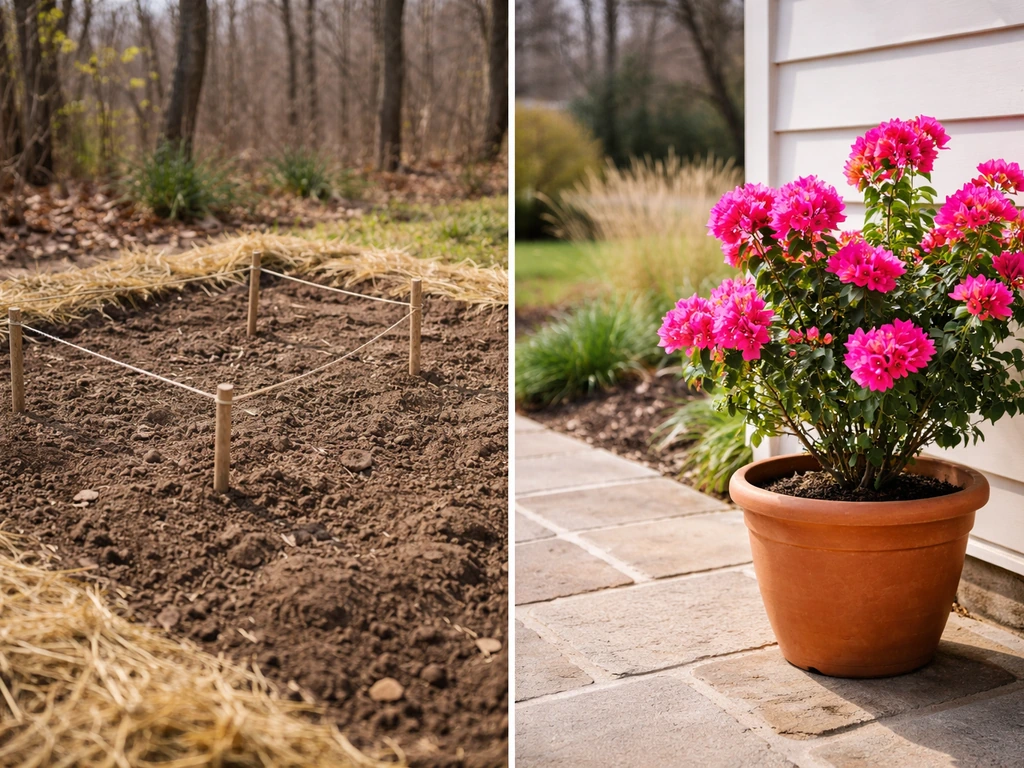
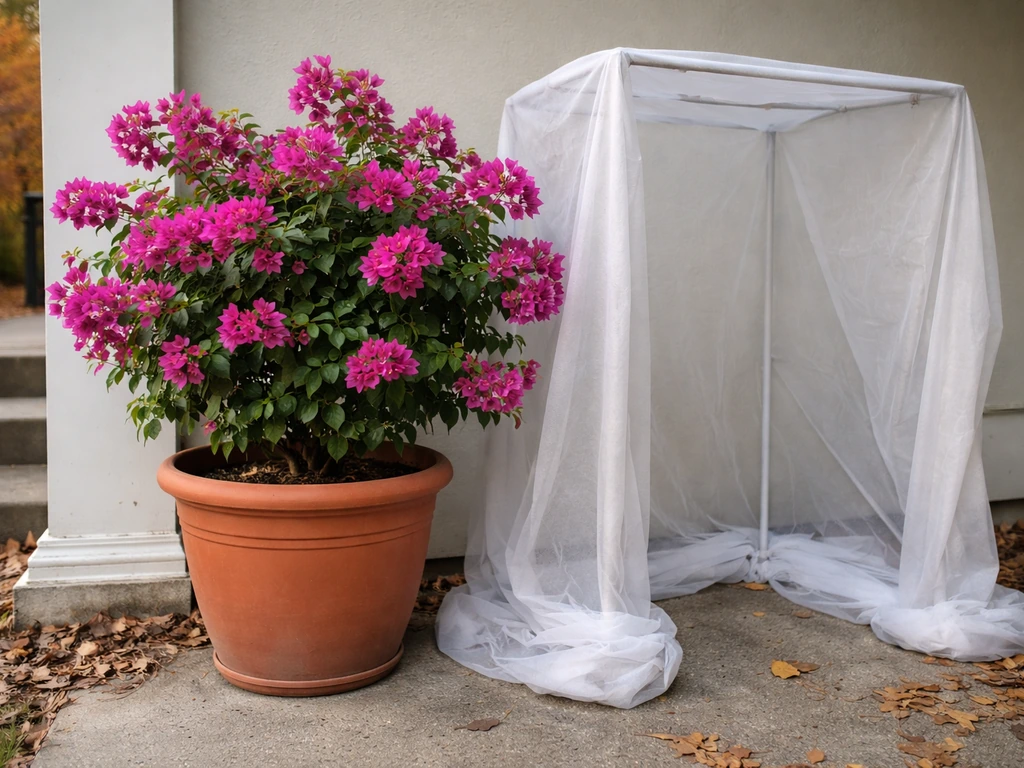
University extension experts are blunt on this one: bougainvillea is not winter hardy in Maryland. That is not a soft hedge. It means you cannot plant one in the ground and expect it to come back next spring. Bougainvillea cannot tolerate temperatures below about 30°F, and Maryland averages roughly 90 freezing days per year, with multi-day cold spells that can last up to 24 consecutive days. Even a single hard freeze kills the root system when the plant is in the ground with no protection. Container growing changes that equation entirely. A potted bougainvillea can thrive on a Maryland patio from late spring through early fall, bloom beautifully in full sun, and then move inside before the cold arrives. That is the only setup that works consistently here.
Why Maryland's climate is the real obstacle
Maryland's winters are the dealbreaker. January average daily low temperatures at College Park, a representative central Maryland location, sit around 26°F. February is only marginally better at 28°F. Bougainvillea needs temperatures to stay above 30°F to avoid damage, so even in the middle of the state, the thermometer routinely drops below that threshold for weeks at a time. The cold comes in spells, not just isolated nights. Climatological data from the Maryland State Climatologist Office shows the state averages about 14 cold spells of two or more consecutive freezing days per year, with the longest spell stretching nearly 24 days. That kind of sustained cold does not give a frost-tender tropical plant any chance of recovery.
Heat and sun are the good news. Maryland summers are warm enough for bougainvillea to bloom aggressively. The plant needs at least four to six hours of direct sun daily, and most Maryland yards deliver that comfortably from May through September. Humidity is generally tolerable too. The problem is the calendar. You get maybe four to five good months of outdoor growing before frost risk returns in October. That is a workable window if you commit to the container-and-overwinter routine.
Microclimates matter too, and some Maryland locations do push toward the warmer end of the spectrum. In Seattle, you can use the same container and overwintering approach to give bougainvillea the warmth it needs during cold months can bougainvillea grow in seattle. A south-facing brick wall in Annapolis, a sheltered courtyard in Baltimore, or a protected spot near the Chesapeake in St. Mary's County can add a couple of degrees of protection. But even those spots see hard freezes, and the sustained cold spells erase any microclimate advantage after a few nights. Do not count on a warm corner of your yard to replace a proper overwintering plan.
Maryland's growing zones and what they mean for bougainvillea
Maryland spans USDA hardiness zones 5b through 7b, with some sources including small pockets of 8a along the Atlantic coast and lower Eastern Shore. USDA explains that Plant Hardiness Zones are based on 1991, 2020 weather data and use 5°F increments, which is why closely numbered halves like 7a and 7b represent colder versus warmer conditions USDA hardiness zones 5b through 7b. That range is wide. Garrett County in the western mountains sits at zone 5b, where average annual extreme minimum temperatures can drop to around negative 15°F. The Eastern Shore and southern Maryland coastal areas reach zone 7a to 7b, where extreme lows average between 0°F and 10°F. Bougainvillea is rated hardy in zones 9b and 10. That puts every single Maryland zone several steps below where this plant can safely overwinter in the ground. Even zone 7b, the warmest Maryland gets, is two full zones colder than bougainvillea's absolute minimum. There is no Maryland zone where in-ground overwintering is a reasonable bet.
| Maryland Region | USDA Zone | Avg Extreme Min Temp | Bougainvillea Outdoor Viability |
|---|---|---|---|
| Western Mountains (Garrett County) | 5b | Around -15°F | Not viable outdoors |
| Central Maryland (Baltimore, College Park) | 6b–7a | Around -5°F to 0°F | Not viable outdoors |
| Eastern Shore / Southern MD coast | 7a–7b | Around 0°F to 10°F | Not viable outdoors |
| Atlantic coast pockets | 7b–8a | Around 5°F to 15°F | Not viable outdoors; containers only |
How Virginia compares, and where it gets easier
Virginia gives bougainvillea growers a slightly better hand, though not by much for most of the state. Virginia spans zones 5b to 8b, and crucially, the southeastern corner near Virginia Beach and the Hampton Roads area pushes into zone 8a to 8b. Those coastal pockets see average extreme winter lows in the 10°F to 20°F range, which is still well below bougainvillea's threshold, but the combination of milder winters, fewer sustained freeze spells, and stronger urban heat in dense coastal areas makes the container-growing window longer and the overwintering risk slightly lower. A gardener in Virginia Beach has a more forgiving fall and earlier spring than someone in Annapolis or Rockville.
That said, the bulk of Virginia, including the Shenandoah Valley, Richmond, and northern Virginia suburbs, sits in zones 6b to 7b, just like central and southern Maryland. The practical advice is nearly identical across both states for most growers: containers, full sun, bring it inside before frost, let it go dormant. If you are asking about can bougainvillea grow in Oregon, expect similar container, full-sun, and frost-protection planning to stay on the safe side. If you are comparing Maryland versus Virginia for bougainvillea feasibility, the answer is that both states require the same container strategy for 90 percent of their geography. Virginia's southeastern tip is the one meaningful exception where outdoor survival becomes a slightly more realistic experiment. Neighboring Pennsylvania, by contrast, is even colder across most of its range, making Maryland's southern zones look relatively hospitable. You may still be able to grow bougainvillea in Pennsylvania, but expect similar container and overwintering needs as in Maryland can bougainvillea grow in pennsylvania. And states like Georgia and Florida operate in an entirely different league where in-ground bougainvillea thrives without any of this management. If you are wondering about Georgia specifically, the key is that much of the state is warm enough for bougainvillea to survive better than in Maryland, though sites with occasional freezes still benefit from protection states like Georgia and Florida operate in an entirely different league.
The best setup if you grow bougainvillea in Maryland
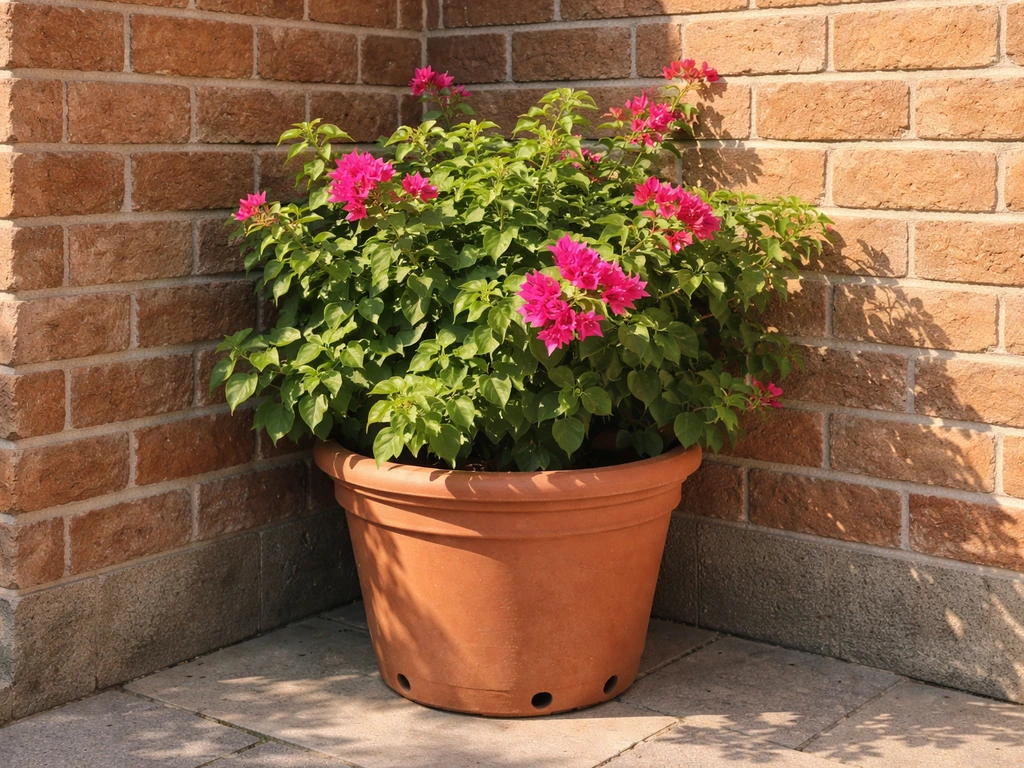
Container choice and placement
Use a large container with excellent drainage holes. Bougainvillea hates soggy roots, and a pot that retains moisture through Maryland's humid summers or rainy fall stretches will cause root rot fast. A container in the 15 to 25 gallon range gives the root system room to develop while still being movable. Terra cotta looks great but dries out quickly and cracks in frost. A resin or fiberglass pot is more practical for a plant you are moving in and out seasonally.
Place it where it gets maximum sun. South or west-facing spots are ideal. A spot against a brick wall on the south side of the house captures both direct sun and radiated heat, which can extend the comfortable outdoor season by a week or two in both spring and fall. Keep it away from spots that collect water or stay damp after rain. Good air circulation also helps prevent fungal issues during Maryland's humid summer months.
Soil and watering
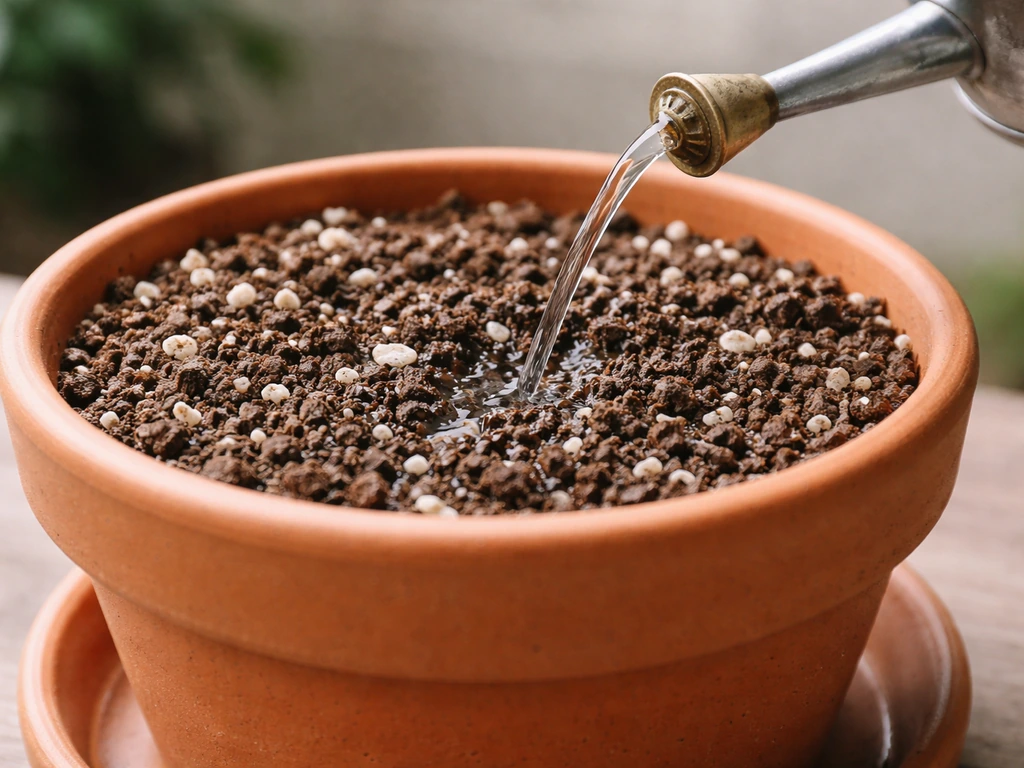
Use a fast-draining potting mix. You can amend a standard potting soil with perlite to improve drainage. Water thoroughly when the top inch of soil is dry, but never let the pot sit in a saucer full of water. During active growth in summer, bougainvillea actually blooms better with a slight stress cycle, so resist the urge to water constantly. Fertilize with a balanced or bloom-boosting fertilizer through the summer growing season, then stop entirely once you bring the plant indoors for winter.
Overwintering your bougainvillea through a Maryland winter
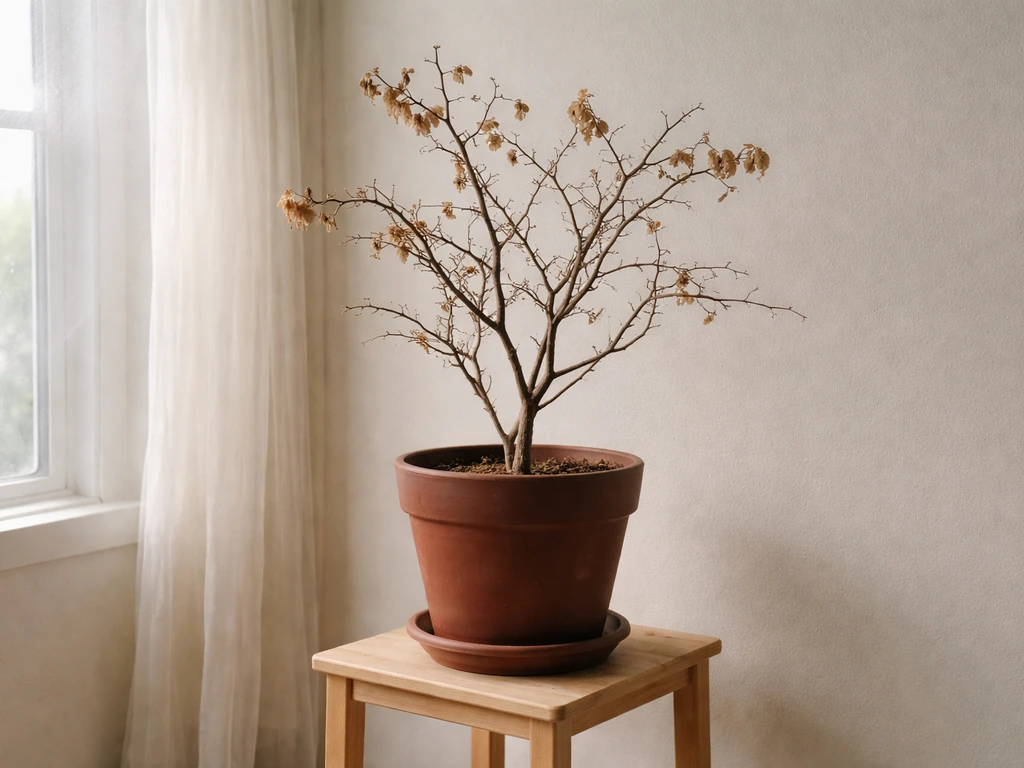
This part is non-negotiable. When nighttime temperatures start approaching 32°F, typically in October in central Maryland and sometimes as early as late September in the western part of the state, the plant needs to come inside. Do not wait for the first hard freeze. One night below 30°F can cause serious damage or kill the plant entirely.
The best overwintering strategy is to let the plant go dormant rather than trying to keep it actively growing indoors. Move it to a cool, frost-free location: an unheated garage that stays above freezing, a basement with a small window, or a cool enclosed porch all work well. The University of Missouri Extension specifically recommends a cool-but-not-freezing spot that allows natural dormancy. The University of Missouri Extension recommends moving overwintering tropical patio plants, including bougainvillea, to a cool-but-not-freezing location so they can go dormant cool-but-not-freezing spot. The plant will drop its leaves and look dead. That is normal. Do not panic and overwater it.
- Stop fertilizing about six weeks before you plan to bring the plant in.
- Reduce watering gradually as temperatures cool in September and October.
- Move the container indoors before the first frost, ideally when nighttime temps are consistently in the mid-30s.
- Place it in a cool, frost-free spot with some light if possible, though full darkness is tolerable during dormancy.
- Water only enough to keep the root ball from completely drying out, roughly once every two to three weeks.
- Do not fertilize at all during winter dormancy.
- In late March or April, move it back to a sunny spot indoors to encourage new growth, then transition it back outside after the last frost date for your Maryland county.
Maryland's average last frost dates vary from early April in coastal areas to mid-May in the western mountains. Check your county's specific frost dates before moving the plant back outside in spring, and harden it off gradually over one to two weeks by setting it outside for increasing hours each day before leaving it out full time.
Mistakes to avoid before you buy
- Buying a large, established bougainvillea assuming it is cold-hardy. Size does not equal hardiness. A mature plant dies just as fast in a Maryland freeze as a young one.
- Assuming bougainvillea is frost-tolerant because you saw it growing somewhere in the Mid-Atlantic. It may have been in a container, in a greenhouse, or it may have simply died that winter and been replaced.
- Relying on a warm microclimate alone without a backup overwintering plan. Even the warmest Maryland spots see sustained freezing spells that exceed what bougainvillea can handle.
- Planting in the ground thinking you can mulch heavily enough to protect it. No amount of mulching compensates for Maryland's sustained sub-freezing winter temperatures at the root zone.
- Overwatering during dormancy indoors. This kills more overwintered bougainvilleas than the cold does.
Bougainvillea is absolutely worth growing in Maryland if you go in with realistic expectations. You will get spectacular color and vigorous growth through the summer months. The trade-off is a committed annual routine of bringing the plant in before frost and storing it carefully through winter. If that sounds manageable, it is a rewarding plant for a Maryland patio. If you want something that blooms just as boldly without the seasonal management, look at native alternatives like trumpet vine or hardy hibiscus, which are genuinely zone-appropriate for Maryland's range and deliver impressive color without the overwinter logistics.
FAQ
Can I keep bougainvillea outside in Maryland on a covered porch or under an overhang to avoid bringing it indoors?
Yes, but treat it as a “move-and-store” plant. If you cannot bring the container fully indoors (or to a frost-free garage or cool enclosed porch), the odds of losing it in Maryland are high.
If my Maryland nights rarely go below freezing, do I still need to move bougainvillea inside before October?
Plan for one hard freeze risk. Even if daytime stays warm, nighttime dips below about 30°F can damage roots in containers too, especially if the pot is sitting directly on cold ground. Use insulation under the pot (styrofoam board or plant stand) when nights approach freezing.
How should I water bougainvillea during winter dormancy in a cool garage or basement?
Stop watering on the same schedule you stop fertilizing when you bring it indoors, then water only enough to prevent the mix from fully drying out. Overwatering during dormancy is the fastest way to cause root rot, since the plant uses far less moisture in winter.
Should I prune bougainvillea before bringing it indoors for winter in Maryland?
Most bougainvillea in containers does best with deliberate dormancy. Keep it cool and frost-free, expect leaf drop, and avoid heavy pruning until spring. Only remove dead, snapped stems after you see new growth starting outdoors.
Is there any trick to grow bougainvillea in the ground in Maryland using mulch or frost blankets?
In-ground is not realistically reliable in Maryland because winter cold is the limiting factor. If you really want to plant in soil, the closest workable approach is to keep it in a container that you sink into the ground seasonally, then lift it out and overwinter it safely before sustained cold spells.
Will bougainvillea die if I bring it inside abruptly, and how do I transition it to indoor life?
Yes, if you give it sun outdoors and then bring it into brighter conditions indoors. A common failure mode is moving it into a dark basement, then watering it lightly as it struggles. Use the sunniest cool indoor spot you have (or a grow light) to reduce stress when temperatures drop.
What container size is best, and does bigger always mean better in Maryland?
Use the biggest pot you can manage and keep it moving smoothly for winter. For example, a 25-gallon container may be ideal for roots, but if it becomes too heavy to relocate before a frost night, a slightly smaller size (still well-draining) can be the practical choice.
My Maryland bougainvillea is dropping leaves after I move it indoors, should I worry about a disease?
If you see yellowing and leaf drop after moving indoors, it is often a normal response to cooler temperatures and reduced light, not immediate disease. Check the soil first, then wait to see if new buds form in spring before treating aggressively.
Why isn’t my bougainvillea flowering well on my Maryland patio, and what should I change first?
If it is blooming poorly, the issue is usually light, not fertilizer. Make sure it gets at least several hours of direct sun outdoors, use bloom-boosting fertilizer only during the active growing season, and avoid continuous nitrogen-heavy feeding. Slight water stress is normal, but do not let the pot fully dry into bone-dry.
When can I put my bougainvillea back outside in Maryland, and how should I harden it off?
Harden-off even container plants. After winter, set it outside for longer periods over 1 to 2 weeks, starting in sheltered, bright conditions, then move it to full sun. This reduces leaf scorch and prevents shock from cool nights.