
Bougainvillea can grow in Pennsylvania, but it cannot survive outdoors year-round in any part of the state. The same container approach is also what people typically use when they ask can bougainvillea grow in Seattle. Pennsylvania winters are simply too cold for this tropical vine. What you can do, and what plenty of PA gardeners do successfully, is grow bougainvillea in a container, bring it inside before the first hard frost, and get genuine blooms during the warm months. It takes some commitment, but it works.
Can Bougainvillea Grow in Pennsylvania? Outdoor and Pot Tips
Marcus Hartwell
16 May 2026
What bougainvillea actually needs to survive
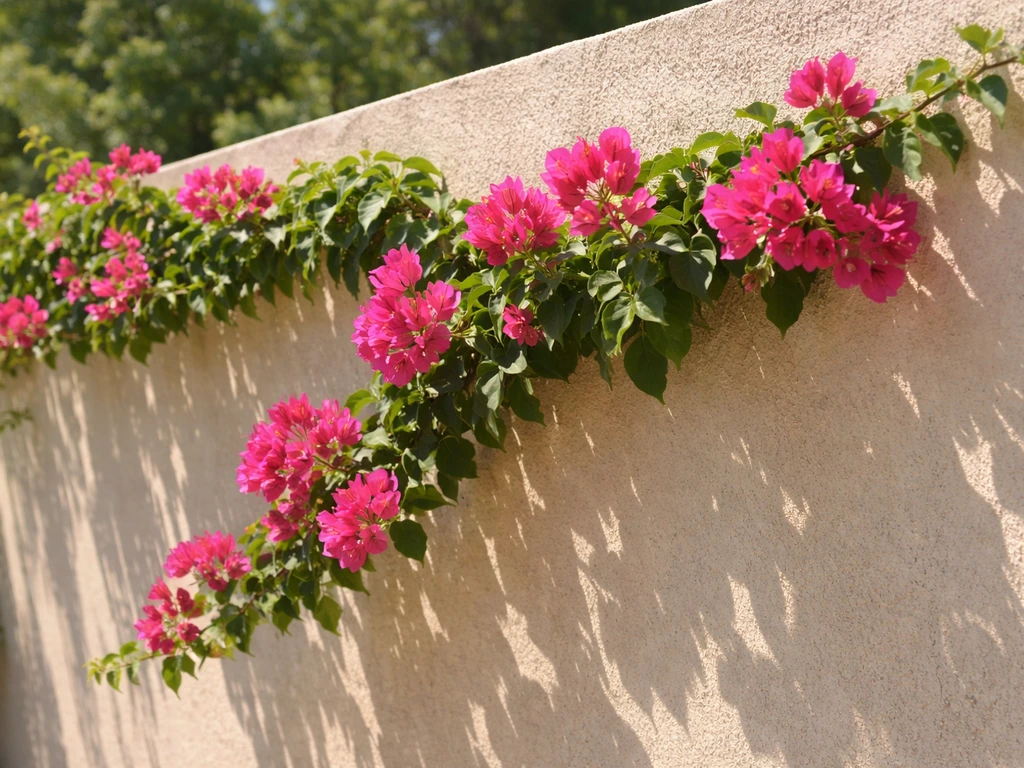
Bougainvillea is a tropical vine native to South America. It thrives in heat, full sun, and frost-free conditions. Once temperatures dip to 32°F, the plant suffers. A hard freeze will kill stems to the ground, and prolonged cold at or below 20°F can kill the root system entirely. The UC Statewide IPM Program is blunt about this: bougainvilleas do not tolerate freezing temperatures and should be moved indoors wherever frost occurs.
On the heat side, bougainvillea needs consistent warmth and long stretches of full sun (at least 5 to 6 hours per day) to produce its signature bracts. It blooms best when it's a little stressed, meaning dry conditions between waterings and temperatures that stay reliably above 60°F at night. Cool, cloudy summers produce far fewer flowers than hot, bright ones.
Pennsylvania's climate and USDA zones
Pennsylvania spans USDA Hardiness Zones 5b through 7a, depending on where you are in the state. Philadelphia and the southeastern corner sit in Zone 7a, where average annual extreme minimum temperatures reach 0°F to 5°F. Move toward central PA, and you're in Zones 6a or 6b, with lows from -10°F to 0°F. The northern tier and higher elevations drop into Zone 5b, where winters can push -15°F. Bougainvillea is rated hardy only to Zone 9 or 10 in most references, meaning it needs winter lows no colder than 20°F to 25°F at the very most. Every single zone in Pennsylvania falls well outside that range.
The first frost in Philadelphia typically arrives in mid to late October. In Pittsburgh it can come in early to mid October. In State College and northward, late September frosts aren't unusual. First frost is your deadline for getting bougainvillea indoors, and you need to mark it on your calendar if you're serious about keeping the plant alive. To check your exact zone in Pennsylvania, use the 2023 USDA Plant Hardiness Zone Map and enter your zip code.
Can bougainvillea grow outdoors year-round in PA?
No. There is no part of Pennsylvania where bougainvillea will survive a full winter in the ground. Even in Philadelphia, the warmest corner of the state, temperatures regularly drop below the plant's cold tolerance. Gardeners who try leaving bougainvillea in the ground or in an exposed container outside through a Pennsylvania winter will come back to a dead plant in spring. This is not a close call.
If you're comparing Pennsylvania to similar mid-Atlantic states, Maryland gardeners in the Baltimore and DC suburbs face the same problem in most of the state, though the southernmost tip of Maryland gets slightly more leeway. Can bougainvillea grow in Oregon? The same cold sensitivity that affects other states makes outdoor year-round growing difficult. Massachusetts and Michigan gardeners are in an even colder position. Because Michigan has similarly cold winters, you’ll usually need to grow bougainvillea in a container and overwinter it indoors rather than leaving it outside year-round Michigan gardeners. Because Massachusetts winters are also well below bougainvillea's freezing tolerance, you'll need to treat it as a container plant and overwinter it indoors. Georgia is where the calculus really shifts, since much of that state sits in Zones 8 and 9, where some outdoor overwintering becomes possible. Because Georgia sits mostly in USDA zones 8 and 9, bougainvillea is sometimes able to survive outdoors with less protection than in colder states.
Container growing and overwintering: the real path forward
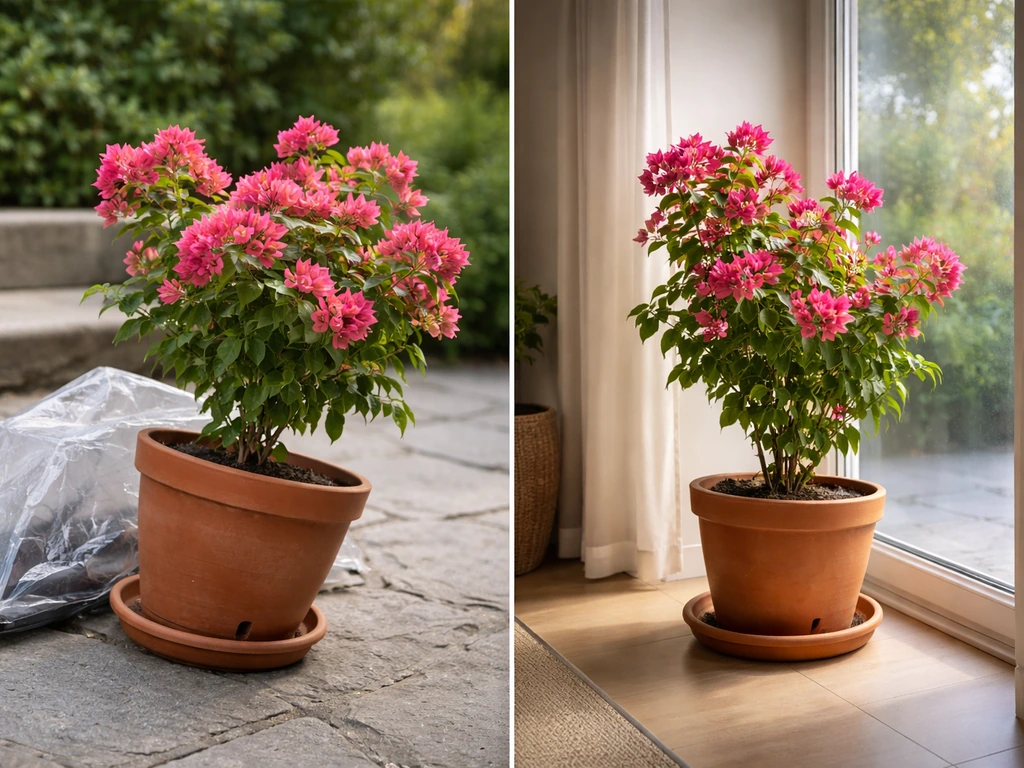
Growing bougainvillea in a container and overwintering it indoors is the proven strategy for Pennsylvania. Illinois Extension recommends treating bougainvillea exactly this way: as a container plant that goes dormant and gets stored in a cool, dry indoor location through winter. It's worth pointing out that 'cool and dry' doesn't mean a heated living room. A garage, basement, or enclosed porch that stays above freezing but below 50°F works well. The plant drops its leaves and goes semi-dormant, needing only occasional watering every three to four weeks to keep the roots from desiccating completely.
Penn State Extension makes an important point about containers in winter: the roots of a potted plant are exposed to the same temperatures as the surrounding air. A container sitting in a garage where temps drop to 25°F is a dead container plant. You need to make sure whatever indoor space you use stays reliably above 32°F, and ideally above 40°F, throughout winter.
Here's a practical overwintering plan that works for most PA gardeners:
- Bring the container indoors two weeks before your area's average first frost date (late September for northern PA, mid-October for central PA, late October for southeastern PA).
- Cut back the plant by about one-third to make it manageable and reduce stress on the root system.
- Place it in a cool, dim location, ideally between 40°F and 55°F. A detached garage or unheated basement room is ideal.
- Water sparingly, roughly once a month, just enough to keep the root ball from drying out completely.
- In late March or April, move the container to a warm, sunny spot and begin regular watering. New growth will emerge within a few weeks.
- After the last frost date in your area (mid to late April in most of PA), move the plant back outdoors.
What to actually expect: blooms, growth, and freeze damage
Be honest with yourself about what Pennsylvania bougainvillea growing looks like in practice. You'll get blooms, but probably not the sprawling, wall-covering spectacle you see in Florida or California. Container plants stay smaller than in-ground specimens. The bloom cycle is compressed into the warm months, roughly June through September in most of PA. If your summer is hot and sunny, you can get two or three strong bloom flushes. If it's a cloudy, cool summer, blooms will be sparse.
Any cold snap below 32°F that catches your plant outdoors will cause tip and branch dieback. Stems will turn brown and mushy, and you'll need to cut back the damaged growth. The plant can recover from this if the roots were protected, but repeated cold damage weakens the plant significantly. One hard, unexpected freeze in early October before you've brought it in can set you back an entire season. Watch the forecast closely.
Picking the right variety and placement
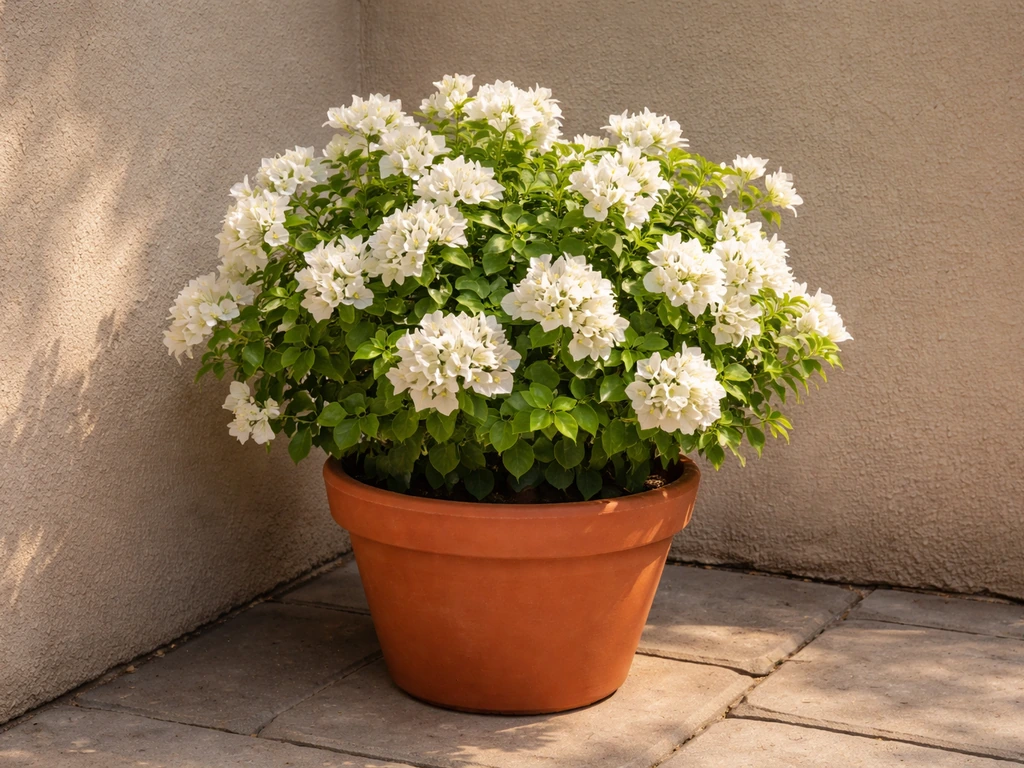
Variety selection matters. For container growing in Pennsylvania, dwarf or compact varieties are far easier to manage because you'll be moving this plant in and out every year. Some good options to look for include:
- Miss Alice: a compact, thornless variety with white bracts, manageable size, and good container performance
- Helen Johnson: a dwarf with deep pink bracts that stays small and blooms reliably even in containers
- Raspberry Ice: a variegated-leaf variety with magenta bracts, slightly more compact than standard types
- Rosenka: a dwarf with golden-orange to pink bracts, excellent for pots
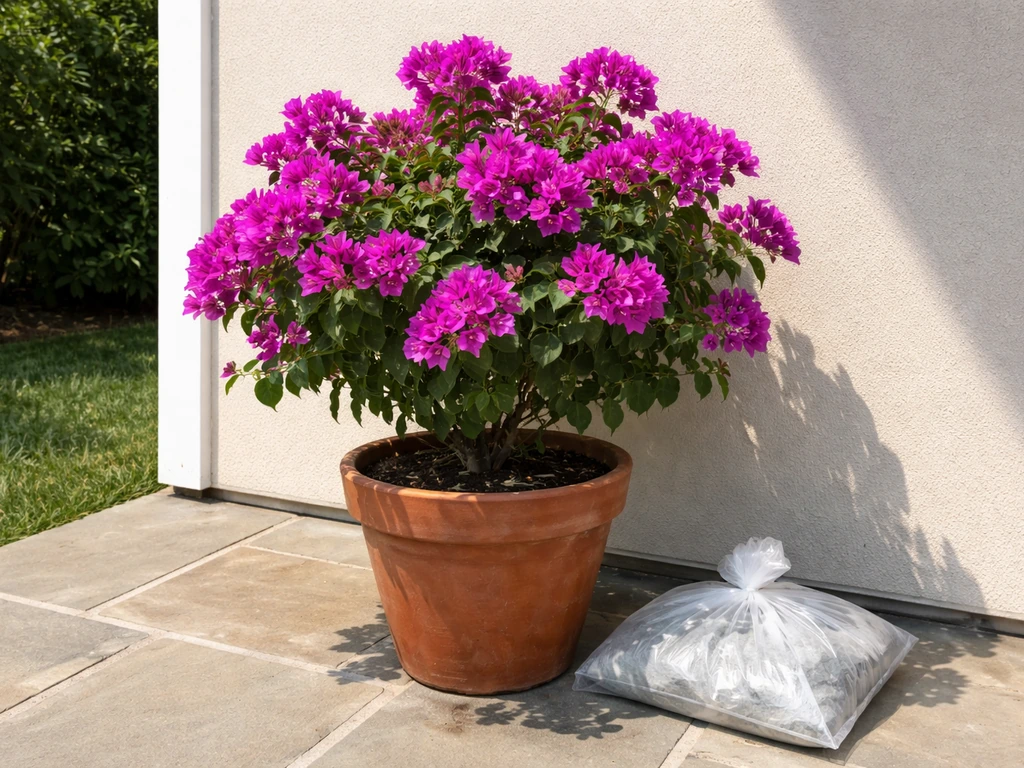
For placement during the outdoor season, put your container against a south-facing or west-facing wall. Brick and masonry walls absorb heat during the day and radiate it at night, creating a microclimate that's a few degrees warmer than the open garden. This extends your outdoor season slightly and helps bougainvillea bloom more reliably. Full sun is non-negotiable. A spot that gets less than 5 hours of direct sun will produce mostly foliage and almost no bracts.
Use a terra cotta or lightweight plastic container with excellent drainage. Bougainvillea hates wet roots. A pot in the 10 to 14 inch range is a good starting size. Larger pots produce bigger plants and more blooms, but you'll have to wrestle a heavy container in and out each season. Some gardeners use wheeled plant caddies to make the annual move easier.
| Variety | Size | Bract Color | PA Container Suitability |
|---|---|---|---|
| Miss Alice | Compact, 2-3 ft | White | Excellent |
| Helen Johnson | Dwarf, 3-4 ft | Deep pink | Excellent |
| Raspberry Ice | Semi-compact, 4-6 ft | Magenta | Good |
| Rosenka | Dwarf, 3-4 ft | Orange to pink | Excellent |
| Barbara Karst | Large, 15-20 ft | Bright red | Poor (too large) |
Should you plant bougainvillea in Pennsylvania? Run through this first
Before you buy a bougainvillea, run through this quick checklist. If you answer yes to most of these, you're a good candidate. If you're answering no to several, a different plant might reward your effort more.
- Do you have a south or west-facing spot outdoors that gets 6 or more hours of direct sun daily?
- Do you have indoor storage space that stays above 32°F (and ideally 40°F to 55°F) all winter, like a garage or unheated basement?
- Are you willing to bring the plant inside before your first frost date every single year?
- Can you commit to occasional winter watering (once a month) to keep the roots alive during dormancy?
- Are you choosing a compact or dwarf variety you can realistically move in a container?
- Do you understand that blooms will be seasonal (roughly June through September) and not guaranteed every year?
- Have you checked your specific PA zip code on the USDA zone map to know your frost dates?
If that list feels like a lot, it's worth considering whether a hardy alternative might give you more payoff for less work in Pennsylvania. Trumpet vine (Campsis radicans), native and hardy across all of PA, gives you a vigorous flowering climber that needs no winter care. Climbing hydrangea is another option for a dramatic wall plant. But if you want bougainvillea specifically, and plenty of people do, the container strategy genuinely works. You'll get that tropical color splash on your patio every summer. You just have to be organized about the move each fall.
FAQ
Can bougainvillea be kept outside year-round in Pennsylvania if I cover it with a blanket or tarp?
Yes, as long as you treat it like a seasonal plant in Pennsylvania. The key requirement is uninterrupted warmth for survival, you cannot rely on any in-ground location or an uncovered outdoor container through winter. If you can bring it indoors before hard freezes and keep the container above freezing all winter, it can live for multiple years.
What indoor temperature is safe for overwintering bougainvillea in a container in Pennsylvania?
Avoid overwintering it in a space that drops into the 20s or lower. In a pot, root temperature follows the air temperature closely, so a garage or basement that routinely falls near 25°F is risky. Aim for reliably above 32°F, and ideally above 40°F, then keep the soil only lightly moist with watering about every three to four weeks.
When should I prune bougainvillea in Pennsylvania, before winter or after it comes inside?
Do not prune hard until you have brought it indoors and the plant is clearly finished with outdoor growth. If you cut back while it is still taking cold damage outdoors, you can encourage more tender regrowth that is vulnerable to the next dip below 32°F. Wait, then remove brown or mushy tips after a cold event and after you see what survived.
How do I tell dormancy from cold damage after a frost in Pennsylvania?
If your plant suffers leaf loss after a cold snap, that can be part of dormancy, but it should not look waterlogged, mushy, or turn black/brown at the crown. Healthy dormancy typically means the plant looks bare yet firm, and stems do not collapse. If you see mushy tissue, remove it and reassess indoor temperature and watering.
What placement mistakes most often stop bougainvillea from blooming in a Pennsylvania summer?
Use wind and rain protection during the outdoor season, even if you cannot prevent cold. Place containers near south- or west-facing walls, and secure the pot so it does not tip in storms. Rain plus cool nights can slow blooming and increase the chance of staying too wet, so prioritize fast drainage and a sheltered spot with full sun.
How often should I water bougainvillea outdoors and during winter indoors in Pennsylvania?
Yes, but avoid soaking. Bougainvillea likes to dry slightly between waterings, and the sign is dryness several inches down in the potting mix. In winter dormancy, water sparingly (every few weeks) so roots do not desiccate, using just enough to prevent the mix from fully drying out.
What pot size is best for bougainvillea in Pennsylvania for easier overwintering?
A container size near 10 to 14 inches is usually a practical sweet spot for moving it each season while still supporting bloom. If you go much larger, the plant can look bigger in summer, but it becomes harder to transport and the soil stays wet longer, which is risky in cooler shoulder seasons.
Is terra cotta or plastic better for bougainvillea in Pennsylvania containers?
Terra cotta is often excellent because it dries faster, but it can also dry out too quickly in summer heat, leading to stress that can reduce growth if you miss waterings. Lightweight plastic holds moisture longer. The best choice is the one that matches your ability to monitor moisture, with a non-negotiable focus on drainage holes and a fast-draining mix.
Why does my Pennsylvania bougainvillea grow leaves but make few or no bracts?
In Pennsylvania, you will usually see fewer bracts in cool, cloudy periods and more frequent flushes during hot, sunny stretches. If bloom is disappointing, check sun first, then verify nighttime temperatures are consistently above about 60°F during the warm months, and confirm you are not keeping the pot constantly wet.
Can I repot bougainvillea in Pennsylvania before moving it indoors for winter?
Yes, but it is easier and safer to repot right before the start of your outdoor season rather than late in the fall. Repotting during the transition to cold can trigger stress and more leaf loss right when you need the plant to set energy for dormancy. When you do repot, do it while nights are warm and keep disturbance minimal.