
Bougainvillea can technically grow in Scotland, but not outdoors in the ground year-round. If you want it to survive and actually flower, you need a container-based setup with a greenhouse, conservatory, or at minimum a frost-free indoor space to bring it into over winter. Can bougainvillea grow in Seattle? In most cases it also does best in a container so you can protect it from cold and bring it indoors when temperatures drop. In Michigan, the big question is whether you can keep bougainvillea warm enough through winter and grow it in a protected container can bougainvillea grow in Michigan. Oregon has a similar Mediterranean-style climate in many areas, so it may be possible to grow bougainvillea there with the right winter protection can bougainvillea grow in oregon. That's the honest answer. It's not a plant you can put in a border and forget about, but with the right approach it's genuinely doable and very rewarding.
Can Bougainvillea Grow in Scotland? Realistic Options
Scotland's climate reality for tender plants
Scotland sits mostly in USDA hardiness zone 8 in milder coastal areas, dropping to zones 6 and 7 inland and across the Highlands. Even in the warmest Scottish spots like the south-west coast and parts of the Clyde, winter temperatures regularly dip well below freezing, frost is common from October through April, and summers are cool, overcast, and short. Edinburgh, for example, records around 44 air frost days per year on average (1991–2020 Met Office data), and even the warmest Scottish summers rarely see prolonged spells of the heat that Mediterranean plants crave. For genuinely tender plants like bougainvillea, jasmine, and hibiscus, Scotland's climate is simply not a natural match without extra effort. That doesn't mean you can't grow them, but you need to go in with your eyes open.
What bougainvillea actually needs to thrive
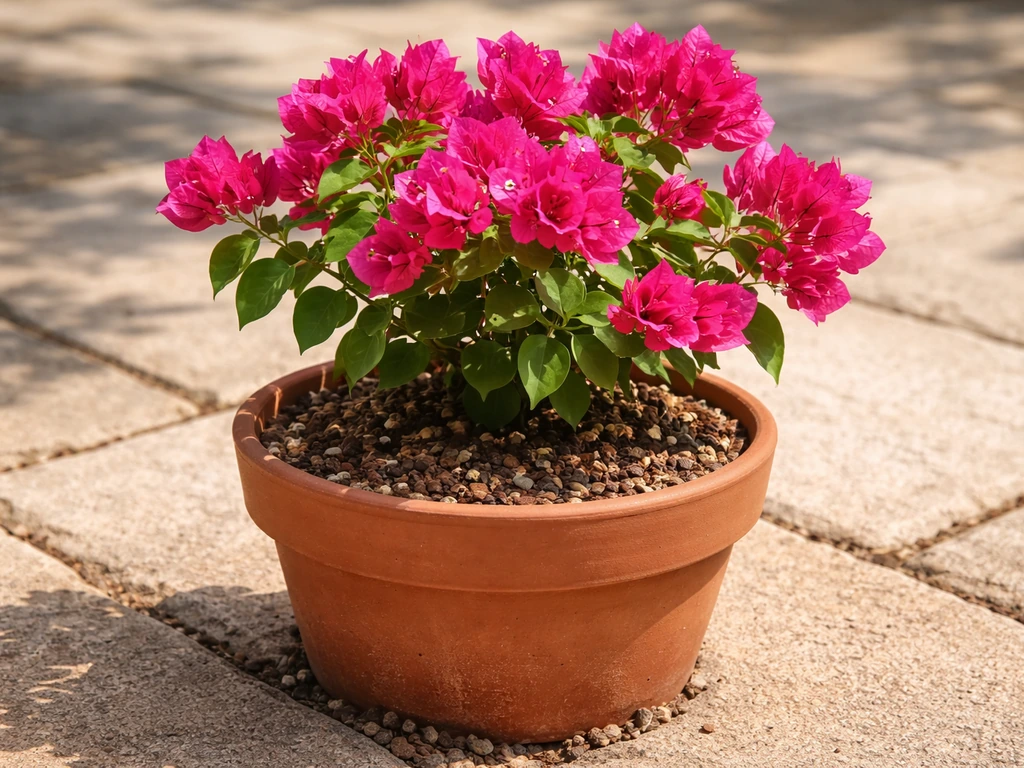
Bougainvillea originates from South America and is built for heat, sun, and dry conditions. It needs a bright, sunny position for most of the day, well-drained soil (it absolutely hates sitting in wet compost), and warm temperatures to both grow and flower. The RHS advises a minimum night temperature of 10°C during active growth, dropping to no lower than 4°C in a frost-free winter rest. The BBC Gardeners' World advice notes that bougainvillea can technically tolerate as low as 2°C briefly, and the RHS notes that the variety 'Poultonii Special' can survive short spells down to 0°C if kept dry, but these are survival thresholds, not growing conditions. At those temperatures it's just hanging on, not putting on a show.
Flowering depends almost entirely on warmth and light. The plant blooms most prolifically when it experiences some stress, particularly a slightly dry, warm period followed by bright sun. That combination is very hard to deliver naturally in Scotland. But inside a warm conservatory or greenhouse facing south, you can get close enough.
Can it grow outdoors in Scotland? The regional picture
Leaving bougainvillea in the ground outdoors through a Scottish winter is not realistic anywhere in the country. Even in the mildest spots, the combination of wet winters, wind, and frost will kill it. However, there is some regional variation worth knowing about if you're planning a sheltered outdoor summer placement.
| Region | Average annual frost days (approx.) | Outdoor summer viability | Key challenge |
|---|---|---|---|
| South-west Scotland (e.g., Stranraer, Ayrshire coast) | 20–35 days | Possible in sheltered spot, late May–September | Low summer sun hours, cool nights |
| Central Belt (Edinburgh, Glasgow) | 40–55 days | Limited, needs very sheltered wall | Short warm season, high rainfall |
| Highland (Inverness and north) | 70+ days | Very unlikely outdoors | Late frosts, cold summers |
| Outer Hebrides / Northern Isles | 20–35 days (mild winters, but windy) | Not practical outdoors | Wind damage, low sun, cool temperatures |
A south-facing sheltered wall in a south-west Scottish garden could host a containerised bougainvillea from late May to early September, but you'd still be moving it indoors for winter. This is very different from warmer climates where outdoor growing is straightforward. If you're wondering whether Maryland weather is similar, the answer depends largely on frost protection and the ability to keep the plant warm enough to flower can bougainvillea grow in Maryland. If you're comparing notes with gardeners in states like Georgia or even Maryland, where outdoor bougainvillea is achievable in the ground, Scotland is a different league entirely.
The approaches that actually work in Scotland
Growing in a container
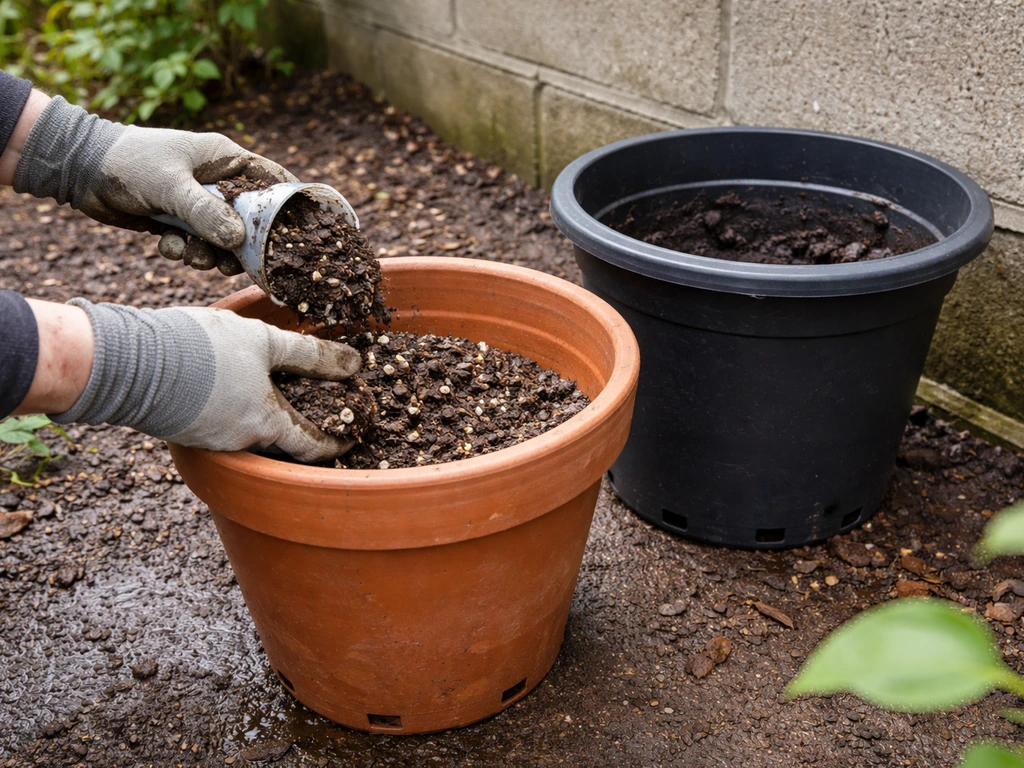
A container is non-negotiable for Scottish bougainvillea growing. Use a terracotta or large plastic pot (at least 30–40cm diameter) with excellent drainage holes, and fill it with a gritty, free-draining compost mix, ideally John Innes No. 3 mixed with about 20–30% horticultural grit. Terracotta looks beautiful but dries out faster, which bougainvillea actually likes. The container approach gives you full control: move it outside in late May when night temperatures are reliably above 10°C, position it in the sunniest spot you have, and bring it back inside before the first frosts in October.
Using a greenhouse or conservatory
A heated greenhouse or south-facing conservatory is the most reliable way to grow bougainvillea in Scotland. In a conservatory that stays above 10°C on warm summer days and can be kept frost-free in winter (minimum 4°C overnight), you can get genuine flowering. Position the plant where it gets direct sun through the glass for as many hours as possible. Under glass, shade it slightly in midsummer to avoid scorching, but for most of the Scottish year more light is always better, not less. This is the setup that transforms bougainvillea from a 'maybe' to a 'yes'.
The outdoor summer + indoor winter hybrid approach
If you don't have a conservatory, a cool but frost-free indoor space like a spare bedroom with a bright window, a utility room with skylights, or even a cool hallway can work for overwintering. The plant goes semi-dormant and needs very little water at this stage. From late spring to early autumn it lives outside in the warmest, most sheltered spot you have, and then it comes back in. It's a bit of work, but it's manageable with a plant this size.
Overwintering and frost protection in Scotland
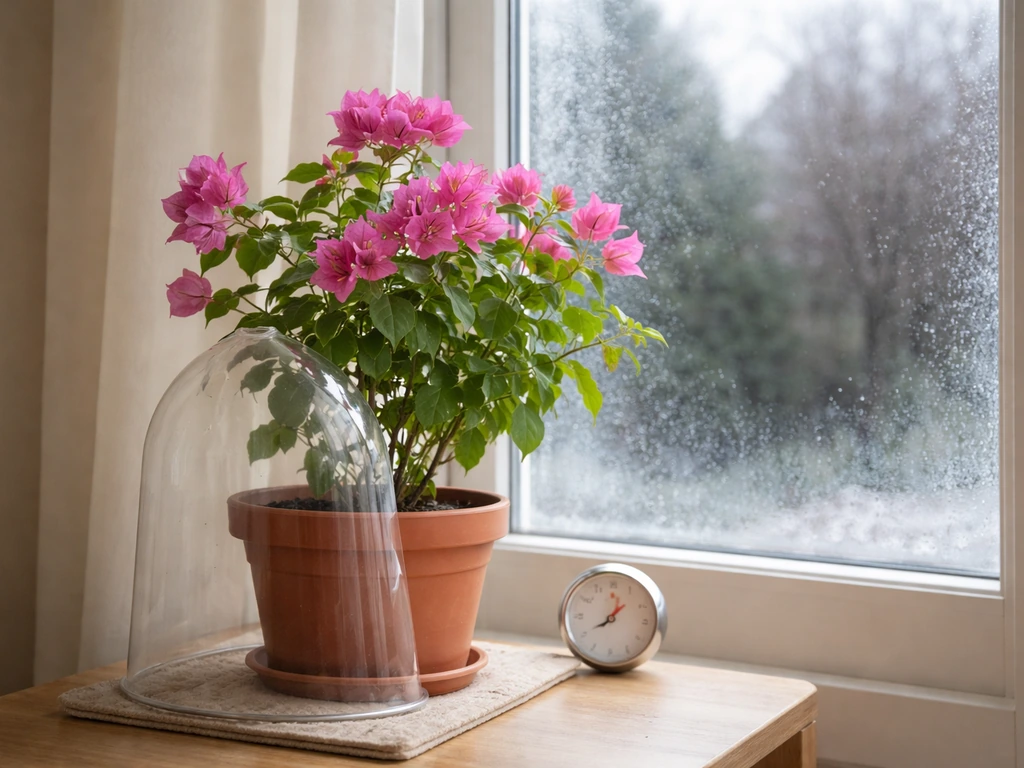
Getting the overwintering right is honestly the most important part of growing bougainvillea in Scotland. Get it wrong and you'll lose the plant. Here's what you need to do.
- Bring the plant indoors before the first frost, typically by early to mid-October across most of Scotland. Don't wait for a frost warning, because by then it may already have suffered.
- Reduce watering drastically once indoors. Bougainvillea goes semi-dormant in winter and wet roots in cold conditions will cause root rot. Water only enough to stop the compost from completely drying out, roughly once every 2–3 weeks.
- Keep the plant in the brightest possible indoor spot. A south-facing windowsill, conservatory, or heated greenhouse is ideal. Aim for a minimum night temperature of 4°C (frost-free) as an absolute minimum, with 7–10°C being much better for plant health.
- Do not feed during winter dormancy. Resume feeding with a high-potassium fertiliser (like tomato feed) in March as growth resumes.
- Prune lightly in late winter or early spring to encourage new growth, which is where the flowers form. Cut back by about a third, removing any dead or weak stems.
- Move back outside gradually from late May, hardening it off over 1–2 weeks by leaving it outside for increasing periods before committing it to its outdoor summer position.
If you're in a particularly cold inland area of Scotland and the conservatory isn't available, you can wrap the pot in bubble wrap or hessian to protect the roots from cold air, but this only helps at the margins. Bringing the whole plant indoors is always the safer bet.
Before you buy: your Scotland bougainvillea checklist
Run through this before you hand over any money for a bougainvillea. If you can tick all of these boxes, you have a realistic shot at success.
- Do you have a frost-free indoor space for October through May? A conservatory, heated greenhouse, or bright spare room above 4°C overnight is the minimum requirement.
- Can you offer a south-facing position with at least 5–6 hours of direct sun daily during the growing season? Outdoors from late May, or through glass in a conservatory.
- Do you have a container that drains freely? At least 30–40cm wide, filled with gritty compost. Bougainvillea must never sit in waterlogged soil.
- Are you prepared to move the plant indoors by early October every year without fail? This is not optional in Scotland.
- Can you resist over-watering in winter? Reducing water to almost nothing during dormancy is counterintuitive but critical.
- Is your summer outdoor spot sheltered from wind? Strong wind damages the papery bracts and stresses the plant even in mild temperatures.
- Are you in the south-west or central belt rather than the Highlands or Northern Isles? The further north and more exposed your location, the fewer outdoor summer days you'll realistically get.
What to do right now if you want to give it a go
If you're reading this in spring or early summer, now is actually the best time to start. Buy a young bougainvillea from a reputable garden centre (look for 'Poultonii Special' or any of the compact varieties that handle cool-ish conditions slightly better), pot it into a well-draining gritty mix in a large container, and position it in your sunniest, most sheltered outdoor spot once night temperatures are consistently above 10°C. Feed weekly with tomato fertiliser from June onwards, water generously but let the top few centimetres of compost dry between waterings, and let it enjoy the Scottish summer as best it can. Then follow the overwintering plan above come September. If you also wonder can bougainvillea grow in Massachusetts, the answer is similar: success depends on protecting it from frost and using a container or greenhouse setup overwintering plan. It takes commitment, but bougainvillea in a Scottish conservatory or summertime patio is genuinely achievable, and when those vivid magenta bracts appear, it's completely worth the effort.
FAQ
Can bougainvillea survive outside in Scotland if I cover it with fleece or a cloche?
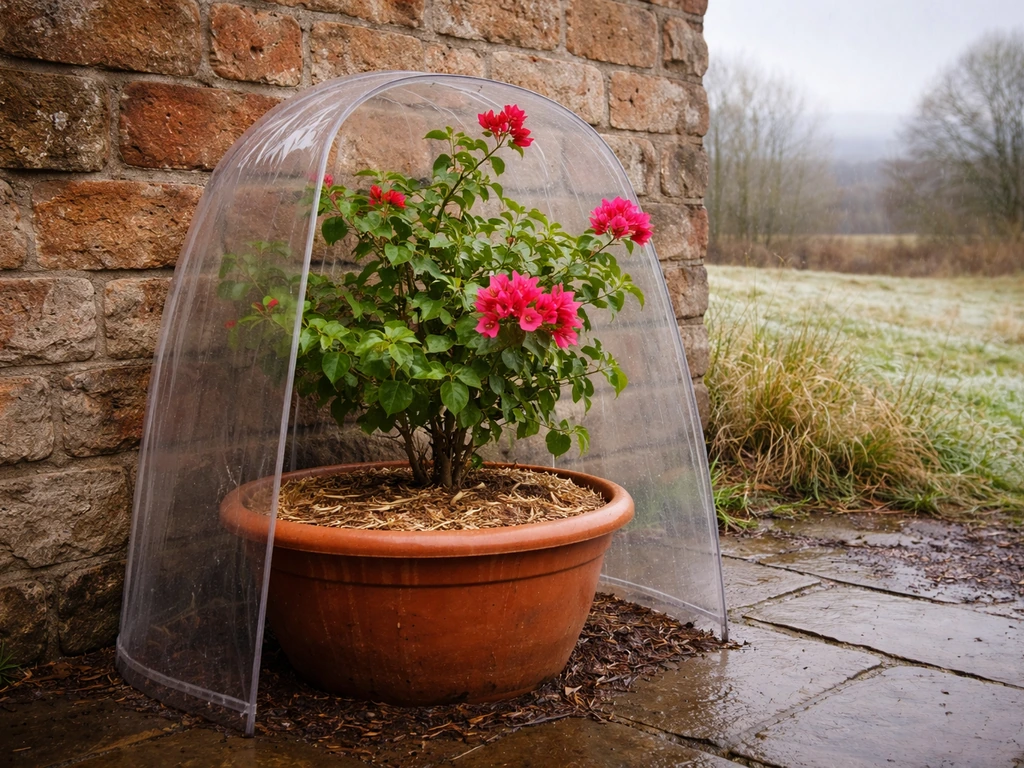
Usually no. Covers can reduce wind chill, but they do not stop root-zone wetness and they rarely keep night temperatures up near the plant’s needs. If you cannot move the pot indoors before the first frosts, assume fleece will not prevent a loss in Scottish conditions.
What is the safest winter storage temperature range for bougainvillea in Scotland?
Aim for a frost-free space that stays around 4°C overnight minimum. If you keep it much warmer indoors all winter, it may try to keep growing, which can make it weaker and more prone to stress when you move it back outside.
How do I avoid root rot in a Scottish container?
Use a very free-draining mix and confirm the pot has drainage holes, then never leave it sitting in a saucer of runoff. Water only when the top few centimetres feel dry, and empty any excess water from trays after 10 to 15 minutes.
Should I prune bougainvillea before bringing it indoors for winter?
Do a light prune after flowering finishes in late summer, not deep pruning right before overwintering. Deep cuts late in the season can slow recovery, and in a cool Scottish indoor space new growth may not harden off before cold weather.
Will bougainvillea flower the first year if I buy a small plant in Scotland?
Often it flowers if it’s been grown warm before purchase and you give strong light in your conservatory or warm window. If it stays too cool or too wet early on, you may get lots of leaves but few or no bracts, so focus on temperature and sun first.
What bougainvillea varieties are most practical for Scotland’s cooler conditions?
Look for compact types and any that are sold as handling cooler spells better, such as 'Poultonii Special'. Even with better varieties, you still need the same container plus overwintering plan, since Scotland’s issue is winter survival and consistent light.
Can I grow bougainvillea in a greenhouse that is unheated in Scotland?
Sometimes, but only if it can reliably stay above freezing at night. An unheated greenhouse often dips too low and can also trap humidity, increasing rot risk. If you try it, use an insulating pot wrap plus a cover on the plant, but consider it experimental unless you can measure night temperatures.
When should I move bougainvillea outside again in spring?
Do it when night temperatures are consistently above about 10°C, not just when the daytime warms up. In Scotland that usually means late May for many gardens, and you should still be ready to bring it back in if cold nights return.
How much sun does bougainvillea need in a Scottish conservatory?
More is better, aim for direct light for as many hours as possible. If it’s scorching in midsummer, use light shade rather than moving it to a dull spot, because reduced light is one of the quickest ways to reduce flowering.
Is bubble wrap or hessian wrapping worth it for a plant kept in a patio container during winter?
It can help protect the pot’s roots at the margins, especially in a slightly milder coastal microclimate. But it does not replace bringing the entire plant into a frost-free place when freezes are expected, because the combination of cold plus damp is what kills it.
Can bougainvillea be grown on a south-facing wall outdoors during summer without a greenhouse?
Yes for part of the year if it’s container-grown and you can fully protect it from the autumn to spring temperature drop. Treat it as a moveable summer placement (late spring to early autumn), because Scottish winter exposure is still not workable for long-term outdoor survival.
What feeding and watering schedule works best in Scotland?
Feed weekly with a tomato-type fertiliser from early summer, then taper as autumn approaches. Water generously during active growth but let the top portion dry between waterings, because wet compost in cool weather is the common failure mode.