
Azaleas need four things above almost everything else: the right USDA hardiness zone (roughly 5 through 9 for most varieties), acidic and well-drained soil with a pH between 4.5 and 6.0, partial shade especially in the afternoon, and consistent moisture without waterlogging. Get those four things right and azaleas are surprisingly easy to grow. Get even one badly wrong and you'll be staring at yellowing leaves, no blooms, or a plant that just sits there looking miserable year after year.
What Do Azaleas Need to Grow in Your USDA Zone
Marcus Hartwell
12 May 2026
First: can you actually grow azaleas where you live?
Before you buy a single plant, do a quick climate check. In the wild, you can also spot azaleas growing naturally, depending on the climate and soil conditions where they’re native grow wild. Most evergreen and deciduous azalea varieties are rated for USDA zones 5 through 9, though some cold-hardy cultivars push into zone 4 and some heat-tolerant types handle zone 10. That said, surviving winter minimum temperatures is only part of the story. University of Missouri Extension makes the point clearly: the USDA zone alone doesn't guarantee performance. Azaleas also need matching light conditions, decent drainage, correct soil chemistry, and reasonable moisture. A plant in the right zone can still fail badly if those other factors are off.
Here's a rough regional read. Trailing azaleas generally do best in regions that match the typical azalea requirements, especially in areas with acidic, well-drained soil where do trailing azaleas grow. In this article, we’ll walk through the best regions and growing conditions so you can figure out where to grow azaleas with confidence Here's a rough regional read.
In the Southeast (zones 7–9), azaleas are practically a signature plant, but summer heat and humidity mean you need to manage sun exposure and drainage carefully. The classic approach in south Georgia and across the Carolinas is planting under pine trees, where filtered shade and naturally acidic, well-drained soil do half the work for you. In the Mid-Atlantic and Northeast (zones 5–7), azaleas thrive with a bit of wind protection and morning sun.
In the Southwest and arid West, it's a harder fit because of alkaline soils, low humidity, and intense heat. Trailing azalea can be much more sensitive to harsh conditions, so it grows best where you can provide the right combination of soil, moisture, and exposure. If you're in Arizona or a similarly dry, alkaline region, check into whether azaleas are realistic for your specific spot before investing, since soil chemistry and moisture management become a much bigger battle.
In practice, this is why do azaleas grow in Arizona depends heavily on having the right soil pH and careful moisture management If you're in Arizona. In the Pacific Northwest (zones 7–9 west of the Cascades), conditions are often ideal, with mild, moist weather and naturally soft, acidic soils.
| Region | Typical USDA Zones | Feasibility | Main Watch-Out |
|---|---|---|---|
| Southeast | 7–9 | Excellent | Afternoon sun and heat stress |
| Mid-Atlantic / Northeast | 5–7 | Good to Excellent | Winter wind exposure, late frosts |
| Pacific Northwest | 7–9 | Excellent | Few issues; mild and moist |
| Midwest / Plains | 5–6 | Fair to Good | Cold hardiness at zone edges, wind |
| Southwest / Arid West | 6–10 | Difficult | Alkaline soil, low humidity, extreme heat |
| Mountain West | 4–6 | Marginal | Short season, cold, alkaline soil |
Sunlight: morning sun is the sweet spot
The best placement for almost any azalea is morning sun with afternoon shade. That combination gives the plant enough light to fuel strong bloom production while shielding it from the most intense heat of the day, which scorches leaves and fades flower color fast. University of Maryland Extension specifically recommends this east-facing or dappled-light placement, and it holds true from Maryland down through the Gulf Coast and across to the West Coast. In full afternoon sun, you'll often see leaf scorch, faded or short-lived blooms, and increased susceptibility to lace bugs, which is a real problem in hot, sunny spots in the Southeast. Under dense, all-day shade, the plants grow leggy and produce far fewer flowers.
Filtered shade under tall pines is a setup that works especially well in the South. The canopy breaks direct sun, the soil under pines tends to be slightly acidic from needle drop, and drainage is generally good. If you don't have trees to work with, a north or east-facing wall or fence can create a similar effect in smaller gardens. One thing to avoid in colder zones: a spot that catches early morning sun right after a hard freeze. That rapid freeze-thaw cycle on the leaves and buds can cause more cold injury than the frost itself.
Soil and pH: this is where most azaleas fail
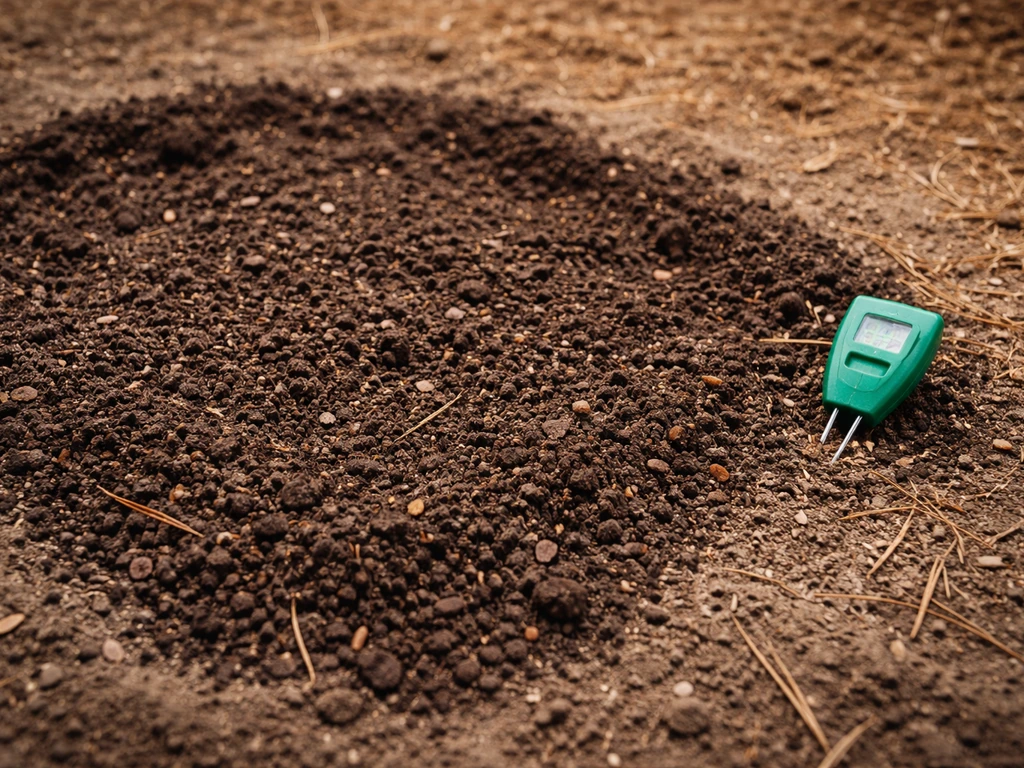
Azaleas are acid-loving plants. Full stop. They need a soil pH between 4.5 and 6.0, with 4.5 to 5.5 being the real sweet spot. Outside that range, iron and other nutrients become chemically unavailable to the plant even if the nutrients are physically present in the soil. The result is chlorosis, which we'll come back to in a moment. Get a soil test before you plant. It takes the guesswork out and tells you exactly how much adjustment you need.
Beyond pH, azaleas demand well-drained, loose, aerated soil with plenty of organic matter. Their roots are fine and shallow, and they suffocate quickly in heavy clay or compacted ground. If your soil is heavy or dense, mix in up to about 50% organic matter, such as fine pine bark or well-rotted leaves, before planting. That improves both drainage and the root environment. In spots where drainage is genuinely poor, either build a raised bed or install drainage tile before planting. Putting an azalea in a low spot or near a downspout where water pools after rain is a common and expensive mistake.
Watering: moist but never soggy
Azaleas want about an inch of water per week, combining rain and irrigation. During dry periods, that means you need to water deliberately. The practical measurement from UGA Extension is helpful: [roughly 6 gallons over 10 square feet](https://extension. uga.
edu/publications/detail. html? number=B670), watered thoroughly enough to wet the soil to 8 to 12 inches deep. University of New Hampshire Extension recommends watering landscape plants to wet the soil about 8, 12 inches (and adjusting frequency after planting based on conditions) [wet the soil to 8 to 12 inches deep](https://extension.
unh. edu/resource/using-water-efficiently-landscape). That deep, infrequent watering approach is far better than light, frequent sprinkles that only wet the surface and encourage shallow roots. Because growing basil in Phoenix is similar, you will also want to keep the soil evenly moist but never waterlogged.
To know when to water, pull back the mulch near the base of the plant and feel the soil. If it's dry, water thoroughly. In warm weather on sandy soils, especially during the first year after planting, you may need to water twice a week. In established plantings in heavier soils, once a week during dry spells is usually enough. Water at the base of the plant rather than overhead. Wetting foliage regularly encourages foliar diseases like petal blight and azalea leaf gall, which are already common in humid regions.
Mulch is your best tool for moisture management. A 2 to 3 inch layer of organic mulch, pulled a few inches away from the stem, holds soil moisture, moderates root temperature, and slowly improves soil structure as it breaks down. It's one of the simplest and most effective things you can do for an azalea.
Fertilizing: timing matters as much as product
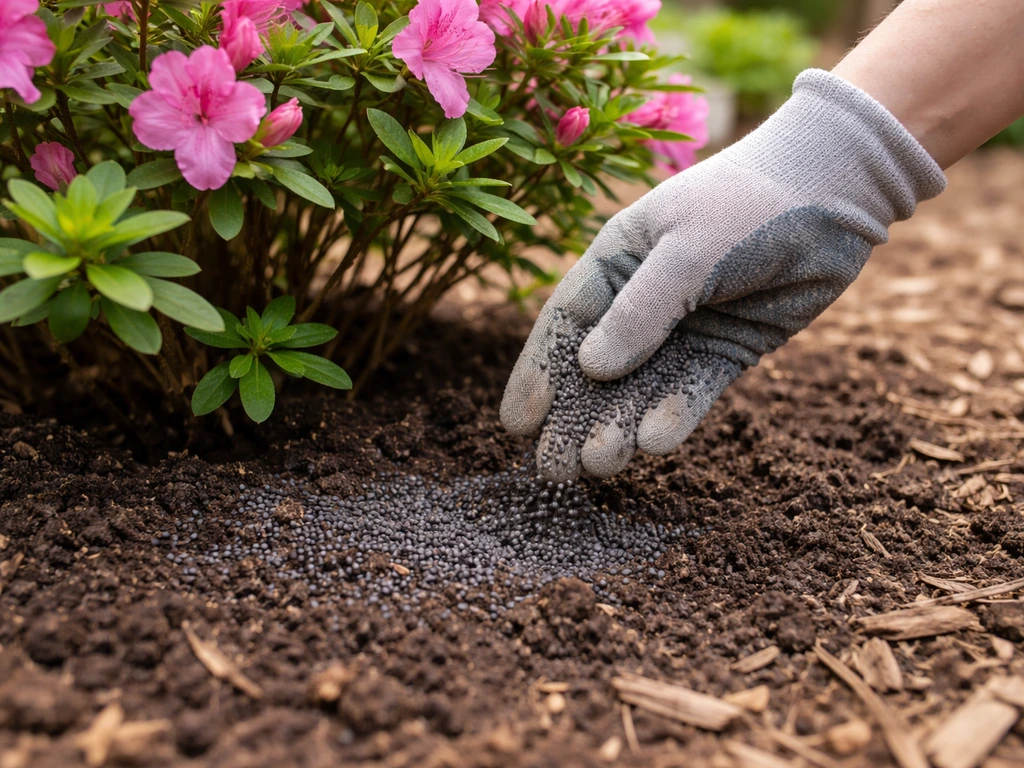
Use a fertilizer specifically formulated for acid-loving plants. A ratio around 2-1-1 (nitrogen-phosphorus-potassium) from an acid-based fertilizer is a solid default. If you haven't done a soil test, Mississippi State Extension recommends applying 2 to 4 pounds of that type of fertilizer per 100 square feet of bed area. Fertilizers marketed for azaleas, camellias, and rhododendrons are generally the right choice because they're formulated to avoid pushing the pH in the wrong direction.
The timing rule is simple and important. Apply the majority of your fertilizer right after the spring bloom ends, when growth is most active. A second, smaller application can go on a bit later in the season. But stop fertilizing by July 1 at the latest. Fertilizing after that pushes out tender new growth that won't harden off before cold weather arrives, which can cause serious winter injury, especially in zones 5 and 6. Azaleas already set their flower buds for the following year during summer and fall, so late feeding disrupts both cold hardiness and next year's bloom.
Pruning: do it right after bloom or skip it
Prune azaleas immediately after they finish flowering in spring. That's the window. The rule of thumb across multiple extension services is: prune after spring bloom, and no later than July 4. After that date, you're cutting into the buds that were forming for next spring's flowers, and you'll end up with a well-shaped plant that doesn't bloom. It's a frustrating and common mistake.
For routine shaping, just trim back the longest, most unruly shoots right after the last flower drops. For overgrown or leggy plants, azaleas actually respond well to harder rejuvenation pruning. You can cut them back to as low as 6 to 12 inches from the ground and they'll push new growth from old wood. Do that kind of hard pruning in early spring, ideally before bloom if you're willing to sacrifice one year of flowers, or right after bloom if you want to keep that season's display. Remove vigorous suckers whenever they appear to keep the plant's energy going where you want it.
Why your azalea isn't growing: common problems and fixes
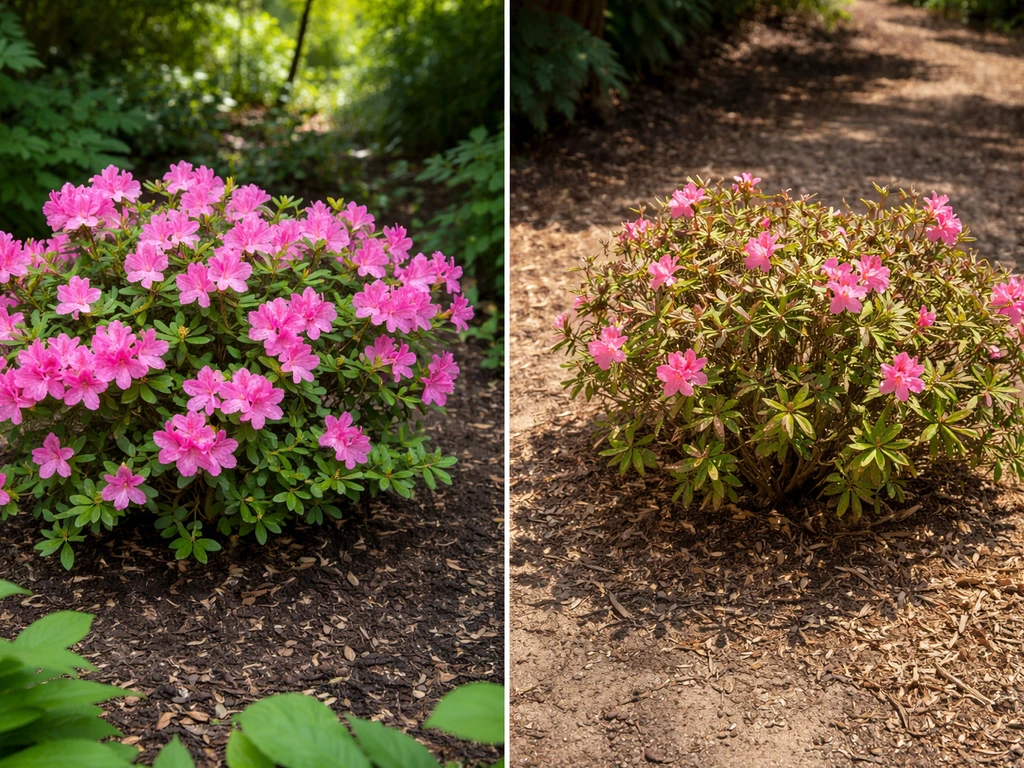
The most common problem you'll see with azaleas is chlorosis, which shows up as yellowing between the leaf veins while the veins themselves stay green. It looks alarming but it's almost always fixable once you identify the cause. The Azalea Society of America identifies this as the number one issue, and it almost always traces back to soil pH being too high, making iron unavailable to the plant. Other contributors include compacted soil, overwatering, and over-fertilizing.
Chlorosis from high pH
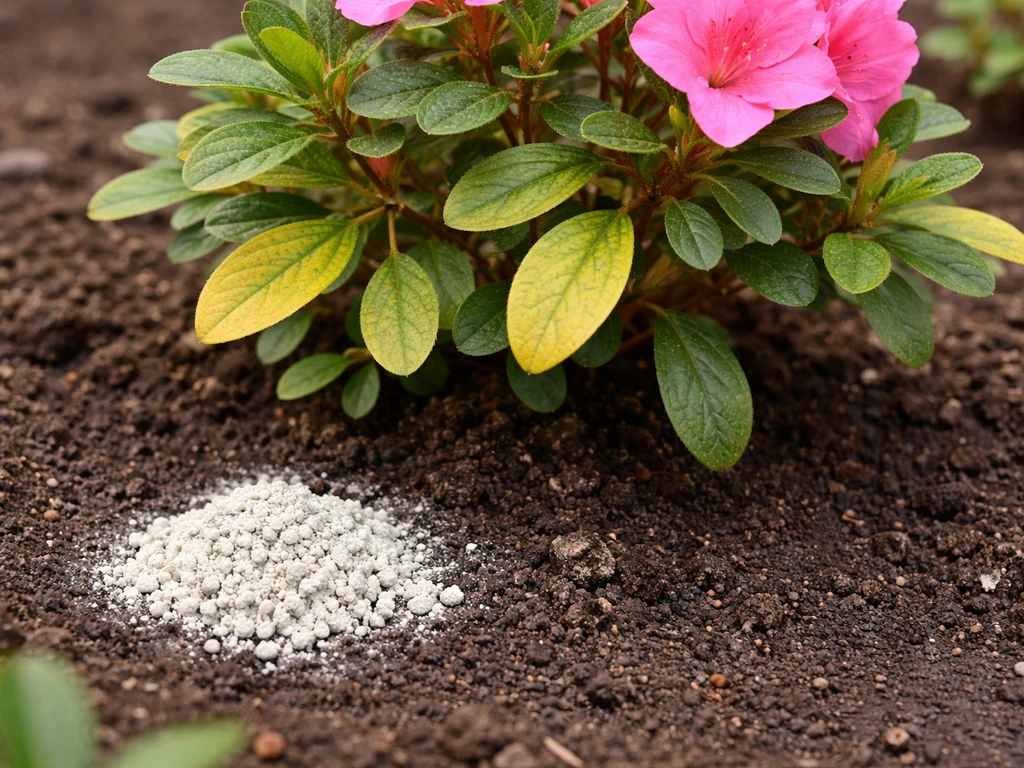
Test the soil pH first. If it's at 6.0 or above, apply half a cup of wettable sulfur per 10 square feet to bring it down. For a quicker fix while the pH corrects itself, apply ferrous sulfate at about 1 ounce (roughly 2 tablespoons) per 10 square feet to make iron more immediately available to the roots. In alkaline regions like much of the Southwest and Mountain West, this is a constant management battle, which is one of the main reasons azaleas are so much harder to grow there.
Root rot from poor drainage
If your azalea looks wilted even when the soil is wet, or if you tug on a root and it slips off easily, leaving a slimy brown core, that's root rot. It's caused by waterlogged soil, usually from poor drainage or a low-lying planting spot. There's no easy fix once root rot is advanced. Prevention is everything: plant in well-drained soil, avoid low spots, and never let water stand around the base. If your site drains poorly, raise the planting bed by 8 to 12 inches rather than fighting the drainage problem with amendments alone.
Heat and sun stress
Bleached or scorched-looking leaves with brown edges, along with blooms that fade within days of opening, are signs of too much direct sun and heat. Move the plant to a shadier location if you can, or add shade cloth during the hottest months. In zones 8 and 9, choosing heat-tolerant hybrid varieties makes a real difference, since not all azaleas handle summer heat equally well. If relocation isn't possible, consistent deep watering and a thick mulch layer can help the plant cope.
No blooms despite healthy foliage
If your plant looks green and healthy but never flowers, the most likely culprits are pruning at the wrong time (after July), too much shade, or over-fertilizing with high nitrogen. Check your pruning calendar, move the plant to brighter morning light if possible, and back off on nitrogen-heavy fertilizers.
Planting tips to get things off to a good start
Plant azaleas in fall or early spring when temperatures are cooler and roots can establish before summer heat arrives. Dig the hole two to three times as wide as the root ball but only as deep, or even slightly shallower. Azaleas planted too deep are one of the most common causes of decline. The top of the root ball should sit at or just slightly above the surrounding soil grade to prevent water from pooling around the crown.
Backfill with a mix of your native soil and organic amendments, water thoroughly at planting, and lay down that 2 to 3 inch mulch layer right away. Water consistently for the first growing season while the root system establishes. Newly planted azaleas in sandy soils or warm climates may need water twice a week during summer heat. The first year is when most establishment failures happen, so don't assume the plant can fend for itself once it's in the ground.
One final thing worth knowing: if you're still deciding whether your specific location is going to work for azaleas at all, the soil and drainage check is just as important as the zone map. If you are growing magnolias instead, follow the specific “magnolia how to grow” care steps for the best results. Two gardeners in the same zip code can have very different results depending on their soil pH and drainage. Sort those two things out first and the rest of the care routine becomes much more straightforward.
FAQ
Can azaleas grow in neutral or slightly alkaline soil if I add fertilizer?
Fertilizer alone usually cannot fix the root problem. If the soil pH is too high, iron and other nutrients become unavailable, so the plant can turn chlorotic even with nutrient additions. The practical move is to do a soil test first, then adjust pH (often with wettable sulfur) and keep organic matter in the planting mix.
What’s the best way to lower soil pH for azaleas without overdoing it?
Aim for 4.5 to 6.0, with 4.5 to 5.5 as the sweet spot. Lowering pH is not instant, and repeated amendments can overshoot. Re-test after adjustments and avoid mixing sulfur and other pH materials in random amounts, especially in areas with very fine or slow-draining soils.
How much sun is “too much” for azaleas in hot climates?
Morning sun with afternoon shade is the safest target, but “too much” depends on how fast your site dries. In zones 8 and 9, even plants that tolerate sun may suffer if the soil dries quickly, so give extra mulch and use deep watering. If you see leaf scorch or flowers fading within days, reduce afternoon exposure (shade cloth or relocation) rather than only increasing water.
Is overhead watering okay if I’m careful?
Overhead watering increases wet foliage time, which raises the odds of foliar problems like petal blight and azalea leaf gall in humid conditions. Water at the base, water deeply, and keep the crown area from staying wet. A simple schedule is to water in the morning so any splashes dry quickly.
How do I know if my azalea’s mulch is helping or hurting?
Mulch should be 2 to 3 inches thick and pulled a few inches away from the stem. If mulch is piled up against the crown, it can trap moisture and worsen root problems, especially in low spots. Also avoid thick, compacted mulch layers that prevent air exchange around the fine, shallow roots.
What’s the right planting depth, and how can I tell if I planted too deep?
The top of the root ball should sit at or slightly above surrounding soil grade. If the plant seems chronically unhappy, takes a long time to establish, or shows repeated yellowing, one hidden cause is burying the crown too deeply, which encourages water pooling. If you suspect this, check the crown height before the next growing season.
How often should I fertilize, and what if my azalea looks green but still won’t bloom?
Apply most fertilizer right after spring bloom ends, do a smaller follow-up later, then stop by July 1. If it stays leafy but never flowers, common causes include pruning after July, too much shade, or too much nitrogen. Switching to an acid-formulated fertilizer with an appropriate ratio (not a high-nitrogen lawn product) is usually the fastest correction.
My azalea is wilting, but the soil is wet. Is that always just thirst?
Not always. If the soil is moist yet the plant wilts, and roots slip easily leaving a slimy brown core, that points to root rot rather than underwatering. The fix is site-based prevention, improve drainage, and avoid low-lying planting spots. In advanced cases, recovery is limited, so reassessing the planting location is key.
Do azaleas need special care during the first year after planting?
Yes, most establishment failures happen early. Plan on more consistent deep watering during the first growing season, particularly in sandy soils or warm climates where the root zone dries fast. Also keep an eye on mulch placement and avoid heavy late fertilizing, since tender growth can be damaged before the plant establishes.
When is the safest time to prune if I accidentally missed the spring window?
If it’s past the usual rule (prune right after spring flowering, no later than around early July), you risk cutting off next year’s buds. At that point, focus on light maintenance like removing dead or broken shoots and suckers, and plan a more complete shape-up for the following spring bloom window instead of hard pruning mid-season.
Why are my leaves yellow between the veins, even though I added iron?
Yellowing between veins typically means chlorosis, and iron products do not help if the soil pH is too high. Nutrients become chemically unavailable at higher pH, so the plant cannot use what you apply. Test pH first, then correct it, and consider supplemental ferrous sulfate only as a temporary assist while pH returns toward the target range.