
Yes, you can grow a magnolia in most parts of the US, but the key is choosing the right type for your specific zone. Plant the wrong magnolia and you'll end up with a tree that either freezes out in winter, refuses to bloom, or slowly declines in soil it can't handle. Get the match right, though, and magnolias are genuinely low-maintenance, long-lived trees that reward you with spectacular flowers every spring. Here's how to make the right call and get it in the ground successfully.
Magnolia How to Grow: Choose Variety by Zone and Care
Marcus Hartwell
24 Mar 2026
Magnolia types and what to choose for your climate
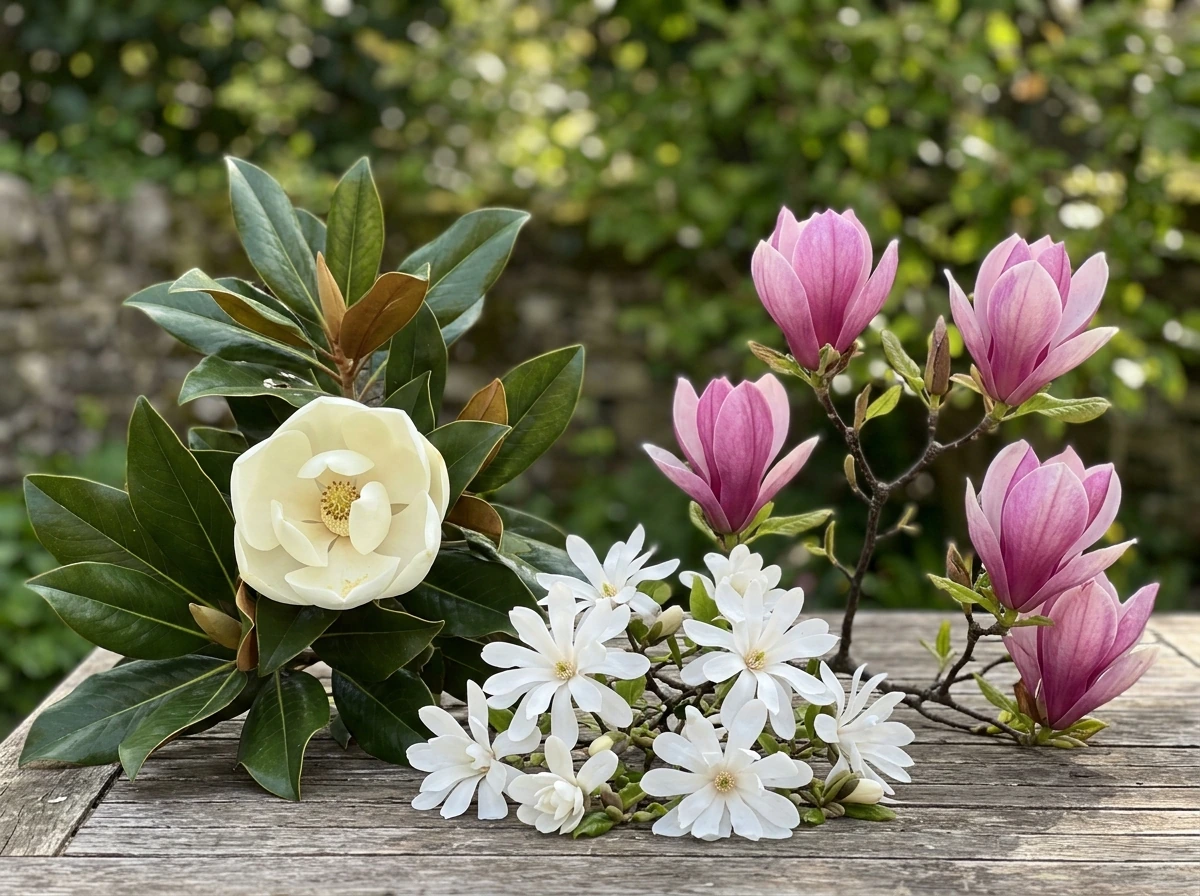
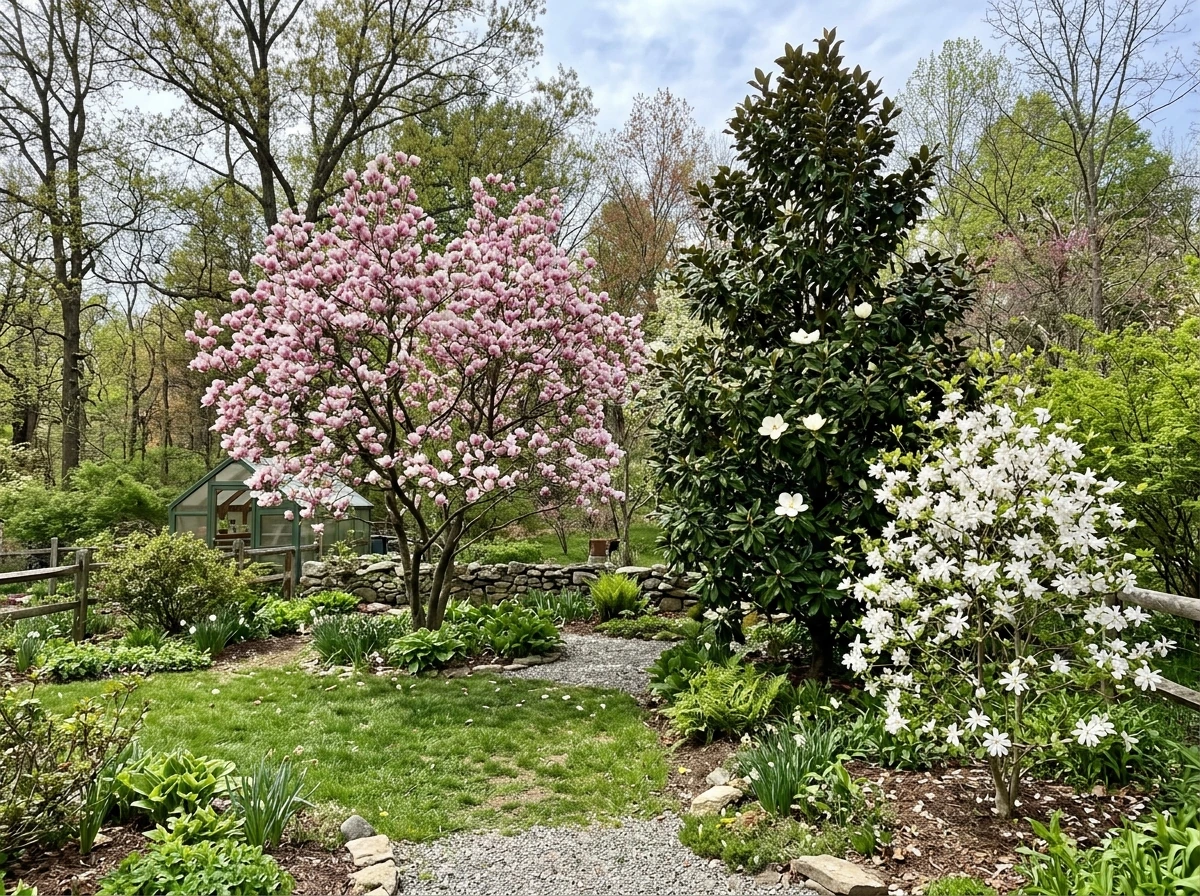
There are hundreds of magnolia species and cultivars, but most home gardeners are choosing between three main types: Southern magnolia, saucer magnolia, or star magnolia. Each has a different cold tolerance, mature size, and regional sweet spot. Knowing which category you're working with before you buy saves a lot of disappointment.
Southern magnolia (Magnolia grandiflora)
This is the iconic evergreen magnolia with the glossy dark leaves and the huge white flowers that look almost architectural. It's native to the Southeast and truly thrives in warm, humid climates. If you're in the Gulf Coast states, the Carolinas, or anywhere with long hot summers and mild winters, this is probably the magnolia you're picturing. It prefers rich, porous, acidic soils with a pH of 5.5 to 6.5 and does best in moist, well-drained conditions. It's surprisingly adaptable and will tolerate clay and even brief wet periods, which matters a lot in the South where drainage isn't always ideal. The trade-off: it sheds leaves and seedpods year-round (yes, even though it's evergreen), so plan to plant it inside a defined landscape bed rather than in the middle of a lawn.
Saucer magnolia (Magnolia x soulangeana)
Saucer magnolia is the classic deciduous type you see in front yards across the Mid-Atlantic and Midwest, with those big pink-purple tulip-shaped flowers that appear before the leaves in early spring. It's hardy in USDA Zones 4 through 9A, which makes it one of the most widely adaptable magnolias available. If you're in a cold-winter state like Ohio, Pennsylvania, or Illinois and you've been envying people's magnolias, this is almost certainly the one you can grow. It wants fertile, well-drained soil and handles both full sun and partial shade. One thing to know: those early blooms are vulnerable to late frosts, which is a real frustration in Zone 5 and 6 gardens where spring temperatures are unpredictable.
Star magnolia (Magnolia stellata)
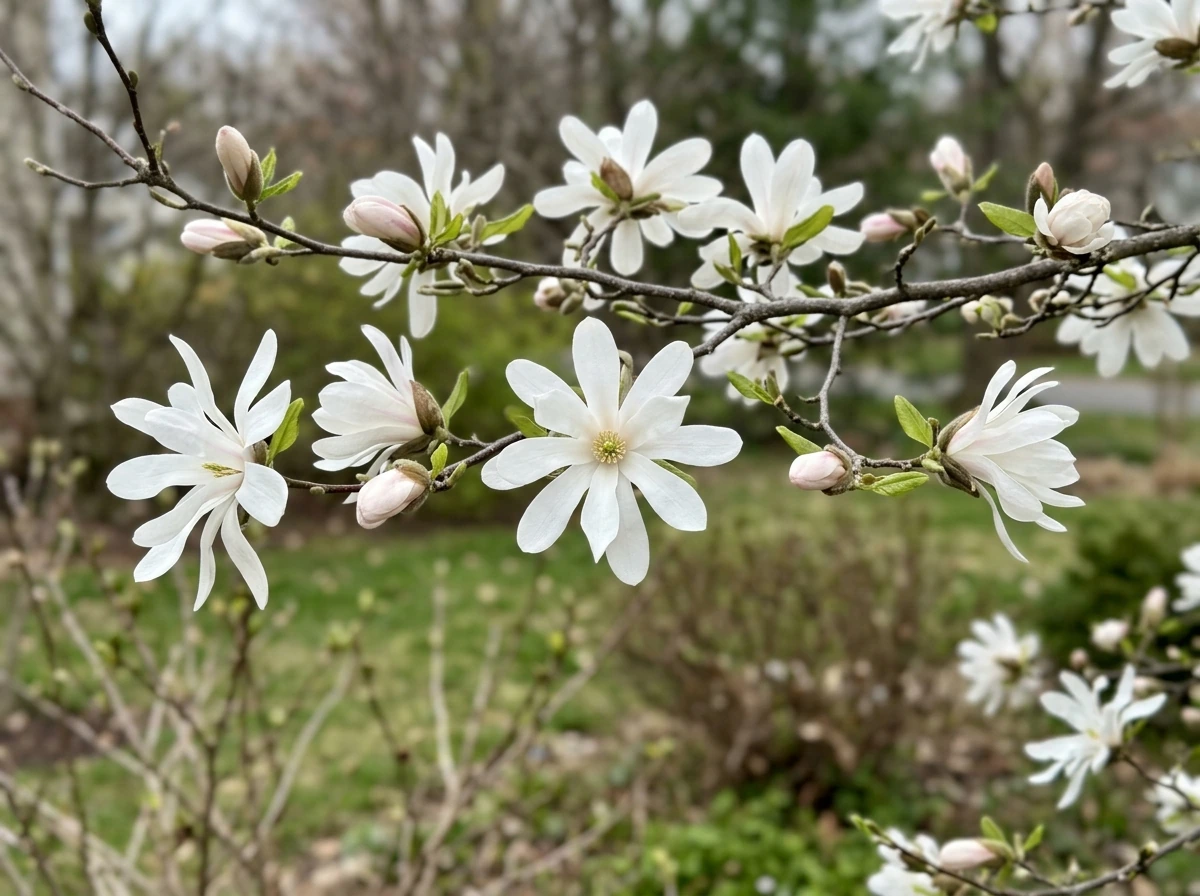
Star magnolia is smaller and more refined than saucer magnolia, with delicate white star-shaped flowers that open even earlier in spring. It's suited to USDA Zones 5A through 8B. It's a good pick for smaller yards or as a specimen plant near a patio. Just know going in that star magnolia is not tolerant of salt, drought, or root competition, so it's a fussier plant than the others when it comes to site selection. It wants full sun and rich, well-draining, slightly acidic soil. Don't try to squeeze it in under a canopy of bigger trees.
| Type | USDA Zones | Evergreen or Deciduous | Best Soil | Sun Needs | Special Notes |
|---|---|---|---|---|---|
| Southern Magnolia | 7–9 (broadly) | Evergreen | Moist, well-drained, acidic (pH 5.5–6.5) | Full sun to partial shade | Tolerates clay and brief wet periods; sheds year-round |
| Saucer Magnolia | 4–9A | Deciduous | Fertile, well-drained | Full sun or partial shade | Early blooms vulnerable to late frost |
| Star Magnolia | 5A–8B | Deciduous | Rich, porous, slightly acidic | Full sun | Not tolerant of salt, drought, or root competition |
Check your growing zone and sunlight and soil needs
Before you do anything else, look up your USDA Hardiness Zone. You can find it by entering your zip code on the USDA Plant Hardiness Zone Map. Once you know your zone, match it to the chart above. If you're in Zone 4, your realistic options narrow to saucer magnolia. If you're in Zone 5 or 6, both saucer and star magnolia work. Zones 7 through 9A open up all three types, including Southern magnolia. If you're in Zone 10 or above, most magnolias will struggle because they need a winter chill period to set flower buds properly.
Sunlight is equally important. Magnolias are not shade plants. Southern magnolia and saucer magnolia can tolerate partial shade, but they flower best with at least 6 hours of direct sun per day. Star magnolia really wants full sun. Walk your yard at different times of day and honestly assess how much unobstructed sun each spot actually receives. A spot that gets 4 hours of afternoon shade is very different from one that's fully shaded by a house from noon onward. UF/IFAS Extension transplant guidance recommends applying mulch after transplanting, for example 2 to 3 inches around the base of the plant A spot that gets 4 hours of afternoon shade.
For soil, the consistent theme across all magnolias is drainage. They don't like sitting in waterlogged soil for extended periods. The North Carolina Cooperative Extension advises keeping the trunk flare or root collar visible before planting, since burying it is a common problem planting depth that buries the flare is a common issue to avoid. Get a cheap soil pH test kit from any garden center and test before you plant. Aim for a pH in the 5.5 to 6.5 range. If your soil tests alkaline (above 7.0), work in sulfur or acidifying amendments and retest. Also do a simple drainage test: dig a hole about 12 inches deep, fill it with water, and see how long it takes to drain. If water is still sitting after an hour, you have a drainage problem to fix before planting.
Step-by-step planting: timing, site prep, and container vs. bare root
When to plant
In most zones, fall planting gives magnolias the best start. The soil is still warm enough to encourage root growth, and the tree isn't simultaneously trying to push out new leaves while establishing itself. Spring planting works too, especially in colder zones where fall planting risks leaving a newly planted tree exposed to a hard freeze before roots are set. If you're in Zone 7 or warmer, fall is your best window. If you're in Zone 5 or 6, early spring (after the last frost but before heat sets in) is usually the safer bet.
Container vs. bare root
Most magnolias sold at nurseries come in containers, which is the easiest way to plant and gives you a forgiving window throughout the growing season. Bare root plants are less common for magnolias but occasionally available through mail-order nurseries. If you're working with bare root stock, plant immediately after arrival and keep roots moist during the entire process. Container-grown trees should be watered thoroughly before you take them out of the pot, and check that the root ball isn't severely root-bound before planting.
How to dig and plant
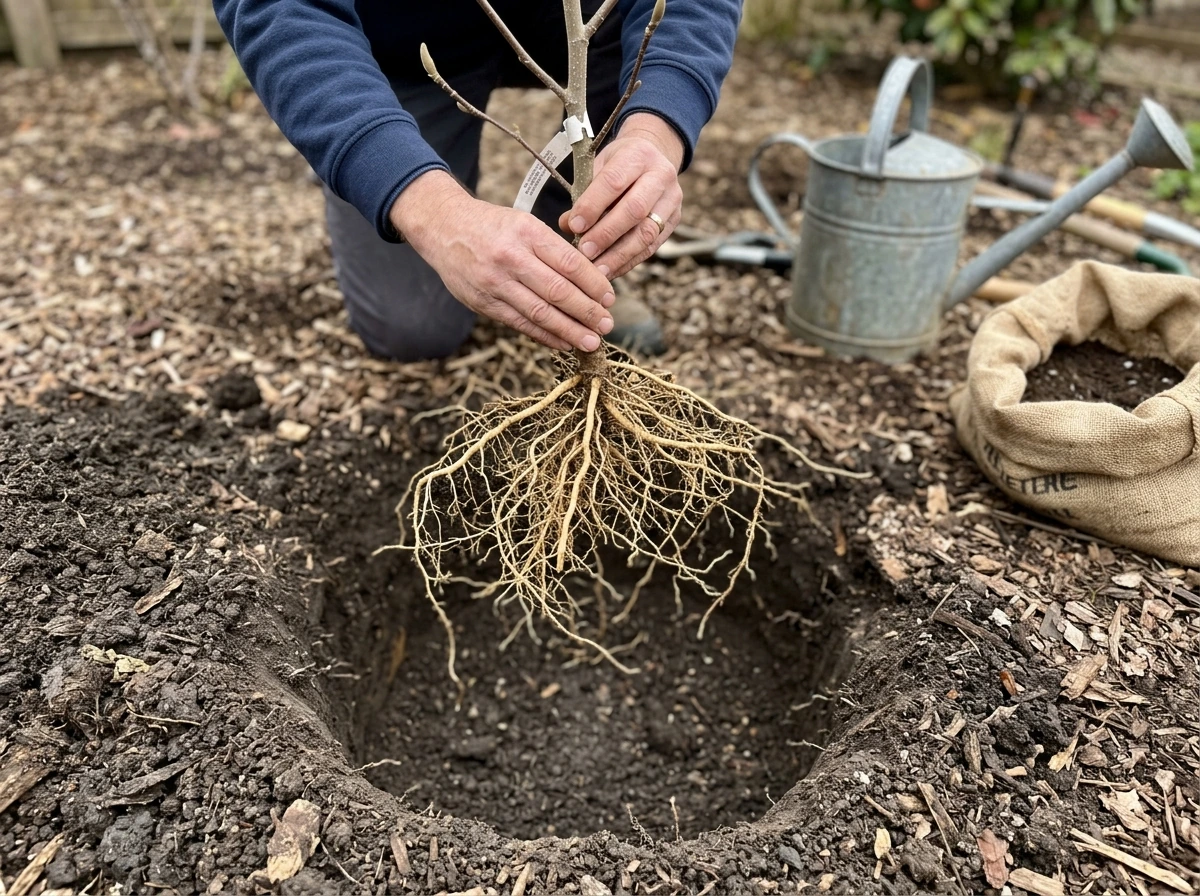
- Dig the planting hole at least two times wider than the root ball. The extra width loosens surrounding soil so roots can spread out quickly rather than hitting a hard wall. Make the hole nearly as deep as the root ball, not deeper.
- Locate the trunk flare before you set the tree in the hole. This is where the base of the trunk visibly widens before it meets the roots. The trunk flare must sit at or just above ground level when planting is complete. Burying the flare is one of the most common planting mistakes and causes slow decline over years.
- Set the tree so the top of the root ball sits slightly higher than the surrounding ground, about 1 to 2 inches. This accounts for settling and keeps water from pooling against the trunk.
- Backfill with the original soil you dug out. You don't need to amend heavily, especially with fast-draining amendments that create a drainage boundary between native soil and the planting hole. If your native soil is very poor, blend in a modest amount of compost.
- Water thoroughly right after planting to collapse air pockets around the root ball.
- Apply 3 to 4 inches of mulch in a ring around the tree, extending to the drip line if possible. Leave the area directly around the trunk and the root ball surface uncovered. Mulch piled against the trunk invites rot and pest problems.
Watering, fertilizing, and mulching for establishment and long-term growth
Watering after planting
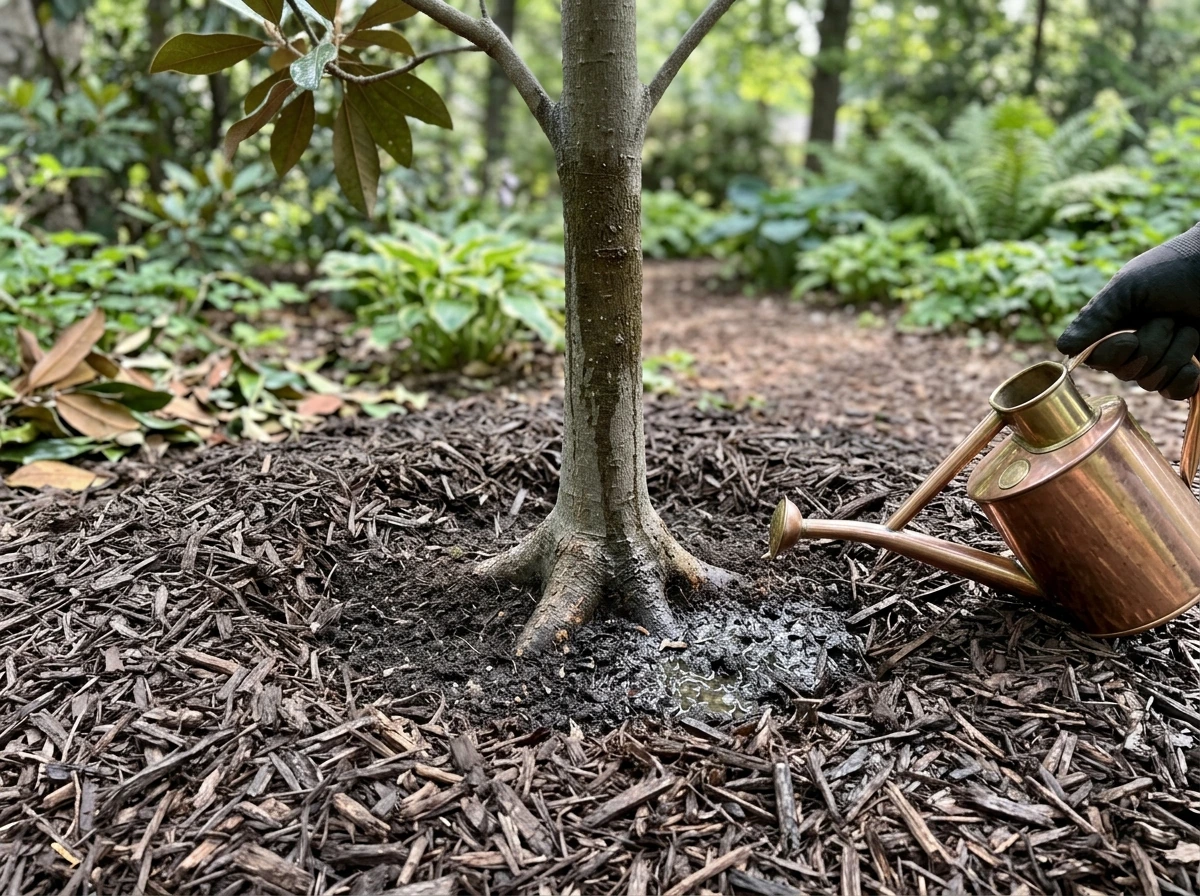
Establishment watering is where most people go wrong, either overwatering until the roots rot or underwatering through the first summer and wondering why the tree looks stressed. Here's a practical schedule based on Clemson University research: water daily for the first 2 weeks, then every other day for 2 months, then weekly until the tree is fully established (typically 1 to 2 years for smaller trees, longer for larger specimens). The specific amount: 2 gallons of water per inch of trunk diameter each time you water. So a 2-inch caliper tree gets about 4 gallons per watering session. Focus the water on the root ball, not the surrounding soil, especially in the first weeks.
Mulching for moisture retention
Mulch is doing real work here, not just looking tidy. A 3 to 4 inch layer of organic mulch (shredded hardwood, pine bark, or wood chips) over the root zone holds soil moisture, moderates soil temperature, and suppresses weeds. Refresh it annually in spring. The one consistent rule: keep mulch pulled back from the trunk and don't pile it against the root ball, since thick mulch directly on top of the root ball can prevent water from actually reaching the roots.
Fertilizing
Magnolias don't need heavy feeding. In the establishment years, a light application of a balanced slow-release fertilizer in early spring is plenty. Once established, healthy magnolias in decent soil often don't need annual fertilizing at all. If your tree is growing slowly or foliage looks pale, a soil test will tell you what's actually missing rather than guessing. Avoid high-nitrogen fertilizers, which push leafy growth at the expense of flowers. If you're growing in acidic soil and maintaining pH in the 5.5 to 6.5 range, most magnolias will access nutrients naturally.
Pruning and shaping magnolias: when, why, and what to avoid
Magnolias bloom on last year's growth, which changes everything about when you prune. If you prune at the wrong time, you're cutting off the buds that would have flowered next spring. The rule is simple: prune right after flowering in spring, and stop by late June at the absolute latest. UF/IFAS extension guidelines specifically note that pruning must stop 3 to 4 months after bloom, when new flower buds start forming for next year. Once you're past that window, put the pruners away until after next spring's bloom.
For most homeowners, magnolias don't need heavy annual pruning. The main reasons to prune are to remove dead or crossing branches, to shape a young tree while it's establishing its structure, or to manage size if a tree is outgrowing its space. Southern magnolia in particular is often left to grow naturally into its mature form. If you're trying to keep a magnolia smaller than its natural mature size, know that it's a constant battle and you might be better served by selecting a more compact cultivar from the start.
What to avoid: don't make large pruning cuts that remove major scaffold branches. Magnolias don't compartmentalize wounds especially well and large cuts are slow to close. Avoid pruning in fall or winter, which is both the wrong timing for bud preservation and a period when open wounds are more vulnerable. Never top a magnolia.
Common problems and how to troubleshoot them
Transplant shock
A newly planted magnolia that drops leaves, wilts, or just sits there doing nothing for a season is usually experiencing transplant shock. This is normal and doesn't mean the tree is dying. The most important response is consistent watering on the schedule above. Resist the urge to fertilize heavily, which can burn stressed roots. Give the tree a full growing season before declaring it a failure. If you're also seeing a similar slowdown with shrubs like azaleas, you may be dealing with the same kind of stress that explains why won't my azaleas grow.
Poor or no flowering
If your magnolia isn't blooming, the most common causes are pruning at the wrong time (removing next year's buds), too much shade, or late frost damage to buds. Saucer and star magnolias are especially vulnerable to late frosts nipping their early buds in Zones 5 and 6. If you had a bloom-free year after a cold snap in early spring, late frost is almost certainly the culprit. There's not much you can do except choose a more sheltered site for future plantings or select later-blooming cultivars.
Pests
Scale insects are the most common magnolia pest you'll encounter, showing up as small brown or white bumps on stems and leaves. They're manageable with horticultural oil applied in late winter before new growth emerges. Magnolia borers can attack stressed or injured trees, so maintaining tree health through proper watering and avoiding trunk damage is the best prevention. Aphids occasionally hit new growth in spring but are usually handled by natural predators without intervention.
Diseases and leaf issues
Magnolias are generally disease-resistant, but a few issues come up. Verticillium wilt can cause sudden wilting and branch dieback in stressed trees. There's no cure once established, so prevention through good soil prep and drainage is key. Leaf spots and algal leaf spot are cosmetic in most cases and don't threaten the tree's health. Yellow leaves with green veins (chlorosis) usually indicate iron deficiency caused by pH that's too high. Lower the soil pH with sulfur amendments and the problem typically resolves.
Seasonal care and maintenance by region
Cold-winter zones (4–6): Midwest, Northeast, Mountain regions
In Zone 4 and 5, stick to saucer magnolia as your main option. Spring planting after the last frost is safer than fall here, giving roots a full growing season before winter. Watch for late frosts in April and May that can damage open flower buds. There's little you can do to prevent it other than choosing a planting site with some wind protection or a slightly warmer microclimate (south-facing walls help). In fall, a fresh layer of mulch extended over the root zone provides some insulation during freeze-thaw cycles. Don't fertilize after midsummer, which can push soft new growth that won't harden off before frost.
Transitional zones (6–7): Mid-Atlantic, Piedmont, Upper South
Zone 6 and 7 gardeners have the widest selection, with saucer, star, and the cold-hardier Southern magnolia cultivars all feasible. Fall planting works well here, giving roots 8 to 10 weeks to establish before the ground freezes. Spring pruning after bloom is the key seasonal task. Watch soil moisture during summer dry spells, especially for star magnolia, which has no drought tolerance. These zones often sit in that awkward frost window where saucer magnolia blooms can get caught by a late March or April cold snap, so plant in a spot with some overhead protection if you can.
Warm zones (7–9): Southeast, Gulf Coast, Lower South
Southern magnolia is at home here, and fall planting is ideal. The main seasonal task in these zones is managing the year-round leaf drop from Southern magnolia, which is not a sign of disease but just the tree's nature. A defined mulch bed under the canopy makes cleanup easier. Summer watering matters most in the first year or two, especially if you're in a region with dry summers. Established Southern magnolias are surprisingly tough once their roots are settled, but they need consistent moisture during establishment. Southern magnolia is at home here, and fall planting is ideal. The main seasonal task in these zones is managing the year-round leaf drop from Southern magnolia, which is not a sign of disease but just the tree's nature. A defined mulch bed under the canopy makes cleanup easier. Summer watering matters most in the first year or two, especially if you're in a region with dry summers. Established Southern magnolias are surprisingly tough once their roots are settled, but they need consistent moisture during establishment. If you're gardening in the Deep South and want a companion flowering shrub for your landscape, azaleas are the natural pairing. If you are planning azaleas too, the key is choosing the right planting location based on your local conditions so they bloom reliably where to grow azaleas. If you also want azaleas to thrive alongside your magnolia, make sure you know what azaleas need to grow, especially for light, soil pH, and consistent moisture what do azaleas need to grow. You can find more about matching azalea varieties to your specific state and climate in our regional azalea guides. You can find more about matching azalea varieties to your specific state and climate in our regional azalea guides. You can also check whether do azaleas grow in Arizona in the right conditions for your local climate.
Dry and arid regions (West, Southwest)
Magnolias are a harder sell in the arid West and Southwest. They're not drought-tolerant plants, and the alkaline soils common in those regions work against them. In coastal California and the Pacific Northwest, saucer and star magnolias can do well in Zones 7 and 8 where moisture is adequate. In desert climates like Arizona or Nevada, magnolias are generally a poor fit without significant soil amendment and regular irrigation, and even then results are inconsistent. If you're in a low-rainfall zone, honestly assess your irrigation capacity before committing to a magnolia. If you are wondering whether do azaleas grow in arizona, it depends heavily on finding the right microclimate and providing the right soil conditions. If you're wondering whether do azaleas grow wild, it largely depends on your local climate, soil, and whether the plants can naturalize where you are.
FAQ
How do I tell if my magnolia is failing because of cold versus soil problems?
Cold damage usually shows up as browned or blackened tips on twigs and missing flower buds, while foliage may regrow from unaffected parts. Soil or drainage issues tend to cause more general yellowing, wilting in wet conditions, or branch dieback that progresses gradually. If you see wilting after rain or irrigation, repeat the 12-inch drainage test and check pH, before assuming winter is the only cause.
What’s the best way to protect a magnolia from late frosts without harming it?
Use temporary protection only during the frost risk window (cover at dusk and remove at daylight), and avoid wrapping so tightly that leaves stay pressed against plastic. If your goal is bud survival, prioritize covering the plant’s upper half where flower buds form, and focus on shielding from wind as well as cold.
Can I grow magnolia in a container, and if so, what are the key differences?
Yes, but container culture is a compromise, especially for saucer and star magnolias that dislike root disturbance. Choose a large pot with ample drainage holes, use an acidic, well-draining mix, and plan for more frequent watering since containers dry faster. Also, you must manage winter exposure, the root zone is colder in pots than in-ground, so consider insulating the pot or moving it to a sheltered spot.
How much root space do magnolias need, and will they crowd nearby plants?
Magnolias develop substantial root systems that can compete with shallow-rooted plants, particularly for star magnolia. Keep other plants away from the immediate drip line area, and avoid placing magnolias where they will be forced to share space with established tree roots. If you want low plants underneath, use mulch and choose plants that tolerate partial shade and drier surface conditions.
How deep and wide should I dig the planting hole?
Plant so the top of the root ball sits at or slightly above the surrounding soil level, this helps prevent water from pooling around the trunk. Dig wider, not deeper, because you want loosened soil for early roots to spread into. After planting, water thoroughly and then re-check that the trunk did not sink as the mix settles.
Should I stake my magnolia, and for how long?
Small, container-grown trees often don’t need staking if planted in firm soil, but larger specimens or sites with strong wind may benefit from temporary support. If you stake, remove it as soon as the tree is stable, usually within one growing season, to prevent trunk rubbing and girdling.
Is it normal for my magnolia to drop leaves or look bare after planting?
Leaf drop can be normal for new plantings, especially with southern magnolia, and it often coincides with establishment stress. What matters is the branch and twig health, if buds stay alive and new growth appears over the season, the tree is usually recovering. If there is no new growth after a full growing season, review watering consistency and drainage before fertilizing.
How do I water correctly in the first year if my soil stays wet?
If your drainage test indicates water persists after an hour, reduce watering frequency and focus on light, infrequent deep soaking only when the root ball is drying slightly. Overwatering in poorly draining soil can cause root stress that looks similar to drought stress. Adjust the schedule you use in the article so you are responding to soil moisture, not the calendar alone.
Do I need to prune at all, or can I just leave it alone?
Many homeowners can largely skip shaping after planting, especially for southern magnolia, where natural form is usually best. Limit pruning to removing dead or crossing branches and do it right after flowering. If you prune outside that window, you may sacrifice next season’s bloom because magnolias form flower buds on older growth.
What’s the best fertilizer strategy if my magnolia grows slowly?
First confirm pH and drainage, because slow growth is often a site problem rather than a nutrient problem. If soil testing shows a deficiency, use a balanced slow-release product at light rates, and avoid high-nitrogen lawn-type fertilizer that encourages leafy growth and weak flowering. For container plants, consider a small amount more often, since nutrients leach out faster.
What should I do if I see scale insects on my magnolia?
If the bumps appear on stems and leaves, treat promptly with horticultural oil during late winter when growth is not actively expanding. Re-check every couple of weeks because eggs and crawlers hatch over time. For minor infestations, pruning out heavily affected twigs can reduce the problem before it spreads.
How can I reduce the risk of borers on my magnolia?
Keep the trunk free of wounds, avoid string trimmers around the base, and don’t pile mulch against the trunk. Maintain consistent watering during establishment so the tree is not stressed. If you find fresh sawdust-like frass or entry holes, pruning out small affected twigs may help, but severe trunk borer infestations are difficult to reverse.
My magnolia’s leaves are yellow with green veins, what’s the most likely fix?
That pattern commonly points to iron chlorosis caused by soil pH that is too high. Retest pH before adding multiple amendments, then lower pH gradually using sulfur-based products targeted for soil acidification. Recheck after the recommended interval on the product label, because swings in pH can stress the tree.
How do I choose between saucer and star magnolia if I’m worried about frost damage?
In frost-prone gardens, saucer and star can both suffer because they bloom early, but star magnolia’s earlier opening can make it feel more vulnerable. If late frost is a recurring issue, choose a sheltered site (wind-protected and with some microclimate warmth) and consider later-blooming cultivars rather than relying on general hardiness zone numbers.