
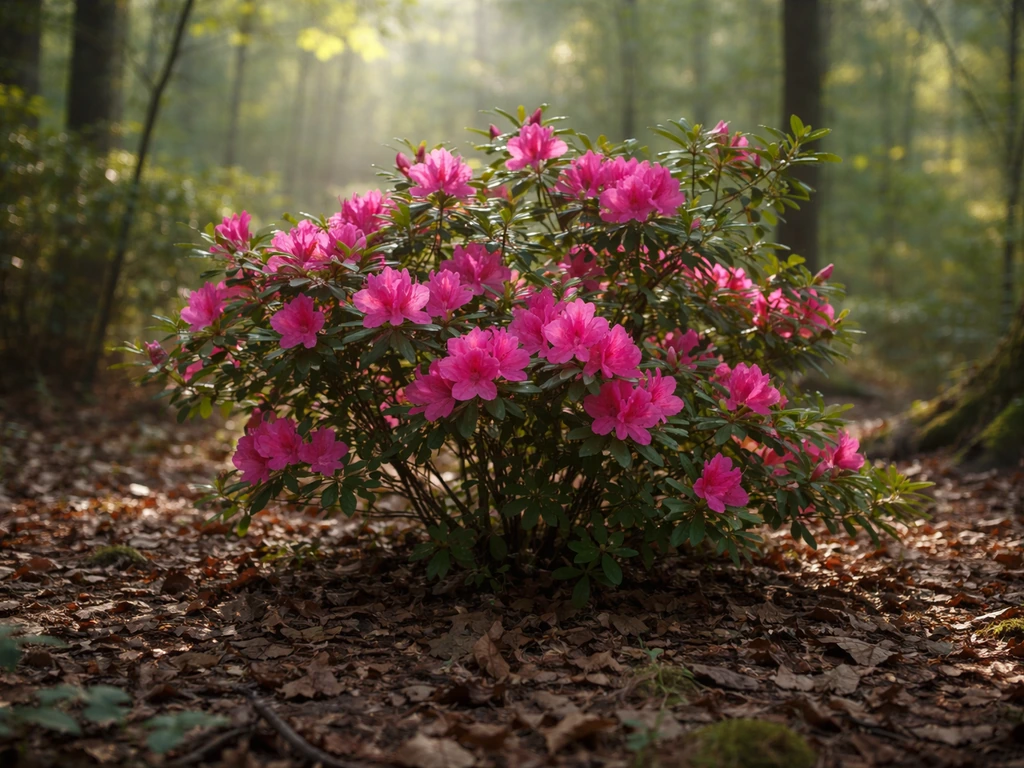
Yes, azaleas do grow wild in the United States, but where and how depends a lot on which type of azalea you mean. Truly native wild azaleas are concentrated in the eastern half of the country, especially the Appalachian Mountains and the Southeast. If you are in the Southeast, Mid-Atlantic, or New England and you stumble across azaleas in the woods or along a creek bank, there is a real chance you have found a genuine native species. If you are in the West, the Midwest, or the Southwest, what looks "wild" is almost certainly a garden escapee from nearby landscaping rather than a naturally occurring plant.
Do Azaleas Grow Wild? Native vs Feral Identification

Marcus Hartwell
6 May 2026
Quick answer: do azaleas grow wild in your region?
The short version by broad region looks like this. If you live anywhere from Georgia and the Carolinas up through Virginia, Maryland, Pennsylvania, and into New England, you are in genuine native azalea territory. Species like Rhododendron canescens (Piedmont azalea), Rhododendron viscosum (swamp azalea), and Rhododendron arborescens (smooth azalea) are legitimately wild plants in those areas, not garden runaways. The Gulf Coast and Florida also host native species.
Once you move west of the Mississippi, though, native wild azaleas essentially disappear. What shows up in hedgerows or vacant lots in Texas, Arizona, California, or the Pacific Northwest is almost always an ornamental variety that has seeded or suckered out of someone's yard. Knowing which situation you are in matters because it affects whether the plant is ecologically appropriate for your landscape and whether it will thrive without help.
Where wild azaleas occur: native ranges vs. escaped plants
North America has roughly 16 to 18 native Rhododendron species that are classified as azaleas, and the vast majority of them are clustered in the eastern United States. The greatest diversity is in the southern Appalachians, where you can find multiple species growing within a few miles of each other along stream banks, ridges, and forest edges. The USDA PLANTS database and Flora of North America both document these native distributions at the state level, and checking those resources for your specific state is the most reliable way to confirm whether a species is truly native where you live.
The native range map follows a rough pattern: deciduous native azaleas dominate from the mid-Atlantic through the Southeast and into the Ozarks. Swamp azalea (R. viscosum) reaches as far north as Maine and as far south as Florida, making it one of the widest-ranging native species. Go Botany (Native Plant Trust) lists North America distribution coverage for Rhododendron viscosum and includes additional species account detail that can help with location-based identification [Swamp azalea (R.
viscosum) reaches as far north as Maine and as far south as Florida](https://gobotany. nativeplanttrust. org/species/rhododendron/viscosum/). Smooth azalea (R.
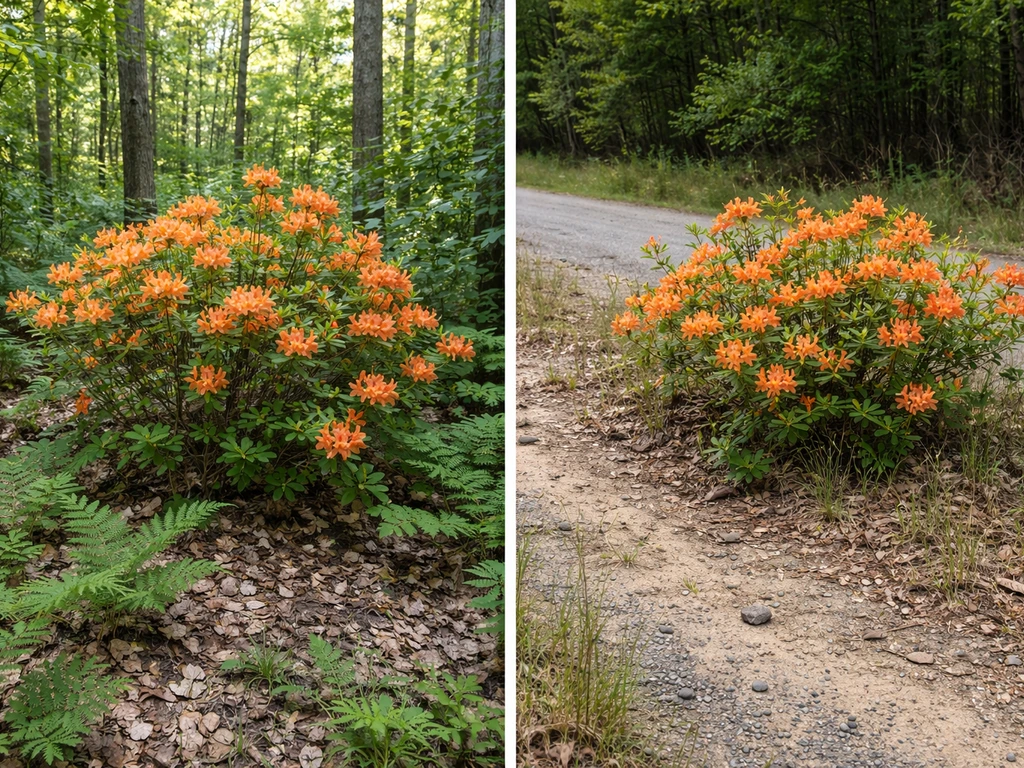
arborescens) is largely an Appalachian and upper South plant. Flame azalea (R. calendulaceum) is an iconic Appalachian species that turns hillsides orange and red in late spring. None of these have a natural range extending into the western states.
Escaped or naturalized azaleas are a different story. Evergreen ornamental azaleas, especially the Kurume and Satsuki hybrids so popular in Southern landscaping, occasionally spread from cultivated settings. Some Rhododendron ponticum, a European species used in older ornamental plantings, has naturalized in parts of the British Isles and has been flagged in a few eastern U.S. locations. But widespread naturalization of ornamental azaleas is not a major documented phenomenon in the United States the way it is in some other countries. If you see a flowering shrub along a roadside near a housing development, it was probably planted, not wild-born.
How to tell wild or feral azaleas from planted ones
This is genuinely tricky, but a few contextual clues narrow it down fast. Location is the biggest one. A shrub growing in a continuous woodland understory along a stream, far from any obvious planting site, is a strong candidate for a true native. A shrub growing next to a fence line, in a row, or near an old foundation is almost certainly a planted or escaped ornamental, even if it has been there for decades.
Plant characteristics help too. Native deciduous azaleas in the eastern U.S. typically have tubular, fragrant flowers and a loosely branched, open habit. The flowers appear in white, pink, orange, or red depending on species, and in many cases they bloom before or alongside the leaves, not after. Ornamental evergreen azaleas, by contrast, hold their leaves year-round, tend to have a denser, more compact growth form, and often display larger, showier flowers in colors that include purples and deep magentas that are not common in native species.
- Deciduous with fragrant tubular flowers: likely a native species if you are in the eastern U.S.
- Evergreen with dense, compact form and glossy leaves: almost certainly an ornamental hybrid
- Growing in a woodland, along a stream, or on a ridge with no nearby human activity: more likely native
- Growing near a property line, old garden bed, or disturbed roadside: more likely planted or escaped
- Flowers in orange, yellow, or strongly fragrant white: classic native azalea traits
- Flowers in deep purple, magenta, or vivid red with no fragrance: typical ornamental hybrid
For a definitive ID, the USDA PLANTS database or your state's native plant society can match a species description and your county location to confirm whether that azalea species is even recorded as native or naturalized in your area. Apps like iNaturalist are also genuinely useful here because they cross-reference your photo and GPS location against known distribution data.
Azalea types worth knowing before you assume anything
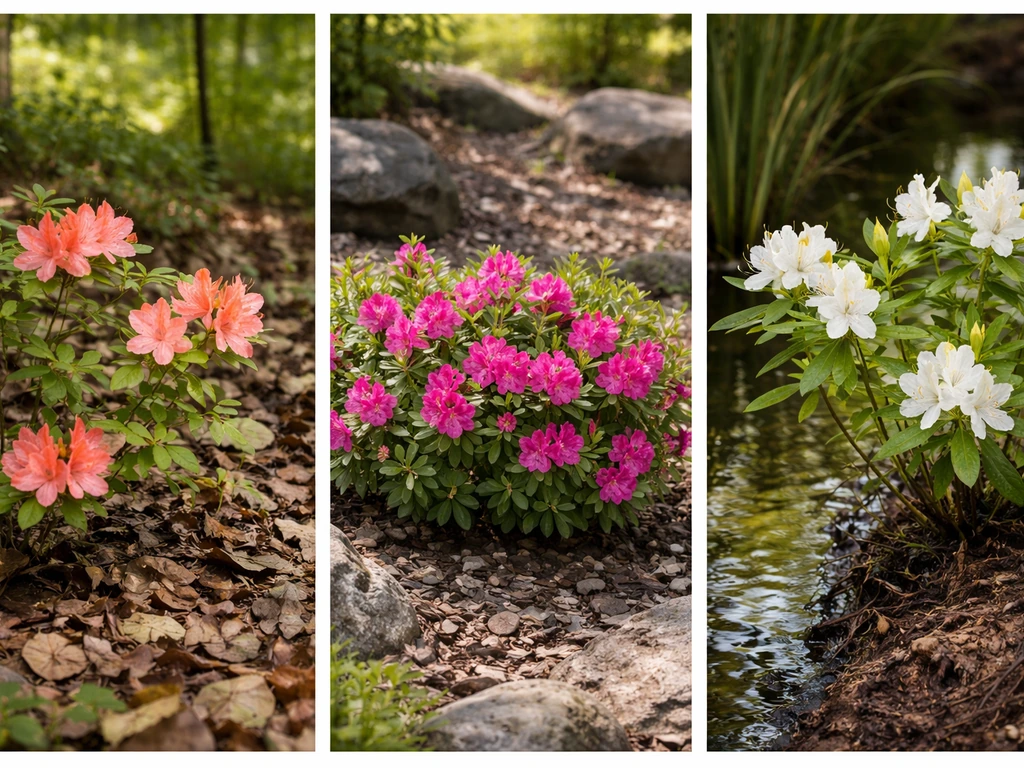
"Azalea" is not a single plant. It is a loose grouping within the genus Rhododendron that covers both native North American species and a large collection of ornamental hybrids developed in Asia and Europe. The distinction matters because these groups behave very differently in the landscape and show up in very different contexts.
| Type | Examples | Leaf behavior | Typical range/origin | Where you find them wild |
|---|---|---|---|---|
| Native deciduous azaleas | R. canescens, R. viscosum, R. arborescens, R. calendulaceum | Drop leaves in fall | Eastern North America | Woodlands, stream banks, mountain ridges in East |
| Native evergreen azaleas | R. carolinianum, coastal plain species | Hold leaves year-round | Southeastern U.S. coastal plain | Pocosins, flatwoods, sandy pinelands |
| Ornamental evergreen hybrids | Kurume, Satsuki, Encore, Southern Indica | Hold leaves year-round | Developed from Asian species | Gardens, rarely escaped |
| Ornamental deciduous hybrids | Exbury, Knap Hill, Mollis | Drop leaves in fall | Bred from native and Asian species | Gardens, occasionally in old homesteads |
If you are researching whether azaleas can grow in a specific region like Arizona or the deep South, the type matters enormously. If you are also wondering where to grow azaleas, start by identifying which species or hybrid matches your climate and soil Whether you’re deciding what type of azalea to plant. What grows wild in the Carolinas is a completely different plant from what gets sold at a big-box nursery in Phoenix.
Trailing azaleas, which grow in harsh alpine and subalpine environments, are yet another category entirely, adapted to conditions that would kill a standard ornamental hybrid. If you are wondering where do trailing azaleas grow, look for cool, high-altitude alpine and subalpine habitats with the right moisture and acidic conditions. Trailing azaleas are specially adapted to those harsh alpine and subalpine conditions, which is why they are such a tough fit for milder gardens harsh alpine and subalpine environments.
What climate conditions wild azaleas actually prefer
Native wild azaleas are telling you something about their preferred conditions just by where they grow. Most eastern native species are found in USDA hardiness zones 4 through 9, which covers a huge swath of the eastern United States. They naturally grow in partial shade under taller trees, which protects them from harsh afternoon sun and keeps the soil consistently moist. The forest floor environment they favor is also reliably acidic, with a soil pH typically between 4.5 and 6.0. This is the single biggest reason azaleas struggle when transplanted into heavy clay soils with neutral or alkaline pH: the plants are programmed for the acidic, humus-rich soils of forest understories.
Moisture matters too. Swamp azalea (R. viscosum) is literally named for its preference for wet, boggy areas and stream margins. Smooth azalea (R.
arborescens) is almost always found near water. Even the drier-sited native azaleas prefer consistent rainfall and humidity. This is a key reason why wild azaleas do not exist in the arid West: the dry air and alkaline desert soils of places like Arizona or New Mexico are climatically opposite to what azaleas need. If you want to know what do azaleas need to grow in your yard, focus on acidic soil, partial shade, and consistent moisture.
Even if azaleas struggle in Arizona, you can still grow herbs like basil in Phoenix if you give it warm temperatures and enough sun can you grow basil in phoenix. Because Arizona has arid, alkaline conditions, azaleas typically do not grow there as true wild plants azaleas in arid West like Arizona.
If you are in a low-humidity, alkaline-soil region, coaxing azaleas to thrive in your yard requires significant soil amendment and irrigation, essentially recreating conditions the plant evolved in.
For the ornamental evergreen hybrids so common in Southern landscaping, the climate range skews warmer. The Southern Indica types that blanket Georgia and South Carolina gardens are most at home in zones 7 through 9. Cold-hardy hybrids like the Northern Lights series were specifically bred to push performance into zones 4 and 5 where the standard ornamentals would freeze out.
Are azaleas invasive or likely to escape your yard?
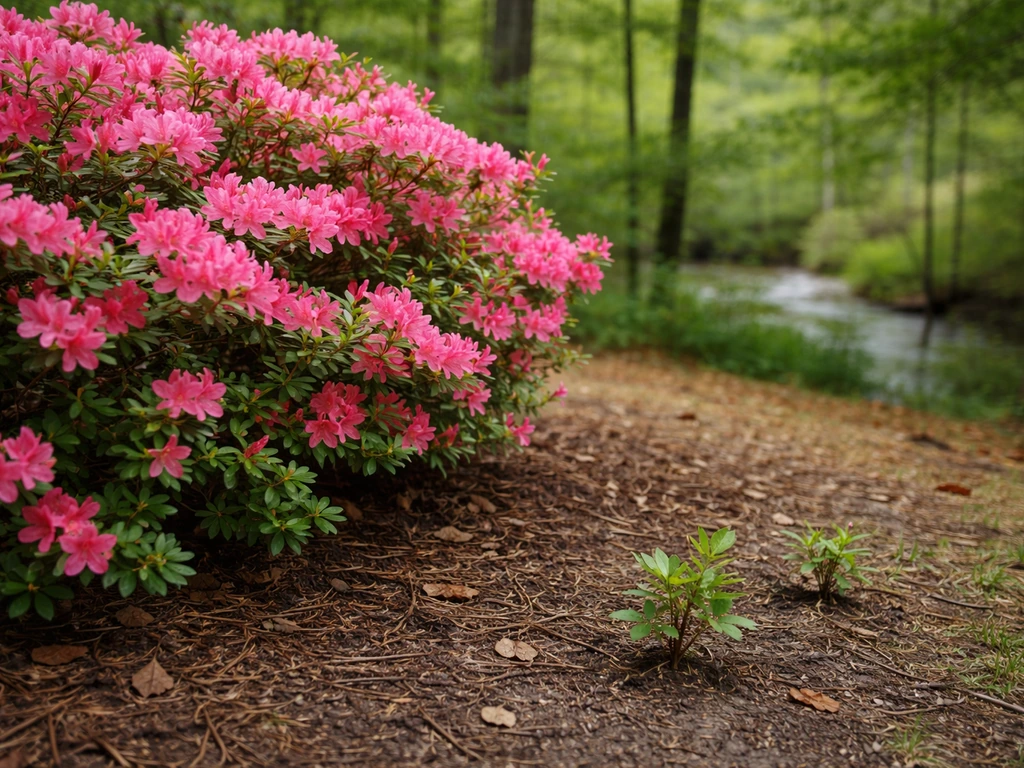
In the United States, ornamental azaleas are generally not considered a serious invasive threat. Unlike some introduced shrubs, they do not aggressively colonize natural areas at a landscape scale here. The most documented invasive azalea problem globally involves Rhododendron ponticum in the UK and Ireland, where it has spread into native woodland. That issue has not played out the same way with U.S. ornamental azaleas.
That said, some caution is warranted in specific regions. In the Southeast, where the climate closely matches what ornamental evergreen azaleas need, there is more potential for garden escapes near waterways or disturbed woodland edges. The risk is low compared to many other ornamentals, but if you are planting near a natural area, choosing native species like R. viscosum or R. canescens over ornamental hybrids is a straightforward way to stay on the right side of the ecological line. Native azaleas support local pollinators, particularly native bees and butterflies, in ways that ornamental hybrids often do not.
How to check feasibility for your area and find the right variety
The most practical first move is to look up your state and county on the USDA PLANTS database. Search for specific azalea species like Rhododendron viscosum or Rhododendron canescens and check the distribution map. If the species shows as native to your state, you are in azalea country and growing them is very likely feasible with minimal fuss. If no native species are listed for your state, you are working against the grain of the plant's natural preferences and will need to select a variety bred for your conditions.
- Check the USDA PLANTS database for your state to confirm whether any azalea species are listed as native or naturalized in your county.
- Identify your USDA hardiness zone and confirm the variety you want is rated for it. Most native eastern azaleas cover zones 4 through 9; Southern ornamentals typically need zone 7 or warmer.
- Test your soil pH before planting. Azaleas need pH 4.5 to 6.0. If your soil tests above 6.5, amend it with sulfur or plant in raised beds with acidified soil mix.
- Contact your state's native plant society or cooperative extension office for locally appropriate species recommendations, especially if you want to support native pollinators.
- If you are in the western U.S. or a hot, dry climate, check whether a cold-hardy or heat-tolerant hybrid has been developed for your zone before investing in plants that will struggle.
- Use iNaturalist or similar apps to photograph and submit any suspected wild azalea for community ID and distribution verification.
If you are trying to figure out whether azaleas will work in your specific state or grow zone, the answer starts with understanding whether you are in their natural range. If your azaleas still refuse to thrive, troubleshooting the most common causes can help explain why won't my azaleas grow in your yard. The closer your local conditions are to an acidic, shaded, moist eastern woodland, the better azaleas will perform with no extra effort from you.
If you want step by step guidance, see our magnolia how to grow tips to match the basics to your site conditions acidic, shaded, moist eastern woodland. The farther you are from that baseline, the more you are asking the plant to adapt rather than thrive. Choosing a variety that matches your zone, testing your soil, and leaning toward native species where possible are the three moves that separate successful azalea gardeners from frustrated ones.
FAQ
If I find an azalea in the woods, does that automatically mean it is native?
Not automatically. Azaleas can persist for decades after planting, then spread by suckers or dropped seed into nearby understory. The location still matters, but confirm whether the species is recorded as native or naturalized in your county, not just your state, using USDA PLANTS or a local native-plant society.
How can I tell native deciduous azaleas apart from common evergreen landscaping azaleas in the field?
A fast rule is seasonality and foliage behavior. Native deciduous types commonly bloom before or with leaf-out, and they drop leaves. Evergreen ornamentals usually keep leaves year-round and often have a denser, more compact growth habit, with flower colors that frequently include deep purples and magenta shades not typical for many native species.
Can ornamental evergreen azaleas really “go wild” in the U.S., even if they are not considered widely invasive?
They can naturalize locally, especially near waterways or disturbed edges in climates that match their needs. The key is scale and persistence: look for seedlings and repeated spread across multiple years away from the original plantings, rather than a single clump that simply self-sustains.
What should I do if iNaturalist or an app gives conflicting IDs for my photo?
Treat app results as a shortlist, then verify with distribution and traits. Cross-check the likely species against your county’s recorded native range, and compare practical traits like leaf retention (evergreen vs deciduous), bloom timing (before/with leaves vs after), and flower color patterns.
Do azaleas need acidic soil to be “true” wild, or can they tolerate neutral or alkaline conditions?
True wild native azaleas are strongly associated with acidic forest-floor soils, typically about pH 4.5 to 6.0. If you see azaleas thriving in neutral or alkaline soil, that often points to an ornamental that has been soil-amended, irrigated, or planted in a sheltered pocket rather than a natural habitat.
Why do azaleas seem more common along creeks and stream banks than in dry uplands?
Many native types depend on consistent moisture and humid microclimates. Stream margins provide steady water and a cooler, shadier understory, which helps keep the soil moist and acidic. Dry uplands can look suitable in terms of shade, but usually fail on the moisture requirement.
If the USDA PLANTS database shows no native azalea species in my state, can I still grow azaleas successfully?
Yes. You can grow azaleas as ornamentals, but you will generally need a variety bred for your climate and you may have to actively manage conditions like soil acidity, partial shade, and irrigation. Use the plant’s hardiness range and the cultivar’s needs, not just whether “azaleas grow wild” nearby.
How do I choose between native species and ornamentals if I want to support pollinators?
If your goal is local ecology, prioritize native species that match your region, because they co-evolved with local native bees and butterflies. If you can’t get a native species that fits your site, choose ornamentals that match your conditions but expect pollinator value to be more limited than with native plants.
Are trailing azaleas (alpine types) considered the same “wild azalea” category as eastern forest natives?
No. Trailing azaleas are adapted to cold, high-altitude alpine and subalpine habitats with specific moisture and acidic conditions. If you are trying to interpret “do azaleas grow wild” for a specific location, the habitat type and species group matter as much as the region.
What’s the quickest way to verify whether a specific azalea species is native where I live?
Use the county-level distribution info where available, not just a broad region guess. Start with USDA PLANTS for your state and county, then refine with a species-level check and local native-plant resources, because native and naturalized statuses can differ even between neighboring areas.