
Yes, hibiscus can grow in Missouri, but the answer depends entirely on which type you buy. Get the right one and you'll have massive blooms every summer with almost no effort. Get the wrong one and you'll be hauling pots indoors every October. Missouri gardeners have good options here, so let's sort it out before you spend a dime.
Can Hibiscus Grow in Missouri? Hardy vs Tropical Guide
Marcus Hartwell
12 Apr 2026
Why the type of hibiscus matters more than anything else
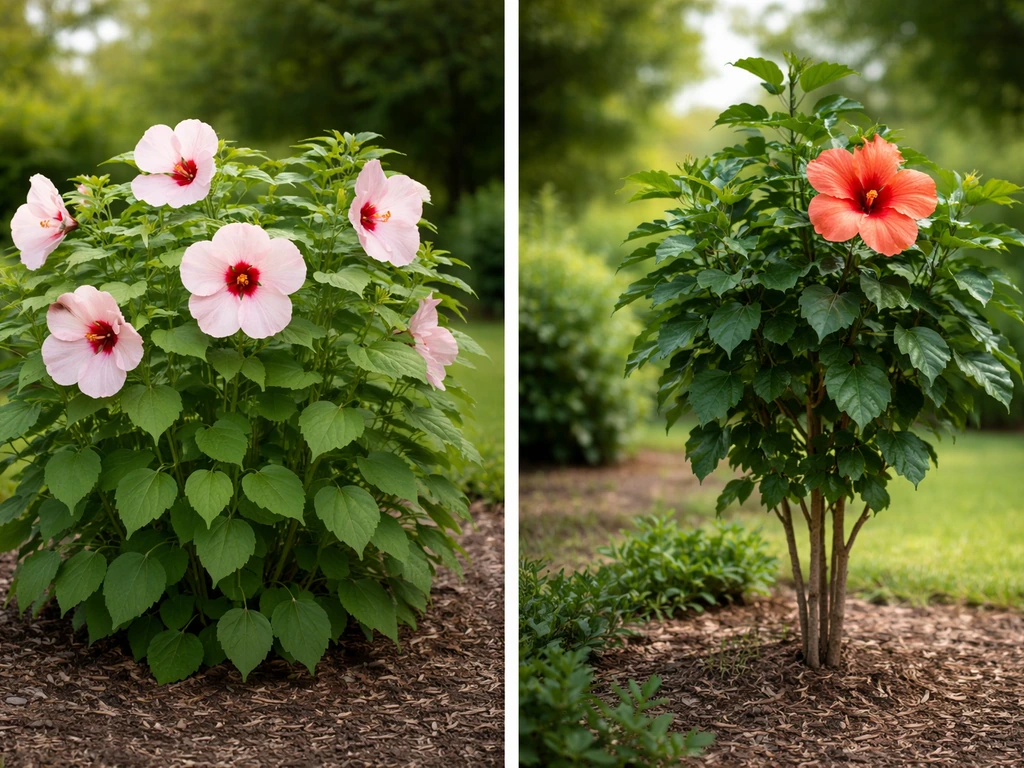
Hibiscus is not one plant. It's a genus with species that range from fully winter-hardy perennials to tropical shrubs that die the moment temperatures dip near freezing. The confusion trips up a lot of gardeners because both types are sold at the same garden centers, often side by side, and they can look pretty similar in a pot. There are three main types you'll encounter in Missouri:
- Hardy hibiscus (Hibiscus moscheutos, also called swamp rose mallow or rose mallow): A true perennial that dies back to the ground in winter and returns each spring. Flowers can reach dinner-plate size, 8 to 12 inches across.
- Rose-of-Sharon (Hibiscus syriacus): A deciduous shrub that stays woody and comes back reliably each year. Smaller flowers than hardy hibiscus but it grows into a full landscape shrub over time.
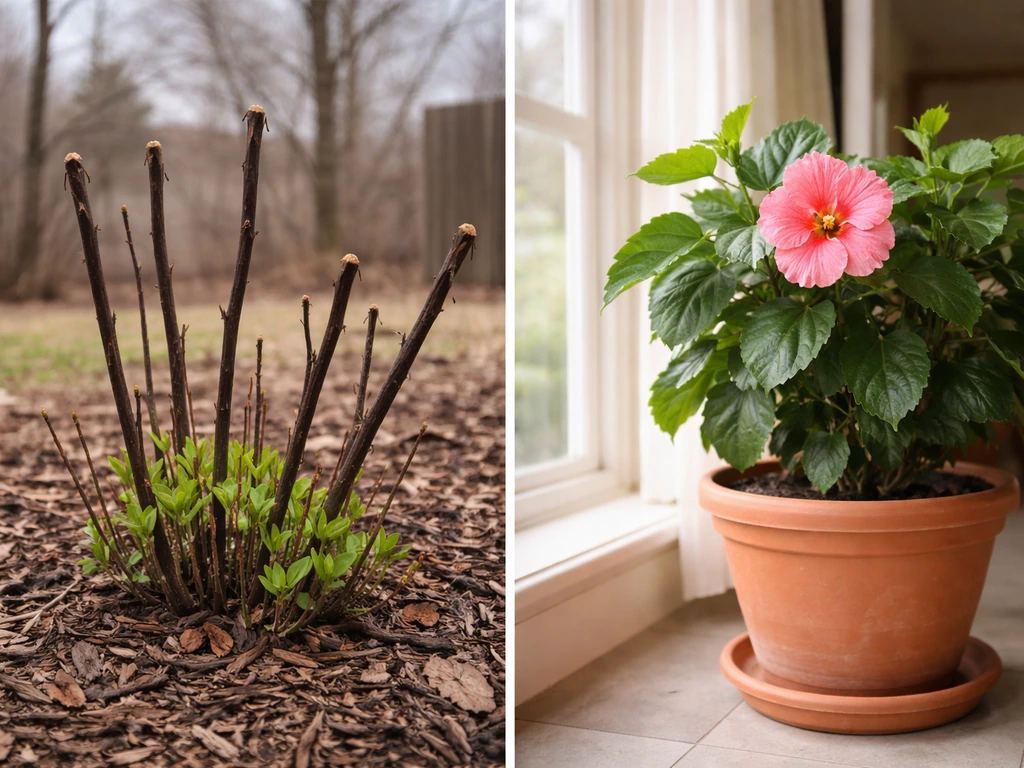
- Tropical hibiscus (Hibiscus rosa-sinensis): The one with the waxy, vivid flowers you see at every grocery store and big-box garden center in spring. It's a zone 9–11 plant and will not survive a Missouri winter outdoors.
The tropical type is what catches people off guard. It looks spectacular in April and May, and it is spectacular, but it was grown in a greenhouse and has zero cold tolerance. Hardy hibiscus and rose-of-Sharon are your reliable outdoor plants in Missouri. Tropical hibiscus is a container plant or an annual here unless you're willing to bring it inside for winter.
Missouri's climate and what it means for hibiscus
Missouri spans USDA hardiness zones 5b through 7b, according to the 2023 USDA Plant Hardiness Zone Map. The Missouri Climate Center confirms this breakdown: the northwest and north-central parts of the state sit in zone 5b (average annual extreme minimums around -15°F), while the Bootheel and southern Missouri reach zones 7a and 7b (minimums around 0 to 10°F). The middle of the state, including Columbia and much of central Missouri, falls in zones 6a and 6b. St. Louis notably shifted zone ratings in the updated map, a real-world reminder that you should always check current zone data for your specific address rather than relying on decade-old maps.
It's also worth understanding what a hardiness zone actually tells you. The USDA system is based on the average annual extreme minimum temperature over a 30-year period, not the absolute coldest it has ever gotten. That means in a particularly brutal winter, your zone 6b garden might see temperatures colder than the zone average. For hibiscus, that rarely matters for the hardy types, but it's a good reason not to push your luck with anything rated only to the edge of your zone.
Summer heat is rarely a problem for hibiscus in Missouri. Hardy hibiscus and rose-of-Sharon both love hot summers and actually bloom more prolifically when temperatures climb. The challenge is almost always winter cold, not summer heat.
Winter dieback: what to expect
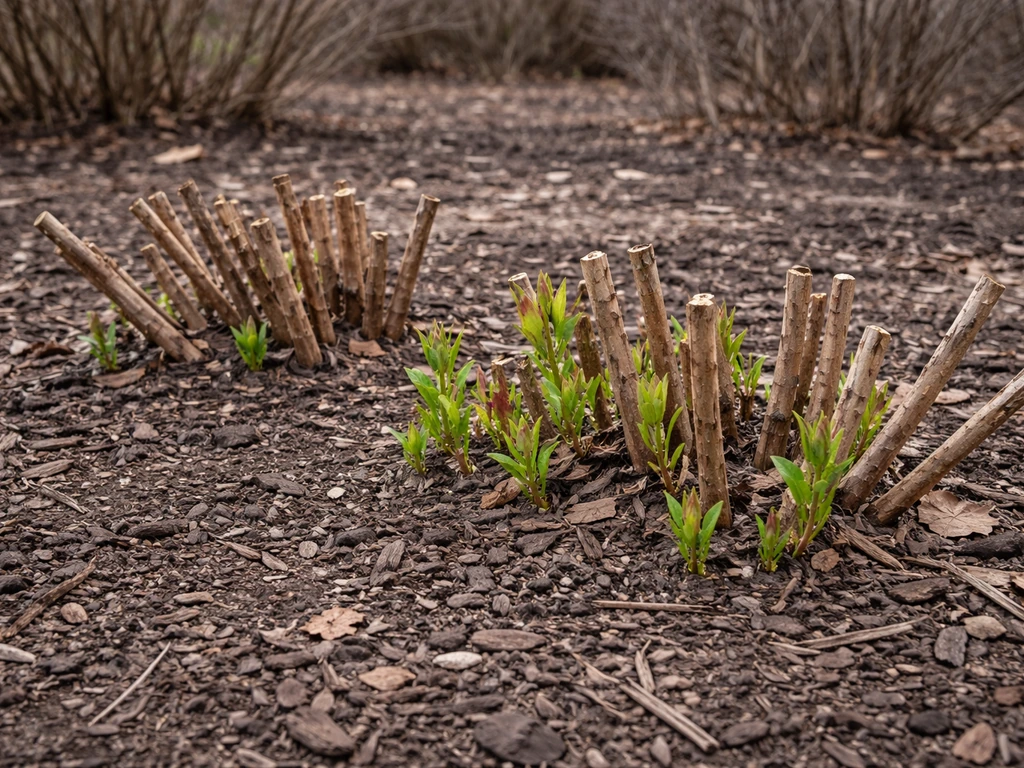
Hardy hibiscus (Hibiscus moscheutos) dies back completely to the ground every winter. This is normal. The plant is not dead. It's just a perennial doing what perennials do. It comes back slowly in spring, often not showing growth until late May, which alarms first-time growers every single year. Don't dig it up. By July it will be 4 to 6 feet tall and covered in blooms. Rose-of-Sharon keeps its woody structure through winter and leafs out in spring, usually a bit later than most shrubs.
The best hibiscus varieties for Missouri gardens
For outdoor planting in Missouri, you have two excellent options. Hardy hibiscus (Hibiscus moscheutos) is hardy in USDA zones 5 through 9, which covers every corner of Missouri with room to spare. It grows 3 to 7 feet tall and 2 to 4 feet wide, so give it space. Look for named cultivars in the 'Summerific' series, 'Luna' series, or 'Disco Belle' series at nurseries. They come in white, pink, red, and bicolor options.
Rose-of-Sharon (Hibiscus syriacus) is equally reliable. The USDA National Arboretum rates cultivars like 'Aphrodite' as hardy in zones 5b through 9, and the 'Diana' cultivar is specifically rated to zone 5b, making it a solid choice even in northern Missouri. Rose-of-Sharon grows into a multi-stemmed shrub, typically 8 to 12 feet tall at maturity, and blooms from midsummer into fall when most other shrubs are done. It's one of the better late-season flowering shrubs you can plant in the state.
If you're comparing Missouri's options to what grows well in warmer states, it puts things in perspective. Hibiscus in Georgia can include tropical types grown as outdoor perennials in some parts of the state, which just isn't an option in most of Missouri. Knowing your climate limits helps you spend money wisely.
| Type | Species | Hardy Zones | Missouri Viability | Winter Behavior |
|---|---|---|---|---|
| Hardy hibiscus | Hibiscus moscheutos | 5–9 | All of Missouri, reliably | Dies to ground, returns in spring |
| Rose-of-Sharon | Hibiscus syriacus | 5b–9 | All of Missouri, reliably | Deciduous shrub, regrows from woody stems |
| Tropical hibiscus | Hibiscus rosa-sinensis | 9–11 | Container only; must overwinter indoors | Dies if exposed to frost |
How to confirm hibiscus will work in your specific Missouri spot
Missouri is a geographically diverse state, and a garden in Joplin (zone 7a) has meaningfully different winters than one in Maryville in the northwest (zone 5b). Before you buy anything, look up your specific zip code on the USDA Plant Hardiness Zone Map online. It takes about 30 seconds and gives you the exact zone for your address. Once you know your zone, match it to the plant tag on whatever hibiscus you're considering. Hardy hibiscus rated to zone 5 works everywhere in Missouri. Rose-of-Sharon rated to zone 5b works everywhere in Missouri. Any hibiscus rated only to zone 9 or above is tropical and needs to come inside in winter.
The plant tag is your most important tool at the nursery. If it says 'zones 9–11' or 'tropical,' that's your signal that it's Hibiscus rosa-sinensis and needs special handling in Missouri. If the tag says 'zones 5–9' or 'perennial,' you're likely looking at a hardy hibiscus or rose-of-Sharon. When in doubt, ask nursery staff for the species name. Missouri gardeners who are comparing notes with friends in neighboring states sometimes find the conversation useful: growing hibiscus in Indiana involves the same zone considerations since Indiana and northern Missouri share similar climate constraints.
What hibiscus needs to thrive: sun, soil, and water
Both hardy hibiscus types want full sun, and this is non-negotiable if you want good blooms. The Chicago Botanic Garden confirms that Hibiscus moscheutos performs best with full sun, and the same guidance applies to rose-of-Sharon. A spot with six or more hours of direct sun daily is ideal. Anything less and you'll get leggy growth and sparse flowering.
Soil and moisture
Hardy hibiscus (Hibiscus moscheutos) is a moisture lover. It naturally grows along stream banks and in low-lying wet areas, and it does best in consistently moist to wet soil that's rich in organic matter. It can tolerate average garden soil as long as it doesn't dry out completely between waterings. If you have a low spot in your yard that stays damp, this is your plant. According to Mt. Cuba Center, it grows best in organic, consistently moist to wet soils.
Rose-of-Sharon is more flexible. It tolerates clay, loam, and sandy soils, but it does need good drainage. A spot that stays waterlogged will cause root rot over time. It prefers slightly acidic to neutral soil and handles Missouri's variable soil types reasonably well. Pruning rose-of-Sharon is best done in late winter or early spring before new growth starts, which fits well with Missouri's late-February to mid-March window before things wake up.
Growing tropical hibiscus in Missouri: containers and overwintering
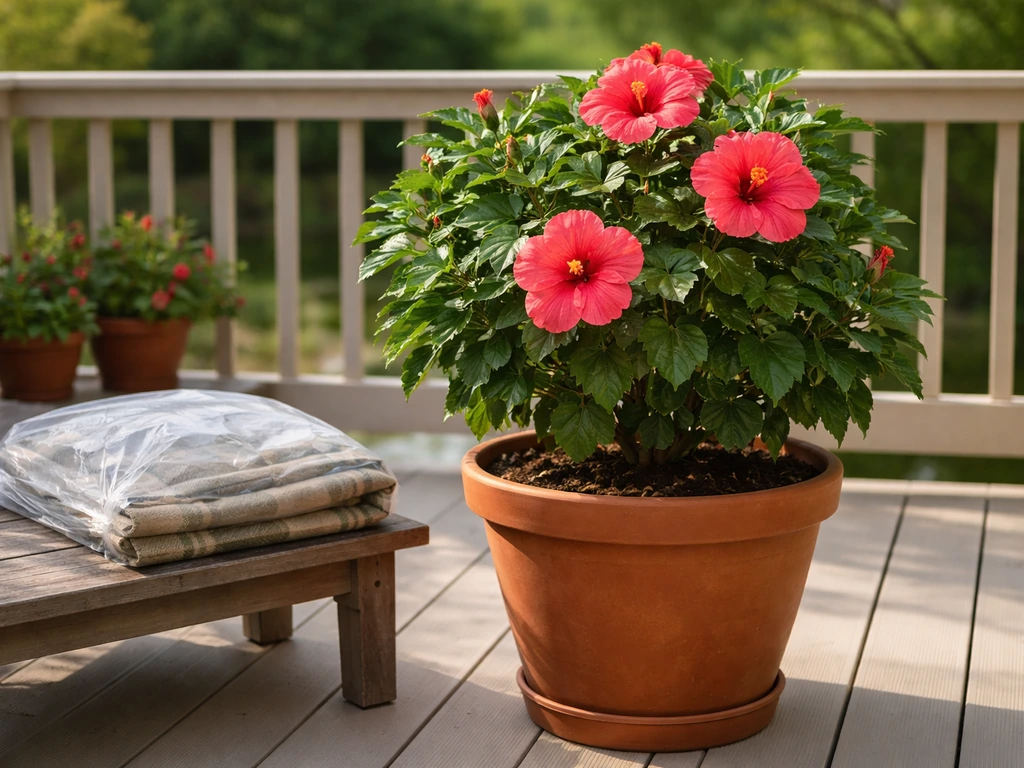
If you love the look of tropical hibiscus and want to grow it in Missouri, you absolutely can. You just have to commit to treating it as a container plant. Grow it in a pot outdoors from late May through early October, then bring it inside before the first frost. The University of Maryland Extension confirms that potted tropical hibiscus can be overwintered indoors successfully. The Smithsonian Gardens recommends keeping tropical hibiscus above 50°F, and the Royal Horticultural Society notes that a minimum night temperature around 45°F (7°C) is needed for good indoor overwintering.
In practice, a bright south-facing window or a heated sunroom works well for overwintering tropical hibiscus in Missouri. Expect the plant to drop some leaves when you bring it inside. That's normal stress from the transition. Water sparingly through winter and don't fertilize until spring. It will perk back up as light increases in March and April, and you can move it back outside once nighttime temperatures are consistently above 50°F, which in Missouri typically means late May.
The container approach is worth it if you're particularly attached to a specific tropical variety, but it's a real commitment. Most Missouri gardeners find that hardy hibiscus gives them equally impressive flowers without the annual hauling. Hibiscus growers in Colorado face an even tougher version of this same calculation, which shows just how much climate shapes what's practical.
Container size and pot selection
For container growing, use a pot that's at least 12 to 14 inches in diameter, with drainage holes. Tropical hibiscus roots fill out quickly and a pot that's too small will stress the plant and reduce flowering. Use a quality potting mix rather than garden soil, which compacts badly in containers. During the outdoor season, water frequently since containers dry out faster than garden beds, and fertilize every two to three weeks with a balanced fertilizer.
Before you buy: a quick checklist and mistakes to skip
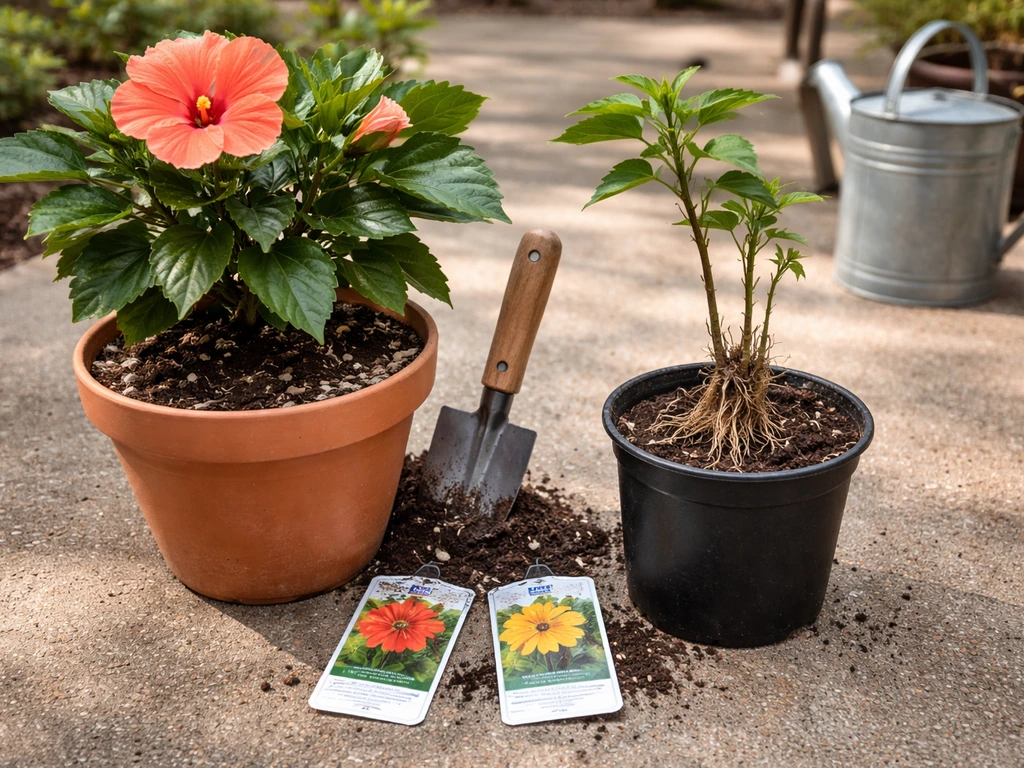
The mistakes that cost Missouri gardeners money are almost always about buying without checking the basics first. Here's what to confirm before anything goes in your cart or in the ground:
- Check your USDA hardiness zone for your zip code before you shop. Missouri ranges from 5b to 7b, so know which you are.
- Read the plant tag. Look for the hardiness zone listed. If it says zones 9–11, it's tropical and needs winter protection.
- Ask for the species name if the tag isn't clear. Hibiscus moscheutos and Hibiscus syriacus are your outdoor-hardy choices. Hibiscus rosa-sinensis is tropical.
- Choose a full-sun location. Six or more hours of direct sun daily is required for good blooming from any hibiscus type.
- Plan your moisture situation. Hardy hibiscus wants consistent moisture. Rose-of-Sharon wants good drainage. Match the plant to your site.
- If buying tropical hibiscus, have a clear indoor overwintering plan before the plant comes home, not after first frost hits.
Common mistakes Missouri gardeners make
- Digging up hardy hibiscus in spring because it hasn't emerged yet. It's slow to wake up. Wait until late May before worrying.
- Planting tropical hibiscus directly in the ground and assuming it will come back next year. It won't survive a Missouri winter outdoors.
- Buying without reading the tag and ending up with a zone 9 plant for an outdoor garden in Kansas City.
- Planting in part shade and wondering why blooms are sparse. Both hardy and shrub hibiscus need full sun.
- Letting hardy hibiscus dry out completely in a hot summer. It's a moisture-loving plant and will struggle without consistent water.
Missouri is a genuinely good state for hibiscus when you match the right type to your site. Gardeners in neighboring states face similar decisions: Ohio hibiscus growers work with nearly identical zone ranges and the same hardy-versus-tropical dilemma, so any advice that works there translates well here. At the other climate extreme, what works for hibiscus growers in Arizona or those growing hibiscus in Texas is almost the opposite situation, where tropical types thrive outdoors year-round.
Missouri sits in a middle zone where you get reliable hardy options outdoors and can still enjoy tropical types with a bit of extra work. Pick hardy hibiscus or rose-of-Sharon for your outdoor beds, and you'll have one of the most dramatic-flowering plants in the state with minimal fuss.
FAQ
How can I tell if the hibiscus I’m buying is actually hardy or just labeled “hibiscus” at the store?
Look for the species name on the tag (Hibiscus moscheutos for hardy types, Hibiscus syriacus for rose-of-Sharon, Hibiscus rosa-sinensis for tropical). If the tag uses words like “tropical,” “zones 9–11,” or “rosa-sinensis,” assume it will not survive Missouri winter in the ground.
Will hardy hibiscus survive Missouri if I mulch heavily or use frost protection?
Mulch can help reduce temperature swings for hardy hibiscus, but it does not reliably turn a tropical hibiscus into a winter survivor. For edge-of-zone hardy varieties, use a thick organic mulch layer after the ground starts to cool, and still expect dieback to the ground for Hibiscus moscheutos.
My hardy hibiscus hasn’t leafed out yet, is it dead?
Often it is simply late to start. Hibiscus moscheutos can stay dormant into late May in Missouri. Do not dig it up early, and avoid fertilizing in spring until you see new growth so you do not encourage weak, late flush.
What’s the best time to plant hibiscus in Missouri?
For in-ground planting, spring is safest so roots establish before winter. If you’re planting in the fall, prioritize hardy hibiscus, choose a well-drained spot, and plan on extra watering until the ground freezes, since newly planted crowns can be more vulnerable than established plants.
How much sun is “full sun” for hibiscus, and what happens if my yard gets less?
Full sun means at least six hours of direct light daily. Below that, hardy hibiscus and rose-of-Sharon often become leggy and bloom less, so the plant may look healthy but produce fewer flowers.
Do hardy hibiscus and rose-of-Sharon need different watering routines?
Yes. Hardy hibiscus performs best with consistently moist, organic-rich soil and may need more water in hot spells. Rose-of-Sharon can handle more variation, but it must not stay waterlogged, so adjust watering to your drainage and avoid keeping the root zone soggy.
Why didn’t my rose-of-Sharon bloom as expected last year?
Common causes are too little sun, pruning at the wrong time (after buds form), and water stress during summer. Prune in late winter or early spring before new growth starts, and aim for steady moisture without saturating the soil.
Can I grow tropical hibiscus outdoors in Missouri as a permanent plant?
Usually no. In Missouri, tropical hibiscus is typically a container or annual because it cannot handle near-freezing temperatures outdoors. If you want it in the landscape permanently, you would need a protected microclimate (like a greenhouse or very sheltered building setup), but for most gardens it will not be dependable.
What’s the minimum indoor temperature target for overwintering tropical hibiscus?
Plan around keeping it above about 45 to 50°F overnight during overwintering. If your indoor space dips much colder, expect more leaf drop and slower recovery in spring, even if you water correctly.
What size pot should I use for tropical hibiscus in Missouri, and why does it matter?
Use at least a 12 to 14 inch diameter pot with drainage holes. Too-small containers restrict root growth, which reduces flowering and makes the plant more sensitive to drying out when it is outside.
How should I handle fertilizer for hibiscus in Missouri?
For hardy hibiscus, avoid heavy feeding early in spring before active growth, since it can lead to weaker shoots. For tropical container hibiscus, fertilize during the outdoor season on a consistent schedule (about every 2 to 3 weeks) but stop fertilizing while overwintering indoors and return once light increases.
What is the fastest way to fix a hibiscus that looks stressed in summer?
First check sun and soil moisture. Leggy growth usually points to insufficient light, while wilting or poor bloom can be drought stress for hardy hibiscus or inconsistent watering for containers. If the plant is in soggy ground, especially rose-of-Sharon, adjust drainage rather than only increasing watering.