How Arizona's climate matches up with hibiscus needs
Arizona's USDA Plant Hardiness Zones range from about Zone 4b in the high country all the way to Zone 10b in the southwestern low desert, according to the University of Arizona Cooperative Extension. Phoenix specifically sits around Zone 9b, where average annual extreme minimum temperatures run roughly 25 to 30 degrees Fahrenheit. That zone range is the first thing to check when you're deciding which hibiscus type to plant.
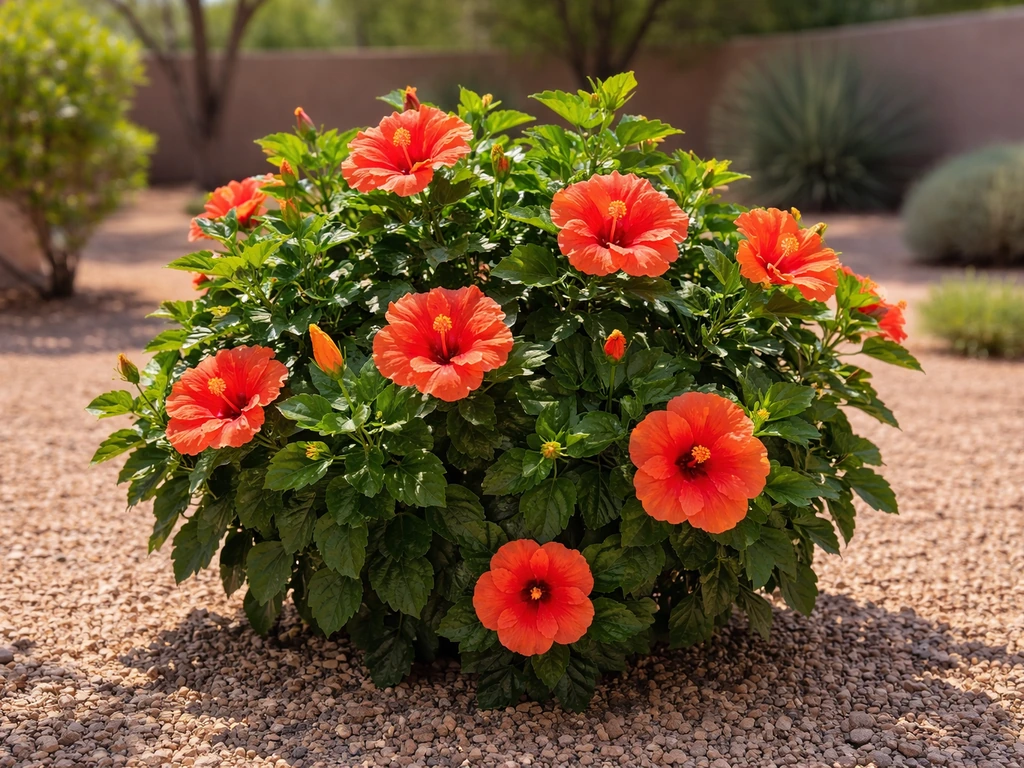
For tropical hibiscus, the good news is that Phoenix summers are genuinely hot enough to push these plants into overdrive. The challenge is those occasional winter cold snaps. Phoenix does see frost, and tropical hibiscus is frost-sensitive. Desert-Tropicals notes that in Phoenix's low desert, tropical hibiscus typically takes some frost damage in a cold winter but bounces back come spring. That's a manageable tradeoff for most gardeners.
Northern Arizona is a different story. Flagstaff sits at about 7,000 feet, and the NWS Flagstaff office confirms that the high country sees near-freezing and well-below-freezing temperatures throughout winter. January average lows in Flagstaff run around 25 degrees Fahrenheit, and the average growing season is only about 103 days, with the first freeze typically arriving around October 5. Tropical hibiscus will not survive a Flagstaff winter outdoors, period. Hardy hibiscus (Hibiscus moscheutos) is rated for Zones 4a through 9b, which technically covers Flagstaff, but the short growing season and dry air make it a more effortful choice there.
Intense sun is one of Arizona's defining features, and hibiscus actually welcomes it. Both tropical and hardy varieties prefer full sun. What hibiscus does not love is the combination of intense afternoon sun bouncing off a west-facing stucco wall with no moisture in the soil. Wind is the other wildcard, especially during Arizona's monsoon season in July and August. Strong gusts can shred large blooms and snap brittle stems, so placement matters a lot.
The best hibiscus varieties for Arizona conditions
There are two main types most Arizona gardeners are choosing between: tropical hibiscus and hardy hibiscus. They are different plants with different needs, and knowing which one fits your part of the state saves a lot of frustration.
| Feature | Tropical Hibiscus (H. rosa-sinensis) | Hardy Hibiscus (H. moscheutos) |
|---|
| USDA Zone Range | 9–11 (outdoors year-round) | 4a–9b |
| Best Arizona Location | Phoenix metro and low desert | Higher elevations, cooler zones |
| Flower Size | Medium, glossy, continuous bloom | Very large (up to 12 inches), summer flush |
| Winter Hardiness | Frost-sensitive, needs protection below 30°F | Dies back to ground, regrows in spring |
| Water Needs | Moderate, consistent | Consistently moist soil required |
| Sun Preference | Full sun, tolerates part shade | Full sun or part shade |
| Soil Preference | Well-drained, slightly acidic | Loam or sand with high organic matter |
For Phoenix and the Sonoran Desert zone, tropical hibiscus is the clear winner. It stays evergreen in appropriate zones, blooms nearly year-round in warm weather, and handles the heat that would stress many other flowering plants. Hardy hibiscus is better suited to gardeners in Tucson's higher neighborhoods, Prescott, or anywhere above about 4,500 feet where winters are too cold for tropical varieties to survive unprotected.
If you're curious how hibiscus behaves in similarly hot neighboring states, the patterns in growing hibiscus in Texas are a useful comparison, since parts of Texas share the same Zone 9 challenges around frost and summer heat management.
Where to plant hibiscus in your Arizona yard
Placement is genuinely one of the biggest success factors for hibiscus in Arizona. Get this right and you'll spend a lot less time nursing a struggling plant.
Full sun is the baseline requirement, ideally at least six hours a day. Morning sun with some afternoon shade is actually ideal in Phoenix during peak summer, when afternoon temperatures can exceed 110 degrees Fahrenheit. A spot that gets eastern or southeastern exposure gives hibiscus the light it needs without roasting it during the hottest part of the day. Planting against a south-facing wall can work in winter when you want to retain warmth, but that same wall becomes a heat trap in July and August.
Microclimates matter enormously in Arizona. A courtyard that traps warmth can keep a tropical hibiscus alive through a mild Phoenix frost event that would damage one planted in an open, exposed corner of the yard. Think of spots that stay a few degrees warmer at night: near a south-facing wall, inside a walled garden, or close to the house where radiant heat from the structure helps. Conversely, avoid frost pockets in low-lying areas where cold air settles on clear nights.
For monsoon wind protection, planting hibiscus on the leeward side of a fence, hedge, or other windbreak dramatically reduces stem breakage and bloom shredding. This is especially relevant for larger tropical varieties with dinner-plate-sized flowers that act like sails in a strong gust.
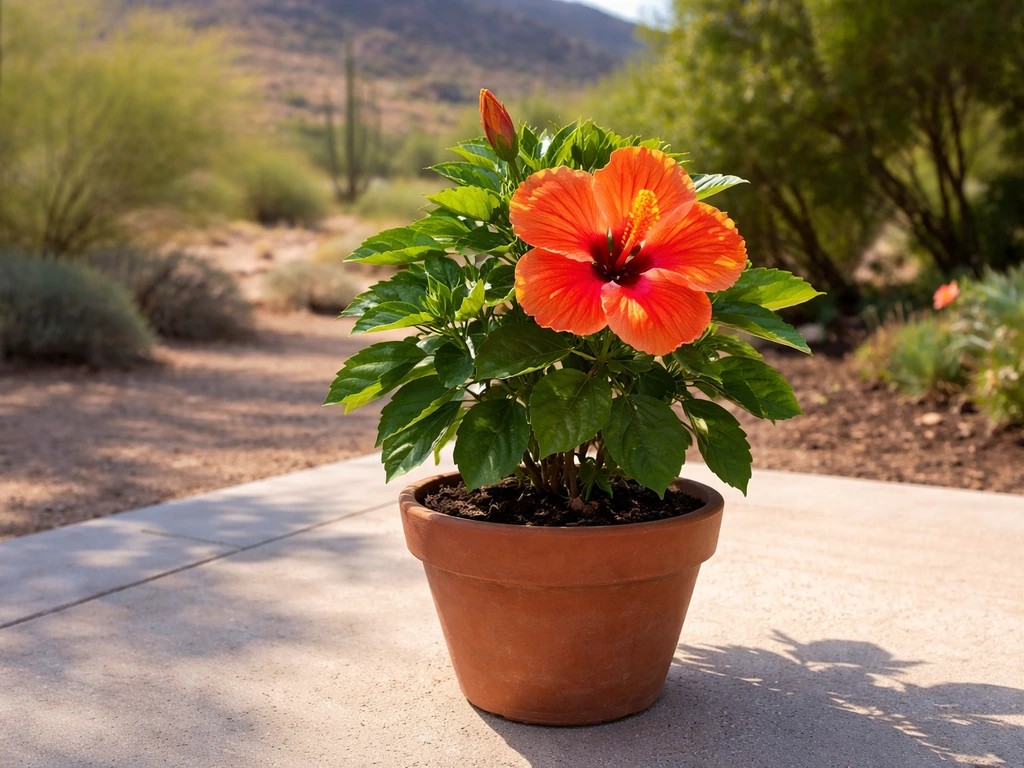
If you're in a higher-elevation part of Arizona where winter cold is a real concern, container planting is a legitimate strategy. A large pot lets you move the plant to a sheltered spot or indoors when temperatures threaten to drop below freezing. Just be prepared: hibiscus in containers need more frequent watering in Arizona's dry heat than the same plant in the ground.
Watering and soil: getting this right in the desert
This is where a lot of Arizona gardeners run into trouble. Hibiscus wants consistently moist soil, and Arizona wants to turn everything into dust. The two are not incompatible, but you have to set things up correctly from the start.
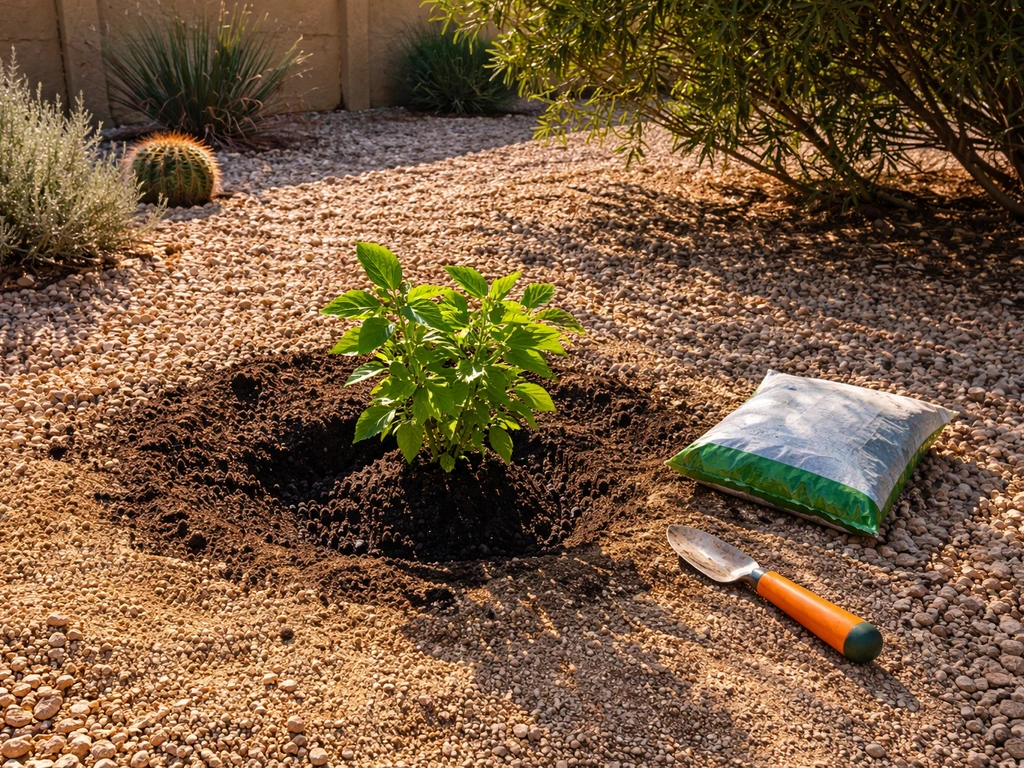
Start with soil amendment. Arizona's native soils tend to be alkaline, compacted, and low in organic matter. Hibiscus prefers well-drained, slightly acidic conditions. Before planting, work in a generous amount of compost or aged organic matter to improve water retention and introduce some acidity. Sandy soil is easier to amend than heavy caliche-dominated clay, but both benefit from organic additions. This approach lines up with what Texas A&M AgriLife Extension recommends for tropical hibiscus: well-drained soil with slightly acidic conditions.
Mulch is not optional in Arizona. A three to four inch layer of organic mulch around the root zone reduces soil temperature, slows evaporation, and keeps moisture available between waterings. Pull it back slightly from the stem to prevent rot.
For watering frequency, deep and infrequent beats shallow and frequent in most cases. During Phoenix summers, that might still mean watering every two to three days for a young plant in the ground. Established plants are more drought-tolerant but will drop buds and stress if they dry out completely. Drip irrigation on a timer is the most reliable setup for Arizona hibiscus, delivering consistent moisture without wetting the foliage and without relying on you remembering to water during a 115-degree July week.
Fertilizing is part of the water and soil equation because hibiscus is a heavy feeder. A balanced fertilizer like a 10-10-10 or 20-20-20 formula used consistently through the growing season supports the bloom production that makes hibiscus worth growing. Back off on fertilizer during winter dormancy or periods of minimal growth.
Keeping hibiscus blooming and healthy all year
Winter protection in Phoenix and the low desert
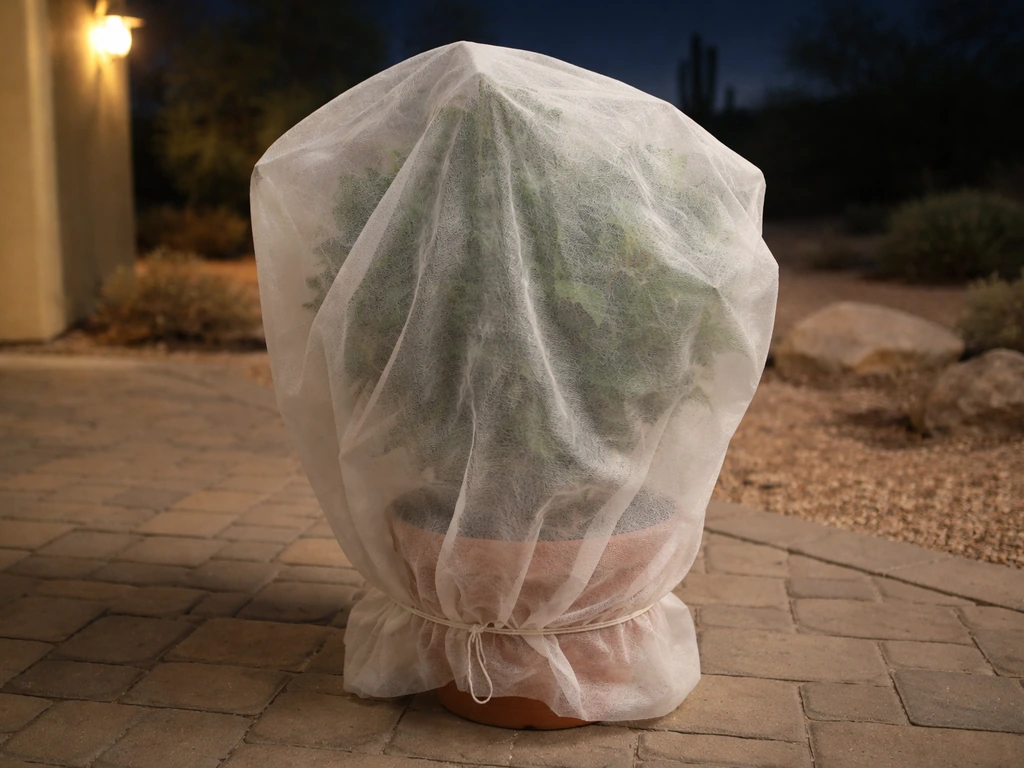
Even in Phoenix, you should have a frost-protection plan for tropical hibiscus. When overnight temperatures are forecast to drop below 32 degrees Fahrenheit, cover plants with frost cloth or a breathable fabric. Do not use plastic directly on the leaves. Uncover them during the day when temps rise above freezing. If a plant does take frost damage, resist the urge to cut it all back immediately. Wait until spring, check stems for green growth, and then prune back to live wood.
Gardeners in cooler parts of the state who grow tropical hibiscus in containers have the option to bring plants indoors for winter. When overwintering a container hibiscus inside, cut back on watering and stop fertilizing until you see new growth in spring. University of Maryland Extension recommends allowing container tropical hibiscus to go somewhat dormant indoors rather than trying to keep it in full-growth mode under low light.
Before you bring any container plant inside, inspect it carefully for pests. Moving an infested plant indoors is a quick way to spread problems to other houseplants. This is a step that University of Missouri Extension specifically flags as critical when overwintering tropical container plants.
Pest scouting for Arizona hibiscus
Arizona has a specific hibiscus pest concern worth knowing about: the blank" rel="noopener noreferrer">pink hibiscus mealybug (Maconellicoccus hirsutus) has been identified as a problem in the state by the Arizona Cotton Research and Protection Council. The National Invasive Species Information Center also blank" rel="noopener noreferrer">provides a technical factsheet/profile for the pink hibiscus mealybug (Maconellicoccus hirsutus). This pest can cause significant damage to hibiscus and is worth monitoring for, especially in the Phoenix area. Check stems and leaf axils regularly.
Aphids are the other common hibiscus pest across hot climates. They cluster on new growth and flower buds, sucking sap and secreting honeydew that attracts sooty mold. A strong spray of water dislodges them, and neem oil or insecticidal soap works well as a follow-up treatment. Scout new growth every week or two during the growing season so you catch infestations before they get established.
Pruning and encouraging more blooms
Tropical hibiscus blooms on new growth, which means regular pruning actually increases flower production. In the Phoenix area, you can prune lightly throughout the growing season to shape the plant and encourage fresh branching. A harder cutback in late winter, once frost risk has passed, gets the plant set up for a strong spring flush. For hardy hibiscus growers at higher elevations, the plant dies back to the ground each fall on its own, so your main job is cutting back the dead stalks in late winter and waiting for the regrowth to emerge in spring.
Hibiscus is a rewarding landscape plant in Arizona when you match the right variety to your zone and set up the basics well. If you're curious how the same plant performs in states with more humidity and milder winters, reading about hibiscus in Georgia gives you a sense of what it looks like when frost risk is lower and summer rain is more reliable.
Gardeners exploring options across very different climates, from the mild mid-South to the frosty Midwest, will find the feasibility breakdown for growing hibiscus in Missouri or the cold-season realities covered in hibiscus in Ohio useful for perspective. For high-altitude desert gardeners who wonder how hibiscus fares in a Rocky Mountain climate more similar to Flagstaff, the guide on hibiscus in Colorado covers that cold-winter, short-season scenario in depth.
And for flat-out contrast, the Midwest's challenging winters are the focus of the look at hibiscus in Indiana, where container strategies and zone selection matter just as much as they do in northern Arizona.
Your Arizona hibiscus game plan
If you're in Phoenix or the low desert, buy a tropical hibiscus, plant it in a spot with morning sun and afternoon relief, amend your soil with compost, mulch heavily, set up drip irrigation, and have frost cloth ready for the occasional cold snap. You will get flowers most of the year and a plant that genuinely loves your summers.
If you're in Flagstaff or the high country, either grow hardy hibiscus in a prepared bed and accept that it dies back each winter, or treat tropical hibiscus as a seasonal container plant that moves indoors from October to April. The short growing season makes commitment to any hibiscus at that elevation a real effort, but it is doable.
- Identify your Arizona zone: Phoenix metro is Zone 9b; Flagstaff and high country are Zones 5 to 7.
- Choose tropical hibiscus for the low desert, hardy hibiscus for higher elevations.
- Plant in full sun with afternoon shade protection during peak summer in hot zones.
- Amend native soil with compost; mulch 3 to 4 inches deep around the root zone.
- Water deeply and consistently; drip irrigation on a timer is the most reliable approach.
- Fertilize with a balanced formula through the growing season; reduce in winter.
- Keep frost cloth on hand for Phoenix winters; bring containers indoors above Zone 9.
- Scout weekly for mealybugs and aphids; treat early with water spray or neem oil.
- Prune tropical hibiscus lightly through the season and harder after last frost risk.
- Inspect any container plant for pests before bringing it inside for winter.