
Hostas can grow in Las Vegas, but only if you engineer almost every condition they need from scratch. The city's summer highs regularly hit 104°F or above, humidity routinely drops below 10%, and the sun intensity is brutal. Those are the exact opposite of what hostas want. But here's what works in your favor: Las Vegas winters are mild enough that cold hardiness is rarely the problem. The challenge is the heat, the sun, and the dry desert air. Get those three things managed with the right variety, the right spot, and a solid irrigation setup, and hostas can absolutely survive and even look good in a Vegas garden.
Will Hostas Grow in Las Vegas? Heat and Shade Guide
Marcus Hartwell
12 Jun 2026
Las Vegas climate and why it matters for hostas
Las Vegas sits in USDA Hardiness Zone 9b in most valley locations, which puts average winter lows between 25°F and 30°F. The city's 1991–2020 climate normals show average January lows around 40. The NWS Las Vegas climate book for December (period of record 1937, 2026; normals 1991, 2020) reports blank" rel="noopener noreferrer">normal highs around 60°F and normal lows around 42°F. 5°F and average July highs around 104.5°F. The all-time record low is 8°F, which happened back in January 1963, but in a typical year December and January lows hover in the low 40s. That means cold hardiness is almost a non-issue for hostas, which generally survive in zones as cold as Zone 3 or 4.
The real threat is at the other end of the thermometer. Summers are brutally hot, the sun angle is intense, and Las Vegas is one of the driest, least humid places in North America. Relative humidity frequently falls below 10% during summer, which means the air is constantly pulling moisture out of plant leaves through a process called transpiration. For a hosta, which evolved in cool, moist, shaded woodland conditions, that kind of atmospheric moisture deficit is genuinely stressful. Wind compounds the problem, especially the dry desert winds that can strip foliage moisture even faster than the heat alone.
Hosta cold-hardiness vs Las Vegas heat and sun exposure
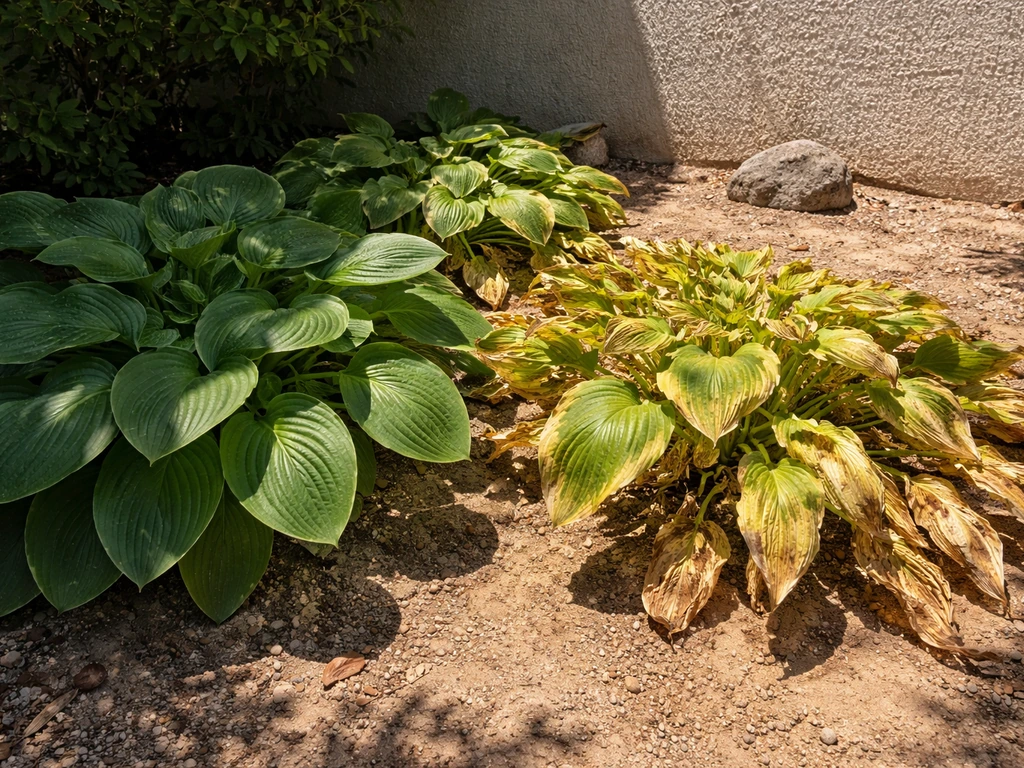
Hostas are rated as winter hardy in USDA Zones 3 to 8 and heat tolerant in AHS Heat Zones 8 to 1. Las Vegas qualifies easily on the cold side. The heat side is a different story. The city sits at the upper limit of what hostas are designed to handle, and intense afternoon sun is the specific killer. Exposure to mid-afternoon direct sunlight causes leaf scorch, bleached papery margins, and overall decline. Research from Walters Gardens puts the sunscald threshold for hostas at around 4,000 foot-candles, a number that Las Vegas afternoon sun blows past by a wide margin.
Even varieties that are marketed as 'sun tolerant' can still show scorch damage when planted in the open Las Vegas sun. The issue is not just direct light intensity but also the reflected heat from stucco walls, concrete, and pavers, which can raise the effective temperature around a plant significantly. That reflected light and radiant heat is one of the most underestimated problems for gardeners new to desert planting.
One advantage Las Vegas does offer is that hostas need some chilling time below 40°F to complete dormancy properly. Most sources suggest around 600 to 700 hours below 40°F for a healthy dormancy cycle. Las Vegas winters are mild, so some years you may fall short on chilling hours. That can result in reduced vigor the following spring or irregular emergence. It is worth watching for this if your plants seem slow to come back after the first winter.
Best hosta types for hot desert conditions
Not all hostas are equal when it comes to heat and sun tolerance. Your best shot in Las Vegas is to start with varieties that have documented sun and heat resilience. Here are the ones worth trying first.
| Variety | Zone Range | Sun Tolerance | Why It Works in Vegas |
|---|---|---|---|
| Guacamole | 3–9 | Higher than average | Described as sun tolerant by multiple nurseries; gold-green leaves handle more light; best with morning sun and afternoon shade |
| Fragrant Bouquet | 3–9 | Moderate to higher | Another fragrant variety noted for doing well with more sun exposure when placement is managed carefully |
| June | 3–9 | Moderate (4–6 hours sun) | Tolerates part sun with the right morning-only light pattern; variegated blue-gold coloring holds up reasonably well |
| Sagae | 2–9 | Moderate | Extremely broad zone tolerance; large, vase-shaped form; benefits from shelter from dry winds, which is essential in Vegas |
| Sum and Substance | 3–9 | Higher than average | Large gold-chartreuse leaves; gold and yellow-toned hostas generally handle more sun than blue or green varieties |
As a general rule, gold and yellow-leaved hostas handle more sun than blue or dark green varieties. Blue hostas are especially vulnerable because the waxy coating that gives them their color melts away in high heat, turning the leaves green and then scorched. Fragrant hostas also tend to fall on the more sun-tolerant end of the spectrum, so that is a useful secondary filter when shopping.
Site placement: shade levels, microclimates, and wind protection
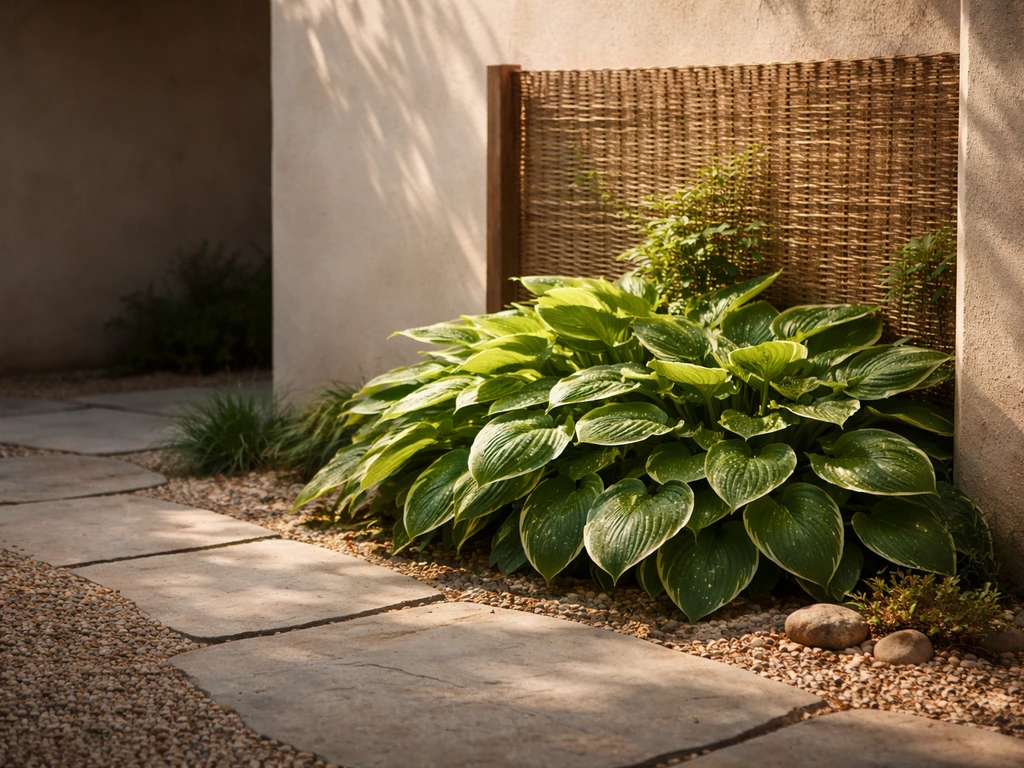
Where you put your hostas matters more in Las Vegas than almost anywhere else. You are looking for spots that get morning sun only and are fully shaded by early afternoon, ideally by 11 a.m. or noon at the latest. North-facing beds are the gold standard because they never receive direct overhead or western sun. East-facing spots work well too, since they get gentle morning light but are protected from the intense afternoon exposure.
Protected courtyards are one of the best microclimate options Las Vegas has to offer. A walled courtyard facing north or east can create a remarkably sheltered environment where temperatures run several degrees cooler than the surrounding landscape. Planting under a shade tree gives you filtered dappled light, which is about as close to ideal hosta conditions as you will find in the desert. Under a patio cover with shade cloth rated at 40 to 50 percent also works well and lets you control exactly how much light reaches the leaves.
Wind protection is non-negotiable. Las Vegas dry winds desiccate hosta leaves fast, especially in late spring and early summer when the plants are in active growth. Planting near a solid wall, fence, or dense shrub hedge on the windward side (usually the west or southwest) gives your hostas a fighting chance. Just watch that the wall is not light-colored stucco or concrete that reflects radiant heat back onto the leaves, because that can be just as damaging as direct sun.
Soil, planting time, and irrigation needs
Las Vegas soils are typically alkaline, sandy, or caliche-heavy, and low in organic matter. None of that is ideal for hostas. Before planting, amend the bed to a depth of 12 to 18 inches with quality compost or aged organic matter. Hostas prefer a soil pH of 6.
5 to 7. 5, which is slightly acidic to neutral. Vegas soils often run higher than that, so mixing in sulfur or acidic compost can help bring the pH down into range. The goal is a soil that holds moisture but drains well enough that water does not pool around the crown.
If you dig a hole, fill it with water, and it is still pooled five to six hours later, you need to improve drainage before planting.
Plant crowns level with the soil surface, with the growing tips right at grade. Planting too deep invites crown rot, and in Vegas, where you will be adding extra water to compensate for the heat and dry air, crown rot is a real risk. The best planting windows in Las Vegas are late February through March, when temperatures are warming but before the brutal summer heat arrives, or in October when things cool down again. Avoid planting in summer if at all possible. A hosta trying to establish in 105°F heat is fighting an uphill battle.
Irrigation is where Las Vegas hosta care diverges most sharply from the rest of the country. These plants will need far more water than they would in a cooler, more humid climate. A drip system set to water deeply two to three times per week during summer is a realistic baseline, with adjustments based on how the soil moisture looks. The goal is to keep the root zone consistently moist without creating standing water around the crown. Deep, infrequent watering that encourages roots to go down is better than shallow daily sprinkles that keep the surface wet and invite rot.
Care plan in Vegas: mulch, fertilizing, pest and leaf issues
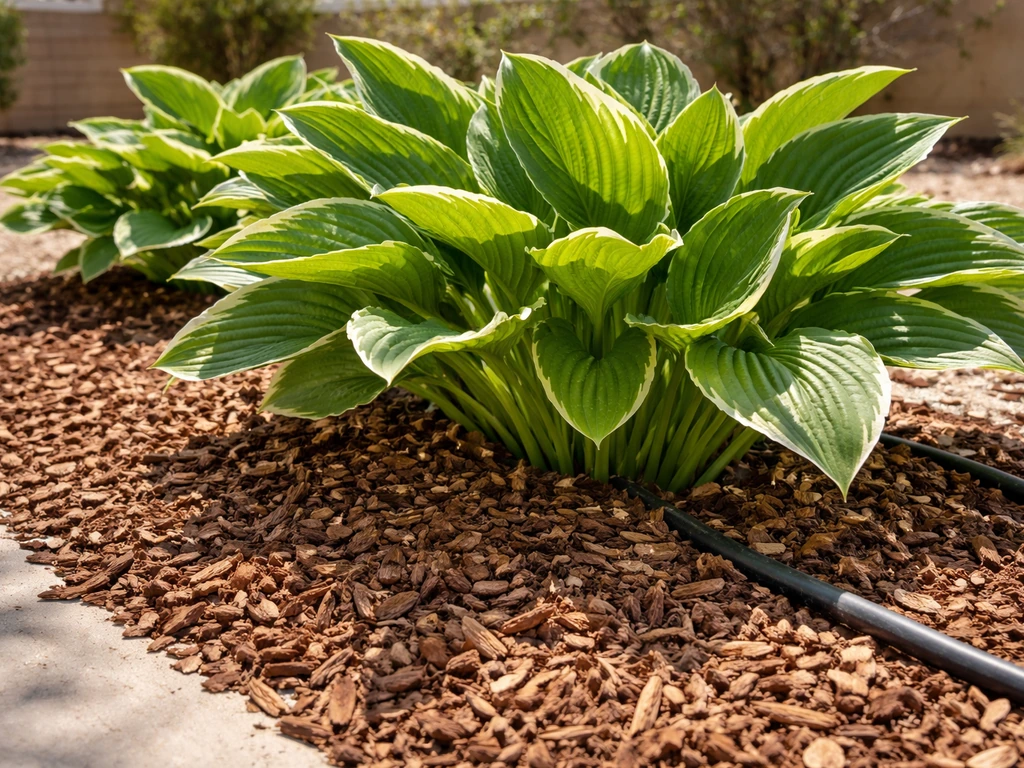
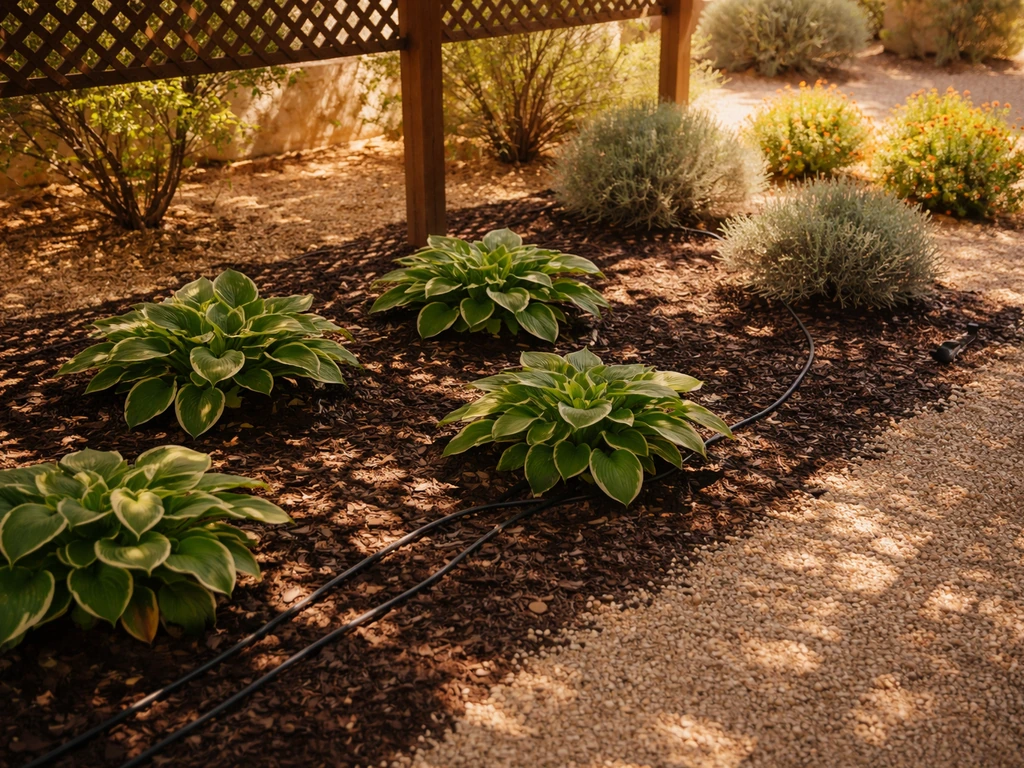
Mulch is probably the single most important thing you can do for hostas in Las Vegas beyond picking the right spot. A 3-inch layer of organic mulch like shredded bark or wood chips keeps the soil temperature lower, slows moisture evaporation dramatically, and protects roots from the extreme heat radiating down from the desert sun. Keep the mulch pulled back an inch or two from the crown itself to allow airflow and reduce rot risk.
For fertilizing, a light application of liquid fertilizer in early spring as plants emerge is a good starting point. Walters Gardens recommends feeding from late spring through mid-summer. In Las Vegas that window is really late February through May before the heat really sets in. Keep granular fertilizers away from the crown entirely because direct contact with concentrated fertilizer can injure or burn the crown tissue. Less is more here. Over-fertilizing creates lush, soft growth that is even more vulnerable to heat and desiccation.
Slugs and snails are the most common hosta pests nearly everywhere, including Las Vegas. They feed at night and leave ragged holes in the leaves. In Vegas, slug populations tend to build in May, so getting ahead of them with iron phosphate bait before you see damage is smart. On the disease side, crown rot is the main risk, triggered by standing water or consistently wet conditions around the crown.
If you see the crown or lower leaf bases turning mushy or developing a cottony white fungal webbing, you are dealing with crown rot and need to improve drainage and reduce watering frequency immediately. Leaf spots from Alternaria, Botrytis, or Colletotrichum can also appear, usually when air circulation is poor or foliage stays wet overnight from overhead irrigation.
Realistic expectations: growth rates, overwintering, and when to choose alternatives
Here is the honest truth: hostas in Las Vegas will not look like the lush, giant clumps you see in Pacific Northwest or Midwest gardens. Growth will be slower, leaf size will often be smaller, and the plants will need more intervention to stay healthy. In a well-managed microclimate with reliable irrigation, a shade-tolerant variety like Guacamole or Sagae can survive and look genuinely attractive. But they are working against their nature in this climate, and if the irrigation fails for even a few days during peak summer, the damage can be severe.
For overwintering, Las Vegas winters are generally mild enough that hostas will die back to the ground and re-emerge in late winter or early spring. The mild winters are actually a double-edged sword: hostas benefit from cool dormancy, and if chilling hours fall short of that 600 to 700 hour benchmark below 40°F, plants may emerge with less vigor. You can leave the dead foliage in place as a light insulating layer through winter and cut it back as new growth begins pushing up.
If your hostas are struggling despite doing everything right, consider whether a region-appropriate alternative might serve you better. In Colorado, do hostas grow mainly depends on whether you can match their cool, moist, shaded conditions and protect them from intense sun and dry air, which is why planning the right site and shelter is key region-appropriate alternative. Several shade-loving plants perform more reliably in hot desert conditions and can fill a similar ornamental role.
- Cast iron plant (Aspidistra elatior): extremely tough, shade-tolerant, and handles heat far better than hostas
- Caladiums: thrive in heat with shade, offer bold foliage color, though they are grown as annuals or lifted for winter in Vegas
- Elephant ears (Alocasia or Colocasia): love heat, do well with regular water and shade, and create dramatic tropical texture
- Liriope (lilyturf): more drought-tolerant than hostas, shade-friendly, and a reliable low-maintenance border plant in desert climates
- Agapanthus: handles more sun and heat, produces attractive blue or white flowers, and works well in protected shade spots too
Gardeners dealing with similar heat challenges in neighboring states face comparable decisions. If you are wondering about do hostas grow in texas, expect similar tradeoffs, since hot, dry conditions push you to use shade, wind protection, and consistent irrigation. The calculus for hostas in Arizona is even harsher than in Vegas, while Colorado gardeners in cooler zones further north have an easier time with hostas than anyone in the desert Southwest.
If you are committed to hostas, Las Vegas is workable with the right setup. In South Carolina, hostas can grow, but you will usually need shade, consistent moisture, and protection from harsh afternoon sun. Hostas in California can also work, but you will need to match the site conditions to the plant’s cool, shaded, moist origins.
In North Carolina, the answer depends heavily on your specific area and whether you can give hostas enough shade and consistent moisture hostas, Las Vegas. But go in with clear eyes: it takes real effort, and the results will always be more modest than what you could achieve in a cooler, moister climate.
FAQ
Will hostas grow in Las Vegas if I only have a sunny yard with no north or east spots?
They can survive, but you will need to physically control the light, a shade structure or shade cloth (around 40 to 50 percent) with morning-only exposure is usually the minimum. Also account for reflected heat from light-colored stucco, pavers, and concrete, since that can scorch leaves even when you think the bed is “not that sunny.”
How much shade do hostas need in Las Vegas to avoid leaf scorch?
Aim for morning sun, then full shade by late morning (ideally by 11 a.m. to noon). If leaves show bleaching or papery margins after a few weeks, treat it as a light-management problem first, then reassess wind and irrigation timing.
Can I grow hostas in containers in Las Vegas instead of planting in the ground?
Yes, containers are often easier to manage for drainage and pH, but they dry out faster, especially with reflective walls. Use a larger pot, keep drip or a consistent slow watering schedule, and never let the crown sit in constantly wet, heavy mix. Mulch is still helpful, but avoid covering the crown.
What is the biggest mistake that causes crown rot for hostas in Las Vegas?
Planting too deep or letting water pool around the crown, especially when the bed stays soggy after irrigation or during cool, damp nights. If you notice mushy crown bases, immediately reduce watering frequency and check drainage by doing a “bucket test” before the next watering.
How should I water hostas in Las Vegas without overwatering them?
Use deep drip watering (two to three times per week in summer as a baseline) and adjust based on soil moisture 2 to 4 inches down. Avoid frequent short watering that keeps the surface wet, since that can promote rot even when the plant looks thirsty at the surface.
Do hostas need a special soil pH or amendment in Las Vegas?
They perform best around slightly acidic to neutral (about 6.5 to 7.5). If your soil is caliche-heavy or very alkaline, plan on amending early with quality compost and, when needed, sulfur or acidic compost, then re-evaluate with a simple soil test rather than guessing.
Will blue hostas survive Las Vegas heat better with extra shade?
Blue cultivars are particularly vulnerable because the waxy coating can degrade in extreme heat. Extra afternoon shade helps, but you should also prioritize wind protection and reliable root-zone moisture, since stress from dryness can worsen heat symptoms.
Why do my hostas emerge late or slowly after winter in Las Vegas?
Mild winters can result in fewer chilling hours below 40°F than hostas require for normal dormancy. If growth is delayed, don’t compensate with heavy fertilizer, wait and monitor, and confirm that your bed is not too dry when the first shoots appear.
What chilling-hour issue should I watch for in Las Vegas winters?
If you consistently fall short of roughly 600 to 700 hours below 40°F, you may see weaker vigor or irregular emergence. The practical fix is mostly behavioral, avoid overfeeding early, keep moisture even in spring, and expect the plant to “ramp up” more slowly than in cooler regions.
When should I plant hostas in Las Vegas for the best chance of success?
Late February through March is usually the safest window, then again in October when temperatures cool down. Summer planting is risky because establishment competes with peak heat and low humidity, even if you water correctly.
How do I prevent slugs from destroying hostas in Las Vegas?
Expect the biggest slug pressure in May. Use iron phosphate bait as a preventative rather than only after damage shows up, and remove hiding spots like thick leaf debris near the bed. Night checks after warm, damp spells can help you time reapplication.
What should I do if my hostas get leaf spots or look wet overnight?
If you use overhead irrigation, switch to drip so foliage dries quickly. Leaf spots are more likely when leaves stay wet and air movement is poor, so thin crowded clumps slightly and ensure mulch is not piled against the crown.
Can I put hostas near a wall or under a tree, and what’s the tradeoff?
Near a solid fence or shrub hedge on the windward side is good for wind protection, but avoid light-colored reflective surfaces that radiate heat. Under a tree with filtered dappled light can work well, but you must still manage competition for water and ensure the hostas are not left dry during hot weeks.
If my hostas never look lush in Vegas, is that normal?
Some reduction in size and slower clump growth is normal because of the desert heat, low humidity, and higher transpiration demand. If you see severe decline after short dry spells or persistent scorching, the problem is usually either too much afternoon sun or irrigation coverage that is not keeping the root zone consistently moist.