
Here is the short answer: most jasmines cannot survive a Chicago winter in the ground without serious protection, and even then it is a gamble. The city sits firmly in USDA Zone 6a, where winter lows routinely drop to −10°F to −5°F. That is cold enough to kill the roots of most jasmine species outright. But the full story is more nuanced, because "jasmine" is a word people use for several completely different plants, and your odds of success depend entirely on which one you actually have.
Can Jasmine Grow in Chicago? Types, Hardiness, and Tips
Marcus Hartwell
15 Apr 2026
Which "jasmine" are you actually talking about?
This matters more than anything else in this article. When someone in Chicago says "I want to grow jasmine," they could mean at least three or four different plants, and those plants have wildly different cold hardiness.
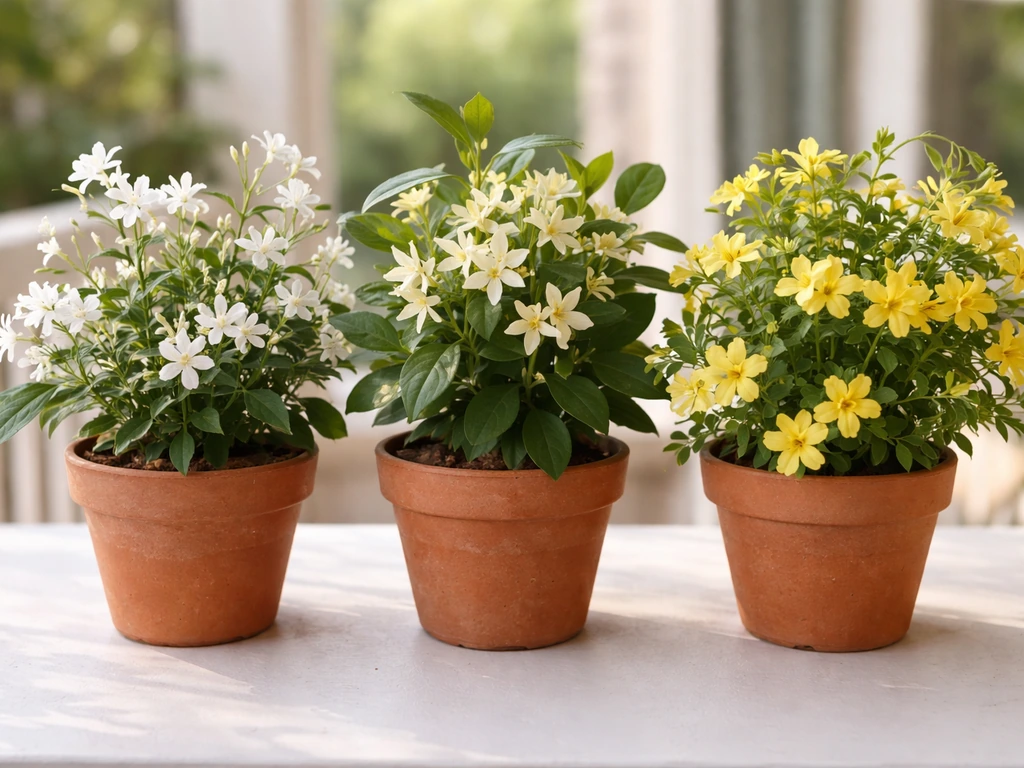
- True jasmine (Jasminum species): This is the real thing — Jasminum officinale (common jasmine), Jasminum sambac (Arabian jasmine), and their relatives. These are the ones with that intensely sweet fragrance everyone associates with jasmine. Jasminum officinale is the hardiest of the group, rated to around Zone 7 at best. Jasminum sambac is a tropical plant, only reliably hardy to Zone 9. Neither is suited to Chicago winters in-ground.
- Star jasmine (Trachelospermum jasminoides): Despite the name, this is not a true jasmine at all. It is in the dogbane family. It has similarly fragrant white flowers and a vining habit, which is why it gets called jasmine at nurseries. It is rated to Zone 7–8. Still not Chicago-friendly for in-ground planting.
- Hardy jasmine / Winter jasmine (Jasminum nudiflorum): Yellow-flowered, winter-blooming, and rated to Zone 6. This is the one exception that can actually survive Chicago winters in the ground. It has no fragrance, but it is a genuine jasmine that will live here.
- Carolina jasmine (Gelsemium sempervirens): Another lookalike with yellow tubular flowers, sometimes sold as jasmine. Hardy to Zone 6–7, and toxic. It can survive in protected Chicago spots but is not reliably hardy through the full zone.
If you bought something at a garden center labeled simply "jasmine" and it has white flowers with a strong perfume, you almost certainly have a true jasmine (Jasminum officinale or Jasminum sambac) or star jasmine. Those are the tricky ones. If your plant has yellow flowers that bloom in late winter or early spring with no fragrance, you likely have Jasminum nudiflorum, which is an entirely different situation.
What Chicago's climate actually throws at jasmine
Chicago is USDA Zone 6a across most of the city proper, with some warmer pockets near the lakefront (Zone 6b) and cooler suburban areas pushing toward Zone 5b. The 2023 USDA Plant Hardiness Zone Map update confirmed this, with downtown and near-north neighborhoods like Lincoln Park sitting squarely at Zone 6a, meaning expected annual minimum temperatures between −10°F and −5°F. The Illinois State Climatologist notes that USDA’s 2023 hardiness zone map shows the 5b/6a boundary shifting about 60, 70 miles north in Illinois, based on average annual extreme minimum temperatures around −10°F USDA’s 2023 hardiness zone map update confirmed this. That is the benchmark every plant recommendation in this article is based on.
But raw zone numbers only tell part of the story in Chicago. The city adds several compounding challenges beyond just cold temperatures: brutal northwest winds off the lake and across the plains that dramatically increase windchill and desiccation on evergreen plants, freeze-thaw cycles in late winter that heave roots and crack stems, and the fact that spring comes late and often still delivers a hard freeze in April. For a jasmine trying to survive, it is not just about the lowest temperature, it is also about wind exposure, duration of cold, and how quickly temperatures swing.
The bottom line: can jasmine grow in Chicago in the ground?
| Jasmine Type | Hardiness Zone | In-Ground Chicago? | Container Option? |
|---|---|---|---|
| Jasminum nudiflorum (Winter jasmine) | Zone 6 | Yes, with some protection | Yes |
| Jasminum officinale (Common jasmine) | Zone 7 | Only with heavy protection, often dies | Best approach |
| Jasminum sambac (Arabian jasmine) | Zone 9-10 | No | Yes, bring indoors |
| Trachelospermum jasminoides (Star jasmine) | Zone 7-8 | Usually no, zone-borderline | Yes |
| Gelsemium sempervirens (Carolina jasmine) | Zone 6-7 | Possible in sheltered spots | Yes |
If you want the fragrant white-flowered jasmine that most people are picturing, the realistic answer is: grow it in a container and bring it inside for winter. Full stop. Trying to push a Jasminum officinale or star jasmine through a Chicago winter in the ground is the kind of experiment that ends in a dead plant and frustration. It can survive in Zone 7 with mild winters. Chicago is Zone 6a with harsh winters. That gap is too wide to bridge reliably with mulch alone.
Jasminum nudiflorum is the genuine exception. It is a sprawling, arching shrub that blooms yellow in February and March, right on bare stems before leaves appear. It is not what most people picture when they say jasmine, and it has no scent, but it is a real jasmine that will actually survive in your Chicago garden. If living with a non-fragrant species bothers you, pair it with something else for fragrance and enjoy its late-winter color for what it is.
The only real cold-hardy option: Jasminum nudiflorum cultivars
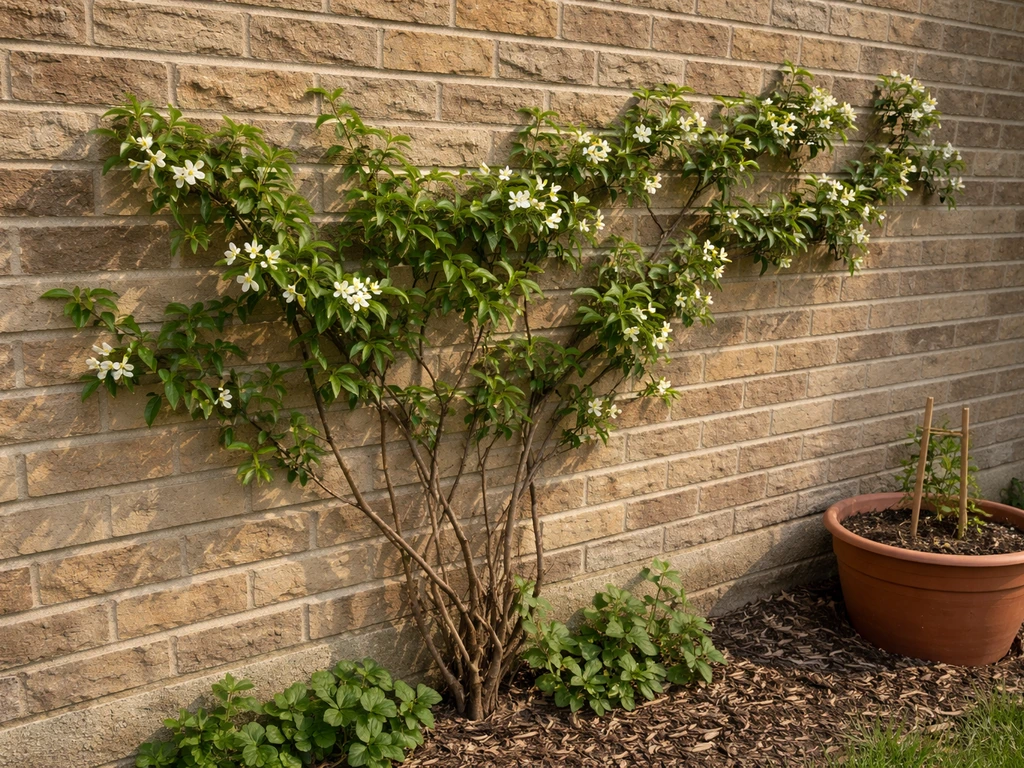
If you are committed to growing jasmine in the ground in Chicago, Jasminum nudiflorum is your plant. The straight species is the most widely available and performs well in Zone 6. There are a couple of cultivars worth knowing about. 'Aureum' has yellow-variegated leaves and the same bright yellow winter flowers. 'Mystique' is a more compact form that works well against walls or fences. All of them handle Chicago winters when given a south-facing or sheltered exposure. They are semi-evergreen (they may keep some foliage in mild winters and drop it in severe ones), and they root readily where stems touch soil, which lets you propagate new plants from established ones over time.
Gardeners in neighboring states face similar decisions. If you are comparing notes with someone in a nearby state, the same calculus applies, growing jasmine in Wisconsin is even harder, since most of that state sits in Zone 5, while jasmine in Michigan follows a very similar zone 6 story to Chicago in the lower part of the state.
Where you plant matters as much as what you plant
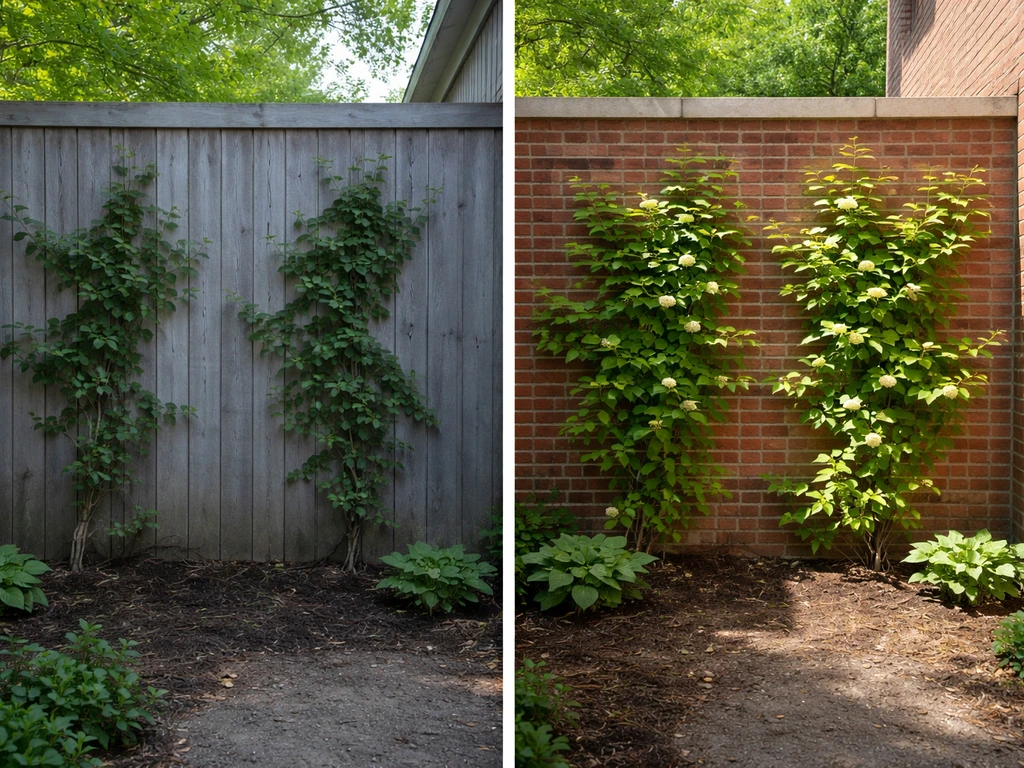
Microclimates in Chicago are real and they can shift your effective growing zone by a full zone or more. The difference between a north-facing exposed fence and a south-facing brick wall can be the difference between a dead plant and a thriving one. Here is how to use your yard's microclimates to your advantage.
- South or southeast-facing walls: Brick, stone, or concrete walls that face south absorb heat during the day and radiate it back at night, creating a warmer microclimate directly in front of them. This is your best spot for any marginally hardy jasmine.
- Protected corners: A corner formed by two walls or fences blocks wind from multiple directions. Wind desiccation kills more marginally hardy plants in Chicago than raw cold does, so this matters enormously.
- Away from frost pockets: Low spots in a yard collect cold air and experience lower minimum temperatures than slightly raised or sloped areas. Avoid planting jasmine at the bottom of a slope.
- Urban heat: Dense urban neighborhoods in Chicago run measurably warmer than surrounding suburbs, especially overnight. If you are gardening in a city neighborhood rather than a western suburb, you have a slight advantage.
- Full sun: Any jasmine you try in-ground needs maximum sun exposure to harden off properly before winter. A shaded spot weakens stems and reduces cold tolerance.
Lakefront neighborhoods get a slight warming effect from Lake Michigan in early winter (the lake stays warmer than the air for months), but that same lake is the source of brutal east and northeast winds in winter that can desiccate plants severely. A lakefront microclimate helps at the margins but does not make jasmine reliably in-ground viable.
If you try in-ground: a winter protection plan that actually works
Let's say you want to try pushing Jasminum officinale in the ground in a really good microclimate. Here is how to give it the best shot. This is not a guarantee, it is about improving odds from "almost certainly dies" to "might survive."
- Choose the location carefully before you plant: south-facing wall, wind protection on north and west sides, full sun. Do not skip this step and plan to compensate later with more mulch.
- Plant in spring, not fall. Give the jasmine a full growing season to establish roots before it faces a Chicago winter. Fall-planted marginally hardy plants almost never make it.
- In late October or early November, after a couple of hard frosts have triggered dormancy, apply 4 to 6 inches of shredded bark mulch over the root zone, extending well past the drip line.
- Wrap the above-ground stems loosely in burlap or frost cloth. Do not use plastic — it traps moisture and causes rot. The goal is wind protection and temperature buffering, not a sealed environment.
- For extra protection, build a simple wire cage around the plant and fill it with dry leaves, which insulate far better than burlap alone.
- Remove protection gradually in spring — do not unwrap everything in one go on a warm April day. Stagger it over two to three weeks as consistent warmer temps arrive, because late frosts in April are common in Chicago.
- Expect dieback. Even with all this, you will likely see significant stem dieback most years. The question is whether the roots survive. If they do, the plant can push new growth in spring. If not, you are starting over.
This level of effort makes sense if Jasminum nudiflorum's yellow flowers are not what you want and you are determined to try. But most gardeners who go through this process once end up switching to containers or to alternative plants. Know that going in.
Container growing: the smarter path for fragrant jasmine in Chicago
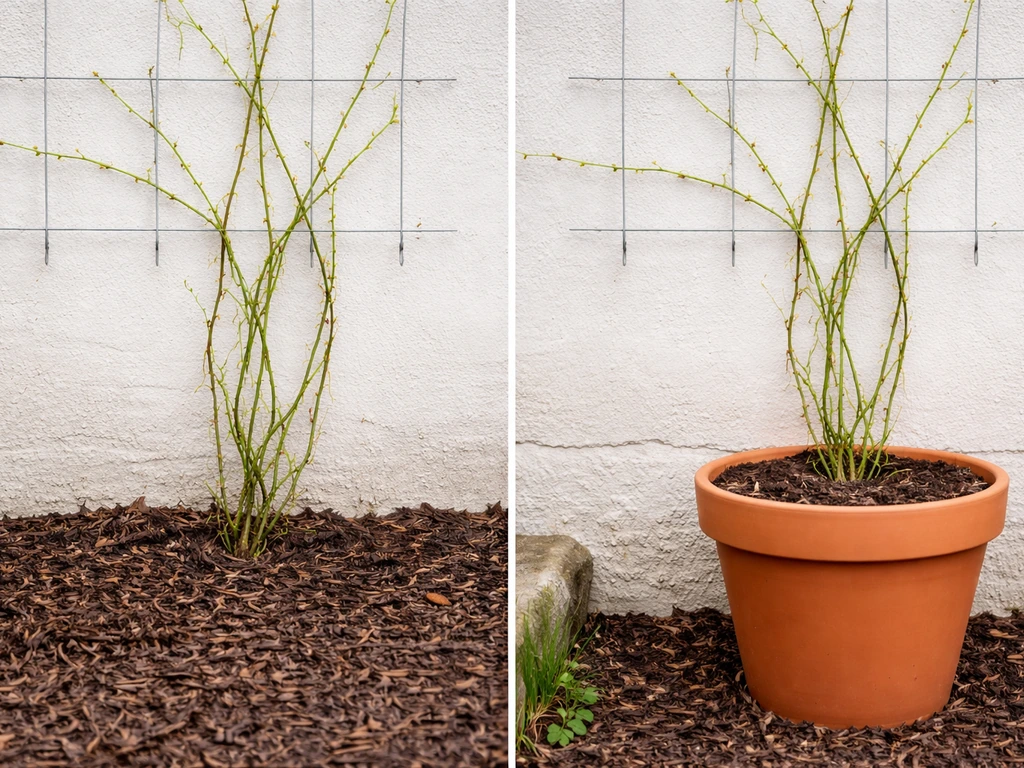
For anyone who wants the real thing, Jasminum sambac, Jasminum officinale, or star jasmine, containers are genuinely the right approach, not a consolation prize. Grow them in large pots (at least 14 to 16 inches diameter) with good drainage. Train them on a small trellis. During Chicago summers they will thrive outdoors in a sunny spot and bloom heavily. Move them inside before the first frost (typically late September to mid-October in Chicago) to a bright, cool indoor space, a sunroom, south-facing window, or under grow lights. They do not need to be warm indoors; in fact, a cooler indoor temperature around 50 to 60°F actually encourages reblooming.
The container approach also gives you complete control over soil quality, watering, and fertilization in a way that in-ground planting in Chicago clay soil does not. The main trade-off is the annual moving logistics and finding adequate indoor light for winter.
Fragrant alternatives that actually thrive in Chicago
If you want fragrant flowering vines or shrubs without the annual battle against Zone 6a winters, Chicago has genuinely excellent options that deliver similar garden effects without the stress.
- Wisteria (Wisteria floribunda or W. macrostachya 'Blue Moon'): 'Blue Moon' is the standout — it is native-adjacent, reliably Zone 4 hardy, and produces enormous clusters of fragrant lavender-blue flowers. It is actually one of the best fragrant vines for Chicago.
- Honeysuckle (Lonicera sempervirens or L. × brownii): Trumpet honeysuckle and its hybrids are Zone 4–5 hardy, fragrant, vigorous climbers that hummingbirds love. They cover fences and trellises quickly and need no winter protection.
- Climbing roses (especially rugosa types): Old garden roses and rugosas are Zone 3–4 hardy, intensely fragrant, and will thrive in Chicago without fuss. 'Therese Bugnet' and 'Hansa' are both excellent choices.
- Mock orange (Philadelphus coronarius): Not a vine, but a shrub with one of the strongest jasmine-like fragrances you will find in Zone 4–5. Blooms in late spring and is completely bulletproof in Chicago gardens.
- Sweet autumn clematis (Clematis terniflora): Hardy to Zone 3, fast-climbing, and covered with small white fragrant flowers in late summer and fall. It naturalizes easily and fills the same climbing/fragrant niche as jasmine.
- Native virgin's bower (Clematis virginiana): A native relative with similar small white flowers, fully hardy, and good for wildlife.
Mock orange in particular gets overlooked by gardeners chasing jasmine. The fragrance is almost identical, sweet, heady, white-flowered, and it asks nothing special from a Chicago garden. If jasmine fragrance is your actual goal, mock orange delivers it without the winter drama.
How Chicago compares to other Midwest and Northeast climates
Chicago's Zone 6a puts it in the same general bracket as jasmine growing conditions in Ohio and most of Pennsylvania, where the same rule applies: Jasminum nudiflorum survives, everything else needs containers or heavy protection. Gardeners in warmer parts of those states (southern Ohio, southeastern Pennsylvania) have slightly better odds with Jasminum officinale due to milder winters, but Chicago's wind exposure and continental climate make it a tougher environment even at the same zone number. Climates like New England and Minnesota are generally colder still, making in-ground jasmine even less feasible there.
The pattern across the Midwest is consistent: the further north and more continental the climate, the harder jasmine becomes. Chicago sits right at the edge where only the hardiest species (Jasminum nudiflorum) are genuinely reliable, which is the same conclusion you reach when looking at jasmine feasibility in Minnesota.
What to do right now
If you are reading this in spring and planning your garden, here is the practical decision tree. First, figure out which plant you actually have or want. If it has white fragrant flowers, it is almost certainly a true jasmine or star jasmine, plan for a container. If it has yellow flowers and blooms in late winter, you likely have Jasminum nudiflorum, and you can plant it in the ground in a sheltered sunny spot. If you are buying new, and you want fragrance, either commit to container growing or pivot to mock orange, wisteria, or climbing roses. If you want a jasmine specifically in the ground, buy Jasminum nudiflorum and set your expectations for yellow flowers with zero fragrance. None of these are bad outcomes, just different ones. The key is making the decision with clear information rather than buying a Jasminum sambac at a big-box store in May and wondering what happened to it by November.
FAQ
I bought a plant labeled jasmine, how can I tell which one it is before trying to overwinter it?
No, the term “jasmine” is often misused. In Chicago, true jasmine with fragrant white flowers usually means Jasminum officinale or star jasmine, and those are the ones that generally need winter containers or very heavy protection. Yellow, late-winter blooms with no scent usually indicate Jasminum nudiflorum, which is the in-ground option.
When should I move potted jasmine indoors in Chicago so it has the best chance to survive?
For Jasminum sambac, officinale, and star jasmine grown in containers, keep the plant outside until you get a few nights of frost, then move it indoors before hard freezes start (often late September to mid-October in Chicago). Don’t wait for the first frost day if you can avoid it, because a sudden deep cold can damage flower buds and tender stems even if the roots survive in a pot.
Can I grow fragrant white jasmine in the ground in Chicago if I use extra mulch and protection?
Yes, but you need to protect the entire root ball and reduce freeze-thaw damage. Even with mulching, in-ground white fragrant jasmine often fails because Chicago’s wind and rapid temperature swings dry out canes and heave roots. If you try anyway, use a sheltered location and focus on winter insulation around the crown, not just a surface mulch layer.
What indoor conditions matter most for overwintering potted jasmine in Chicago?
In Chicago winters, the biggest failure mode for container jasmine is insufficient light. If your indoor spot is bright but not sunlit, use supplemental grow lights so the plant gets enough light to stay productive and not drop all growth. A cool indoor temperature (around 50 to 60°F) helps rebloom, but it does not replace light.
Where should I plant Jasminum nudiflorum in my yard to maximize success in Chicago?
Jasminum nudiflorum can handle Chicago winters in the ground better when the site is sunny and protected from northwest winds, such as near a south-facing wall or a fence that blocks strong wind. It still benefits from wind buffering and from not having waterlogged soil, since freeze-thaw cycles are worse when the roots stay wet.
How should I water jasmine during winter, especially if it is in a container?
If your jasmine is container-grown, use a potting mix that drains fast and ensure there are drainage holes that never clog. Water less in winter when growth slows, then increase watering as spring warmth returns. With windy Chicago conditions, containers can dry out quickly on sunny winter days even though it looks “cold,” so check moisture whenever temperatures briefly rise.
Can I propagate Chicago-hardy jasmine plants at home, and what’s the easiest method?
Yes, because Jasminum nudiflorum roots readily where stems touch soil. To propagate, you can gently lay a low stem against the ground and lightly cover the touching section with soil, then keep it lightly moist until it forms roots. You can separate the new plant once it’s established, usually after a growing season.
What should I choose if I want jasmine-like fragrance or flowering but don’t want the container work?
If you’re trying to get fragrant blooms in Chicago, mock orange is a practical swap because it provides a similar sweet fragrance with much less winter drama. If your priority is early color instead of scent, Jasminum nudiflorum gives the late-winter yellow display. Knowing your goal helps you choose the right plant rather than forcing a tender jasmine through Zone 6a conditions.
My plant blooms but it has little or no fragrance, what are the most common reasons in Chicago?
If it blooms reliably for you but doesn’t smell, that usually means you likely have Jasminum nudiflorum or a non-fragrant jasmine type. True fragrant jasmine in Chicago is typically container-grown, so a lack of scent after overwintering can also mean the plant never reached enough healthy growth due to low winter light or cold injury.