
Yes, you can absolutely grow jasmine on a balcony, and millions of people do it successfully across a huge range of climates. The key is matching the right jasmine type to where you actually live, because 'jasmine' covers a family of plants with very different cold-tolerance levels. If you're wondering whether can daisy grow in india, the right approach depends a lot on your local climate and growing conditions jasmine. Get that match right, put it in a big enough pot with good drainage, give it plenty of light, and you'll get flowers. Get it wrong, and you're buying a dead plant twice.
Can You Grow Jasmine on a Balcony Where You Live?
Marcus Hartwell
2 Jun 2026
First check: will jasmine actually survive your climate?
Before you buy anything, figure out your USDA hardiness zone (US) or equivalent RHS rating (UK/Europe). This one step saves you a lot of frustration. Balcony containers freeze faster than garden soil in winter, which means you're effectively gardening one zone colder than your ground-level neighbors. That matters a lot for jasmine.
Here's the honest zone-by-zone breakdown. If you're in USDA Zone 9 or warmer (think Southern California, Florida, the Gulf Coast, or the warmer parts of the Southwest), you have the easiest time. True jasmines like Jasminum officinale and Arabian jasmine (Jasminum sambac) will grow vigorously. In Zones 7 and 8 (the Pacific Northwest, Mid-Atlantic, parts of the UK), you can still grow common jasmine and blank" rel="noopener noreferrer">star jasmine (Trachelospermum jasminoides, which is hardy to Zone 7), but you'll want frost protection in cold snaps. In Zone 6 and colder (northern US states, most of Canada, northern Europe), your best bet is winter jasmine (Jasminum nudiflorum), which is hardy to USDA Zone 6 and rated as zone 6b to 7b in Canadian hardiness equivalence. Common jasmine and Arabian jasmine won't reliably overwinter outside in those colder zones without moving the pot indoors.
The balcony container factor is real. A pot sitting above ground on an exposed balcony can see root temperatures 5 to 10 degrees colder than a garden bed in the same location. Always buy for one zone colder than your actual zone if you plan to leave the pot outside year-round.
Picking the right jasmine for your balcony
People use the word 'jasmine' to mean several different plants, and that confusion leads to a lot of disappointment. Let's clear it up fast so you buy the right thing.
| Jasmine Type | Botanical Name | USDA Zone | Fragrance | Best Balcony Use |
|---|---|---|---|---|
| Common jasmine | Jasminum officinale | Zone 7–10 | Very strong | Warm to mild climates, classic scented climber |
| Winter jasmine | Jasminum nudiflorum | Zone 6–9 | None (unscented) | Cold climates, yellow winter flowers, wall training |
| Arabian jasmine | Jasminum sambac | Zone 9–11 | Very strong | Tropical/subtropical balconies or indoor overwintering |
| Star jasmine (Confederate) | Trachelospermum jasminoides | Zone 7–10 | Strong | Reliable evergreen climber in mild to warm climates |
| Pink jasmine | Jasminum polyanthum | Zone 8–11 | Strong | Mild climates; popular as indoor/patio plant in colder zones |
Confederate jasmine is actually Trachelospermum jasminoides, not a true jasmine at all, but it behaves very similarly on a trellis and is often easier to manage in containers. It's a good pick for Zone 7 to 10 balconies. Oregon State University’s landscape plants database lists Trachelospermum jasminoides as hardy to USDA Zone 7. Winter jasmine is the go-to for cold climates (Zone 6 and up), but be aware it has no scent, so if fragrance is your main goal you'll need to either choose a different species or plan to move a tender jasmine indoors when temps drop.
Container setup: size, soil, and drainage
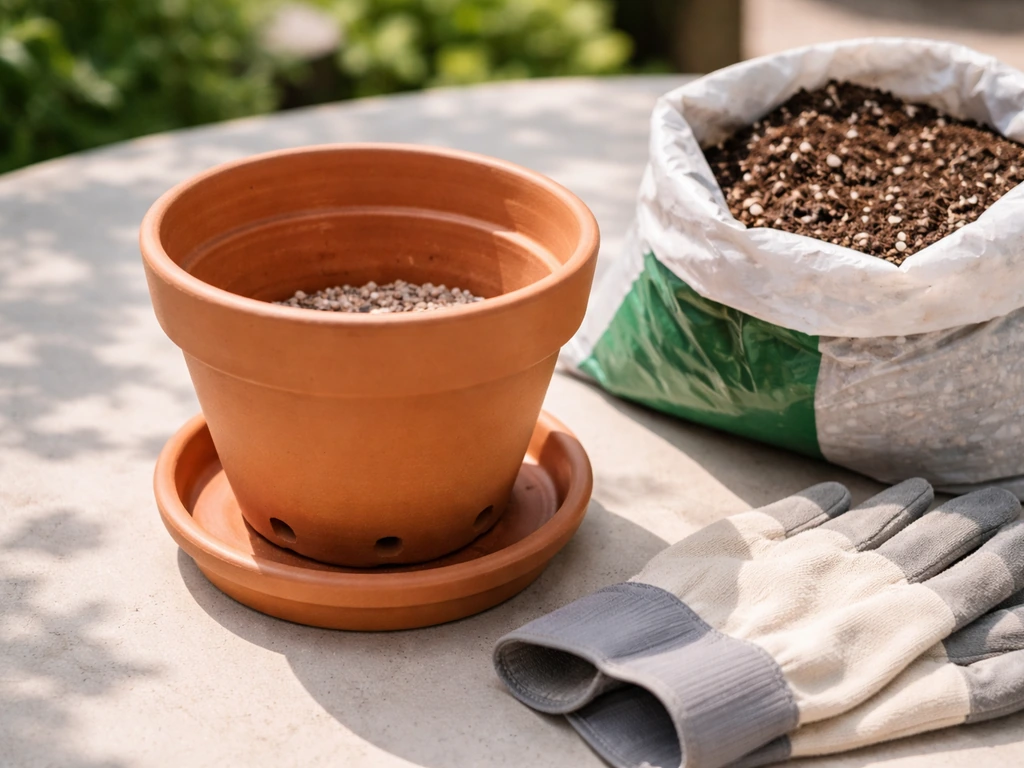
Container size is the most common place people go wrong. Jasmine is a vigorous plant and its roots need room to grow. Start with a pot that's at least 30 to 45 cm (12 to 18 inches) in diameter, and go bigger if you can. A 50-liter container will give a mature jasmine vine the root space it needs to flower reliably. Undersized pots lead to root-bound plants that stress out quickly, produce fewer flowers, and dry out after every watering.
Drainage is non-negotiable. Jasmine roots sitting in waterlogged soil will rot, and on a balcony you have no escape route for excess water unless the pot drains freely. Choose a container with multiple drainage holes, not just one in the center. Elevate the pot slightly on feet or pot risers so water can escape. If you're using a saucer underneath for balcony cleanliness, check it after rain and tip it out so the pot isn't sitting in standing water.
For soil, use a good-quality peat-free multipurpose compost mixed with about 20 to 30 percent perlite or coarse grit. This keeps the mix free-draining while still holding enough moisture between waterings. Avoid heavy garden soil in containers. It compacts, drains poorly, and is too dense for healthy root development in a pot.
Light and placement on your balcony
Most flowering jasmines want full sun to partial shade. For best blooms, aim for at least 4 to 6 hours of direct sunlight per day. South or southwest-facing balconies are ideal. East-facing balconies with morning sun can work for common jasmine and star jasmine, but flower production may be lighter. North-facing balconies are genuinely challenging for most jasmine types, since the lower light levels reduce bloom significantly. Winter jasmine is the exception here and is the most shade-tolerant of the group, which is why it's worth considering if your balcony gets limited direct sun.
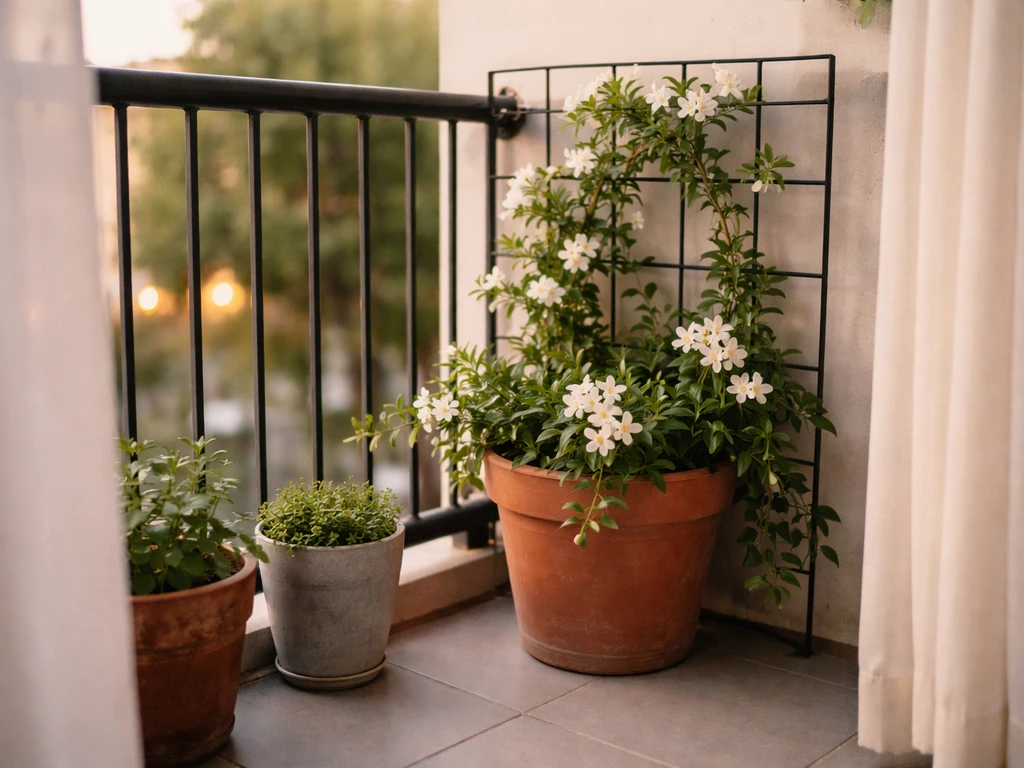
Wind is a bigger problem on balconies than most people expect. High-rise balconies especially can get strong gusts that dry out pots rapidly, scorch leaves, and damage delicate flower clusters. Position your jasmine in the most sheltered corner of the balcony you can manage, ideally against a wall or railing that breaks the wind. A trellis fixed to the wall also gives the vine something to grip and doubles as a windbreak. Yes, you can grow jasmine in a hanging basket, but you’ll need the right variety and strong support so the vines and roots don’t dry out too quickly can you grow jasmine in a hanging basket. If your balcony is very exposed, stick to the more robust species like winter jasmine or star jasmine rather than the more tender Arabian jasmine.
Heat reflection from concrete walls and floors can push temperatures up significantly in summer. That's usually fine for warm-climate jasmine types, but watch the soil moisture carefully because pots dry out faster in reflected heat. In very hot climates (Zone 10 and above), some afternoon shade is actually helpful to prevent heat stress.
Watering and feeding your balcony jasmine
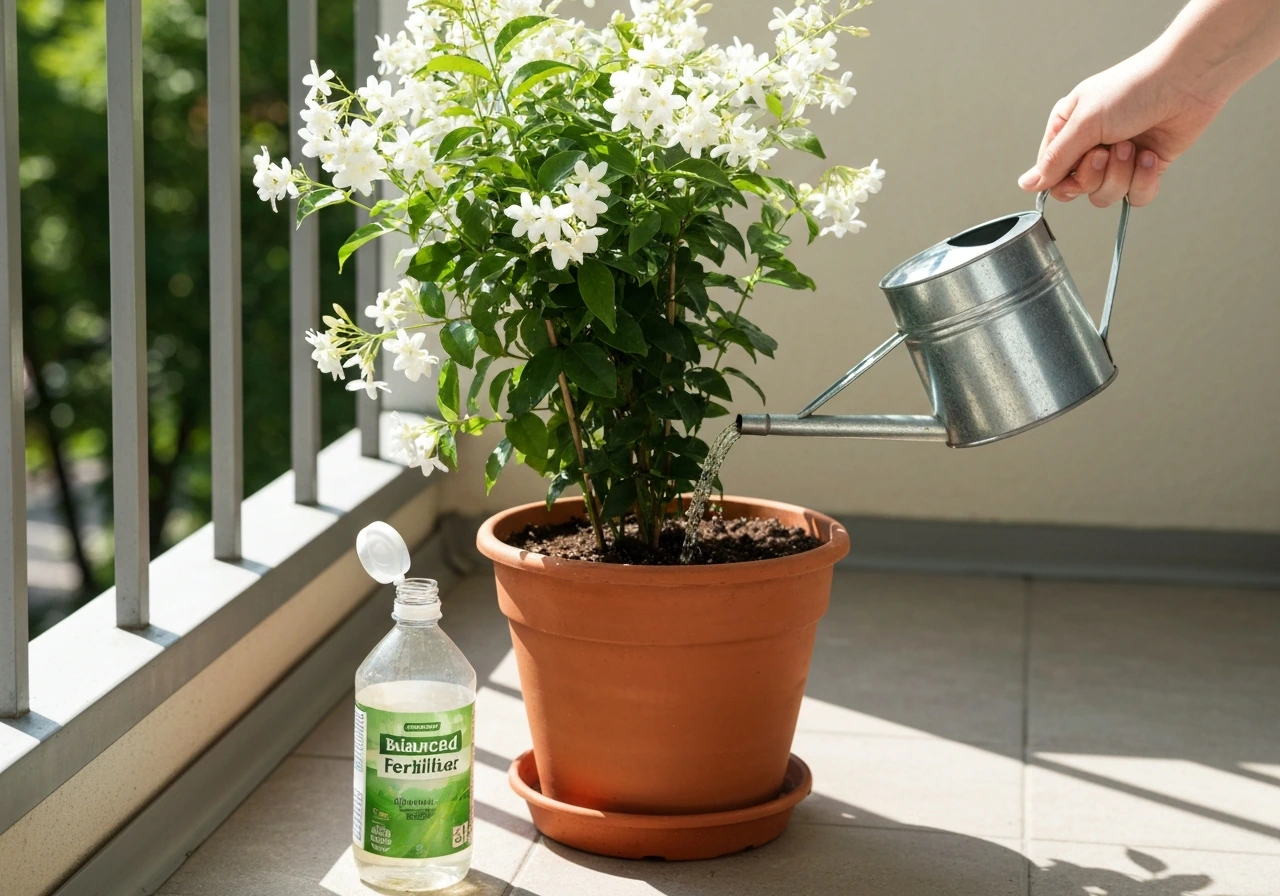
Container jasmine dries out much faster than garden jasmine. In summer, you may need to water daily, especially in warm, windy, or sunny conditions. The general rule: water when the top 2 to 3 cm (about an inch) of soil feels dry to the touch. Water thoroughly until it runs from the drainage holes, then let it drain fully. Never let the pot sit waterlogged. In autumn and winter, cut back watering significantly. Overwatering in cooler months is one of the most common ways to kill container jasmine.
For feeding, start applying a balanced liquid fertilizer (around 10-10-10 NPK) once a month from early spring. When buds start to form, switch to a high-potassium fertilizer, like a tomato feed, to boost flower production. Keep feeding through the blooming period, then stop feeding entirely in late autumn. Jasmine doesn't need feeding in winter, and pushing growth with fertilizer in cold, low-light conditions causes weak, leggy growth that's vulnerable to disease.
Seasonal care and training for flowers all season
Spring
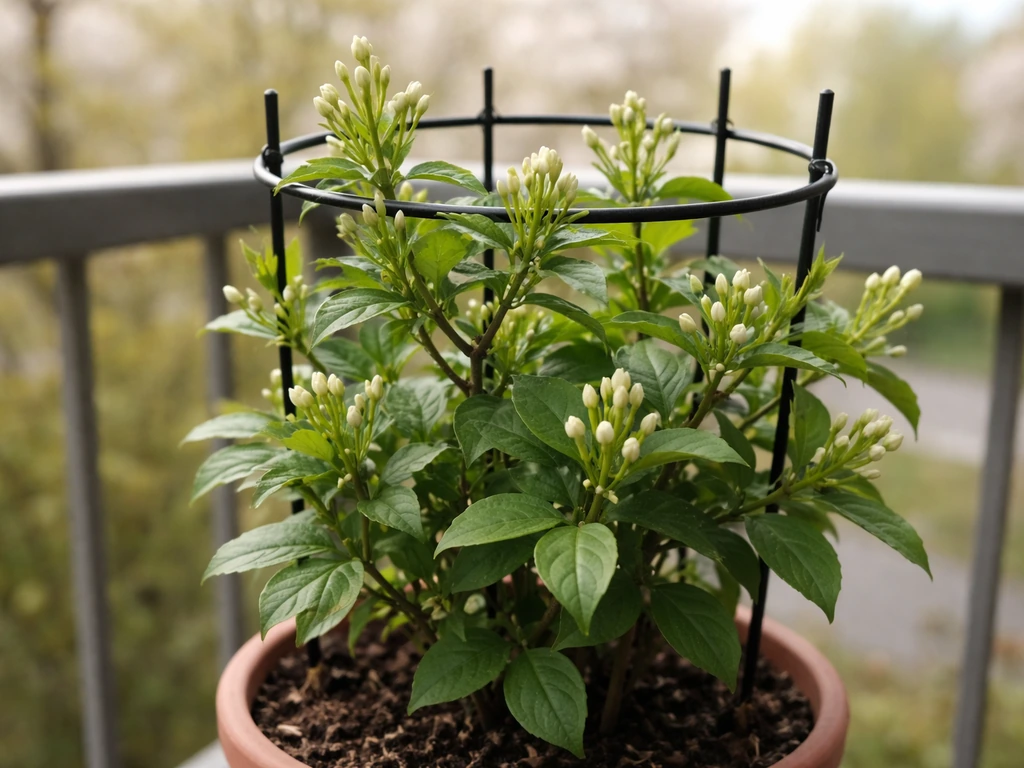
Spring is the most important season for balcony jasmine. Once night temperatures are reliably above 5°C (40°F), bring any overwintered tender varieties back outside. Start feeding, check the roots (repot into a size larger if the plant is root-bound), and begin training new shoots onto your trellis or support. Tie in new growth loosely with soft twine rather than letting it tangle.
Summer
This is peak flowering season for most jasmine types. Water and feed regularly, deadhead spent blooms if you want to, and keep training new growth horizontally along supports where possible. Horizontal training encourages more flowering side-shoots than simply letting the vine grow straight up.
Autumn and pruning
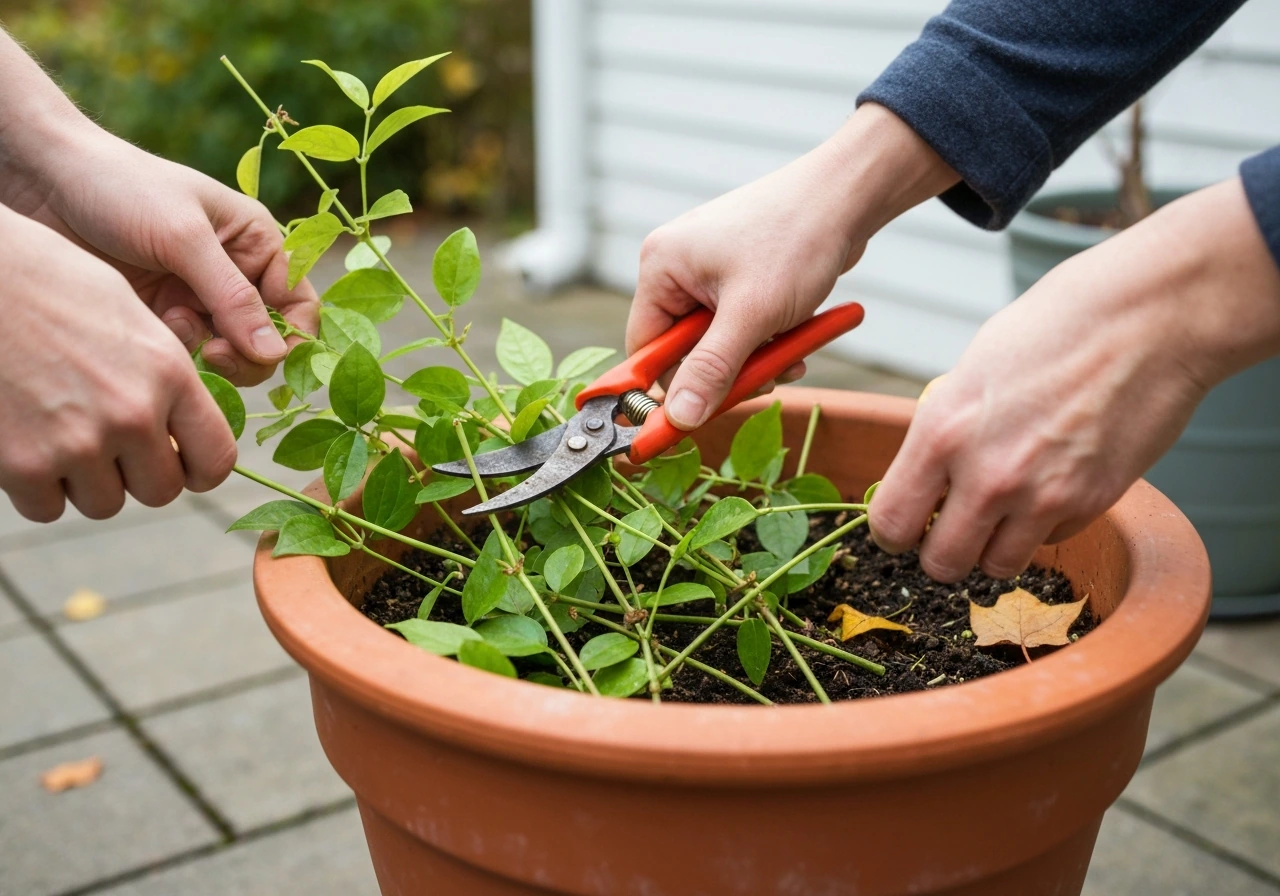
Prune common jasmine and star jasmine after the main flush of flowers, typically in late summer or early autumn. You can cut back quite hard, removing up to a third of the growth to keep the plant compact and prevent it from becoming an unmanageable tangle. Winter jasmine is different: prune it immediately after flowering in late winter to early spring, cutting back flowered shoots to a strong bud. If you're growing jasmine in a colder zone and need to bring it indoors before frost, prune lightly first so it's easier to handle and takes up less space inside.
Winter
Hardy species like winter jasmine and star jasmine (in Zone 7 and above) can stay outside with minimal protection. Wrap the pot in horticultural fleece or bubble wrap to insulate the roots from the worst cold, since pot roots are far more exposed than in-ground roots. For tender types like Arabian jasmine or pink jasmine in cool climates, bring them inside before the first frost and place them in a bright, cool spot (a frost-free shed or cool room works well). Don't overwinter them in a warm, heated living room unless you have very bright light, as this encourages weak growth.
When things go wrong: troubleshooting balcony jasmine
No flowers
This is the most frustrating issue and almost always comes down to one of three things: not enough sun, too much nitrogen fertilizer (which pushes leafy growth at the expense of flowers), or pruning at the wrong time and removing the flower buds. Fix it by moving to a sunnier spot if possible, switching to a high-potassium feed during the growing season, and making sure you know when your specific jasmine type sets buds before you cut anything back.
Yellow leaves
Yellow leaves can mean overwatering, underwatering, or a nutrient deficiency. If the leaves are yellowing and the soil feels soggy, overwatering is the culprit: let it dry out and improve drainage. If the soil is very dry and the plant looks wilted, water more consistently. If the plant looks otherwise healthy but leaves are pale yellow, it's often an iron or nitrogen deficiency, common in containers where nutrients get flushed out over time. A dose of balanced fertilizer with trace elements usually fixes this within a few weeks.
Pests
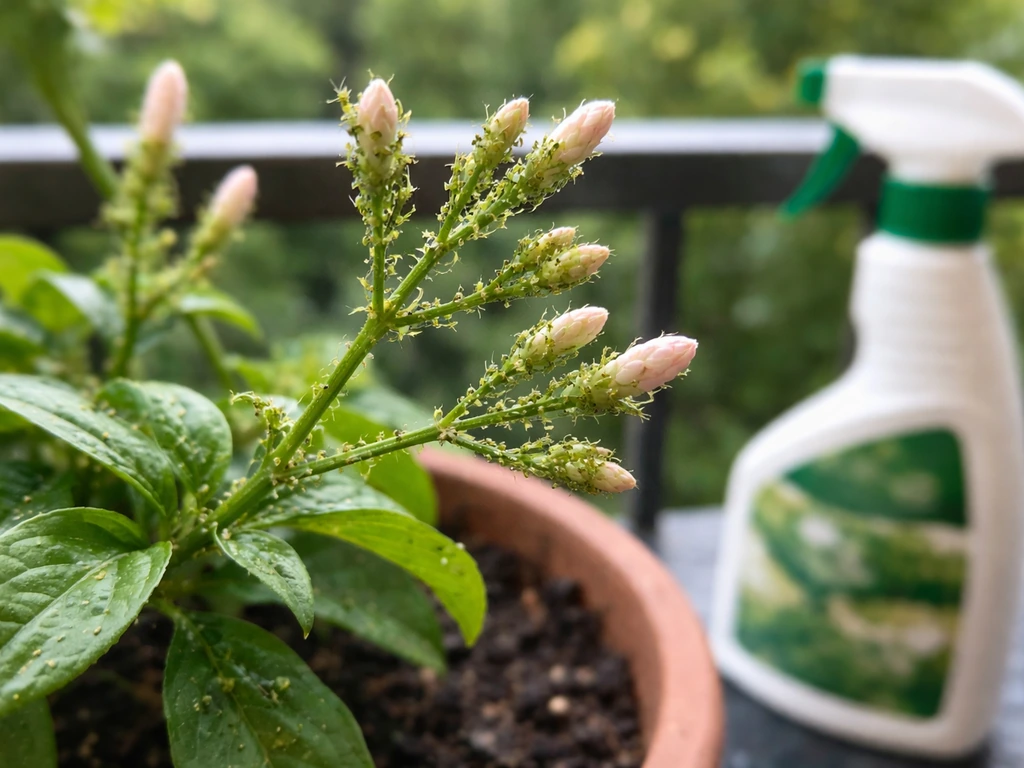
Aphids are the most common pest on balcony jasmine, clustering on new growth and flower buds. A strong jet of water knocks them off, or use insecticidal soap spray for heavier infestations. Spider mites can be a problem in hot, dry conditions on balconies, especially on plants sheltered from rain. You'll see fine webbing and stippled leaves. Increase humidity around the plant by misting and improve air circulation. Scale insects occasionally appear on star jasmine in particular; wipe them off with a damp cloth or use a horticultural oil spray.
Cold damage
If your jasmine suffers frost damage, don't panic and don't prune immediately. Wait until spring when you can see where new growth is emerging, then cut back only to the healthy green wood. Many jasmines will recover from light frost damage if their roots were protected. Prevention is better than cure: wrap the pot before hard frosts rather than after.
Root problems from poor drainage
Root rot from poor drainage shows up as sudden wilting, blackened roots, and a plant that doesn't recover after watering. If you catch it early, remove the plant from its pot, trim off any black or mushy roots, dust the cuts with garden sulfur or cinnamon, and repot into fresh, gritty compost in a pot with better drainage. It's a stressful process for the plant, but jasmine is quite resilient and often bounces back.
What to buy and where to start
If you're in a cold climate (Zone 6 or below), start with winter jasmine. It's the most forgiving, coldest-hardy option and flowers in late winter when almost nothing else does. If you're in a mild to warm climate (Zone 7 to 10), common jasmine or star jasmine are your most reliable bets for fragrance and vigor in a container. If you're in a warm subtropical or tropical zone (Zone 9 to 11) and you want that classic intense jasmine fragrance, Arabian jasmine is worth growing. It's also worth noting that if your balcony faces north or gets limited direct sun, exploring whether jasmine suits a north-facing wall is a helpful parallel question to consider before you commit to a specific variety.
Buy a healthy plant from a reputable nursery rather than the cheapest option at a big-box store. Pot it up straight away into a proper container with good drainage, place it in the sunniest spot your balcony offers, and start feeding in spring. That combination alone will give you the best possible start.
FAQ
Can you grow jasmine on a balcony in a small pot, or do you really need a big one?
You can start it in a smaller pot, but for flowering you will almost certainly need to upsize. In containers, jasmine becomes root-bound quickly, which reduces blooms and makes watering unpredictable. Plan to move up to about 12 to 18 inches (30 to 45 cm) in diameter as the plant grows, and a larger container (around 50 liters) if you want reliable, repeat flowering.
What is the safest way to overwinter jasmine on a balcony without bringing it inside?
For cold climates, keep the plant outside only if it is a balcony-hardy type (like winter jasmine in Zone 6 and up). Insulate the pot before hard frosts using horticultural fleece and bubble wrap, and protect the base from direct cold winds. Also avoid pruning until spring after you see new growth, since jasmine can be damaged more by cold than by trimming.
How do I keep jasmine from drying out on an exposed balcony?
Use a sheltered placement (against a wall or railing) and consider adding a trellis or fixed support that also acts as a windbreak. If you still get strong wind, check moisture daily in summer and water thoroughly until it drains. A thin layer of mulch on the soil surface can help slow evaporation, but do not bury the crown and do not use heavy materials that block drainage.
Can jasmine be trained to grow sideways along a balcony instead of upward?
Yes, and it can improve flowering. Tie new shoots loosely and guide them horizontally along the trellis or railing. Horizontal growth encourages side-shoots that often produce more buds than a single vertical stem, just make sure the vine is not allowed to kink sharply where it bends.
Why does my jasmine grow lots of leaves but not many flowers?
The most common causes are insufficient light, too much nitrogen, or pruning at the wrong time for that specific jasmine type. If you fertilize with a high-nitrogen or all-purpose feed, switch to a higher-potassium fertilizer when buds begin forming. Also avoid pruning before the variety’s bloom set, and move to the sunniest spot you can if your balcony receives limited direct light.
If jasmine gets aphids or spider mites, should I treat immediately or wash them off first?
Start with the least disruptive approach. Rinse new growth with a strong jet of water, especially for aphids, then reassess in a day or two. For persistent infestations, use insecticidal soap, and for spider mites improve conditions by increasing humidity and air flow (mites worsen in hot, dry, stagnant air).
Is it okay to deadhead jasmine flowers on a balcony?
Yes, deadheading can tidy the plant and may encourage continued blooming during the flowering period. However, avoid heavy pruning right before or during bud set. For best timing, deadhead spent flowers but keep structural pruning for after the main flush (or right after flowering for winter jasmine).
How can I tell whether yellow leaves are from watering versus nutrients?
Check the soil first. If the mix is soggy and the plant looks tired, overwatering or poor drainage is likely. If the soil is very dry and the leaves look dull or wilted, focus on more consistent watering. If leaves turn pale yellow while the soil is in a reasonable moisture range, container nutrient depletion (often iron or general nitrogen) is common, and a balanced feed with trace elements usually helps within a few weeks.
Can you grow jasmine on a balcony facing north, and which type is best?
North-facing balconies are challenging for most fragrant jasmines because flower production drops with lower light. If you want to try anyway, winter jasmine is the most shade-tolerant option and is better suited to limited direct sun. For stronger fragrance, you may need a sunnier microclimate such as a north-facing wall that actually gets meaningful reflected light.
Should I fertilize jasmine in winter if it stays outside?
Usually no. In winter, flowering jasmine types slow down, so feeding can cause weak, leggy growth, especially in cool, low-light conditions. Resume feeding in early spring once night temperatures are reliably above about 5°C (40°F), then adjust to a high-potassium feed when buds form.