
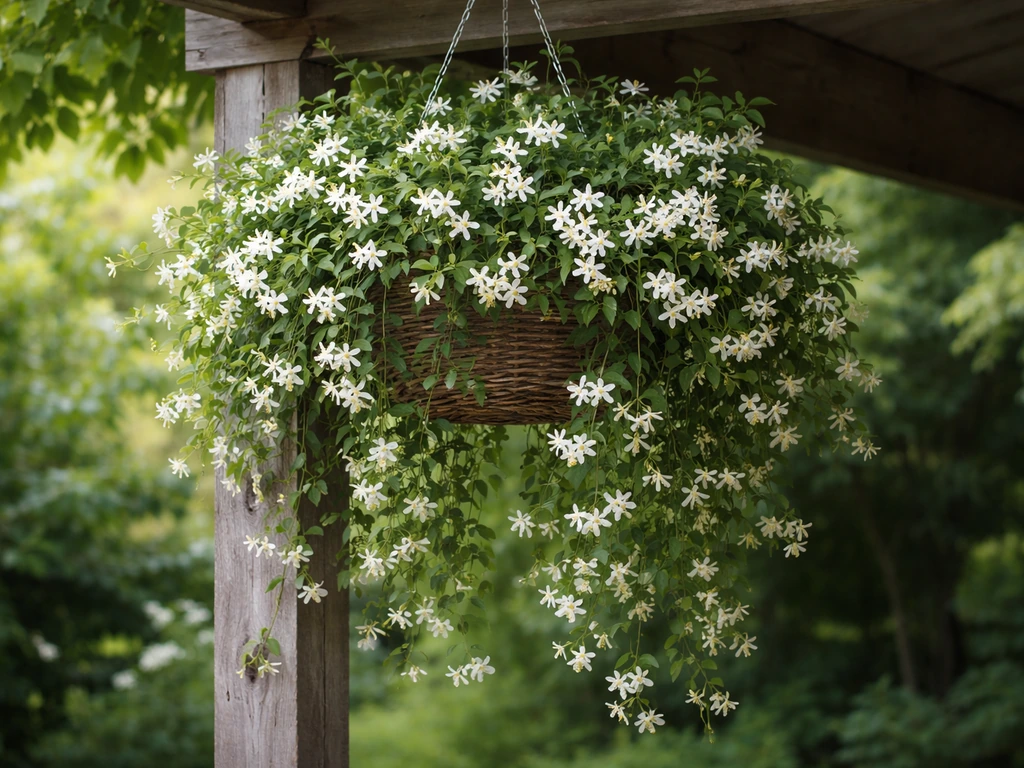
Yes, you can grow jasmine in a hanging basket, and it can look genuinely stunning. The honest caveat is that not every jasmine type suits a hanging format, and whether yours thrives outdoors year-round comes down to which species you pick and which growing zone you live in. Get those two things right and the rest is just good container habits.
Can You Grow Jasmine in a Hanging Basket? How to Do It
Marcus Hartwell
11 May 2026
Which jasmine types actually work in a hanging basket
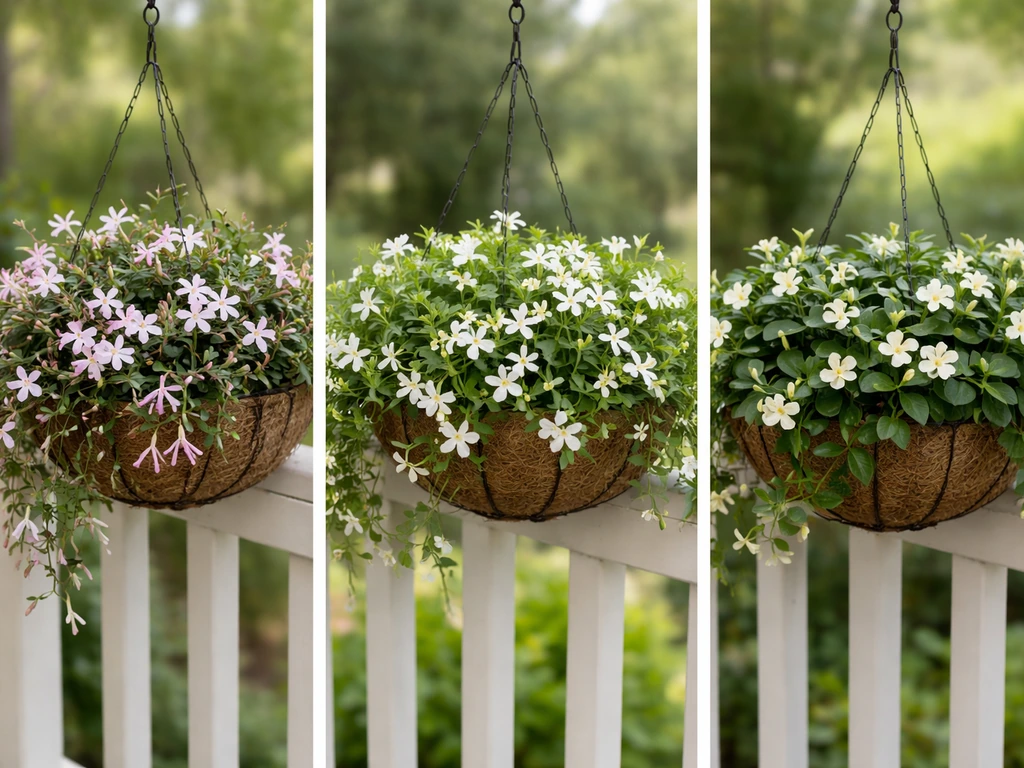
This is where a lot of gardeners go sideways, because the word 'jasmine' gets applied to several very different plants. Before you buy anything, it helps to know what you're actually dealing with. If you want the best results, timing matters too, so learn when to grow jasmine based on your climate and the type you picked.
Jasminum polyanthum (pink jasmine or many-flowered jasmine) is probably the best hanging basket candidate of the true jasmines. It has a naturally trailing, vining habit, incredibly fragrant late-winter to spring blooms, and it handles container life well. It's rated for USDA Zones 8 to 11, so it can't take a hard freeze, but in mild-winter climates it can live outdoors year-round in a basket.
Jasminum officinale (common jasmine or poet's jasmine) is a classic fragrant choice that blooms June through August. It's slightly hardier, surviving down to around Zone 7, but it's still a vigorous climber that gets big fast. In a hanging basket it works best if you're willing to trim it regularly to keep it from becoming a tangled mess. Think of it more as a trained spiller than a true cascading plant.
Jasminum nudiflorum (winter jasmine) is the cold-hardiest of the group, surviving down to Zone 6. It has yellow flowers in late winter but almost no fragrance. Its arching, weeping stems make it a reasonable hanging basket option in colder zones where the others can't survive outside.
Star jasmine (Trachelospermum jasminoides) is technically not a true jasmine at all, but it's sold and grown as one by most gardeners. It's an excellent hanging basket plant because its stems trail and spill beautifully, it has white, intensely fragrant flowers in late spring, and it's a bit more forgiving about heat and drought than the Jasminum species. It's hardy in Zones 7b to 10, with some sources rating it as low as Zone 7b and others starting at Zone 8. If you're on the Gulf Coast, in the South, or in coastal California, star jasmine in a basket is a near-perfect choice.
| Jasmine Type | Botanical Name | USDA Zones | Fragrance | Hanging Basket Suitability |
|---|---|---|---|---|
| Pink jasmine | Jasminum polyanthum | 8–11 | Very strong | Excellent — natural trailing habit |
| Common jasmine | Jasminum officinale | 7–10 | Strong | Good with regular trimming |
| Winter jasmine | Jasminum nudiflorum | 6–9 | None | Decent in cold zones, arching stems |
| Star jasmine | Trachelospermum jasminoides | 7b–10 | Very strong | Excellent — trails and spills naturally |
Will it survive where you live? Zone and climate feasibility
Your growing zone is the single most important factor here. If you're in the warm South (Zones 8 to 10), including states like Texas, Georgia, Florida, the Carolinas, and California's coastal areas, you have the most flexibility. J. polyanthum, J. officinale, and star jasmine can all live outdoors in a basket through winter with little fuss. In the hottest parts of Zone 9 and 10, intense summer heat can actually stress jasmine, so watch for that.
If you're in the Mid-Atlantic or lower Midwest (Zones 6 to 7), common jasmine and star jasmine are right at their cold-hardiness limit. Star jasmine rated to Zone 7b can survive mild winters in sheltered spots, but in a hanging basket it's more exposed than an in-ground plant, which effectively drops your microclimate by a zone. Winter jasmine (J. nudiflorum) is the safer outdoor choice in Zone 6, where the others would likely freeze.
In Zones 5 and colder, no jasmine will overwinter outdoors in a hanging basket. That doesn't mean you can't grow them; it just means treating them as seasonal annuals or bringing them indoors before the first frost. J. polyanthum actually makes a wonderful cool-room houseplant over winter, which I'll cover in the seasonal care section.
If you're wondering about growing jasmine on a balcony or in a space with limited exposure, keep in mind that containers on balconies and hanging baskets both experience more temperature extreme than plants in the ground, so bump your expected hardiness down one zone when planning.
Setting up the basket: container size, potting mix, and drainage
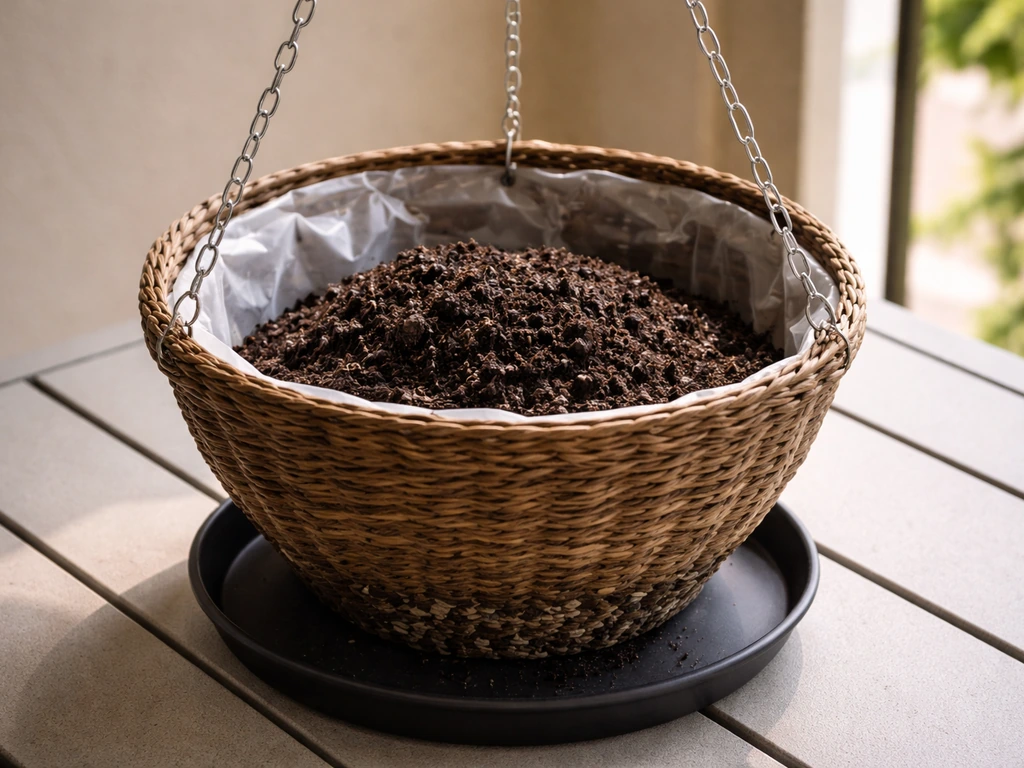
Jasmine isn't a small plant, and this is the part most people underestimate. A basket that's too small will dry out in hours on a warm day and stunt growth. Go with a hanging basket that's at least 12 inches in diameter, and 14 to 16 inches is genuinely better if you want a full, lush display. Lined wire baskets work well because they offer drainage from every direction, but lined coco-fiber baskets retain a bit more moisture, which helps in hot climates.
For potting mix, skip standard garden soil entirely. Use a quality peat-free or peat-based multi-purpose compost blended with about 20 to 25 percent perlite for drainage. Jasmine roots do not like sitting in soggy mix, and the extra perlite keeps things from compacting over the season. A small amount of slow-release granular fertilizer worked into the mix at planting gives you a head start without any extra effort in the first month or two.
Drainage is non-negotiable. If you're using a solid plastic hanging pot, check that the drainage holes are large enough and not blocked. Waterlogged roots are the fastest way to kill a jasmine in a container. If your basket liner holds water, poke a few extra holes in the bottom.
For support inside the basket, most trailing varieties don't need a structure if you let them spill over the sides. But if you want any upward or structured growth, a small hoop or ring of wire pushed into the potting mix gives stems something to grab. For vigorous climbers like J. officinale, a few bamboo stakes help you control direction before growth gets out of hand.
Where to hang it and how much to water
Light placement
Most jasmines want full sun to partial shade. If you are wondering about a north facing wall setup, that is a different light challenge and can affect which jasmine variety will grow well. In practice, that means a spot that gets at least 4 to 6 hours of direct sun per day. More sun usually means more flowers. In very hot climates (Zones 9 and 10), some afternoon shade protection actually helps prevent heat stress and keeps the blooms from burning off too quickly. A south- or west-facing porch, pergola beam, or fence bracket works well in most regions. East-facing spots with morning sun are fine for star jasmine, which tolerates partial shade better than most.
One thing to keep in mind for J. polyanthum specifically: if you want it to rebloom indoors over winter, it needs to be kept away from artificial light sources in the evening. The plant relies on long dark periods and cool nights (40 to 50 degrees Fahrenheit at night) to trigger bud formation. Hanging it near an outdoor lamp or indoor window with light on into the night can prevent blooming entirely.
Watering routine
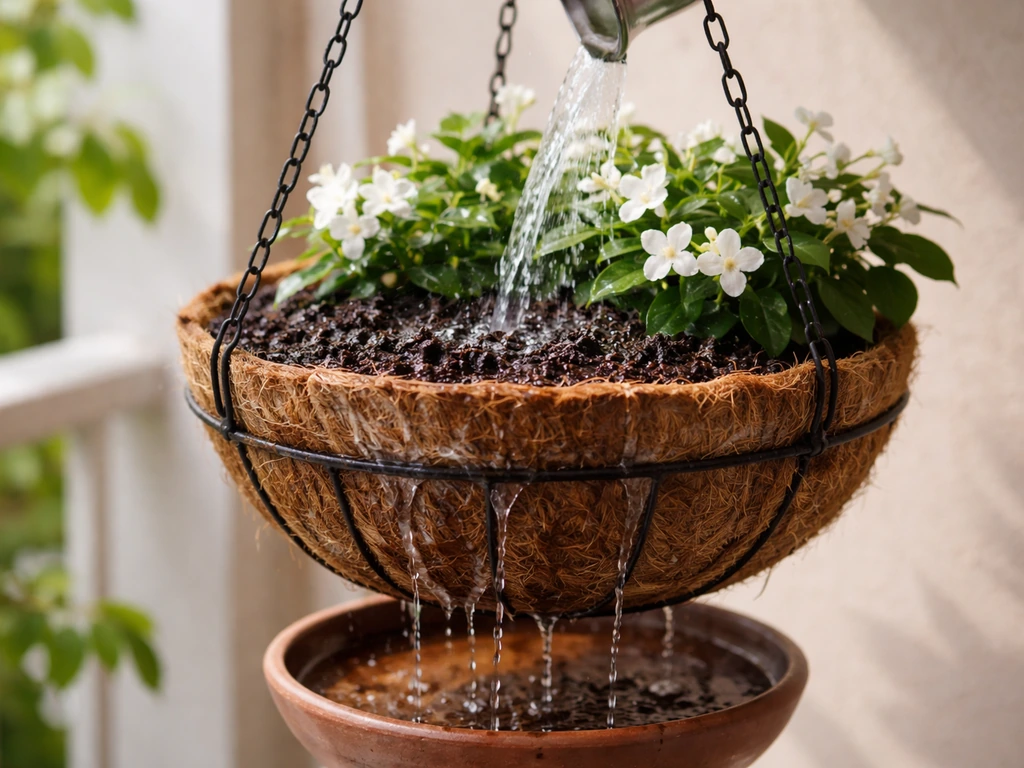
Hanging baskets dry out significantly faster than pots on the ground because they have more exposed surface area and airflow around them. In summer, that can mean watering once a day in hot weather, sometimes twice if it's windy or exceptionally hot. The standard test is to push your finger an inch into the potting mix: if it's dry at that depth, water thoroughly until it drains freely from the bottom. In spring and fall, every two to three days is usually sufficient. In winter, if the basket is outdoors in a mild climate, cut back to once or twice a week depending on rainfall.
If you're finding the basket dries out faster than you can keep up with, a moisture-retaining liner (coco fiber works well) or adding a small amount of water-retention gel granules to the potting mix can buy you extra time between waterings.
Feeding, pruning, and getting it to actually bloom
Feeding schedule
Container-grown jasmine is entirely dependent on you for nutrients, since frequent watering leaches fertilizer out of the mix quickly. During the active growing season (spring through late summer), feed every two weeks with a liquid fertilizer. Here's the important part: use a bloom-boosting or high-phosphorus, high-potassium formula rather than a high-nitrogen one. High nitrogen pushes leafy green growth at the expense of flowers. A tomato food or a dedicated flower fertilizer with numbers like 5-10-10 or similar is exactly what you want. Taper off feeding in autumn and stop entirely in winter while the plant rests.
Pruning and training
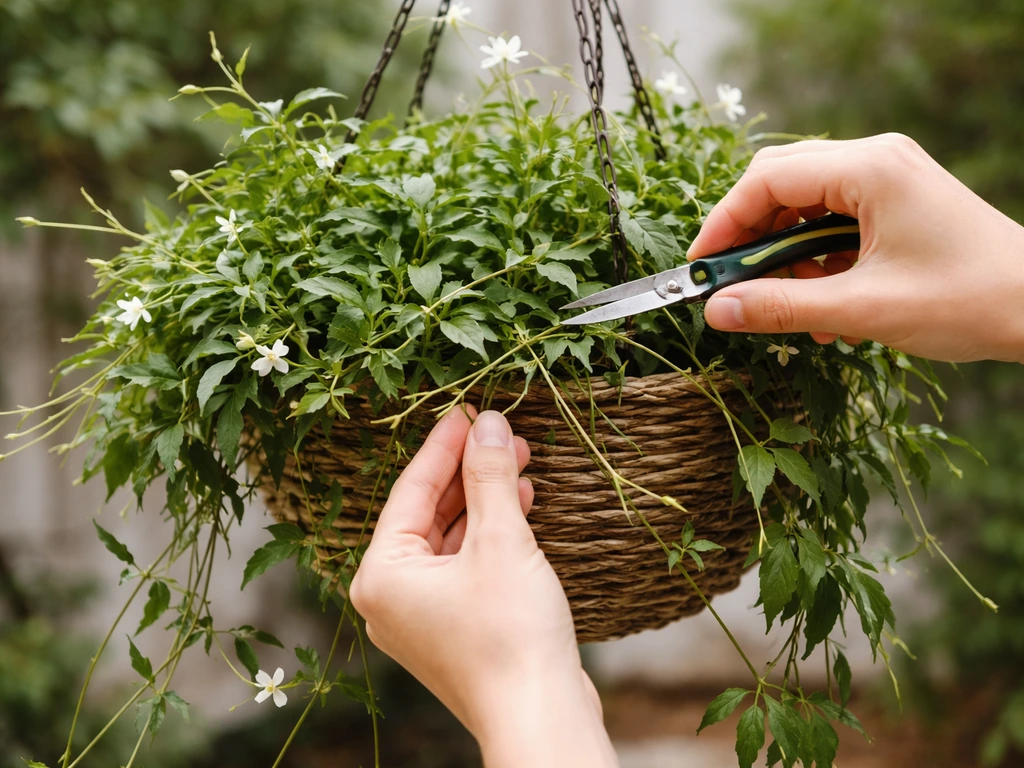
Left to its own devices, jasmine in a hanging basket will get long, twiggy, and tangled within a single season. Pruning keeps it looking full and actually encourages more flowers by redirecting the plant's energy. For most jasmines, prune right after the main flush of blooms finishes. For J.
polyanthum (late winter to spring bloomer), that means trimming in spring. For J. officinale (summer bloomer), trim in late summer after flowering. Garden Guides recommends [regenerative pruning immediately after the flowering display](https://www.
gardenguides. com/83209-prune-jasminum-officinale/) to help reduce vines and encourage a new flush before autumn chill. For star jasmine, Gardeners' Path recommends pruning in early spring if you're at the cooler edge of its range, giving it time to push new growth before bud formation.
Cut back long trailing stems by a third to a half. Remove any dead, crossing, or excessively tangled stems completely. This sounds aggressive but jasmine handles it well and bounces back quickly with fresh, floriferous growth. For climbing types in a basket, regularly tucking new stems back into the basket structure rather than letting them grow unchecked keeps things tidy and prevents the weight imbalance that can tip a basket off its hook.
Encouraging blooms
The bloom trigger for many jasmines, especially J. polyanthum and J. officinale, is a cool-night period in winter. Logees' care guidance specifically flags that these species need nighttime temperatures in the 33 to 55 degrees Fahrenheit range to stimulate flowering. If your jasmine looks healthy but refuses to bloom, it's often because it was kept too warm through winter. Moving it to an unheated but frost-free space (like a cool garage, sunporch, or unheated greenhouse) for 8 to 10 weeks in late autumn often fixes the problem. Combined with the high-phosphorus feed once growth resumes in spring, you should see buds form within a few weeks.
Seasonal care: heat, cold, and overwintering
In summer, the main risk is heat stress and drying out. Move the basket to a spot with afternoon shade if temperatures regularly exceed 90 degrees Fahrenheit, and don't let it sit dry for more than a day in a heat wave. Wilting in the morning is a sign of heat stress, not just water stress. Mulching the surface of the basket with a thin layer of fine bark or moss helps retain moisture and buffer soil temperature.
As autumn approaches and you're in Zone 7 or colder, start thinking about overwintering before the first frost hits. For J. polyanthum, bring it indoors to a cool, bright room where temperatures stay between roughly 40 and 65 degrees Fahrenheit. A cool sunroom, enclosed porch, or south-facing window in an unheated room is ideal. Keep watering lightly but don't let it dry completely. The cool-dark period it experiences through winter is exactly what triggers that spectacular late-winter bloom indoors.
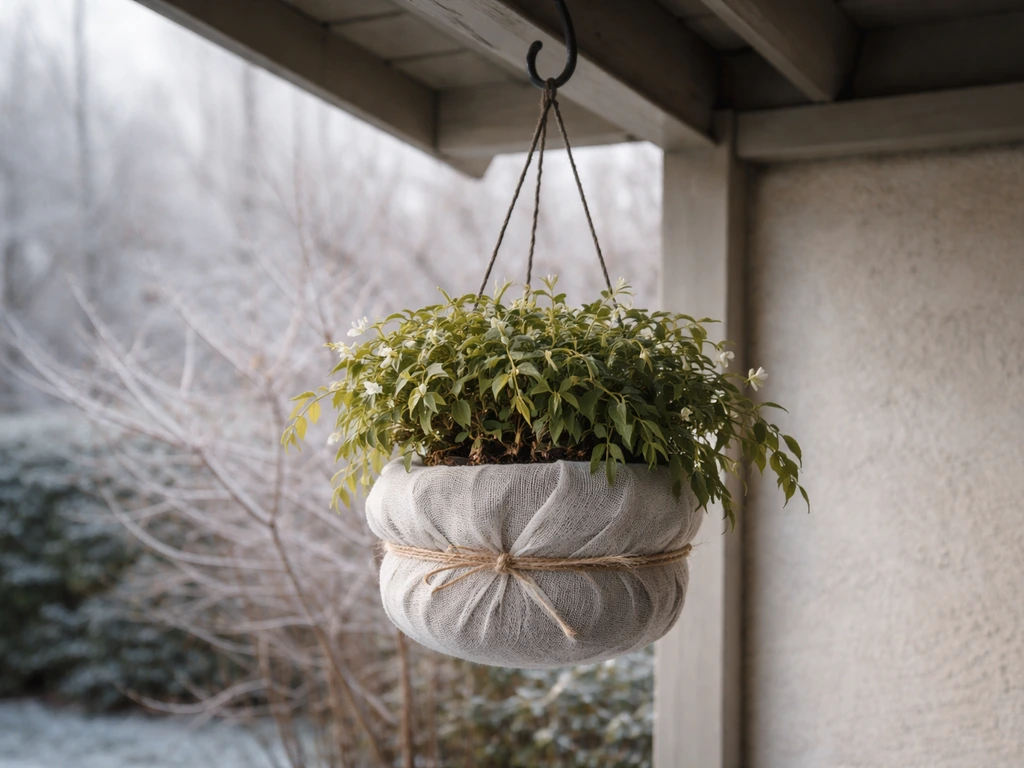
For J. officinale in Zone 7, you can try overwintering outdoors in a sheltered spot (against a warm wall, wrapped in fleece) but a hanging basket is far more exposed than a ground-level plant. Honestly, bringing it inside or into an unheated greenhouse is lower risk. For star jasmine in Zone 7b, a sheltered wall spot may work, but again, a basket will experience more cold than the same plant in the ground. When in doubt, bring it in.
In Zones 8 to 10, winter care is simpler: reduce watering, stop feeding, and let the plant rest. If a brief frost is forecast, move the basket to a covered porch or garage overnight. J. polyanthum in these zones often blooms right through late winter and early spring outdoors, which is one of the great joys of growing it in a mild-climate hanging basket.
When things go wrong: troubleshooting common problems
- Yellowing leaves: Usually overwatering or a nutrient deficiency. Check that drainage is working properly and that you're not keeping the potting mix constantly saturated. If drainage is fine, a dose of balanced fertilizer or a specific iron supplement often resolves yellowing caused by deficiency.
- Leaf drop: Can be caused by sudden temperature change, cold drafts, or moving the plant from outdoors to indoors too abruptly. Try to acclimate it gradually by moving it to a sheltered outdoor spot for a week before bringing it fully inside.
- No flowers: Almost always a cool-night-period issue for J. polyanthum and J. officinale. The plant needs that 33 to 55 degree Fahrenheit cool night period in winter to set buds. Also check that it's getting enough direct light and that you're not over-feeding nitrogen.
- Leggy, sparse growth: Usually caused by too little light. Move to a sunnier location and trim the long leggy stems back by half to encourage branching and bushier growth.
- Drying out too fast: Upgrade to a larger basket, add water-retention granules to the mix, switch to a coco-fiber liner, or water with a dilute seaweed solution which can help soil structure retain moisture longer.
- Pests (spider mites, aphids, whitefly): Hanging baskets get better airflow than ground pots, which helps, but spider mites love dry, hot conditions. If you see fine webbing or distorted new growth, treat promptly with insecticidal soap or neem oil spray. Repeat applications every five to seven days for two to three weeks.
- Root-bound and declining after one season: Jasmine grows fast. If growth slows dramatically and water runs straight through without being absorbed, the plant is root-bound. Pot up to a larger basket or root-prune and refresh the potting mix in early spring.
Growing jasmine in a hanging basket is genuinely achievable almost anywhere in the country, as long as you match the variety to your zone and don't fight the plant's natural needs. If you're in a cold climate and have always assumed jasmine was off the table, J. polyanthum as a cool-room winter houseplant that spends summer outside in a basket is a surprisingly easy and rewarding way to enjoy it.
Pick the right type, give it a proper-sized basket with good drainage, and stay on top of watering in summer: that's genuinely most of the work. In India, you can grow jasmine in a hanging basket if you choose a type that matches your local climate and provide afternoon shade during hot weather.
FAQ
Can you grow jasmine in a hanging basket if you do not know which variety you have?
Treat it as a risk until identified. “Jasmine” can mean true Jasminum or star jasmine, and their cold tolerance and blooming triggers differ. If the plant is already potted, check the plant tag or look for clues, star jasmine has glossy evergreen-type leaves and white very fragrant flowers, while Jasminum types are often leafier and less consistently evergreen. If you cannot confirm, plan for extra protection and do not expect reliable flowering the first season.
What is the biggest reason jasmine fails in a hanging basket?
Overwatering or poorly draining mix is the most common cause, jasmine roots rot quickly when they stay soggy. Make sure drainage holes are clear, use a mix with significant perlite for airflow, and water only when the top inch is dry. If the basket gets heavy or smells sour after watering, adjust immediately.
How often should you water jasmine in a hanging basket in summer?
Most baskets need at least daily checks in hot weather, sometimes twice during windy heat waves. Do not rely on a calendar, do the finger test (about 1 inch down). Water thoroughly until it drains from the bottom, then let it drain fully so water does not pool in the liner or saucer.
Should you use a saucer or liner under a hanging basket?
Avoid a water-collecting saucer for jasmine. If the basket drains into a liner or catch tray, empty it right away. Hanging baskets can trap water near the root zone, which increases the chance of rot. If your basket requires a liner for structural reasons, make sure it is not acting like a reservoir.
Do you need to fertilize jasmine in a hanging basket, or will compost be enough?
Plan on regular feeding, container jasmine depends on you because frequent watering leaches nutrients out. Use a liquid fertilizer on a schedule during active growth (spring through late summer) and choose a formulation aimed at blooms, not high nitrogen. Stop feeding in winter when the plant is resting.
How do you stop jasmine from becoming a tangled mess in a hanging basket?
Prune on schedule and physically redirect growth. After the main bloom flush, trim long trailing stems back by about one-third to one-half and remove crossing stems. For vigorous types, tuck new shoots back into the basket opening or use a small ring support so growth stays balanced instead of pulling one side down.
Will jasmine grow well in shade, or does it need full sun?
Most jasmines want at least a half day of direct sun, about 4 to 6 hours. If you grow it in partial shade, you may still get foliage, but flowers are less consistent. In very hot climates, a bit of afternoon shade can improve flowering, especially for star jasmine and Jasminum in warm months.
How cold can jasmine handle in a hanging basket?
Expect less cold tolerance than the in-ground plant because the basket exposes roots to air movement and faster temperature swings. As a rule of thumb, plan as if you are working one zone colder than the variety rating. Star jasmine is generally the most forgiving, winter jasmine is safer for lower zones, and common or many-flowered jasmine need protection or indoor overwintering near their limits.
Why does my jasmine look healthy but not flower?
Temperature and light schedule are the usual culprits. For J. polyanthum and J. officinale, a cool-night period in winter is often required for bud formation, keeping it too warm can prevent blooms even if the plant is otherwise thriving. Also check for indoor light at night, artificial evening light can block the long-dark trigger for bud set.
Can you overwinter jasmine in the hanging basket outdoors in cold climates?
Usually no for true Jasminum varieties in zones colder than their ratings, especially because baskets freeze around the root ball faster. In colder regions, bring the plant indoors before the first frost or treat it like a seasonal plant. If you attempt outdoor overwintering, use a sheltered location and insulation, but success is less reliable than indoor cool storage.
What should you do about wind exposure on a hanging basket?
Wind accelerates drying and can also cause basket instability as jasmine grows heavy. Choose a secure hook, check fasteners, and consider a basket with a more structured liner. In windy weather, increase watering frequency, and move the basket to a calmer spot if possible.
Is star jasmine the same as true jasmine for hanging baskets?
Not exactly, but it is often the easiest “jasmine” to grow in a basket. Star jasmine (Trachelospermum) tends to trail and spill nicely and is typically more tolerant of heat and some drought than many Jasminum species. If your priority is low-maintenance flowering in a basket, confirm you have star jasmine rather than an unknown Jasminum variety.