
Jasmine can grow on a north-facing wall, but whether it will actually flower depends heavily on your climate zone and how much indirect light that wall receives. In mild, frost-light regions (think USDA zones 8 to 11, or the UK's southern counties), star jasmine (Trachelospermum jasminoides) is your best shot and can manage reasonably well with bright indirect light. In colder zones, or anywhere that north wall sits in deep shade most of the day, you're looking at a plant that stays alive but rarely blooms well enough to be worth the effort.
Will Jasmine Grow on a North-Facing Wall? How to Make It Work
Marcus Hartwell
4 May 2026
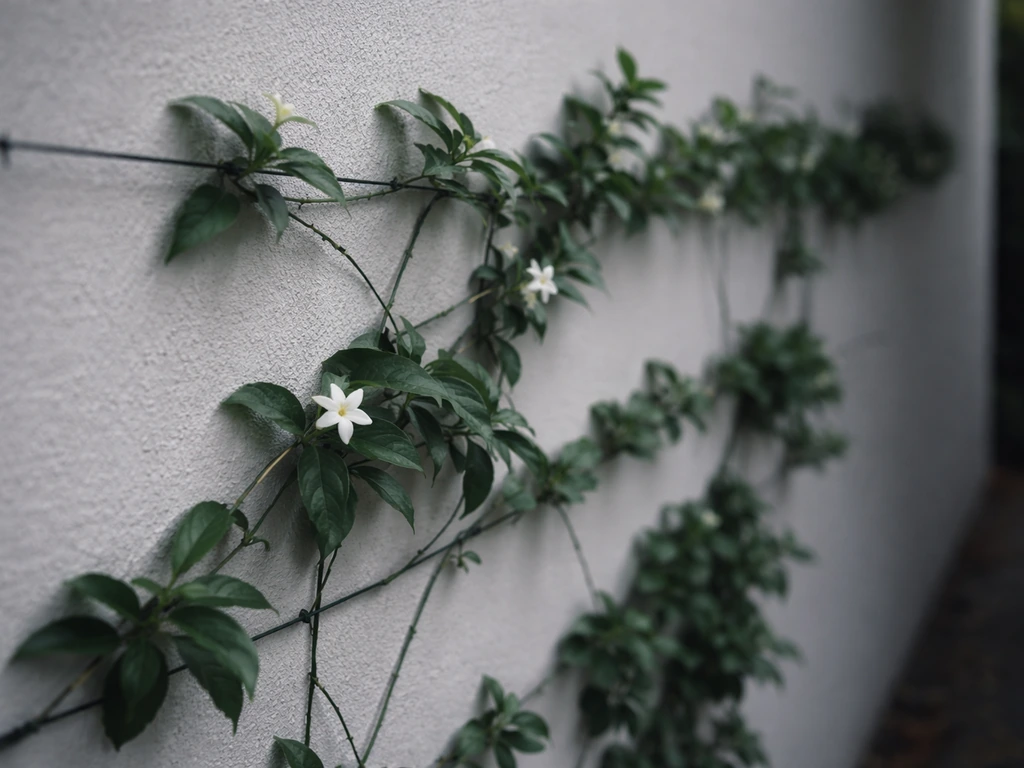
What a north-facing wall actually means for jasmine
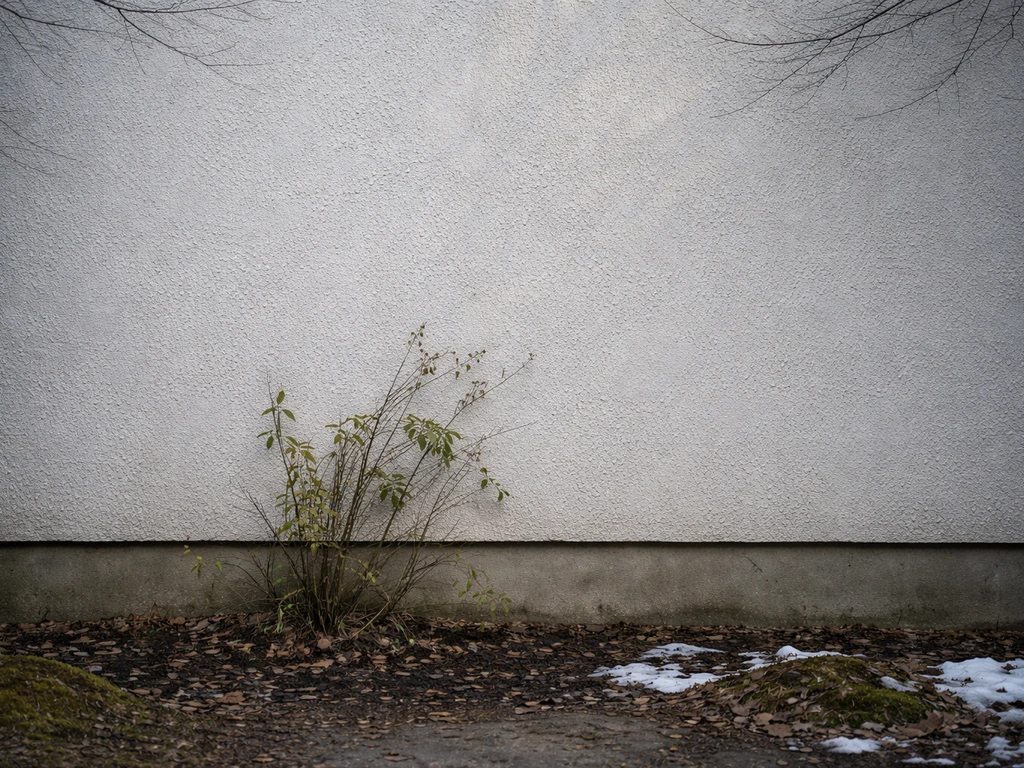
A north-facing wall is the toughest spot in any garden. In the Northern Hemisphere, it receives no direct sun for most of the year. In winter, it may get almost none at all. That said, 'north-facing' doesn't always mean pitch dark. A wall that catches morning or late afternoon light at an angle, or one that benefits from reflected light off a pale fence or building opposite, can be surprisingly workable. The problem is that most people searching this question have a wall that really is shaded the majority of the day, and that's where honest expectations matter.
Star jasmine specifics: what it needs to flower
Star jasmine (Trachelospermum jasminoides) is the jasmine type most commonly trained up walls and fences, and it's the most tolerant of shade among the popular options. The RHS recommends growing it in full sun or partial shade, but always with shelter from cold winds. That 'partial shade' tolerance is real, but there's a catch: partial shade means a few hours of direct sun or consistently bright indirect light, not a dim wall that rarely sees the sky. In those brighter partially shaded conditions, star jasmine will flower, though expect fewer blooms and a slower start than you'd get on a sunny south or east-facing wall.
The plant is also cold-sensitive. The RHS is clear that star jasmine won't fare well in locations where temperatures consistently fall below -5°C (23°F) in winter. On a north wall, that risk is amplified: north walls stay colder longer, warm up more slowly in spring, and offer less thermal mass to protect roots and stems overnight. So you're stacking two challenges, lower light and colder microclimate, at the same time.
Not all 'jasmine' is the same, and it really matters here
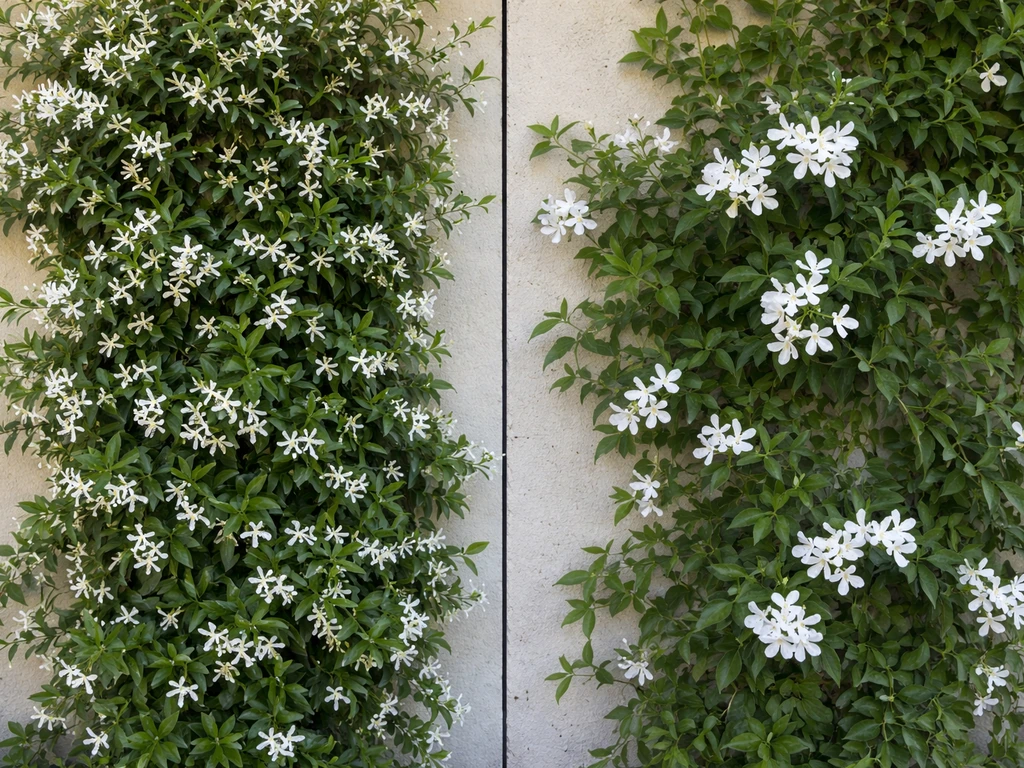
When people search for jasmine for a wall, they often mean different plants. Knowing which one you actually want saves you a failed purchase and a wasted season.
| Plant | Botanical Name | Light Needs | Cold Hardiness | North Wall Verdict |
|---|---|---|---|---|
| Star jasmine | Trachelospermum jasminoides | Full sun to partial shade | Down to about -5°C (23°F), zone 8+ | Possible in mild climates with bright indirect light |
| Common jasmine | Jasminum officinale | Full sun preferred | Hardy to -15°C (5°F), zone 6+ | Poor blooming on north walls; grows but won't flower well |
| Winter jasmine | Jasminum nudiflorum | Full sun to full shade | Hardy to -20°C (-4°F), zone 6+ | Best option for a truly shaded north wall |
| Arabian jasmine | Jasminum sambac | Full sun | Frost-tender, zone 9+ | Not suitable for north walls outside of tropical climates |
Winter jasmine (Jasminum nudiflorum) deserves special attention here. The RHS plant selector also notes winter jasmine is well suited to full sun or partial shade in sheltered positions and is a good hardy option for UK-type conditions Winter jasmine (Jasminum nudiflorum) deserves special attention here.. It's genuinely shade-tolerant and cold-hardy, and the RHS actually recommends it specifically for north and east-facing walls. The trade-off is that it flowers on bare stems in late winter before the leaves come out, so it looks quite different from the lush, fragrant climber most people picture. If your goal is a fragrant summer display, winter jasmine isn't a substitute. But if you just want cheerful yellow flowers on a tricky north wall in January and February, it's a genuinely excellent plant.
How to check your microclimate before you buy anything
Do this assessment on a clear day before spending a penny on plants. It takes about 20 minutes of actual observation and saves months of disappointment.
- Stand at your north wall at 9am, 12pm, and 3pm on a sunny day and note whether any direct sun reaches it at each time. Even one hour of direct sun counts as meaningful. Zero hours in all three checks means deep shade.
- Look for reflected light sources: a white or pale rendered wall opposite, a light-coloured patio or path nearby, or a conservatory roof that bounces light back. These lift ambient light levels more than people realize.
- Check the wall surface temperature in early spring. Stone or brick walls that retain heat overnight give plants a buffer against late frosts. Timber fences don't offer much thermal mass at all.
- Note any wind exposure. North walls are often in a wind corridor between buildings. Star jasmine hates cold, drying wind even more than low light.
- Look up your USDA hardiness zone (or if you're in the UK, check your average winter lows). Star jasmine needs zone 8 or warmer (winter lows above -12°C / 10°F) to survive reliably in the ground.
If you're weighing up whether a balcony or a container situation might give you more control over placement and sun exposure, the considerations there overlap closely with what's discussed in guides on growing jasmine on a balcony. For many gardeners, a hanging basket is also an option for controlling light and temperature, including with jasmine can you grow jasmine in a hanging basket. If your balcony is sunnier or sheltered enough, growing jasmine in a large container can be a smart workaround so you control light and temperature growing jasmine on a balcony.
When north walls work, and when they don't
The honest dividing lines come down to three things: your zone, your wall's actual light levels, and which jasmine you're planting.
| Scenario | Star Jasmine Result | Best Choice Instead |
|---|---|---|
| Zone 9-11, wall gets 2+ hours indirect/reflected light | Will grow and flower, slowly | Star jasmine works here |
| Zone 8, sheltered wall, mild winters, some reflected light | Will survive and produce some flowers | Star jasmine with winter fleece protection |
| Zone 7 or below, north wall in consistent shade | Will struggle, likely die back in cold winters | Winter jasmine or climbing hydrangea |
| Zone 6 or colder, harsh winters | Not viable outdoors | Winter jasmine, ivy, or Virginia creeper |
| Any zone, wall in complete shade all day | Grows weakly, rarely flowers | Winter jasmine or choose a different wall aspect |
If you're gardening somewhere with reliably mild, frost-light winters (coastal California, the Pacific Northwest lowlands, southern England, coastal Ireland), the calculus shifts. If you're wondering can you grow jasmine in Ireland, it's especially worth focusing on star jasmine in sheltered north-facing spots or choosing winter jasmine for cold-hardy results. In those climates, even a north wall rarely hits the critical -5°C threshold that damages star jasmine, and the ambient light levels are often enough for moderate flowering. If you're wondering can daisy grow in India, the key is matching the right daisy type to your climate and providing plenty of sun. Gardeners in those regions often report star jasmine doing respectably well on sheltered north-facing walls against brick buildings, especially in urban areas where walls hold heat from central heating.
How to improve your odds on a north wall
Choose the right spot within the wall
Even on a north-facing wall, there's usually a better and worse end. The corner where the wall meets a south or east-facing return wall will get more ambient light and warmth. If you can plant within a metre or two of that corner, you're giving the jasmine a meaningful advantage. Similarly, a wall under a light-coloured overhang or next to a reflective surface gets more light than an open, exposed section.
Prep the wall properly
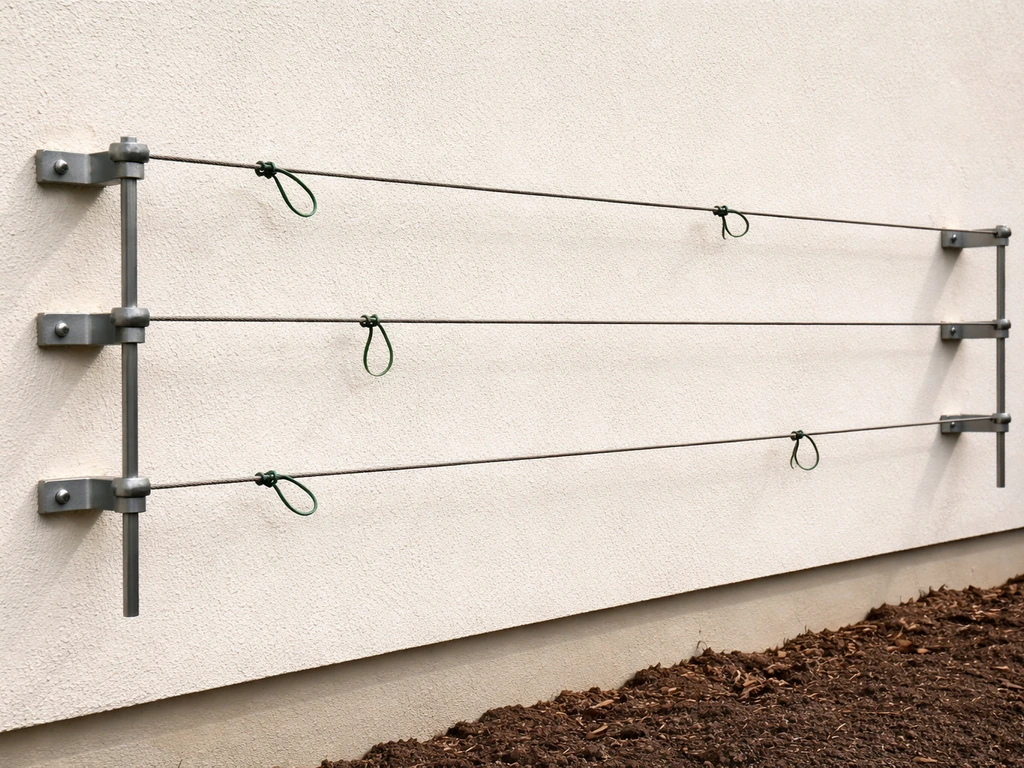
- Install horizontal wires or a trellis firmly fixed to the wall, with a gap of at least 3 to 5cm between the trellis and the wall surface. This gap allows air circulation and stops fungal problems in low-light, low-airflow conditions.
- Paint or render the wall white or a pale colour if possible. The reflected light genuinely helps in marginal situations.
- Improve drainage at the base. North walls are often damper because they don't dry out in sun. Star jasmine is especially sensitive to waterlogged soil, so add grit or improve drainage before planting.
Give it the best possible start
- Plant in late spring, not autumn. On a north wall, soil stays cold longer and autumn plantings often fail to establish before the cold sets in.
- Use a sheltered, established plant rather than a small cutting. A plant already in a 2-litre or 3-litre pot with a good root system gives you a head start.
- Mulch the base well in the first autumn to protect roots from cold ground temperatures.
- In zone 7 or 8, keep horticultural fleece handy for the first two winters. Wrap the plant if temps are forecast to drop below -5°C.
Training for maximum light capture
Fan the stems horizontally across the wall rather than letting them grow straight up. Horizontal training encourages more lateral branching, which means more flowering shoots and better light distribution across the plant. Tie stems in gently every 20 to 30cm as they grow, and don't let the plant become a dense thicket in the centre: thin out crowded growth in late spring so light can penetrate.
When something's going wrong: common symptoms on north walls
If you've planted jasmine on a north wall and it's struggling, the symptoms are usually pretty readable. Here's what to look for and what to do about each.
- Long, floppy stems with large gaps between leaves (etiolation): This is a classic low-light response. The plant is literally stretching toward light. Fix: redirect stems toward the lightest part of the wall, thin out competing growth, and consider whether the wall gets any reflective light you can increase.
- Lots of green growth but no flowers: Common when light is just barely enough to sustain the plant but not enough to trigger flowering. Fix: check if the plant is being over-fed with nitrogen fertiliser (which pushes leafy growth), switch to a high-potassium feed in spring, and ensure the plant isn't rootbound or waterlogged.
- Yellowing leaves from the inside of the plant outward: Often a combination of low light and poor air circulation causing minor fungal stress. Fix: thin out the centre of the plant, improve the gap between trellis and wall, and check soil drainage.
- Dieback after winter, brown or shrivelled stems: Cold damage or wind scorch, especially on exposed north walls. Fix: cut back to healthy wood in late spring (be patient, star jasmine can look dead but recover), add wind protection, and consider whether your zone is simply too cold for star jasmine to be practical.
- Very slow establishment over two or more years: Normal on north walls in cooler zones, but if there's no real progress by the third year, the site may genuinely be too shaded or cold. Fix: try moving the plant to a better aspect, or replace with winter jasmine or another shade-tolerant climber.
If maximum flowers are the goal, consider your options honestly
If you want the full fragrant display that star jasmine is known for, a north wall is always going to be a compromise. The same plant on a south or east-facing wall in the same garden will typically produce three to four times more flowers, establish in half the time, and look exactly like the pictures that made you want to grow it in the first place. If you have any flexibility on wall choice, a sheltered east-facing wall is often the sweet spot: good morning sun, protection from the hottest afternoon heat, and much better than north. It's worth walking around the garden and genuinely asking whether you have a better option before committing.
If the north wall is your only wall, or if it's the only space in the design that makes sense, go in with realistic expectations. In a mild climate zone 8 or above, star jasmine on a bright north wall can be a satisfying plant. It won't be a showstopper, but it'll be evergreen, scented when it does flower, and tidy. In zone 7 or colder, make winter jasmine your first choice and save the star jasmine for a sunnier spot or a container you can move. If you're wondering when to grow jasmine on a north wall, aim to plant star jasmine in spring and choose winter jasmine if you want flowers without waiting for warm weather.
FAQ
How many hours of light does a north-facing jasmine wall need to flower?
Aim for consistently bright indirect light or at least a few hours of direct sun somewhere on the wall (often morning light). If the wall stays dim most of the day, star jasmine may survive but usually delays or skips meaningful flowering.
Is star jasmine always the right choice for a north wall?
Not if you are in colder zones or the wall stays cold for long periods. In reliably chilly winters, winter jasmine is often the better match because it tolerates cold and blooms in late winter even when light is limited.
What is the biggest mistake people make when growing jasmine on a north wall?
They assume “north-facing” means the same light everywhere. In reality, microclimates vary a lot by corner placement, overhangs, nearby fences, and reflective surfaces, so always check light from the exact planting spot on a clear day.
Can I improve the odds by planting at the base corner of the wall?
Yes. Planting within about a metre or two of a junction with a warmer return wall (south or east) can increase reflected and ambient light and reduce cold exposure overnight, which helps both establishment and flowering.
Will jasmine tolerate shade if I add fertilizer?
Fertilizer can help growth, but it cannot replace missing light. In low-light north-wall conditions, extra feeding often leads to lush foliage with few flowers, so focus first on maximizing light and shelter from cold winds.
How should I shelter jasmine on a north wall during winter?
Use wind protection and consider adding mulch around the root zone to buffer overnight temperature swings. If your area drops near star jasmine’s cold limit, wrapping young plants or using a cloche in severe cold can prevent stem damage.
What should I do if my jasmine grows but produces very few flowers?
Check whether the wall is truly receiving bright indirect light, then thin crowded growth in late spring to open up the canopy. Also verify you trained stems horizontally, since upright growth reduces lateral branching and can reduce the number of flowering shoots.
When is the best time to train and tie jasmine on a north wall?
Start gentle tying as new growth lengthens, then keep adjusting every 20 to 30 cm. In spring, thin dense central growth so light reaches interior stems, which supports more flowering later.
Why does winter jasmine look different from the jasmine people expect?
Winter jasmine flowers on bare stems in late winter before leaves fully develop, so it does not have the same lush, fragrant vine-and-leaf look at first. It is a good choice for winter color, not a substitute for the summer fragrance display of star jasmine.
Can I grow jasmine on a north wall in a container instead of planting in the ground?
Yes, and it can help when winter cold is the limiting factor. A large pot can let you adjust placement for extra light and you can move it to shelter during cold snaps, but ensure the pot is big enough to prevent fast drying and root stress.