For most fence or trellis coverage projects, you need one honeysuckle plant every 5 to 10 feet, depending on the species and how patient you are. A fast vining type like Japanese honeysuckle can throw out up to 30 feet of new stem in a single season, so one plant can cover a surprising amount of ground. A more compact native vine like Lonicera sempervirens 'Major Wheeler' [spreads 2 to 10 feet at maturity](https://www. streambankgardens.
Honeysuckle Grow a Garden How Much to Plant and Space
Marcus Hartwell
26 May 2026
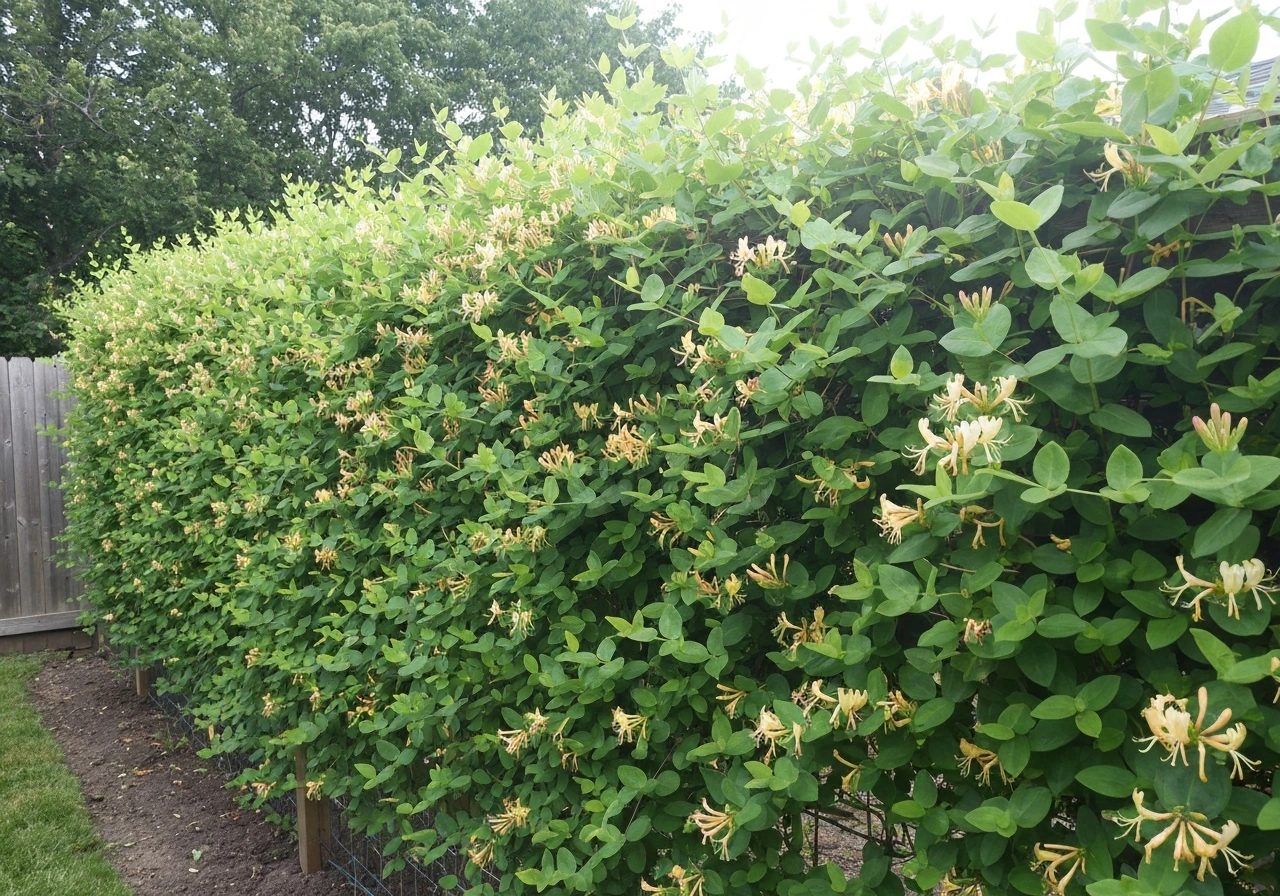
com/products/lonicera-sempervirens-major-wheeler-plant), which means you'll need more plants and more years to fill the same fence run. Before you buy anything, though, you need to know whether honeysuckle will even thrive where you live, because some species are outright banned in certain states, and planting the wrong type in the wrong zone is just a waste of money.
What 'how much' really means here
When people search for how much honeysuckle to plant, they're usually mixing three different questions at once: How many plants do I need? How much space will they take over? And how much is this going to cost me? Let's separate those out, because the answers are pretty different.
Plant count is a math problem based on your fence length or coverage area divided by the spread of your chosen species. Space is about understanding how aggressively a particular honeysuckle will fill a trellis, wall, or border over time. Budget varies widely by species and pot size, but container-grown vines at a garden center typically run anywhere from $10 to $40 per plant, and shrub forms can run higher.
If you also meant pricing for plants to buy, honeysuckle is commonly sold by the plant, and costs vary by species and whether it is container-grown how much does honeysuckle sell for grow a garden. For a standard 40-foot fence, you might need as few as 4 plants if you choose a vigorous vining type, or as many as 10 to 12 if you're using a slower, more compact variety and want coverage within a couple of seasons.
Can honeysuckle actually grow where you live?
Honeysuckle is not one plant. The genus Lonicera includes dozens of species, and their climate ranges are genuinely different. Nailing down your USDA hardiness zone is the first step before you buy a single plant.
As a general range, most commonly sold honeysuckles thrive in Zones 4 through 9. Shrub forms like Amur honeysuckle (Lonicera maackii) are hardy from Zone 3 all the way to Zone 8, which covers most of the continental US except the hottest parts of the Deep South and desert Southwest. Native coral honeysuckle (Lonicera sempervirens) handles Zone 4 to 9 comfortably and is the best bet for hot, humid climates in the Southeast. If you're gardening in Zone 3 (think northern Minnesota or Maine), focus on hardy shrub types. If you're in Zone 10 or warmer, most honeysuckles will struggle with the heat and humidity combination.
Beyond cold hardiness, think about your summer heat and humidity. Honeysuckles in general do not love prolonged extreme heat above 95°F without some afternoon shade. In areas like coastal California or the Pacific Northwest, conditions are nearly perfect for vining types. In the arid Southwest, you'd need to water more consistently and expect slower growth.
Vine or shrub, evergreen or deciduous: pick the right type first
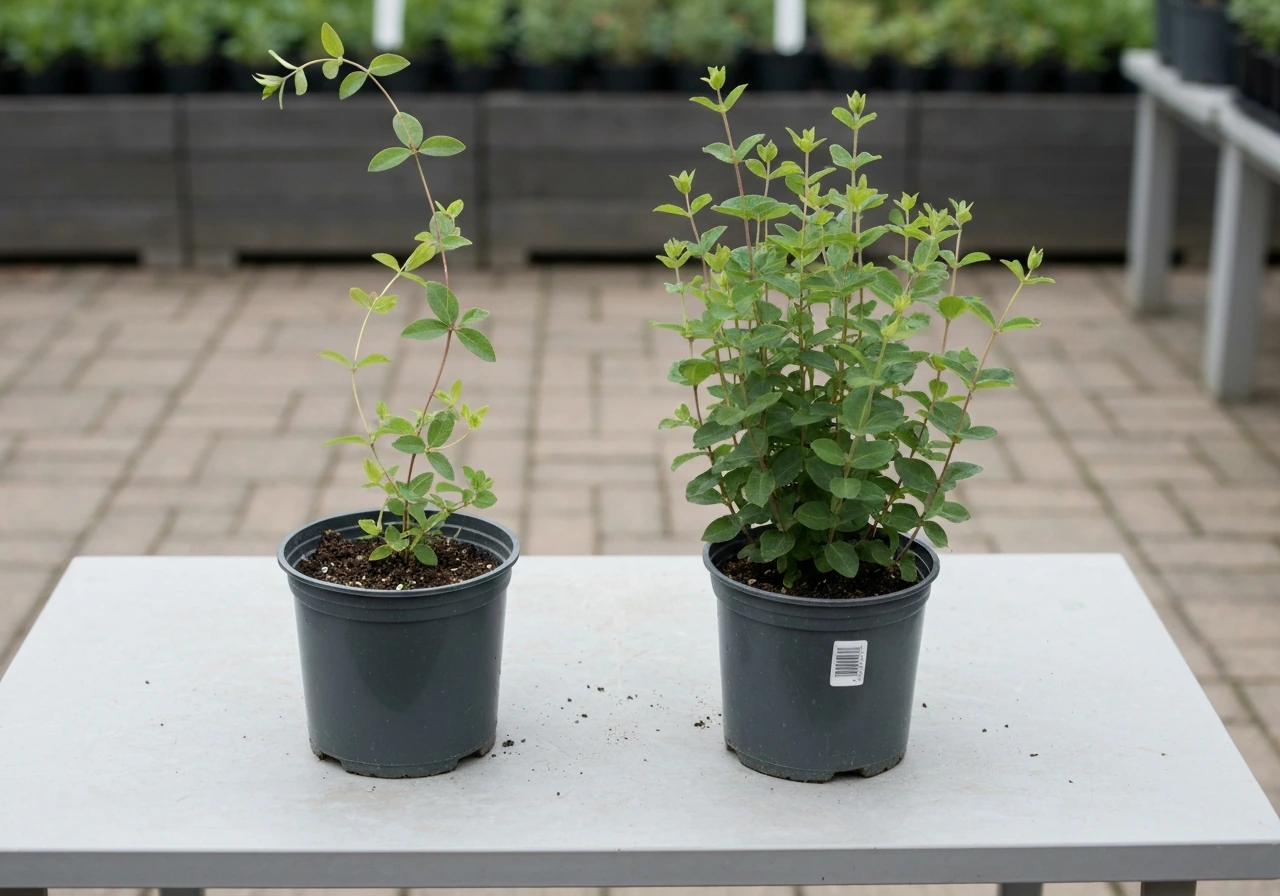
The type of honeysuckle you choose dramatically changes how many plants you need, where you can put them, and how much maintenance you're signing up for. Here's how the main categories break down.
| Type | Example Species | Growth Habit | Mature Size | Best Use |
|---|---|---|---|---|
| Vining (deciduous) | Lonicera japonica (Japanese) | Aggressive twiner, up to 30 ft/year | Can reach 30+ ft in length | Quick fence/trellis cover — but invasive risk is high |
| Vining (semi-evergreen) | Lonicera sempervirens (Coral/Native) | Moderate twiner | 3–8 ft tall, 2–10 ft spread | Fence, trellis, arbor — native and non-invasive |
| Shrub (deciduous) | Lonicera maackii (Amur) | Upright spreading shrub | 10–15 ft tall and wide | Hedge, border, wildlife planting |
| Shrub (deciduous) | Lonicera tatarica (Tatarian) | Upright shrub | 8–10 ft tall and wide | Screening hedge — invasive in many states |
For most homeowners wanting to cover a fence or trellis, a native or non-invasive vining type is the practical sweet spot. Lonicera sempervirens 'Major Wheeler' is widely available, non-invasive, and hummingbird-friendly. If you want faster coverage and live in a state where Japanese honeysuckle is not restricted, it will fill a fence remarkably fast. Just understand that speed comes with a commitment to control. Shrub types work well for hedges and borders where you want a freestanding plant rather than something trained to a structure.
How many plants you actually need for your space
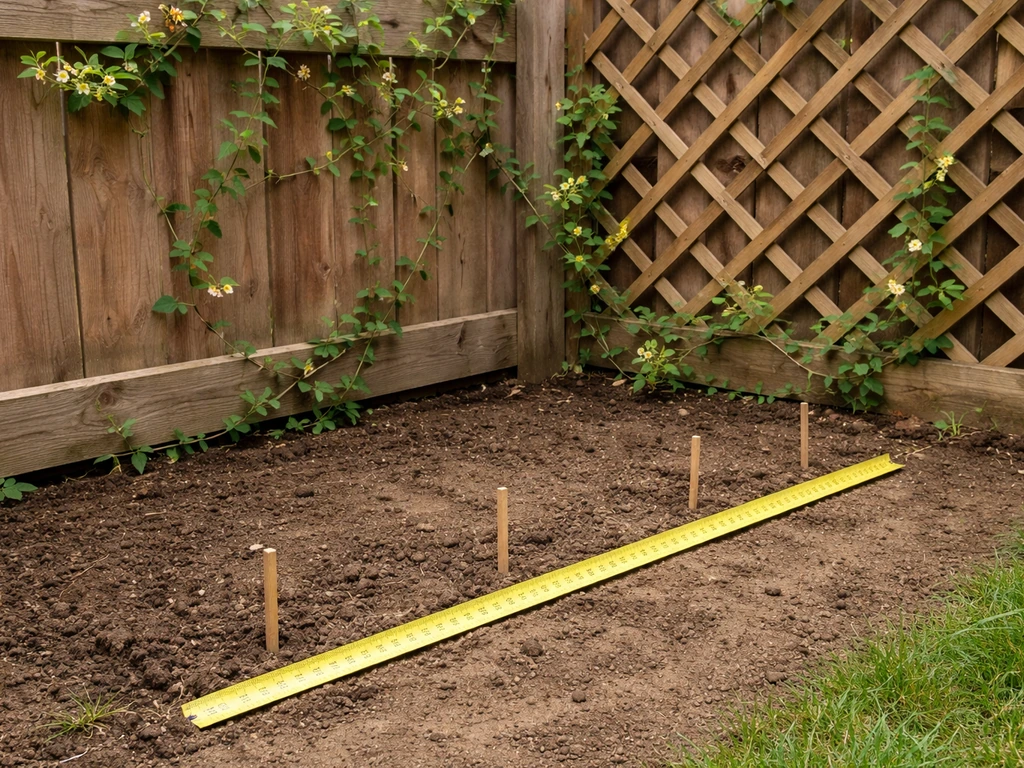
Measure your fence run or trellis width first. That's your denominator. Then divide by the expected spread of your chosen plant.
- Lonicera sempervirens (Coral Honeysuckle): space plants 4 to 6 feet apart for coverage within 2 to 3 seasons. For a 30-foot fence, that's about 5 to 7 plants.
- Japanese Honeysuckle (vigorous vining): one plant can cover 10 to 15 feet of fence width per season once established. For a 30-foot fence, 2 to 3 plants are often enough — but check your state's rules before planting.
- Shrub types (Amur, Tatarian): plant 5 to 8 feet apart for a dense screen. A 40-foot hedge would need 6 to 9 plants.
- For a trellis or arbor rather than a long fence: one to two plants is usually sufficient for most home-scale structures.
One practical note from experience: buy slightly fewer plants than you think you need for fast-growing vining types. It is much easier to add a plant later than to spend years trying to keep an overgrown honeysuckle in bounds. If you're using a slower cultivar, erring toward closer spacing makes more sense for quicker visual impact.
Sun, shade, soil, and water: how your conditions affect coverage speed
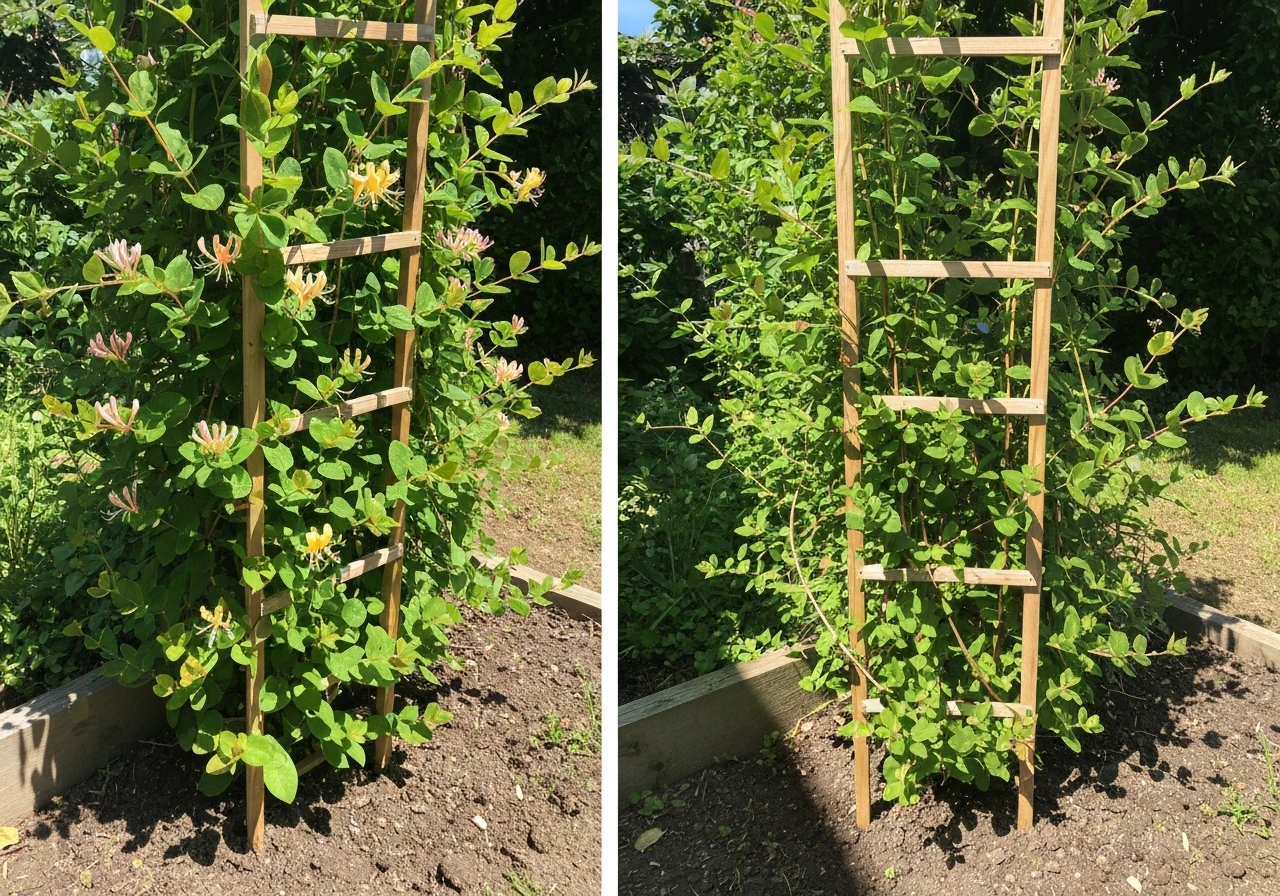
Here's something that surprises a lot of gardeners: Japanese honeysuckle is genuinely shade tolerant, which is unusual for a flowering vine. It will grow in partial shade where other vines stall out, though it blooms and spreads most aggressively in full sun. Lonicera sempervirens prefers full sun to part shade and will fill its trellis faster in a south- or east-facing spot.
Soil-wise, honeysuckle is forgiving. Japanese honeysuckle grows in soil pH from 6.1 to 7.8, which covers most residential garden soils without any amendment. It tolerates poor, rocky, or compacted ground better than most flowering vines. Coral honeysuckle prefers well-drained soil but is similarly adaptable.
Water is most important in the first season. After planting, water thoroughly and then plan on one deep soaking per week through the summer unless you're getting significant rainfall. Once established, most honeysuckle species are fairly drought tolerant, though consistent moisture will keep growth rates up and flowering strong. Plants in hot, dry conditions will cover their trellis more slowly than the same species in a cool, moist climate.
When to plant and where on your property to put it
The best planting window for honeysuckle is early spring after your last frost date, or early fall at least six weeks before your first frost. Spring planting gives a full growing season for roots to establish before summer heat. Fall planting works well in Zones 6 and warmer, where winters are mild enough for roots to keep developing. Avoid midsummer planting in hot climates, because the combination of heat stress and establishment stress can stall or kill new plants.
For placement, the RHS recommends leaving at least a 2-inch (5 cm) gap between the fence or wall and any support structure like wire or trellis panels. This lets the vine twine properly and allows air circulation, which reduces fungal problems. On a south- or west-facing fence, you'll get the fastest growth but will need to water more. North-facing fences work for shade-tolerant species like Japanese honeysuckle but expect slower bloom cycles and more modest annual spread. Keep vining types away from gutters, roof overhangs, and window frames unless you're committed to trimming a few times per season.
Pruning and training: the piece that changes how much you need
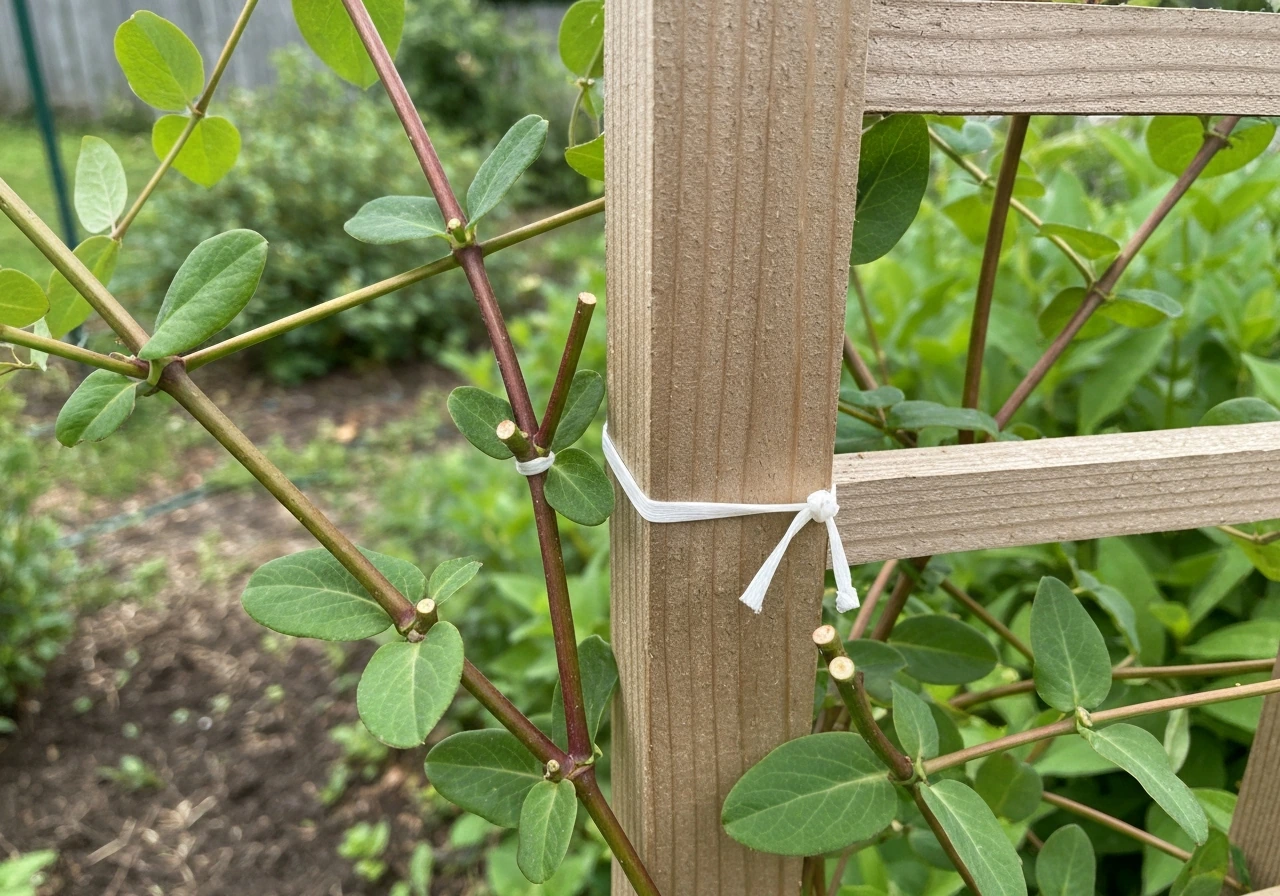
Here's the planning reality that a lot of first-time buyers miss: how aggressively you're willing to prune determines how many plants you actually need, especially with fast-growing vining types. If you're happy to let a Japanese honeysuckle run freely, one plant can cover a 20- to 30-foot fence run in two to three seasons. If you want a tighter, more manicured look and are willing to prune hard every spring, you'll need more plants spaced closer together to fill the same visual space, because you're constantly cutting back the spread.
For vining types, a hard annual pruning in late winter or early spring, cutting stems back to a manageable framework, keeps the plant healthy and productive. Shrub honeysuckles can be sheared or selectively pruned right after flowering. If you skip pruning for several years on a vigorous vine, you'll end up with a dense woody mass that's hard to reclaim and may damage fencing. So factor maintenance time into your 'how much' decision from the start.
Invasiveness and legal restrictions: how much is safe (and legal) in your area
This is the section that can save you a real headache. Several honeysuckle species, most notably Japanese honeysuckle (Lonicera japonica) and Amur honeysuckle (Lonicera maackii), are on prohibited plant lists in a number of states. Massachusetts, for example, prohibits both species from sale, transport, and planting entirely. Other states including Pennsylvania, New Jersey, and parts of the Midwest have restrictions or strong discouragement recommendations from their departments of agriculture or natural resources.
Before you buy any honeysuckle, look up your state's invasive or prohibited plant list. A quick search for '[your state] invasive plant list' or '[your state] prohibited plants' will get you to the right agency page fast. If Japanese honeysuckle or Amur honeysuckle is on that list, pivot immediately to non-invasive alternatives: Lonicera sempervirens (Coral honeysuckle) is native, non-invasive, and available at most native plant nurseries. Lonicera flava (Yellow honeysuckle) is another non-invasive native option for warmer regions.
Invasiveness also affects how much you should plant from a practical standpoint, even where planting is technically legal. If you live near a natural area, woodland edge, or park, planting aggressive non-native species like Japanese honeysuckle carries a real risk of escape and ecological damage. In those situations, planting fewer plants of a native species is always the smarter long-term choice.
Your quick planning checklist
- Check your USDA hardiness zone and confirm your chosen species is rated for it.
- Look up your state's invasive or prohibited plant list before purchasing.
- Measure your fence run, trellis width, or border length.
- Choose your type: vining native (Lonicera sempervirens) for trellises, shrub form for hedges and borders.
- Calculate plant count: divide your fence length by the expected spread of your chosen variety, then add one or two buffer plants if using slower cultivars.
- Pick your planting time: early spring or early fall, not midsummer.
- Install support with a 2-inch gap from the wall or fence before planting.
- Water deeply at planting, then once per week through the first summer.
- Plan for annual pruning from year two onward, and decide before planting how formal or loose you want the look to be.
When to plant less, or choose something else entirely
Plant less if you're gardening near natural areas, if you can commit only minimal time to pruning, or if you're in a state with restrictions. One well-placed, well-maintained native honeysuckle will give you years of flowers and wildlife value with far less work than a hedge of invasive species that you're constantly fighting back. For many gardeners, honeysuckle can produce more than one noticeable bloom cycle in a season, depending on the species and your growing conditions is honeysuckle multi harvest in grow a garden.
If your climate isn't a good match for honeysuckle, or if you're in Zone 10 or above where most species struggle, consider native alternatives with a similar vining, fragrant character. Crossvine (Bignonia capreolata) works well in hot Southern gardens. Carolina jessamine (Gelsemium sempervirens) is a great fragrant evergreen vine for Zones 6 to 9. In very cold zones (2 or 3) where even hardy shrub honeysuckles are marginal, Virginia creeper or native clematis species are more reliable bets for fence and trellis coverage.
If you're already exploring how honeysuckle fits into a specific game or planting system rather than a real garden, that's a different question entirely, but for actual in-ground planning, the checklist above and a quick zone lookup will get you most of the way to a confident plant purchase. Honeysuckle berries are typically not prickly, so they are not usually described as a prickly fruit when you are growing it in your garden. If you're also wondering what rarity honeysuckle has in Grow a Garden, the rarity depends on the specific variation you’re looking for what rarity is honeysuckle in grow a garden.
FAQ
If I want to cover a 40-foot fence faster, should I increase plant count or rely on pruning-free growth?
For fast results, increasing plant count usually beats adding more time. Vigorous vines can cover a lot when allowed to run, but without pruning they may overrun the fence line and become harder to train back. A practical approach is to plant slightly fewer than the “maximum” spacing, train them early, and prune lightly the first year so you avoid a tangled mass.
How far apart should I space honeysuckle if my trellis is narrower than a standard fence run?
Use the trellis width as your spacing basis, not the fence length alone. If the vine’s mature spread is wider than your trellis, plants will overlap and compete, which can delay full coverage. For narrow panels, choose a slower cultivar and space a bit wider, or expect to add plants later after you see how the first season performs on that exact support.
Does the plant count change if I’m growing honeysuckle on a wall versus a trellis with airflow?
Yes. On walls or tight surfaces, reduced airflow can slow growth and increase leaf issues, so you may need more plants to achieve the same visible coverage on the same timeline. Also keep the vine off gutters and downspouts, because water runoff can create persistent wet spots that affect establishment.
How much gap should I leave from the support, and what if I already planted too close to the fence?
A small stand-off improves twining and airflow, so leaving a modest gap (about the size of a finger to a couple inches) is ideal. If you already planted too close, you can gently redirect and retrain stems rather than removing the plant immediately. Focus on moving the growing tips onto the trellis face and prune out any stems that are fighting the structure.
Can I plant honeysuckle close to other plants, or will it steal water and light?
Honeysuckle can be competitive, especially once established. Keep a buffer from other thirsty roots, and expect reduced performance if it’s surrounded by heavy feeders. If you want nearby plants to thrive, use a wider spacing plan and maintain consistent watering the first season so all roots establish.
What should I do if my honeysuckle grows slowly, am I under-planting or is it a placement problem?
Check sunlight and watering before adding plants. Many honeysuckle varieties perform much slower in prolonged extreme heat without afternoon shade, and all types need steady deep watering in year one. If you are in cooler conditions or north-facing exposure, slower bloom and spread are expected, and under-planting might not be the real cause.
Do potted starter plants need to be spaced differently than bare-root or larger container plants?
Not exactly, but larger starts often catch up sooner. If your goal is quicker visual coverage, using larger containers can reduce the “waiting time,” yet the long-term spacing should still be based on mature spread and your pruning plan. If you use smaller starts, assume you may need to fill in after the first season.
If I want a more formal hedge-like look, is it better to choose shrub honeysuckle or vining types with training?
Shrub types generally give a tighter, easier-to-manage shape, while vining types require ongoing training and pruning to prevent uncontrolled width. If you plan to shear annually and you want consistent height, shrub forms are usually the more predictable route. If you want vertical coverage on a trellis and do not mind regular pruning, trained vines can look sleek.
How late can I plant honeysuckle and still expect it to establish before winter?
Early fall planting works best when you have enough time for roots to settle, typically at least six weeks before the first frost in milder zones. In colder regions, late-season planting increases the risk of poor establishment. If you missed spring, prioritize the earliest workable window and protect new plants with mulch without piling it against the crown.
What’s the best way to adjust the plan if my vine is escaping beyond the fence line?
Increase pruning frequency before adding more plants, and retrain stems back onto the support. Vigorous vining honeysuckle can push long stems quickly, so stopping spread early matters. If you cannot commit to regular trims, switch to non-invasive native options or to shrub forms that are less likely to ramble.
Will honeysuckle coverage be different in full sun compared with partial shade, and does it affect “how much to plant”?
Yes. Shade-tolerant types can survive with less sun, but they often bloom and spread more modestly. If your support gets partial shade for much of the day, plan for slower coverage, either by choosing a faster-growing species that is legal in your area or by slightly increasing plant count while still respecting mature spread.