
Gardenias can grow in Indiana, but honestly, most of the state makes it a real uphill battle. Southern Indiana (Zone 6b to 7a, near the Ohio River) gives you a fighting chance with cold-hardy cultivars and good winter protection. Northern and central Indiana (Zones 5b to 6a) are too cold for reliable outdoor survival, and even with protection, you'll likely lose plants during hard winters.
Will Gardenias Grow in Indiana? Zones, Varieties, Care
Marcus Hartwell
13 May 2026
If you're in the southern tip of the state and willing to put in the extra work, yes, go for it. Everywhere else, gardenias are better treated as container plants you bring in for winter, or you swap them for fragrant alternatives that actually thrive here. If you are wondering whether gardenias in Oregon can work outdoors, the answer depends heavily on local winter lows and whether you can provide protection.
Indiana's climate and what gardenias actually need
Indiana spans a wider range of growing zones than most people realize. According to the 2023 USDA Plant Hardiness Zone Map (via Purdue Extension), the state runs from Zone 5b in the northwest corner (where average annual extreme minimum temps hit -15 to -10°F) all the way to Zone 7a along the Ohio River in the far south (average extreme lows of 0 to 5°F). That's a huge spread, and it matters enormously for gardenias. Kleim’s Hardy Gardenia – hardiness claim and temperature range (Gardener Direct) notes that gardener Direct lists 'Kleim’s Hardy' as growing in Zone 7A and shows a cold tolerance band of roughly 0° to 5°F (as part of their zone/temperature listing).
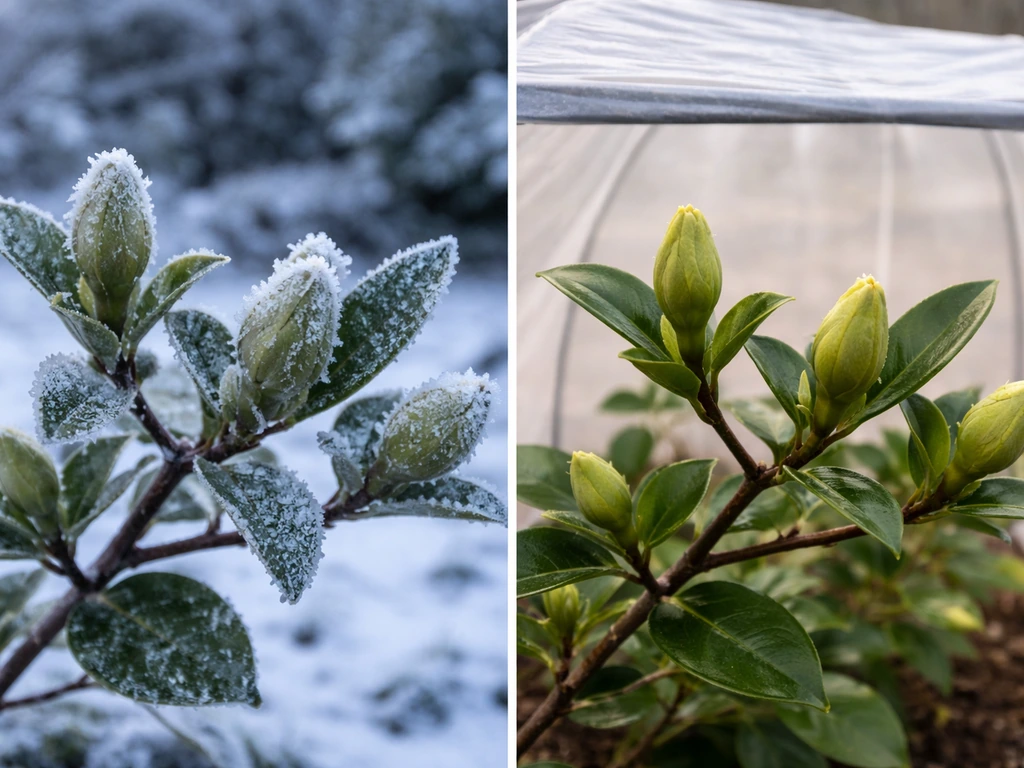
Here's the core problem: gardenia shoots and buds get killed when temperatures drop below 15°F, according to Clemson's Home and Garden Information Center. That threshold wipes out most of Indiana in a typical winter. Even in Zone 7a, you can hit 0 to 5°F on the coldest nights of the year, and that's the average extreme, not a freak event. Central Indiana's frost records show freezes have arrived as early as September 13 and as late as November 14, meaning the window of cold exposure is long and unpredictable.
On top of raw temperature, Indiana's freeze-thaw cycles are rough on gardenias. A plant that barely survives a cold snap can then get hit with a warm spell that starts new growth, followed by another hard freeze that kills the tender new shoots. That cycle is more damaging to gardenias than a single prolonged deep freeze.
| Indiana Zone | Typical Location | Avg Extreme Low | Gardenia Outlook |
|---|---|---|---|
| Zone 5b | Northwest Indiana (Gary area) | -15 to -10°F | Too cold — outdoor gardenias will not survive |
| Zone 6a | Indianapolis and north-central | -10 to -5°F | Too cold for reliable outdoor planting |
| Zone 6b | South-central Indiana | -5 to 0°F | Marginal — container only with serious protection |
| Zone 7a | Far southern tip, Ohio River corridor | 0 to 5°F | Possible with cold-hardy cultivars and winter prep |
Which gardenia varieties give you the best odds in Indiana
Not all gardenias are equal when it comes to cold. The standard Gardenia jasminoides you find at a big-box store is typically rated for Zone 8 or warmer, which means it has no business being planted outdoors in Indiana. You need to specifically seek out cold-hardy cultivars. Three names come up consistently in colder-zone gardening circles:
- 'Kleim's Hardy': Rated for Zone 7, with a cold tolerance down to about 0 to 5°F. Missouri Botanical Garden describes it as a compact, cold-resistant selection. It's one of the most commonly recommended choices for pushing gardenia north of its comfort zone.
- 'Frostproof': Listed as Zone 7 to 11 on Gardenia.net, and nature Hills notes it can survive Zone 6 conditions with protection from winter wind and a thick layer of mulch. This is probably your best bet if you're in Zone 6b and determined to try in-ground planting.
- 'Chuck Hayes': Frequently cited in cold-climate gardenia discussions (including by Arkansas Extension) as one of the hardier options. Worth seeking out at specialty nurseries if you can find it.
Even with these cultivars, you're working at the edge of their range in most of Indiana. 'Kleim's Hardy' is rated Zone 7, and the only Zone 7 in Indiana is the very southern edge. In Zone 6b, you're asking 'Frostproof' to stretch beyond its rated minimum with protection helping to make up the difference. It can work, but you're accepting real risk.
Realistic alternatives if gardenias won't work for you
If you're in central or northern Indiana and the honest answer is that gardenias aren't going to make it, here are plants that give you a similar aesthetic without the heartbreak. Mockorange (Philadelphus spp. ) is hardy to Zone 3-8 depending on cultivar and produces fragrant white flowers that genuinely rival gardenias for scent. It's low-maintenance, fully winter-hardy in Indiana, and underused.
Inkberry holly (Ilex glabra) is an Indiana native evergreen shrub that gives you that year-round structure gardenias are loved for, with creamy white late-spring flowers as a bonus. For groundcover-level evergreen texture in shaded spots, Pachysandra procumbens is a native alternative to the common Japanese pachysandra with attractive foliage that handles Indiana winters without any fuss.
None of these have gardenia's intoxicating fragrance, but mockorange comes close enough that I'd rather plant three of them than lose a gardenia every other winter.
Planting basics for Indiana gardenias
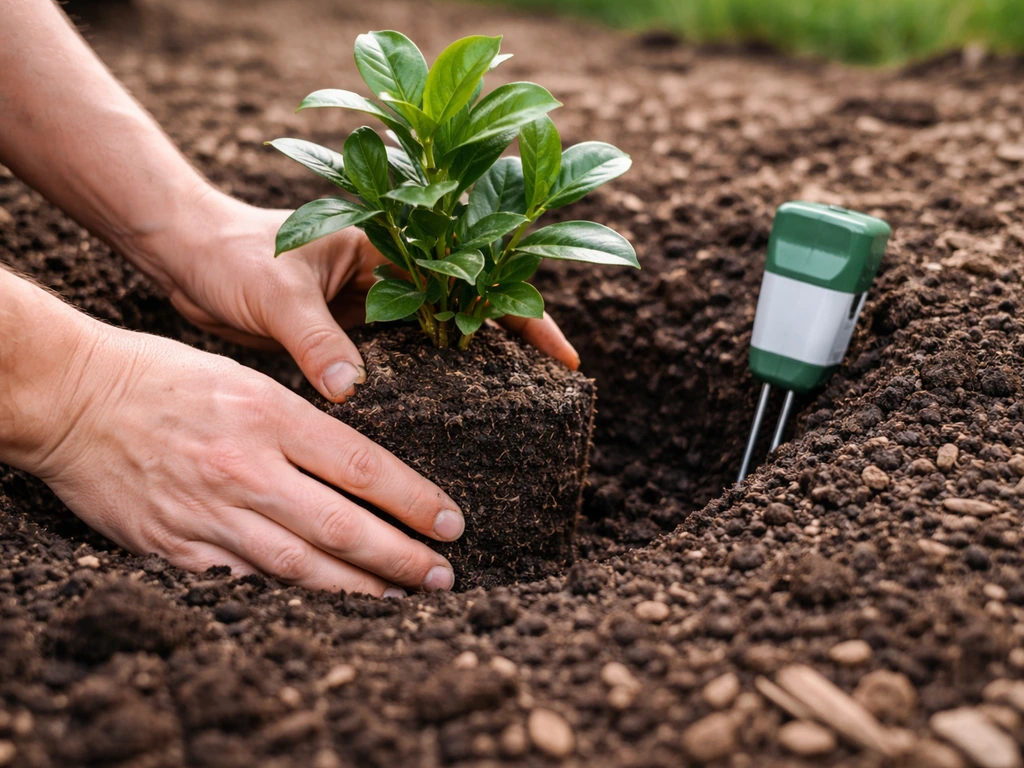
If you're in Zone 7a or pushing it in Zone 6b with a cold-hardy cultivar, timing and soil prep matter a lot. Plant in spring after your last average frost date, giving the gardenia a full growing season to establish roots before winter hits. A newly planted gardenia going into its first Indiana winter is far more vulnerable than an established one. If you are wondering can gardenias grow in Michigan, your answer depends on your local hardiness zone and whether you can provide winter protection gardenias in Michigan.
Gardenias need acidic soil, ideally between pH 5. 0 and 6. 0. This is one place where Indiana can actually work against you: many Indiana soils trend alkaline, especially in areas with limestone-heavy geology.
Alkaline soil causes iron chlorosis, which shows up as yellow leaves with green veins (the classic sign that iron isn't available even though it may be present in the soil). Purdue Extension specifically calls out iron chlorosis as a common problem in Indiana ornamentals grown in high-pH soils. Before you plant, test your soil pH. If it's above 6.
5, you'll need to amend with elemental sulfur and use acidifying fertilizer throughout the growing season. Skipping this step is one of the most common reasons Indiana gardenias look sick even when they survive the winter.
Mix plenty of organic matter (peat moss, pine bark fines, or aged compost) into your planting hole. Gardenias hate wet feet, and improving drainage at planting time pays off. Water consistently after planting, but never let the root zone sit waterlogged. Uneven watering is a direct cause of bud drop, along with sudden temperature swings.
Picking the right spot: sun, soil, and drainage
Location can make or break a gardenia in a marginal climate like Indiana's. If you are wondering can gardenias grow in Ohio, the short answer is that success depends heavily on local winter lows and whether you can provide protection or container overwintering Indiana. Here's what to prioritize when you're scouting spots in your yard:
- South or southeast-facing walls: Brick or stone walls on the south side of a house absorb heat during the day and radiate it at night, raising the temperature of the immediate microclimate by several degrees. This is where I'd plant any Zone 7 plant in Zone 6b territory.
- Wind protection: Winter wind dramatically increases cold damage. A spot sheltered by a fence, hedge, or building on the north and west sides cuts the wind-chill effect that can push your gardenia over the edge even on a night that doesn't quite hit a killing temperature.
- Full sun to part shade: Gardenias need at least 6 hours of direct sun for reliable blooming. Morning sun with afternoon shade works well, especially in Indiana's hot summers. Too much afternoon shade means fewer blooms and more disease.
- Excellent drainage: If the area holds water after heavy rain for more than an hour, don't plant there. Raised beds or slight slopes are your friend. Gardenias planted in low spots with poor drainage almost always struggle, even in warm climates.
- Avoid frost pockets: Low spots and areas where cold air drains and pools at night (like the bottom of a slope) will be consistently colder than the rest of your yard, costing you a degree or two that matters.
Winter protection and cold-damage troubleshooting
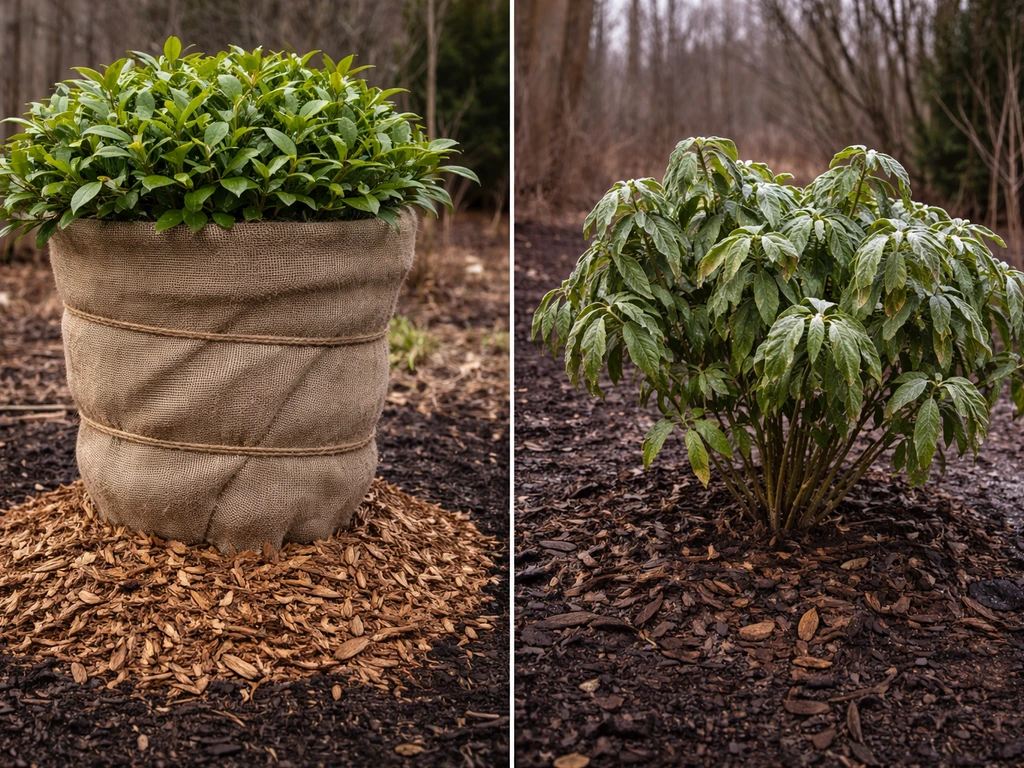
This is the section that determines whether your gardenia makes it. In Indiana, winter protection isn't optional, it's the whole game.
In-ground plants
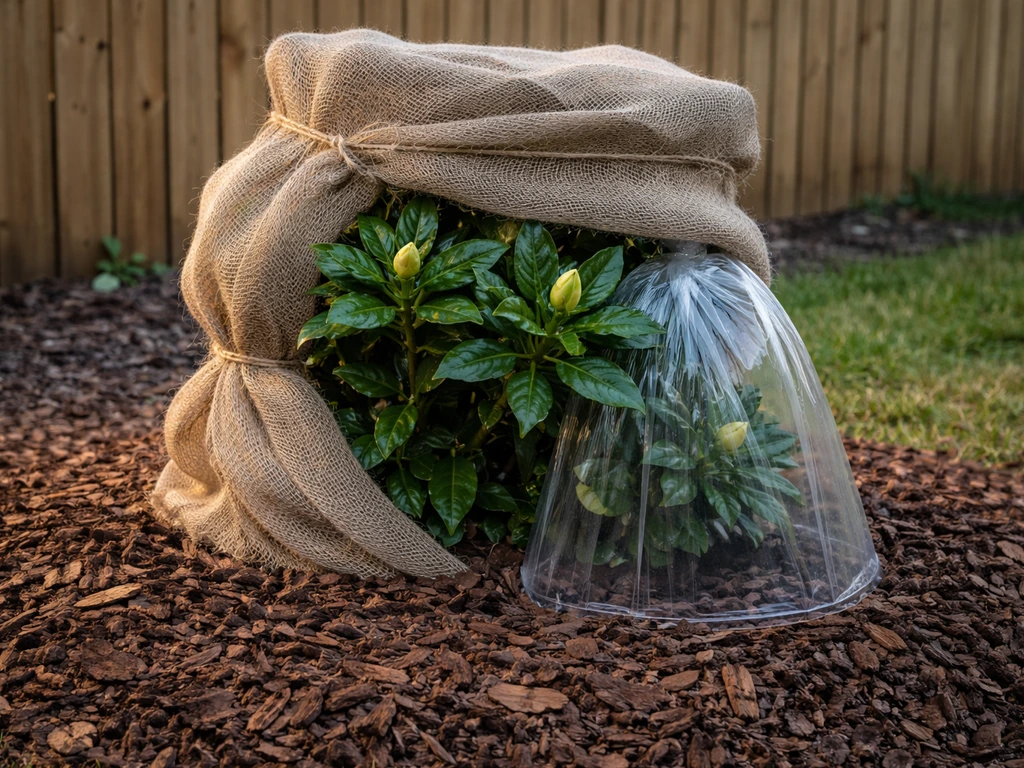
After the ground starts to freeze in late fall (usually November in southern Indiana), apply a 3 to 4 inch layer of organic mulch (shredded leaves, pine straw, or wood chips) around the base of the plant, pulling it a few inches away from the main stem. This insulates the root zone and moderates temperature swings. Wrap the above-ground portion of the plant loosely in burlap, secured with twine, to cut wind and buffer against temperature drops.
Avoid plastic, which can trap moisture and cause rot. If a hard freeze is forecast, adding a layer of frost cloth over the burlap for the duration of the cold snap gives extra protection. [General container overwintering options: garage placement and sparing watering (University of Nevada Reno Extension)](https://extension. unr.
edu/publication. aspx? PubID=2103) notes that uNR Extension recommends practical container overwintering steps including moving smaller/thinner-walled containers to an unheated garage/wall-shared area for warmth and watering sparingly so roots don’t completely dry out.
Container plants
For much of Indiana, growing gardenias in containers and overwintering them indoors is the most reliable strategy. The key insight from Penn State Extension is that containerized roots are colder than in-ground roots, so a plant rated for Zone 7 in a pot actually needs Zone 9 conditions for the root zone. That means you can't just leave a potted gardenia on a Zone 7 porch and expect it to survive.
Your options are to move smaller containers into an unheated (but above-freezing) garage, place them against a shared interior wall, or sink the pot into the ground for the winter to use the earth as insulation. If you go the garage route, water sparingly so roots don't completely dry out, but don't keep the soil wet either.
Diagnosing winter damage and other common problems
Winter injury on gardenias often isn't obvious immediately after a freeze. You may not see the full extent until spring growth (or lack of it) tells the story. Blackened or mushy stems are a clear sign of cold kill. If stems look intact but the plant doesn't break dormancy in spring, scratch the bark with your fingernail: green underneath means it's alive, brown or tan means that section is dead. Cut back to living wood and give the plant time before writing it off entirely.
Bud drop in spring or summer (buds forming but falling before opening) points to stress, not necessarily cold. In Indiana, the usual suspects are uneven watering, sudden temperature swings, poor drainage, or thrips. Check soil moisture first. If the soil has been fluctuating between dry and soggy, that alone will cause bud drop. For yellowing leaves with green veins (chlorosis), test your soil pH before reaching for iron supplements. If your pH is above 6.5, lowering it with sulfur and switching to acidifying fertilizer addresses the root cause rather than just treating the symptom.
Gardenias in Indiana are doable in the right spot with the right variety and real commitment to winter care. If you are wondering about warm-climate gardens, check the specific guidance on whether gardenias can grow in Phoenix, AZ Gardenias in Indiana are doable. In Tennessee, gardenias can sometimes be grown with the right cold-hardy cultivar, but they still require protection and well-drained, acidic soil gardenias in Tennessee.
Gardeners in southern Ohio and Michigan face similar tradeoffs, so if you're researching across state lines, the calculus is roughly the same: zone 7a or warmer is the realistic floor for outdoor planting, and cold-hardy cultivars plus aggressive winter protection are non-negotiable. If your zone and location don't line up, a container-and-garage strategy or a switch to mockorange will save you a lot of frustration and money.
If you are wondering can gardenias grow in Ohio, the answer depends on whether you can offer that same sort of protection and winter plan container-and-garage strategy.
FAQ
If I buy a cold-hardy gardenia, why do some still die in Indiana winters?
No, a winter hardy gardenia can still fail in Indiana if it gets “wet-cold.” Aim for evenly moist soil during the growing season, then let it dry slightly before hard freezes. In practice, that usually means improving drainage at planting, keeping mulch off the stem base, and avoiding low spots where cold air and runoff collect.
My gardenia has yellow leaves with green veins, should I just add iron?
Test first. If your soil pH is 6.5 or higher, gardenias often develop iron chlorosis even if you add iron later. The fix is lowering pH (elemental sulfur plus acidifying fertilizer), and only then using iron as a short-term support if the leaves are already yellow.
Can I cover a gardenia all winter instead of using burlap and frost cloth only for hard freezes?
Yes. Frost cloth helps during a brief hard-freeze window, but it is not meant for long-term coverage in Indiana. If you wrap too early or leave coverings on through mild spells, you can trap moisture and increase rot risk, especially on the burlap area. Use it only when you expect true cold events and ventilate when conditions moderate.
How should I overwinter a potted gardenia in an unheated garage?
In many Indiana yards, the biggest container mistake is leaving the pot on a porch or near the house without insulating the root zone. If you do overwinter in a garage, keep the pot above-freezing but don’t heat it, and water sparingly so the mix does not dry out completely. Also avoid fertilizing after late summer so new growth does not harden poorly for winter.
Is it ever worth planting a gardenia in the fall in Indiana?
Yes, but only if the hole setup is right. Plants grown in-ground still need acidic conditions and good drainage, but they also benefit from being established before their first Indiana winter. In most cases, you will have the best survival odds by planting in spring (after the last average frost date) rather than late fall, so roots can take hold.
Why do my gardenia buds drop in spring even when the plant seems alive?
For gardenias, late cold snaps can damage buds even if the plant looks fine. To reduce bud loss, protect the canopy when forecasts call for sustained lows, not just one overnight dip. If you repeatedly see buds forming then dropping, review watering consistency and drainage before assuming the buds are too tender for your yard.
What’s the best way to tell whether my gardenia is dead after a winter?
If the above-ground parts are damaged, don’t prune everything right away. Wait until you see what actually survives through spring growth, then scratch stems for green underneath to find living tissue. Cut back only to living wood and give it time, because gardenias can take a while to signal recovery after freeze injury.
What yard conditions matter most for gardenias in Indiana beyond the USDA zone?
Morning sun with afternoon shade often works better than full sun in Indiana’s freeze-thaw swings, because it limits stress during sudden warm-ups. Choose a spot protected from winter wind and avoid areas where snowmelt or irrigation runoff collects. In marginal spots, the microclimate is the difference between “sometimes survives” and “reliably survives.”
Can I grow gardenias near a lawn or in a spot that gets regular irrigation?
You can, but it’s usually harder than you think. The pH and drainage requirements stay strict, and the roots must be protected from cold, so container-plus-barrier alone is not enough if your soil is alkaline. If you have to “share” space with turf, you also need to keep lawn competition low and prevent overwatering from sprinklers.