
Gardenias can grow in Canada, but only in a narrow slice of the country outdoors, and most Canadian gardeners will get the best results treating them as container plants that move inside for winter. The honest answer depends on where you live: if you're in coastal British Columbia (think Victoria or Vancouver's sheltered neighborhoods) in a Canadian hardiness zone 7 or 8 equivalent, you have a real shot at growing a cold-tolerant cultivar like 'Kleim's Hardy' or 'Frostproof' in the ground. Everywhere else, and that's the vast majority of Canada, container growing with winter protection indoors is your practical path.
Can Gardenia Grow in Canada? Zones, Varieties, and Tips
Marcus Hartwell
31 May 2026
Gardenia types and how they stack up for Canada
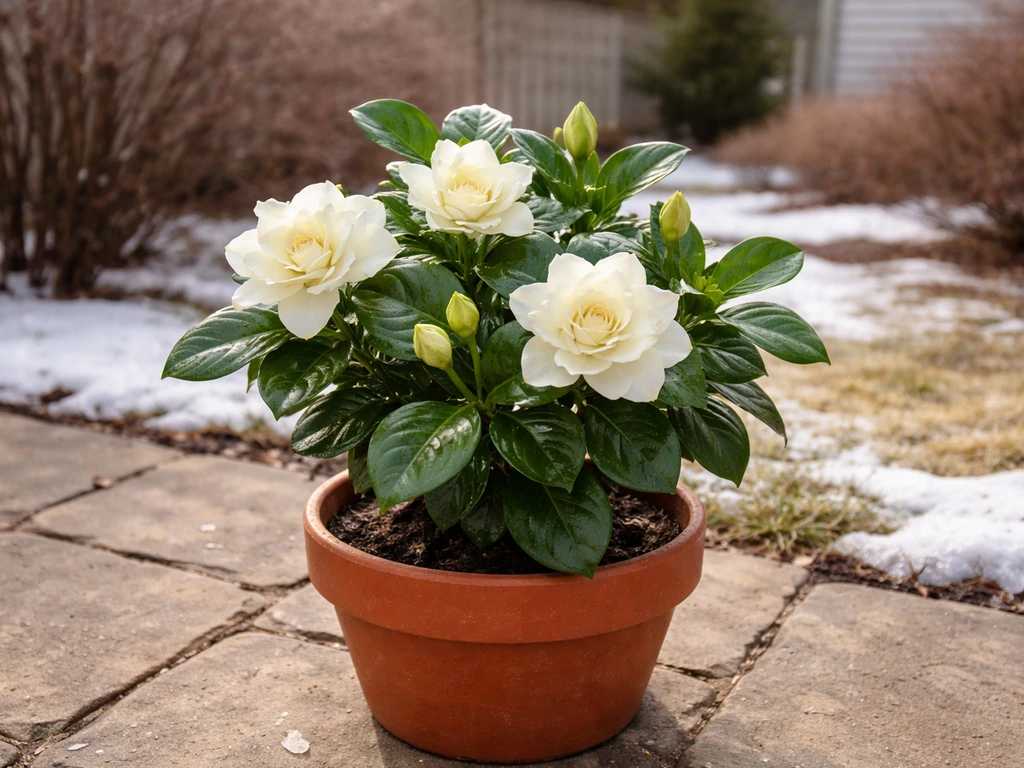
Not all gardenias are created equal when it comes to cold tolerance. Standard Gardenia jasminoides cultivars like 'August Beauty' are only rated to USDA zones 8–11, which rules out outdoor planting almost everywhere in Canada. The cultivars worth knowing about for Canadian conditions are the genuinely cold-tolerant ones: 'Kleim's Hardy' (zones 7–11), 'Frostproof' (zones 7–11, specifically marketed as more frost-hardy than most cultivars), and 'Chuck Hayes' (also cited as roughly zone 7 tolerant).
Clemson Extension confirms that many newer, smaller cultivars push hardiness down to zone 7a, while older standard varieties typically stop at zone 8. One important caveat: grafted plants are even more vulnerable than own-root plants, with [UF/IFAS noting grafted gardenias aren't cold-hardy below 28°F (about -2°C). ](https://edis. ifas.
ufl. edu/publication/EP338) That threshold gets crossed regularly in most Canadian winters, so if you're planting outdoors, look for own-root plants of a cold-tolerant variety.
| Cultivar | USDA Zone Range | Notes for Canada |
|---|---|---|
| Kleim's Hardy | 7–11 | Best outdoor candidate for warmest Canadian zones; own-root preferred |
| Frostproof | 7–11 | Marketed specifically for cold tolerance; good container or sheltered-bed choice |
| Chuck Hayes | 7–11 | Double flowers; decent cold hardiness for mild microclimates |
| August Beauty | 8–11 | Outdoor planting not realistic in Canada; container only |
| Veitchii | 8–11 | Container or greenhouse only for Canadian conditions |
The climate factors that actually decide whether your gardenia survives
Winter minimum temperatures are the number one killer. Even the hardiest cultivars cap out around -15°C (USDA zone 7), and most of Canada regularly sees colder winters than that outside of the far southwest coast. But cold isn't the only issue. Gardenias are subtropical shrubs that evolved in humid, warm climates, so they have requirements beyond just surviving frost.
- Winter lows: Anything colder than about -12°C to -15°C will kill even 'Kleim's Hardy' outright. Most of Canada exceeds that threshold regularly.
- Summer heat: Gardenias need warm summers to bloom well. Short Canadian growing seasons in northern regions often don't deliver enough heat units for reliable flowering.
- Humidity: Gardenias thrive in naturally humid air. Canadian winters indoors are notoriously dry, which triggers bud drop and yellowing leaves when plants are brought inside.
- Frost timing: Late spring frosts and early fall frosts in much of Canada compress the safe outdoor window uncomfortably tight for gardenias.
- Wind exposure: Cold, dry winter wind accelerates desiccation and cold damage even in zones where temperatures might theoretically be survivable.
Which parts of Canada can actually grow gardenias outside
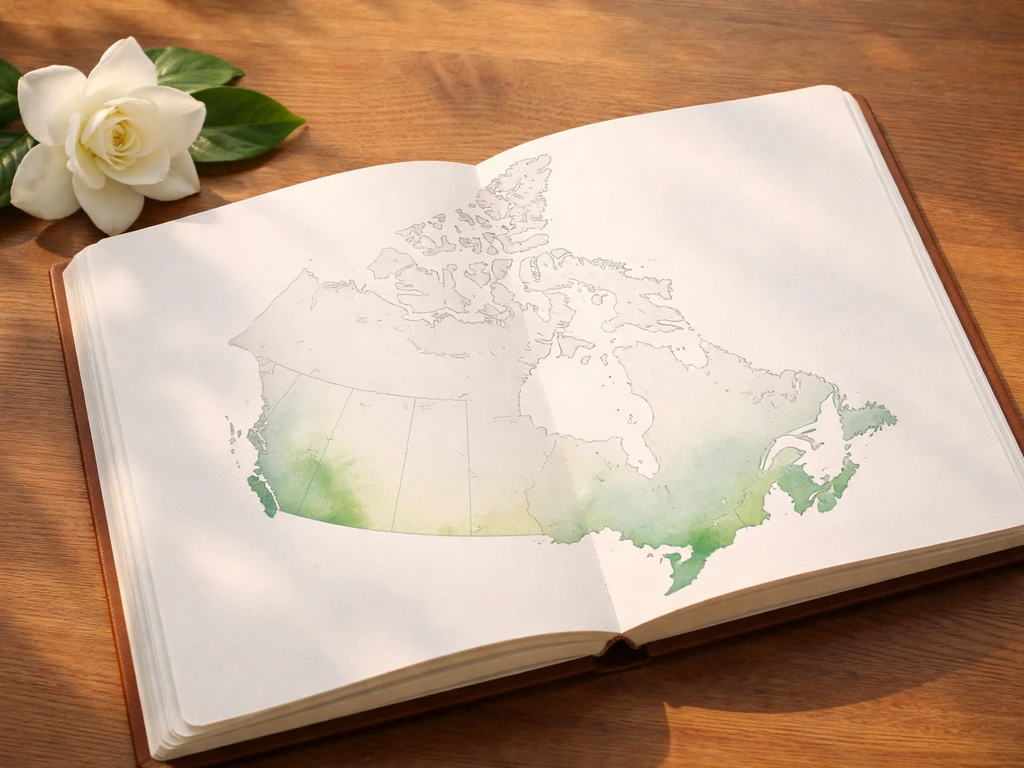
Canada's plant hardiness zone map, maintained by Natural Resources Canada, has been updated to better reflect current climate data (using 1981–2010 temperature extremes rather than older averages). Zones have shifted in some areas, so it's worth checking the current NRCan map rather than relying on an old reference. With that in mind, here's the realistic regional breakdown.
| Region | Typical Canadian Zone | USDA Equivalent | Outdoor Gardenia Verdict |
|---|---|---|---|
| Victoria, BC / Southern Vancouver Island | 8a–8b | Zone 7–8 | Best outdoor opportunity in Canada; zone 7 cultivars like Kleim's Hardy feasible in sheltered spots |
| Vancouver / Fraser Valley, BC | 7b–8a | Zone 7 | Possible in protected microclimates with cold-hardy cultivars; risk of occasional hard winters |
| Southern Ontario (Windsor, Niagara) | 6b–7a | Zone 6 | Marginal to not viable outdoors; container growing strongly recommended |
| Ontario (Toronto, Ottawa) | 6a–6b | Zone 5–6 | Outdoors not realistic; container with winter protection is the way to go |
| Prairie provinces (AB, SK, MB) | 2–4 | Zone 2–4 | Outdoors not possible; treat as indoor/greenhouse plant only |
| Quebec (Montreal, Quebec City) | 4–5 | Zone 4–5 | Outdoors not viable; container only |
| Atlantic Canada | 5–6 | Zone 5–6 | Outdoors not realistic; container with careful overwintering |
| Northern Canada / Territories | 0–3 | Zone 0–3 | No outdoor viability; greenhouse required for any success |
The only realistic outdoor zone in Canada is the mildest corner of coastal British Columbia, and even there you're best positioned in a sheltered south-facing microclimate, ideally with a wall or fence behind the plant to trap heat and block wind. If you're curious where gardenias grow best, use the Canadian hardiness zone map and plan for container growing unless you’re in coastal British Columbia where does gardenia grow. NRCan even noted Yellowknife shifting from zone 0b to 1b as an example of how zones have updated, so always use current data when making your call.
Container growing and overwintering: the right approach for most of Canada
If you're outside coastal BC, containers are your best friend. Growing gardenias in pots lets you enjoy them on a patio or deck through the summer, then move them indoors before temperatures drop. This is genuinely how most successful Canadian gardenia growers operate, and it's not a compromise, it's just the right tool for the climate. Gardenias also differ in growth rate, so it helps to know whether the variety you choose will grow quickly in your conditions.
Moving plants inside before the cold hits
Bring your gardenia inside before nighttime temperatures consistently drop below about 10°C (50°F). Don't wait for the first frost. The goal is a gradual transition rather than a shock move. Once inside, place the plant in the brightest spot available, ideally a south or west-facing window. The New York Botanical Garden recommends bright, filtered light along with cool nights and high humidity to keep gardenias from dropping their buds during the adjustment.
Temperature and humidity targets indoors
Aim for indoor temperatures of 60–65°F (about 15–18°C) at night and no warmer than about 70–75°F during the day. A cool sunroom, enclosed porch, or a bright basement window can work well. A heated living room that dries out to 20% humidity in January is tougher to manage. Run a humidifier near the plant, set a tray of pebbles and water under the pot, or mist the leaves (avoiding the flowers). K-State extension notes that an unheated basement or garage typically settles around 45–50°F through winter, which is slightly cool for gardenias but workable if there's enough light. The bigger risk is usually a warm, dry heated room with no humidity.
What to do with the plant all winter
Keep watering consistently but don't overwater. Gardenias need evenly moist soil, not soggy roots. Reduce fertilizing through the coldest months and resume in late winter as light levels increase. Avoid overhead watering indoors, as wet foliage in low-air-circulation indoor environments invites fungal problems. Water at the base of the plant instead.
Soil, drainage, and planting conditions that matter in Canada
Whether you're planting in the ground (for those lucky enough to be in coastal BC) or in a container, getting the soil right is non-negotiable. Gardenias are acid-loving plants and need a soil pH between about 5.0 and 6.5. Most garden soils across Canada, especially in prairie or limestone-heavy regions, run neutral to alkaline, which locks out the iron and other nutrients gardenias need.
- Test your soil pH before planting. Local extension offices or provincial horticulture programs often offer soil testing, and basic home test kits work too.
- Amend with sulfur, aluminum sulfate, or iron sulfate to drop pH into the acid range if needed. Missouri Botanical Garden recommends this as the best long-range solution for iron chlorosis in alkaline soils.
- For containers, use a potting mix formulated for acid-loving plants (often labeled for azaleas, rhododendrons, or camellias). These are widely available at Canadian garden centers.
- Ensure excellent drainage whether in ground or containers. Gardenias hate sitting in wet soil, and Canadian spring snowmelt can create waterlogged conditions quickly.
- Choose a sheltered site for in-ground planting: south-facing, protected from north and northwest winds, ideally near a wall that stores heat.
Why gardenias fail in Canadian gardens (and how to avoid it)
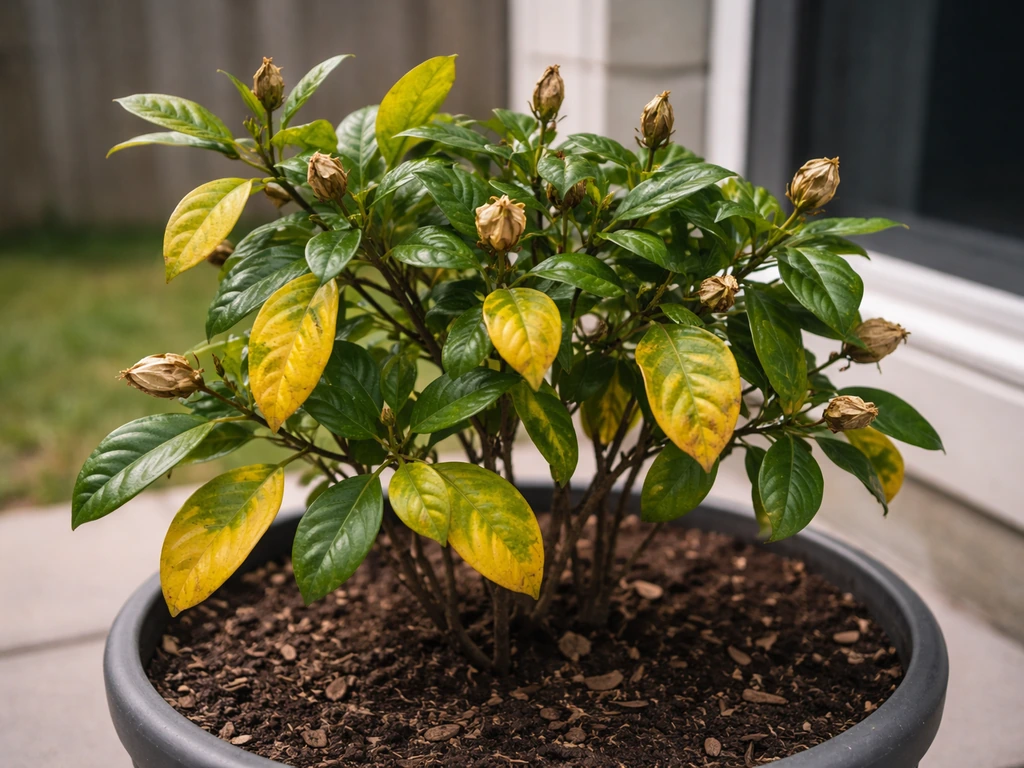
Most gardenia failures in Canada come down to a short list of predictable problems. Knowing them in advance saves you a lot of frustration.
Yellow leaves
Yellow leaves are almost always a soil pH problem or iron deficiency caused by overly alkaline conditions. If your soil or potting mix is too neutral, the plant can't absorb iron even when it's present. Test the pH, correct it, and consider applying chelated iron as a faster interim fix while the soil amendment takes effect.
Bud drop
Bud drop is the classic gardenia frustration, especially when moving plants inside in fall. The causes are low humidity, inconsistent watering, cold drafts, rapid temperature swings, or insufficient light. Payne's Nurseries lists all of these as common triggers. When you bring your gardenia in for winter, the sudden change from outdoor humidity and light to indoor conditions is the exact scenario that triggers bud drop. Transition slowly, boost humidity immediately, and keep the plant away from heating vents and cold windows.
Cold damage and winter kill
For outdoor plants in marginal zones, late cold snaps in March or April are often more damaging than midwinter cold because new growth is already emerging. Black or brown leaf tips after a cold night are an early warning sign. Missouri Botanical Garden specifically notes that black leaf tips are often temperature or water related. If you see this, don't panic and cut back heavily right away. Wait until you're sure which wood is truly dead before pruning.
Dry indoor air
This one catches a lot of Canadian gardeners off guard. Canadian winters mean forced-air heating, and forced-air heating destroys indoor humidity. A gardenia that made it through a -20°C Edmonton winter inside your house can still drop all its buds and go into a long sulk by February because the air is too dry. A humidifier placed near the plant (not directly blowing on it) makes a genuine difference.
How to pick the right variety and time your purchase
If you're in coastal BC and want to try outdoor planting, start with 'Kleim's Hardy' or 'Frostproof'. Both are rated to USDA zone 7 and are the most cold-tolerant options commercially available in Canada. 'Kleim's Hardy' is compact (usually under 1 metre), which also makes it easier to protect with frost cloth during unexpected cold snaps. Look for own-root plants, not grafted ones, since grafted stock has a hard limit of about -2°C before the root system gives up.
For container growing anywhere in Canada, any of the zone 7–11 cultivars work, since they'll be indoors over winter anyway. 'August Beauty' is a popular choice for containers because of its prolific blooming and classic fragrance. For smaller spaces, compact cultivars like 'Kleim's Hardy' are easier to manage in pots.
Timing your purchase matters. Buy gardenias in late spring, once nighttime temperatures are reliably above 10°C, so the plant can establish outdoors without cold stress. Most Canadian garden centers start stocking gardenias in May. Avoid buying plants that are already heavily budded in the store if they've been sitting in low-humidity, low-light conditions, since those buds are often already stressed and likely to drop. Look for plants with healthy dark green foliage and a few buds just starting to form.
One more thing: if you're wondering about climate suitability for other regions or want to compare how gardenias perform versus other acid-loving flowering shrubs in your province, gardenia climate compatibility varies quite a bit depending on where you are in the country, and checking the updated Canadian hardiness zone data for your specific postal code or city is always the right first step before buying. If you’re asking what climate gardenias grow in, the key is warm, humid conditions with winter temperatures that stay well above freezing. In Texas, gardenias often grow best with warm temperatures and careful attention to cold snaps, humidity, and soil do gardenias grow in texas. If you're deciding where to start, this guide on where to grow gardenias walks through the best regions and approaches for Canadian gardeners.
FAQ
Can gardenias survive in Canada if I keep them on a balcony or enclosed porch in winter?
Yes, but only if winter night temperatures stay reliably mild where the plant sits. If you keep a gardenia on a covered balcony or in a porch that routinely drops near freezing, treat it like an indoor plant anyway, because bud drop and dieback often happen when nights fall below about 10°C (50°F) even if the plant is “protected.”
What should I look for if I’m trying outdoor planting in coastal BC, not just containers?
If you want to plant outdoors in coastal British Columbia, choose an own-root plant and plan for a hard freeze event. In marginal coastal areas, shelter still matters, use a south-facing spot, add a thick frost cover during cold snaps, and avoid planting right against a wall where winter drainage is poor, since gardenias dislike waterlogged roots.
How do I prevent soil pH from rising in a gardenia pot in Canada?
For containers, use an acid-formulated potting mix and confirm the pH after you pot it, since some mixes drift upward over time. If your tap water is hard or alkaline, it can raise soil pH in pots, so consider using filtered or rainwater, and recheck pH periodically rather than assuming it will stay in the 5.0 to 6.5 range.
When is the best time to bring a gardenia indoors to reduce bud drop?
Avoid relocating the plant during a cold snap or right after a long period of cloudy weather. In practice, the safest approach is to move indoors when nights first near 10°C (50°F), keep the same soil moisture level, increase humidity immediately, and then only fine-tune light once it settles (a bright window slowly, not all at once).
My gardenia is yellowing indoors, is it always an iron problem or could it be watering or roots?
Don’t assume “cold damage” is always from freezing air. Overwatering combined with cool indoor temperatures can cause root stress, then you see yellowing and bud drop later. Check drainage, use a saucer that never holds standing water, and let the top layer of mix lightly dry before watering again.
What if I don’t have a super bright south or west window for my indoor gardenia?
It depends on the light source you can provide. If you do not have at least a bright window, a grow light becomes the difference between “survives” and “keeps buds.” Gardenias often drop buds when light levels fall indoors, even if temperature and humidity are good.
Can I use chelated iron to treat yellow leaves on a Canadian gardenia, and will it replace pH correction?
Yes, but only with the right product and timing. For a fast fix, chelated iron can help when yellowing is clearly linked to pH or uptake, but you still must correct the mix pH because iron-only applications won’t stay effective indefinitely in alkaline soil. Also, pause fertilizing during the darkest winter stretch.
If my gardenia drops buds indoors, how do I tell stress from a real problem?
If buds drop but the plant keeps growing new leaves, it’s often a stress response rather than a death sentence. However, if you also see leaf yellowing that spreads, mushy stems, or no new growth after you stabilize light and humidity, it may be root stress or persistent cold/dry conditions.
Is frost cloth enough to protect gardenias planted in the ground in Canada?
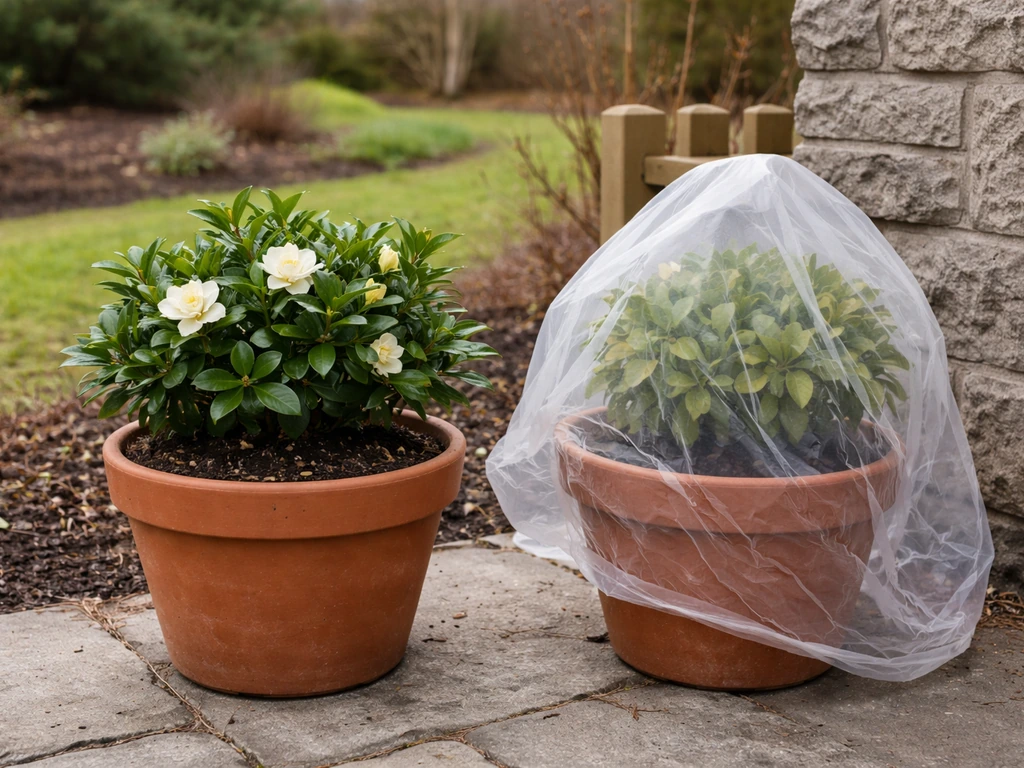
Frost cloth helps with brief exposure, but it is not a substitute for indoor winter care when temperatures plunge below the cultivar’s tolerance. For ground planting, combine shelter with monitoring, for example cover only during the coldest hours and remove it during the day to prevent overheating and trapped moisture.
Should I repot my gardenia in spring, and could repotting affect bud drop?
Yes, and in containers it can be a major advantage. Many growers gently refresh the mix when the plant is repotted in spring, which helps maintain acidity and improves drainage. Don’t repot late in the season, because root disturbance around the time you move indoors can trigger bud drop.