
Gardenias are not fast growers. That is the honest answer. Most gardenia shrubs put on somewhere between 6 and 12 inches of new growth per year under good conditions, and closer to 4 to 6 inches if your climate is marginal, your soil pH is off, or the plant is still settling in after being transplanted. Some dwarf cultivars like 'Prostrata' grow even more slowly by nature. So if you are picturing a lush, flowering shrub by next summer, you need to set realistic expectations now. That said, gardenias are absolutely worth the wait in the right climate, and there are concrete things you can do today to push that growth rate toward the upper end of the range.
Do Gardenias Grow Fast? Growth Rates, Zones, and Tips
Marcus Hartwell
22 Apr 2026
How fast do gardenias actually grow
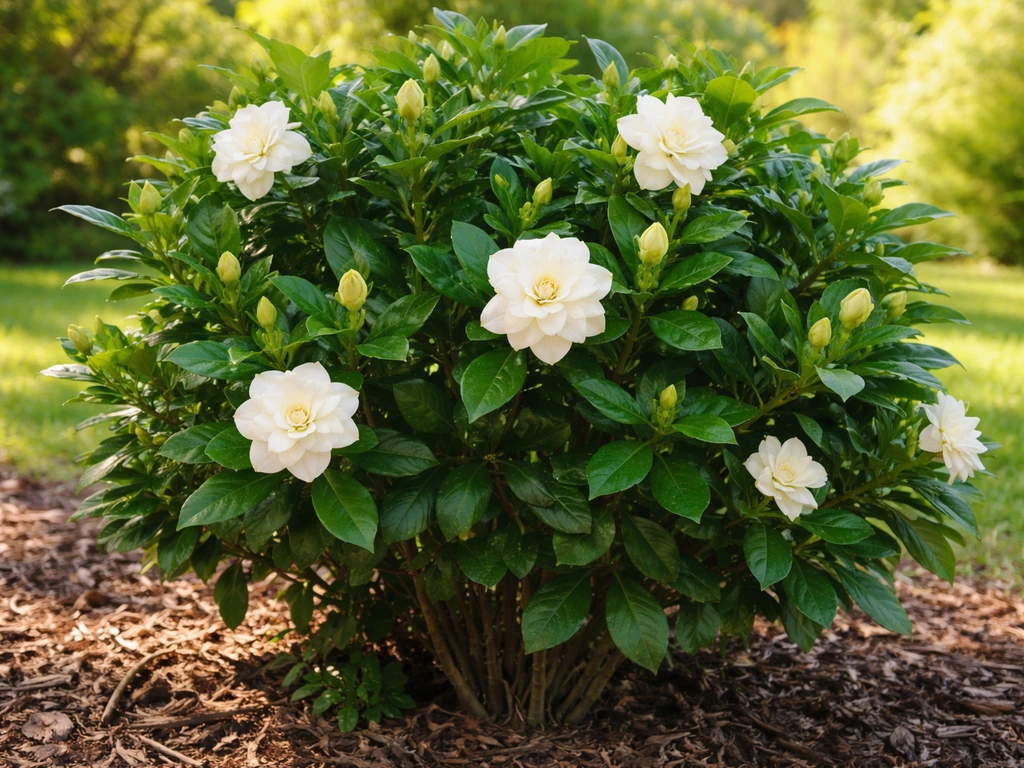
A healthy, established gardenia in a compatible climate typically gains 6 to 12 inches (15 to 30 cm) in height per year. Some vigorous cultivars like 'August Beauty' can hit the upper end of that range in warm, humid regions with consistent care. Mature size varies a lot by type: standard Gardenia jasminoides shrubs often top out at 4 to 6 feet tall and wide over 5 to 8 years, while dwarf types like 'Radicans' or 'Prostrata' stay under 2 feet and grow proportionally slower.
The first year after planting is almost always the slowest. The plant is focused on root establishment, not top growth, which is completely normal. Do not panic if your new gardenia barely grows in year one. By year two and three, you should start seeing meaningful height gains and, if conditions are right, the first reliable bloom cycle. Most gardeners in ideal zones (zones 8 through 10) can expect first buds within two to three years of planting a young container-grown shrub.
What slows gardenias down in your climate and zone
Climate is the single biggest factor controlling how fast your gardenia grows, and it starts with hardiness zone. Gardenias are reliably hardy in USDA zones 8 through 11. In zone 7, they can survive with protection but they often take winter damage that sets growth back every year. Below zone 7, gardenias are essentially container plants unless you bring them inside for winter, and container-grown plants grow more slowly than in-ground shrubs because root space is limited.
Heat and humidity matter just as much as cold hardiness. Gardenias are native to warm, humid subtropical climates, and they genuinely thrive in places like coastal Georgia, the Gulf Coast of Texas, Louisiana, central Florida, and the Carolinas. Gardenias also have a specific range of places where they grow best, so knowing where does gardenia grow for your conditions can help you choose the right spot climate.
In dry or hot-arid climates (think Phoenix or inland California valleys), they will grow slowly and struggle without serious intervention to boost humidity and manage heat. In the Pacific Northwest, they can grow in protected spots but the cooler summers limit how much active growth happens. Understanding your specific climate is really the starting point before anything else.
Soil pH is another massive driver of growth rate. Gardenias need acidic soil in the range of pH 5.0 to 6.0. Above that range, iron and manganese become unavailable to the roots even if those nutrients are physically present in the soil. The plant essentially starves for micronutrients and slows to a crawl. This is one of the most common reasons gardenias in new landscapes underperform: the surrounding soil or lawn amendments have pushed pH too high.
Picking the right gardenia type for your region
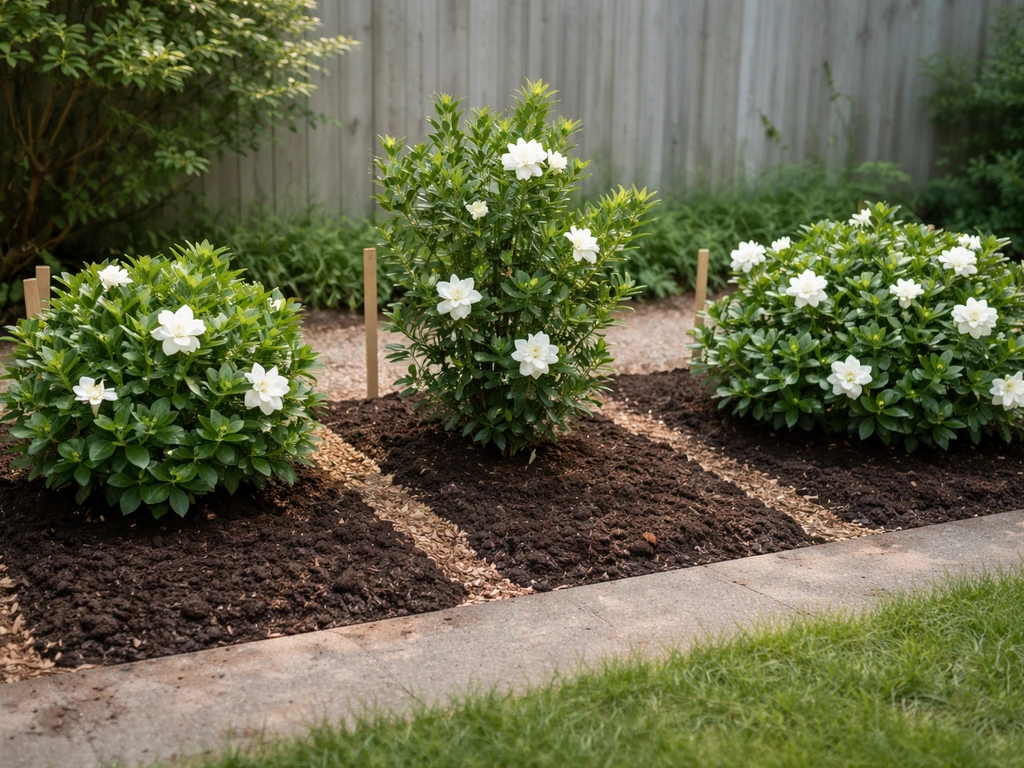
Not all gardenias perform the same way across regions, and choosing the wrong cultivar for your climate is a fast track to slow, frustrated growth. Here is a practical breakdown of the most commonly grown types and where they tend to do best.
| Cultivar | Growth Habit | Best Regions/Zones | Notes |
|---|---|---|---|
| August Beauty | Medium shrub, 4–6 ft | Zones 8–10, Southeast and Gulf Coast | One of the more vigorous growers; blooms twice per year in good conditions |
| Frostproof | Upright, 4–6 ft | Zones 7b–10, wider cold tolerance | Better for zone 7b and cooler edges of the range; steady grower |
| Viet Nam | Large shrub, 6–8 ft | Zones 9–11, Florida and Deep South | Single-flowered; grows faster and larger in warm humid climates |
| Radicans / Prostrata | Dwarf, 1–2 ft | Zones 8–10, container-friendly | Naturally slow grower; good for borders or containers in partial shade |
| Kleim's Hardy | Compact, 3–4 ft | Zones 7–9, transitional South | Most cold-tolerant standard cultivar; recovers well from light frost damage |
If you are in Texas, the Gulf Coast, or the Southeast, 'August Beauty' and 'Viet Nam' give you the best shot at faster, more vigorous growth because they are matched to those warm, humid conditions. If you are in the Carolinas, Tennessee, or the upper South pushing zone 7b, 'Frostproof' or 'Kleim's Hardy' are smarter choices because you will not lose progress to frost damage every winter. And if you are wondering whether your specific state or region is even a realistic fit for gardenias outdoors, that question of regional compatibility is worth exploring separately before you invest in plants. If you are trying to grow gardenias outdoors in Texas, focus on a compatible type, the right light, and keeping soil acidic for reliable growth and blooms.
The conditions that actually speed up growth
Light
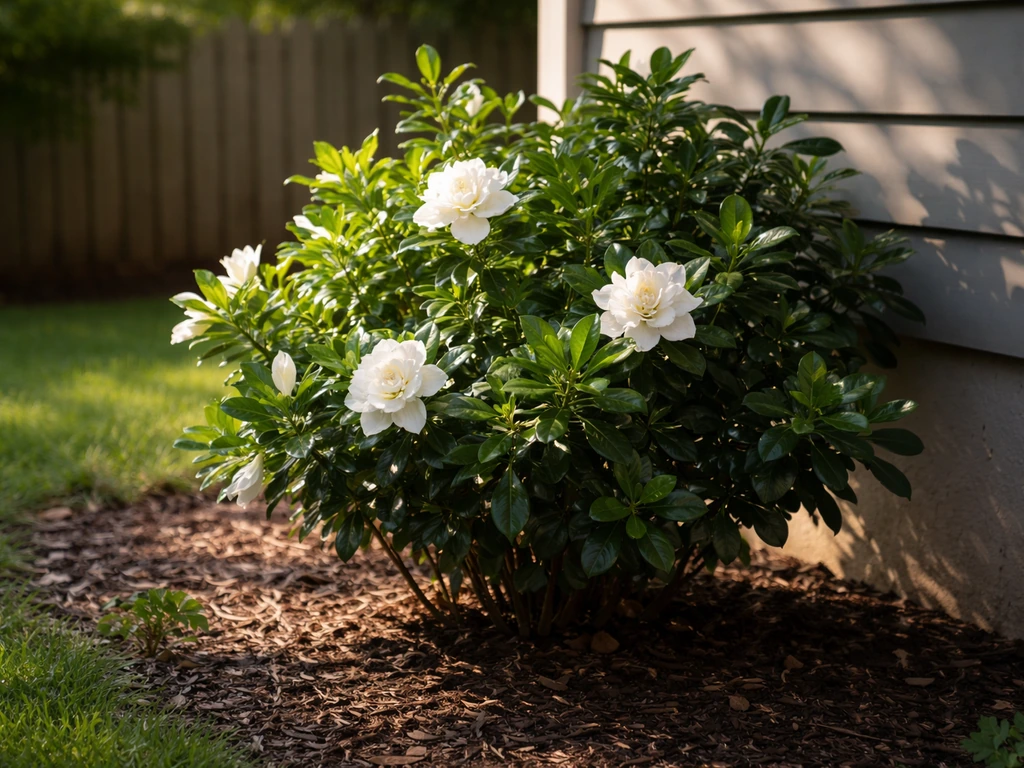
Gardenias need morning sun with afternoon shade in hot climates, or full sun in cooler, cloudier regions. In the Deep South and Texas, direct afternoon sun can stress plants, burn foliage, and slow growth. In zones 8 and below or in the Pacific Northwest, more sun is better. Aim for at least 4 to 6 hours of direct light daily regardless of region.
Soil preparation
Test your soil pH before planting. This is not optional if you want maximum growth. If pH is above 6.0, amend with sulfur to bring it down, or plant in a raised bed filled with acidic mix. For established plants already struggling, chelated iron can be applied as a foliar spray or soil drench to address iron deficiency without waiting for a full pH correction. Mix in compost and improve drainage: gardenias hate waterlogged roots but need consistently moist soil, so good drainage and organic matter together hit that target.
Watering
Keep soil consistently moist but never soggy. Deep watering once or twice a week (depending on your heat and rainfall) beats shallow daily watering. Allow the top inch of soil to dry slightly between waterings. Both overwatering and underwatering stress the plant, slow growth, and directly cause bud drop, a frustrating problem that is almost entirely preventable with consistent moisture management.
Temperature and humidity
Gardenias need night temperatures around 50 to 55°F to trigger flower-bud formation. Temperatures below 15°F will damage or kill branches and set the plant back significantly. In marginal zones, mulching heavily and planting against a south-facing wall gives meaningful protection. In dry climates, running a nearby soaker hose or grouping plants together can raise local humidity enough to make a real difference in growth and bloom rates.
Planting and early care steps to avoid a slow start
- Plant at the right depth: set the root ball so the top is level with or very slightly above the surrounding soil. Planting too deep suffocates roots and is a leading cause of slow establishment.
- Space properly from the start: standard cultivars need 3 to 6 feet between plants for air circulation. Crowding leads to fungal problems and slower growth.
- Mulch immediately after planting: apply 2 to 3 inches of pine bark or pine straw mulch, keeping it pulled back from the base of the stem. This holds moisture, moderates soil temperature, and slowly acidifies soil as it breaks down, which is a win on all fronts.
- Feed with the right fertilizer at the right time: use an acid-forming fertilizer formulated for azaleas and camellias, or a slow-release product where 30 to 50 percent of the nitrogen is in slow-release form. Fertilize in spring after new growth begins, again in early summer, but stop by late summer. Late fertilizing stimulates tender new growth that can be damaged by cold.
- Skip fertilizing the first month after planting: let the roots settle before pushing top growth.
- Water in thoroughly at planting and keep a consistent watering schedule for the first full season.
Is your gardenia growing normally or struggling
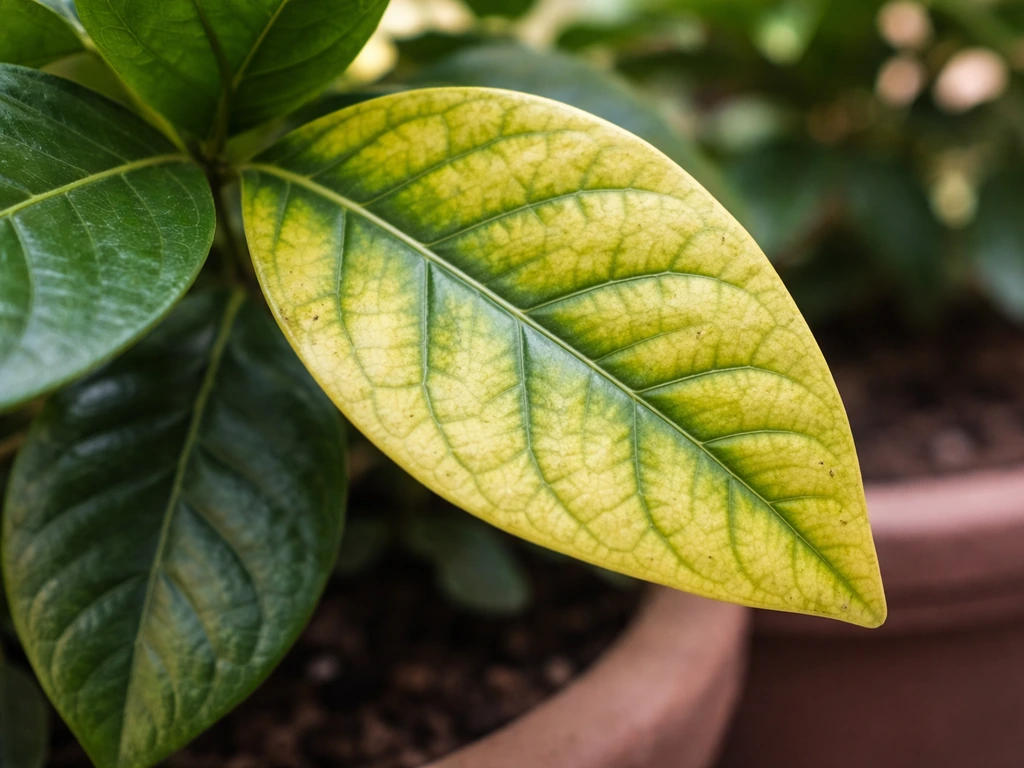
Normal growth in year one looks like this: minimal height gain, some new leaf growth in spring and early summer, and no flowers or maybe a few by late season. That is fine. What is not fine is a plant that produces almost no new growth at all, drops leaves heavily through the growing season, or shows widespread yellowing.
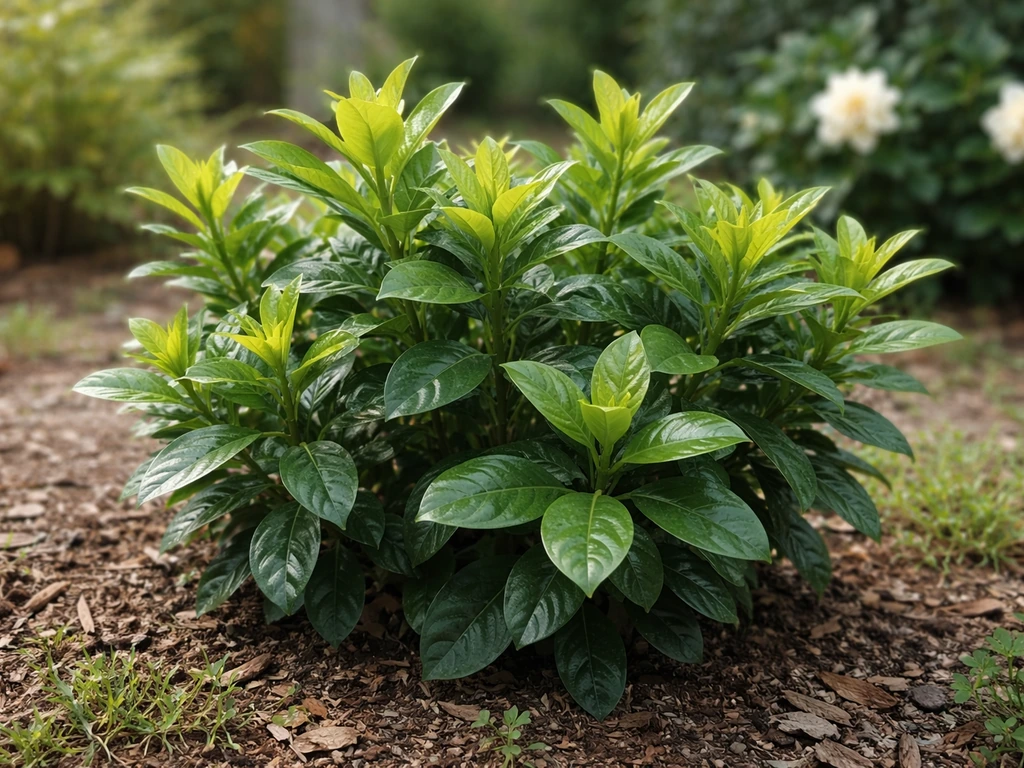
The most common sign of a struggling gardenia is interveinal chlorosis: the leaves turn yellow between the veins while the veins themselves stay green. This is a classic iron deficiency symptom caused by soil pH being too high. If you see this, test your pH immediately, and apply chelated iron as a short-term fix while you work on correcting the pH over the longer term. Do not ignore chlorosis, because a plant that cannot access iron cannot photosynthesize properly and will grow slowly no matter what else you do right.
Bud drop is a separate frustration. If your gardenia sets buds but they fall off before opening, the usual culprits are: inconsistent watering (usually letting it dry out too much), low humidity, insufficient light, or temperatures that are either too high during the day or too variable. Environmental stressors such as drought, excessive heat, or excessive cold can also cause gardenia bud or leaf drop, according to UC Statewide IPM notes. This is particularly common in homes where people grow gardenias as indoor or patio plants in dry climates.
Pest pressure can also genuinely slow growth. Aphids, scale insects, spider mites, mealybugs, and thrips all feed on gardenias and can weaken a plant enough that growth nearly stops. If your plant looks generally unhealthy, unhappy, and sticky or sooty, check the undersides of leaves for insects. Scale insects in particular are easy to miss because they look like part of the stem. Treat with horticultural oil or insecticidal soap early in an infestation before the plant gets too stressed.
| Symptom | Likely Cause | What to Do |
|---|---|---|
| Interveinal yellowing (chlorosis) | High soil pH / iron deficiency | Test pH, apply chelated iron, amend with sulfur |
| Bud drop before opening | Inconsistent watering, low humidity, or temp swings | Even out watering, check light and placement |
| Leaf drop (not just yellowing) | Overwatering, root rot, or transplant shock | Improve drainage, let soil dry slightly between watering |
| Very little new growth in spring | Poor soil, wrong pH, or marginal climate zone | Fertilize with acid formula, recheck pH and zone fit |
| Sticky leaves, sooty mold | Scale insects or aphids feeding | Inspect undersides, treat with horticultural oil |
| New growth dying back in winter | Cold damage from temperatures below 15°F | Mulch heavily, move containers indoors before first frost |
What realistic growth actually looks like over time
Here is what you can realistically expect if you plant a healthy, quart- or gallon-sized nursery gardenia in a compatible zone with good conditions. Year one: mostly root growth, maybe 2 to 4 inches of top growth, no or minimal flowers. Year two: 6 to 8 inches of new growth, possibly your first real bloom flush in late spring or early summer. Year three and beyond: consistent 8 to 12 inches per year, established bloom cycles, and a shrub that finally looks like what you had in mind when you bought it.
Pruning plays into this timeline. The key rule is to prune right after blooming, not in late summer or fall. Gardenias set their flower buds in fall for the following season, so pruning after midsummer cuts off next year's flowers. Prune lightly to shape, remove dead wood, and keep air circulating through the plant. Heavy pruning to reduce size is best done immediately after the main bloom cycle ends, usually by early July in most of the South.
If you are in a marginal zone or a climate where gardenias are a stretch (the upper South, the drier parts of the West, or Canada), recalibrate your expectations. A gardenia surviving in zone 7a with annual frost damage is not going to put on 10 inches per year. It may look great from late spring through fall and then spend the following spring recovering from winter. That is not failure, that is just the reality of growing a plant at the edge of its comfortable range. Knowing your climate compatibility upfront saves a lot of frustration later.
FAQ
How long does it usually take before a gardenia starts to look full and bushy, not just grow slowly?
Even with perfect care, most gardenias take about 2 to 3 years to fill in and look naturally dense. If you only see height but not branching, that often means the plant is getting enough water but not enough consistent light (or it is being pruned at the wrong time).
Does feeding fertilizer make gardenias grow faster, or can it backfire?
Fertilizer can help, but it does not fix the main bottleneck (acid soil and consistent moisture). Use an acidic, gardenia-appropriate fertilizer and avoid high-phosphorus lawn feeds, which can worsen nutrient imbalance. If you fertilize without correcting pH, you will often still see chlorosis and slow growth.
Should I use coffee grounds or acidic compost to speed up growth?
Coffee grounds can slightly affect soil but they are unreliable for reaching the tight pH range gardenias need (about 5.0 to 6.0). Compost is helpful for texture and moisture control, but you should still test pH and amend with sulfur or an acidic planting mix to avoid getting stuck at too-high pH.
Why is my gardenia putting out buds but not opening them even when I water regularly?
Bud drop and failure to open often come from sudden shifts in moisture or temperature, not just overall watering amount. Check for water stress between waterings (especially in containers), then look for hot daytime spikes or low humidity indoors, both of which can stop buds from developing.
Can I speed growth by moving my gardenia to a sunnier spot?
It depends on your climate. In hot regions, moving to stronger afternoon sun can scorch foliage and slow growth, so you may need more morning sun with afternoon shade. In cooler regions, extra sun usually helps, but introduce it gradually over 1 to 2 weeks to prevent shock.
What is the fastest way to recover growth if my gardenia is already struggling?
Start with a soil pH test, because interveinal yellowing usually signals iron lockout from high pH. Apply chelated iron as a temporary fix, then correct pH with sulfur or an acidic bed setup. Also confirm watering is steady and not waterlogged, since root stress can keep growth suppressed even after pH improves.
How much can I prune without reducing next year’s blooms?
To avoid losing the next season’s flowers, prune right after blooming. Light shaping is safer than major reduction, because gardenias set buds in fall. If you must cut back later in the year, expect fewer blooms even if the plant still grows.
Do gardenias grow slower in pots than in the ground, and what can I do about it?
Yes, containers often grow slower because root space and soil moisture stability are limited. Use a large pot with good drainage, keep the root zone evenly moist, and consider switching to in-ground planting if your yard is truly in a compatible zone and you can maintain acidic soil.
Is it normal for my gardenia to grow slowly in year one, but it also looks pale or thin?
Year-one slow top growth can be normal, but widespread yellowing is not. If leaves are turning yellow between veins while veins stay greener, test pH promptly and address iron deficiency. If the plant is pale but not chlorotic, it may simply be adjusting, though you should still review light and watering.
What pests most commonly slow gardenia growth, and how do I catch them early?
Spider mites, aphids, scale, mealybugs, and thrips can all weaken growth, but early signs are usually reduced vigor and distorted new leaves. Inspect the undersides and leaf bases weekly, since scale can look like bumps on stems and feed quietly before growth stalls.