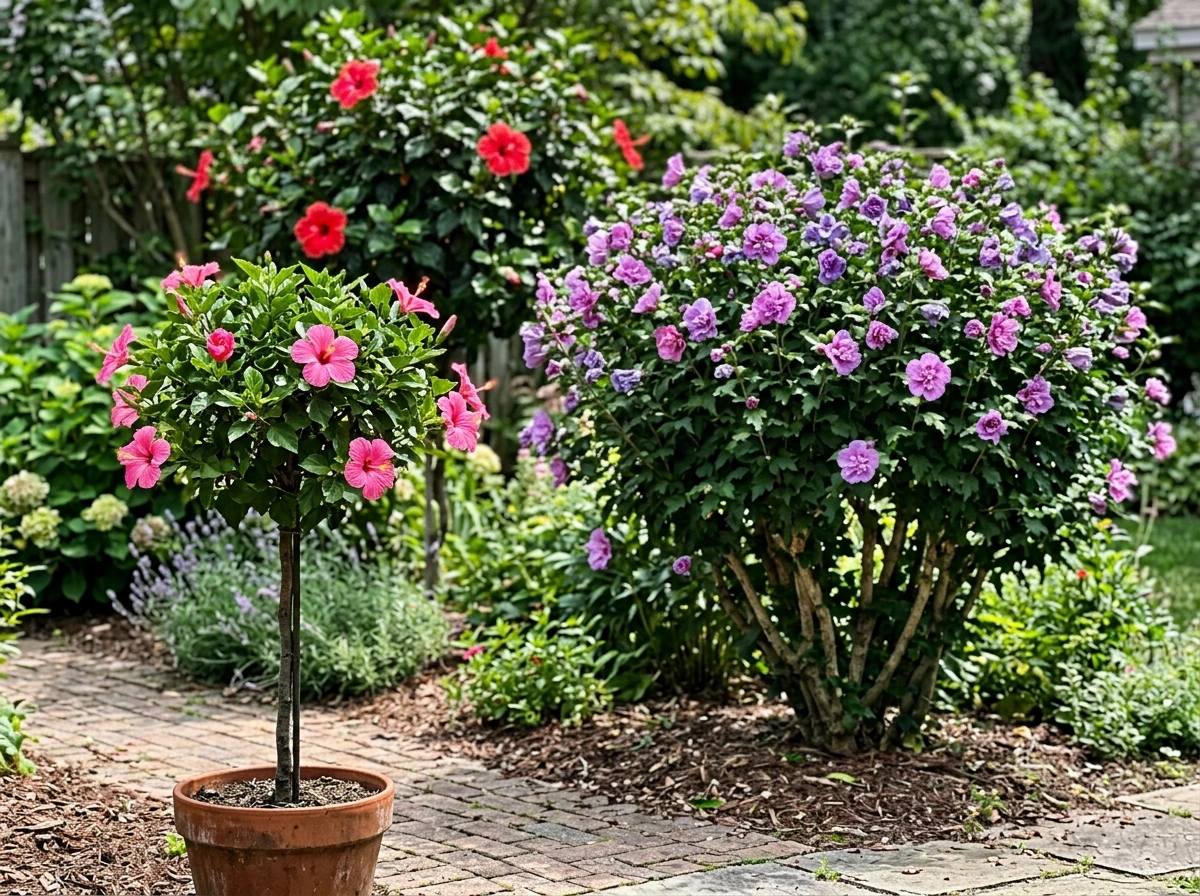
The two main types: hardy hibiscus vs tropical hibiscus
Before you can answer "will this grow like a tree in my yard," you need to know which hibiscus you're actually talking about. There are two categories most home gardeners encounter, and they behave very differently.
Hardy hibiscus (Rose of Sharon, Hibiscus syriacus)
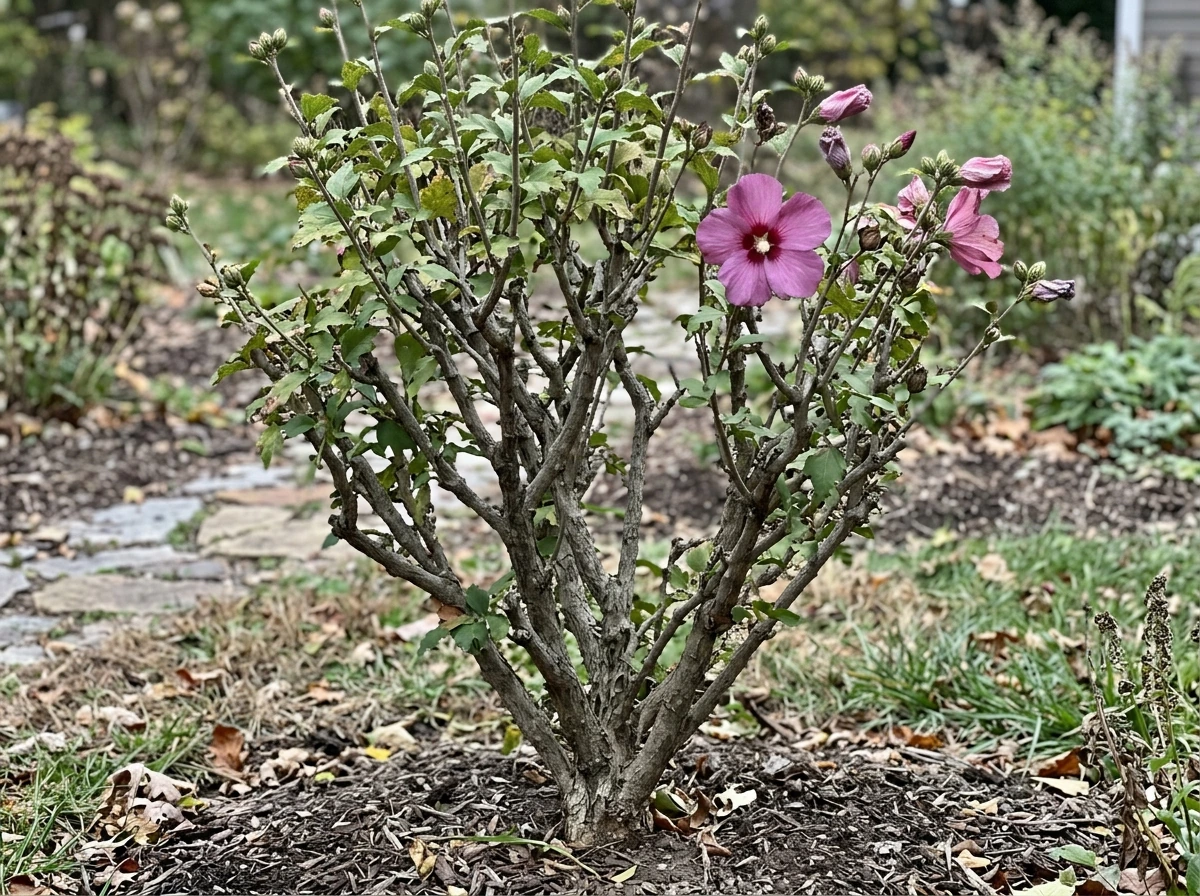
Rose of Sharon is the one most gardeners in the mid-Atlantic, Midwest, and Northeast are familiar with. It's cold-hardy, deciduous, and grows as a multi-stemmed shrub that can reach 8 to 12 feet tall over several years. It dies back to bare wood in winter and leafs out again in spring, blooming on new wood each season.
For hardy hibiscus, remember that the plant blooms on new growth and typically dies back to bare wood in winter, so growth on old wood depends on the specific type and how it is pruned hibiscus grow on old wood. This is the hibiscus that nurseries often sell in a [trained "tree" form](https://hort. ifas. ufl.
edu/trees/HIBSYRA. pdf), where growers have selected one main stem, stripped the lower branches, and let the top branch out into a rounded canopy. The result looks like a small flowering patio tree, but it started life as an ordinary shrub.
Tropical hibiscus (Hibiscus rosa-sinensis)
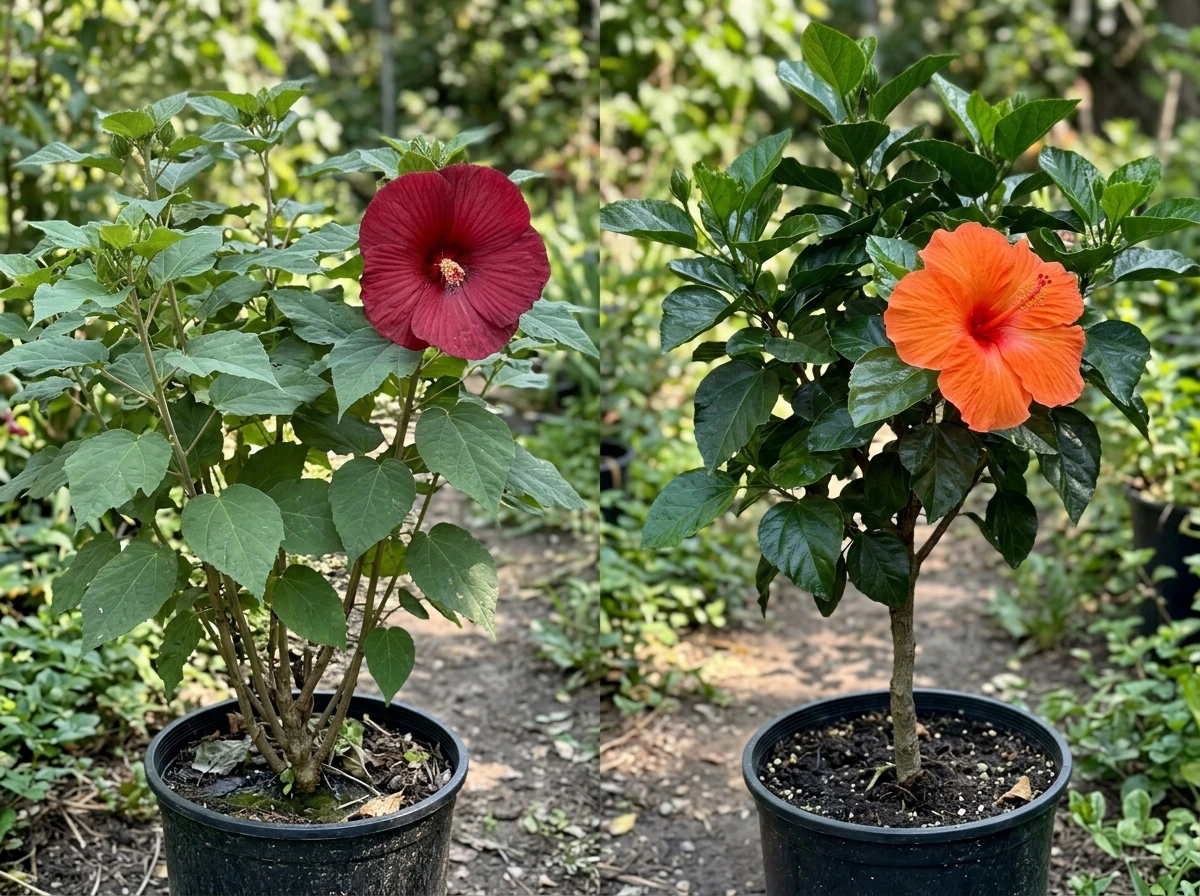
Tropical hibiscus is the big, glossy-leaved plant with dinner-plate flowers in hot pink, red, orange, and yellow. It's an evergreen shrub in warm climates and can grow quite large in zones 9 through 11, sometimes reaching 15 feet or more when planted in the ground and left to grow for years.
In those warm climates (think South Florida, coastal Southern California, Hawaii, South Texas), it genuinely starts to look like a small tree over time, with a woody base and spreading canopy. UF/IFAS specifically describes the plant as a "tree" type when it's trained as a standard, meaning a single-trunk form. Outside of zones 9 to 11, it's grown as a container plant, a patio specimen, or an annual that gets tossed at the end of the season.
A quick side-by-side comparison
| Feature | Hardy Hibiscus (H. syriacus) | Tropical Hibiscus (H. rosa-sinensis) |
|---|
| Cold hardiness | Zones 5-9 | Zones 9-11 |
| Growth habit | Deciduous multi-stem shrub | Evergreen woody shrub |
| Natural form | Upright shrub | Large shrub, tree-like with age |
| Tree-form availability | Yes, sold as trained standard | Yes, sold and grown as standard |
| Winter behavior (cold zones) | Loses leaves, stems survive | Dies back or dies completely |
| Blooms on | New wood | New and old wood |
| Max height (in-ground, warm climate) | 8-12 feet | 10-15+ feet |
Your USDA hardiness zone is the single biggest factor in determining whether your hibiscus will ever look like a tree, or whether it stays a compact shrub or barely survives winter at all. Here's a practical breakdown of what to expect by region.
Zones 9-11 (Deep South, South Florida, Gulf Coast, Southern California, Hawaii)
This is where tropical hibiscus thrives year-round. Planted in the ground in zone 10 or 11, it grows continuously and can be planted any month of the year according to UF/IFAS. Over several seasons, a well-placed tropical hibiscus develops a thick, woody trunk and begins to genuinely resemble a small tree without any training at all. If you're in this zone and you want a tree-like form, you have the most natural path to it. In zone 9, tropical hibiscus is generally reliable but can take cold damage in an unusually hard frost. Texas A&M AgriLife notes that hibiscus is hardy in zones 9 to 10 but cold snaps on the Gulf Coast can cause damage.
Zones 6-8 (Mid-Atlantic, Southeast, Pacific Northwest, upper South)
This is the territory of hardy hibiscus. Rose of Sharon (H. syriacus) is genuinely perennial here and comes back reliably every year. It won't grow into a 15-foot evergreen like tropical hibiscus can in Florida, but it can absolutely reach 10 feet as a tall, upright shrub.
For hardy hibiscus, North Carolina State Extension recommends cutting stems nearly to ground level in fall, and it blooms on new growth.
Clemson Extension notes that perennial hibiscus freezes back to the ground each winter in all but the warmest parts of South Carolina, which means it starts fresh from the roots each year and grows as a shrub, not a tree, from a structural standpoint. If you want a tree shape in these zones, you need to buy a trained standard form (more on that below) or train one yourself.
Zones 4-5 (Upper Midwest, New England, northern states)
Tropical hibiscus is not a permanent landscape plant here, full stop. It can be grown in containers and brought inside for winter, but you won't get a tree form outdoors. Hardy hibiscus (H. syriacus) can survive in these zones but may struggle in the coldest winters. If you're in zone 4 or 5 and want that hibiscus look, check out varieties specifically rated for your zone and keep expectations realistic: you're growing a shrub, not a tree.
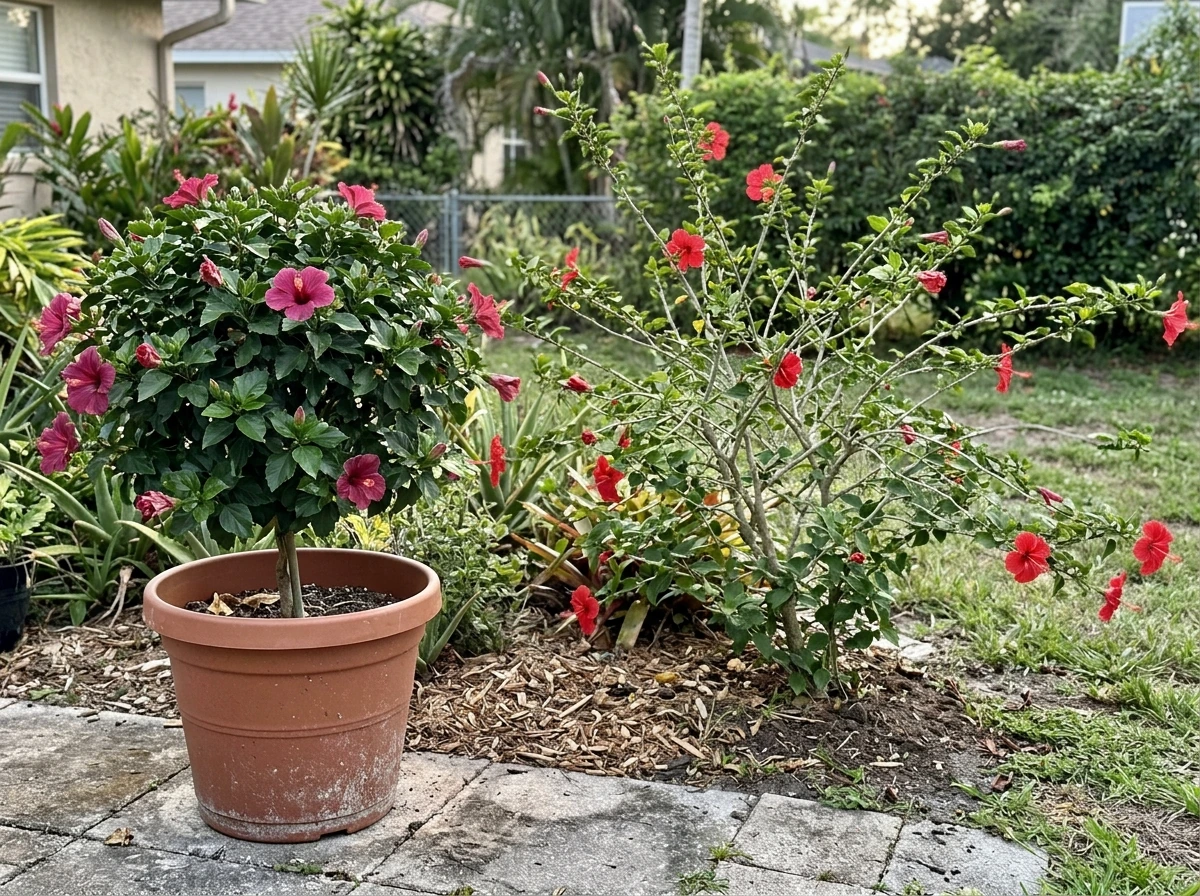
Where and how you plant hibiscus makes a bigger difference to its final form than almost anything else. In-ground planting in a warm climate is where hibiscus really stretches out and builds that tree-like structure over time. The root system can spread freely, the plant grows vigorously, and after four or five years it develops real woody mass in the base and lower trunk.
In a container, hibiscus stays more compact. The root restriction naturally limits overall size, so even tropical hibiscus in a large pot rarely exceeds 5 to 6 feet. A standard (tree-trained) hibiscus in a container is a very popular patio plant precisely because it looks elegant and stays manageable. But don't expect a container plant to turn into a landscape tree. It's decorative in that form, not structural. If you're in a colder zone and growing tropical hibiscus in a pot so you can overwinter it indoors, you'll likely keep it in the 3 to 5 foot range indefinitely.
What "tree hibiscus" actually means at the nursery
This is where a lot of the confusion comes from. Walk into a garden center and you might see a pot labeled "Hibiscus Tree" or "Rose of Sharon Tree" with a single upright trunk and a full rounded canopy on top. That's not a different species of hibiscus. It's a standard: a regular shrub that's been trained (or sometimes grafted) onto a single upright stem, then shaped into a lollipop or rounded top.
The University of Washington's HortLibrary explains this clearly: when you prune hibiscus into a tree-like form with a single trunk, it is called a standard. Nature Hills Nursery describes their tree-form Rose of Sharon the same way, noting the single upright trunk is a standard created by selective training.
The UC ANR's guide on trees for small spaces makes the same point more broadly: a "standard" refers to any plant that has been grafted or trained to a tree form, often by removing lower branches as it grows. So when you see "hibiscus tree" on a tag, you're looking at a cultivated form, not a naturally tree-forming species. This matters because a standard needs maintenance to stay looking like a tree. If you stop pruning, those lower shoots come back and the plant reverts toward its natural shrubby form.
One more point on label confusion: some retailers use the words "standard bush" or "standard" in their plant availability lists to describe this trained form, so don't be thrown off if you see that terminology in a nursery catalog. It's the same thing: a shrub trained to look like a small tree.
Training hibiscus into a tree shape yourself
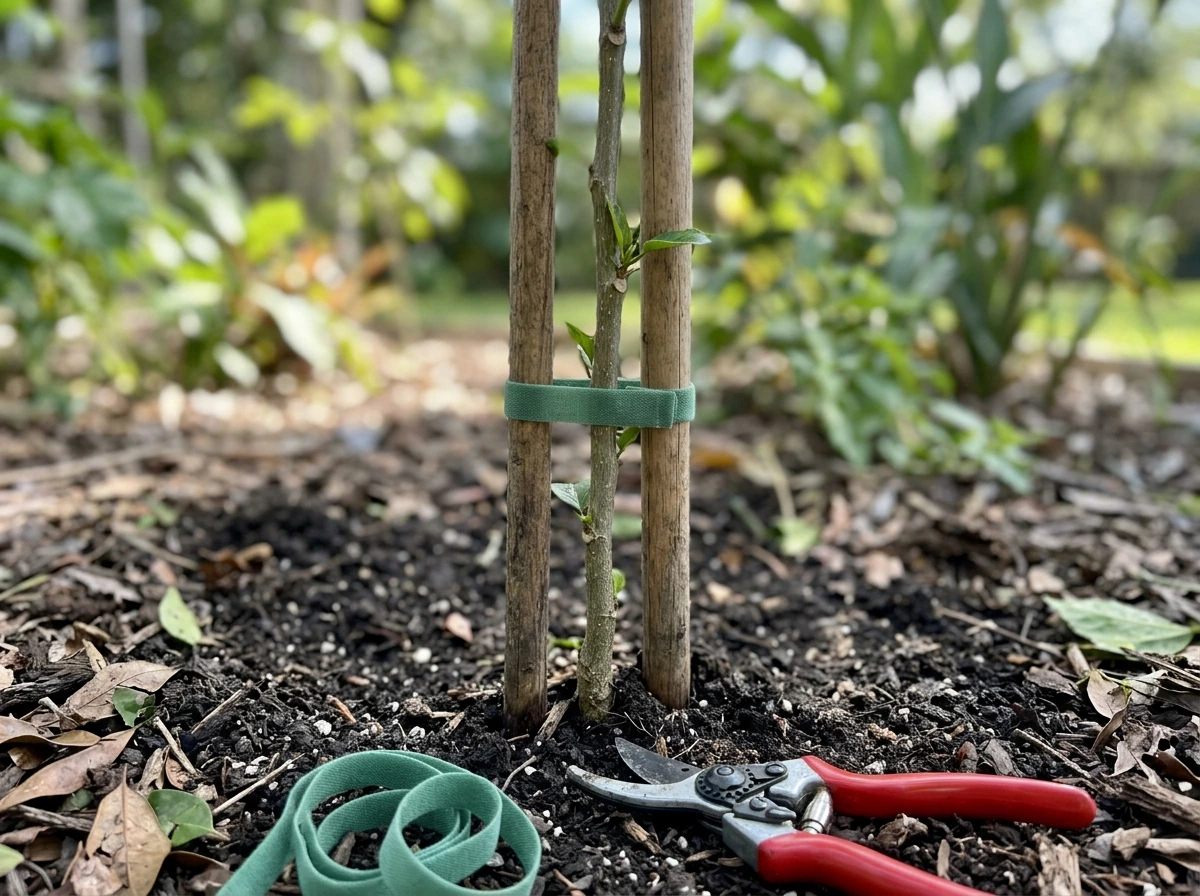
If you want a tree-form hibiscus and you don't want to pay the premium for a pre-trained nursery standard, you can do this yourself. It takes patience (think two to three growing seasons minimum) but it's genuinely not complicated. Here's the decision-level process:
- Start with a young, healthy hibiscus plant (either H. syriacus for colder zones or H. rosa-sinensis for warm zones) and select the single strongest, most upright stem as your future trunk.
- Remove all other stems at the base, and keep removing any new ones that sprout from the base through the season.
- As the plant grows, remove the lower side branches gradually, working your way up the trunk. Don't strip more than one-third of the plant at once.
- Let the top third branch out naturally, then begin shaping the canopy with light pruning to keep it rounded and dense.
- For H. syriacus (Rose of Sharon), do your pruning in late winter or early spring before new growth starts, since this species blooms on new wood. Pruning at that time encourages strong flowering growth. Both the Morton Arboretum and Penn State Extension recommend late winter/early spring pruning for this species.
- Stake the main trunk early on if needed to keep it growing straight, and remove the stake once the trunk is firm and woody enough to stand on its own.
Once your standard is established, the main ongoing task is removing the suckers (shoots that sprout from the trunk or base) every season. If you let them go, your "tree" turns back into a bush within a couple of growing seasons. It's a minimal commitment once the form is set, but you can't ignore it entirely.
Your next step: match hibiscus type to your zone
If you're not sure which hardiness zone you're in, the USDA Plant Hardiness Zone Map is the right starting point. Type in your zip code and you'll get a definitive answer. From there, the choice is straightforward: zones 9 to 11 get tropical hibiscus planted in-ground with a realistic shot at genuine tree-like size over time.
If you want hibiscus requirements to grow well enough for that look, focus on the right variety, sunlight, and consistent warmth for your zone tree-like size over time. Zones 5 to 8 get hardy hibiscus (Rose of Sharon), ideally in a standard/trained form if you want that tree look, and planted in a protected spot. Zones 4 and below should look at container-grown tropical hibiscus as a seasonal patio plant, or stick with cold-hardy shrub forms of H. syriacus.
If you're already planning your landscape and want to dig deeper into where hibiscus plants naturally thrive across different regions, or what it takes indoors versus outdoors in cooler climates, those questions have their own answers worth exploring. You can also review the exact conditions and regions for where hibiscus plants grow so you choose the right type for your yard. The core takeaway here is this: [do hibiscus grow on old wood] doesn't grow on trees, but with the right zone and a little intentional pruning, it can absolutely become one. do hibiscus grow on old wood