
Yes, hibiscus can absolutely grow inside. The short answer is that tropical hibiscus (the kind with glossy leaves and those big, showy blooms in red, orange, pink, and yellow) is actually one of the better large flowering plants you can keep indoors year-round, as long as you give it enough light and keep it warm enough. Hardy hibiscus, on the other hand, is a different story indoors. But if you are reading this because you live somewhere cold and want to keep a beloved hibiscus alive through winter, or you just want a flowering plant inside your home, you are in the right place.
Can Hibiscus Grow Inside? Indoor Care and Setup Guide

Marcus Hartwell
24 Mar 2026
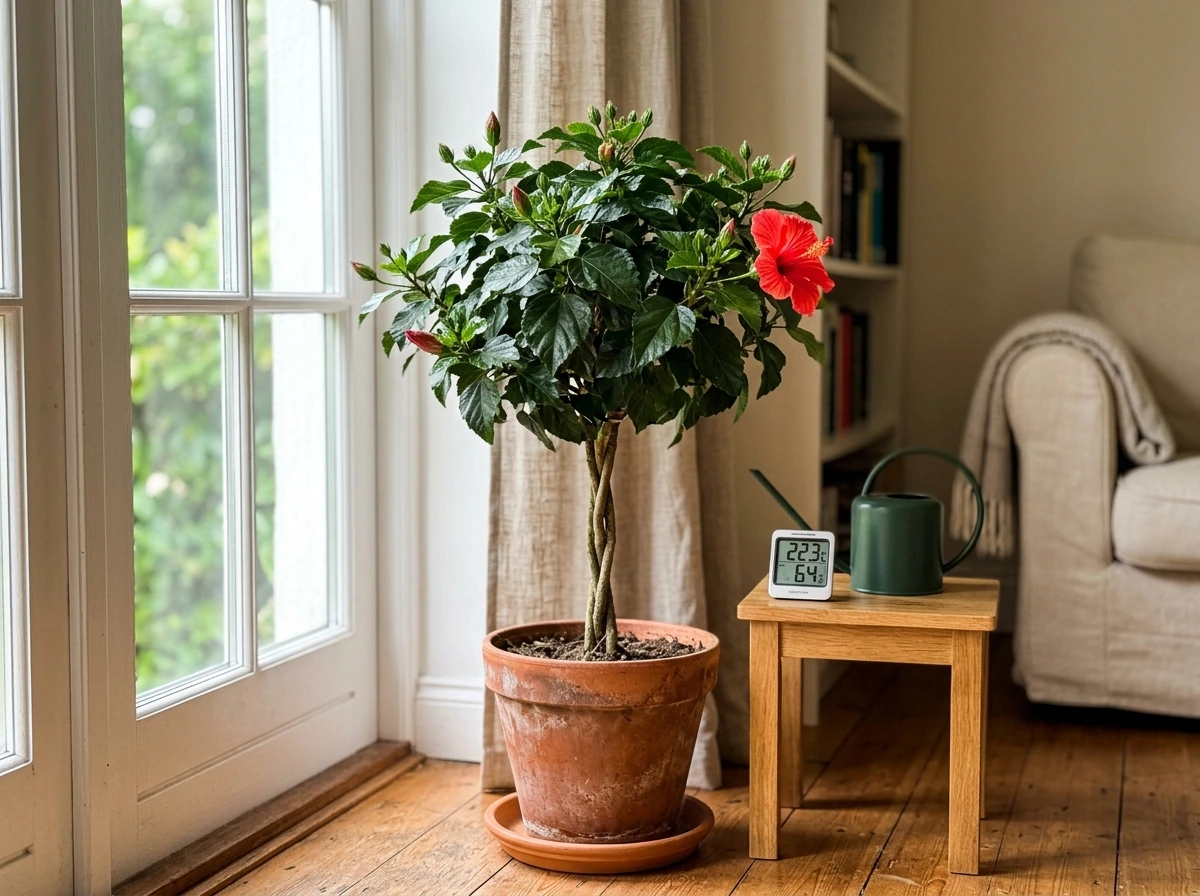
Hibiscus plant vs. hibiscus tree: which one works best indoors?
Before diving into setup, it helps to know which type you are dealing with. There are two broad categories most home gardeners encounter, and they behave very differently indoors.
Tropical hibiscus (Hibiscus rosa-sinensis)
This is the one sold at garden centers in pots, often trained into a standard "tree" form with a single woody trunk and a rounded canopy at the top. Whether you have a bushy potted plant or one of those pruned tree-form standards, it is almost certainly a tropical hibiscus. This species is what Texas A&M AgriLife Extension dedicates a full fact sheet to, and it is the go-to for indoor growing. It handles container life well, tolerates being moved inside in fall, and will bloom indoors if light conditions are good. If you have ever seen a hibiscus labeled as a "hibiscus tree" at a nursery, that is just a tropical hibiscus trained to look like a small tree. It is the same plant, same care needs.
Hardy hibiscus (Hibiscus moscheutos and relatives)
Hardy hibiscus is the big-leafed, plate-sized flowering perennial that dies back to the ground in winter and comes back from its roots in spring. It is suited for outdoor garden beds in zones 4 through 9 and is not a good candidate for indoor growing. It needs a cold dormancy period, it gets enormous (3 to 8 feet tall and wide), and it does not adapt well to container life indoors. If you have this type, growing it outside is really your best path. This article focuses on tropical hibiscus, since that is what people are realistically asking about when they want to grow hibiscus indoors. University of Minnesota Extension also notes that Hibiscus rosa-sinensis is the species commonly available through nurseries, garden centers, and florists in northern climates.
What indoor hibiscus actually needs to survive and bloom
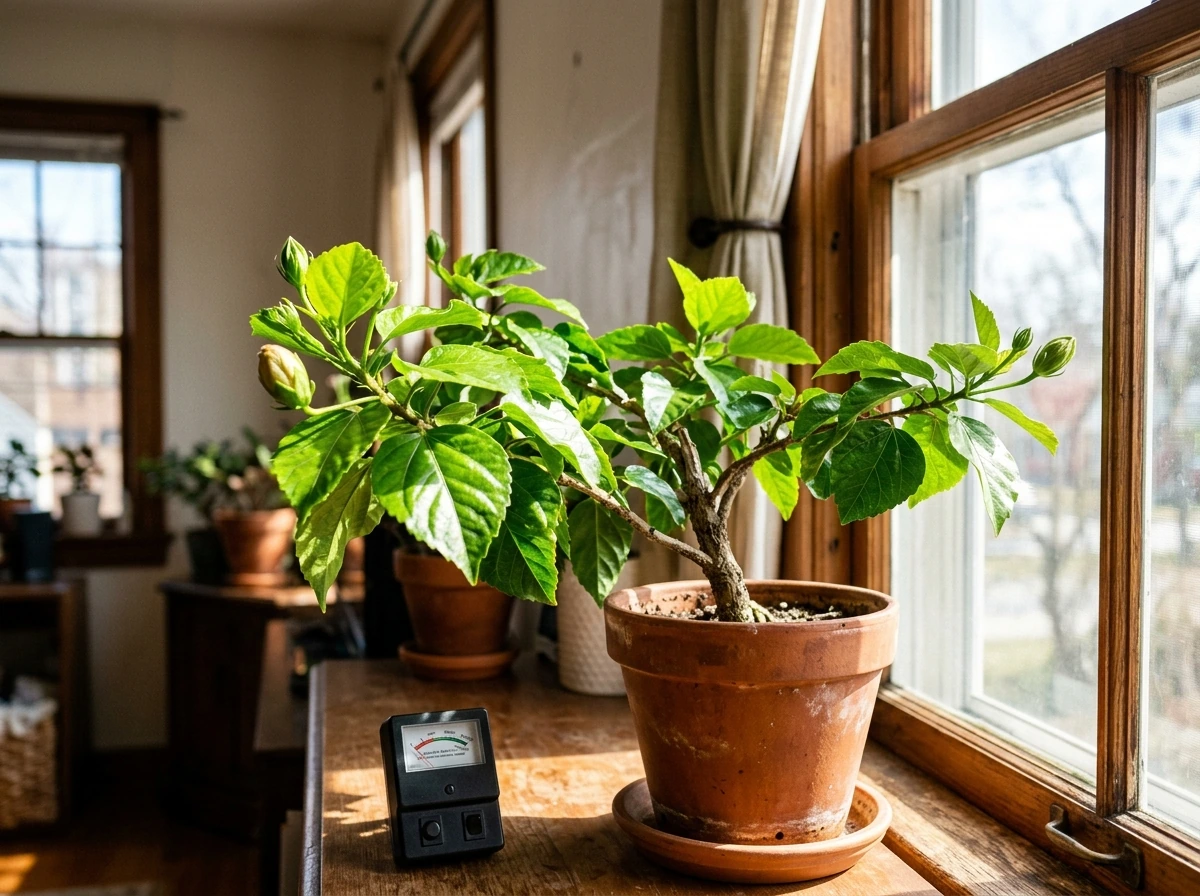
Light: this is the make-or-break factor
Tropical hibiscus is a full-sun plant outdoors, and it does not drop that requirement just because you moved it inside. Logee's, one of the most respected retailers of tropical hibiscus, is blunt about this: it needs full sun and a southern exposure. In practice, that means the brightest south-facing window you have. East or west windows can work for keeping the plant alive through winter, but do not expect reliable blooming without strong light. If your home does not have good southern exposure, a dedicated grow light set to run for about 16 hours a day will make a real difference, especially for seedlings or plants you are trying to get to bloom. Hibiscus flowers on new growth, so without enough light to push that new growth, blooms simply will not happen.
Temperature: keep it above 55 to 60°F
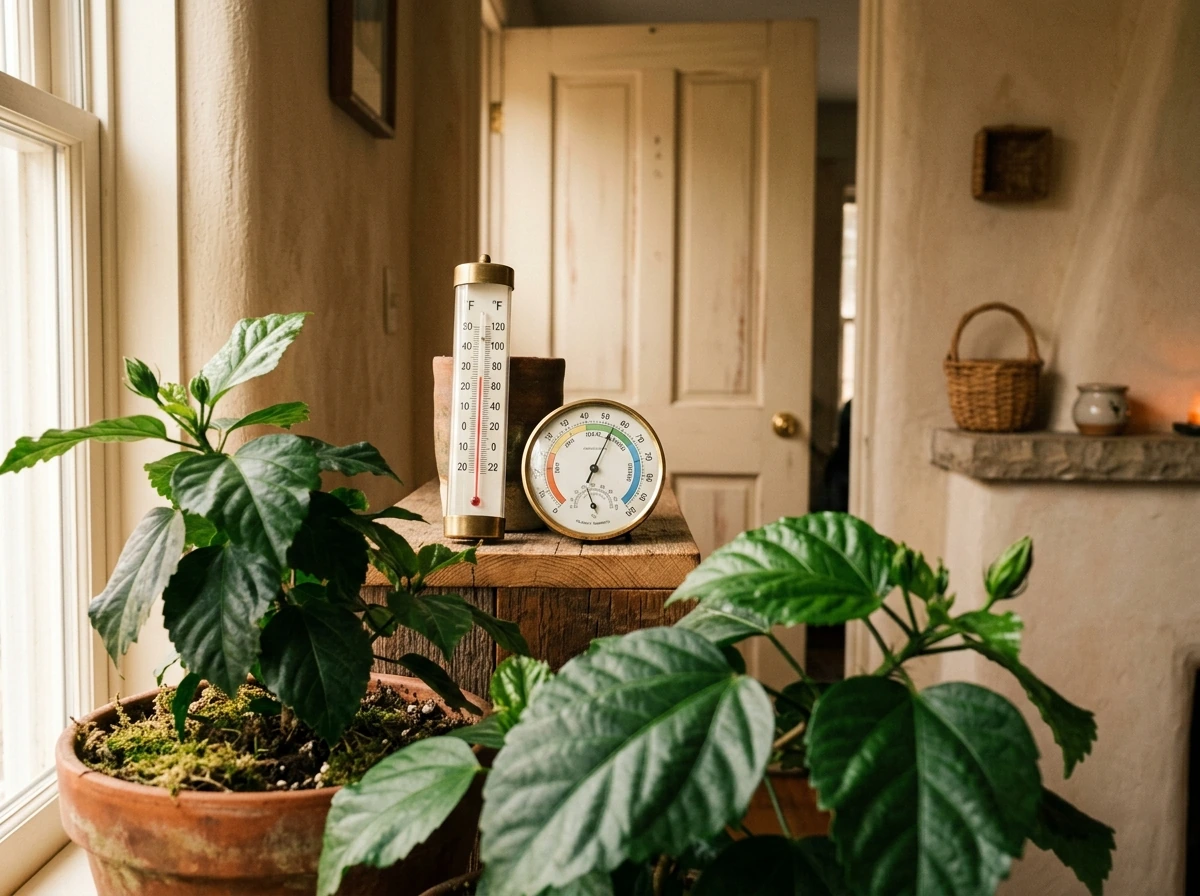
Tropical hibiscus does not tolerate cold. The RHS also specifies that hibiscus needs bright, humid conditions and a minimum night temperature around 7°C (45°F). The absolute minimum is around 55°F (13°C), and most growers, including Logee's, recommend keeping indoor temperatures above 60°F for active growth. The New York Botanical Garden notes that a cool room around 55°F is fine for a resting or semi-dormant plant in winter, but if you want blooms, aim closer to 65 to 75°F. Keep the plant away from drafty windows, heating vents that blow dry hot air, and cold exterior walls in winter. A windowsill that looks sunny might actually get very cold at night in January, especially in zones 5 or 6. Feel the glass on a cold night before committing a plant to that spot.
Humidity: aim for 50 to 70%
Tropical hibiscus comes from, well, the tropics, so it prefers higher humidity than most homes provide in winter. A target of 50 to 70% relative humidity is ideal. Central heating drops indoor humidity dramatically, sometimes into the 20 to 30% range. A small humidifier near the plant, a pebble tray with water beneath the pot (just make sure the pot is not sitting in the water), or grouping plants together can all help raise local humidity. This matters not just for plant health but also because dry conditions invite spider mites, which thrive when humidity drops below 40%.
Getting the pot and soil setup right
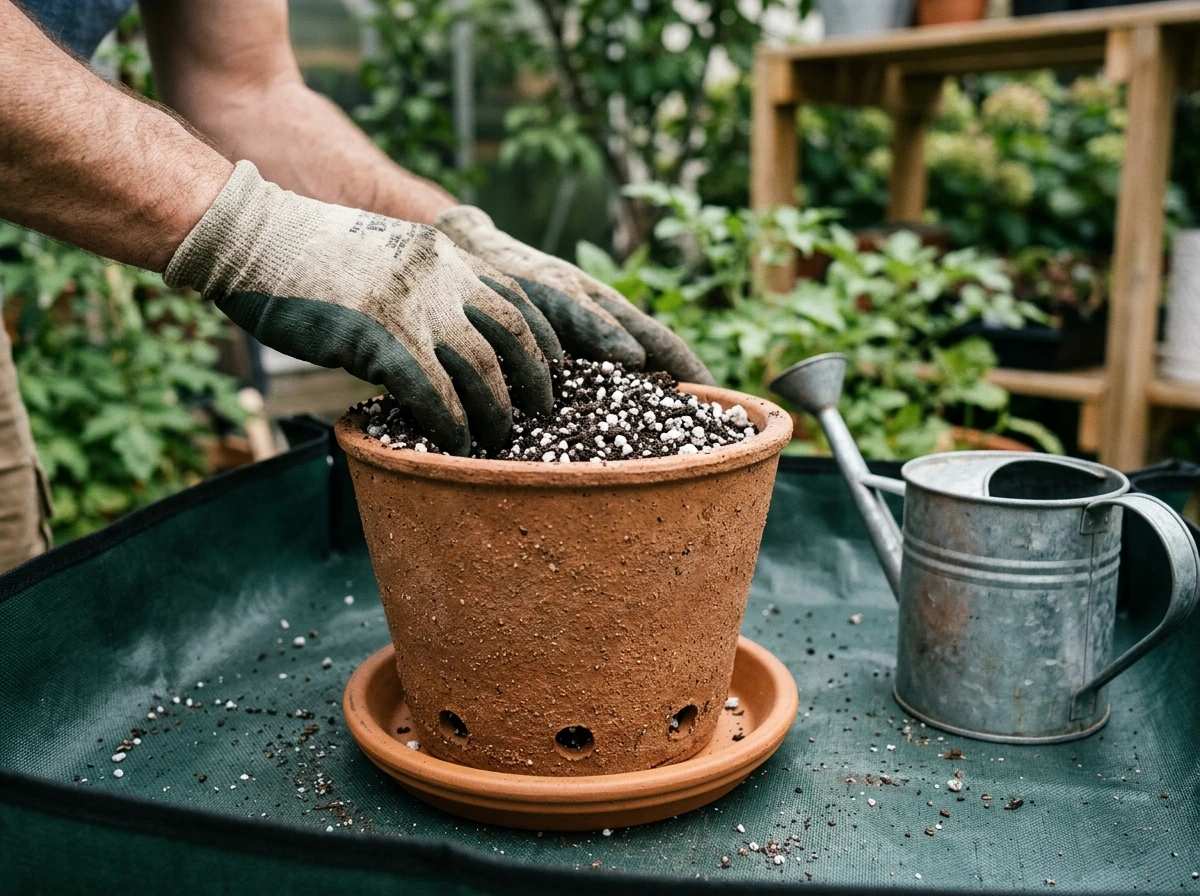
Container choice and potting mix are areas where a lot of indoor hibiscus plants quietly struggle. Here is what actually works:
- Use a pot with drainage holes, full stop. Hibiscus are extremely sensitive to waterlogged roots. Terracotta pots work well because they breathe and dry out faster than plastic, which reduces root rot risk.
- Size matters. A pot that is too large holds excess moisture around the roots for too long. Go up only one pot size at a time when repotting, and only repot when the plant is clearly rootbound.
- Use a well-draining potting mix. A standard tropical or container potting mix works, but consider adding about 20 to 25% perlite to improve drainage. Heavy, moisture-retentive mixes are a common reason indoor hibiscus decline.
- Water only when the soil approaches visual dryness. Logee's puts it this way: bring the soil to a state of visual dryness between waterings. In winter when the plant is growing slowly, that might mean watering much less frequently than you would expect, maybe once every 10 to 14 days depending on your home's conditions.
- Drain thoroughly after watering and never let the pot sit in standing water in a saucer.
How to grow hibiscus indoors from seed
Starting hibiscus from seed indoors is genuinely doable, and it is a satisfying project, though you need to set your expectations correctly. It can take a few years for a seed-started tropical hibiscus to reach flowering size, so this approach is more for patient growers than for anyone who wants blooms this season.
- Time your start correctly. Burpee recommends starting hibiscus seeds indoors 10 to 14 weeks before your last spring frost date. For most of the northern US, that means starting seeds in January or February.
- Soak the seeds first. Most sources recommend soaking seeds in room-temperature water for at least 8 hours, and some (including the Collier Fruit Growers guidance) suggest soaking for a full 24 hours before planting. This softens the seed coat and dramatically improves germination rates.
- Use bottom heat. A seedling heat mat set to around 80°F gives you the fastest, most reliable germination. Without heat, germination can be slow and uneven.
- Keep humidity up around the seed tray. A plastic dome or even a loose plastic bag over the tray keeps moisture consistent until seeds sprout. Hibiscus seeds can over-wet and rot quickly outdoors, but indoors with controlled conditions this is easy to manage.
- Provide strong light as soon as seedlings emerge. Move the tray to a south-facing window or put it under grow lights immediately. Burpee recommends a 16-hour light period per day for seedlings. Leggy, stretched seedlings are a sign they are not getting enough light.
- Pot up gradually as seedlings grow, always moving to the next size up rather than jumping to a large container.
Common indoor hibiscus problems and how to fix them
| Problem | Likely Cause | Fix |
|---|---|---|
| Bud drop | Inconsistent light, overwatering, or sudden temperature change | Stabilize the plant's location, check watering frequency, and keep temps above 60°F |
| Yellow leaves | Overwatering or root rot | Let soil dry out more between waterings; check roots and repot if they smell or look mushy |
| No blooms | Insufficient light | Move to a south window or add a grow light on a 16-hour timer |
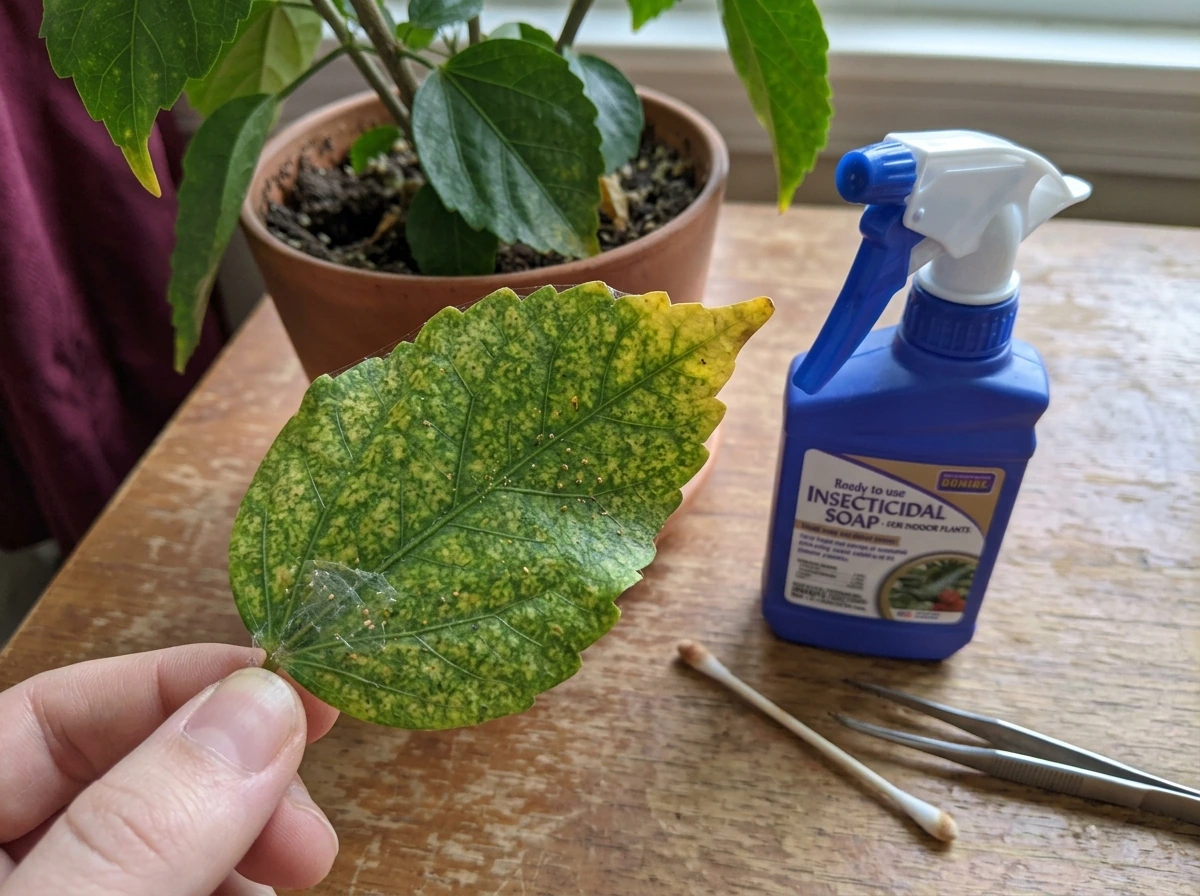
| Spider mites (fine webbing, stippled leaves) | Low humidity and dry indoor air | Raise humidity above 40%, rinse leaves with water, apply insecticidal soap or neem oil |
| Whiteflies or aphids | Common indoor pest pressure | Treat with insecticidal soap or horticultural oil; repeat every 5 to 7 days until clear |
| Leggy, sparse growth | Low light or plant needs pruning | Increase light and prune to encourage bushy new growth (hibiscus blooms on new growth) |
Spider mites deserve a special mention because they are the most common and destructive indoor hibiscus pest. They thrive in the exact conditions most homes create in winter: warm, dry air. Keeping humidity above 40% makes your home significantly less hospitable to them. Neem oil and insecticidal soaps are effective contact treatments recommended by both UF/IFAS and extension services, but consistency matters: one application rarely clears an infestation. Treat, wait five to seven days, and treat again.
When to move your hibiscus outside (and how to bring it back in for winter)
If you are growing hibiscus indoors as a workaround for a cold climate, transitioning it outdoors in summer and back inside in fall is the right strategy for zones 4 through 9. This is one of the best uses of indoor hibiscus growing: you get a thriving, full-sun plant outdoors in summer and a protected plant indoors during months when outdoor temperatures would kill it.
Moving outside in spring
Wait until nighttime temperatures are reliably above 55°F before moving your hibiscus outside. Do not rush this. Even one night below 50°F can stress or damage a plant that has been living in your warm house all winter. When you do move it, acclimate it gradually. Start with a shaded or partly shaded spot for a week or two before moving it into full sun. Plants that have been indoors all winter are not ready for the intensity of direct outdoor summer sun on day one, and a sudden move can cause leaf burn and stress.
Bringing it back inside in fall
Start watching nighttime temperatures in late summer. When nights begin regularly dipping into the low 50s°F, it is time to act. Ohio Tropics and NYBG both emphasize that the transition needs to happen before a cold snap hits, not after. Bring the plant inside before you think you need to, not after the first cold night when it is already stressed. Before bringing it in, inspect it carefully for pests. Spider mites, whiteflies, and aphids love to hitchhike inside on outdoor plants. A thorough spray-down with water and an insecticidal soap treatment before the move will save you a lot of grief later.
What to expect indoors over winter
You have two real options for overwintering: keep the plant actively growing in a warm, bright spot and try to maintain blooming, or let it rest in a cool room around 55°F with reduced light and water. The resting approach is lower-maintenance and works well if you do not have a great south-facing window. Water sparingly, let the soil go quite dry between waterings, and expect the plant to look a bit rough by February. That is normal. Come spring, when you move it back outside and temperatures warm up, it will push vigorous new growth and bloom on that new growth. If you do want to keep it actively growing and blooming all winter, you need strong south-facing light or a good grow light setup, consistent warmth, and more frequent attention to watering and humidity. It is absolutely doable, just more demanding.
If you are still figuring out which hibiscus types are realistic for your specific region and outdoor zone, it is worth digging into where hibiscus plants grow and the full list of hibiscus requirements to grow before deciding how much of your setup needs to be indoors versus out. For readers in truly warm climates (zones 9 through 11), growing tropical hibiscus outdoors year-round is also worth comparing against the indoor route.
FAQ
Can hibiscus grow inside year-round if my only windows are north- or east-facing?
It can survive, but dependable blooming is unlikely without strong light. If you do not have a bright south window, plan on a grow light that runs about 16 hours daily, and keep the plant close enough to the light for new growth to stay compact. Also rotate the pot every week so one side does not stretch toward the light.
What is the lowest temperature where indoor hibiscus can still be okay?
Tropical hibiscus should not be allowed to sit near cold glass or drafty air. A true drop below about 55°F for more than brief periods can slow growth and trigger leaf drop. If your home is warm but the windowsill gets cold at night, move the plant slightly back from the glass or insulate the pot area.
How much light does indoor hibiscus actually need to produce flowers?
To bloom, it must be pushed to grow new shoots, because flowers come from new growth. That usually requires very bright conditions, commonly a real south-facing exposure or an appropriately strong grow light. If you see lots of leaves but no buds after several weeks, increase light before changing fertilizer or humidity.
Is tap water okay for indoor hibiscus, or should I use filtered water?
Tap water is often fine, but very hard or high-salinity water can gradually impair flowering. If you notice brown leaf tips, crust on the soil surface, or a salt smell in the pot, try softening your water (or use rain or filtered water) and occasionally flush the pot with water to move salts through the drainage holes.
How often should I water hibiscus indoors?
Do not follow a strict schedule. Water thoroughly only when the top layer of soil has dried, then let excess drain completely. In winter rest, the plant needs less water, so overwatering is the common mistake that leads to yellowing and root issues.
What humidity level is best, and do I really need a humidifier?
Aim for roughly 50 to 70% relative humidity when possible. A humidifier helps if your indoor air is in the 20 to 30% range, but you can also combine a pebble tray and grouping plants. The key is keeping the plant from crossing below about 40% for long stretches, since spider mites surge in dry air.
My hibiscus dropped leaves after moving it indoors. Is that normal?
Some adjustment is common, especially when light and humidity drop in winter. Leaf drop often happens after a sudden change in location or temperature near drafts or cold walls. Give it stable warmth, bright light, and a gradual acclimation (especially if it was outdoors recently).
Why do indoor hibiscus plants get spider mites even when I think conditions are fine?
Spider mites are more likely when humidity is low and airflow is dry, which is common with forced-air heating and winter windows. Check the undersides of leaves with a quick look for fine webbing or stippling. If detected, you generally need repeat treatments spaced a few days apart, not a single spray.
If I want to overwinter hibiscus indoors and outdoors, when should I bring it back inside?
Bring it in before nights consistently dip into the low 50s°F, not after a first cold night. Inspect for pests right before the move, then do a thorough rinse or gentle soap treatment so spider mites, whiteflies, or aphids do not establish indoors.
Can I prune indoor hibiscus while it is overwintering?
Light pruning is usually okay, but heavy pruning during winter rest can reduce energy reserves and delay spring regrowth. If your plan is to keep it blooming in a warm bright spot, you can prune to shape after it establishes new growth, but prioritize light and watering consistency first.
What container and potting mix helps prevent indoor hibiscus from struggling?
Use a pot with drainage holes and a mix that holds moisture but does not stay soggy. If the potting mix stays wet for too long indoors, roots can suffer. A simple improvement is to ensure the plant has good drainage and to avoid decorative cachepots that trap water in the bottom.