
Yes, you can grow rhubarb in Hawaii, but only in a pretty specific set of conditions. In the same way, it comes down to whether California can provide enough cool temperatures for rhubarb to break dormancy. Forget the coast and most low-elevation yards. Rhubarb needs cool temperatures to thrive, and Hawaii's warm, tropical climate is working against you almost everywhere below 2,000 feet.
Can You Grow Rhubarb in Hawaii? Feasibility and Tips
Marcus Hartwell
3 Jun 2026
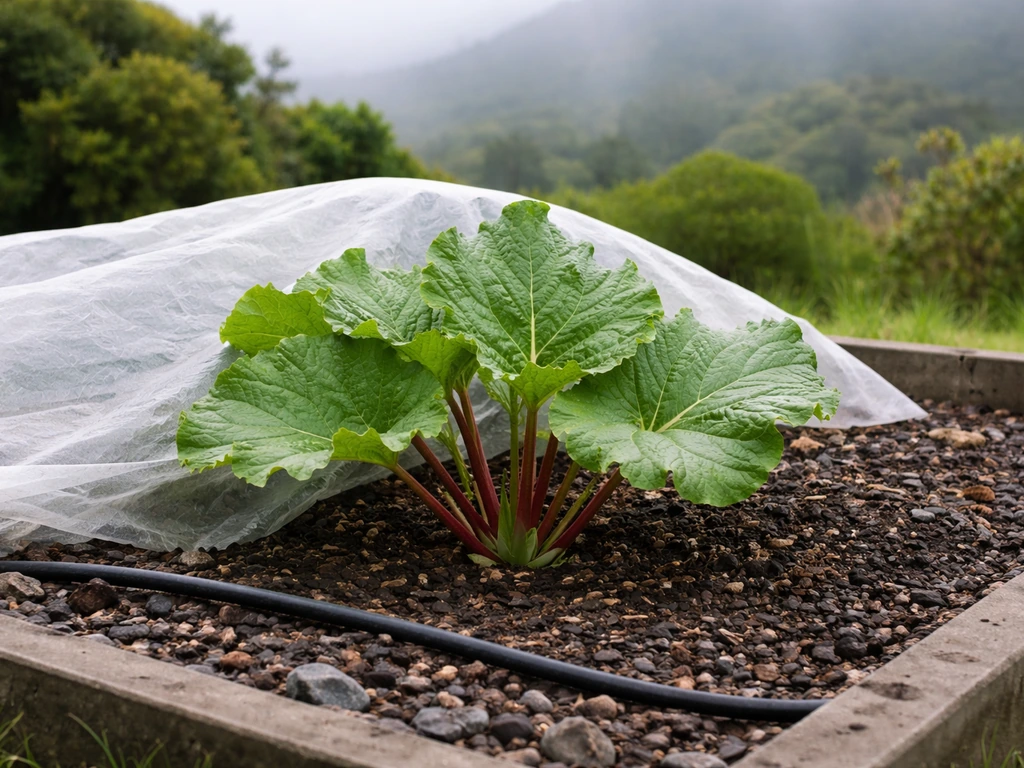
However, the same cool-temperature requirement makes the question of whether rhubarb grows in Tennessee depend heavily on local winter lows and how long cold weather lasts does rhubarb grow in tennessee. If you're wondering does rhubarb grow in NC, the answer is generally yes, as long as you can provide enough cool periods for the crowns. Get up into the cool uplands, though, and you have a real shot at it.
The University of Hawaiʻi's CTAHR Extension confirms rhubarb can be grown in Hawaii's cool uplands, specifically at altitudes of 2,000 feet or more. That's your starting point for making this work.
Why Hawaii's climate is such a challenge for rhubarb
Rhubarb is a cold-climate plant at heart. It's the kind of crop that blankets up under snow in New England and comes roaring back in spring. What makes it tick is a chilling requirement: the crowns need exposure to cool temperatures to break dormancy and push new growth. Research from Oregon State University shows that crown buds begin to develop when temperatures start to exceed 45 to 50 degrees F. That sounds low, but the key is that rhubarb needs sustained cool periods, not just a brief overnight dip.
Hawaii's coastal zones sit in USDA hardiness zones 10b to 12a. Average winter lows along the coast rarely drop below 60 to 65 degrees F. That's simply too warm for rhubarb to get the chilling it needs. Without enough accumulated cold units, crowns struggle to establish, may fail to produce, or bolt prematurely when heat hits. This is the same challenge you run into growing rhubarb in Texas or Tennessee, where summer heat and warm winters stack the odds against you. Hawaii just takes that problem and dials it up to eleven, unless you use elevation to your advantage.
Where in Hawaii you can actually pull this off
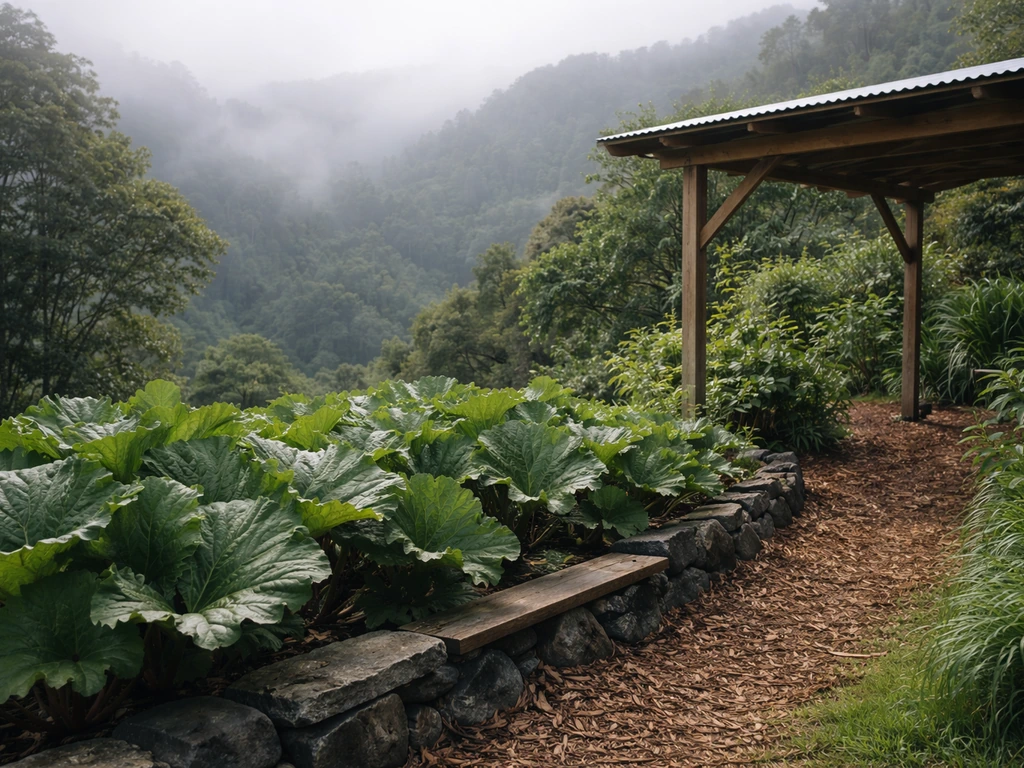
The good news is that Hawaii's geography creates an enormous range of microclimates. NOAA and the National Weather Service note that temperature drops roughly 3 degrees F for every 1,000-foot rise in elevation. Haleakalā on Maui illustrates this dramatically: at 10,023 feet, the summit is about 30 degrees F cooler than the coast. Even at 2,000 to 4,000 feet on slopes like those on Maui, the Big Island (especially Waimea or the Kona uplands), and Oahu's higher interior ridges, you're looking at nighttime temperatures that can dip into the 40s and daytime temperatures that stay manageable for rhubarb growth.
The Big Island has the most diverse elevation range of any Hawaiian island, making it arguably the best candidate. Waimea (Kamuela), sitting at roughly 2,500 to 3,000 feet, gets genuine cool nights and a distinct seasonal temperature shift. The Kula district on Maui at 2,000 to 4,000 feet on Haleakalā's slopes is another strong option. Oahu's cooler interior and north-facing valleys can work at the right elevation, but the island is smaller and doesn't reach the sustained cool of the Big Island or Maui highlands.
Microclimates that help within those islands
Even within the right elevation band, microclimate choices matter. North-facing slopes get less direct sun and stay cooler through the day. Windward sides of the islands receive more moisture and tend to stay cooler than leeward sides. Shaded spots under taller trees or structures can knock afternoon temperatures down meaningfully, reducing heat stress during Hawaii's warmer months. If you're on the edge of the 2,000-foot threshold, stacking these microclimate factors in your favor can make the difference between a struggling plant and one that actually produces.
Setting up your growing season: timing, site prep, and varieties
In mainland cold climates, rhubarb gets planted in early spring as soon as the ground is workable, which is standard guidance from sources like Johnny's Selected Seeds and OSU Extension. In Hawaii's uplands, you're not dealing with frozen ground, so your timing logic flips: plant when temperatures are coolest and most stable, which in Hawaii's higher elevations typically means fall through early winter, roughly October through January.
Oregon State University Extension also recommends vegetative propagation by crown division and provides general planting timing guidance that aligns with planting in spring, with late fall suggested in milder-winter conditions plant when temperatures are coolest and most stable (fall through early winter).
This gives crowns time to establish during the coolest months before any warmer spring weather arrives.
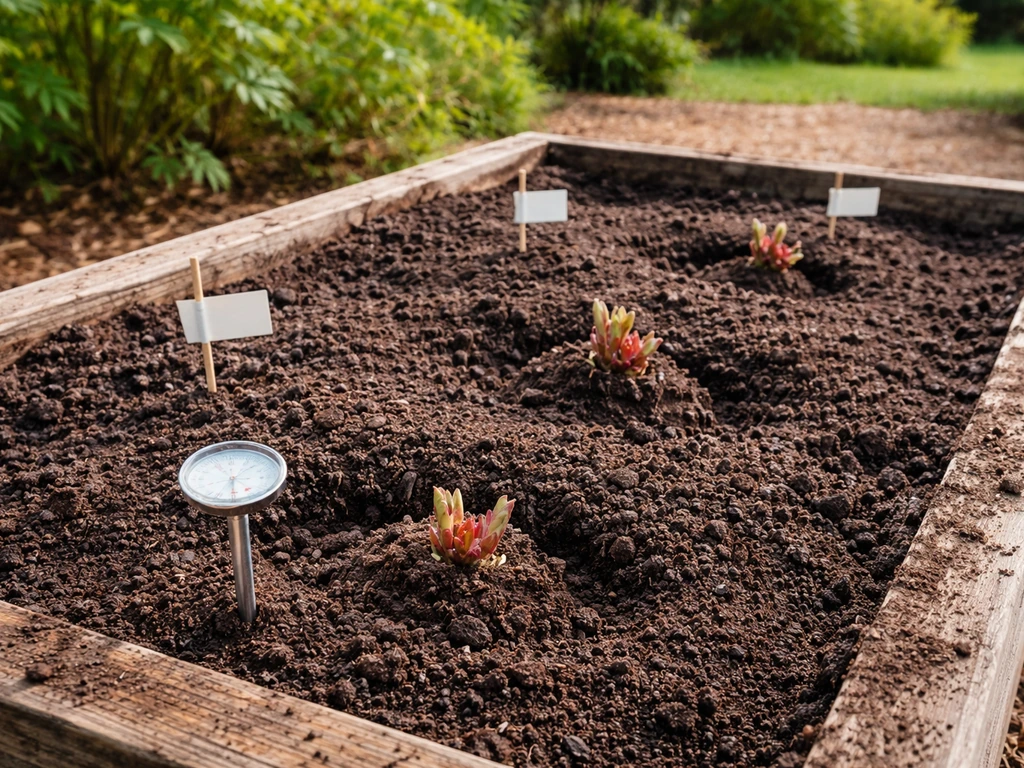
For site prep, drainage is everything. Rhubarb hates wet feet, and Hawaii's upland soils can receive heavy rainfall, especially on windward slopes. Raised beds or mounded rows improve drainage significantly. Amend your soil with compost to improve structure and aeration. CTAHR's guidance is clear on crown depth: set the crown no more than 2 inches below the soil surface. Shallower is better in Hawaii's wetter upland soils because it reduces the risk of crown rot, which is driven by soilborne pathogens like Phytophthora that thrive in waterlogged, humid conditions. Kansas State Extension research on rhubarb crown rot reinforces this: even slight elevation of the planting helps prevent water from pooling around the crown.
For varieties, choose those with proven heat tolerance and a lower chilling requirement. While rhubarb variety information specific to Hawaii is limited, compact red-stalked varieties tend to handle warmer conditions better than large, vigorous types bred for cold northern climates. 'Victoria' and 'Canada Red' are commonly available as crowns through mail-order suppliers and have shown reasonable adaptability in warmer growing zones. Avoid starting from seed; always use crown divisions, which is the standard propagation method for rhubarb and gives you a much faster path to harvest.
Container vs in-ground: which approach works better in Hawaii
This is a decision worth thinking through carefully in Hawaii, because the flexibility of containers can be genuinely useful when temperatures are unpredictable or when you're not sure if your elevation is quite cool enough.
| Factor | In-Ground | Container |
|---|---|---|
| Root space | Unlimited; better for long-term establishment | Restricted; needs at least a 15–20 gallon pot per crown |
| Temperature control | Limited; depends entirely on your site | Can be moved to cooler spots or shade as needed |
| Cold accumulation | Relies on natural site conditions | Can be moved to coolest spot on property in winter |
| Drainage control | Depends on native soil; needs amendment | Easier to manage with quality potting mix |
| Longevity | Plants can live and produce for 10+ years | Needs repotting every 2–3 years as crown expands |
| Best for | Established cool upland sites above 2,000 ft | Borderline elevations or gardeners who want flexibility |
If you're at 2,500 feet or above in a reliably cool location like Waimea or Kula, in-ground planting makes sense for long-term production. If you're closer to the 2,000-foot threshold or in a spot with variable temperatures, containers give you the ability to move plants to the shadiest, coolest corner of your property during warm spells. Oregon State University's research on forcing and cold accumulation even suggests that containers can be strategically placed in cool, dark locations to help crowns accumulate the cold units they need, essentially manufacturing a bit of dormancy.
Whether in-ground or in containers, mulching is important in Hawaii. A 3- to 4-inch layer of organic mulch around (not over) the crown helps moderate soil temperature, retain moisture during drier periods, and suppress weeds. Keep the mulch pulled back from the crown itself to prevent moisture from sitting directly against it.
Caring for rhubarb once it's in the ground
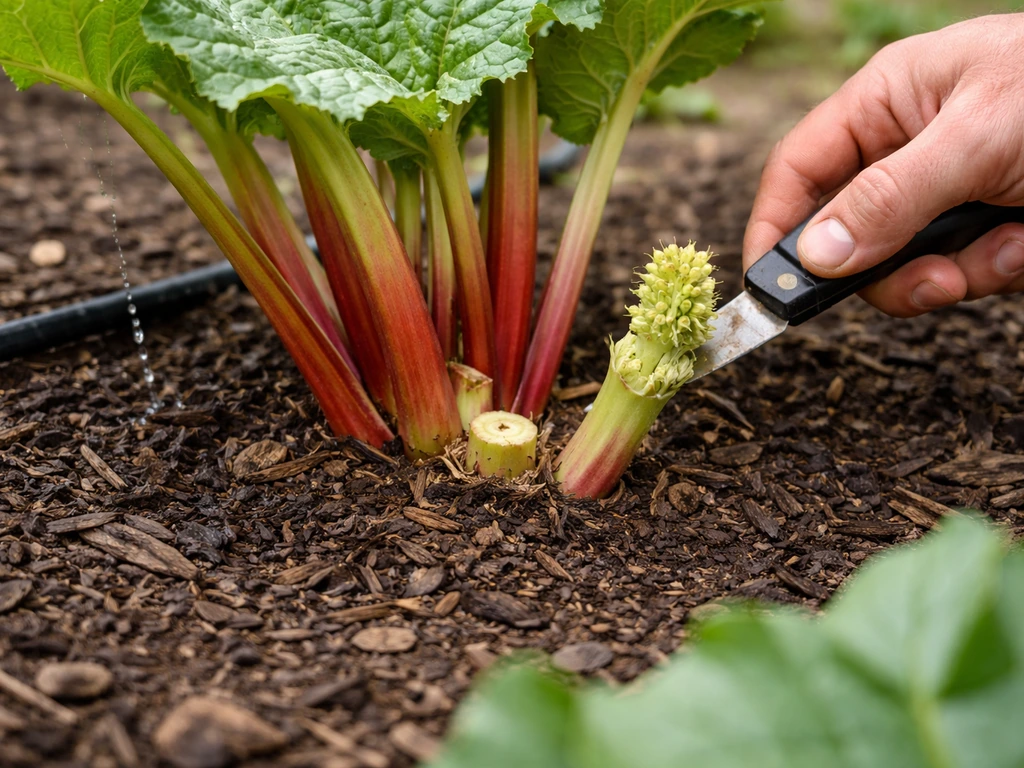
Once established, rhubarb is relatively low-maintenance, but in Hawaii's climate you need to stay on top of a few things. Water consistently but never let the soil stay soggy. In Hawaii's uplands, this often means letting rainfall do most of the work while ensuring your drainage is adequate. Fertilize in early fall (your planting season) with a balanced fertilizer or compost top-dress, and again after harvest to help the plant rebuild energy reserves.
Remove any flower stalks (bolting) as soon as they appear. In warm climates, rhubarb tends to bolt more readily than in cold climates, and allowing it to flower draws energy away from leaf and stalk production. blank" rel="noopener noreferrer">Purdue Extension's rhubarb guidance flags bolting as a key warm-climate failure mode: once a plant shifts energy into seed production, stalk quality drops sharply. Cut the flower stalk off at the base the moment you see it.
Don't harvest at all in the first year. Let the plant focus entirely on root establishment. In year two, take only a few stalks per plant. By year three, if the plant has established well in your cool upland site, you can harvest more freely. Always leave at least half the stalks in place to keep the plant vigorous.
Realistic expectations: what you'll actually get
Be honest with yourself going in. Even in Hawaii's best rhubarb spots, you're not going to get the abundant, thick stalks that gardeners in Oregon or upstate New York pull off their established plants. In marginal cool-upland sites, plants may grow slowly, produce thin stalks, or struggle to develop the vigor needed for heavy harvests.
On the positive side, if you're at a good elevation with reliable cool nights, you can expect a reasonable harvest of stalks by the second or third year, enough for pies, jams, and sauces. The good news is that with the right conditions, you can also explore whether you can grow dahlias in Hawaii by matching varieties to your elevation and seasonal temperatures can you grow dahlias in Hawaii.
Pest pressure in Hawaii's uplands tends to be lower than in humid coastal zones, but watch for aphids, which are common on rhubarb worldwide and confirmed in rhubarb pest handbooks as a routine problem. A strong spray of water or insecticidal soap handles most aphid infestations. The bigger threat in Hawaii is crown rot. Phytophthora crown rot is a real risk in wet, poorly drained upland soils. Symptoms include wilting, yellowing leaves, and a mushy, discolored crown. Prevention through shallow planting, good drainage, and not overwatering is far more effective than treatment after the fact.
If your first planting doesn't establish, don't give up immediately. Rhubarb can take two full seasons to show its real potential. But if after two years you're seeing no meaningful growth, persistent wilting, or repeated bolting without recovery, the honest answer is that your site is probably too warm or too wet for rhubarb to succeed long-term. That's a signal to move to a higher elevation, try containers you can reposition, or reconsider the crop entirely.
Growing rhubarb in Hawaii is genuinely possible, but it's a project that rewards careful site selection far more than effort applied to the wrong location. Mexico has many warm regions, so rhubarb is only practical where you can provide cool enough conditions similar to other cold-climate areas does rhubarb grow in mexico.
Your next steps
- Confirm your elevation: If you're below 2,000 feet, rhubarb is not a realistic crop without significant microclimate advantages. If you're above 2,000 feet, proceed.
- Assess your microclimate: Is your site north-facing, shaded in the afternoon, and well-drained? The more of these you can check off, the better your odds.
- Order crowns, not seeds: Buy one-year-old crown divisions from a reputable mail-order supplier. Plan to plant in fall (October through January) for Hawaii's upland conditions.
- Build a raised bed or mounded row: Prioritize drainage. Mix in compost and make sure water moves away from planting areas quickly after rain.
- Plant shallow: Keep the crown no more than 2 inches below the soil surface. Mulch around it but not over it.
- Commit to year one with zero harvest: Let the plant build root reserves before you take anything from it.
- Watch for bolting and crown rot: Remove flower stalks immediately and adjust watering if you see crown rot symptoms.
FAQ
What elevation in Hawaii is the minimum to realistically grow rhubarb?
Aim for at least 2,000 feet, but treat it as a minimum threshold. If your nights are regularly in the 50s F and you get sustained cool stretches into early winter, your odds improve. Below that, even if plants “live,” they may fail to build enough cold exposure for strong leaf and stalk production.
How can I tell if my yard is getting enough “chilling” for rhubarb?
Track overnight temperatures during fall through winter at your planting spot. If you rarely see cool nights and the plant bolts early or stays weak, you likely do not have enough sustained cold periods. Microclimates matter, so compare a north-facing corner, wind-protected area, and a spot with morning shade.
Can I grow rhubarb on the coast if I use shade cloth or a wall?
It’s usually not enough. Rhubarb needs accumulated cool exposure, not just short-term relief from sun. Coast zones typically stay too warm year-round, so shade cloth may reduce heat stress but still won’t reliably provide the dormancy-breaking chilling the crowns require.
Is it better to plant rhubarb in the fall or winter in Hawaii’s uplands?
Most gardeners have the best establishment results planting from October through January, when temperatures are cooler and more consistent. If you plant too late, crowns can start growth under warmer conditions and then struggle when heat arrives.
What soil drainage tests should I do before planting rhubarb?
Do a simple “soak test.” Dig a hole, fill it with water, and time how long it takes to drain. If it stays wet for a long time, plan on raised beds or mounded rows. Rhubarb crowns rot when water lingers around them, especially in humid upland conditions.
How deep should I set the crown, and why does depth matter in Hawaii?
Set the crown no more than about 2 inches below the soil surface. In Hawaii’s wetter upland soils, deeper planting increases the chance of crown rot because pathogens spread more readily in persistently wet, low-oxygen conditions.
Should I start rhubarb from seed or buy crowns in Hawaii?
Use crowns or crown divisions. Seed is slower and less predictable for timing and vigor, and you need reliable establishment before warmer periods shorten your window for dormancy and regrowth.
Which variety choice makes the most sense for Hawaii conditions?
Look for heat tolerance and a lower chilling requirement. Compact red-stalk types are often easier than very large, cold-bred selections. If you are near the 2,000-foot edge, prioritize varieties reported to perform better in warmer regions rather than those described for deep winter cold.
When should I harvest stalks, and how much is safe?
Do not harvest in the first year. In year two, take only a few stalks per plant. In year three and beyond, harvest more freely but still leave at least half the stalks to maintain energy and prevent the plant from weakening or becoming more prone to bolting.
How do I handle bolting if it keeps happening?
Cut flower stalks off at the base the moment you see them. Bolting pulls energy away from leaf and stalk production, so repeated blooms usually mean the site is too warm, or the plant is under stress from inconsistent moisture or poor drainage.
What container size works best if I’m growing rhubarb for mobility?
Use a large container (commonly at least 16 to 20 inches wide) with excellent drainage. The goal is stable moisture and temperature, plus enough root volume to keep the crown vigorous. Smaller pots heat up faster in warm spells, which can worsen dormancy problems.
Can I move potted rhubarb into a cooler spot to compensate for marginal elevation?
Yes, that’s one of the main advantages of containers. Move plants into the shadiest, coolest microclimate you can access during warm periods. For best results, keep the crown at the proper shallow planting depth even in pots and avoid letting water pool in the container base.
What are the most common disease or pest issues in Hawaii rhubarb plots?
Aphids can show up, and a forceful rinse or insecticidal soap often controls them. The biggest long-term risk is crown rot from waterlogged soil. If you see wilting plus yellowing and a mushy crown area, stop trying to “fix it” with extra watering, and focus on drainage and correct planting depth.
If my rhubarb doesn’t look right in the first year, should I replant immediately?
Not yet. Rhubarb can take up to two full seasons to show its true potential. If you see no meaningful growth, persistent wilting, or repeated bolting with no recovery after two years, then reassess the site temperature and drainage, and consider moving to a higher elevation or using containers.