
Yes, rhubarb can grow in California, but where you live in the state makes a huge difference. Northern California and higher-elevation inland areas give you a genuinely good shot at healthy, productive crowns. Southern California's mild winters are the real problem: rhubarb needs around 500 hours of temperatures below 40°F to break dormancy and produce strong stalks, and most of coastal and low-elevation Southern California simply can't deliver that. You can still try in SoCal, but you need to go in with realistic expectations and a plan to compensate for the warmth.
Does Rhubarb Grow in California? How to Grow It
Marcus Hartwell
26 Apr 2026
How California's climate stacks up for rhubarb
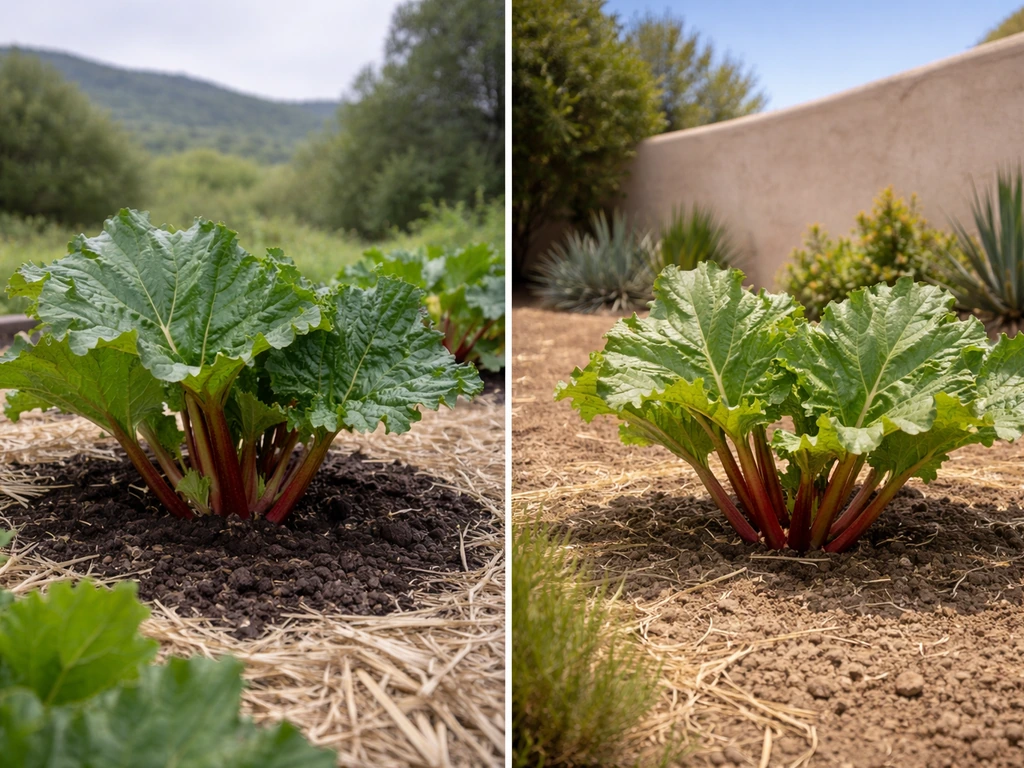
Rhubarb is a cool-season perennial that thrives where winters are cold enough to push the plant into full dormancy. It stores energy in its roots during late summer and fall, then uses that dormancy period to reset for a productive spring flush. That biology is what makes California's north-to-south climate gradient so important to understand before you spend money on crowns.
Northern California: a realistic yes
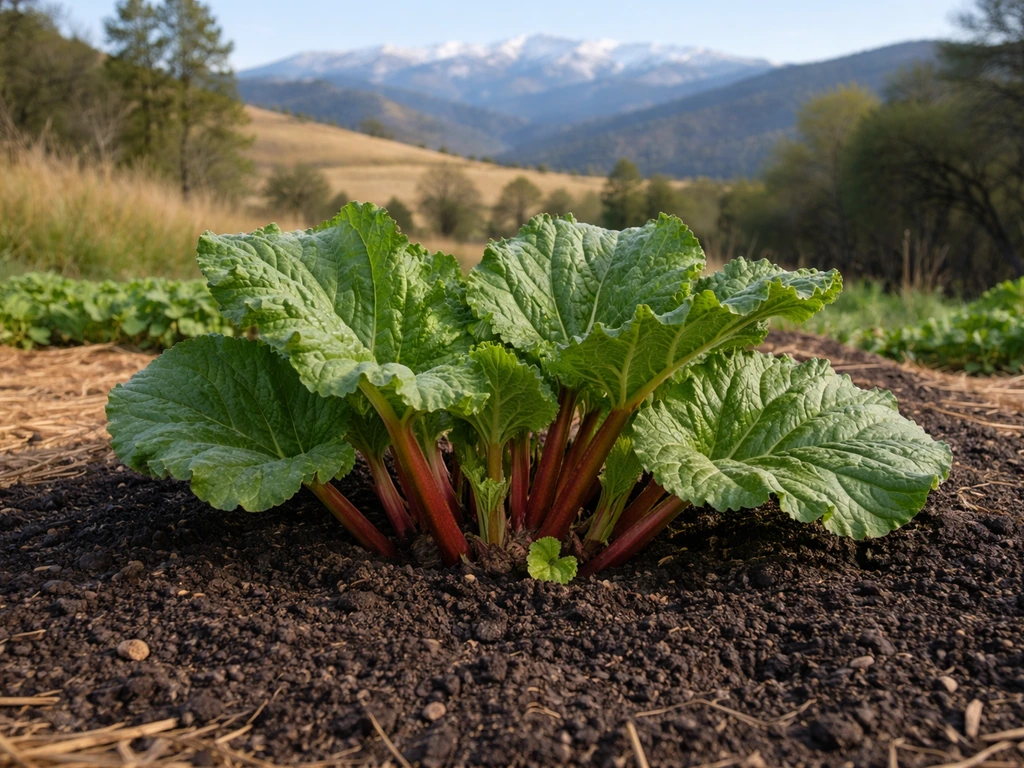
The Sacramento Valley foothills, the Sierra Nevada foothills, and much of inland Northern California fall into USDA Hardiness Zones 8 and 9. Winters there are cold enough for rhubarb to go properly dormant, and the growing seasons are long enough to get productive harvests. The Bay Area is more of a mixed bag: coastal microclimates stay mild all winter, but many inland East Bay and North Bay gardens experience enough chill hours to support rhubarb reasonably well. If you're in Redding, Chico, Sacramento (especially with some afternoon shade), or the wine country hills, you're working with conditions rhubarb actually likes.
Southern California: a qualified maybe
Most of coastal Southern California sits in Zones 10 and 11, where winter lows rarely dip below 40°F for long. Los Angeles, San Diego, and the coastal stretches simply don't accumulate enough chilling hours for rhubarb to perform well season after season. However, higher-elevation areas like the San Gabriel Mountains foothills, Temecula, and parts of the Inland Empire sit in Zones 8b to 9b and can hit the chilling threshold in a good year. If you're in those spots, rhubarb is worth a try. If you're right on the coast in Santa Monica or San Diego, the honest answer is that it's going to struggle and probably frustrate you.
| Region | Typical USDA Zone | Rhubarb Feasibility | Main Challenge |
|---|---|---|---|
| NorCal foothills / inland valleys | 8–9 | Good | Summer heat; manage with mulch and water |
| Bay Area inland (East Bay, North Bay) | 9–10 | Moderate | Variable chill hours by microclimate |
| Bay Area coast (SF, Santa Cruz) | 10 | Marginal | Rarely enough cold hours |
| SoCal inland / higher elevation | 8b–9b | Moderate | Warm winters in low-chill years |
| SoCal coast (LA, San Diego) | 10–11 | Poor | Insufficient chilling; heat stress |
Best planting time and zones for California rhubarb
In California, the best time to plant rhubarb crowns is late winter to early spring, roughly February through April, as soon as the soil is workable and you're past the hardest freezes. OSU Extension guidance points to March and April as the sweet spot for crown planting, and that holds well for Northern California. In Southern California's inland areas, you can often get crowns in the ground as early as late January or February when soil temperatures are still relatively cool. The goal is to get the crown established before summer heat arrives, because rhubarb starts growing early in spring and you want root development happening in cool soil, not in 90°F ground.
For zone reference, rhubarb performs most reliably in Zones 3 through 8. Zone 9 is the practical edge of its comfort zone, and Zone 10 and above is genuinely difficult territory. Check your specific USDA 2023 Plant Hardiness Zone before buying crowns. If you're right on the Zone 9/10 border, a sheltered north-facing or east-facing spot can tip the odds in your favor.
Setting up your rhubarb bed: soil, sun, and water
Rhubarb is a long-term investment since an established plant can produce for a decade or more, so getting the setup right matters more here than with annual vegetables. Think of the prep work as a one-time job you do properly now.
Sun
Pick a spot that gets at least 6 to 8 hours of direct sun per day. In Northern California's hotter inland areas and in Southern California, some afternoon shade (shade from about 2pm onward) can prevent heat stress on the leaves and help keep soil temperature down. A spot with morning sun and afternoon shade is actually ideal in warm California climates.
Soil preparation
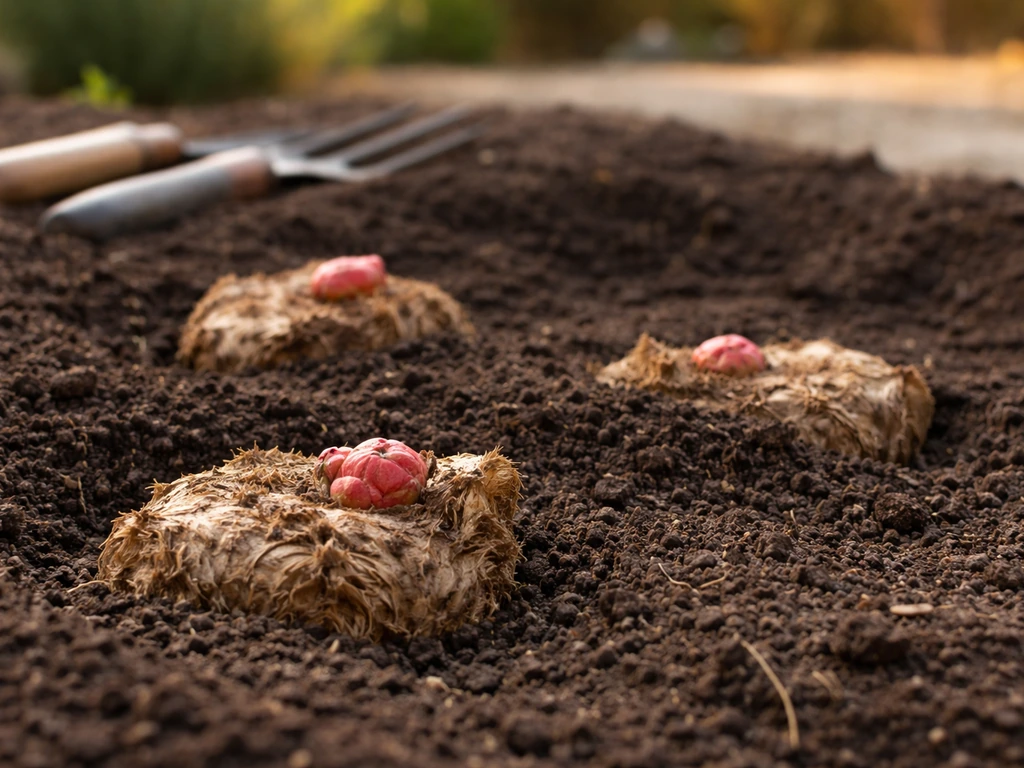
Rhubarb needs good drainage above almost everything else. blank" rel="noopener noreferrer">Crown rot, particularly Phytophthora crown and root rot, is one of the most common killers in California gardens, and it's almost always tied to waterlogged or poorly drained soil. Work in generous amounts of compost or composted manure before planting. Aim for a soil pH of 6.0 to 6.8, which is ideal for production (rhubarb tolerates a range from about 5.0 to 6.8, but the tighter range gives you better results). If your soil is heavy clay, raise the bed by 6 to 8 inches to improve drainage. Sandy or light soils need extra organic matter to hold moisture between waterings.
Planting the crown
Plant crown divisions so the buds sit right at or just below the soil surface, no deeper than 1 to 2 inches. Planting too deep is a common mistake and one of the leading causes of crown rot in California's wetter winters. Space crowns about 3 to 4 feet apart since they spread over time. Water in well after planting and keep the soil consistently moist during establishment.
Watering and fertilizing
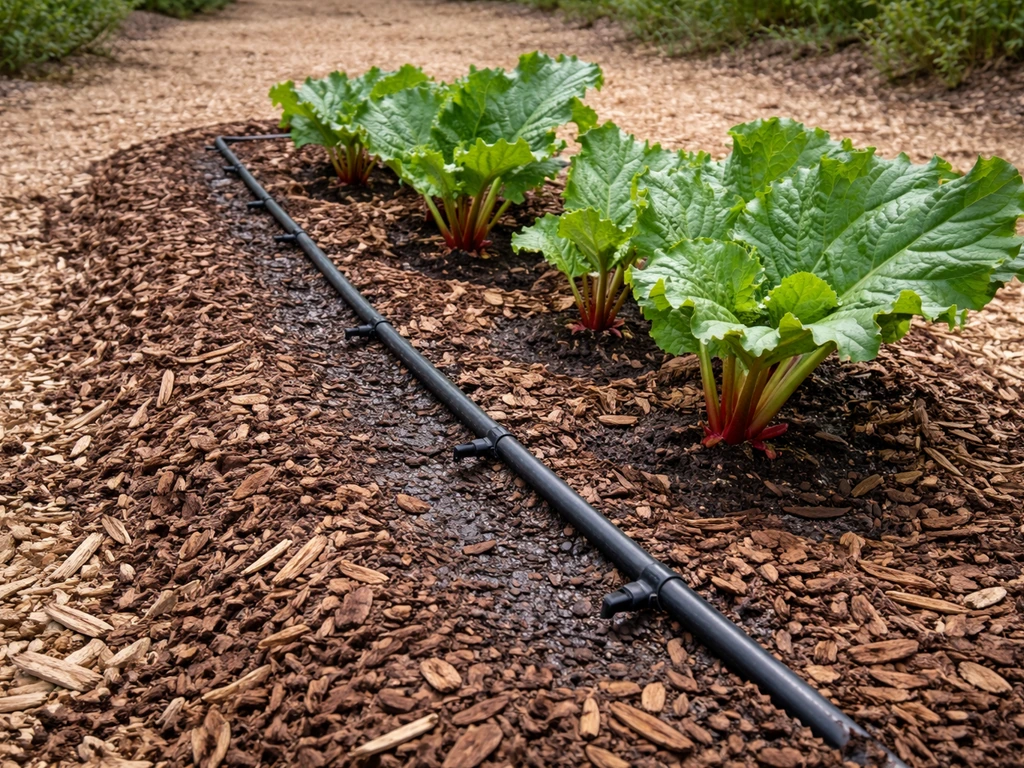
Rhubarb is a thirsty plant but hates sitting in wet soil. The goal is consistent moisture without waterlogging. In California's dry summers, you'll need to irrigate regularly. Drip irrigation is ideal because it keeps water off the crown itself. Mulching with a few inches of clean straw or light organic material does double duty: it holds soil moisture and keeps soil temperatures more moderate during summer heat, which is a real win in warm California gardens. For fertilizing, side-dress with a balanced fertilizer or compost in early spring before growth kicks off, and again after your first harvest of the season. Consistent soil fertility helps reduce bolting risk, which is a bigger problem in California's warmer climates.
The chilling requirement: California's biggest hurdle
This is the core challenge, especially for Southern California growers. Rhubarb needs approximately 500 hours of temperatures below 40°F to properly break dormancy and push out strong, thick stalks in spring. Rhubarb can be grown in Tennessee if you choose a cool-enough location, manage soil drainage, and make sure the plants get enough winter chill rhubarb in Tennessee. Without that cold exposure, the plant may leaf out weakly, produce thin stalks, or stall entirely. The roots store food reserves through fall and need the cold signal to release that energy into spring growth.
In Northern California's inland valleys and foothills, most winters naturally provide enough chill hours. In Southern California's coastal zones, they don't. Here's how to manage the gap in marginal SoCal locations:
- Choose a planting site at higher elevation or in a low-lying frost pocket where cold air settles on winter nights, both of which add chill hours naturally.
- Plant on a north-facing slope or against a north-facing wall to keep the crown cooler longer into the season.
- In very warm winters, the plant may not perform well that year; accept this as a cycle rather than a sign of total failure.
- If you're in Zone 10 or warmer and your winters have been mild for two years running with poor stalk production, the honest move is to accept that rhubarb isn't a reliable crop in your specific microclimate.
- Gibberellic acid is sometimes cited in research as a way to partially substitute for cold induction, but it's not a practical home-garden solution and isn't widely recommended.
For comparison, rhubarb faces similar chilling challenges in other warm-climate states. If you are wondering does rhubarb grow in Mexico, start by comparing your winter chill hours to the same 500 hours below 40°F requirement mentioned for warm places in California For comparison. Growers in Texas and Hawaii face even more severe limitations than Southern California gardeners do, though parts of Northern California are genuinely comparable to growing conditions in Virginia or the Carolinas where rhubarb does well. If you are trying to grow rhubarb in Hawaii, your biggest deciding factor will be whether you can meet its chilling hours requirement. Growers in Hawaii can sometimes succeed with dahlias too, but you’ll need to match the variety to your local temperatures and day length can you grow dahlias in hawaii. Growers often ask does rhubarb grow in Tennessee, and the answer depends on whether your winters reliably meet rhubarb's chilling requirement. If you’re wondering does rhubarb grow in Texas, the same chilling limits matter, and results depend heavily on your winter lows Growers in Texas.
What to expect after planting: growth timeline and harvest
Rhubarb is not a quick-return crop. The first year is entirely about root establishment. Do not harvest any stalks in year one, no matter how tempting. The plant needs all its leaf energy to build the root system that will feed you for years. In year two, you can take a light harvest: pull 3 to 4 stalks per plant maximum, choosing the thickest ones and leaving plenty of foliage so the plant keeps photosynthesizing. By year three, an established California rhubarb plant in a good location should give you a solid spring harvest.
To harvest, grip a stalk near the base and pull with a slight twist rather than cutting. Remove the leaf immediately since rhubarb leaves are toxic and should not be composted carelessly. Stalks are ready when they're 12 to 18 inches long with good color. Stop harvesting by early summer so the plant can rebuild energy reserves for the following year. After about 5 to 6 years, productivity often declines and it's time to divide the crown and replant the divisions to refresh vigor.
Common California-specific problems and how to fix them
Crown rot (Phytophthora)
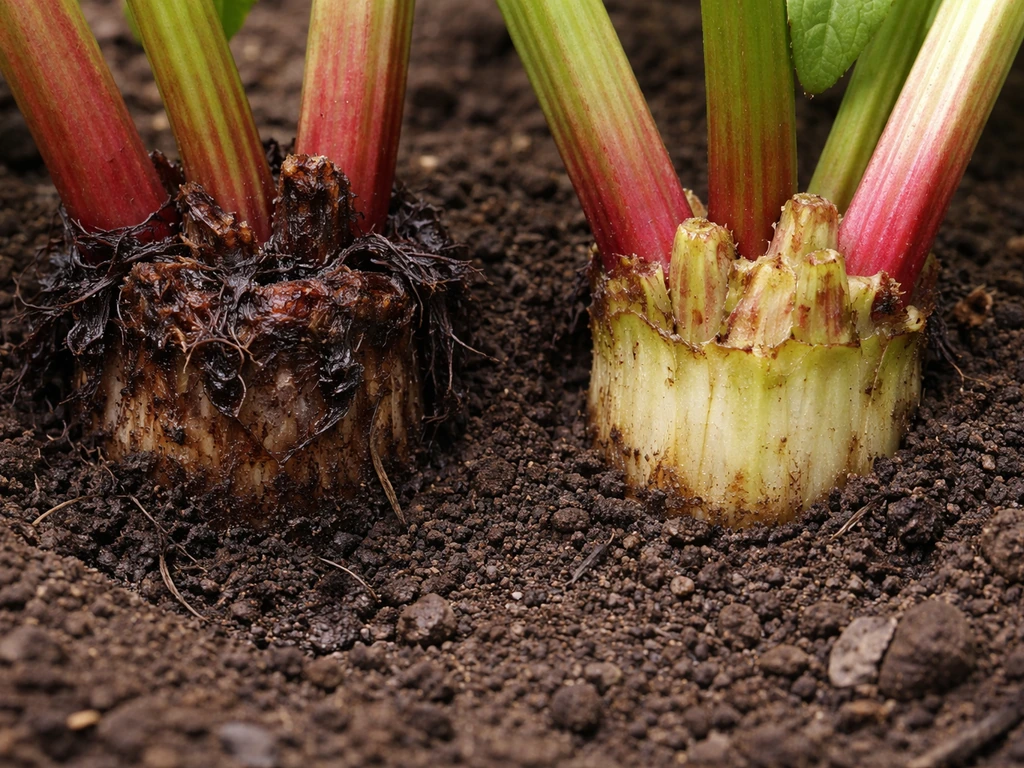
This is the number one killer of rhubarb in California, especially in areas with winter rainfall or heavy clay soil. The crown turns mushy and collapses. Prevention is everything here: plant in raised or well-drained beds, never plant too deeply, and manage irrigation so the crown area doesn't stay wet. If you see rot developing, dig up the crown, trim away affected tissue, let it air dry, and replant in a better-draining spot. Once a crown is badly rotted, it's usually not recoverable.
Bolting (sending up flower stalks)
Rhubarb bolts when it's stressed, and in California that stress is usually heat, drought, low soil fertility, or a combination of all three. When you see a thick, round flower stalk emerging, cut it off at the base immediately. Letting it go to seed wastes the plant's energy reserves. Consistent watering, mulching to moderate soil temperature, and a spring fertilizer application go a long way toward reducing bolt frequency. Older crowns also bolt more readily, which is another reason to divide and refresh every 5 to 6 years.
Heat stress and leaf scorch
In California's hot inland summers, rhubarb leaves can scorch and the plant may go semi-dormant in July and August. This is normal behavior in warm climates. Keep up the watering, maintain your mulch layer, and don't panic. The plant is resting, not dying. It should perk back up as temperatures cool in fall.
Poor or thin stalk production
If your established plant is producing consistently thin, weak stalks, the most likely culprits in California are insufficient chill hours (especially in warmer winters), overcrowding from a crown that needs dividing, or low soil fertility. Check whether your recent winters have been notably warm. If you're in a marginal zone and had two mild winters in a row, that's your answer. Feed the plant in early spring, make sure it's getting adequate water, and consider whether the site has the right light and drainage.
Crown fails to establish in the first season
This usually happens when crowns are planted too late into warming soil, planted too deep, or hit with heat before the root system is established. If a new crown just sits there and produces nothing by midsummer, give it more time. A struggling first-year crown may come back strong the following spring if the roots are still alive. Water consistently, keep it mulched, and check the crown in early spring for signs of new bud development before giving up on it.
FAQ
If I’m in coastal Southern California, is rhubarb still worth trying?
Yes, but only if your specific spot can meet rhubarb’s cold requirement. Before planting, count or estimate your winter chill hours (time under 40°F) and compare it to the roughly 500-hour target. Coastal Santa Monica to much of San Diego typically do not reliably reach that, while higher-elevation Inland Empire and parts of the San Gabriel Mountains foothills sometimes do.
Can a sheltered spot in my yard make rhubarb succeed in a marginal California zone?
Don’t assume every part of your yard is the same. If your property has a sheltered microclimate, rhubarb can do better, for example near a north-facing wall, under tall trees that block intense afternoon sun, or in a spot that collects less reflected heat. But drainage still limits success, so avoid low spots where winter water sits.
Does the planting month matter more than the crown variety in California?
Choose crowns that match your timing and local availability, and plant as soon as soil is workable (often Feb to April in Northern California). If you plant later, roots may not establish before warming soil and summer stress, increasing the odds of weak growth or failure to establish.
What should I check if my first-year rhubarb looks weak or produces thin stalks?
Yes. Rhubarb is extremely sensitive to being planted too deep, but temperature stress can also show up as weak or thin stalks. For first-year issues, check three things early spring: bud eye position (near the surface), drainage after winter rains (no puddling), and whether the crown is crowded and competing underground.
Is it safe to compost rhubarb leaves after harvesting?
Rhubarb leaves are toxic, so remove leaf blades promptly and compost only if your composting process reaches high enough temperatures. Also avoid leaving cut leaves or leaf stems around the crown, since they can trap moisture and worsen rot risk.
What’s the best way to prevent bolting in warm California springs?
If you want to reduce bolting risk, manage stress rather than just adding fertilizer. Prioritize even soil moisture (drip is best), keep a mulch layer in place through spring heat, and remove flower stalks immediately at the base before they expand.
Can I harvest rhubarb in the first year in California?
Yes, start with lower expectations if you want to harvest in year one. Rhubarb builds root reserves the first year, so harvesting too early can slow establishment. A safer approach is no harvest in year one, then a small harvest in year two.
How do I water rhubarb in California without causing crown rot?
For most California gardeners, the most practical approach is to keep soil consistently moist during establishment, then rely on drip irrigation to prevent long dry gaps. Avoid “soak and dry” cycles, especially after spring growth begins, since fluctuating moisture can stress plants and contribute to weak stalks or rot if combined with poor drainage.
What should I do differently if I live near the Zone 9 to 10 boundary?
If you are near the Zone 9/10 border, use site tactics that reduce heat on the crown area and improve drainage, such as raised beds, north or east exposure, afternoon shading, and drip irrigation that keeps water off the crown. Even then, two warm winters in a row can break the rhythm, so treat success as variable rather than guaranteed.
Is rhubarb crown rot ever recoverable in California?
If you see crown rot, recovery depends on how far it has progressed. Typically you need to dig it up, remove all mushy tissue, let the crown air dry briefly in a cool, airy place, and replant only in a higher-drainage location. If the crown base is extensively soft, plan to replace rather than expect regrowth.