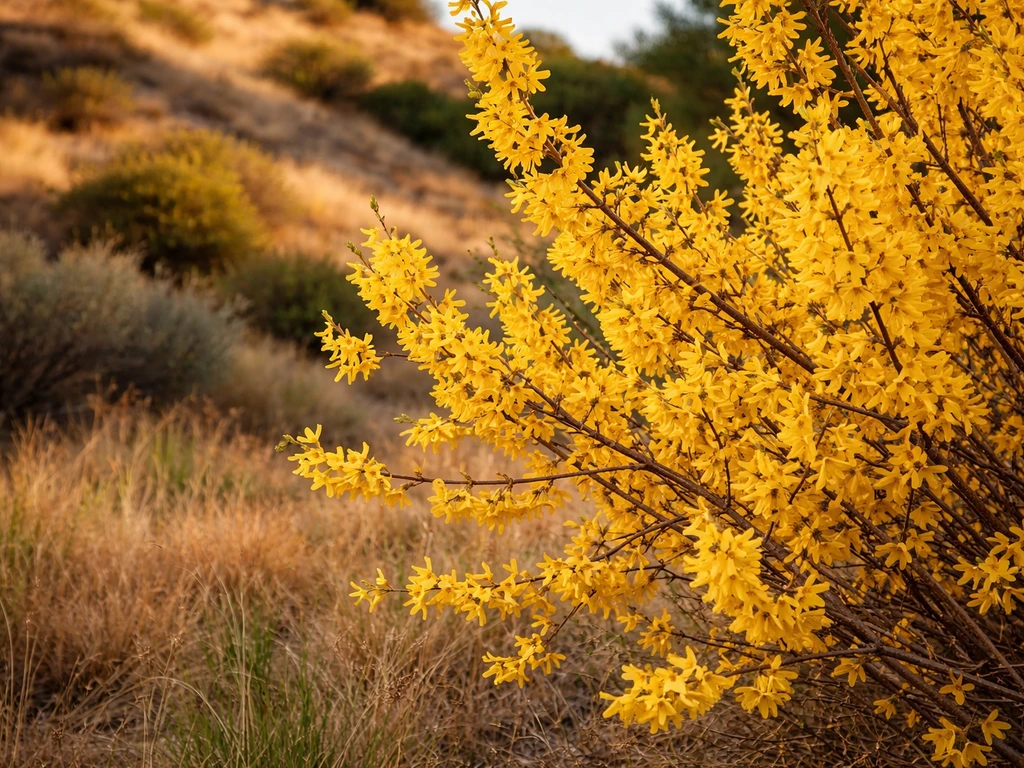
Forsythia can grow in California, but whether it will actually bloom well for you depends heavily on where in the state you live. In cooler Northern California foothill areas, parts of the Sierra Nevada foothills, and inland valleys that get real winter chill, forsythia can put on a decent show of yellow flowers each spring. In most of coastal Southern California and the Central Valley's warmer stretches, the plant survives but rarely blooms reliably because it doesn't get enough cold hours in winter to set flower buds properly.
Does Forsythia Grow in California? Zones, Chill, Tips
Marcus Hartwell
29 Apr 2026
Where forsythia works (and where it doesn't) in California
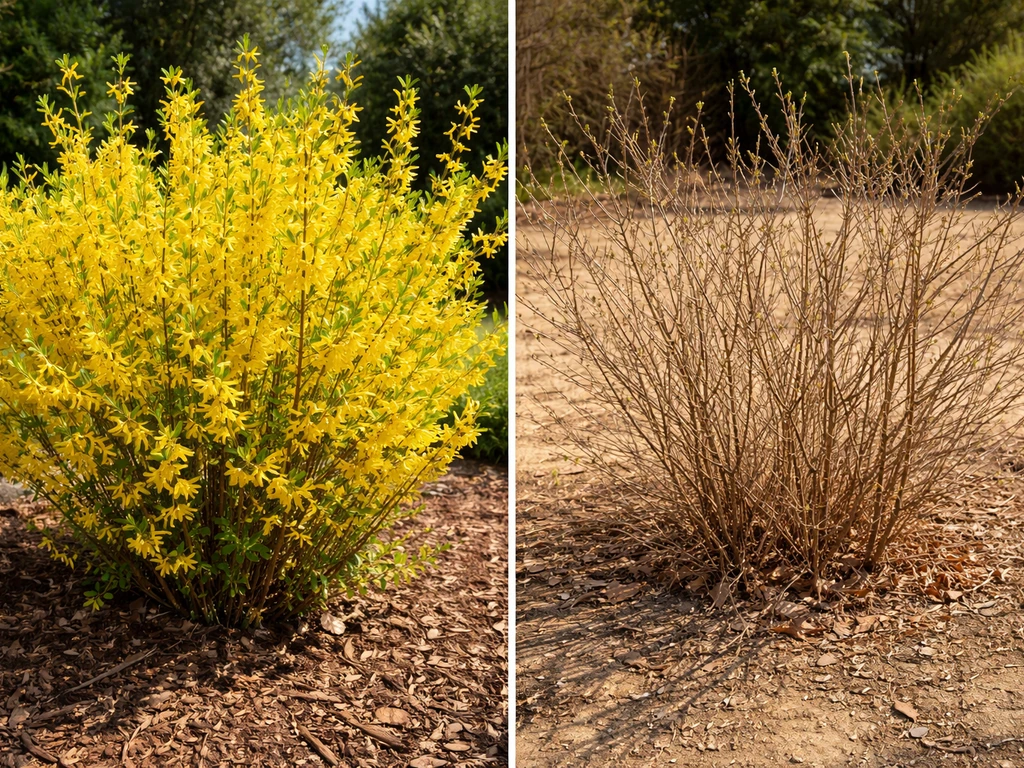
The honest answer is that California is a mixed bag for forsythia. The state spans USDA zones 5 through 11, and forsythia is rated hardy in zones 4 through 9. UConn's Plant Database reports Forsythia × intermedia as hardy to USDA zone 5b (with zone values that can vary by source or cultivar) blank" rel="noopener noreferrer">hardy in zones 4 through 9. That means the zones overlap nicely on paper, but zone hardiness is only half the story. Forsythia needs a specific number of chilling hours (temperatures consistently below 45°F) through winter to trigger flower bud development. Without enough chill, the shrub leafs out fine but skips the blooms entirely. That's the issue that trips up most California gardeners.
If you're in the Sierra Nevada foothills between roughly 1,500 and 4,000 feet elevation, the North Coast ranges, or inland areas of Northern California that regularly see sustained winter lows in the 30s, you're in good forsythia territory. If you want to know where forsythia grows best, focus on locations with enough winter chilling hours so flower buds can develop. If you're in coastal San Diego, the San Fernando Valley, or the low-elevation Central Valley floor, you're likely going to end up with a nice green shrub that just never blooms.
California's climate and how it affects forsythia
The chilling hours problem
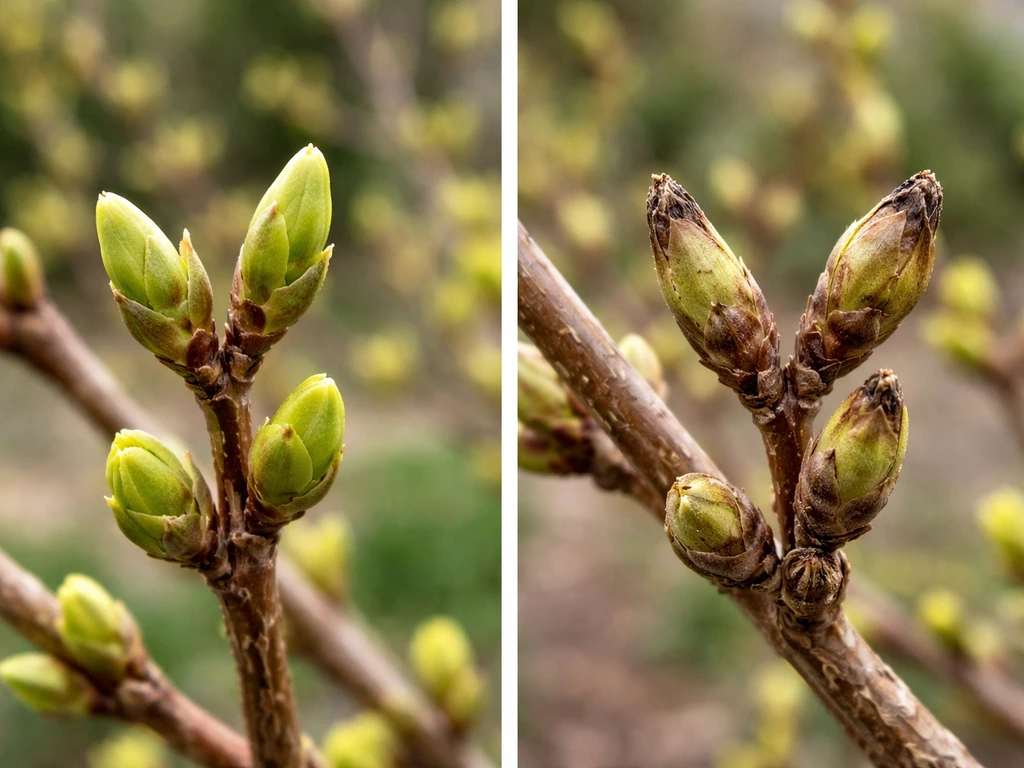
Forsythia generally needs somewhere between 800 and 1,200 chilling hours depending on the variety. Most low-elevation coastal California spots accumulate only 200 to 500 chilling hours in a typical winter. The Central Valley floor around Fresno or Bakersfield fares a bit better, often hitting 600 to 800 hours, but that's still borderline for many standard forsythia cultivars. Compare that to Sacramento's foothill suburbs at 700 to 900 hours, or Placerville at well over 1,000 hours, and you can see why location within California matters so much.
Cold tolerance and winter injury
The plant's main stems are tough, surviving down into zone 4 without much damage. The problem is the flower buds themselves, which are more tender and can be damaged under true zone 5 winter conditions or where temperatures swing wildly. In most California gardens the opposite risk applies: winters are too mild rather than too cold. But in high-elevation foothill gardens above 3,500 feet, a hard late frost in March can wipe out already-swollen flower buds right before bloom, which is just as frustrating.
Summer heat stress
Forsythia handles heat reasonably well when it's established, but prolonged temperatures above 95°F with dry air cause leaf scorch and stress the roots. In the hot interior valleys, a forsythia planted in full afternoon sun with no irrigation will look pretty rough by August. This doesn't kill the plant outright, but a stressed shrub going into fall is a shrub that will produce even fewer flower buds than usual.
Best California zones and microclimates for forsythia
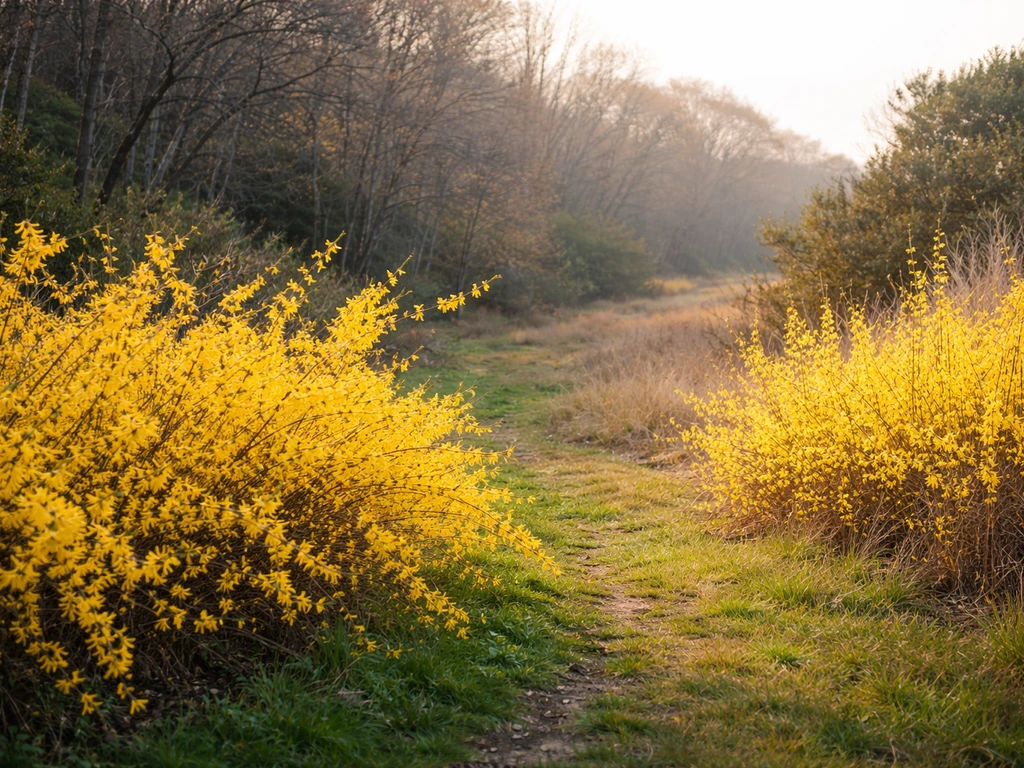
The sweet spot for forsythia in California sits in USDA zones 6 through 8, with reliable annual chilling. Here's a breakdown of how different California regions stack up:
| California Region | Typical USDA Zone | Chilling Hours (approx.) | Forsythia Bloom Reliability |
|---|---|---|---|
| Sierra Nevada foothills (1,500–4,000 ft) | Zone 7–8 | 900–1,200+ | Good to excellent |
| Northern CA inland valleys (Redding, Chico area) | Zone 8–9 | 700–900 | Moderate to good |
| Sacramento metro area | Zone 9 | 600–800 | Moderate; cultivar-dependent |
| San Francisco Bay Area coast | Zone 9–10 | 300–500 | Poor; rarely blooms well |
| Central Valley floor (Fresno, Bakersfield) | Zone 9–10 | 500–700 | Poor to moderate |
| Southern CA coast (LA, San Diego) | Zone 10–11 | 100–300 | Very poor; not recommended |
| Southern CA mountains (Big Bear, Idyllwild) | Zone 6–7 | 1,000+ | Good |
Microclimates matter a lot too. A north-facing slope in Sonoma County might consistently outperform a south-facing flat lot just ten miles away. If your yard gets regular frost and you need to scrape ice off your windshield several mornings each winter, that's a pretty good sign you have the chill forsythia needs. Fog belts along the Marin or Sonoma coasts actually accumulate more chill hours than their mild average temperatures suggest, and forsythia sometimes does better there than you'd expect based on the zone number alone.
Planting and basic care to give forsythia its best shot
If your site checks out climate-wise, forsythia is a low-maintenance shrub once established. Here's what actually matters for California conditions:
- Plant in fall (October through November) in most California areas so roots can establish before spring bloom. Spring planting works too but means more irrigation work during the first summer.
- Give it full sun to light afternoon shade. In the hotter inland areas, a spot with morning sun and some afternoon shade helps reduce heat stress without sacrificing chilling.
- Water deeply but infrequently once established. In Mediterranean-climate California, forsythia needs supplemental summer irrigation, roughly every 1 to 2 weeks during hot dry spells, but overwatering in clay soils causes root rot.
- Plant in well-drained soil. Forsythia tolerates a range of soil types but genuinely hates sitting in wet, boggy ground, which is a real risk in California's heavy clay soils.
- Avoid heavy nitrogen fertilizer. In California's warm soils, heavy feeding pushes leafy growth at the expense of the flower buds you actually want.
- Prune immediately after blooming (late spring), never in fall or winter. Forsythia sets next year's flower buds on this year's new wood, so fall pruning cuts off your spring show.
Picking the right forsythia variety for your California garden
Not all forsythias are equal when it comes to chilling requirements, and variety selection can make a real difference in borderline California climates like the Sacramento Valley or lower foothill elevations.
- Forsythia x intermedia 'Lynwood Gold': The classic, most widely sold variety. Reliable bloomer in zones 6–8 with adequate chill. A solid choice for foothill gardens.
- Forsythia x intermedia 'Spectabilis': Heavy bloomer with lower chill requirements than some older cultivars. Worth trying in the warmer edge of zone 8 or 9.
- Forsythia viridissima 'Bronxensis': A compact, low-growing cultivar that tolerates more heat. Better suited to warmer California locations than the large upright types, though still needs reasonable chill.
- Forsythia 'New Hampshire Gold': Bred for cold hardiness but also known to bloom more reliably in variable chill conditions. Good for high-elevation foothill gardens.
- Forsythia 'Gold Tide' (Courtasol): A low, spreading ground-cover type. Slightly lower chill requirement makes it a better bet in warmer zone 9 locations.
If you're at the warm edge of forsythia's viable range in California, ask at a local independent nursery whether they carry varieties specifically described as low-chill or heat-tolerant. Big box stores typically stock generic 'Lynwood Gold' cuttings that were bred for the mid-Atlantic and Midwest climate, not coastal or inland California conditions.
What to do when things go wrong
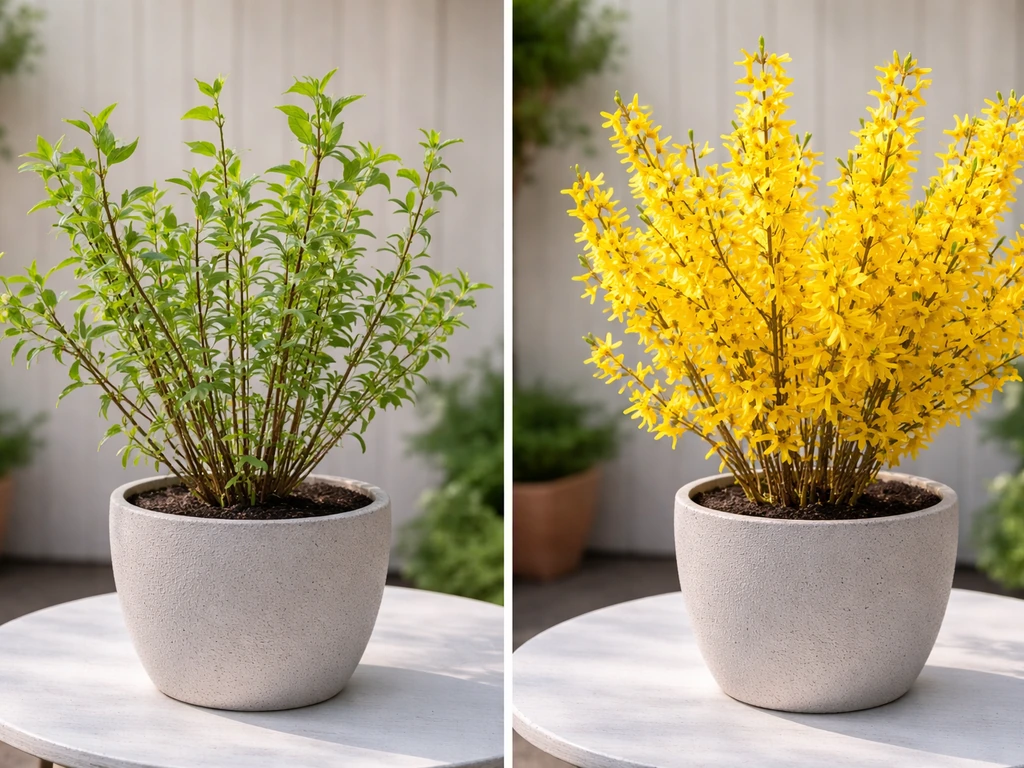
It leafs out but never flowers
This is the most common California complaint about forsythia, and it almost always comes down to insufficient chilling. The fix is honest: if you're in a low-chill zone and this has happened two or three years in a row, the plant is telling you it's in the wrong place. You can try moving it to the coldest, most sheltered microspot in your yard (north-facing wall, low frost pocket), or switch to a lower-chill variety. If neither option exists on your property, forsythia just isn't the right plant for your spot.
Flower buds appear but then die before opening
In higher-elevation foothill gardens, a late frost in late February or March can kill buds that are already swelling. If this happens repeatedly, try planting on a slightly higher slope position where cold air drains away rather than pooling, or choose a variety with slightly later bud-break timing. You can also loosely cover smaller shrubs with frost cloth on nights when late frosts are forecast.
Leaf scorch and wilting in summer
Forsythia planted in full sun in the Central Valley or hot inland areas can look genuinely terrible by midsummer. Make sure you're watering deeply every 7 to 14 days during hot stretches, and consider applying a 3-inch layer of mulch around the root zone to conserve moisture. Moving the plant (in fall) to a spot with afternoon shade can also help dramatically.
Gall and dieback on stems
Crown gall, caused by a soil bacteria, shows up as rough warty growths at the base of stems and can cause dieback. It's more common in California's heavier clay soils with poor drainage. There's no cure once it's established, so prevention is everything: buy plants from reputable nurseries, plant in well-drained soil, and avoid wounding the crown during planting or cultivation. If you see gall, remove and discard affected stems well below the gall tissue, sterilizing your pruners between cuts.
What to grow instead if forsythia won't work in your yard
If you're in coastal Southern California, the low-elevation Central Valley, or anywhere that rarely sees temperatures drop below 40°F, forsythia just isn't going to give you the flower show you're after. Some alternatives that offer similar spring-blooming color without the chill requirement include Carolina jasmine (Gelsemium sempervirens), yellow-blooming Fremontodendron (flannel bush, a California native that thrives in dry heat), or winter jasmine (Jasminum nudiflorum), which actually blooms in late winter with small yellow flowers and has a lower chill requirement than forsythia. Gardeners researching similar feasibility questions for other flowering shrubs in California often look at azaleas, which face their own set of climate compatibility questions depending on which part of the state they're planting in. To learn whether do azaleas grow in California in your area, check the chill and temperature patterns where you plan to plant them. In Texas, azaleas can grow well when you match the variety to local conditions and provide the right soil and shade. If you're wondering whether do azaleas grow in Utah, the key is matching them to a cool winter with the right sunlight and soil, since Utah's dry climate can be challenging for many types. In Colorado, azaleas can work well in the right microclimate, but temperature extremes and winter protection needs often determine success.
FAQ
Will forsythia grow in coastal areas like San Diego or Santa Monica, even if it might not bloom?
Yes, it can survive in coastal Southern California, but blooms are often unreliable because flower buds do not get enough cold hours. If you try it anyway, put it in the coldest, most sheltered microclimate you have (near a north-facing wall, in a spot that still experiences winter lows) and expect green growth with occasional or sparse flowering rather than a dependable spring show.
How can I tell if my yard has enough chilling hours for forsythia before planting?
The best shortcut is to track winter lows and frosts at your address over a season. If your site stays above about 45°F for much of winter, or you rarely get nighttime temperatures in the 30s, you are likely below the chilling needed for consistent bud set. A more hands-on approach is to use a local gardening tool or weather station reading to estimate cold hours, then match a low-chill variety only if you are borderline.
What happens if I plant forsythia in a warm part of California and it blooms poorly for the first year or two?
Poor blooming for 1 year can be a fluke, but repeated non-blooming for 2 to 3 consecutive winters is a strong sign the plant is not getting enough chill to form flower buds. At that point, the most effective fix is switching to a low-chill variety or relocating it to your coldest microspot. Simply increasing fertilizer or pruning usually will not correct the chilling deficit.
Can pruning fix forsythia that won’t flower in California?
Pruning can improve shape and reduce overcrowding, but it cannot replace winter chill needed for flower bud development. For forsythia specifically, heavy pruning at the wrong time can also remove next spring’s buds. If your main issue is no bloom, prioritize chill compatibility first, then prune after the spring flowering period only.
Do all forsythia varieties have the same chilling needs in California?
No. Some cultivars are bred to tolerate warmer winters and require fewer chilling hours than standard types like commonly sold mid-Atlantic selections. If you are planting at the warm edge of forsythia’s range, ask a local nursery for varieties described as low-chill or with later bud-break timing, and choose those before you decide where to plant.
Is late frost in the foothills a separate problem from low-chill?
Yes. Low chill causes buds not to set, while late frost kills buds after they have already started swelling. If your shrubs leaf out but spring flowers disappear suddenly, that points to frost injury. Practical options include planting on a slight cold-air-drain slope, using frost cloth on smaller plants during forecast nights, and selecting varieties with later bud-break.
What is the best time to transplant forsythia in California?
Fall is usually the safest window because the plant can establish new roots before winter. Avoid spring moves right before bloom because bud loss will be more likely, especially in areas that are prone to late frosts.
How much sun and irrigation does forsythia need in hot inland California?
Forsythia dislikes heat stress, especially in full afternoon sun without consistent watering. In hot inland zones, water deeply on a schedule like every 7 to 14 days during dry stretches, and add about a 3-inch mulch layer to reduce root-zone evaporation. If summer scorch is severe, relocating to afternoon shade can quickly improve next season’s flowering potential.
Is crown gall treatable, or is it just a wait-and-see problem?
Crown gall is not truly curable once established. The most effective response is removal of affected stems well below the visible gall and sterilizing pruners between cuts. Prevention matters most in California clay or poorly drained spots, so use well-draining soil and minimize wounding at planting and during weeding or cultivation.
If forsythia won’t bloom where I live, what are good low-chill alternatives that still give spring or winter yellow color?
If your area rarely drops below about 40°F, consider winter jasmine for late-winter yellow blooms, Carolina jasmine for warm-season green with yellow flowers depending on conditions, or yellow-blooming Fremontodendron for a California-native option that handles dry heat better than forsythia. Choose based on whether you want late-winter color or spring color, because their bloom timing and temperature needs differ.