Star jasmine (Trachelospermum jasminoides) grows successfully across the warm-temperate and subtropical parts of the United States, roughly USDA Hardiness Zones 7b through 11. If you live in the South, the Pacific Coast, or anywhere that rarely dips below 10°F in winter, you can almost certainly grow it. If you're further north and your winters regularly bottom out below 0°F, this plant is not going to work for you in the ground. That's the short answer. The rest of this guide will help you confirm exactly where you stand and what local conditions you need to check before you buy.
Where Does Star Jasmine Grow? Zones, Climate, and Timing
Marcus Hartwell
12 Apr 2026
Where star jasmine originally comes from
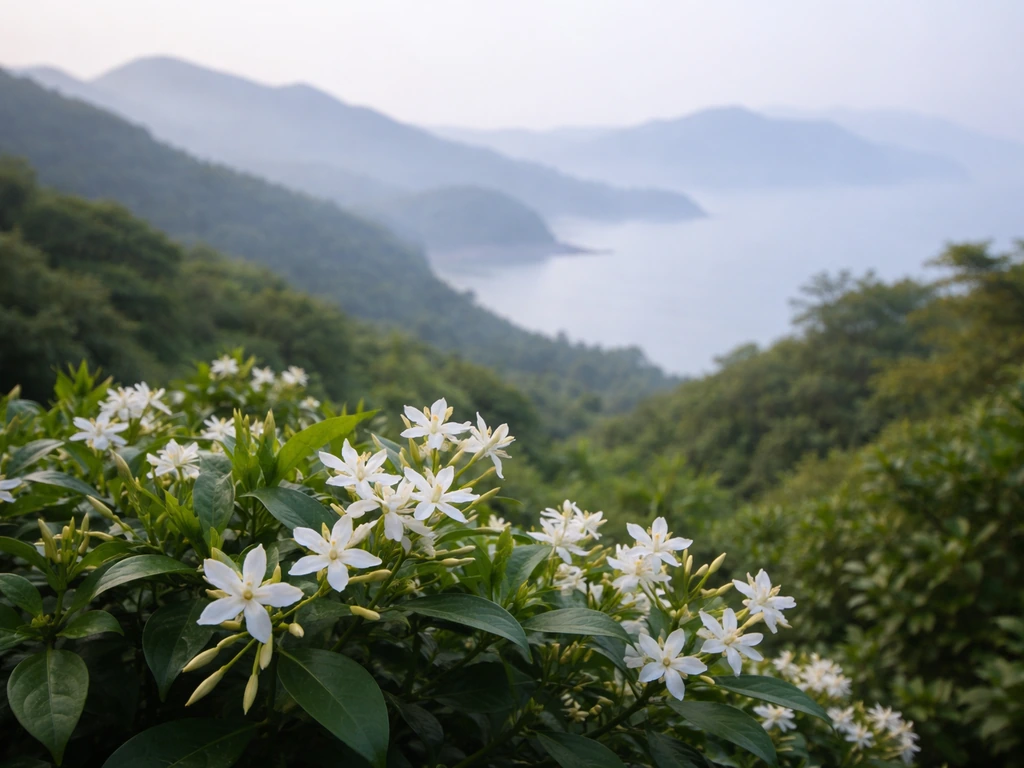
Star jasmine is native to eastern and southeastern Asia, specifically Japan, Korea, southern China, and Vietnam. It grows naturally from sea level all the way up to elevations above 3,000 feet, which tells you something important: this plant is adaptable. It's not a strictly tropical species that needs constant heat and humidity. In its native range it experiences cool winters, seasonal rainfall, and a wide range of elevations. That adaptability is exactly why it translates so well to so many parts of the US, from coastal California to Georgia. Understanding where jasmine grows in its native habitat helps explain why it performs reliably across such a broad range of American climates.
Best growing zones and the cold limits you need to know
The standard guidance puts star jasmine in Zones 7b through 11, and that's a pretty accurate picture. Zone 7b is the real northern edge of reliable performance, and that zone corresponds to winter minimum temperatures of around 5°F to 10°F. Some cultivars, like 'Madison,' are listed with cold hardiness down to that 5°F to 10°F range, which is why Zone 7b is considered the practical floor. Cold damage typically starts showing up when temperatures drop into the low 20s, and serious damage or plant death becomes a real risk somewhere between 23°F and 15°F. Below 10°F, you're almost certainly losing the plant entirely.
In practical US terms, this means star jasmine is a solid performer throughout the Southeast (Georgia, Alabama, Mississippi, Louisiana, the Carolinas), Texas, Florida, Arizona, and the entire Pacific Coast from San Diego up through the Pacific Northwest's milder zones. It's one of the most common landscape vines and groundcovers in California, and it's equally popular in the Gulf Coast states. If you want to dig into how star jasmine compares across different parts of the country, the breakdown of where jasmine grows in the US region by region is a helpful next step.
| USDA Zone | Winter Low (°F) | Star Jasmine Outlook |
|---|---|---|
| Zone 7b | 5°F to 10°F | Survives with some dieback in hard winters; choose hardy cultivars like 'Madison' |
| Zone 8 | 10°F to 20°F | Reliable; evergreen most winters with minimal cold damage |
| Zone 9 | 20°F to 30°F | Thrives; evergreen year-round, strong growth and flowering |
| Zone 10–11 | 30°F and above | Excellent; full evergreen performance, vigorous growth |
| Zone 6 and below | Below 0°F | Not recommended for in-ground planting; container growing only |
Sun, shade, soil, and water: what the plant actually needs
Light
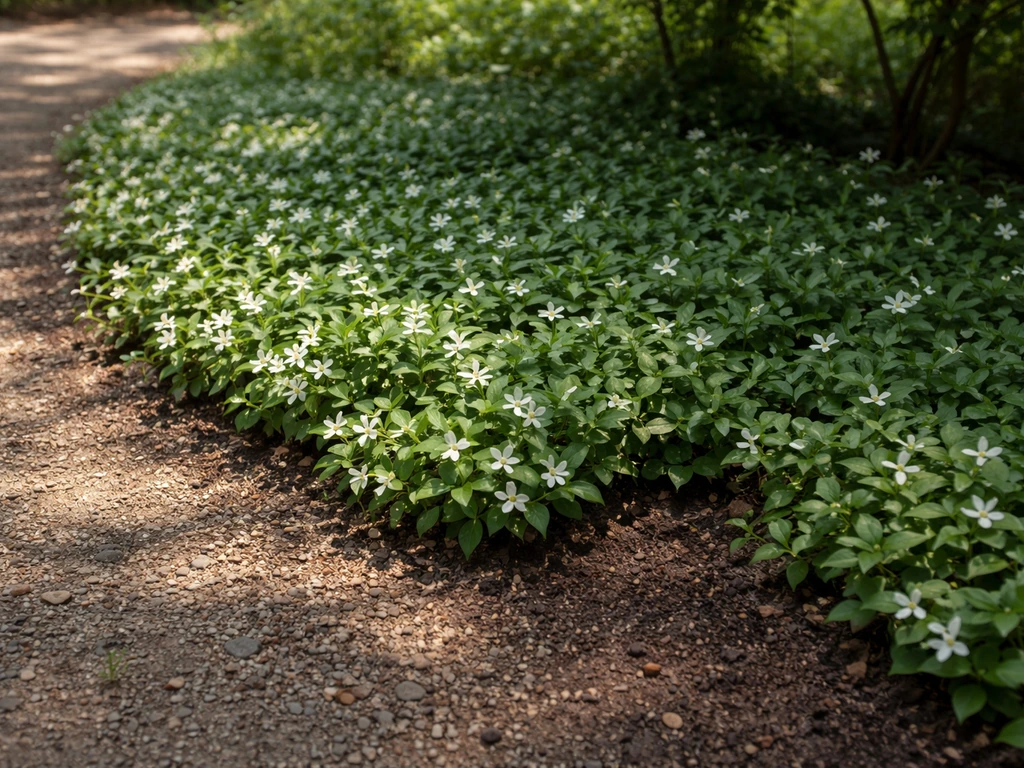
Star jasmine flowers best in full sun, but it tolerates partial shade reasonably well. The trade-off is simple: more shade means fewer flowers. If you're planting it as a groundcover under a tree canopy or on a north-facing fence, it'll grow fine but don't expect the same white flower show you'd see in a sunny spot. For heavy flowering, aim for at least six hours of direct sun per day. This is one of the reasons star jasmine performs so impressively in places like Southern California and the Gulf Coast, where sun is rarely the limiting factor. For a broader look at which conditions produce the best results, the guide on where jasmine grows best covers this in more detail.
Soil and drainage
Drainage is non-negotiable with star jasmine. The plant needs well-drained soil, and if it sits in constantly damp conditions it becomes vulnerable to fungal infection that can take it down fast. There's also a cold-weather angle here that a lot of gardeners miss: poorly drained soil leads to weak, shallow roots, and those roots are far more susceptible to cold injury when temperatures drop. So if you're in Zone 7b trying to push the hardiness limits, planting in waterlogged clay is a recipe for losing the plant in the first hard winter. Amend heavy clay soils before planting, or choose a raised bed or slope where water moves through naturally.
Water
Once established, star jasmine is fairly drought tolerant, which is a big reason it's such a go-to plant in California and the arid Southwest. During the growing season, a practical irrigation schedule looks like about 0.75 inches of water weekly in spring (March through May) and roughly 1.25 inches per week during the heat of summer (June through August), watering deeply each time rather than shallowly and frequently. In humid climates like the Southeast, natural rainfall often handles most of this without any supplemental irrigation once the plant is a year or two old.
When star jasmine grows and when it flowers
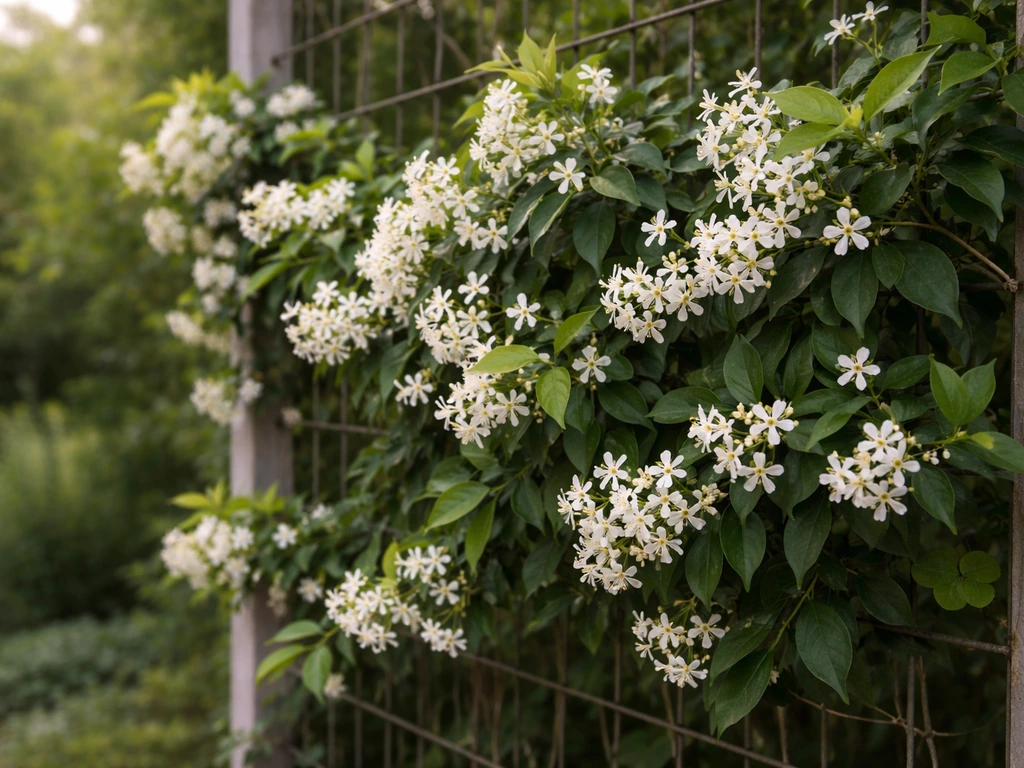
In Zones 8 and warmer, star jasmine is evergreen, meaning it holds its leaves year-round and never really goes dormant in the traditional sense. Active growth picks up in spring as temperatures warm, typically starting in March or April depending on your location. In Zone 7b, the plant may lose some or all of its foliage in a cold winter and re-leaf in spring, behaving more like a semi-evergreen.
Flowering typically runs from late April through early June across most of its growing range, with the most prolific bloom period in May. In warmer climates like South Florida or Southern California, flowering can start a bit earlier and last a bit longer. This spring bloom timing is pretty consistent whether you're in Mississippi or the Bay Area. If you've always admired a neighbor's plant covered in fragrant white flowers in May, that's the bloom window you can count on in most zones. If you're curious how this timing compares with other jasmine types, like the evening-blooming varieties, the article on where night blooming jasmine grows offers a useful contrast.
How star jasmine actually grows: habits and spacing
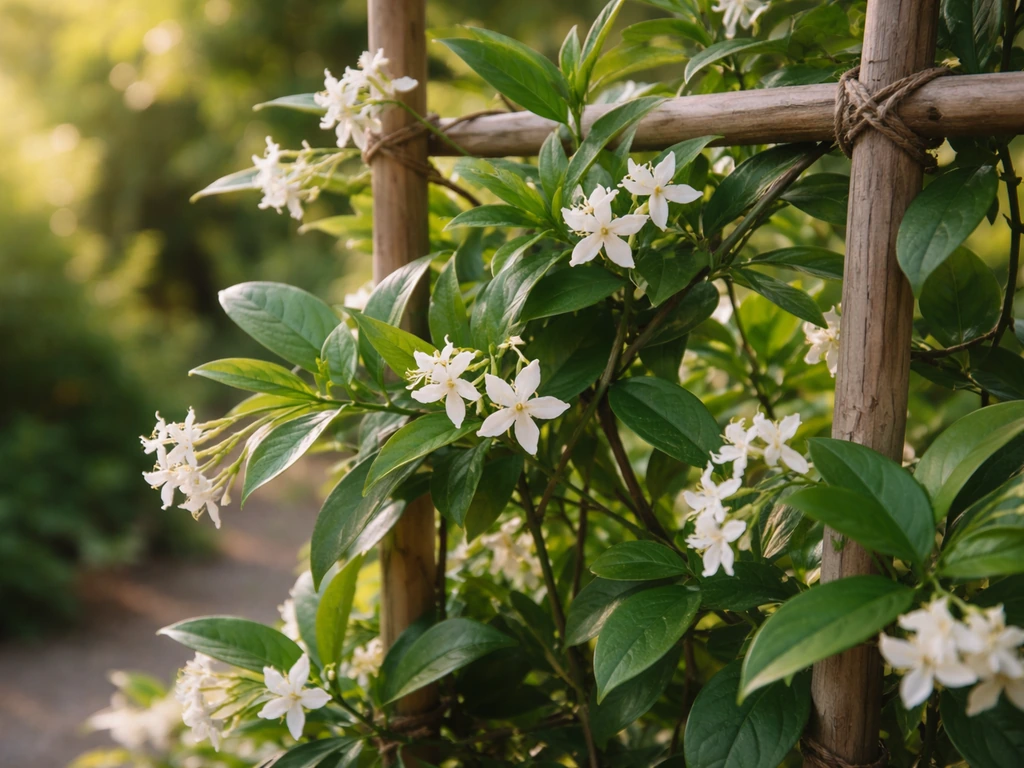
Star jasmine is what you'd call a versatile grower: it can climb as a vine, sprawl as a groundcover, or be kept trimmed as a low shrub depending on how you manage it. As a vine, it uses its twining stems to attach to fences, trellises, and walls. As a groundcover, it spreads horizontally and fills in gaps over a few seasons. The NC State Extension Gardener Plant Toolbox formally classifies it in both vine and groundcover categories, and that dual identity is exactly why it shows up in so many different landscape applications.
For spacing, UF/IFAS recommends 36 to 60 inches apart for general landscape use. If you're specifically trying to cover a fence quickly, spacing plants 2 to 3 feet apart will speed up coverage. As a groundcover, a single plant can spread to fill a footprint of several feet, though it takes a season or two to really get going. Growth rate tends to accelerate significantly after the first year once roots are established. Patience in year one pays off with vigorous spread by year two and three.
How to confirm it'll actually work where you live
The fastest way to check your compatibility is to look up your USDA Hardiness Zone using your zip code on the USDA Plant Hardiness Zone Map. If you're in Zone 7b or warmer, you're in the ballpark. But your zone is just the starting point. Here's a quick checklist of local conditions to verify before you buy:
- Winter low temperatures: Check your actual recorded winter lows for the past several years (not just your zone average). If you've hit 10°F or below recently, factor that in for Zone 7b plantings.
- Drainage: Walk your intended planting spot after a rain. If water pools or drains slowly, fix that first or choose a different spot.
- Sun exposure: Count the hours of direct sun at your planting site. Less than 4 hours means reduced flowering; more than 6 hours means the plant will perform at its best.
- Microclimate factors: South-facing walls, urban heat islands, and sheltered courtyards can push effective cold tolerance a half-zone warmer. North-facing or exposed sites can push it colder.
- Soil type: Heavy clay needs amendment before planting. Sandy or loamy soils with good drainage are ideal.
- Local humidity: In high-humidity climates (Southeast), ensure airflow around the plant to reduce fungal pressure, especially in the first year.
If you clear most of those boxes, star jasmine is going to work for you. If you're right on the Zone 7b edge, look specifically for the 'Madison' cultivar, which is bred for slightly better cold hardiness. Plant it near a south-facing wall if you have one, keep it out of wet spots, and you've given it the best possible shot at thriving in a marginal climate.
FAQ
Can star jasmine grow in a container if my zone is slightly too cold?
Yes, but only within limits. In containers, star jasmine can be grown in slightly colder spots if you protect the pot from repeated freeze-thaw cycles. Use a large container with drainage holes, a lighter potting mix, and keep the root ball from staying wet (water only when the top inch dries). In winter, move the container to a sheltered area (garage wall or covered porch) and wrap the pot to buffer cold.
How do I confirm compatibility beyond my USDA hardiness zone?
Start by checking winter lows on a 10-year local weather summary, not just your average annual temperature. Star jasmine’s risk is tied to deep cold events and how long they last, and it can be harmed when nights drop well below the typical zone minimums. Also consider microclimates, a spot near a south-facing brick wall can raise local temperatures several degrees compared with open areas.
Will star jasmine spread normally if I’m on the northern edge of Zone 7b?
It depends on what you mean by “grow.” If you’re trying to establish it as a groundcover in a marginal climate, plan for slower coverage and possible replanting after severe winters. In Zone 7b, foliage can be lost and the plant may spend more time rebuilding roots and stems than spreading horizontally, so it can take longer to fill in.
What’s the most common reason star jasmine fails in humid or rainy areas?
Overwatering is a bigger issue than underwatering. In heavy clay or consistently damp soil, star jasmine can develop root stress and fungal problems, leading to sudden decline. In humid areas, keep watering modest after establishment and focus on preventing standing water, use raised beds or slope, and avoid planting too close to downspouts.
How much sun does star jasmine need to bloom well?
Full sun is best for flowers, at least six hours of direct sun. If you get less light, it may still grow vigorously, but bloom volume usually drops noticeably. If you must plant in partial shade, expect more foliage and fragrance than a dense white flower display, and try to maximize morning sun.
Should I mulch star jasmine, and where exactly should the mulch go?
Mulch is helpful, but keep it away from the base. Use a 1 to 2 inch layer of organic mulch to moderate soil temperature and reduce moisture swings, but avoid piling it against the crown. Wet mulch in winter can worsen root chilling in borderline areas.
What planting spots should I avoid if I live near the cold limit?
For Zone 7b and colder edges, choose a planting location that stays on the drier side in winter, a raised bed, gentle slope, or area that drains quickly. Avoid low spots where cold air collects and where irrigation or rain water lingers. The combination of cold and wet soil is a common failure pattern.
When is the best time to prune star jasmine so it still flowers?
Yes, but treat pruning as a bloom management tool. If you prune heavily right before the flowering period, you can reduce the number of buds. A safer approach is to do light shaping after the main bloom or in late winter for cleanup, then avoid major trimming until flowering is largely done.
My star jasmine lost leaves after winter, what should I do next?
Even in ideal zones, poor root health can cause setbacks. If your plant starts leaf drop after a cold snap, check soil moisture first, then assess drainage and avoid fertilizing immediately. Give it time to re-leaf in spring, and only then decide whether you need to amend soil, improve drainage, or adjust watering.
Is star jasmine always evergreen in every warm climate?
“Evergreen” is common in Zones 8 and warmer, but it is not guaranteed everywhere. In colder zones or in winters with prolonged cold, it can behave semi-evergreen, dropping some or all leaves. The plant’s growth usually restarts in spring as temperatures rise, March or April depending on your location.
What spacing should I use for a fence versus a groundcover?
Spacing depends on your goal. For quick fence coverage, plants 2 to 3 feet apart tend to establish a connected mass sooner. For a more traditional landscape planting with slower, steadier spread, 36 to 60 inches apart gives room for grooming and airflow.
What’s the best way to propagate star jasmine if I’m planting near Zone 7b?
Propagation is typically done by cuttings or division, but the fastest way to ensure cold performance in borderline areas is to start with a cultivar known for better hardiness, such as 'Madison'. Seed-grown plants can vary, so cultivar consistency is a major factor when you are near the temperature edge.