
Night blooming jasmine (Cestrum nocturnum) grows best in USDA Zones 9 through 11, which covers the warmest parts of the US: South Florida, coastal Southern California, the lower Rio Grande Valley in Texas, and Hawaii. North Carolina State University Extension’s Gardener Plant Toolbox notes that Cestrum (including C. nocturnum) is winter-hardy in USDA hardiness zones 9a through 11b USDA Zones 9 through 11. If you live anywhere that sees regular hard freezes, this plant will not survive in the ground year-round. That said, gardeners in Zones 7 and 8 can still enjoy it in containers that come indoors for winter.
Where Does Night Blooming Jasmine Grow by Climate and Zone
Marcus Hartwell
28 Apr 2026
Which plant people actually mean by 'night blooming jasmine'
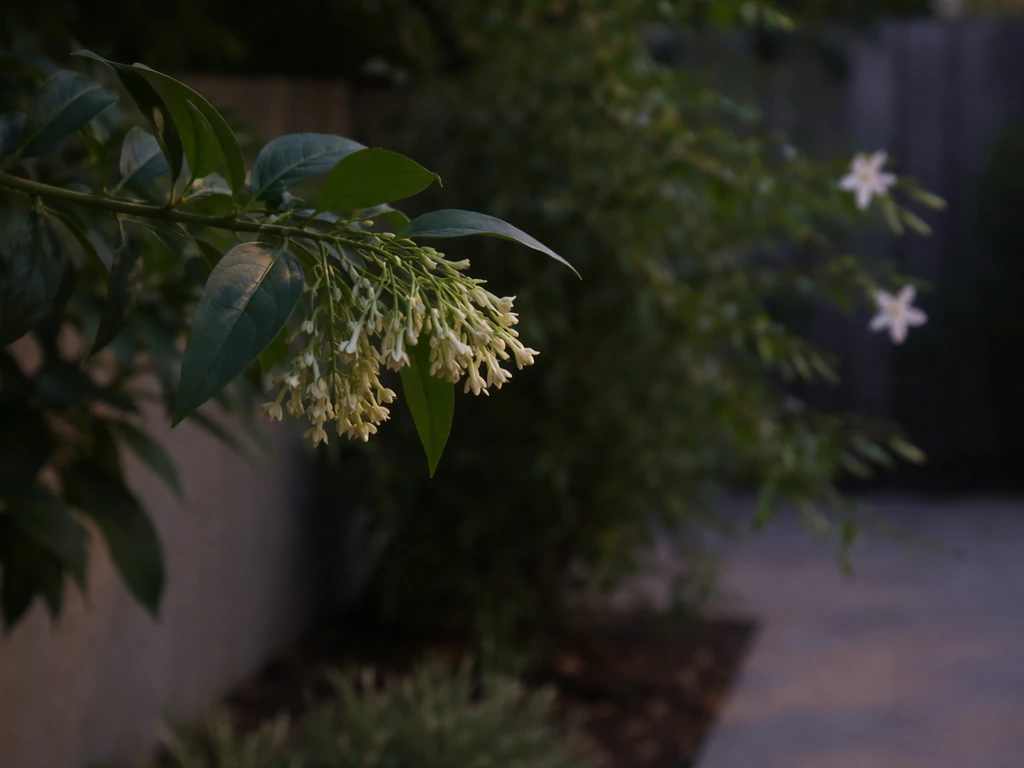
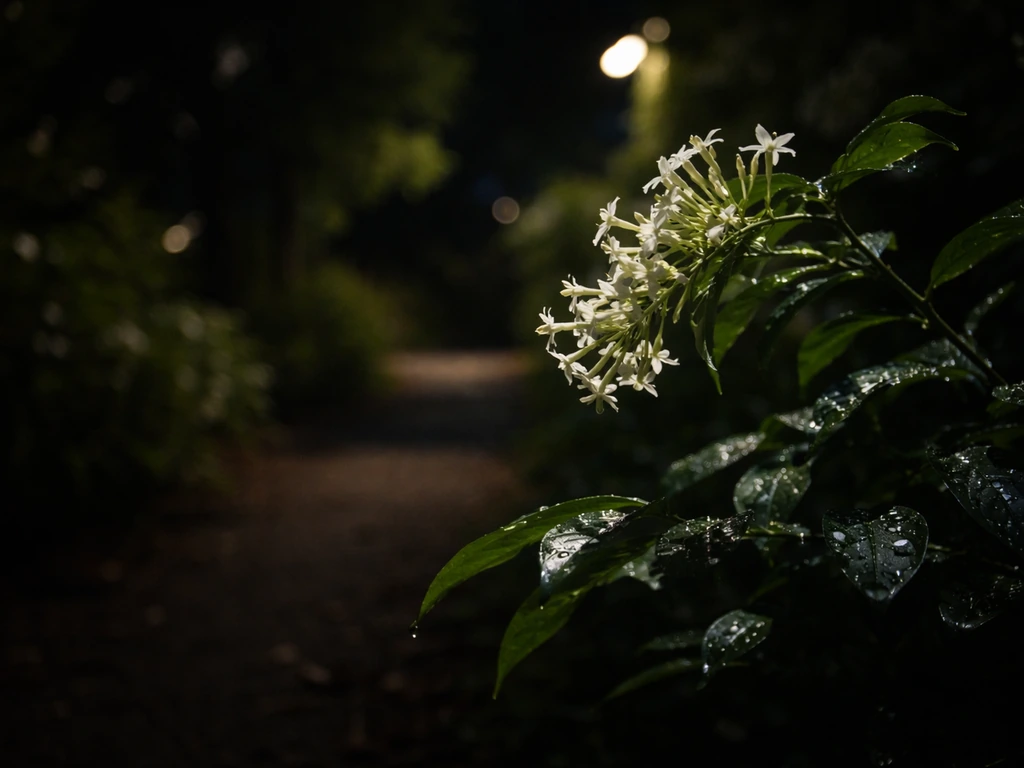
Here is the first thing worth getting straight: night blooming jasmine is not a true jasmine at all. It is Cestrum nocturnum, a bushy to sprawling evergreen shrub from the nightshade family, completely separate from the Jasminum genus that covers plants like star jasmine or common jasmine. The mix-up happens because the fragrance is so intense and jasmine-like that the common name stuck. When you search 'night blooming jasmine' at a nursery or on a plant tag, Cestrum nocturnum is almost certainly what you will find. It produces clusters of small, tubular, greenish-white flowers that open at night and release one of the strongest scents in the plant world. If someone tells you they grew up smelling it on a warm Southern evening, this is the plant they remember.
There is some overlap with other common names. 'Lady of the night' is sometimes used for the same plant. Occasionally moonflower vines or other night-opening plants get lumped under this label. But for geographic growing purposes, and for what you will actually find sold in nurseries across the US, Cestrum nocturnum is the one to research.
Where it comes from and where it thrives naturally
Cestrum nocturnum is native to the Antilles and Central America, where it grows in moist to wet forests, scrubby edges, and open disturbed areas in tropical and subtropical climates. It has since naturalized throughout the tropics worldwide, and in the US it is established in Hawaii (on Kauai, Oahu, Lanai, Maui, and the Big Island) and in parts of Florida, where it is actually flagged as an invasive concern in natural areas. UF/IFAS includes Cestrum nocturnum in its invasive-plant assessment and discusses management and use under specific approved management practices. The National Park Service has documented it around communities in Hawaii Volcanoes National Park. That tells you a lot about its preferred habitat: warm, humid, frost-free, with plenty of moisture and indirect to full sun. It does not just survive in these conditions, it spreads aggressively.
In its native and naturalized range, this plant grows in spots that never dip below freezing. Disturbed roadsides, forest edges, and garden escapes in tropical zones are classic Cestrum nocturnum territory. When you replicate those conditions, even partially, the plant thrives.
The climate numbers: zones, temperature limits, and light
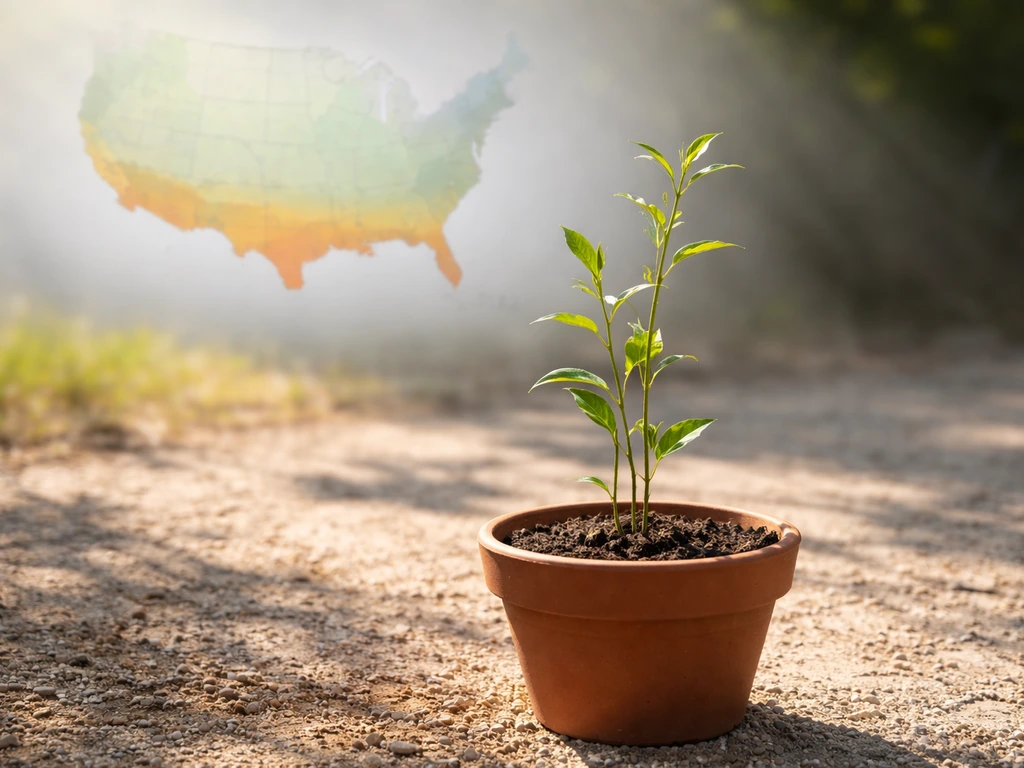
Night blooming jasmine performs best in USDA Zones 9 through 11. The temperature floor that matters most is a hard freeze: sustained cold below about 25°F (-4°C) will kill it to the ground, and prolonged frost below 20°F (-7°C) kills the roots entirely. The RHS places it in a hardiness band corresponding to minimum temperatures around -15°C to -20°C on the UK scale, but in practical US terms, treat it as a plant that struggles anywhere with a real winter.
For light, the plant needs full sun to partial shade to bloom reliably. It will survive in shadier spots, but the flower production drops significantly. A south or west-facing placement that gets at least five to six hours of direct sun is ideal. This is one of the most common reasons gardeners in marginal zones get foliage but no flowers: not enough light, not enough heat accumulation through the growing season.
Humidity matters too. Cestrum nocturnum is a tropical plant that prefers humid air. In dry desert climates like Arizona's interior, even if you are in Zone 9, the low humidity and extreme summer heat stress the plant in ways that a humid Gulf Coast Zone 9 location would not. Coastal humidity genuinely helps.
Where it grows in the US, region by region
Here is the honest regional breakdown so you can answer the 'can I grow this where I live' question quickly:
| Region / State | USDA Zones | In-Ground Feasibility |
|---|---|---|
| South Florida (Miami-Dade, Broward, Monroe) | 10–11 | Excellent — grows year-round, can naturalize |
| Central Florida (Orlando area) | 9b | Good — occasional cold snaps may damage but usually recovers |
| North Florida / Panhandle | 8b–9a | Risky — hard freezes can kill it; needs protection or containers |
| Coastal Southern California (San Diego, LA) | 10–11 | Excellent — mild winters and warmth suit it well |
| Inland Southern California / Low Desert AZ | 9–10 | Moderate — heat stress and low humidity are limiting factors |
| Texas Gulf Coast (Houston, Corpus Christi) | 9–10 | Good — humid Gulf climate works well |
| Lower Rio Grande Valley, TX | 9b–10 | Good — warm and humid, strong performer |
| Central and North Texas | 7b–8b | Not recommended in-ground — freezes too hard |
| Georgia / Carolinas (coastal) | 8b–9a | Marginal — container or very sheltered spots only |
| Hawaii (all major islands) | 10–13 | Excellent — naturalized and thrives; invasive concern exists |
| Pacific Northwest / Mountain West | 5–8 | Not suitable in-ground; container only with indoor winter storage |
| Northeast / Midwest / Great Plains | 4–7 | Not suitable in-ground; container or greenhouse only |
The simplest rule: if you live where bougainvillea or bananas survive outdoors year-round, night blooming jasmine will likely thrive for you too. If you are wondering where does jasmine grow, this is one of the easiest ways to figure out whether your climate supports it night blooming jasmine will likely thrive. If you are trying to pinpoint where does star jasmine grow, use the same approach and match your region to its cold tolerance and light needs night blooming jasmine will likely thrive. For the full answer to where does jasmine grow in the US, focus on warm, frost-free regions and the specific zones mentioned for this species. If you are dealing with snow and hard freezes every winter, plan for a container setup or skip it entirely.
Soil, moisture, and site placement that actually determine success
Cestrum nocturnum is not fussy about soil type, but it absolutely requires good drainage. Soggy, waterlogged roots will rot the plant faster than cold. Well-drained loamy or sandy soil with some organic matter is the sweet spot. If your yard has heavy clay, raise the bed or amend aggressively before planting.
For moisture, the plant wants consistent watering during the growing season, especially when it is actively blooming. It handles brief dry spells but performs noticeably better with steady moisture. In Florida and Hawaii, natural rainfall usually covers most of this. In drier Zone 9 spots like inland Southern California or southern Arizona, you will need to supplement with irrigation.
Placement within your yard matters more than most people think. A sheltered south-facing wall that radiates warmth at night can push the effective microclimate one full zone warmer. Gardeners on the edge of Zone 8b/9a in places like coastal Georgia or the Houston suburbs sometimes keep Cestrum nocturnum alive in-ground by tucking it against a masonry wall with good southern exposure. Good air circulation around the plant also reduces fungal issues, which are more common in the humid climates where it grows best.
Container growing and winter planning for colder regions
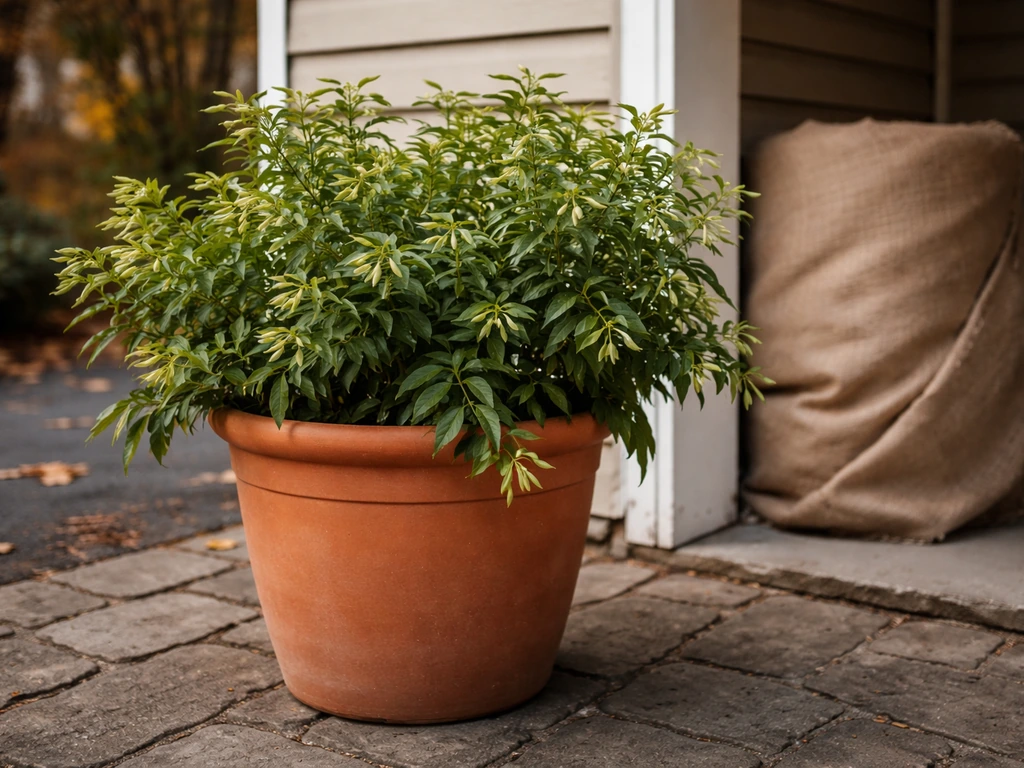
If you are in Zone 7 or 8 and determined to grow night blooming jasmine, containers are the realistic path. The plant grows vigorously enough to make an impressive potted specimen on a patio or deck through the warm months, and because it is in a container, you can move it inside before the first frost hits.
- Choose a large container (at least 15 to 20 gallons) so the root system can develop enough to support good blooming.
- Use a well-draining potting mix, not straight garden soil, which compacts too much in containers.
- Position it in your sunniest outdoor spot from spring through early fall — south or west-facing patios are ideal.
- Watch your local forecast: move it inside before temperatures drop below 45°F consistently. A garage, sunroom, or greenhouse works well for overwintering.
- Indoors, reduce watering significantly and give it as much light as possible. A south-facing window or a grow light setup helps it survive until spring.
- Bring it back outside gradually in spring once nighttime temps are reliably above 50°F.
The honest tradeoff with containers is that blooming can be less prolific than an in-ground plant in a true Zone 10 climate. The plant may still produce flowers, but the show will not match what you see in South Florida landscapes. For many gardeners that is still worth it, especially given the fragrance payoff on a warm summer evening.
Why it is not blooming: location and climate as the usual culprits
If you have night blooming jasmine and it is not flowering, the issue almost always traces back to growing conditions tied to where you put it. Here are the most common location-based problems:
- Not enough sun: Shade or partial shade kills bloom production. If it is getting fewer than five hours of direct sun, move it to a sunnier spot before assuming anything else is wrong.
- Too cold at night during the growing season: Even in Zone 9, unusually cool summers or late springs can delay blooming. Cestrum nocturnum needs warm nights to trigger and sustain flowering.
- Wrong photoperiod timing: Research shows Cestrum nocturnum is sensitive to day length (it behaves as a long-short-day plant). In climates where summer days are very long, like the Pacific Northwest, the photoperiod conditions for blooming may never fully align even if temperatures were adequate.
- Cold damage that stressed the plant: If the plant took frost damage in winter and spent most of spring recovering, blooming will be late or skipped for that season. In marginal zones this is a recurring cycle that limits flowering.
- Low heat accumulation: Desert Zone 9 locations with extreme dry heat but low overnight temperatures differ sharply from humid Zone 9 Gulf Coast conditions. The plant may survive but never get the sustained warmth and humidity it needs to bloom heavily.
- Root-bound container: A cramped pot restricts the plant enough to suppress flowering. If your container plant is not blooming, check whether it has outgrown its pot before blaming the climate.
The bottom line on troubleshooting: if you are outside Zones 9 to 11 and struggling to get blooms, location is almost certainly the issue. No amount of fertilizing or pruning will fully compensate for a climate that does not match this plant's core requirements. Knowing that upfront saves a lot of frustration.
How this compares to other jasmines you might be considering
If Cestrum nocturnum turns out to be a stretch for your zone, it is worth knowing that other jasmines have wider cold tolerance. Star jasmine (Trachelospermum jasminoides), for example, handles Zone 7b to 8 with much more reliability and also delivers strong fragrance. True Jasminum species vary widely by variety, with some tolerating Zone 7. The general topic of where jasmine grows in the US and which varieties fit which zones is broader than just this one species, so if you are in a colder region, it is worth exploring the full jasmine family before settling on Cestrum nocturnum. This plant is extraordinary where it can grow freely, but there are fragrant alternatives that will actually thrive in your yard if you are north of Zone 9.
FAQ
Can night blooming jasmine grow in the ground if I get occasional hard freezes?
Use it as a rule of thumb: if your area regularly drops to about 25°F (-4°C) or lower for sustained periods, plan on it dying back or not surviving year-round. A short, one night dip can be survived with protection, but repeated hard freezes usually turn into root kill over time.
What is the best way to grow night blooming jasmine in Zones 7 or 8 if I bring it inside?
Yes, as a patio or porch shrub, but you need to treat it like a frost-sensitive container plant. Move it indoors before the first freezing nights, keep it bright (a window is better than dim rooms), and water lightly during dormancy so the pot does not stay soggy.
If I live in Zone 9, why does night blooming jasmine sometimes bloom poorly?
In most cases, the fragrance is the same, but the blooming amount can drop if you do not get enough direct sun and heat buildup. Even in a warm zone, a north-facing spot, a shaded yard, or too much afternoon shade can produce mostly foliage and fewer flowers.
Does night blooming jasmine grow well in dry Zone 9 areas like inland Southern California?
In dry climates, the plant may survive but struggle to bloom due to low humidity and heat stress. To compensate, choose the warmest microclimate you can, water consistently during growth, and consider extra humidity support such as grouping plants, using mulch to reduce evaporation, or placing the pot near other vegetation that holds moisture.
How can I make sure I’m buying the right plant when I shop for “night blooming jasmine”?
It is commonly sold under the same names as other night-opening plants, so confirm the botanical name on the tag, look for Cestrum nocturnum, and not just a generic “night jasmine” label. If you cannot find a botanical name, ask the nursery to identify the species, because the care and cold tolerance can differ.
Is “lady of the night” always the same as night blooming jasmine?
You may see “lady of the night” used for this plant, but it is not always a guaranteed match in every nursery. The safest decision aid is the scientific name, Cestrum nocturnum, and ideally a photo of the flowers or the plant at night if the nursery has it.
How should I water night blooming jasmine when it is overwintered in a container?
Because it prefers consistently moist conditions, winter watering depends on indoor conditions. In a cool, bright indoor space, water sparingly and let the top of the potting mix dry slightly, then water again. Do not keep the pot constantly wet in winter, since root rot risk rises when growth slows.
Can I grow night blooming jasmine in clay soil, and what should I change if I do?
Yes, but good drainage matters more than soil type. If your soil is heavy clay, raised beds or planting on a slight mound can prevent waterlogging after storms. Also avoid placing it in low spots where rainwater pools, since rot can appear even in otherwise warm zones.
What watering schedule works best in humid climates versus drier climates?
It is not just how much water you give, it is whether water moves through the roots. Aim for steady moisture during active growth, then reduce slightly between waterings once blooming slows. Overwatering is a common mistake in humid regions, especially if the plant is in dense, wet soil.
What are the most common non-climate reasons night blooming jasmine won’t flower?
If it never flowers even with enough sun, check for cold exposure first, then heat and moisture consistency. Another frequent cause is insufficient light indoors during overwintering, because weak growth in the off-season can lead to fewer blooms the following summer.