Honeysuckle grows across most of the United States, from USDA hardiness zones 4 through 10, and it does so with almost embarrassing ease in many regions. Whether you are talking about the wildly common Japanese honeysuckle (Lonicera japonica) or the better-behaved native coral honeysuckle (Lonicera sempervirens), you have a real shot at growing it in your yard as long as you match the right species to your climate. The bigger question is not whether honeysuckle will grow where you live, but which type to plant, because some versions of this plant are genuinely invasive and can become a management headache if you choose wrong.
Where Do Honeysuckle Grow Best and Can You Grow It
Marcus Hartwell
2 Apr 2026
Natural range and climate where honeysuckle grows
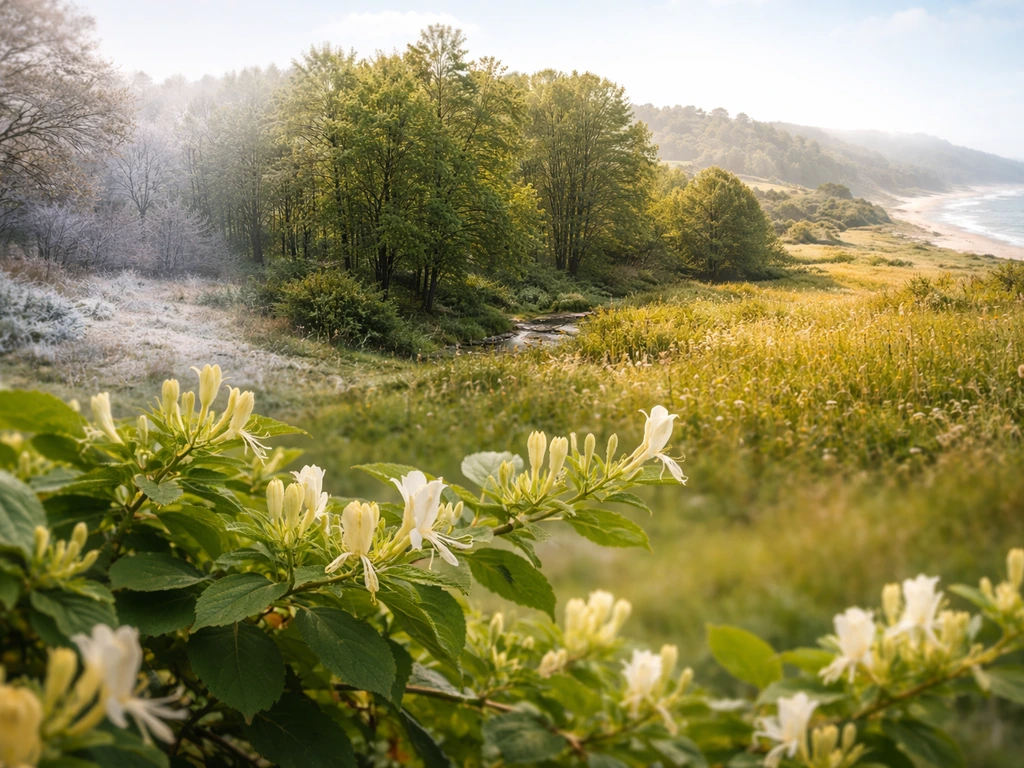
Japanese honeysuckle is rated for USDA zones 4 through 10A, which covers virtually every part of the continental U.S. except the coldest corners of the upper Midwest and mountain West. It originated in Japan and Korea but has naturalized so thoroughly across North America that many people assume it is native. It shows up from California to New England, from the Great Lakes south to Florida, and throughout Texas and the Southeast. Coral honeysuckle, the native alternative, covers a similar but slightly more restricted cold range: zone 5a through zone 11 according to Texas A&M AgriLife Extension, or zone 4 to 9 in some MSU Extension references, meaning it handles most of the same geography.
Climate-wise, honeysuckle is remarkably flexible. It handles cold winters down to around -20°F (zone 5a) in its native forms and tolerates summer heat well into the subtropical South. That said, the plant does noticeably better in regions with at least moderate rainfall during the growing season. In consistently arid climates, it can struggle without supplemental irrigation, though established plants are fairly drought-tolerant once their roots are settled.
Does honeysuckle grow wild (and where to look)
Yes, honeysuckle absolutely grows wild, and depending on where you live, you may have seen it without realizing it. Japanese honeysuckle has naturalized across the eastern U. S. from Maine down to Florida and west through Wisconsin and Texas, with scattered populations in the Southwest.
It tends to show up along forest edges, roadsides, disturbed areas, and fence lines, basically anywhere there is some sun and something to climb. Penn State Extension specifically calls out Japanese honeysuckle as preferring to grow along the edge of disturbances such as wood edges and path edges edge of disturbance habitat, like wood edges and path edges.
Penn State Extension specifically calls out blank" rel="noopener noreferrer">edge-of-disturbance habitat, like wood edges and path edges, as prime territory, which tracks with what you will see driving through rural Pennsylvania, Virginia, or Georgia in early summer.
Coral honeysuckle also grows wild, particularly across the southeastern United States. The South Carolina Native Plant Society recognizes it as a native plant with documented habitat in southeastern states, and if you spend time in woodlands from Florida to Texas, you will occasionally spot its bright red-orange tubular flowers scrambling up a shrubby tree line. It is far less aggressive than Japanese honeysuckle, which is part of why it does not show up quite as prominently along roadsides, but it is genuinely wild in its native range.
If you are in the upper Midwest, it is worth knowing that the northwest Ohio and southeast Michigan region has documented Japanese honeysuckle presence significant enough that land managers have developed specific management protocols for it. So if you are asking whether honeysuckle grows in Michigan, the short answer is yes, both in the wild and in gardens, though you should be thoughtful about which type you plant.
Where it grows best: sun, soil, moisture, and zone fit
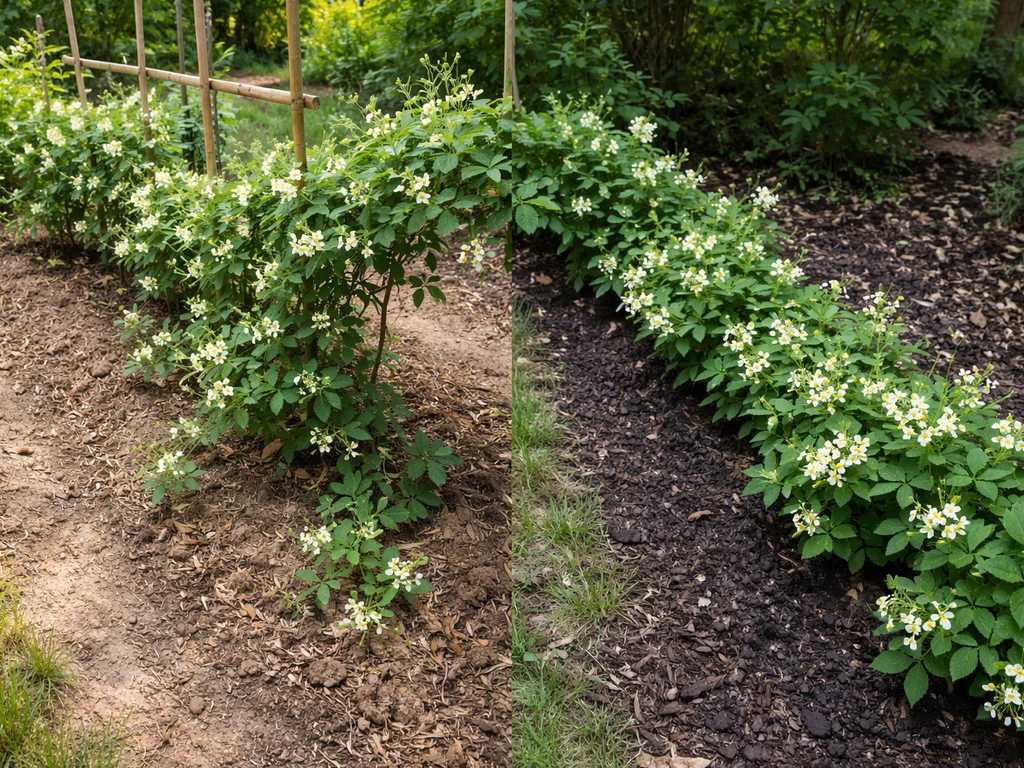
Japanese honeysuckle is famously adaptable to soil conditions. Texas Tech University notes it tolerates poor soils, and UConn Extension confirms it grows in a wide variety of soil types. It thrives in full sun but remains genuinely shade tolerant, which is a rare combination. That shade tolerance is part of why it outcompetes native plants in woodland edges. For garden purposes, full sun will give you the best flowering performance and the most vigorous growth.
Coral honeysuckle is a bit more specific. Texas A&M AgriLife Extension lists full sun as the ideal exposure and recommends well-drained soil with a pH between 5.5 and 6.5. The Florida Native Plant Society gives a slightly broader range of 6.0 to 8.5, and Port St. Lucie Botanical Gardens describes the ideal as moist, well-drained loamy soil with a pH of 6.0 to 8.0. The takeaway: coral honeysuckle wants reasonable drainage, decent soil structure, and as much sun as you can give it, though it will tolerate part shade. Bloom quality drops in shadier spots.
| Condition | Japanese Honeysuckle (L. japonica) | Coral Honeysuckle (L. sempervirens) |
|---|---|---|
| USDA Zones | 4–10A | 4–11 |
| Sun | Full sun to heavy shade | Full sun to part shade |
| Soil | Tolerates poor, varied soils | Well-drained, loamy; pH 5.5–8.5 |
| Moisture | Moderate; drought-tolerant once established | Moderate; moderate water until established |
| Invasive risk | High in most of eastern U.S. | Low; native vine |
What honeysuckle grows on: climbing habit, trellises, and trees
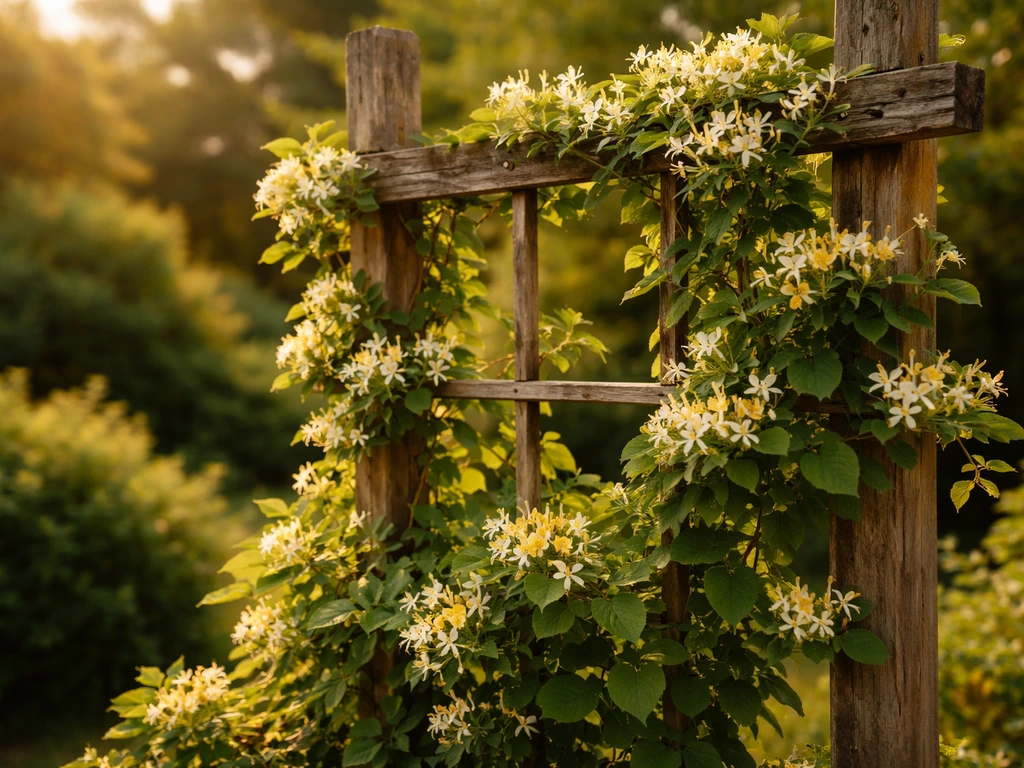
Honeysuckle is a twining vine, meaning it climbs by wrapping its stems around whatever vertical structure it can find. That includes trellises, fences, arbors, walls, and yes, trees. Invasive.org specifically notes that Japanese honeysuckle climbs by twisting its stems around the limbs and trunks of shrubs and small trees. This is not a benign habit. When vines wrap tightly around a tree trunk year after year, they can actually girdle the tree and cut off the flow of water and nutrients. It is one of the main reasons Japanese honeysuckle is treated as a serious invasive in many states.
For garden use, a sturdy trellis, a fence post, or a pergola is the ideal support. Chicago Botanic Garden describes coral honeysuckle (their entry for the 'Blanche Sandman' cultivar) as a woody perennial vine that twines up trellises, walls, and fences and can reach about 18 feet. Japanese honeysuckle can go further, reaching 18 feet or more in length, with single plants capable of producing up to 30 feet of new stem per year under favorable conditions. Give it a solid structure and expect to manage its reach.
When honeysuckle has nothing to climb, it does not just stop growing. University of Maryland Extension notes it will spread horizontally and form a groundcover instead, which is useful to know if you are thinking about using it on a slope or a bare bank. Just understand that in the absence of a structure, it will spread outward, not upward.
How honeysuckle grows over time: vines, spacing, and site placement
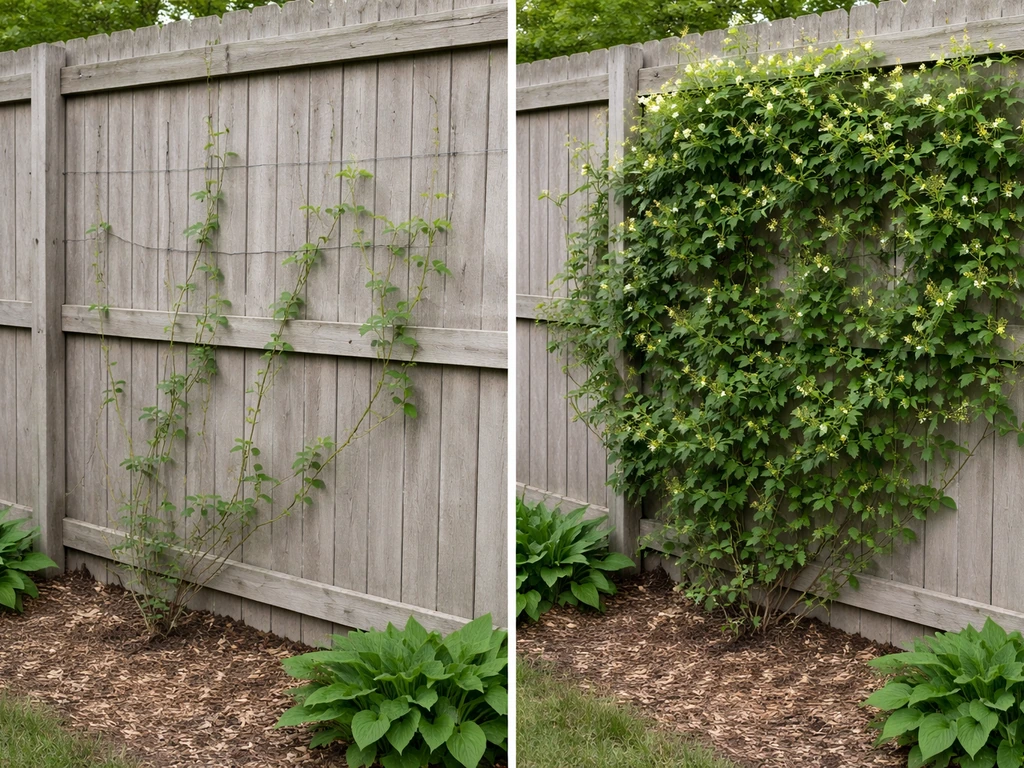
Honeysuckle is a fast grower, and if you underestimate it, it will get away from you quickly. Japanese honeysuckle can push up to 30 feet of new stem in a single growing season, which means you need to think about site placement seriously before you plant. Do not put it near young trees or shrubs it can use as hosts. A fence line, an arbor over a patio, or a sturdy trellis against a wall are all smart placements because you control the structure and can manage the spread.
Coral honeysuckle is a more reasonable grower for most home gardens. The Tried and True document from MGNV lists vine height in the range of about 8 to 20 feet depending on cultivar, and it flowers and fruits seasonally with a predictable structure. It will still need regular pruning to stay tidy, but it is not going to engulf your yard the way Japanese honeysuckle can. UC ANR notes that honeysuckle can spread or climb 15 to 30 feet and may become invasive in the landscape if left alone for several years, so plan for annual maintenance regardless of which species you choose.
For spacing, give vining honeysuckle at least 3 to 5 feet between plants if you are growing multiple plants on a long fence or trellis. A single plant can easily cover a 6-foot section of fencing in two or three growing seasons, so resist the urge to plant too densely at the start. If you are using it as a groundcover, expect one plant to spread 3 to 4 feet in all directions per year under good conditions.
Choosing the best honeysuckle for your region
Native vs. non-native: why this matters more than you think
The most important decision you will make when choosing honeysuckle is species selection, and that decision should be driven by your region and your tolerance for management work. Japanese honeysuckle (Lonicera japonica) is the most widely available and the most vigorous, but UF IFAS lists it on the Florida Noxious Weed List and classifies it as a Category 1 invasive in that state. Across the eastern U.S., it is documented as invasive from Maine to Florida. Planting it is legal in most states, but it comes with real management obligations. If you have woodland, natural areas, or native plantings nearby, it is genuinely risky.
It is also worth noting that not all problematic honeysuckles are vines. Some bush-type honeysuckles, like Amur honeysuckle (Lonicera maackii), are treated as invasive in many states as well. Michigan's invasive species program specifically lists invasive honeysuckle-type plants as a management concern. The broader takeaway: "honeysuckle" is not a single plant, and you need to know the species before you buy.
Coral honeysuckle: the native you should consider first
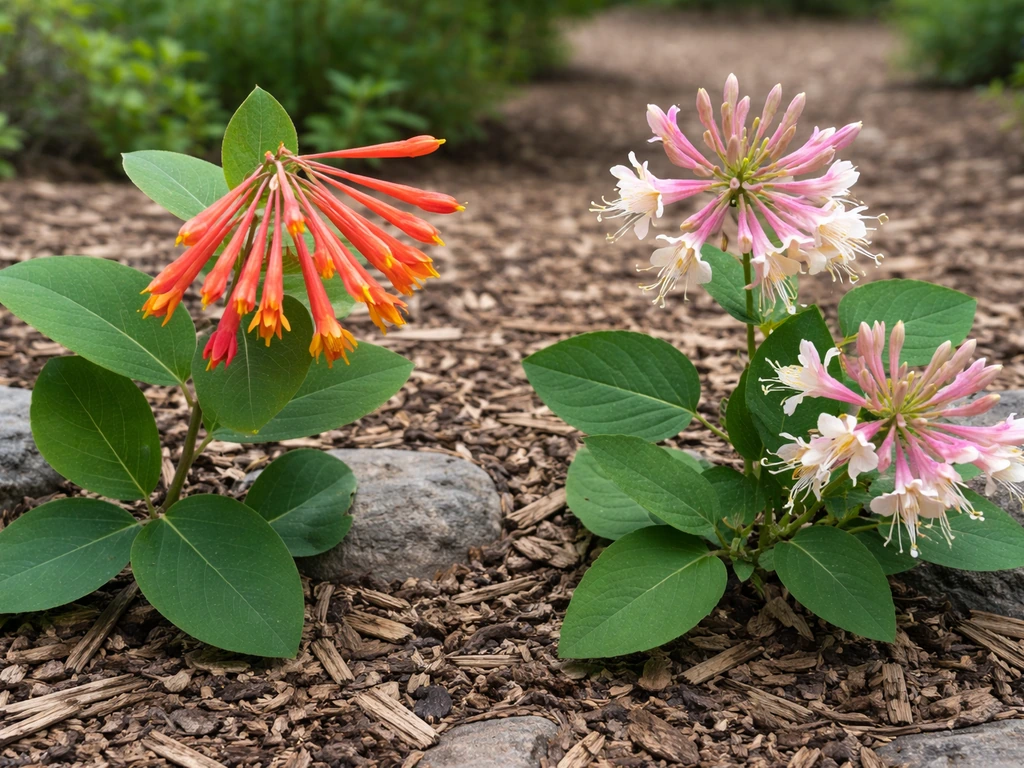
Coral honeysuckle (Lonicera sempervirens) is native to the eastern and southeastern U. S. and is the recommendation most extension programs lead with when someone asks what to plant. Mississippi State University Extension specifically highlights it as both a garden plant and a wildlife champion, noting its value for hummingbirds and pollinators.
It grows across a wide zone range (zones 4 to 11), handles both Texas heat and Michigan winters reasonably well, and does not carry the invasive risk of Japanese honeysuckle. UF/IFAS EDIS states that trumpet honeysuckle (Lonicera sempervirens) is hardy in USDA hardiness zones 4 through 10A [It grows across a wide zone range (zones 4 to 11)](https://edis. ifas. ufl.
edu/publication/FP354). If you are in the South or Southeast, this is almost always the right call.
NativePlants.info distribution data confirms coral honeysuckle occurrence across many U.S. states including both Texas and Michigan, which tells you it is not just a deep-South plant. If you are wondering whether honeysuckle grows well in Texas, coral honeysuckle is genuinely at home there, especially in the eastern half of the state where soils and moisture levels suit it best.
European and cultivated options
If you want something with strong fragrance and a cultivated appearance, Lonicera periclymenum (woodbine or European honeysuckle) is worth considering. The Morton Arboretum covers several named cultivars of this species, and popular varieties like 'Scentsation' are rated to USDA zone 4, making them cold-hardy across most of the northern U.S. The Spring Meadow Nursery grower sheet for 'Scentsation' notes it may push a lot of soft, tender growth in very warm climates, so if you are gardening in zones 8 and above, you may get a rangy plant in summer heat. This species is generally less invasive than Japanese honeysuckle, but as always, check your state's invasive species list before planting any non-native.
Matching honeysuckle to your state: next steps before you buy
Before you purchase any honeysuckle, here is a practical checklist to avoid buying the wrong thing. Start by confirming your USDA hardiness zone, which you can look up by ZIP code. Then check whether the species you are considering is on your state's invasive plants list, because this varies significantly by state and is updated regularly. Finally, consider your site conditions: how much sun, what kind of soil drainage, and what structure will the vine climb.
- Confirm your USDA hardiness zone by ZIP code before shopping.
- Check your state's invasive species list for any honeysuckle species you are considering, especially Japanese honeysuckle.
- Choose coral honeysuckle (L. sempervirens) if you are in the eastern or southeastern U.S. and want a low-maintenance, wildlife-friendly vine.
- Choose Japanese honeysuckle only if you have a contained site, a solid management plan, and no nearby natural areas.
- Plan your support structure before planting: a sturdy trellis, pergola, or fence line works best.
- Avoid planting any twining honeysuckle near young trees or shrubs it can use as a host.
If you want to go deeper on regional fit, there is solid guidance available for specific states. For a broader look at how honeysuckle is distributed across different parts of the country, the breakdown of where honeysuckle grows across the U. S. is a useful next read.
And if you are on the West Coast, the article on whether honeysuckle grows in California covers the specific climate considerations for that state, where some species naturalize readily and others struggle with summer drought. The bottom line is that honeysuckle is one of the more forgiving vines you can grow, but picking the right species for your region is the single step that separates a beautiful seasonal bloomer from a landscape problem.
FAQ
If I see honeysuckle growing wild near my house, does that mean the same type will work in my yard safely?
Not necessarily. Honeysuckle often shows up as “Japanese” in nurseries, but nurseries can also label cultivars that look similar. Before buying, confirm the exact species name on the plant tag (for example, Lonicera japonica vs Lonicera sempervirens), and then cross-check that species against your state’s invasive list.
How likely is it that honeysuckle will spread beyond where I plant it?
It can, especially for Japanese honeysuckle. Even if you only have a small patch, vines can root where stems touch the ground or spread outward when there is no climbing structure, so “out of sight” does not mean “contained.” Plan for annual checks along the base, fence line, and any nearby shrubs.
When should I prune honeysuckle so it still flowers, but stays under control?
Yes, but timing matters. In many gardens you will get better control by pruning right after the main flowering period rather than waiting until late winter, because some native species set flower buds on newer or late-season growth. If you prune too early or too hard, you can reduce that season’s blooms.
What should I do if honeysuckle struggles in my region even though it’s supposed to grow there?
In drier climates, the biggest failure is assuming “drought-tolerant” means “no irrigation.” Coral honeysuckle especially performs best with consistent moisture during establishment. A practical approach is deep watering 1 to 2 times per week for the first growing season, then reassess based on rainfall and how quickly the soil dries.
I planted it where it can get some shade. Why is my honeysuckle not flowering well?
For vining honeysuckle, too little sun is one of the most common reasons people get lots of leaves but fewer flowers. Japanese honeysuckle is more shade tolerant than coral, but bloom quality still improves as light increases. Aim for the sun level the species prefers, typically full sun for best flowering.
Do I really need a trellis, or can I let honeysuckle grow on a fence naturally?
Fences and trellises help, but they must be sturdy. A mature vine can become heavy and keep pushing growth upward, so weak mesh or wobbly posts fail over time. Use a support rated for climbing plants (secure attachment points, solid posts, and enough room for maintenance access).
Is coral honeysuckle the safest choice for wildlife-friendly gardening without turning into an invasive problem?
Possibly, depending on the species and where you live. Coral honeysuckle is widely recommended as a native alternative in many regions, but it can still spread and attract wildlife. Check your invasive list first, then choose a native species if the goal is “minimal management” and “low risk near woods.”
What’s the risk if my honeysuckle starts growing into nearby trees or shrubs?
If it’s climbing or twining up neighboring trees and shrubs, you should treat it like a plant that can cause damage. Japanese honeysuckle is known for girdling issues, but any vigorous vine can stress weaker branches. Remove and redirect vines promptly and avoid placing it next to young trees you want to keep.
Can I tell Japanese honeysuckle from coral honeysuckle just by looking at the plant at purchase?
Yes, and it helps avoid wasting money. Honeysuckle often looks “about the same” from a distance, but the underlying species decides invasiveness and care needs. If your local nursery cannot confirm the species name, buy elsewhere, because the tag label is the only reliable way to distinguish them.
What’s a simple containment plan for the first year after planting honeysuckle?
If you want to control it without constant trimming, choose a plan that matches your goal. Use a dedicated trellis with limited reach, keep a bare-mulch boundary at the base for easy monitoring, and prune annually. For any species you’re unsure about, start with one plant, observe how far it extends, then decide whether to expand.