Here is the regional short version: coastal California (zones 9–11), the Bay Area, the Central Valley, and most inland foothills are all excellent for honeysuckle. Mountain areas above 5,000 feet work too, especially with cold-hardy natives. The low desert (think Palm Springs or the Imperial Valley, zones 10–11) is the one zone where most honeysuckles struggle with brutal summer heat and dry air. Everywhere else in California, you have real options.
Native, ornamental, or invasive: know what you are buying
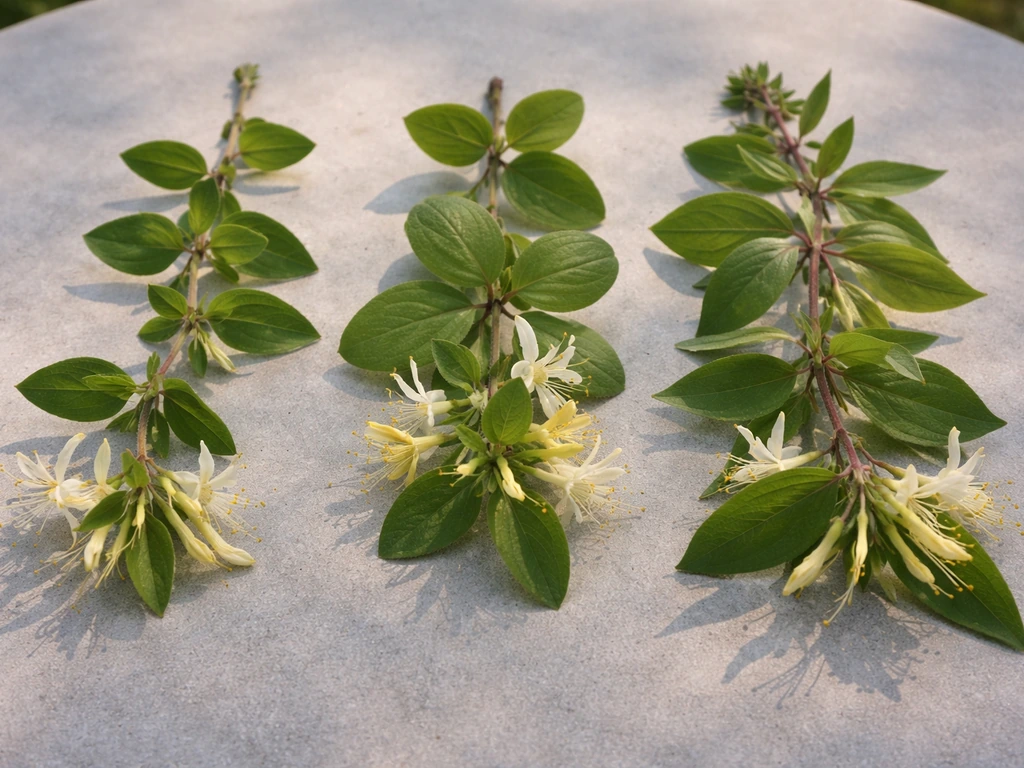
California has several honeysuckle species that are genuinely native and others that are non-native ornamentals. Then there is Japanese honeysuckle (Lonicera japonica), which is a whole different conversation. Let me break these down.
California native honeysuckles
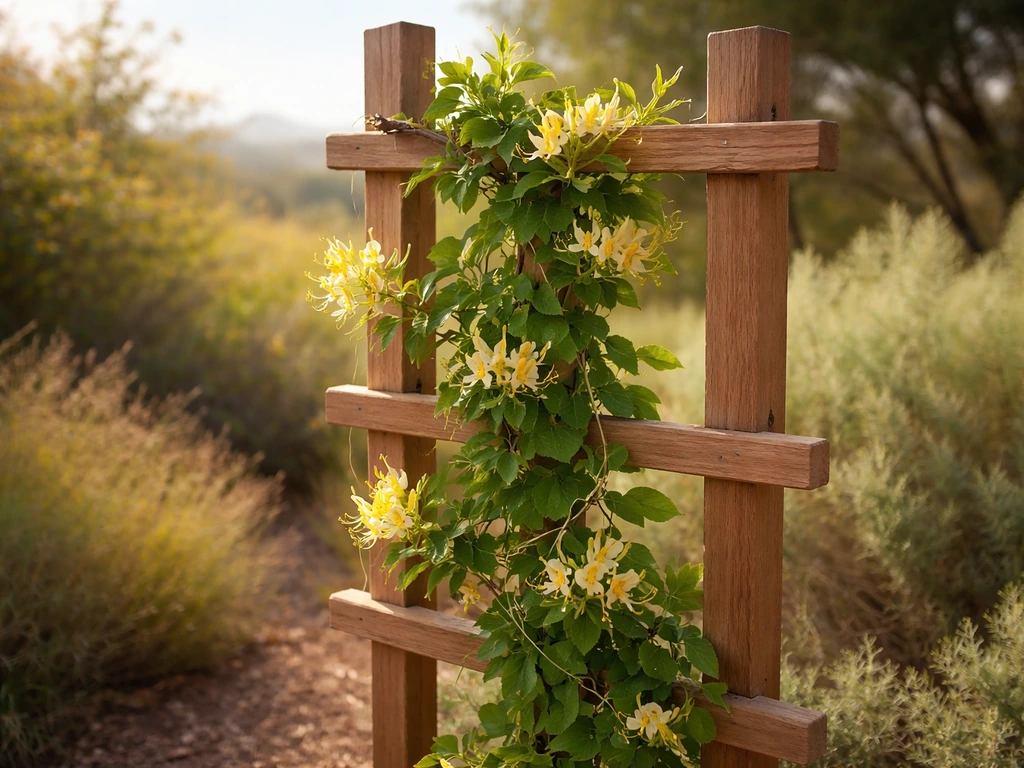
Pink honeysuckle (Lonicera hispidula) is the workhorse native for most California gardens. It is a vine that can also be grown as a shrub, and it is adapted to a wide range of conditions across the state, from coastal scrub to inland foothills. It does well in clay soil with minimal water once established, which makes it a genuinely practical choice for water-conscious California gardeners. It is commonly trained on a trellis or wall, and it handles both full sun and partial shade depending on your region. If you are in the Bay Area, the foothills, or coastal Southern California, this is one of the first plants I would point you toward.
Twinberry honeysuckle (Lonicera involucrata) is another California native, more of a shrub than a vine. It prefers moist areas and tolerates a wide soil pH range (roughly 5.5 to 8), though it has no salinity tolerance, so skip it if you are right on the coast with saline soil conditions. It is a great choice for coastal wetland margins, riparian edges, and areas of the North Coast and Sierra foothills with consistent moisture.
Santa Barbara honeysuckle (Lonicera subspicata var. subspicata) is worth knowing about even if you probably cannot plant it. It is a rare, evergreen perennial shrub that is endemic to California, ranked CNPS 1B. CNPS Rare Plants Program lists Santa Barbara honeysuckle as found only in California, ranked 1B.2 ranked CNPS 1B.. 2, meaning it is rare, threatened, or endangered in California and elsewhere. It naturally occurs in chaparral, cismontane woodland, and coastal scrub at elevations from roughly 10 to 1,000 meters. It is listed here because it shows just how locally adapted some California honeysuckles are, but it is not something you will find at your local nursery and it is not appropriate for general garden use.
Non-native ornamental honeysuckles
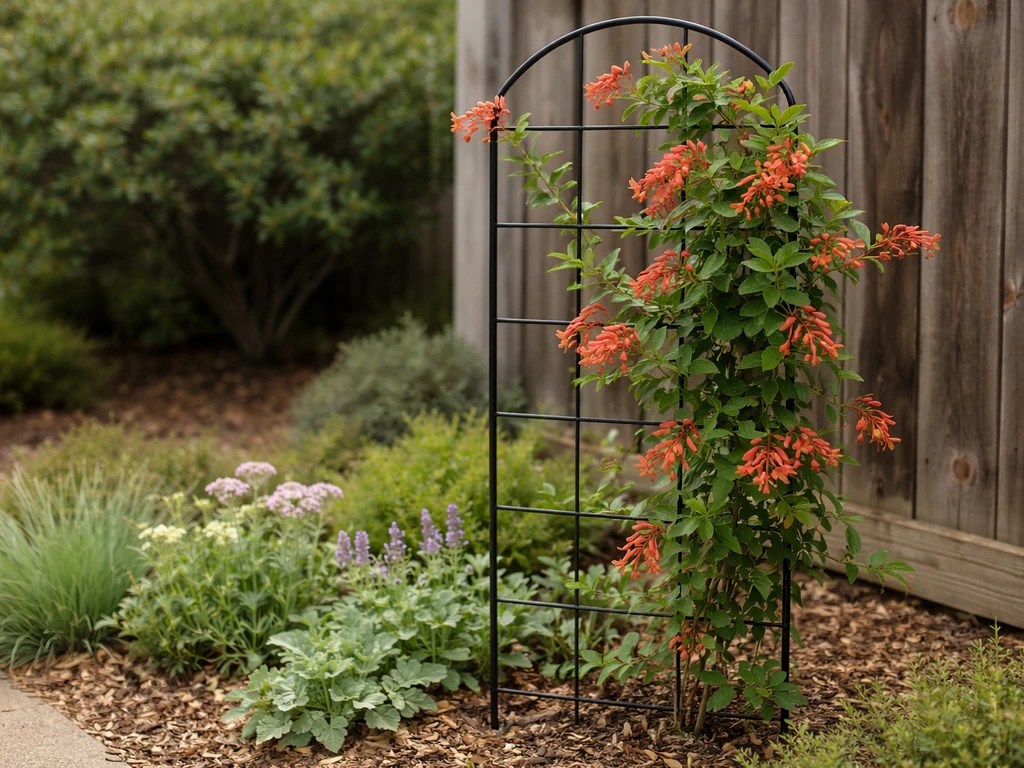
Coral honeysuckle (Lonicera sempervirens) and some hybrid ornamental varieties are available at California nurseries and can be grown responsibly. These are not native to California but are generally considered low-invasive-risk in most parts of the state. They give you the classic flowering vine look with less ecological baggage than the invasive species. If you want that showy climbing vine for a pergola or fence, these are a better choice than going straight for Japanese honeysuckle.
The invasive ones to avoid
Japanese honeysuckle (Lonicera japonica) is the one to know about and stay away from. It has few natural enemies in North America, which is exactly why it spreads so aggressively and out-competes native species once it escapes a garden. In California it generally establishes below about 3,300 feet, which covers most of where people actually live and garden. Cal-IPC has issued a specific Weed Alert for it, and the California Department of Fish and Wildlife's "Don't Plant Me!
" program directs homeowners to the Cal-IPC Invasive Plant Inventory for species exactly like this. Cal-IPC also maintains an inventory-facing horticulture plants page that catalogs plants known to occur in horticulture and links to its risk assessment and profile pages within the Cal-IPC Inventory framework Cal-IPC Invasive Plant Inventory.
No biological control agent is currently available for Japanese honeysuckle, so if it gets out of hand, you are managing it manually. The same warning applies to Tatarian honeysuckle (Lonicera tatarica), Morrow's honeysuckle (L. morrowii), and the bella hybrid (L. x bella).
All of these are on the "do not buy, do not plant" list.
How California's climate zones line up with honeysuckle
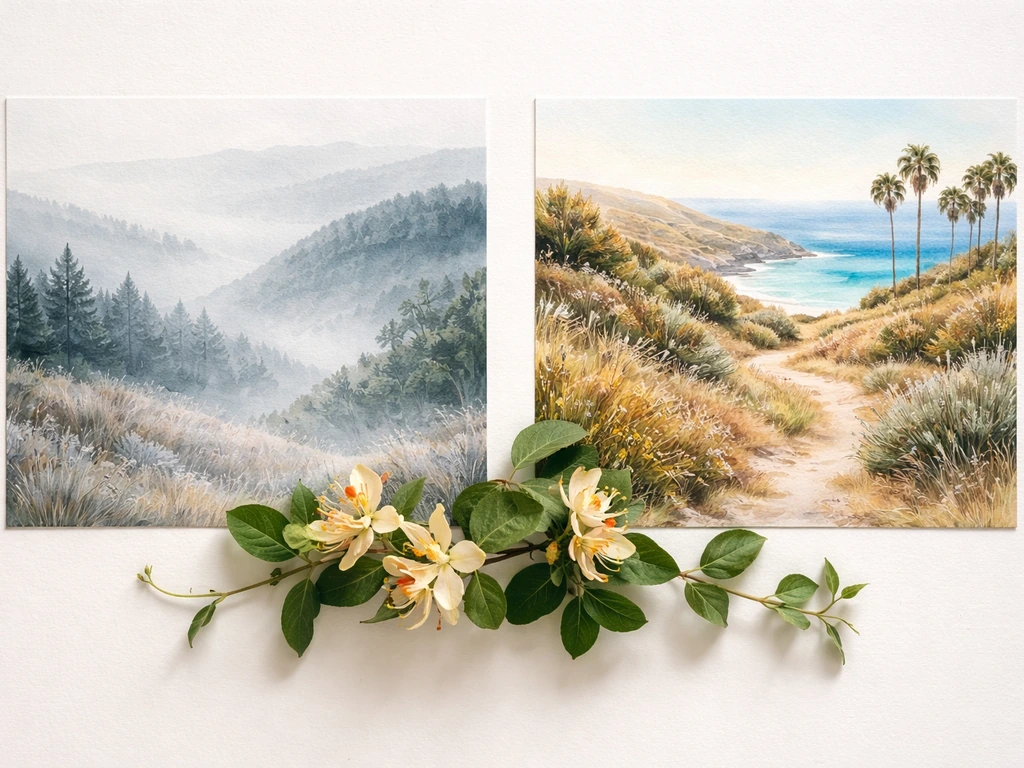
California is one of the most climatically diverse states in the country. It spans USDA hardiness zones 5a through 11a, meaning a gardener in Truckee and a gardener in San Diego are working with completely different parameters. Where honeysuckle grows across the US is heavily shaped by winter cold and summer moisture, and California's variation makes it important to know your specific zone before you buy anything.
| California Region | Typical USDA Zone(s) | Honeysuckle Feasibility | Best Types |
|---|
| Coastal SoCal (LA, SD) | 10a–11a | Excellent | L. hispidula, coral honeysuckle |
| Bay Area / Central Coast | 9b–10b | Excellent | L. hispidula, twinberry, coral honeysuckle |
| Central Valley | 9a–10a | Good (heat tolerant variety needed) | L. hispidula, coral honeysuckle |
| Inland Foothills | 8b–9b | Good | L. hispidula, twinberry |
| Mountain Regions (above 4,000 ft) | 5a–7b | Good with cold-hardy natives | L. involucrata, native shrub types |
| Low Desert (Palm Springs, Imperial Valley) | 11a–12 | Difficult; intense heat/dry air | Limited; avoid most types |
Coastal and Bay Area
The coastal strip from San Diego up through the Bay Area is genuinely ideal for honeysuckle. Mild winters, moderate summers, and consistent moisture from marine layer and fog make this some of the most hospitable territory for the plant. Tule fog can drift into Bay Area valleys through the Carquinez Strait and keep temperatures cooler and more humid than inland areas, which actually benefits moisture-loving honeysuckle varieties. Lonicera hispidula handles the coastal sun-and-part-shade balance perfectly, and it is well adapted to the sandy and loamy soils common near the coast.
Central Valley
The Central Valley gets hot, dry summers, and that is the main challenge here. Honeysuckle can still work, but you need to choose varieties with heat and drought tolerance and plan your irrigation accordingly. Lonicera hispidula, with its clay soil tolerance and low water requirements, is well suited here. Plant it where it gets afternoon shade, give it a good deep watering system, and it will establish and hold. The valley's foggy winters are not a problem at all.
Foothill areas like the Sierra Nevada foothills and inland Southern California ranges are solid honeysuckle territory. Temperatures are moderate, soils tend to be well-drained, and you often have enough winter chill to keep plants healthy. As you move into the mountains proper, native species like twinberry honeysuckle are your best bet. They are built for the cold and the moisture patterns at elevation. Honeysuckle grown in Michigan sees similar cold-winter conditions to what California's higher elevations experience, so the same cold-hardy natives that survive there give you a reliable reference point for what can handle a California mountain winter.
Desert regions
The low desert is where I would pump the brakes. Zones 11 and above in places like Palm Springs, the Coachella Valley, or the Imperial Valley throw sustained 110-degree summers and very low humidity at plants. Most honeysuckle varieties, including natives, are not designed for that. If you are in a desert region and have your heart set on a flowering vine with some honeysuckle character, consider alternatives like desert honeysuckle (Anisacanthus thurberi) which is not a true Lonicera but gives you a similar hummingbird-friendly flowering look in an extreme-heat-adapted package.
Sun, water, and soil: what honeysuckle actually needs in California
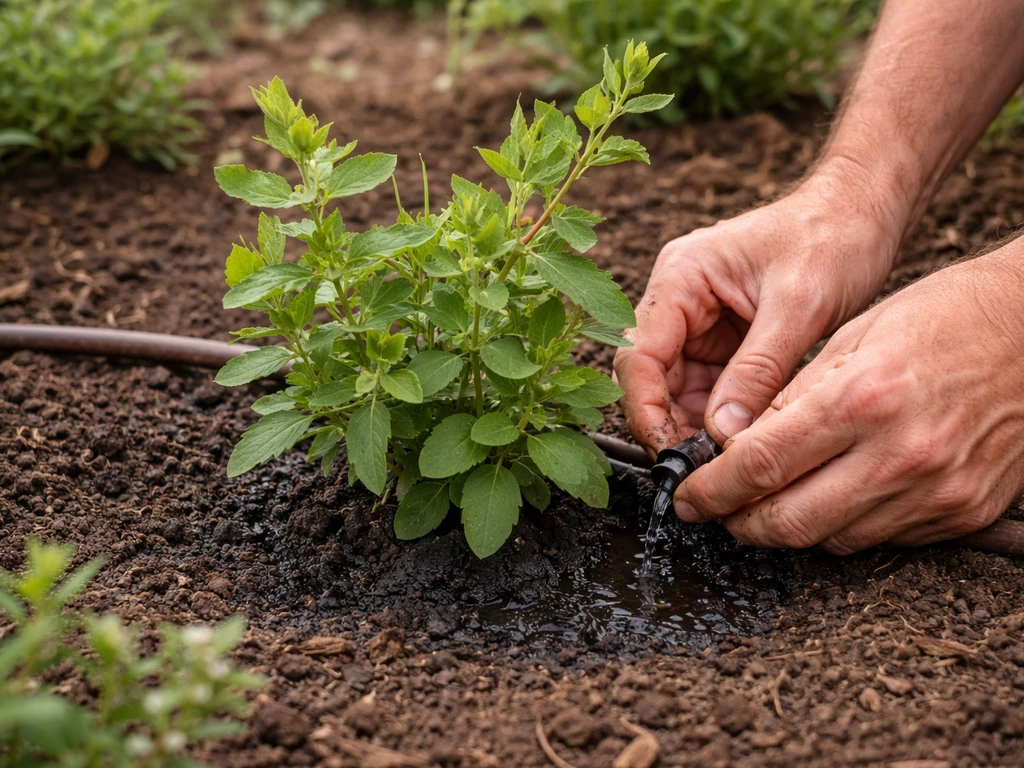
Understanding where honeysuckle grows best comes down to a few practical basics that apply especially well in California's variable conditions. Here is what to know before you dig a hole.
Sun exposure
Most California honeysuckles, especially Lonicera hispidula, are adapted to the "woodland edge" situation: roots in shade, foliage reaching toward sun. For coastal and Bay Area gardens, full sun to partial shade both work. For the Central Valley and inland foothills, partial afternoon shade will protect the plant from heat stress during peak summer. Mountain plantings can handle more full sun since temperatures are lower. The Theodore Payne Foundation recommends Lonicera hispidula for coast-sun, coast-part-sun, inland-sun, and inland-part-sun situations, which tells you how flexible it really is.
Water
Once established, Lonicera hispidula needs watering roughly every two to four weeks, making it a legitimate California water-wise plant. During the first year, water more frequently to help roots establish, then back off. In the Central Valley and desert-adjacent areas, you may need to push toward the shorter end of that range during summer. Twinberry honeysuckle (L. involucrata) is the exception and needs consistent moisture, so it is better suited to naturally wet or irrigated spots.
Soil
This is where California native honeysuckles really shine. Lonicera hispidula is documented to do well in clay soil, which is incredibly useful in the Central Valley and foothill regions where heavy clay is common and a lot of ornamental plants struggle. It also grows in loam and sandy loam. Twinberry honeysuckle handles a pH range of about 5.5 to 8, giving it decent flexibility, though it will not tolerate saline soils. Overall, honeysuckle is not a fussy plant about soil quality as long as you are not planting it in waterlogged or compacted ground with no drainage.
Where to plant it and how to keep it in check
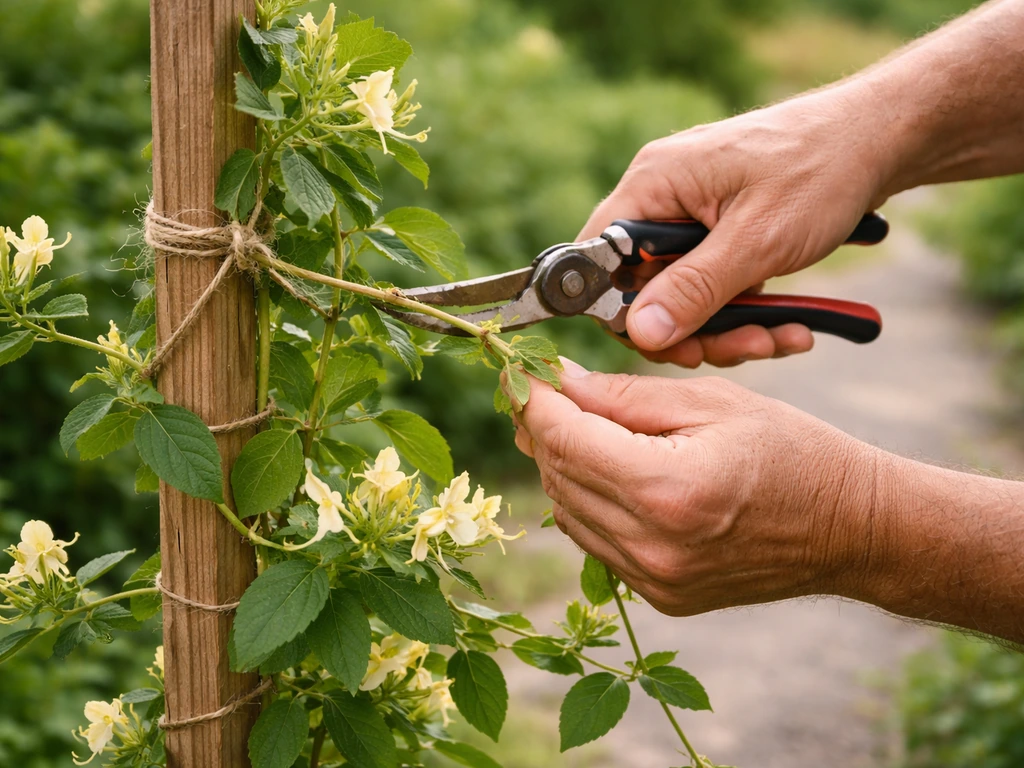
Placement is everything with honeysuckle. It is a vine, which means it will grow wherever it can grab hold, and if you do not give it a job, it will find one you did not plan on. Give it a trellis, a fence, a pergola post, or a rock wall. Plant it near a structure where you can monitor how far it spreads. Keep it away from native plant areas, riparian corridors, or any area that backs up to wildland, especially if you are not growing a California native species.
Pruning is simple but necessary. Cut it back by about one-third after the main bloom period in spring or early summer. This keeps the plant from getting too woody and sprawling out of its lane. For a vine on a fence, check the ends regularly and redirect or cut back any runners that are heading somewhere you do not want them. For native shrub-form honeysuckles, just shape them lightly and remove dead wood in late winter.
The containment issue matters most if you are anywhere near open land. Even well-behaved non-native ornamentals can drop seeds that birds spread. Bay Area gardeners in particular should be aware that many invasive landscaping plants escape gardens into nearby natural areas, which is exactly why the Bay Area has put out guidance on choosing non-invasive alternatives. If you are planting near wildland interface areas, stick with California natives like L. hispidula and L. involucrata. They belong here and will not cause ecological problems if they spread.
Pollinators, pest issues, and what to plant nearby
One of the best reasons to grow native honeysuckle in California is the pollinator value. Lonicera hispidula and other natives are highly attractive to hummingbirds and native bees. If you are trying to build a pollinator-friendly yard, honeysuckle is one of the more effective tools you have. Plant it near other native shrubs like toyon, coffeeberry, or ceanothus and you will create a layered habitat that benefits wildlife through multiple seasons.
On the pest side, California honeysuckles are generally low-maintenance. Aphids are the most common issue and they tend to cluster on new growth in spring. A strong blast of water from a hose knocks them back without any chemicals needed. Powdery mildew can appear in spots with poor air circulation, especially in coastal areas where marine layer humidity stays high, so give plants enough space between them and nearby structures. Root rot is possible in poorly drained or overwatered conditions, so lean toward underwatering once the plant is established.
If you are gardening near Texas or thinking about regional comparisons, whether honeysuckle grows in Texas follows some similar logic around heat zones and native versus invasive species choices, though California's coastal cooling gives it some advantages Texas lacks in its hotter regions.
Your next steps: confirm your zone, pick your variety, and get planting
Here is exactly what I would do if I were in your position right now:
- Look up your USDA hardiness zone. Go to the USDA Plant Hardiness Zone Map and enter your zip code. California spans zones 5a through 11a, so knowing your specific zone tells you immediately which varieties are realistic for your yard.
- Check your microclimate. Are you in a fog belt? A south-facing slope that gets extra heat? A frost pocket in a valley? These factors matter more than your zone label alone. Talk to neighbors or a local UC Cooperative Extension Master Gardener if you are unsure.
- For most California gardeners: start with Lonicera hispidula. It is native, water-wise, clay-tolerant, works in sun or partial shade, and is available at California native plant nurseries. It is genuinely hard to go wrong with this one in most of the state.
- If you want a showier flowering vine and are willing to go non-native: look for coral honeysuckle (Lonicera sempervirens) or named ornamental cultivars at a reputable nursery. Ask explicitly whether the variety is on the Cal-IPC invasive list before you buy.
- Avoid Japanese honeysuckle (Lonicera japonica), Tatarian honeysuckle, Morrow's honeysuckle, and the bella hybrid entirely. These are the species that give all honeysuckles a bad reputation in California.
- Plan your placement before you plant. Decide where you want the vine to go, install a trellis or support structure first, and give it a spot where you can keep an eye on spread.
- Water weekly for the first summer, then dial back to every two to four weeks in year two and beyond for established L. hispidula. Add a layer of mulch to retain soil moisture and you are done.
The bottom line is that California is genuinely one of the better states for growing honeysuckle, especially if you go with native varieties. You have the climate, the soils, and the pollinators to make it work. You just need to be deliberate about which species you choose and where you put it.