
Mimosa hostilis can technically grow in Australia, but only in a narrow band of frost-free, warm, and reasonably wet regions. For most Australian gardeners, the honest answer is: it's very difficult to grow outdoors, it faces serious biosecurity restrictions (and in Queensland it's outright prohibited), and even in warm climates it's not the carefree, ornamental shrub many people picture. If you're planning a garden and this plant is on your list, you need to know those facts before you spend time or money chasing it.
Does Mimosa Hostilis Grow in Australia? Suitability Guide

Marcus Hartwell
2 Jun 2026
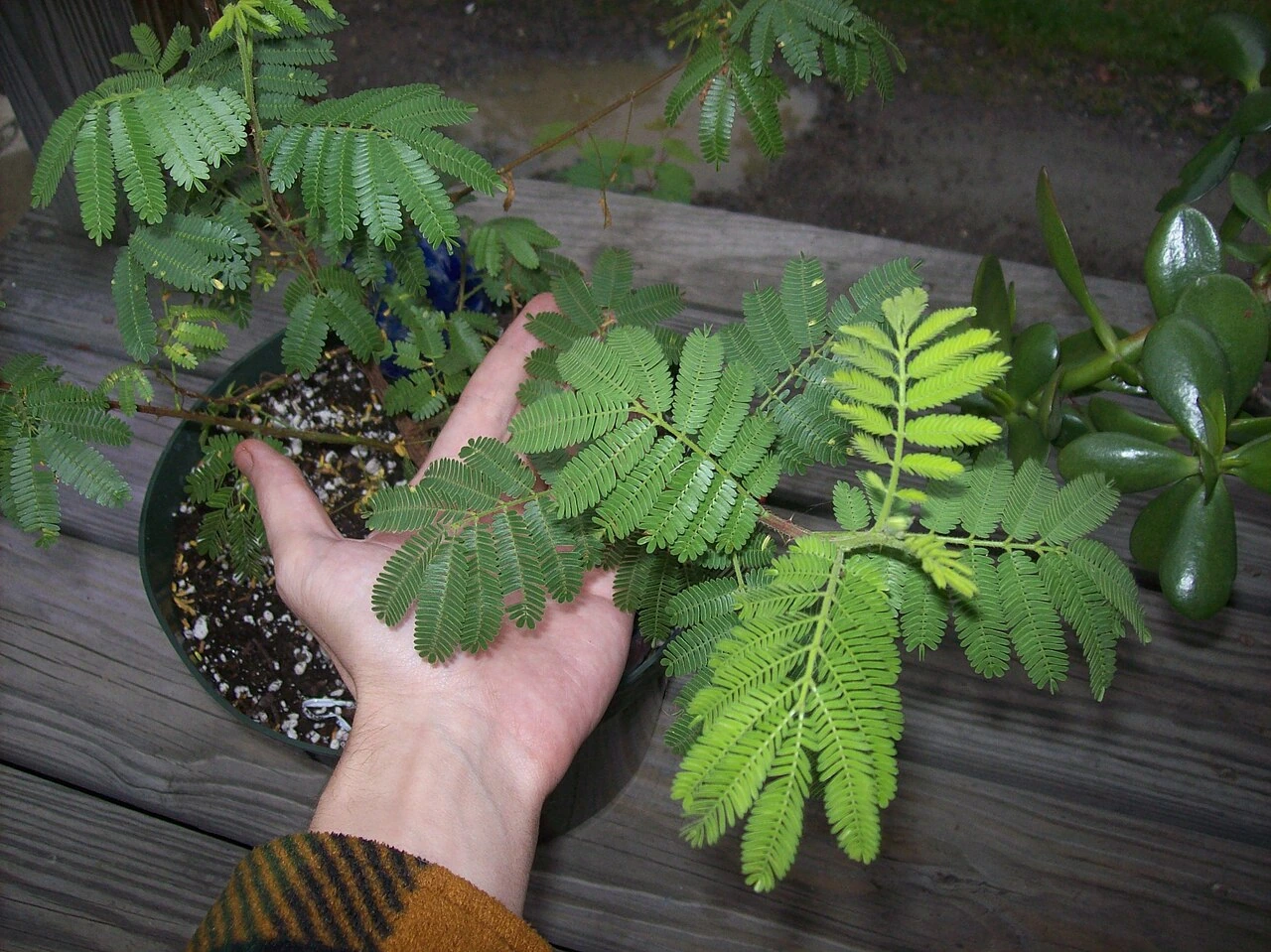
What Mimosa hostilis actually is (and why searches get so confusing)
Mimosa hostilis is a small deciduous tree native to northeastern Brazil, where locals call it Jurema Preta or Brazilian Jurema. Its scientific synonym is Mimosa tenuiflora, and you'll see both names used interchangeably online. That's the first source of confusion.
The second is that 'mimosa' is a casual common name applied to a pile of unrelated plants: Acacia dealbata (the fluffy yellow flowering tree widely known as 'silver wattle' or 'mimosa' in Europe), Albizia julibrissin (the Persian silk tree, also called mimosa in the US), and even Mimosa pudica (the touch-me-not plant sold in nurseries as a novelty). When someone searches 'does mimosa grow in Australia,' they might mean any one of these.
This article is specifically about Mimosa hostilis/tenuiflora, the Brazilian Jurema. If you're after Acacia dealbata or Albizia julibrissin, those are different plants with very different growing requirements and legal status.
The direct answer: will it grow outdoors in Australia?

In a small number of Australian regions, yes. In most of Australia, no, not reliably outdoors. The plant is frost-tender and needs warm, humid conditions to survive. This means northern Queensland, the Top End of the Northern Territory, and some sheltered coastal pockets in northern Western Australia are the places where outdoor growing is even theoretically viable.
Everywhere else, including Sydney, Melbourne, Perth, Adelaide, and most of regional New South Wales, you're looking at frost risk killing it or the dry winters shutting it down. And in Queensland, there's an additional legal barrier: Mimosa tenuiflora (syn. Mimosa tenuiflora (syn. Mimosa hostilis) is identified in Queensland’s weed/biosecurity publications as a “new invasive species for Queensland and Australia” linked to “Brazilian jurema,” and it is listed as a prohibited invasive plant [Mimosa tenuiflora (syn.
- p5s6 Mimosa hostilis) is listed as a prohibited invasive plant under Queensland biosecurity legislation](https://www. qld. gov. au/_data/assets/pdffile/0033/68478/weed-bulletin-nov2015.
pdf). Mimosa hostilis) is listed as a prohibited invasive plant under Queensland biosecurity legislation, meaning you can't legally grow, sell, or distribute it there at all.
Climate requirements vs Australian regions: how they line up
In its native habitat in northeastern Brazil, Mimosa hostilis grows in semi-arid to sub-humid tropical conditions. It handles poor, rocky soils, gets by with modest rainfall (often 500 to 1,000mm annually), and thrives in heat. What it absolutely cannot handle is frost. Even a light frost will damage young plants and repeated or hard frosts will kill them. It also struggles with prolonged wet and cold winters, which rules out most of temperate Australia.
| Australian Region | Frost Risk | Climate Match | Outdoor Viability |
|---|---|---|---|
| Far North Queensland (Cairns, Cooktown) | None | Tropical, humid | Possible but legally prohibited in Qld |
| Darwin / Top End NT | None | Tropical wet/dry | Best climate match in Australia |
| Coastal North WA (Broome, Kununurra) | None to very low | Hot semi-arid | Reasonable with irrigation |
| South East Queensland (Brisbane, Gold Coast) | Occasional light frost | Subtropical | Legally prohibited in Qld |
| Northern NSW (Byron Bay, Lismore) | Occasional light frost | Subtropical to warm temperate | Marginal; frost risk is real |
| Sydney and surrounds | Frost possible inland | Warm temperate | Unlikely outdoors without protection |
| Melbourne, Adelaide, Tasmania | Regular frost | Cool temperate | Not viable outdoors |
| Perth metro | Occasional light frost | Mediterranean | Dry summers help; cold winters don't |
The South Australian Government's own declared plant policy puts it bluntly: Mimosa is not frost hardy, and in South Australia would need glasshouse protection to grow at all. That's a useful benchmark for anywhere in Australia that experiences winter temperatures below about 5°C.
Can you grow it in a container or greenhouse?
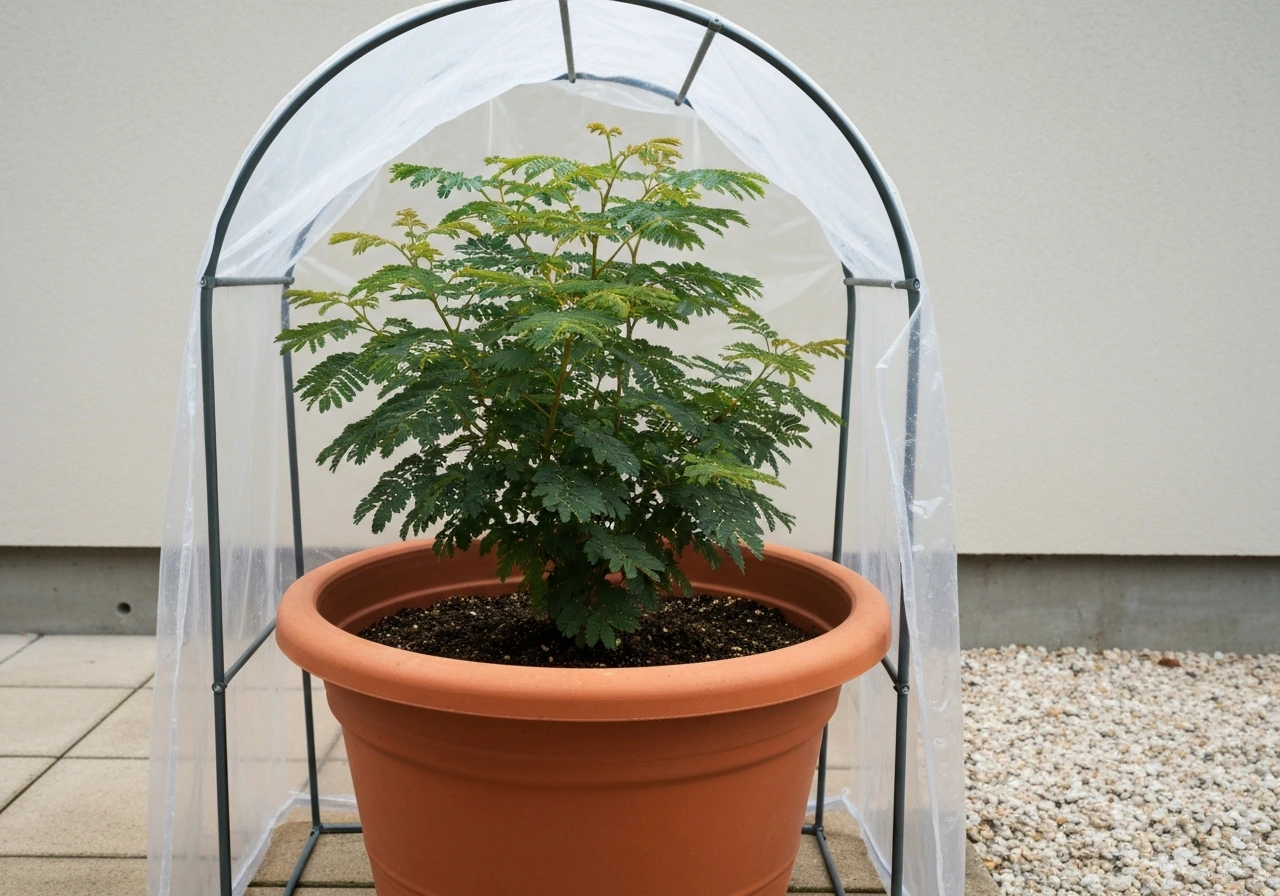
Yes, and this is where gardeners in cooler parts of Australia have the most realistic path forward. Mimosa hostilis is a woody tree that can reach 8 metres in the ground, but in a large container it stays much smaller and more manageable. Growing in a pot lets you move the plant under cover before your first frost and back outside in spring.
This approach is different from hibiscus propagation, where you can try rooting hibiscus from leaf cuttings as a way to start new plants can hibiscus grow from leaves. A greenhouse or large glasshouse gives you even more control, letting you maintain the warm, frost-free environment the plant needs year-round. If you’re wondering can hyacinth grow in the tropics, the key factor is usually whether temperatures stay consistently warm and frost-free frost-free environment the plant needs year-round.
For container growing to work, you need a container that's at least 40 to 50 litres to give the root system enough room, a very free-draining mix (think coarse sand and perlite blended with potting mix), and a spot that gets full sun for most of the day. The plant does not like sitting in wet soil, so drainage is non-negotiable. In Sydney, Melbourne, or Adelaide, a warm north-facing courtyard or a heated greenhouse lets you push the boundaries of what's feasible.
- Use a 40-50 litre pot minimum with large drainage holes
- Blend coarse sand and perlite into your potting mix to prevent waterlogging
- Place in a full-sun position, ideally north-facing and sheltered from southerly winds
- Move indoors or under glass when overnight temperatures drop below 5°C
- Water sparingly in winter; this plant goes semi-dormant and hates wet, cold roots
- In a heated greenhouse, it can grow year-round in Melbourne or Adelaide
How to check your garden's compatibility right now
Before you do anything else, look up your local frost dates. In Australia, the Bureau of Meteorology publishes historical climate data for most towns and suburbs. Search for your nearest weather station and check the average minimum temperatures for June and July. If you're regularly seeing minimums below 5°C, you're in risky territory for this plant outdoors.
- Check BOM (bom.gov.au) for your local station's average July minimum temperature. Below 5°C means frost risk; below 2°C means the plant will likely die outdoors.
- Identify your Australian climate zone using the BOM climate classification map. Zones 1 (equatorial) and 2 (tropical) are the best fit. Zone 3 (subtropical) is marginal. Zones 4 through 6 (temperate, semi-arid, desert) require greenhouse protection.
- Check your soil drainage by digging a 30cm hole, filling it with water, and seeing how long it takes to drain. If water is still sitting after an hour, your drainage is too poor for this plant in the ground.
- Search your state's biosecurity or agriculture department website for 'Mimosa tenuiflora' or 'Mimosa hostilis' before you try to source any plants or seeds. Queensland has it explicitly prohibited.
- Look at your yard's microclimates: a north-facing wall or a courtyard surrounded by brick can add 2 to 3 degrees of warmth overnight, which can make a marginal location workable for container plants.
Plant availability and the legal situation in Australia
This is where things get complicated. Mimosa hostilis/tenuiflora has a serious biosecurity status in Australia. In Queensland, the plant is explicitly named as a prohibited matter under biosecurity legislation, and Queensland's weed spotters' network has flagged it as a new invasive species for both Queensland and Australia. That means in Queensland you cannot legally possess, grow, sell, or distribute it. Penalties for breaching biosecurity legislation in Queensland are significant.
In other states, the status varies. South Australia's declared plant policy flags it as a concern requiring glasshouse protection and notes specific restrictions. If you're in any other state, check with your state's agriculture or biosecurity department before attempting to import seeds or plant material from interstate or overseas. Australia's federal biosecurity laws also restrict the import of plant material, and seeds purchased online from overseas sources may be intercepted at the border. The short version: sourcing this plant legally and safely in Australia is genuinely difficult, and ignoring the biosecurity rules isn't worth the risk.
Better alternatives for Australian gardens
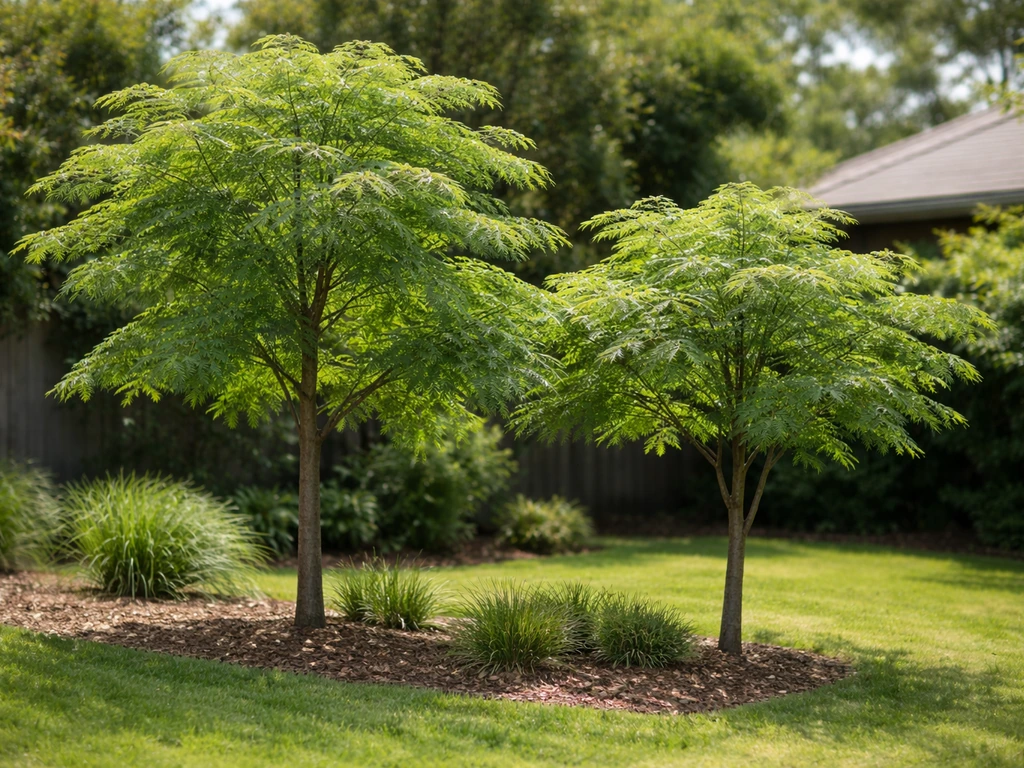
If what you're after is the feathery, tropical look of Mimosa hostilis, or a fast-growing ornamental tree with similar foliage, there are several plants that are well-suited to Australian gardens, legally available, and far less complicated to grow.
| Alternative Plant | Best Australian Regions | Why It Works |
|---|---|---|
| Albizia julibrissin (Persian Silk Tree) | NSW, VIC, QLD, WA | Similar feathery pink flowers; handles more cold than Mimosa hostilis; widely available |
| Acacia dealbata (Silver Wattle) | VIC, TAS, SA, NSW | The 'mimosa' of European gardens; frost-hardy; native to SE Australia |
| Calliandra haematocephala (Powder Puff) | QLD, Northern NSW, NT, WA | Tropical look with stunning red pom-pom flowers; loves heat and humidity |
| Leucaena leucocephala | QLD, NT, North WA | Similar pinnate foliage; fast-growing; suits tropical and subtropical zones |
| Jacaranda mimosifolia | QLD, NSW, WA, SA | Feathery foliage; spectacular purple flowers; well-adapted across warm Australian regions |
If you're in a tropical or subtropical zone and love the aesthetic of fine, compound foliage and exotic-looking blooms, Calliandra is probably the most direct ornamental substitute. If you're in a cooler temperate zone and just want that soft, feathery look, Albizia julibrissin is widely grown across New South Wales and Victoria and is far more cold-tolerant. Jacaranda is another excellent option across warm parts of the country, with feathery leaves and a dramatic spring flowering show.
Other flowering favourites like hibiscus, which also love heat and humidity, are worth exploring if you're building out a tropical-style garden. Can chamomile grow in the tropics? It depends on humidity and temperature, but it can be grown there with the right conditions.
The bottom line: if you're in Darwin or the wet tropical north and not in Queensland, Mimosa hostilis is worth investigating further with your local biosecurity authority. If you're in Brisbane or anywhere else in Queensland, it's a legal dead end. If you're in Sydney, Melbourne, Adelaide, or Perth, grow it in a pot in a warm spot and bring it inside before winter, or save yourself the hassle and choose one of the alternatives above that will actually thrive in your garden without the regulatory headache.
FAQ
If I’m in a frost-free Australian area, is it safe to grow Mimosa hostilis outdoors year-round?
Even in the warmest regions, you still need to manage winter temperature dips and indoor-outdoor transitions, especially around cool nights and occasional cold snaps. Outdoors also increases the risk of unintended spread, so consider containment (large pot, sealed drainage system, and no dumping of soil) and confirm local biosecurity rules before planting.
Does ‘mimosa’ at nurseries or online sellers mean Mimosa hostilis (jurema preta) in Australia?
Not necessarily. ‘Mimosa’ can refer to several unrelated species like silver wattle (Acacia dealbata) or silk tree (Albizia julibrissin), which have different care needs and may be legal where Mimosa hostilis is restricted. Ask for the full scientific name (Mimosa tenuiflora synonym) before buying anything.
Can I legally import Mimosa hostilis seeds or cuttings from overseas into Australia?
Possibly, but it is commonly restricted and may require permits, inspections, and quarantine conditions. Online overseas seed orders are a frequent interception point at the border, so you should check both federal import rules and your state biosecurity requirements before purchasing.
Is Queensland the only state where Mimosa hostilis is prohibited?
Queensland is explicitly prohibited in the text, but other states can still have restrictions such as required containment, threatened plant status, or conditions for possession and cultivation. Because rules can change, confirm with your state agriculture or biosecurity department for your specific address and planned use (personal growing versus sale).
What container size and soil type give the best chance of success in cities like Sydney or Melbourne?
Aim for a large volume, at least 40 to 50 litres, and prioritize drainage over moisture retention. Use a very free-draining mix (for example potting mix blended with coarse sand and perlite), and ensure the pot has effective drainage holes, saucers that don’t trap water, and regular checks for root suffocation.
How can I reduce winter damage if I cannot provide a heated greenhouse?
Use a staged strategy: move the pot under cover before your first meaningful frosts, keep it near maximum light (bright window or sheltered sun), and protect from cold air pooling around the base. If you rely on a garage or shed, ventilation matters to prevent damp, cold conditions that can weaken the plant.
Will frost kill mature Mimosa hostilis, or is it mainly young plants that are vulnerable?
Frost is a major risk for the species regardless of age. The article notes light frost can damage young plants and repeated or hard frosts will kill them, so do not assume maturity makes it safe outdoors. Containers can also lose heat faster than ground, so potted plants often need earlier protection.
If I grow it in a pot, can I simply compost the plant or dispose of cuttings locally?
Be cautious. Local disposal practices can still conflict with biosecurity requirements, especially if the plant is restricted or considered a concern. Bagging and landfill disposal, rather than composting, is typically the safer default for regulated species, but you should confirm with your state authority.
What are good look-alike alternatives that are generally easier in temperate parts of Australia?
For a fine, feathery look, Albizia julibrissin is often more cold-tolerant than Mimosa hostilis, and Jacaranda can provide a similar airy canopy effect with strong seasonal flowering. If you want tropical-style foliage, also consider Calliandra in suitable climates, but verify your local winter temperature tolerance first.