
Hibiscus cannot reliably grow from a detached leaf alone. If you pull a leaf off your hibiscus, stick it in soil, and hope for roots, you will almost certainly end up with a rotted leaf and nothing else. True hibiscus propagation requires stem tissue, specifically a node, which is the small bump or joint on the stem where leaves attach. That said, if you include a short piece of stem with your leaf cutting, you are now working with a nodal cutting, and that can absolutely root into a new plant. The distinction sounds minor but it changes everything.
Can Hibiscus Grow From Leaves? How to Propagate Fast

Marcus Hartwell
6 Jun 2026
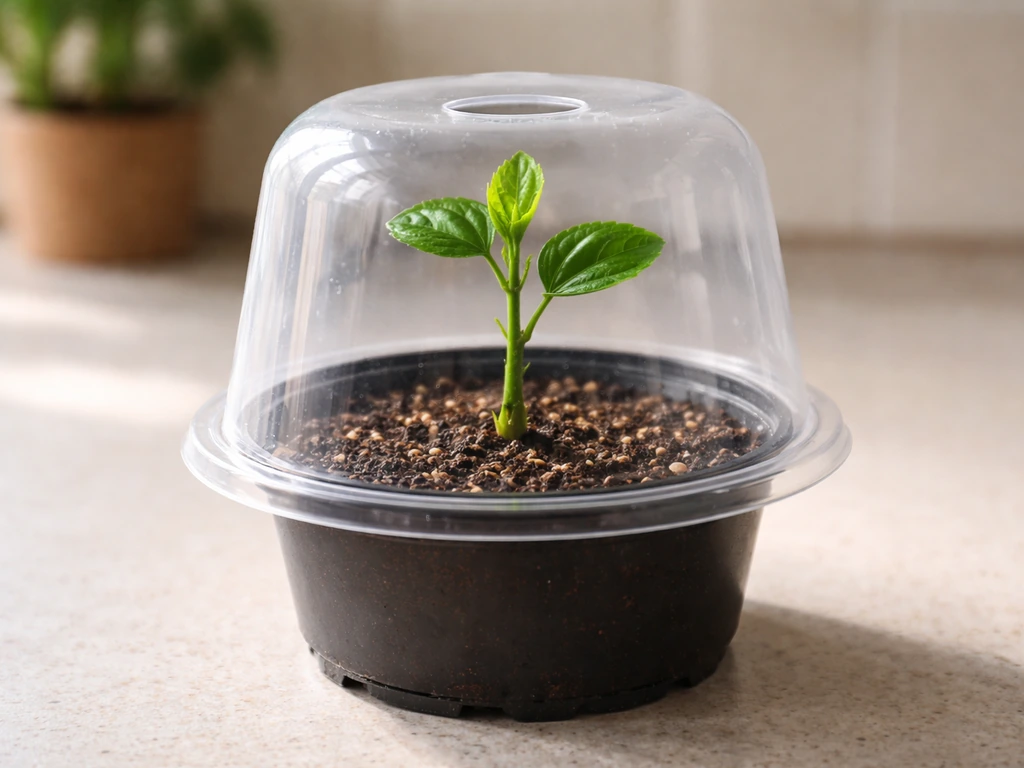
Why a bare leaf won't cut it
Plants that root from a single leaf, like African violets or succulents, have a special tissue capacity that hibiscus simply does not share. Hibiscus rosa-sinensis (tropical hibiscus) and hardy hibiscus (the perennial types like Hibiscus moscheutos) both need nodal or meristematic tissue to generate new roots and eventually a full plant. Even in formal propagation trials, leaf-only cuttings of Hibiscus rosa-sinensis are explicitly listed as non-viable. So if a blog post told you to just pop a leaf in water, that advice will not work here. You need stem tissue in the picture.
Tropical vs. hardy hibiscus: does the type matter for propagation?
Yes, the type of hibiscus you have affects how you should propagate and when. Tropical hibiscus (Hibiscus rosa-sinensis) is the one with the glossy leaves and bold, showy flowers you often see in pots or in Southern landscapes. It roots from stem cuttings reasonably well, and because it is typically grown as a container plant in cooler zones, you can take cuttings indoors almost any time of year. Hardy hibiscus is the deciduous perennial version that dies back to the ground in winter and comes back each spring in zones 4 through 9. It also propagates from stem cuttings, but timing matters more because you are working around its dormancy cycle. Division is also an option for hardy types. Neither type roots from a plain detached leaf.
Propagation methods compared: what actually works
Before you commit to any method, it helps to see how the options stack up. Stem cuttings are the most practical choice for home gardeners. Air layering is slower but excellent for tropical cultivars that are stubborn rooters. Seeds are an option for species hibiscus but not for hybrids, since hybrid seeds will not produce a plant identical to the parent.
| Method | Works for Tropical? | Works for Hardy? | Difficulty | Time to Roots | True-to-Type? |
|---|---|---|---|---|---|
| Leaf-only cutting | No | No | Easy but futile | Never | N/A |
| Stem (nodal) cutting | Yes | Yes | Easy-Moderate | 3 to 6 weeks | Yes |
| Air layering | Yes | Sometimes | Moderate | 4 to 8 weeks | Yes |
| Division | Rarely | Yes | Easy | Immediate | Yes |
| Seed | Species only | Species only | Moderate | Weeks to germinate, months to mature | No (hybrids) |
Stem cuttings win for most people. They are straightforward, require no special equipment, and produce a rooted plant that is genetically identical to the one you took it from. Air layering is worth considering if you have a tropical cultivar that consistently fails to root from cuttings, since the cutting stays connected to the parent plant and fed until roots form.
What you need before you start
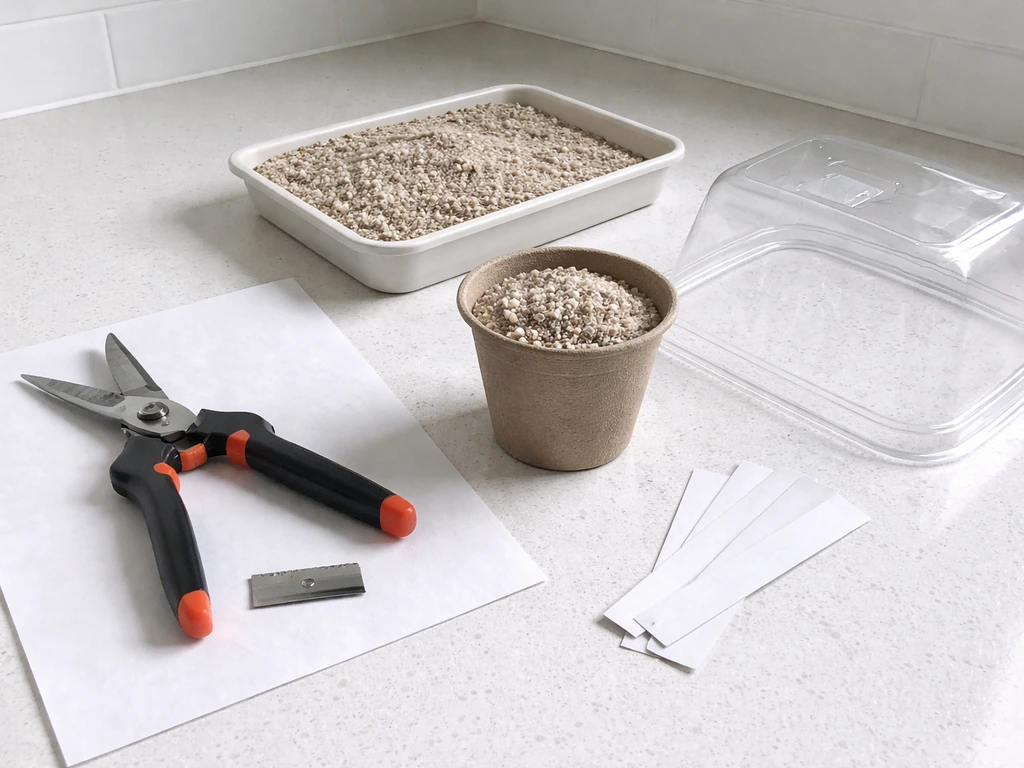
Gather these before taking any cutting. Having everything ready means you can get the cutting into medium within minutes of taking it, which dramatically improves your success rate.
- Clean, sharp pruners or a razor blade (wipe with rubbing alcohol to sterilize)
- A small pot or cell tray, 3 to 4 inches is ideal, with drainage holes
- Rooting medium: a 50/50 mix of perlite and peat moss, or coarse perlite mixed with a small amount of potting soil. Avoid heavy potting mixes that hold too much moisture
- Rooting hormone powder or gel (optional but genuinely helpful, especially for tropical cultivars)
- A clear plastic bag or a humidity dome to cover the cutting
- A spray bottle for misting
- A warm, bright spot out of direct sun, ideally between 70 and 85 degrees Fahrenheit
How to take the cutting and get it in the ground
This is the step where most people either succeed or sabotage themselves without knowing it. Follow the sequence below carefully, particularly the part about the node, and you will be in good shape.
- Choose a stem tip that is green and flexible, not woody. For tropical hibiscus, look for softwood growth from the current season. For hardy hibiscus, take cuttings in late spring or early summer when new growth is 3 to 6 inches long.
- Cut a 3 to 5 inch section just below a node. The cut should be clean and angled at about 45 degrees. The node is the swollen joint where a leaf meets the stem. This tissue is what will produce roots.
- Remove all but the top one or two leaves. Leaving too much leaf surface causes the cutting to lose water faster than it can absorb it, which kills the cutting before roots have a chance to form.
- If the remaining leaves are large (common with tropical hibiscus), cut them in half horizontally to reduce water loss.
- Dip the cut end, including the node, into rooting hormone powder or gel. Tap off any excess powder. If skipping hormone, this step is optional but you may see slower or less reliable rooting.
- Use a pencil or chopstick to make a hole in your moistened rooting medium, then insert the cutting so the node is buried about an inch below the surface. Firm the medium gently around the stem.
- Water lightly, then cover with your plastic bag or humidity dome. Make sure the bag does not press against the leaves.
Keeping it alive while it roots
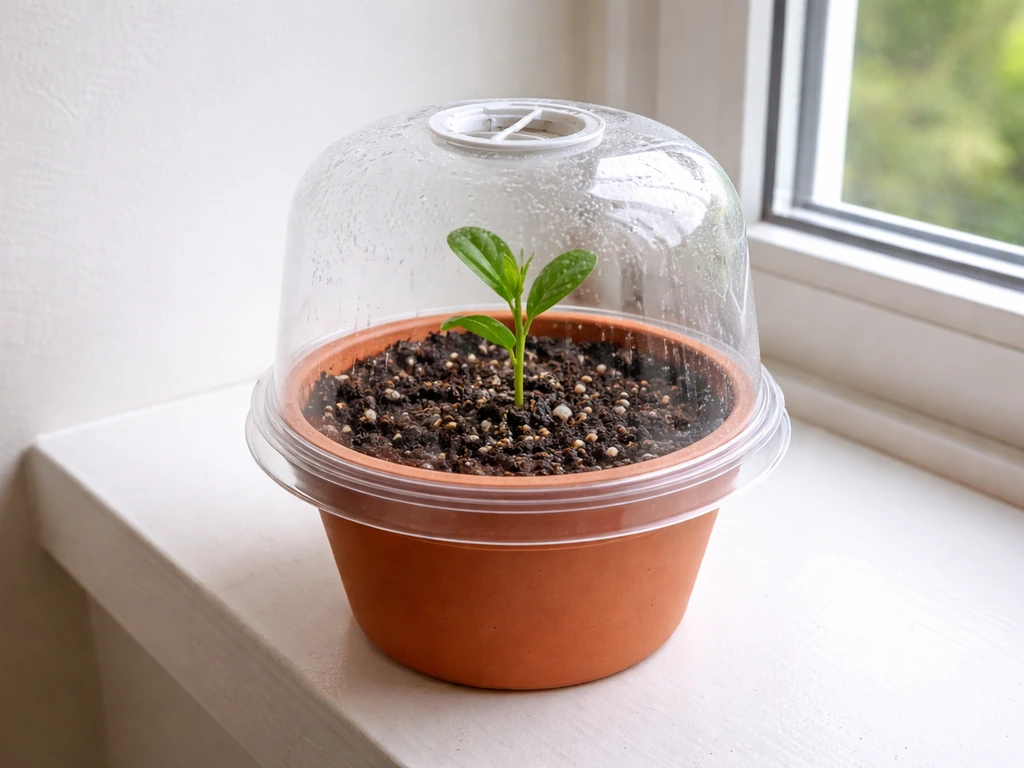
The first three to six weeks are purely about keeping the cutting from drying out or rotting while it develops roots. Place it somewhere warm with bright indirect light, a north or east-facing windowsill works well, or under a grow light set to 14 to 16 hours per day. Direct sun will cook it through the plastic dome.
Check the medium every two to three days. It should feel lightly damp, not soggy. If water droplets are condensing heavily inside the dome, crack it open for 30 minutes each day to prevent mold and rot. After two weeks, start opening the dome for longer periods each day to gradually acclimate the cutting. You will know roots have formed when you see new leaf growth, or when you gently tug the cutting and feel resistance. At that point, remove the dome entirely and treat it like a seedling.
Most stem cuttings from tropical hibiscus root in three to six weeks under warm conditions. Hardy hibiscus cuttings taken in late spring can root in a similar window. Cuttings taken in cooler months or from older, woodier growth may take longer or fail entirely.
When things go wrong: quick fixes for common problems
No roots after 6 weeks
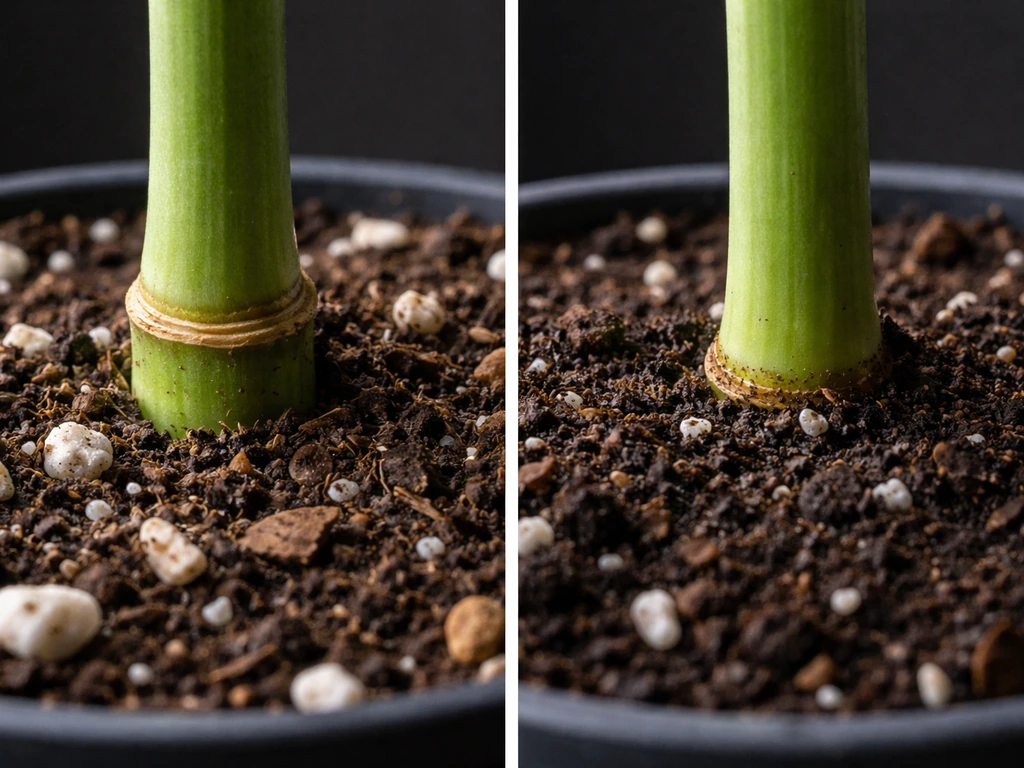
First, check whether the node was actually buried in the medium. If it was sitting above the soil line, no roots will form. Also check temperature: if the rooting spot is below 65 degrees Fahrenheit, root development stalls. Move the pot to a warmer location or use a seedling heat mat set to around 70 to 75 degrees. If none of that is the issue, the cutting may have been taken from growth that was too mature or too young. Retake a cutting from a fresh, semi-firm stem tip.
Stem rot at the base
This is almost always caused by overwatering or poor drainage. The rooting medium should never be saturated. Pull the cutting, trim off any rotted tissue with a clean blade, let the cut end air dry for 30 minutes, re-dip in rooting hormone, and replant in fresh dry-ish medium. Make sure your pot has drainage holes.
Yellow leaves or leaf drop
A little leaf yellowing or even dropping one leaf is normal stress while the cutting redirects energy toward root production. If most leaves are yellowing, check for too much direct sun, excessive moisture at the roots, or temperature swings. Reduce humidity slightly by venting the dome more often, and move the cutting out of direct light.
Mold on the soil surface or leaves
Mold inside the humidity dome means there is too little airflow. Increase ventilation by leaving the dome partially open during the day. You can also dust the soil surface with a tiny pinch of ground cinnamon, which has mild antifungal properties and will not harm the cutting.
Your climate and growing zone change how all of this plays out
Where you live determines not just when to take cuttings, but whether a rooted cutting will survive long-term outdoors. Tropical hibiscus is only reliably winter-hardy in USDA zones 9 through 12, meaning Florida, coastal Southern California, Hawaii, and the Gulf Coast. That same warmth requirement is why hyacinth-like plants are typically limited to tropical or near-tropical conditions Tropical hibiscus. If you are outside those zones, a successfully rooted tropical hibiscus still needs to come inside before temperatures drop below 50 degrees Fahrenheit, or it will die. That is not a failure of your propagation, it is just the reality of the plant.
Hardy hibiscus is a different story. Hibiscus moscheutos and its cultivars survive winters in zones 4 through 9, meaning most of the continental United States. If you are in the Mid-Atlantic, the Midwest, or the Pacific Northwest, you can root a hardy hibiscus cutting in late spring and plant it out by mid-summer, and it will establish and come back on its own every year. Take those cuttings in May or June for best results, when the new growth is fresh but starting to firm up.
If you are in a hot, humid climate like the Southeast or Texas, fungal issues during propagation are more likely. Keep extra attention on ventilation and avoid overwatering. In dry Western climates, the dome is more important because low ambient humidity will desiccate an unprotected cutting within days. In Northern zones, starting cuttings indoors in late spring under a grow light is often the most practical approach, since outdoor temperatures may still be too cool for reliable rooting even in May.
If you have been exploring propagation for other flowering plants, the same zone-awareness matters. If you are asking whether can chamomile grow in the tropics, the same zone and temperature awareness applies other flowering plants. Whether you are trying to determine how a plant survives winter or which propagation window fits your region, understanding your local climate first saves a lot of wasted effort. The same principle applies whether you are working with hibiscus or figuring out whether something like a tropical mimosa-type plant can survive in your area. Does mimosa hostilis grow in Australia? That depends on your climate, temperature lows, and ability to protect the plant when conditions turn cool tropical mimosa-type plant.
The bottom line on leaf propagation
Skip the leaf-only experiment and go straight to a proper stem cutting with a node included. It takes the same amount of effort, uses the same supplies, and it actually works. Get a 3 to 5 inch softwood tip cutting, include at least one node, strip the lower leaves, dip in rooting hormone, and plant it in a perlite-heavy mix under a humidity dome in a warm bright spot. Check back in three to six weeks. That is your realistic path to a new hibiscus plant, regardless of which type you are working with or which zone you call home.
FAQ
If a leaf cutting doesn’t root, can I still use it to save the plant somehow?
You usually cannot turn a single detached hibiscus leaf into a new plant. The useful salvage path is to take a new cutting that includes a node, discard the leaf cutting, and try again with a short piece of stem (3 to 5 inches) so you have the tissue hibiscus needs to form roots.
What counts as a “node” for hibiscus cuttings?
A node is the bump or joint on the stem where a leaf attaches. For rooting, you want that bump to be buried in the medium. If the node sits at or above the soil line, you may see no rooting because callus forms without the right rooting points.
Can I root hibiscus from a leaf if I include part of the stem?
Yes, but the success comes from the stem segment with a buried node, not from the leaf itself. Treat it as a nodal stem cutting: include at least one node, strip the lower leaves so less surface rots, and keep the medium lightly damp.
Should I root tropical and hardy hibiscus cuttings the same way?
The technique is similar, but timing differs. Tropical hibiscus can be taken indoors more flexibly, while hardy hibiscus is best with cuttings in late spring (around May or June) to avoid issues with dormancy and slower winter rooting.
Is water propagation ever worth trying for hibiscus?
For hibiscus, water-only propagation is unreliable, especially if you start with a detached leaf or a cutting without a proper node burial. For the best chance, root in a perlite-heavy, fast-draining medium under humidity with warmth and bright indirect light.
How warm does my cutting area need to be?
Root development can stall if the rooting zone is below about 65°F. If your windowsill or room runs cool, use a seedling heat mat or move the pot to a warmer spot, aiming for roughly 70 to 75°F.
My dome has condensation. Is that good or bad?
A light amount is normal, but heavy condensation that keeps surfaces wet can lead to mold and rot. Vent a short time daily, and crack the dome if you see sustained heavy buildup, especially after day one or two.
How do I know if the cutting is rotting versus just failing to root yet?
Rotting usually progresses from the cutting base with dark, mushy tissue and foul smell, often right away or after overwatering. A non-rooting cutting may still look firm and show gradual changes like mild yellowing of stress leaves. If you suspect rot, trim away affected tissue with a clean blade and replant in fresh dry-ish medium.
Can I use rooting hormone and should I dip the node only?
Yes, rooting hormone can improve success for stem cuttings. Coat the cut end and the area that will be near or around the buried node, then plant promptly so it does not dry out.
What potting mix works best for hibiscus cuttings?
Use a perlite-heavy, well-draining mix. The goal is to keep it lightly damp, never saturated, because hibiscus cuttings are prone to rot when the medium stays wet.
How long should I wait before deciding the cutting failed?
Many tropical hibiscus stem cuttings root in about three to six weeks under warm conditions. Hardy hibiscus taken in late spring can take a similar window, but cooler months or woodier stems may take longer or fail, so avoid abandoning the cutting too early if conditions are right.
Do I need to acclimate the cutting after removing the dome?
Yes. New leaf growth often means roots formed, but the cutting still needs gradual humidity reduction. Remove the dome fully only after you see active growth, and then monitor for wilting over the next few days.
If I successfully root a tropical hibiscus, when can I plant it outdoors?
Do not plant it outdoors before nights stay safely above about 50°F. Even if rooting succeeded, cold exposure after rooting can kill the plant, so in cooler zones you will need to transition it gradually and bring it inside before cold weather.
Is cinnamon dusting safe for hibiscus cuttings?
A tiny pinch of ground cinnamon on the soil surface can help with mild fungal pressure. Use only light dusting, and focus on improving airflow and avoiding overwatering, since cinnamon is not a fix for consistently wet medium.