
Yes, bougainvillea can grow in Texas, but how well it survives long-term depends almost entirely on where in Texas you live and how cold your winters get. In South Texas and the Gulf Coast, it can thrive as a landscape plant year after year. In Houston, it's workable with some planning. In Dallas, you're dealing with a real freeze risk every winter, so you need to go in with realistic expectations. The good news: even in the trickier parts of the state, bougainvillea is absolutely worth trying if you're willing to manage it through cold snaps.
Does Bougainvillea Grow in Texas? Dallas vs Houston Guide
Marcus Hartwell
5 Apr 2026
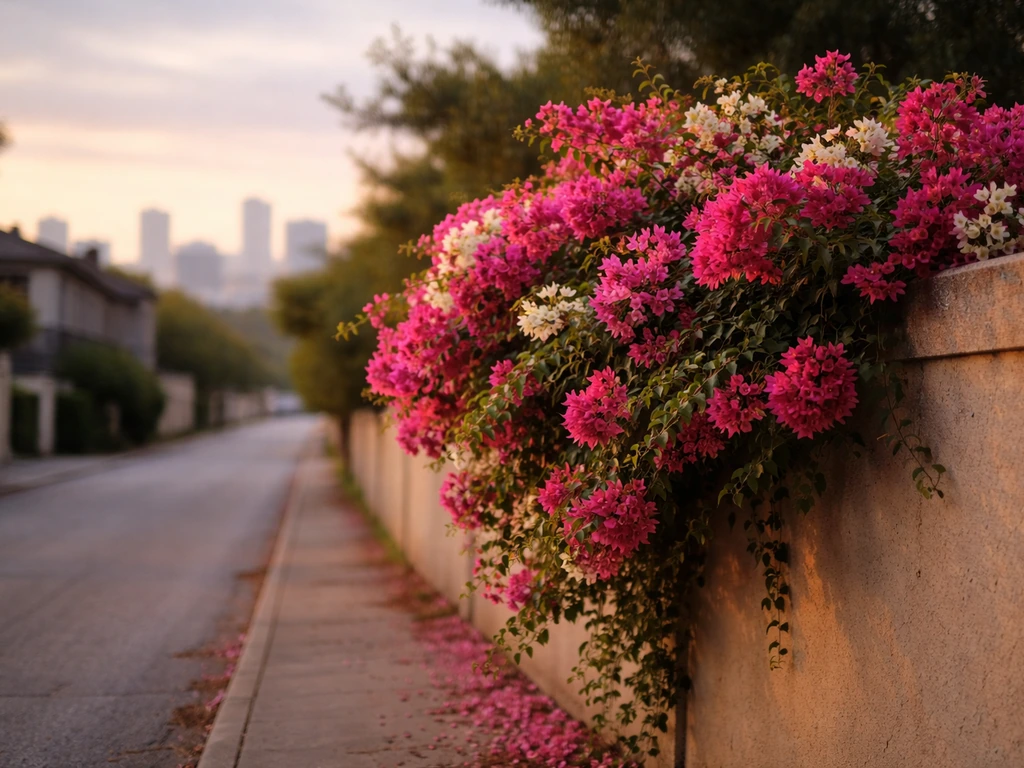
The short answer for Texas overall
Bougainvillea is rated hardy in USDA zones 9 through 11 outdoors. Most of South Texas, the Rio Grande Valley, and the Gulf Coast fall into that range, making bougainvillea a natural fit. The challenge is that Texas is enormous and climatically inconsistent. Dallas sits around zone 8b, where winter lows can drop well below freezing and stay there for days at a time. Even Houston, which is warmer overall, averages around 13 days per year with lows at or below 32°F, and those freezes can cluster into multi-day cold spells that punish tender plants. So the honest answer is: bougainvillea grows in Texas, but it's not foolproof everywhere in the state.
Texas A&M horticulture research makes the risk clear: bougainvillea will be damaged or killed if subjected to below-freezing temperatures for any significant duration. That doesn't mean you shouldn't plant it, but it does mean your location and strategy matter a lot. If you want a broader look at which climates actually work for this plant, the guide on where to grow bougainvillea is a good starting point for understanding the full range before zeroing in on your specific Texas zip code.
Dallas: expect freezes, manage accordingly
Dallas is the harder case. The National Weather Service in Fort Worth tracks freeze data for the DFW metro going back decades, and the 1991–2020 normals show that Dallas averages a meaningful number of freeze days each winter, with hard freezes occurring most winters. Year-to-year variation is real, some winters are mild enough to feel almost subtropical, and others are brutal. DFW ended a recent meteorological winter ranked as the third warmest on record, which sounds reassuring until you remember that the winter before that sent temperatures plummeting for days. That inconsistency is exactly what makes bougainvillea risky here.
The realistic expectation for Dallas: treat bougainvillea as a plant that will likely die back to the ground most winters, possibly all the way to the roots in a hard year. In a mild winter, an established in-ground plant might surprise you and push back hard from the base. But you cannot count on that. If you're planting in Dallas, containers are your best friend, and you need a plan for moving the plant or protecting it every single year without exception. Even 'Texas Dawn' bougainvillea, which sounds like it was made for the state, comes with a climate caution from growers who note that some Texas microclimates are simply too cold for reliable performance.
Houston: warmer, more forgiving, but not freeze-proof
Houston is a better situation. The city's freeze season typically runs between early December and late February, with about 13 days per year on average hitting 32°F or below. Some years Houston records no freezing temperatures at all, which is genuinely great news for bougainvillea. In those years, an in-ground plant in a protected spot can sail through winter without any intervention. But the flip side is that Houston can also get multi-day freezing cold snaps when a front settles in and refuses to leave. Those are the events that can kill even established bougainvillea, especially if the cold is prolonged.
For Houston gardeners, bougainvillea is a reasonable landscape gamble, especially along the Gulf Coast where Zone 9 conditions are consistent. Plant it in a sheltered spot, mulch the base heavily before winter, and have frost cloth ready for cold snaps. Most years you'll get away with minimal intervention and be rewarded with that dramatic tropical color through the warm months. It's a very different risk profile than Dallas, and for most Houston homeowners, the reward easily outweighs the effort.
How to actually grow it: sun, soil, and water
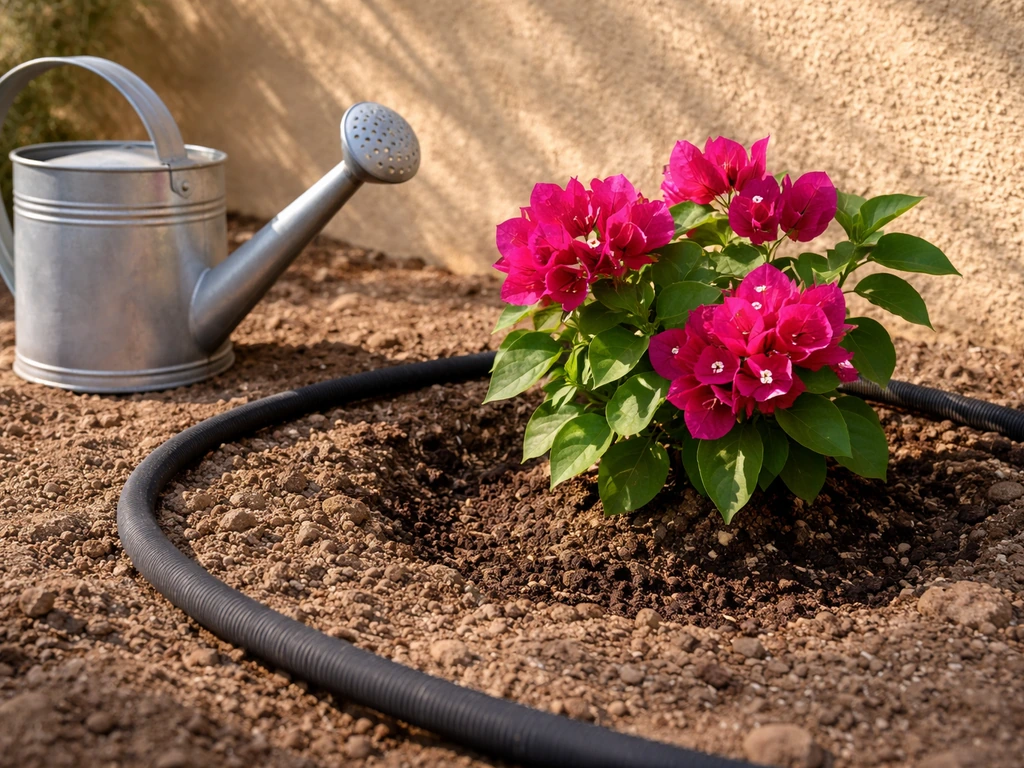
Bougainvillea needs full sun to perform. We're talking at least six hours of direct sun per day, and more is better. In Texas heat, a south- or west-facing wall is ideal, and that wall does double duty by reflecting heat and offering some radiant warmth on cold nights. Galveston County Master Gardeners specifically call out full sun as non-negotiable for bougainvillea in coastal Texas landscapes, and that advice holds statewide. A shaded spot will give you green growth but weak or absent blooms.
Soil drainage is the other critical factor. Bougainvillea does not tolerate wet feet. It wants well-draining, slightly acidic soil, and it will rot in heavy clay that stays soggy after rain. If your Texas soil is heavy clay (which is common across much of the state), amend it with coarse sand and organic matter before planting, or build a raised bed. The plant actually blooms better when it's slightly stressed for water rather than over-irrigated. Consistent deep watering is better than frequent shallow sprinkles. Avoid the temptation to water every day during Texas summers. Water deeply, then let the soil dry out somewhat before watering again.
Container vs. in-ground: what works where
This is where strategy really matters for Texas gardeners. Here's a straightforward comparison:
| Factor | Container Growing | In-Ground Planting |
|---|---|---|
| Best location | Dallas, North/Central Texas | Houston, South Texas, Gulf Coast |
| Winter management | Move indoors before freezes | Heavy mulch plus frost cloth during cold snaps |
| Freeze survival | High, if moved in time | Variable, depends on winter severity |
| Bloom performance | Slightly limited by pot size | Strongest with established root system |
| Long-term effort | Annual moving and repotting | Lower once established in warm zones |
| Risk level | Low to moderate | Low in Zone 9+, high in Zone 8b |
For Dallas, the container approach is the most reliable strategy. You can grow a stunning bougainvillea in a large pot on a sunny patio all spring, summer, and fall, then move it into a garage or cool interior space before the first hard freeze. The plant will go semi-dormant in low light and cool temperatures, and you bring it back out in spring. This is essentially how gardeners in places like New Jersey make bougainvillea work, and the same logic applies to Dallas. For more on how gardeners in cold-challenged states handle this, the article on <a data-article-id="A0B48DA48-4EC5-4609-ADDD-711CFC4BFB07">whether bougainvillea can grow in NJ</a> walks through the container overwintering approach in detail.
For Houston and South Texas, in-ground planting makes sense if you choose a protected microclimate. Plant near a south-facing wall or fence, mulch 3 to 4 inches deep over the root zone before December, and you'll have a fighting chance through most winters. Keep a large container option in your back pocket anyway: if a nasty multi-day freeze is forecast, a recently planted specimen in a portable pot is much easier to protect than one that's already in the ground.
Winter protection: what to do before, during, and after a freeze
Before a freeze hits
- Water the plant well a day before a freeze. Moist soil holds heat better than dry soil and gives roots some thermal protection.
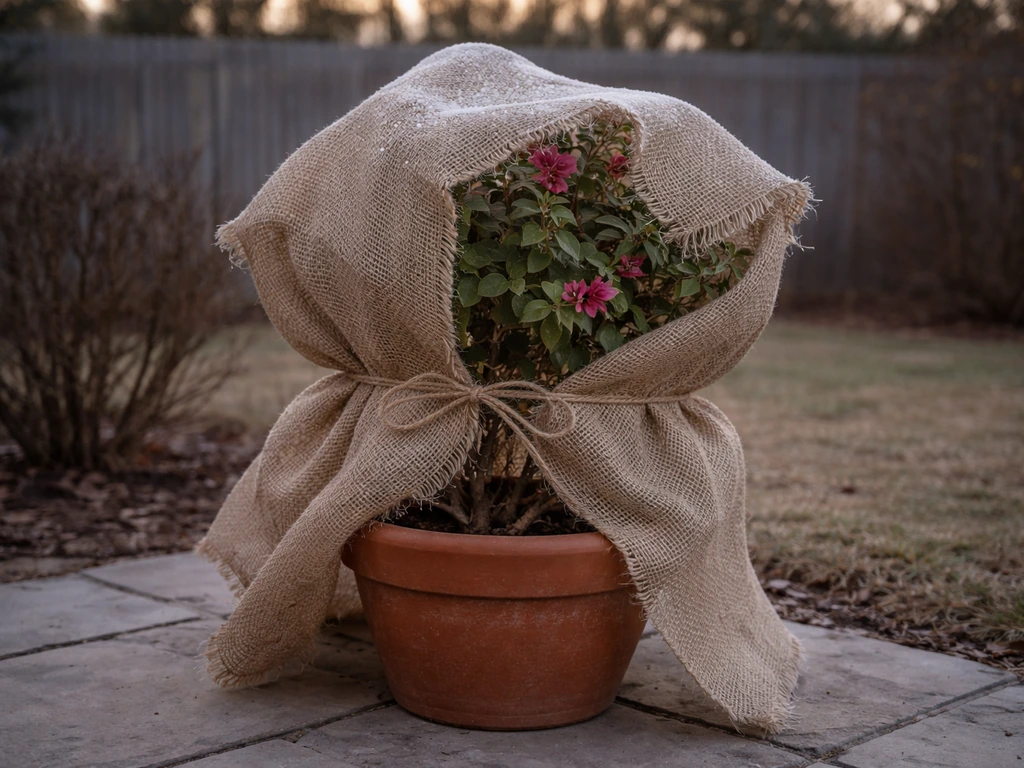
- Cover the plant with frost cloth or burlap when temperatures are forecast to drop below freezing. Avoid plastic sheeting directly on foliage, which can trap cold and cause more damage.
- Pile 3 to 4 inches of mulch over the root zone, especially for in-ground plants. This is your first and most important line of defense.
- Move containers indoors well before the first hard freeze. A garage, sunroom, or shed works fine. The plant doesn't need bright light during dormancy.
After a freeze: patience is the strategy
Here's where a lot of Texas gardeners make a costly mistake: they prune too early. Texas A&M AgriLife horticulture expert Michael Arnold is direct about this: resist the urge to cut back freeze-damaged bougainvillea right away. Premature pruning can trigger buds to activate, and if another cold snap follows, that vulnerable new growth gets wiped out too. The plant may look dead and ugly for weeks, but that's not a sign it's actually dead. Wait until you're confident freezing weather is over for the season, then assess what's truly dead versus what's still alive underneath.
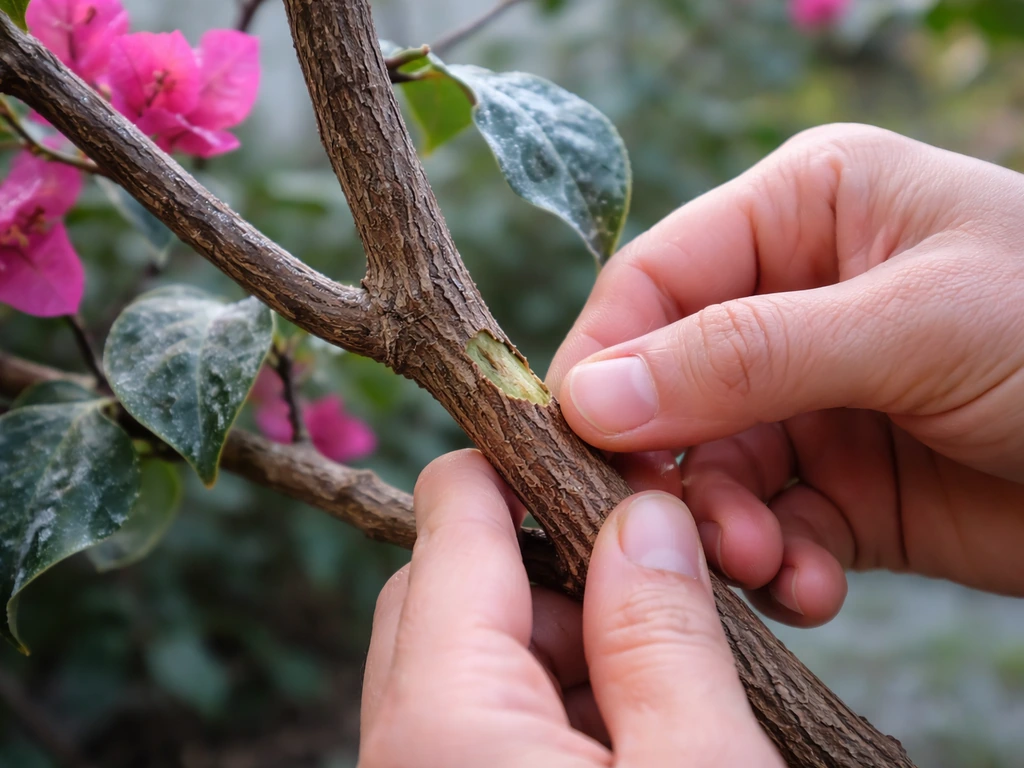
To check whether canes are still alive, scratch the bark lightly with a fingernail. Green tissue underneath means the cane is viable. Brown and dry all the way through means it's gone. Work from the tips down and only cut back to live wood. In a bad freeze year in Dallas, you may cut back almost to the soil level. That's okay. Bougainvillea can regenerate strongly from the root system even when the top growth is completely killed. Timing your pruning correctly, generally late winter to early spring after freeze danger has passed, gives the plant the best chance to bounce back aggressively.
What to buy: varieties that handle Texas conditions better
'Barbara Karst' is consistently recommended for Texas gardeners who want the most cold-tolerant option. It's rated for USDA zones 9 through 11 and is noted among the hardier selections for brief cold spells, making it a smarter bet for Houston and South Texas landscapes. Some growers also flag it as the go-to choice for container growing in colder regions, which makes it equally relevant for Dallas container gardens. If you're in a warm zone and want something showier, 'San Diego Red' and 'Purple Queen' both perform well in Texas heat. For a container in Dallas, stick with 'Barbara Karst' or another compact variety that won't overwhelm a pot.
It's also worth noting that bougainvillea's cold-climate challenges are not unique to Texas. Gardeners in other challenging climates face similar decisions. The articles on whether bougainvillea grows in Ireland and whether bougainvillea grows in Canada show how gardeners handle this plant in much colder, wetter climates, and some of those container and overwintering strategies translate directly to North Texas conditions.
Your next steps: a simple action plan
Before you buy anything, decide which category you fall into. This determines your whole approach:
- Houston or South Texas, in-ground planter: Buy 'Barbara Karst' or 'San Diego Red' in a 5-gallon or larger container. Plant in a south-facing, full-sun spot with well-amended, fast-draining soil. Mulch heavily before December. Keep frost cloth on hand. Expect some dieback most winters but strong regrowth come spring.
- Dallas or North Texas, container grower: Buy a compact variety like 'Barbara Karst' in a manageable pot size. Grow it outdoors in full sun from March through October. Move it into a garage or cool indoor space before the first hard freeze. Water sparingly during dormancy. Bring it back out in spring after last frost.
- Anywhere in Texas, first-time grower: Start with one container plant before committing to an in-ground planting. This lets you learn the plant's needs through one Texas summer and winter cycle without a major investment. If it thrives, expand from there.
The bottom line is this: bougainvillea is absolutely growable in Texas, and for Houston and points south, it can be a spectacular long-term landscape plant. For Dallas, it's a rewarding annual challenge rather than a set-it-and-forget-it shrub. Go in knowing that, pick the right variety, give it maximum sun, and have a winter plan ready before the cold arrives. That's really all the difference between a thriving plant and a frustrating one.
FAQ
If I plant bougainvillea in the ground in North Texas, will heavy mulch save it through a hard freeze?
Yes, but treat it as partial insurance, not a guarantee. Mulch helps insulate the root zone, while the canes usually still die back in hard freezes. If your winter lows dip below 30°F for more than a day or two, a movable container or a more complete cover plan (like a protected structure) is usually what makes the difference.
How should I water bougainvillea during Texas winters, especially in a container?
Aim for a “dry-out” winter rhythm. In containers, water sparingly once growth slows, only when the potting mix is close to dry, and keep the plant cool but bright. Overwatering in winter is a fast route to root issues, especially if temperatures drop and evaporation slows.
What winter-prep checklist should I have in Dallas or Houston before a freeze forecast?
Don’t wait until you see damage to respond, set a repeatable trigger. Before the first predicted hard freeze in your area, stage frost cloth, confirm your garage or sheltered spot temperature, and plan what you’ll do if the forecast shifts by a day. Many Dallas gardeners lose plants because they “react” after the cold arrives, when it is already too late to fully protect tender canes and young root growth.
My bougainvillea looks dead after a freeze, how do I know if it will come back?
The main sign is return of new growth from living tissue, not whether the plant looks alive above ground. You can scratch-test canes, but also look for buds at nodes near the base in late winter or early spring. If you see no viable tissue after your scratch test and the stem stays brown all the way through, it may be time to prune aggressively and wait for root regeneration.
Should I overwinter bougainvillea in a warm house window or a cool garage in Dallas?
A bright, cool garage is often better than a warm interior. Too much warmth indoors can wake bougainvillea early, then a sudden cold event outdoors can wipe out the fresh shoots. If indoor light is limited, keep temperatures cooler and delay heavy watering until spring to prevent weak, tender growth.
Is it better to keep bougainvillea in containers in Texas even long-term, or only during the first few years?
Yes, but do it with intent. In-ground bougainvillea can be easier to protect than containers once established, yet containers are far easier to move when a multi-day freeze is expected. For recently planted specimens, the safer approach is often container-style protection even if the plant will eventually go into the ground.
If bougainvillea blooms better with slight water stress, how do I balance that with Texas summer heat and freeze risk?
Because it is drought-tolerant but freeze-sensitive, the right “stress” is not neglect. Avoid overwatering in clay soils, but also don’t let pots go bone-dry during hot spells. A practical rule is deep watering when the top few inches are dry in the growing season, and then scaling back as daylight shortens and temperatures drop.
How much do microclimates, like wind exposure and yard slope, affect whether bougainvillea lives in Dallas?
Yes, and it can help you prevent repeat losses. If you have a spot that is near a south-facing wall and gets morning sun plus afternoon reflected heat, you will often get more survival than a yard that is exposed to wind and cold air drainage. Dallas microclimates matter because a few degrees difference across a single block can change whether canes die back or the plant survives.
Why does bougainvillea sometimes look worse before it improves after winter in Texas?
Yes, the “winter look” problem is common. After cold snaps, you might see green stems only in patches or only at the base, and the plant can look bad for weeks. Verify viability with a scratch test, then wait to prune until you have stable warm weather, usually after freeze danger is truly over.