
Bougainvillea cannot survive a Canadian winter outdoors. It is rated for USDA hardiness zones 9B through 11, and virtually every part of Canada falls well below that range. Even the warmest pockets of Ontario, like Windsor, sit in zone 7 at best. That means the plant will die if left outside when temperatures drop to freezing, which will happen every single winter in Canada. That said, plenty of Canadian gardeners grow bougainvillea successfully as container plants, bringing them indoors before the cold hits. You can absolutely enjoy this plant in Canada, including Ontario, but you need to go in with the right expectations and a clear plan.
Does Bougainvillea Grow in Canada? Ontario Guide
Marcus Hartwell
2 May 2026
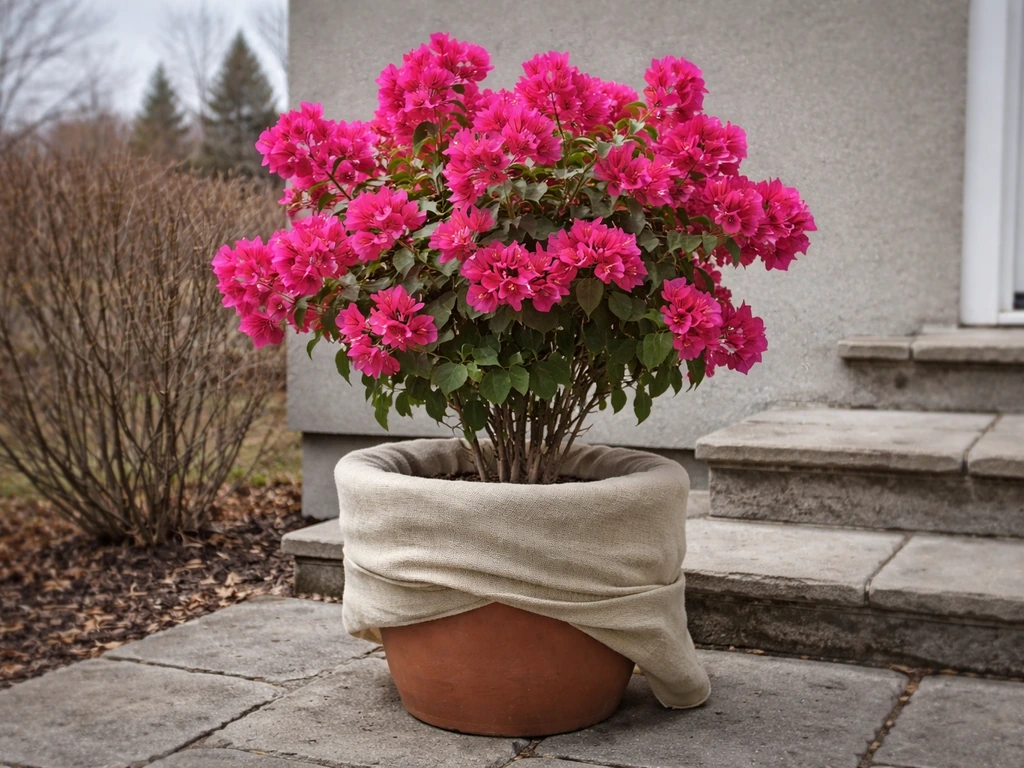
Canada's climate zones and why bougainvillea is a tough sell outdoors
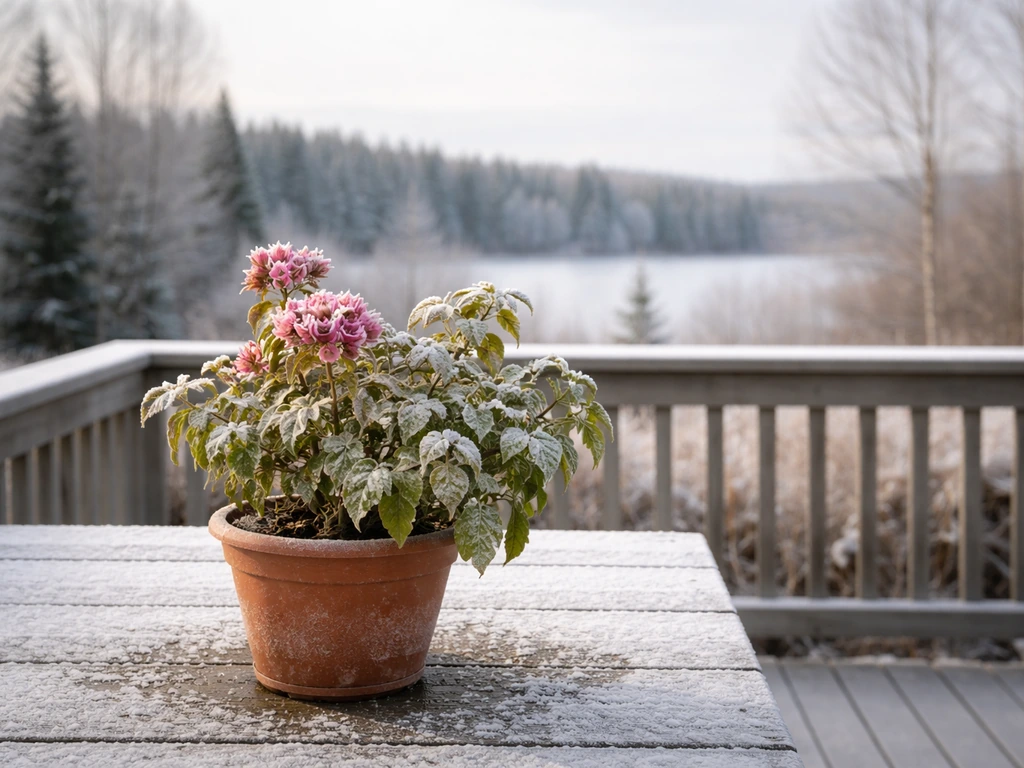
Bougainvillea's cold tolerance bottoms out around freezing, 32°F (0°C), and even temperatures just above freezing with wind can cause serious damage. Natural Resources Canada's Plant Hardiness Site assigns zones based on average yearly extreme minimum temperatures, and almost every Canadian municipality lands in zones 2 through 7. The warmest corners of British Columbia's coast (parts of Victoria and Vancouver) reach zone 8 in some measurements, but that still falls one to two full zones short of where bougainvillea is happy outdoors year-round.
To give you a sense of the gap: Canada's warmest cities sit in roughly zones 6 to 8, while bougainvillea needs zone 9B as an absolute minimum for reliable outdoor survival. That is not a small difference. A zone 9B winter low averages around 25 to 30°F (-4 to -1°C), while a zone 6 winter low averages around -10 to 0°F (-23 to -18°C). Outdoors in Canada, bougainvillea simply has no chance of making it through February.
Ontario and other regions: where it might work (and where it definitely won't)
Ontario gets asked about more than any other Canadian province when it comes to bougainvillea, probably because it has the most gardeners and some of its southern cities feel warm in summer. Toronto sits around zone 6B to 7A depending on the specific location. Windsor, the warmest city in Ontario, reaches zone 7A. Ottawa is zone 5B to 6A. None of these zones support bougainvillea in the ground over winter, full stop.
The rest of Canada tells a similar or colder story. Calgary sits in zone 4A. Montreal is zone 5B. Even coastal Vancouver, often cited as Canada's mildest city, sits around zone 8A in its warmest spots. That is still a significant step below zone 9B. British Columbia's Gulf Islands and parts of the Saanich Peninsula on Vancouver Island push into zone 8B in some microclimates, which is the closest Canada gets, but even there, a hard winter will kill an unprotected bougainvillea to the roots.
You can use Natural Resources Canada's Plant Hardiness Site to look up the exact zone code for your specific municipality. It is the most accurate starting point for any planting decision in Canada, and it will confirm exactly what zone you are dealing with before you spend money on a plant.
Cold hardiness limits, freeze damage, and what microclimates can do
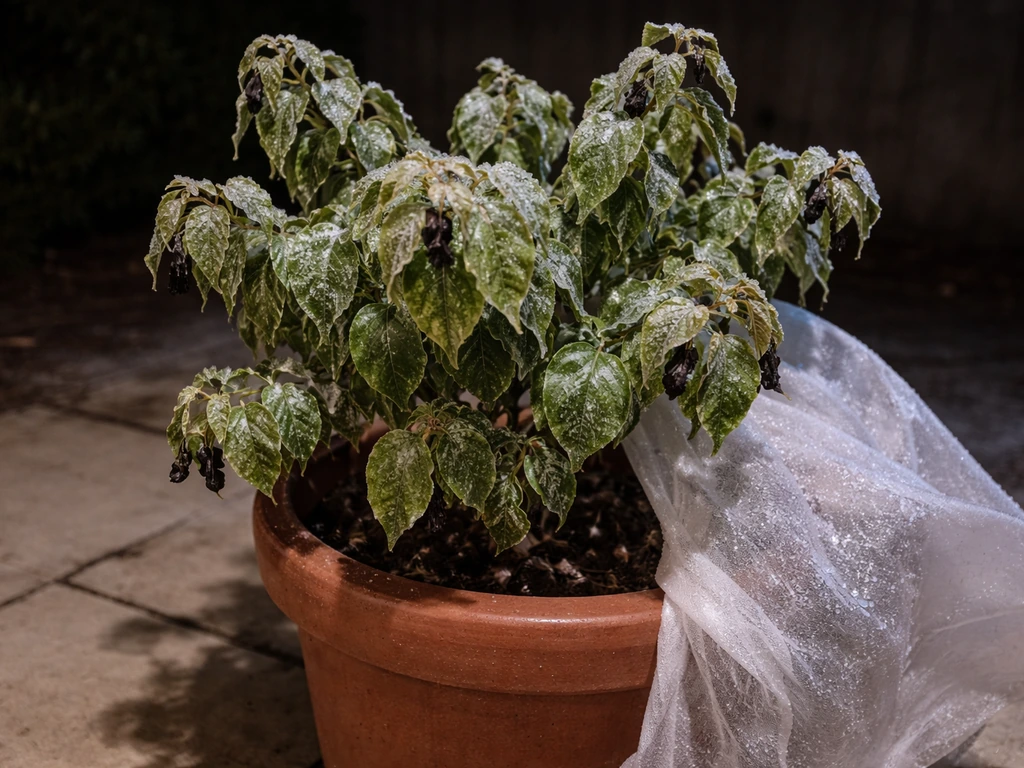
Bougainvillea needs protection any time temperatures drop below 32°F (0°C), and BGI, one of the leading bougainvillea nutrient specialists, flags that even 40°F with wind can start causing cold stress. When freezing temperatures hit, the damage shows up first as wilting and browning leaves, then branch dieback. In severe freezes, the roots die entirely, and there is no coming back from that.
Microclimates can shift outcomes meaningfully, even in Canada. A south-facing brick or stone wall that holds daytime heat, a sheltered urban courtyard, or a position between buildings can raise the effective temperature around a plant by several degrees on cold nights. In Toronto or Vancouver, a well-chosen microclimate can make the difference between a container plant surviving a mild fall night versus getting nipped early. But no Canadian microclimate will protect a bougainvillea through a full winter outdoors. Think of microclimates as useful for extending your outdoor display into late fall, not as a substitute for a real overwintering plan.
Picking the right variety and setting realistic expectations
Not all bougainvillea varieties are equally cold-sensitive, but in Canada's context, the difference between varieties is almost academic because even the toughest ones will not survive outdoor winters here. What variety selection does matter for is container performance indoors and flowering productivity during the outdoor season. Compact or dwarf varieties like 'Helen Johnson,' 'Raspberry Ice,' or 'Rosenka' are much easier to manage in containers and move indoors. Larger trailing varieties look spectacular but become genuinely difficult to overwinter when they get big.
On flowering expectations: bougainvillea blooms on new lateral growth and needs heat and strong sun to produce its signature bracts well. Canadian summers do get warm enough in southern Ontario, BC, and Alberta to trigger good flowering, especially in July and August. But the season is shorter than what you would get in Texas or Florida (or Ireland, which is a separate climate comparison entirely). You will likely get one strong flush of color in midsummer rather than the near-continuous blooming you see in tropical climates. That is still worth it, but do not expect your patio bougainvillea in Toronto to look like the ones draped over walls in Portugal.
The setup that actually works: containers, overwintering, and greenhouses
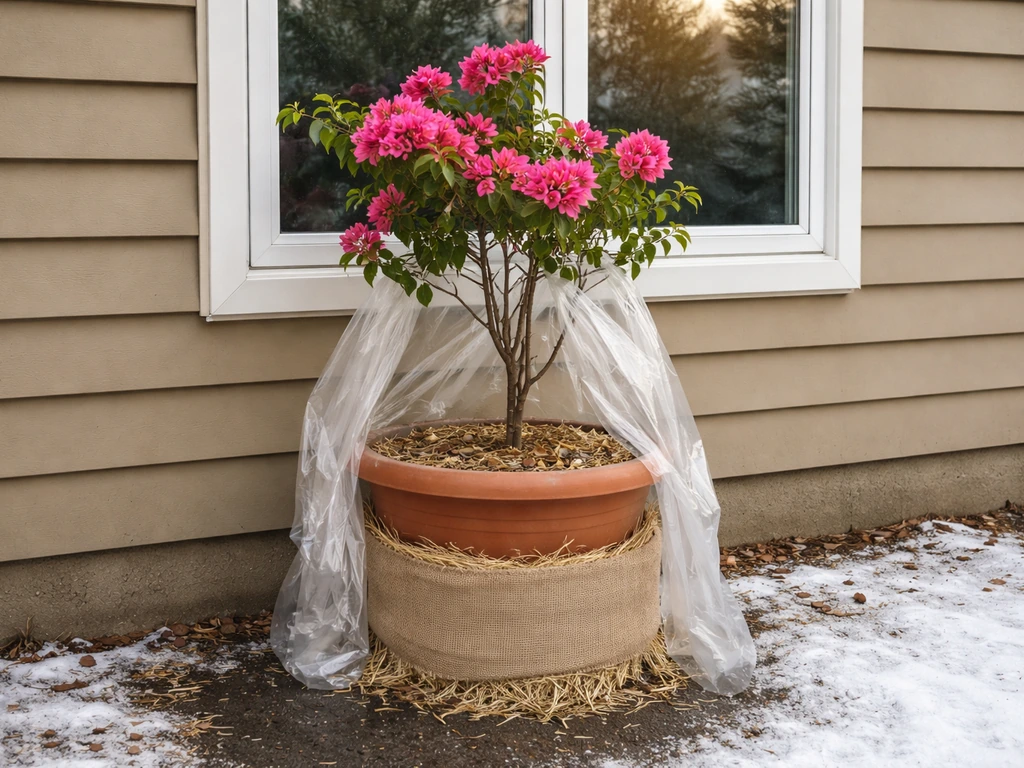
Container growing is the only realistic outdoor strategy for Canadian gardeners, and it works well when you commit to the full plan. The core idea is simple: grow it in a pot outdoors from late May through September or early October, then bring it inside before the first frost. The container approach lets you chase the warmth in summer and protect the plant in winter without ever asking bougainvillea to do something it cannot do.
Container basics
Use a container with excellent drainage, bougainvillea is highly susceptible to root rot, and a pot that holds water will kill it faster than the cold will. Terra cotta works but is heavy to move; a large resin or fiberglass pot is easier. Keep the container size manageable so moving it indoors is actually feasible. A 12 to 16 inch pot is a reasonable starting point for a compact variety.
Overwintering indoors
Bring your bougainvillea inside before nighttime temperatures dip below 40 to 45°F (4 to 7°C). That typically means moving it in late September to mid-October depending on your location. Indoors, it can be kept in two ways: actively growing (requires a very bright, sunny window or grow lights and temperatures above 60°F), or semi-dormant (a cool but frost-free space like an unheated garage or basement that stays above 32°F, ideally 45 to 55°F). The semi-dormant approach is lower maintenance.
The plant will drop leaves and look rough, but it is not dead. During this period, water very sparingly, just enough to keep the roots from completely drying out. Overwatering during winter dormancy is one of the most common ways people lose their bougainvillea in storage.
Logee's, a specialty tropical plant nursery, advises maintaining temperatures above 50°F during winter storage for the best outcome. A cool basement that does not freeze is a practical target for most Canadian homes.
Greenhouse option
If you have an attached or detached greenhouse that stays above freezing through winter, bougainvillea will thrive in it and may even continue blooming through the colder months if temperatures stay above 50 to 55°F and light is adequate. A heated greenhouse is the closest a Canadian gardener can get to growing bougainvillea year-round, and some serious enthusiasts in Ontario and BC go this route. The investment is significant, but the payoff is a plant that flowers for far more of the year.
What bougainvillea needs to actually perform in Canada
Getting the basics right during the outdoor season is what separates a bougainvillea that flowers well from one that just survives. Gardening Know How recommends avoiding heavy nitrogen for bougainvillea and using lower-nitrogen, bloom-focused fertilization to encourage flowering rather than leafy growth avoid heavy nitrogen for bougainvillea. Here is what actually matters:
- Full sun, at least 6 hours daily, and ideally 8 or more. Bougainvillea is a sun-hungry plant, and shade is one of the fastest ways to stop it from flowering. Put it in the sunniest spot on your deck or patio.
- Moderate, careful watering. Let the top inch or two of soil dry out between waterings. Bougainvillea prefers a slightly dry stress cycle, it actually triggers flowering better when not constantly wet.
- A phosphorus-rich fertilizer to encourage blooming. Feed every two to three weeks during the outdoor growing season with a fertilizer formulated for flowering plants. Avoid heavy nitrogen, which pushes leafy growth at the expense of bracts.
- Pruning after each bloom flush. Bougainvillea blooms on new lateral growth, so trimming back after flowering encourages new shoots and another round of color. Light pruning in late winter before you move the plant back outside helps too.
- Warm placement outdoors. Put it against a south-facing wall or in a sheltered sunny corner where it absorbs maximum heat. This is especially important in shorter-season zones like Ottawa or Calgary.
Your next steps: a practical checklist for buying and planting in Canada
If you are ready to move forward, here is exactly what to do next, in order:
- Look up your specific Canadian hardiness zone using Natural Resources Canada's Plant Hardiness Site (canada.ca/en/natural-resources-canada). Enter your municipality to get your precise zone. This confirms your starting point.
- Decide on the container approach. In-ground planting is not viable anywhere in Canada. Choose a pot with drainage holes and pick a compact variety suited to container life, such as 'Helen Johnson,' 'Raspberry Ice,' or 'Rosenka.'
- Plan your overwintering space before you buy the plant. Do you have a cool basement, garage, or sunroom that stays above freezing? A heated greenhouse? If you cannot answer this question, you will likely lose the plant its first winter.
- Buy the plant locally from a nursery in late May or early June, after your last frost date has passed. Do not rush it outdoors in April or early May when nights are still cold.
- Place it in full sun, ideally against a south-facing wall or on a sunny deck, and set up a feeding schedule with a bloom-boosting fertilizer every two to three weeks.
- Watch the forecast in September and bring the plant indoors before nighttime temperatures drop below 40 to 45°F. Do not wait until the first hard frost warning.
- During winter storage, water minimally, once every two to three weeks is often enough in a semi-dormant cool space. Do not fertilize until you move it back outside in spring.
- Repeat. Bougainvillea in Canada is a container perennial if you commit to the overwintering routine. Most Canadian gardeners who lose theirs do so in the first winter because they did not have a plan.
The honest answer is that Canada is not bougainvillea country the way Texas or coastal California is. If you are wondering about the opposite climate, yes, bougainvillea is a common landscape plant in Texas where winter lows are usually mild enough. But that does not mean you cannot grow it well.
You may be wondering, can bougainvillea grow in NJ, and the answer depends heavily on your local hardiness zone and whether you can protect it from winter cold. Gardeners across Ontario, BC, and even Alberta enjoy bougainvillea every summer by treating it as the frost-tender container plant it is.
Go in with the right expectations, pick the right variety, and have a winter plan ready, and there is no reason you cannot have a patio full of color every summer.
FAQ
Can bougainvillea grow outdoors year-round anywhere in Canada?
In ground, no, not reliably. Even Canada’s warmest areas generally fall below the winter range bougainvillea needs, so the plant will eventually freeze back or die unless it is kept in a structure like a greenhouse or moved indoors for winter.
Is a light frost or a few cold nights enough to kill bougainvillea in Canada?
It can be. Bougainvillea becomes stressed at around freezing, and wind makes damage start sooner. If you get repeated dips below 0°C, you may see leaf browning and branch dieback, and repeated freezes can kill the roots in a container too.
What is the safest time to bring bougainvillea indoors in Ontario and other provinces?
Don’t wait for the first hard freeze. Move it in when nighttime temperatures consistently drop below about 4 to 7°C (around 40 to 45°F). In practice, many gardeners start mid to late September in cooler regions and later in milder coastal areas.
Should I water bougainvillea normally when it is overwintering indoors?
No, reduce watering during dormancy. In a semi-dormant setup, water sparingly only to prevent the root ball from fully drying out. Overwatering in cool conditions is a common way to lose the plant through root rot.
My bougainvillea drops leaves indoors, is it dying?
Leaf drop during winter storage is common, especially in semi-dormant conditions. The key sign is whether new growth resumes in spring. If stems are firm and the plant later leafs out, it is usually not dead.
How big can the container be if I want to overwinter it successfully in Canada?
Choose a size you can actually lift and move. Very large pots can be difficult to transport, which leads to missed timing and freeze damage. For compact or dwarf varieties, starting around a 12 to 16 inch pot is often a practical balance.
Does bougainvillea in Canada need pruning to survive the winter?
Pruning is mainly for shape and managing indoor size, not cold-proofing. If you prune, do it before winter storage and leave enough healthy stems. Avoid major pruning right before bringing it indoors, because it can reduce reserves when light is limited.
Can I keep bougainvillea in an unheated garage or basement without freezing?
Yes, as long as it stays frost-free. A cool, bright-free but nonfreezing space can work well for semi-dormant overwintering. Aim to keep it above freezing, and many growers target a range roughly above 7 to 10°C for easier success, while still avoiding active growth if light is weak.
Will a south-facing wall or sheltered patio make outdoor overwintering possible?
It can extend outdoor color into late fall, but it is still not a full winter solution in Canada. A microclimate might prevent early damage, yet it typically cannot guarantee protection through a whole winter with frequent freezing nights.
Are some bougainvillea varieties more cold-tolerant for Canada?
Variety can help with container manageability and how well it performs and flowers in summer, but it does not change the core issue, which is winter survival. Even the more robust varieties still generally need indoor or protected overwintering in Canada.
What indoor lighting setup gives the best flowering after winter?
For the most reliable blooms, plan for very strong light. If your home window is not bright enough, grow lights can matter, because bougainvillea forms flowers on new growth and needs intense sun during the active growing period.