
Yes, bougainvillea can grow in New Jersey and New York, but with a big asterisk: for most of both states, you are growing it as a container plant that comes indoors for winter, not as a permanent landscape shrub.
Can Bougainvillea Grow in NJ and New York? Conditions and Tips
Marcus Hartwell
22 Apr 2026
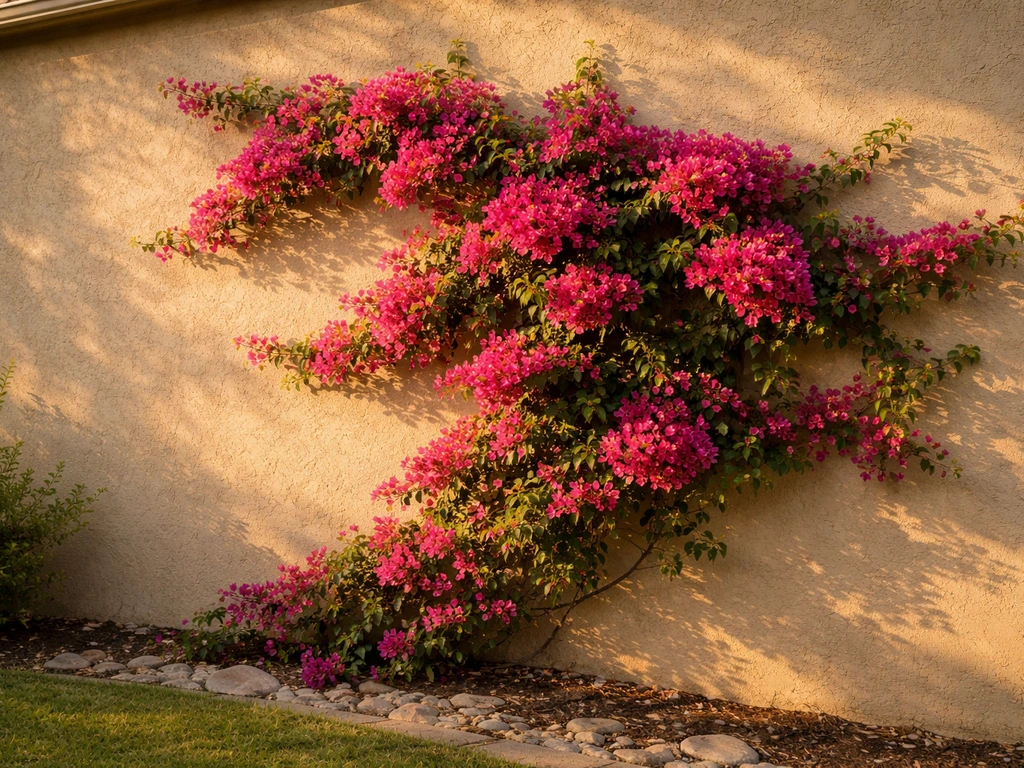
The short version is this: if you live in southern coastal NJ (think Cape May area) or in a warm urban pocket like Brooklyn or lower Manhattan, you are in zones 7b to 8a where cautious year-round outdoor survival is at least worth attempting with the right microclimate and some protection. Everywhere else in NJ and most of New York, container growing and overwintering indoors is the realistic path. That is not a dealbreaker.
Bougainvillea is stunning in a large pot on a sunny deck all summer, and thousands of gardeners across the region do exactly that.
NJ vs NY at a glance: outdoor ground vs container
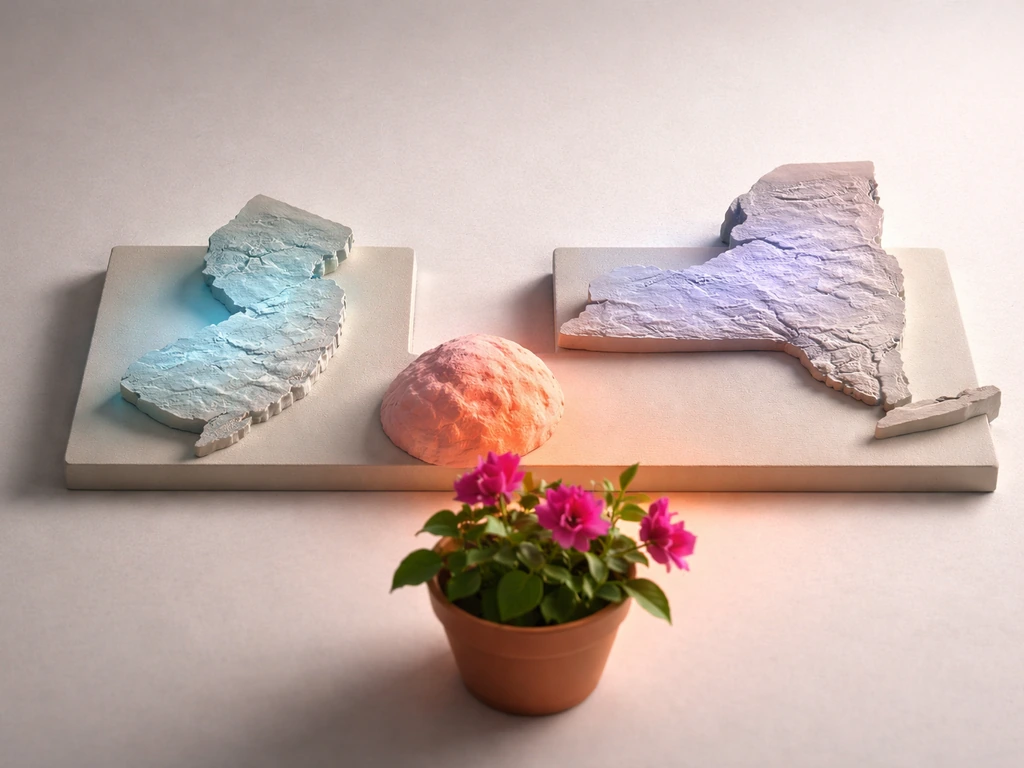
New Jersey and New York are close geographically but cover a wide range of climates. NJ runs from zone 6b in the coldest northwestern corners all the way to zone 8a in the warmest southern coastal spots. New York stretches from zone 7b in New York City down to zone 4a up near Lake Placid. The practical takeaway for bougainvillea is simple:
| Location | USDA Zone | Outdoor Year-Round? | Best Approach |
|---|---|---|---|
| Cape May County, NJ | 7a/7b, small 8a pocket | Marginal with protection | In-ground with south-facing wall + frost cloth |
| Jersey Shore coastal areas | 7b | Marginal, risky | Container preferred; experiment in sheltered spots |
| Central NJ (Trenton area) | 7a | Not realistic | Container, overwinter indoors |
| Northern NJ (Morris, Sussex) | 6b–7a | No | Container only, bring in before first frost |
| NYC / Brooklyn / Staten Island | 7b | Marginal with urban heat | Container or sheltered south-facing wall |
| Long Island (south shore) | 7a–7b | Marginal | Container preferred, sheltered spots possible |
| Hudson Valley, NY | 6a–6b | No | Container only |
| Buffalo / Upstate NY | 6b | No | Container only, move inside by early October |
What bougainvillea actually needs to thrive
Bougainvillea is a Zone 9 to 11 plant at its core. It originates from tropical South America and is built for heat, sunshine, and dry spells, not cold, gray winters. To put that in numbers: it starts to struggle when temperatures drop to around 40°F (4°C) and can suffer serious root damage or death when temps hit or stay below 30 to 32°F (roughly -1°C). That is a very different threshold from, say, a rosebush that laughs at a Zone 6 winter. When you look at a Zone 7a winter low of 0 to 5°F, the gap between what bougainvillea tolerates and what NJ and NY actually deliver becomes obvious.
Beyond cold hardiness, here is what the plant genuinely needs to look its best. It wants at least 6 full hours of direct sun every day, period. Less than that and you get a leafy green plant with almost no flower color. It needs soil or potting mix that drains fast and thoroughly, because sitting in wet media rots the roots quickly. It actually blooms better under mild drought stress, which is counterintuitive but real. Fertilizer, pruning timing, and watering matter too, but getting sun, drainage, and cold protection right are the three factors that determine whether your bougainvillea survives and flowers in this region.
How NJ and NY zones actually compare to what bougainvillea needs
The 2023 USDA Plant Hardiness Zone Map (based on average coldest temperatures from 1991 to 2020) places most of New Jersey in zones 6b through 8a and most of New York State in zones 4a through 7b. NYC itself sits at 7b. The warmest pocket in NJ, a small slice of Cape May County, touches zone 8a. For bougainvillea, the comfort zone starts at 9a. So even the warmest corners of both states are two full hardiness zones below where bougainvillea truly winters over without intervention.
Here is the nuance worth knowing about those zone numbers: they represent the average annual extreme minimum over 30 years, not an absolute guarantee. The USDA Plant Hardiness Zone Map uses [30-year averages of the coldest night temperatures](https://planthardiness. ars. usda.
gov/pages/map-creation) at a location (with the 1991, 2020 period used in the 2023 edition). A zone 7b spot averages a coldest night of 5 to 10°F each winter. Bougainvillea roots are effectively dead long before you hit those temperatures. Even if your zip code says 7b, a single cold snap dropping to 20°F is enough to kill an unprotected in-ground plant.
This is why the zone map, while useful, only tells part of the story when you are pushing a tropical plant this far north.
One thing working in favor of NJ and NY gardeners: zones have been shifting slightly warmer. A 2025 Climate Central analysis confirmed nationwide warming trends in average coldest temperatures over recent decades, and some northern gardeners are reporting more success with plants that would have seemed impossible 20 years ago. That does not mean bougainvillea is now easy to overwinter outside in Trenton, but it does mean the southernmost NJ coastal zones are worth experimenting with, and that container growing further north is more viable than ever with good indoor setup.
In-ground planting vs containers: which makes sense for you
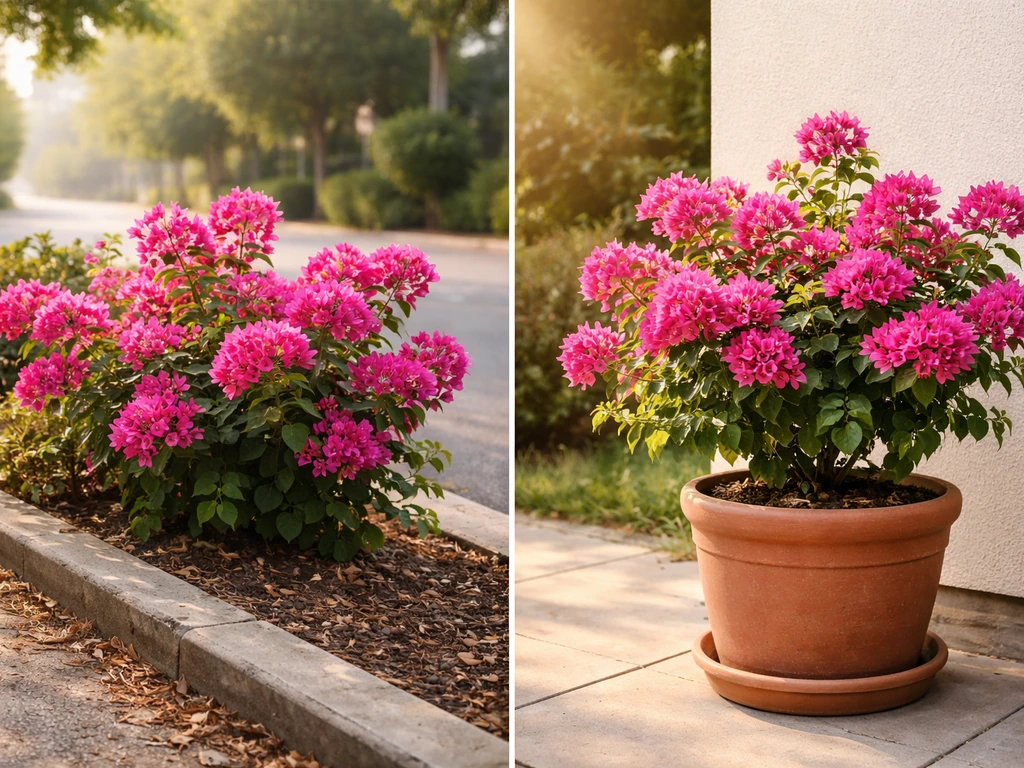
For most NJ and NY gardeners, containers are the practical choice, full stop. A large pot (think 15 to 25 gallons for a mature plant) gives you mobility, which is the one thing an in-ground bougainvillea cannot offer. You grow it outdoors from late May through early October, get the full summer flower show, then bring it in before temps consistently drop below 40°F. A well-draining potting mix with drainage holes in the container is non-negotiable.
In-ground planting is worth attempting only if all of these conditions line up: you are in zone 7b or warmer (Cape May, coastal South Jersey, NYC boroughs), you have a south or southwest-facing wall or fence that radiates heat and blocks north wind, and you are genuinely prepared to wrap the plant and protect the root zone during cold snaps. Even then, treat your first winter as an experiment, not a guarantee. If the plant dies back to the ground in a bad winter, it may resprout from the roots in spring if those roots stayed above about 28 to 30°F, but that is not something you want to bet an expensive plant on without a backup plan.
Overwintering strategies that actually work
This is the part that separates successful bougainvillea growers in NJ and NY from people who lose their plant every November. You have a few realistic options depending on what setup you have.
Bringing containers indoors
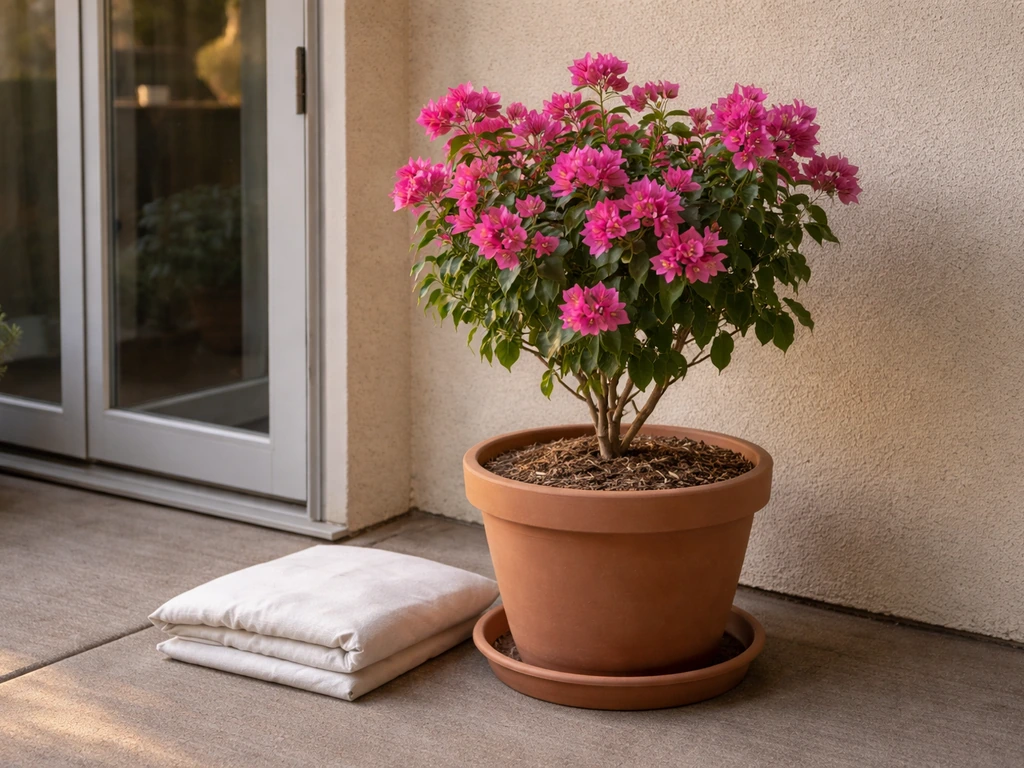
This is the most reliable strategy for most of the region. Move the container inside before your first expected frost, which in NJ typically falls in mid-October in the north and late October or early November along the coast. Inside, you want to keep the plant where temperatures stay above 43 to 46°F at minimum.
If you want it to stay active and possibly bloom, aim for 60°F or above with adequate light, whether from a bright south-facing window or supplemental grow lights. In lower light and cooler conditions (but still above freezing), bougainvillea will go semi-dormant, drop leaves, and coast through winter with minimal water. If you keep bougainvillea dormant over winter, Illinois Extension notes that it should be [overwintered as a dormant plant in a cool, dry location](https://extension. illinois.
edu/flowers/bougainvillea). That is fine. Water sparingly during dormancy (every 2 to 3 weeks), do not fertilize, and hold on until you can move it back outside in late spring.
Frost cloth and mulch for in-ground or borderline zone plants
If you are attempting in-ground growing in Cape May or a warm NYC microclimate, frost cloth or burlap wrap can buy you protection through brief dips to 30 to 32°F. This works for a cold snap lasting a night or two, not for a week of sustained freezing temperatures. Pile 4 to 6 inches of mulch around the root zone before any hard freeze to insulate the roots, which are more sensitive than the above-ground canes. The moment a sustained cold pattern sets in, the honest answer is that frost cloth is not enough and the plant is at risk.
Treating it as a summer annual
Some gardeners, especially in northern NJ and upstate NY, skip overwintering entirely and buy a fresh bougainvillea each spring, treating it like a petunia or geranium. This is a legitimate approach if you want the color without the storage hassle. You get about 4 to 5 months of spectacular bloom, and you start fresh the next year. The downside is that younger plants take a season to really hit their stride, so the flower show is often better in year two or three when a well-overwintered plant has size and root mass behind it.
Finding your best spot: microclimate matters more than zone
If you are serious about pushing bougainvillea outdoors in NJ or NYC, your specific site can matter more than your official hardiness zone. The USDA map gives you an average, but microclimates within your own yard can vary by several degrees. Here is what to look for when choosing a placement.
- South or southwest-facing walls or fences: These absorb heat during the day and radiate it at night, creating a noticeably warmer zone right against the structure. Brick and masonry are especially good at this.
- Urban heat pockets: In NYC boroughs and dense NJ urban centers, pavement, buildings, and reduced wind create measurably warmer minimums than the surrounding suburbs. Brooklyn gardeners have an advantage here.
- Protection from north and northwest winds: A fence, hedge, or building on the north side dramatically reduces wind chill damage during cold snaps.
- Elevated or sloped ground: Cold air drains downhill, so a plant on a slight rise or elevated patio stays warmer than one in a low corner of the yard.
- Maximum sun exposure all day: Do not settle for a spot that only gets afternoon sun. Bougainvillea needs 6 or more hours of direct sun and will underperform in partial shade regardless of how good your winter protection is.
If you cannot find a spot in your yard that checks most of those boxes, containers are genuinely the better answer. A pot on a south-facing deck or patio that you can wheel inside in October gives you more control than the best in-ground microclimate in a zone 7a yard.
A note on cultivar choice
Not all bougainvilleas are the same when it comes to cold tolerance. Bougainvillea glabra is generally noted as more tolerant of cooler conditions than Bougainvillea spectabilis. If you are attempting an outdoor trial in the warmest part of your NJ or NY garden, choosing a B. glabra variety is a reasonable hedge. Ask your nursery specifically about species when buying, since many plants are simply labeled 'bougainvillea' without specifying which type.
Before you buy: your quick decision checklist
Run through these questions before you head to the nursery or place an online order. They will tell you exactly what setup you need and whether you are ready for it.
- Look up your specific zip code on PlantMaps or the USDA hardiness zone tool to confirm your exact zone. Do not assume based on state alone, since NJ and NY have wide zone variation.
- Decide now whether you can realistically bring a large container inside before first frost each year. If you have no garage, sunroom, bright basement, or south-facing window space, plan around that constraint before buying.
- Identify your sunniest outdoor spot. If it gets less than 6 hours of direct sun in summer, bougainvillea will disappoint you regardless of everything else.
- Check whether that sunny spot has a south-facing wall, wind protection from the north, and good drainage. If yes, you have a viable outdoor setup for summer at minimum.
- If you are in zone 7b or warmer (coastal South Jersey, NYC area) and that spot ticks the microclimate boxes, decide whether you want to attempt in-ground with protection or still use a container as insurance.
- Choose your overwintering plan before the plant goes in the ground or pot: indoor container storage, semi-dormancy in a cool garage, or annual replacement. Having no plan is what kills plants in November.
- If buying in-person in NJ or NY, wait until after your last frost date (mid-May for most of the region, early May for southern NJ) to put it outside. Do not rush it out on a warm April weekend.
Bougainvillea in NJ and New York is absolutely doable, and it is genuinely rewarding when you set it up right. Does bougainvillea grow in Texas? In warm, frost-free conditions it can, but you still need plenty of sun and protection if temperatures drop Bougainvillea in NJ and New York is absolutely doable. It is just not a plant you plant and forget in most of this region.
Think of it as a high-performance summer container plant that earns its keep with months of brilliant color, as long as you have a warm spot for it to live when the temperatures drop. If you want to pinpoint your best odds, start by checking where to grow bougainvillea based on your local zone and microclimate.
If you are curious how it compares to other climate-challenged regions, the situation in upstate New York shares a lot in common with what gardeners face in Canada, while coastal gardeners in the warmest NJ pockets are not far off from the marginal outdoor conditions found in some parts of Ireland. If you are curious how it compares to other climate-challenged regions, the situation in upstate New York shares a lot in common with what gardeners face in Canada, including the question does bougainvillea grow in canada.
If you are asking whether bougainvillea can grow in Canada, the short answer is that it usually needs a sheltered setup like an indoor container over winter rather than open-ground growing. Yes, the situation in coastal Ireland is similar to the marginal outdoor conditions mentioned for warm NJ pockets, so container growing with cold protection is usually the safest bet does bougainvillea grow in ireland.
FAQ
Can bougainvillea survive outdoors in NJ if I cover it with frost cloth every winter?
Frost cloth can help with a brief cold snap, but it is usually not enough for multi-day freezes. Plan around the root zone, insulate with mulch before hard freeze, and treat 40°F nights as the real cutoff for your risk level. If you cannot move or reliably insulate the pot, assume outdoor overwintering is unlikely outside the warmest microclimates.
What is the best way to overwinter a container bougainvillea in NJ or New York?
Move it indoors before your first frost, then keep it cool but not freezing, ideally above about 43 to 46°F. If you want flowers, give strong light and closer to 60°F. If you allow semi-dormancy, water sparingly (roughly every 2 to 3 weeks) and stop fertilizing to prevent weak new growth.
Should I prune my bougainvillea before bringing it indoors for winter?
Wait until after it finishes most of its fall growth, then do light pruning only to shape and remove dead or messy growth. Heavy pruning right before overwintering can reduce energy reserves and make leaf drop worse. If it is actively blooming in October, prioritize getting it indoors safely over pruning.
How much sun is enough for bougainvillea indoors during winter in NJ or NY?
You still need very bright light indoors, a bright south-facing window is the minimum for many homes. If your window is dim or the plant drops leaves, add supplemental grow lights, aiming for several hours of strong light to keep the plant from going fully dormant.
Can I keep bougainvillea outside longer in spring if the forecast is warm?
Do it gradually. After the last frost date, move it outdoors during the day first if nights are unpredictable, then keep it sheltered if temperatures dip near freezing. A sudden cold night can damage stems or force the plant into setback growth, even if daytime temperatures look safe.
What pot size and potting mix work best for bougainvillea in NJ and New York?
Use a large container so the root mass has stability, many growers use something like 15 to 25 gallons for mature plants. Choose a mix that drains fast, ensure the pot has drainage holes, and avoid garden soil, it stays too wet and increases rot risk.
Why does my bougainvillea bloom poorly even though it gets some sun in NJ or NY?
The most common causes are not enough direct sun, inconsistent watering stress, or too much nitrogen fertilizer. If it gets less than about 6 hours of direct sun, you often get mostly foliage. Also, avoid heavy feeding, and let the plant dry slightly between waterings to encourage better flowering.
Is Bougainvillea glabra or spectabilis better for trying outdoors in the warmest NJ spots?
B. glabra is generally considered more tolerant of cooler conditions than B. spectabilis, which can be a helpful hedge if you are testing an in-ground trial in the warmest pockets. Still, even with glabra, treat winter as a risk period and have a plan to protect or fallback to a container.
If my bougainvillea freezes back in-ground, will it come back from the roots?
Sometimes it resprouts if the roots survived, but you cannot count on it. Root survival depends on how cold and how long the root zone stayed near freezing. In practice, assume setback is possible and plan for a backup, such as overwintering a cutting or keeping a container option.
Can I take cuttings in late summer so I am not stuck if my plant dies the next winter?
Yes, and it is a smart insurance step. Take healthy tip cuttings when growth is vigorous, root them before you bring the main plant indoors, then you have replacements if the overwintering attempt fails. This reduces the “all-or-nothing” stress of winter survival.