Yes, honeysuckle can grow in Arizona, but whether it actually thrives depends heavily on where in the state you live and which type you plant. Yes, honeysuckle can grow in Colorado too, but your success will depend on choosing the right type for your elevation and protecting it from frost and heat swings does honeysuckle grow in Colorado. In the low desert around Phoenix and Tucson, most traditional honeysuckles struggle with the brutal summer heat and alkaline soils.
Does Honeysuckle Grow in Arizona? What to Expect by Region
Marcus Hartwell
5 May 2026
Move up to Prescott, Flagstaff, or the higher-elevation communities in between, and honeysuckle becomes a genuinely good landscape choice. The key is matching the right species to your specific location instead of just grabbing whatever vine is on the shelf at your local nursery.
First: Which Honeysuckle Are You Actually Talking About?
This matters more in Arizona than almost anywhere else, because nurseries sometimes sell plants under loose common names that can mean very different things. True honeysuckles are in the genus Lonicera, and they come in several forms: twining vines, sprawling shrubs, and upright bushes. The ones most relevant for Arizona gardens are Lonicera sempervirens (coral or trumpet honeysuckle), Lonicera × heckrottii 'Goldflame' (a popular hybrid vine), Lonicera japonica (Japanese honeysuckle, which you should mostly avoid), and Lonicera arizonica, the Arizona native species. Audubon’s species page identifies Arizona honeysuckle (Lonicera arizonica) as a native plant and discusses habitat-appropriate context for Arizona gardens Lonicera arizonica, the Arizona native species.
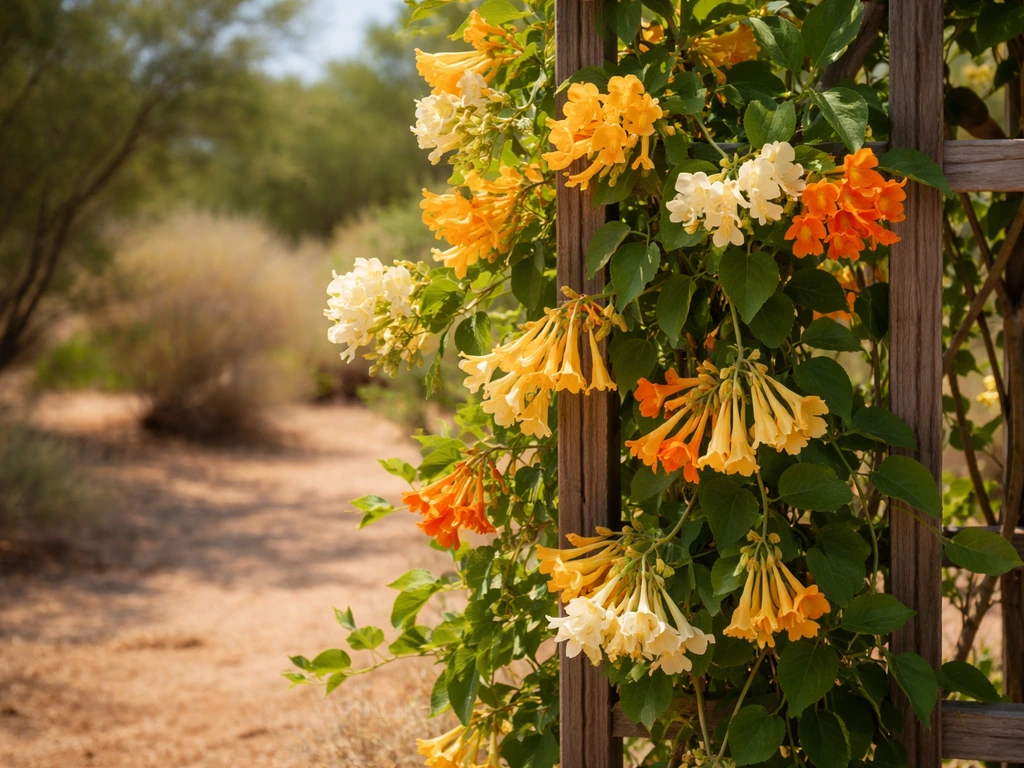
Then there are the lookalikes. Cape honeysuckle (Tecomaria capensis) is commonly sold in Phoenix-area nurseries and thrives there, but it is not a Lonicera at all. It just shares the common name and produces similarly tubular flowers. If you see "honeysuckle" at a low-desert nursery and it looks suspiciously healthy and heat-tolerant, check the tag carefully. You might actually be looking at something else entirely, which is not a bad thing, it just tells a different story about what will work where you live.
How Arizona's Climate Breaks Down by Region
Arizona is not one climate. It spans USDA hardiness zones roughly 5 through 10, which means the gap between a Flagstaff garden and a Phoenix garden is comparable to the gap between Tennessee and southern Florida. That range dramatically changes what honeysuckle can and cannot do.
| Region | Elevation / Zone | Summer Highs | Honeysuckle Feasibility |
|---|---|---|---|
| Phoenix / Tucson (low desert) | Under 2,000 ft / Zones 9b–10a | 110°F+ in summer | Difficult; most Lonicera struggle with heat and alkaline soil |
| Prescott / Verde Valley | 4,000–5,500 ft / Zones 7a–8a | Mid-90s°F typical | Good; most ornamental honeysuckles perform well here |
| Flagstaff / White Mountains | 6,500–9,000 ft / Zones 5b–6b | 70s–80s°F in summer | Excellent; native and cold-hardy cultivars thrive |
| Sedona / Jerome area | 3,500–5,000 ft / Zones 7b–8b | High 90s°F typical | Good to moderate; choose heat-tolerant cultivars |
The low desert is really the problem zone. Arizona has a bimodal precipitation pattern with winter/spring rains and summer monsoons, but even with monsoon humidity, Phoenix summers deliver extended heat that pushes most Lonicera vines past their comfortable range. The root zone dries out fast, and that combination of heat stress and drought stress is hard to overcome even with irrigation.
Sun, Water, and Soil: What Honeysuckle Actually Needs
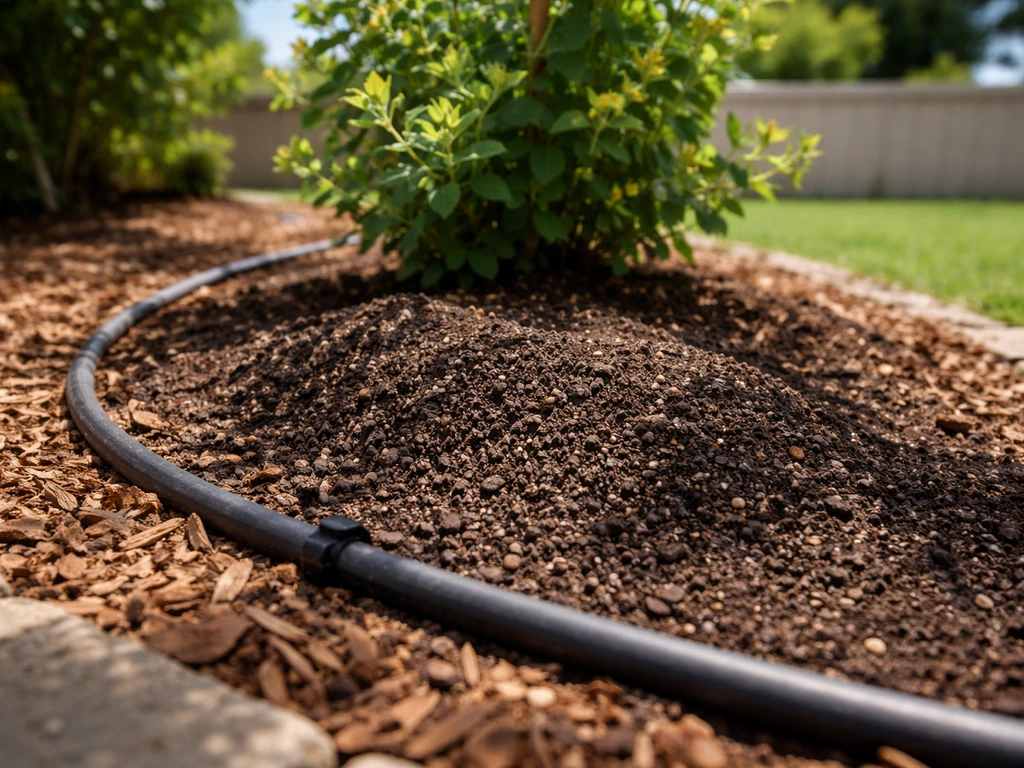
Lonicera sempervirens (coral honeysuckle) does best in full sun to part shade, with medium moisture and well-drained soil. Goldflame honeysuckle (Lonicera × heckrottii 'Goldflame') is similar but is notably intolerant of alkaline soils, which is a real problem in the Phoenix basin where soil pH regularly runs above 7.5 or even 8.0. Both vines want the root zone to stay consistently moist but never waterlogged. Good drainage is non-negotiable: if the soil puddles around the roots during monsoon rains or winter irrigation, you will lose the plant to root rot before you ever get a good bloom.
In terms of soil pH, honeysuckles generally tolerate neutral to slightly acidic or slightly alkaline conditions. But "slightly" is doing a lot of work in that sentence. Push into the high-alkaline range typical of Arizona's low desert and you will start seeing thin, weak growth, aphid pressure, and powdery mildew, even if you are watering well. If you are gardening in alkaline soil and want to try a honeysuckle vine, amend heavily with sulfur and compost before planting, and understand you are working uphill.
Cold Tolerance and Frost Across Arizona
This is where Arizona surprises people coming from other states. The cold danger in Arizona is not the sustained deep freeze you get in the Midwest, it is the unpredictability. A warm spell in January can push plants out of dormancy, and then a sudden frost comes through and damages the new growth before it has any chance to harden off. The University of Arizona Extension specifically flags this pattern as a major cause of frost damage: plants that are actively growing are far more vulnerable than dormant ones.
For honeysuckle specifically: coral honeysuckle (Lonicera sempervirens) is generally hardy to around Zone 4, which means it handles cold just fine in Flagstaff and Prescott. Goldflame honeysuckle is deciduous in cold climates and semi-evergreen in warmer ones, so in Sedona or Prescott you may see it drop its leaves in winter, then flush back in spring. Arizona native honeysuckle (Lonicera arizonica) is the most cold-adapted for in-state conditions and is a safe bet at higher elevations.
If you are at a mid-elevation location like Sedona or Prescott where frosts do happen, placement matters a lot. A southern or western exposure near a block wall or rock feature will stay warmer than an open north-facing spot. Those walls store heat during the day and radiate it back at night, which can be the difference between a plant that survives a cold snap and one that doesn't.
What to Buy: Species and Cultivars Worth Planting (and What to Skip)
Good choices for Arizona
- Lonicera arizonica (Arizona honeysuckle): A native species growing to about 6 feet, with bright red-orange trumpet flowers that hummingbirds absolutely love. This is the most climate-appropriate choice for mid-to-high elevations and the lowest-risk option for Arizona gardeners overall.
- Lonicera sempervirens 'Major Wheeler': A cultivar of coral honeysuckle that performs especially well at higher elevations in Arizona. It needs a trellis or structure to climb, produces heavy flushes of red tubular flowers, and is manageable in size. Phoenix-area retailers carry it and describe it as semi-evergreen through Phoenix winters, though performance is better above 4,000 feet.
- Lonicera × heckrottii 'Goldflame': A twining vine that reaches 10 to 15 feet with showy bi-color pink and yellow flowers. Works well in Prescott-area gardens and higher. Avoid it in alkaline, low-desert soil.
What to avoid
- Lonicera japonica (Japanese honeysuckle): This is the one Arizona's Yavapai County Cooperative Extension specifically recommends against planting. It can run 50 to 100 feet and behave aggressively in moist or riparian areas. The USDA Forest Service lists it among invasive plants to avoid, and while it is not currently on Arizona's official noxious weed list, it has a well-documented history of displacing native plants and forming monocultures.
- Lonicera maackii (Amur honeysuckle): Another invasive shrub type flagged for suckering and colonizing behavior. Not a good choice anywhere in the state.
- Generic unlabeled 'honeysuckle' at big-box stores: If you cannot identify the exact species, pass on it. The difference between a well-behaved native and an aggressive invasive matters a lot in Arizona's riparian ecosystems.
Planting and Placement Tips That Actually Make a Difference
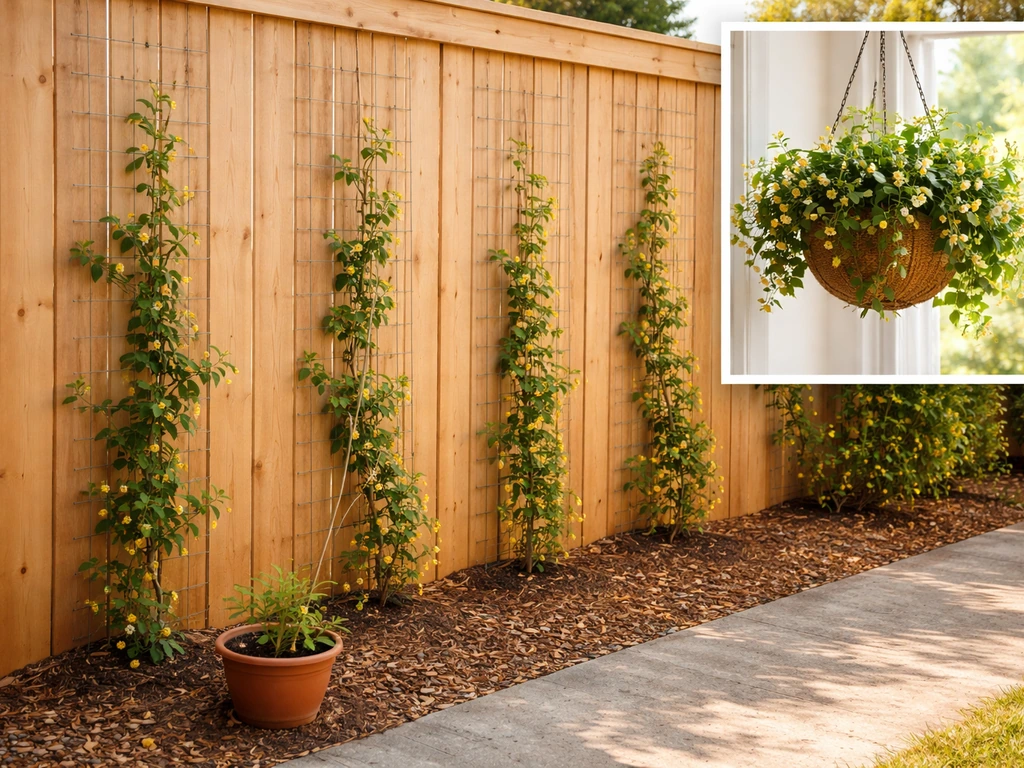
Give your honeysuckle something to climb. In many cases, you can also grow honeysuckle in a hanging basket, as long as you give it the right amount of light and consistent moisture can you grow honeysuckle in a hanging basket. These are vines, not shrubs, and without a trellis, fence, or arbor to work with, they become a sprawling mess that is hard to manage and more prone to disease because air cannot circulate around the foliage. Good air circulation also reduces the risk of powdery mildew, which Goldflame honeysuckle in particular can be susceptible to in humid conditions.
In the low desert, if you are committed to trying a coral honeysuckle anyway, place it on an east-facing wall where it gets morning sun and afternoon shade. That afternoon shade is critical for protecting the plant from the worst of the summer heat. Keep the root zone mulched with 3 to 4 inches of organic mulch to hold soil moisture and moderate ground temperature, and plan on supplemental irrigation through the summer even during monsoon season.
At mid-to-high elevations, a south or west-facing exposure near a masonry wall gives you frost protection in winter and enough warmth to push good flowering. Plant in spring after your last frost date, give the vine a full growing season to establish before it has to deal with winter, and resist the urge to fertilize heavily. Heavy nitrogen feeding pushes leafy growth at the expense of flowers.
- Install a trellis, fence section, or arbor before you plant, not after.
- Amend clay or caliche-heavy soil with compost to improve drainage.
- Mulch the root zone immediately after planting.
- Water deeply and less frequently rather than shallowly every day.
- In the low desert, protect from afternoon sun with shade cloth or east-facing placement.
- In frost-prone zones, site the plant against a south or west-facing wall for warmth.
If Honeysuckle Won't Work Where You Live
If you are in Phoenix or Tucson and want the same hummingbird-attracting, tubular-flower vibe without the struggle, a few plants genuinely deliver in the low desert. Cape honeysuckle (Tecomaria capensis) is the obvious first choice: it handles heat and drought the way true honeysuckle never will, produces masses of orange-red flowers through the warm season, and hummingbirds treat it like a buffet. It is widely available at Phoenix-area nurseries and is one of the most reliable flowering vines for Zone 9 and 10 gardens.
Bougainvillea is another option if you want aggressive coverage and color rather than the hummingbird angle specifically. For something a bit more restrained, queen's wreath (Antigonon leptopus) climbs well and handles heat, and Yellow Bells (Tecoma stans) gives you a shrubby native alternative with tubular yellow flowers that hummingbirds and butterflies both use. None of these are honeysuckle, but they will all succeed where Lonicera won't, and that is ultimately what matters when you are planning a landscape that you want to actually enjoy.
If you are at a higher elevation and honeysuckle does work for you, it is worth knowing that questions around timing and growing habits matter just as much as location. That matters because many honeysuckles flower on older stems rather than only new growth grow on old wood. Jasmine and honeysuckle can share a garden if you match their light and watering needs and give both enough space to climb can jasmine and honeysuckle grow together. The details around when honeysuckle grows and blooms, whether it can grow alongside other vines like jasmine, and how it responds to pruning on old versus new wood all play into how you manage it season to season.
FAQ
What’s the easiest honeysuckle type to try in Arizona if I’m not sure about my exact zone?
Start with Lonicera arizonica if you’re in higher elevations, because it is the most cold-adapted for in-state conditions. If you’re closer to the low desert, treat Lonicera sempervirens and hybrids as experimental and be prepared for extra shade and soil improvements, since many fail mainly from heat and alkaline stress rather than lack of water.
Can honeysuckle survive Arizona winters, or do I need to protect it?
It depends on whether it is actively pushing new growth during a warm January thaw. Even hardy plants can get damaged when growth reactivates and then a sudden frost hits, so consider temporary protection on nights that are forecast to drop sharply, especially for new plantings and vines closest to reflective walls or south-facing exposures.
Does honeysuckle grow in Arizona without irrigation if it rains during the monsoon?
Usually not reliably. Monsoon rain helps, but low-desert roots still swing between drying out between storms and staying too wet during longer stretches. Use deep, infrequent supplemental watering during hot stretches, and monitor drainage so you do not rely on rainfall to both feed and manage root health.
What are the signs my honeysuckle is failing in Arizona, and what should I do first?
Look for thin, weak growth, leaf issues, and increased powdery mildew or aphids, especially in alkaline soils. Your first step should be checking drainage and soil pH trends, then adjusting location for afternoon shade and improving the root zone with compost and careful sulfur-based amendments where needed.
How can I tell if the “honeysuckle” at a Phoenix-area nursery is the real thing (Lonicera)?
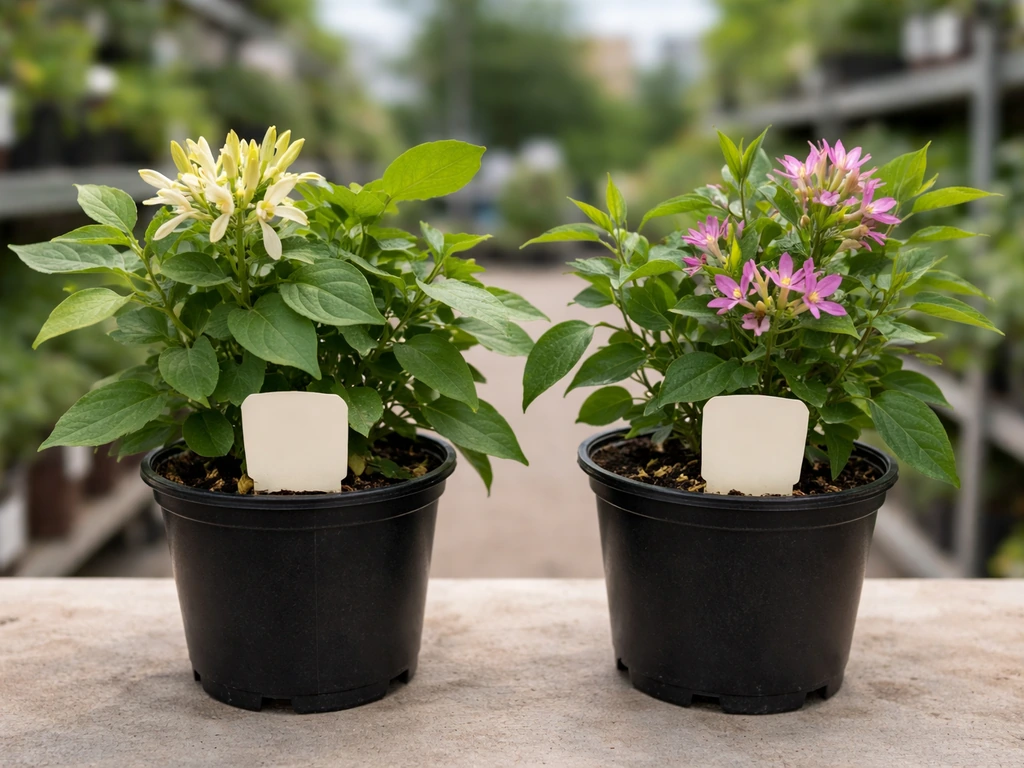
Check the scientific name on the tag. True honeysuckles are Lonicera, while Tecomaria capensis is a common lookalike sold under the honeysuckle name. If the tag is vague or only uses a common name, ask for the genus because the planting advice can be completely different.
Is it better to grow honeysuckle on a trellis or in a hanging basket in Arizona?
Trellis or an arbor is usually easier to manage in Arizona because it supports airflow and lets you control how the canopy dries after irrigation and rain. Hanging baskets can work for vines, but without a trellis you’ll likely get tangled growth, uneven sun exposure, and higher disease risk from trapped humidity inside the plant mass.
How much sun should honeysuckle get in the low desert versus at higher elevations?
In the low desert, prioritize morning sun with afternoon shade, which reduces heat stress during peak burn hours. At mid-to-high elevations, a south or west exposure near a masonry wall can help with warmth for flowering, but you still want well-drained soil and consistent root moisture.
What’s the most common pruning mistake for honeysuckle in Arizona?
Pruning at the wrong time or too aggressively without considering whether your specific honeysuckle blooms on older stems. Many honeysuckles rely on prior season growth for flowers, so wait to prune until after the main bloom period when possible, and use light training cuts rather than heavy early cuts.
Should I fertilize honeysuckle in Arizona to get more flowers?
Use caution. Heavy nitrogen tends to push leafy growth at the expense of blooms, especially when the plant is already stressed by heat or alkaline soil. If you fertilize at all, choose a mild, balanced approach and focus first on drainage, pH adjustment if needed, and correct sun exposure.
If honeysuckle doesn’t thrive in my yard, what’s the best low-desert alternative with a similar look?
Cape honeysuckle (Tecomaria capensis) is often the closest “tubular flower, hummingbird appeal” option that reliably handles Arizona heat and drought. Bougainvillea and queen’s wreath can also provide strong coverage, but cape honeysuckle is usually the more direct match for the honeysuckle-like flowering vibe.