
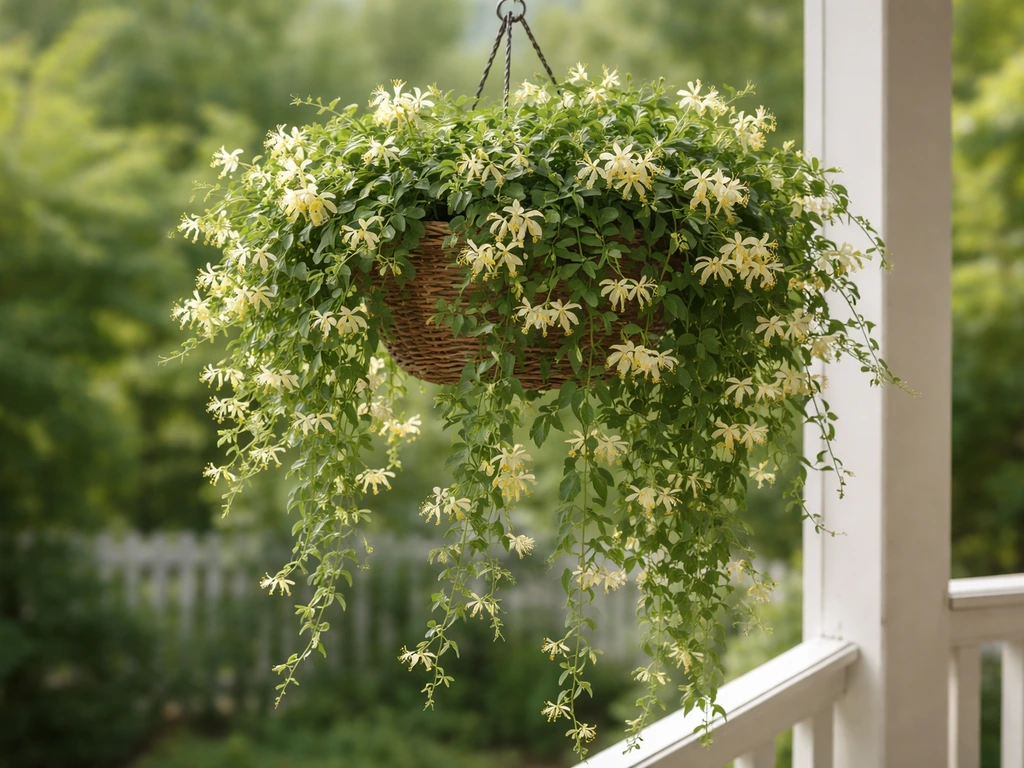
Yes, you can grow honeysuckle in a hanging basket, but it works best with the right variety and a clear commitment to regular pruning and watering. The key is choosing a compact or trailing species rather than an aggressive climber, and accepting upfront that this plant wants to grow fast and sprawl hard. Get that part right and you'll have a fragrant, flowering basket that looks fantastic all season. Get it wrong and you'll have a tangled, root-bound mess by July.
Can You Grow Honeysuckle in a Hanging Basket?
Marcus Hartwell
30 Apr 2026
When hanging-basket honeysuckle actually works
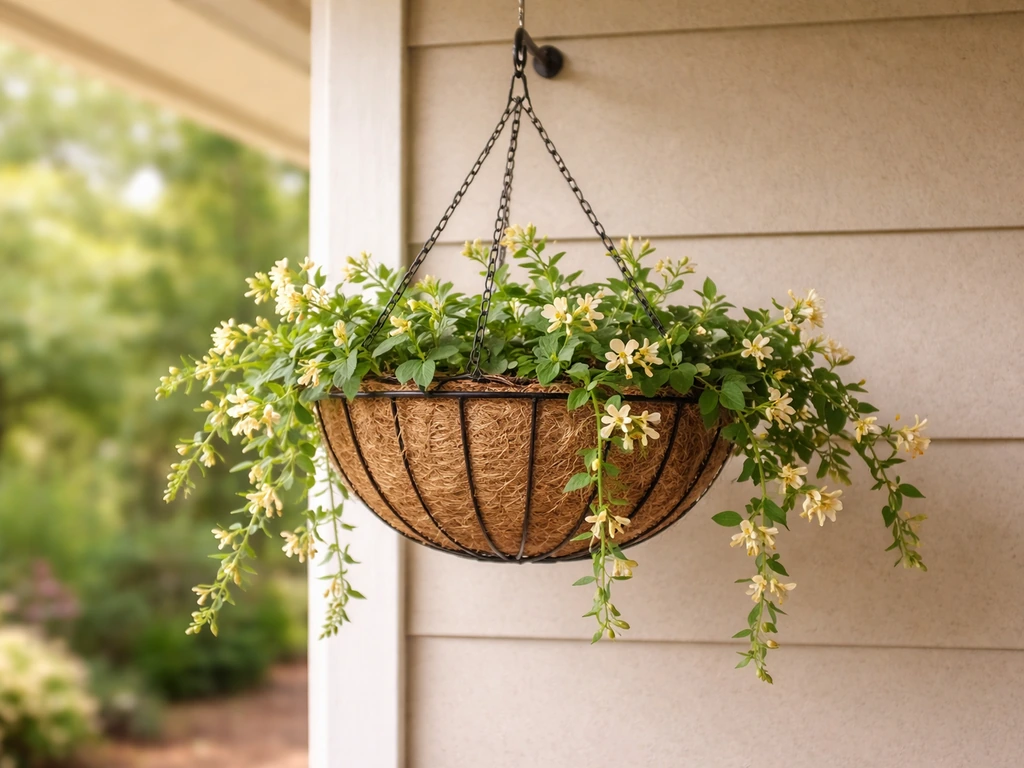
Honeysuckle in a hanging basket is a genuine success story when you pick a manageable variety, live in a mild-to-warm climate (roughly zones 5 through 10), and treat the basket like a high-maintenance container rather than a set-it-and-forget-it planting. The vine's natural climbing and trailing habit actually plays in your favor in a basket because the stems will cascade over the edges and show off the flowers beautifully. Where it falls apart is when gardeners use a too-small pot, skip the support structure, or let the roots dry out during summer heat. In those situations, you get poor flowering, rapid wilting, and a tangled bird's nest of stems that's frustrating to manage.
It's also worth being honest about vigorous species like Japanese honeysuckle (Lonicera japonica). It's labeled invasive in many states, including much of the Southeast and Midwest, and while a container does limit its spread into the ground, you still need to prune it hard and often. If you're in a state where it's listed as invasive, seriously consider one of the better-behaved alternatives below instead.
Best honeysuckle types for containers and trailing growth
Not all honeysuckles behave the same way in a confined space. Some are vigorous to the point of being unworkable in a basket; others are compact enough to stay manageable with light weekly pruning. Here are the types worth considering.
| Variety / Species | Growth Habit | Zones | Best For Baskets? |
|---|---|---|---|
| Lonicera sempervirens 'Major Wheeler' | Moderate twining vine, semi-evergreen | 4–9 | Yes — great choice, less aggressive |
| Lonicera sempervirens 'Coral Honeysuckle' | Twining vine, slow-moderate growth | 4–10 | Yes — manageable, non-invasive |
| Lonicera periclymenum 'Serotina' (Woodbine) | Twining vine, moderate vigor | 5–9 | Yes — fragrant, trainable |
| Lonicera japonica (Japanese honeysuckle) | Vigorous to rampant climber | 4–10 | Caution — invasive in many states |
| Lonicera brownii 'Dropmore Scarlet' | Moderate twining vine | 3–9 | Yes — especially for colder zones |
| Lonicera x heckrottii 'Gold Flame' | Semi-twining, moderate growth | 5–9 | Yes — good fragrance and color |
If I had to pick one variety for most hanging baskets, I'd go with Lonicera sempervirens 'Major Wheeler' or coral honeysuckle. Both are native to North America, non-invasive, reliably attractive, and manageable enough that you won't be fighting the plant every week. Gold Flame is another solid pick if you want fragrance alongside the color.
Climate and growing zone fit: can you grow it where you live?
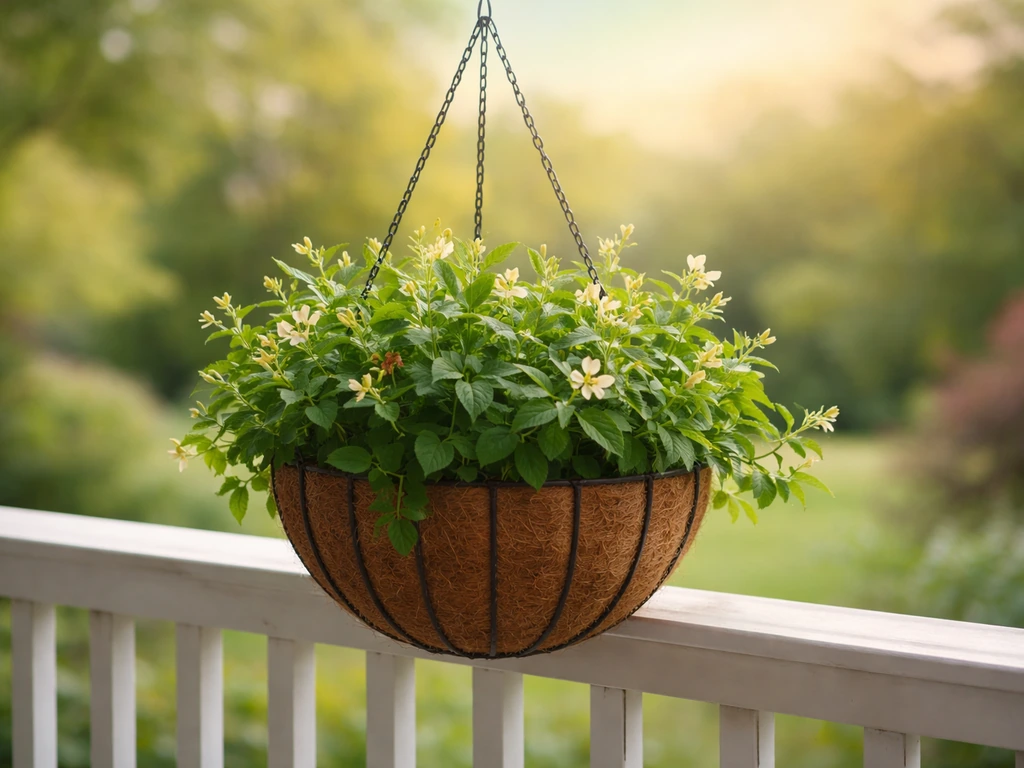
Before buying a plant, the first question is always whether your climate is a realistic match. The good news is that honeysuckle is broadly adaptable, covering zones 3 through 10 depending on species. But hanging baskets change the equation because exposed roots in a container are far more vulnerable to both heat and cold than roots in the ground.
Hot and humid climates (Southeast, Gulf Coast, zones 8–10)
Honeysuckle generally thrives here, but Japanese honeysuckle is invasive across much of the South, so stick with coral honeysuckle or Gold Flame. The bigger challenge in hot climates is moisture: baskets dry out incredibly fast in summer heat, sometimes needing watering twice a day. Powdery mildew and leaf blight (caused by Glomerularia lonicerae) are also real risks during humid, rainy stretches in the Southeast.
Dry and arid climates (Southwest, Arizona, Rocky Mountain states)
Honeysuckle can work in zones 5–9 of these regions, but heat stress in baskets is severe. If you're growing in Arizona or a similar dry climate, position the basket in afternoon shade and plan on daily deep watering. The low humidity actually reduces fungal disease risk, which is one upside. In higher-elevation areas of Colorado or the Rockies, 'Dropmore Scarlet' or 'Major Wheeler' are your best bets given their cold tolerance down to zone 3–4. If you're wondering does honeysuckle grow in Colorado, this cold-tolerant approach is why it can succeed there 'Dropmore Scarlet'.
Cold-winter climates (Midwest, Northeast, zones 4–6)
This is where you need to think carefully. A container plant in zone 5 or 6 behaves more like a zone 3 or 4 planting in terms of root exposure, because the root ball can freeze solid during extended cold snaps. Penn State Extension recommends thinking "two zones colder" when assessing container hardiness. Choose varieties rated to at least zone 3 or 4 if you're in a cold-winter state and plan to leave baskets outdoors. Dropmore Scarlet and Major Wheeler are reliable here.
Mild coastal and Pacific Northwest climates (zones 7–9)
Ideal territory for basket honeysuckle. Mild winters mean less root freeze risk, and moderate summers mean less moisture stress. Almost any of the recommended varieties will perform well here with minimal intervention beyond regular watering and pruning.
Basket setup: pot size, soil, drainage, and trellising
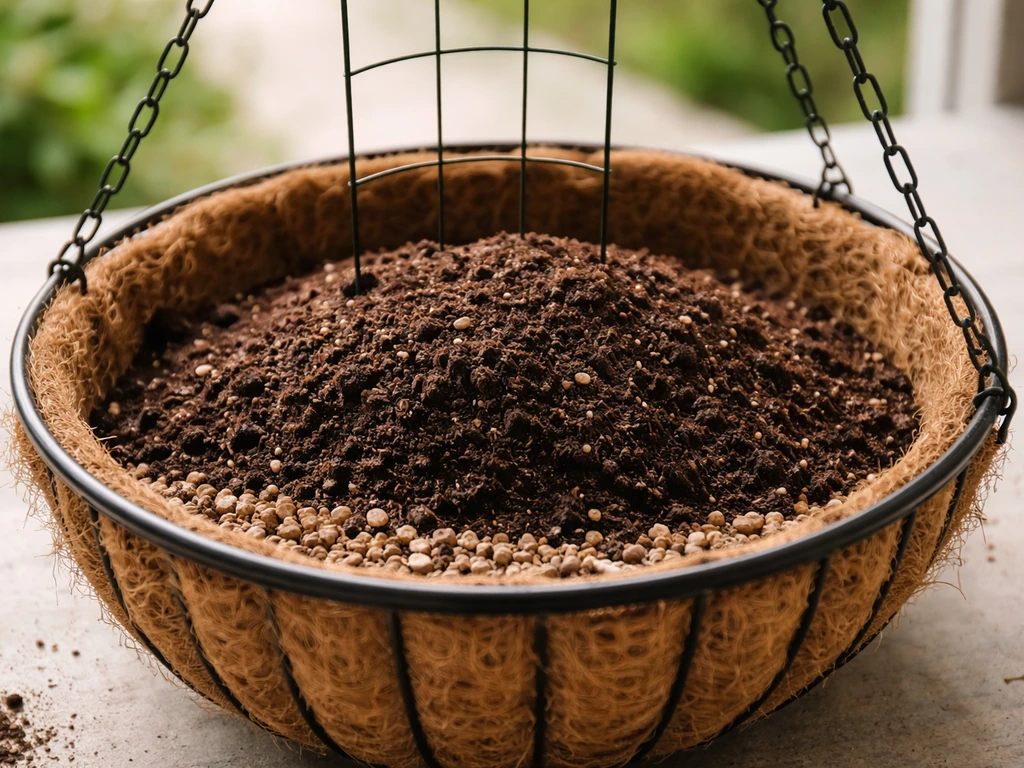
The setup is where most people cut corners and end up disappointed. Honeysuckle has an active root system, so the standard 10-inch or 12-inch decorative basket you'd use for petunias is too small. Go with a basket or container at least 14 to 16 inches in diameter and at least 12 inches deep. Bigger is genuinely better here, both for moisture retention and for root insulation in winter. A half-barrel or large 18-inch basket will outperform a small decorative one every single season.
For soil, use a high-quality potting mix (not garden soil, which compacts badly in containers) and blend in about 20 to 25 percent perlite to improve drainage. Honeysuckle hates sitting in waterlogged soil, and Phytophthora root rot is a real risk in containers with poor drainage. Make sure your basket has multiple drainage holes and that they're never blocked by a solid tray that holds standing water. If you're using a decorative outer basket, elevate the inner pot slightly so it isn't sitting in runoff.
For trellising, don't skip this step. Honeysuckle is a twining vine and it needs something to grab onto. In a hanging basket, a small cone-shaped wire support or a simple lattice of bamboo stakes pushed into the soil works well. The RHS specifically recommends a trellis or wire support as part of proper establishment for climbing honeysuckle, and the same principle applies in a container. Without support, stems will tangle into each other and shade out lower growth, reducing flowering significantly.
Sun, watering, and feeding your basket honeysuckle
Light
Honeysuckle flowers best in full sun, and this is especially true for Japanese honeysuckle, which produces the most blooms and seeds in the sunniest spots. For basket growing, aim for at least 6 hours of direct sun per day. In hot climates (zones 8 and above), some afternoon shade will protect the plant from heat stress and reduce your watering burden considerably. In cooler zones, full sun all day is fine and will maximize flowering.
Watering
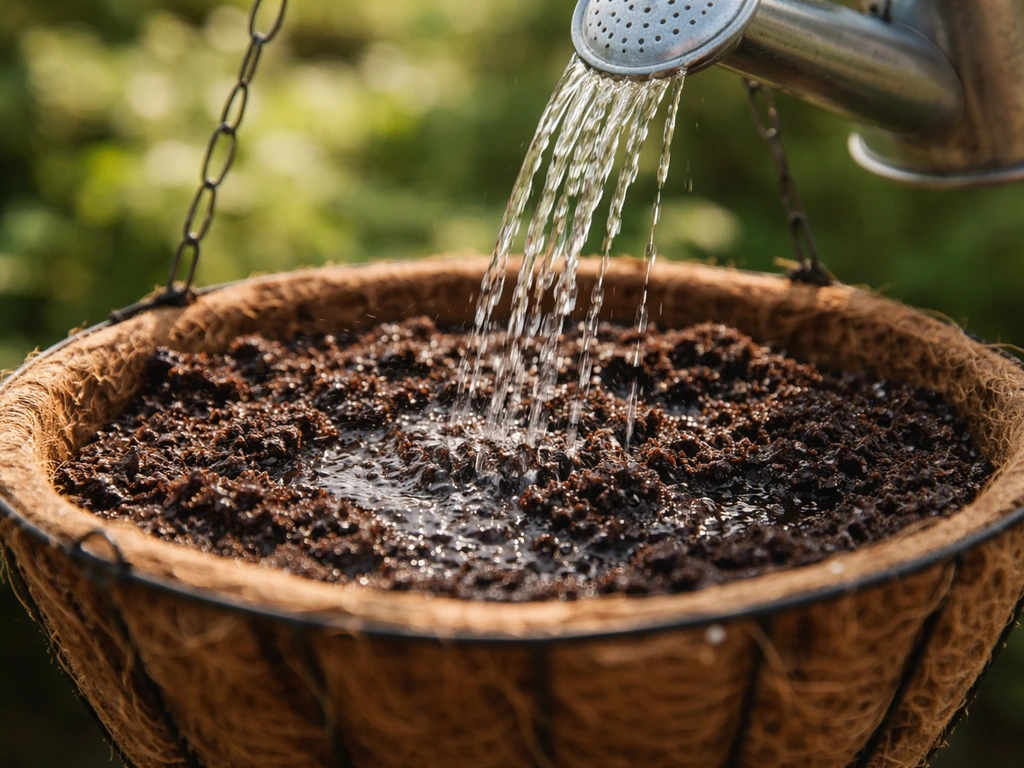
This is the single most demanding part of growing honeysuckle in a hanging basket. Baskets dry out fast, especially in summer sun and wind. During warm months, check the soil daily by pushing a finger an inch into the mix. If it's dry, water deeply until it runs freely out of the drainage holes. In peak summer heat, some baskets need watering once or even twice a day. A self-watering basket insert or water-retaining gel mixed into the potting soil can help buffer against rapid drying. In winter, cut back to sparse watering but don't let the root ball go completely dry, as dry winter roots are just as damaging as frozen ones.
Feeding
Container plants need more frequent feeding than in-ground plants because nutrients flush out with every watering. Use a balanced slow-release fertilizer (like a 10-10-10 granular) worked into the top inch of soil at the start of the growing season, then supplement with a liquid bloom-booster fertilizer (higher in phosphorus, like a 5-10-5) every two weeks through the blooming period. Stop feeding about six weeks before your expected first frost date to avoid pushing tender new growth into cold weather.
Pruning and training to prevent tangles and keep flowering
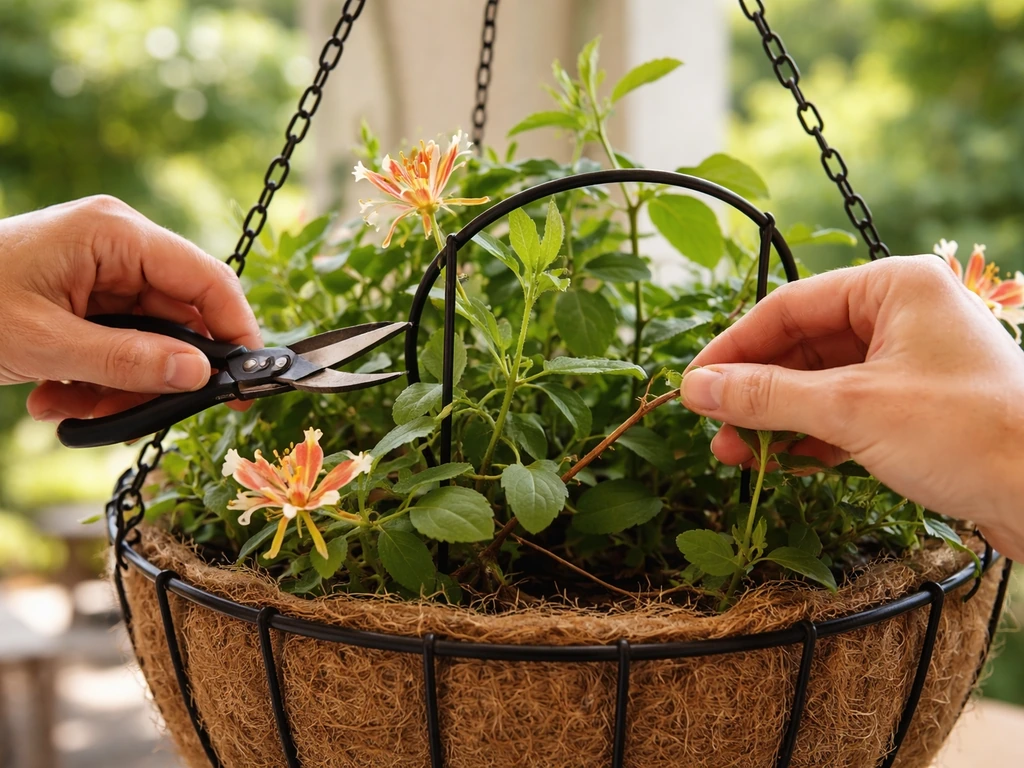
Pruning is non-negotiable with basket honeysuckle. Without it, even a relatively compact variety will turn into a dense, unflowering mess within a single season. The good news is that honeysuckle responds well to pruning and will push new growth and flowers quickly after a trim.
The timing of your pruning matters because different honeysuckles bloom on old wood versus new wood. If you're trying to understand whether it grows on old wood or new wood, the pruning timing matters for flowering does honeysuckle grow on old wood. Many of the popular varieties, including Lonicera periclymenum, bloom on old wood from the previous season, so heavy pruning right after planting out in spring can cost you that year's flowers. For old-wood bloomers, blank" rel="noopener noreferrer">prune lightly right after the main flowering flush to shape the plant and remove dead or tangled stems, then do a harder tidy-up in late winter before new growth starts. For varieties that bloom on new wood, a harder spring prune is fine and actually encourages more flowering stems.
For training in a basket, encourage the longest stems to weave through your trellis or support frame, and trim back any stems that are going rogue or looping back into the center of the plant. Aim to keep air flowing through the plant's center, which also reduces fungal disease. Remove any dead or crossing stems every few weeks during the growing season. It only takes a few minutes and makes an enormous difference in how the basket looks and performs.
Common problems and how to fix them
Wilting and drying out
The most common problem by far. If your basket is wilting, the first move is always to water it deeply, then reassess your schedule. Consider moving the basket to a spot with afternoon shade in summer, lining the basket with moss or a water-retaining liner, or upsizing to a larger container with more soil volume.
Poor or no flowering
Usually caused by too little sun, over-pruning at the wrong time, or too much nitrogen fertilizer (which pushes leafy growth at the expense of flowers). Move the basket to a sunnier spot, switch to a lower-nitrogen, higher-phosphorus feed, and double-check whether your variety blooms on old or new wood before the next pruning session.
Aphids
Aphids love honeysuckle, especially on tender new growth. In a container, they can build up fast. For mild infestations, a strong blast of water from a hose knocks them off. For persistent problems, introducing or encouraging predatory insects like lady beetles is an effective biological control. Insecticidal soap spray works well as a direct treatment without harming beneficial insects.
Powdery mildew and leaf blight
Powdery mildew shows up as a white, powdery coating on leaves, while leaf blight (Glomerularia lonicerae) causes brown, blighted patches during wet seasons. Both are worse when air circulation is poor and humidity is high. Fix: prune out affected growth, improve airflow around the basket by thinning stems, avoid overhead watering (water at the base), and apply a sulfur-based or neem oil fungicide if the problem is severe.
Root rot
Phytophthora root rot is the container gardener's nightmare. It's driven by poor drainage and waterlogged roots, and can spread through contaminated runoff and drain holes. Prevention is everything here: use well-draining soil mix, never let the basket sit in standing water, and use clean potting mix each season. If you suspect root rot (wilting despite moist soil, brown mushy roots), remove the plant, cut away all rotted roots, repot in fresh mix with better drainage, and treat with a phosphonate-based fungicide.
Winter root damage in cold zones
Container roots freeze much more easily than in-ground roots. When temperatures stay below freezing for extended periods, the root ball in a basket can freeze solid, cutting off water availability to the plant entirely. The roots most at risk are at the outer edges of the container. To protect them, wrap the pot in burlap or bubble wrap, move the basket into an unheated garage or shed during hard freezes, and water sparingly through winter so roots don't freeze dry. In zones 6 and colder, bringing the basket indoors or into a cool (but frost-free) shelter is strongly recommended.
Hanging-basket planting timeline and maintenance checklist
Here's a practical month-by-month outline to keep your basket honeysuckle on track from planting through winter.
| Timing | Task |
|---|---|
| Early spring (after last frost) | Plant in a 14–16" basket with well-draining potting mix + perlite; install trellis/support; apply slow-release balanced fertilizer |
| Spring through early summer | Water regularly (check daily); begin liquid bloom-booster feed every 2 weeks; train stems onto support; pinch back rogue stems |
| Peak bloom season | Continue feeding and watering; check for aphids weekly; remove spent flowers to encourage reblooming; prune lightly to keep shape |
| Midsummer | Increase watering frequency in heat; watch for powdery mildew in humid climates; ensure drainage holes are clear |
| Late summer | After main bloom flush, prune old-wood bloomers to remove spent stems; continue feeding until 6 weeks before first frost |
| Early fall | Stop fertilizing; reduce watering gradually; begin preparing winter protection plan based on your zone |
| First frost approach | Move basket to sheltered location (unheated garage or shed) in zones 6 and colder; wrap pot in insulating material; water sparingly |
| Winter | Keep roots from freezing solid and from drying out completely; check moisture monthly; no feeding |
| Late winter / early spring | Inspect plant for winter dieback; prune dead/damaged stems; bring basket back outside once frost risk has passed; restart feeding cycle |
If you're also thinking about where honeysuckle fits into your broader garden, the same climate-zone thinking applies whether you're growing it in the ground in Colorado or Arizona, or deciding what time of year it actually starts leafing out and flowering in your region. Timing is key too, so read up on when honeysuckle grows and what to expect in each season when does honeysuckle grow. The container approach gives you flexibility that in-ground planting doesn't, especially in climates where honeysuckle might be marginally hardy or frost-risky. Just be ready to move the basket when the weather calls for it, and this plant will reward you generously. You may also be able to grow jasmine alongside honeysuckle in the same container, but you’ll want to match their light and watering needs closely can jasmine and honeysuckle grow together.
FAQ
Which honeysuckle varieties are actually easiest to keep in a hanging basket?
Not every honeysuckle is suitable for a hanging basket. If you see vigorous vines like Japanese honeysuckle in a catalog, treat it as a poor fit even if it is technically container-safe, because you will likely be pruning more than enjoying the flowers, and it may still be problematic where it is listed as invasive. Choose a variety known to stay manageable in confined spaces, such as Major Wheeler, coral honeysuckle, or Gold Flame.
Can I prune honeysuckle hard in spring to control growth in a basket?
Yes, but plan for regular shaping. For old-wood bloomers, heavy pruning right after planting or right before the buds form can remove the wood that produces flowers. A safer approach is light cleanup after the main bloom, then a more thorough tidy-up late winter, once you know what survived.
How do I tell when my hanging-basket honeysuckle needs water?
At minimum, push your finger about 1 inch into the mix before watering, because the top can look dry while moisture deeper in the pot is still adequate or, in hot weather, the reverse can happen. When you do water, soak until it runs freely out the drainage holes, then empty any catch tray so the pot is not sitting in runoff.
My honeysuckle wilts but the soil feels wet, what should I check first?
If your basket is wilting even after you water, the issue is often drainage, not drought. Check that the potting mix is not compacted, verify multiple drainage holes are open, and confirm the inner container is not sitting in pooled water within a decorative outer basket.
How can I prevent root rot in a hanging basket honeysuckle?
Most common container root problems happen when water cannot move quickly through the soil. Use a high-quality potting mix, mix in perlite as described, and consider a basket insert that improves drainage or moisture buffering. Also, do not reuse tired, waterlogged potting mix every year without freshening, because it breaks down and holds more water over time.
Will extra fertilizer increase flowering in honeysuckle baskets?
Yes, but use it as a supplement to balanced feeding, not a replacement for pruning and sunlight. Too much nitrogen tends to promote leaves and can reduce flowering, so if blooms drop, cut back on rich feeds and switch to a higher-phosphorus liquid during bloom time only. Also stop feeding early enough so new growth can harden before cold weather.
Is a smaller decorative basket okay if I water often?
Honeysuckle can handle being slightly crowded, but not extremely small. If you want reliable flowering, a basket that is too small will dry out too fast and become root-bound quickly, leading to reduced blooms and constant stress. If your basket was less than about 14 inches across, consider upsizing rather than trying to compensate with more frequent watering.
What kind of trellis or support works best in a hanging honeysuckle basket?
For best results, use a support that is easy for you to train against, not a vague “something for stems to grab.” A cone-shaped wire support or a small trellis works better because you can guide stems outward and keep airflow through the center, which also helps reduce mildew.
What is the minimum sunlight needed to get flowers in a hanging basket?
Most honeysuckles will be happier with full sun, but the exact sweet spot is practical. Aim for at least 6 hours of direct sun, and in very hot regions, provide afternoon protection. If the plant is not flowering, first check sun exposure before increasing water or fertilizer.
How can I reduce powdery mildew or leaf blight on honeysuckle in a basket?
Yes. If you want fewer disease issues, improve airflow by removing dead or crossing stems and avoid wetting leaves when possible. In rainy or humid stretches, pruning lightly to open the plant can reduce powdery mildew risk, even if you cannot fully control watering.
Do I need to bring a hanging-basket honeysuckle indoors during winter?
Container plants freeze differently than in-ground plants, because the outer edges of the root ball lose warmth fastest. For hard freezes, wrap the pot (burlap or bubble wrap), move the basket into an unheated but protected space like a garage or shed, and water only sparingly through winter so roots do not dry out completely.
Can I combine honeysuckle with jasmine in the same hanging container?
Yes, you can grow jasmine and honeysuckle in the same large container, but only if you match their needs and control how they share space. Both are climbing vines, so plan a support that allows independent training, and ensure the pot is large enough so one plant does not shade or outcompete the other.